
CHAPTER 4 PHYSICAL ACTIVITY Benefits to Physical Health
CHAPTER 4 PHYSICAL ACTIVITY

Benefits to Physical Health: • Cardiovascular System • Strengthens your heart muscle • Respiratory System • Breathe larger amounts of air • Muscles don’t tire as quickly • Nervous System • Respond more quickly to stimuli • Improve reaction time Benefits to Social Health: • Builds self-confidence • Interact and Cooperate with others • Manage stress, which helps with relationships Benefits to Mental/Emotional Health: • Relax tense muscles • Sleep better • Manage Anger or Frustrations in a healthy way. • Helps you look and feel better • Gives you a sense of pride and accomplishment • More oxygen to brain reduces mental fatigue which allows you to think more clearly. • New Challenges gives you a “can do” spirit

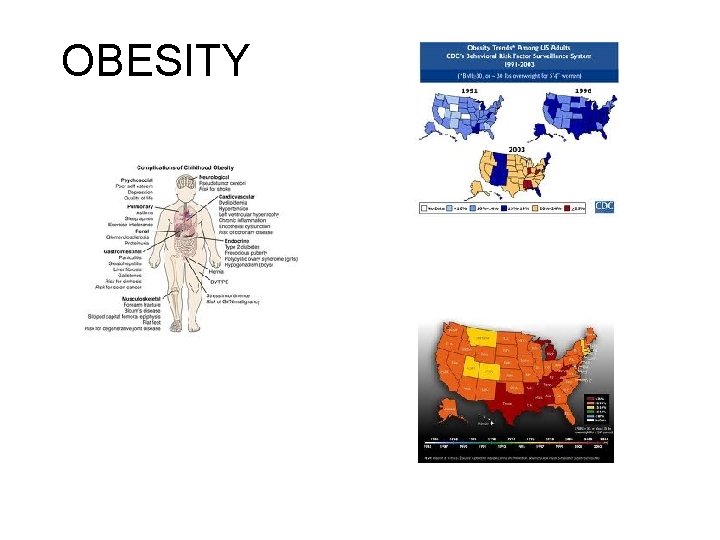
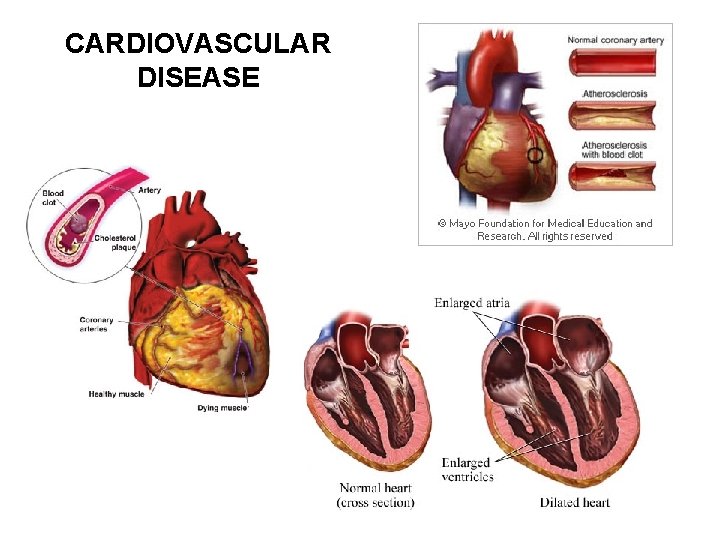
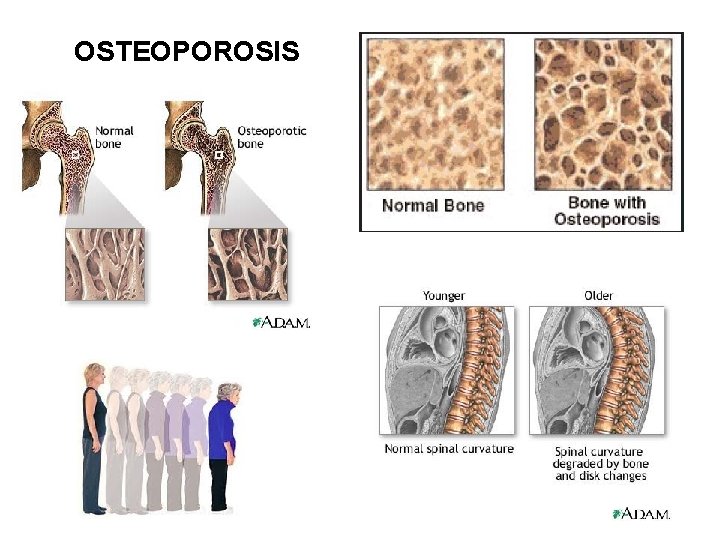
Risks to Physical Inactivity • Unhealthful weight gain can lead to severe life-threatening conditions • Cardiovascular Disease • Leading cause of death among Americans • Type 2 Diabetes • Cancer • Increased risk of Osteoporosis • Reduced ability to manage stress • Decreased opportunities to meet and form friendships with active people who value and live a healthy lifestyle.
OBESITY
CARDIOVASCULAR DISEASE
OSTEOPOROSIS
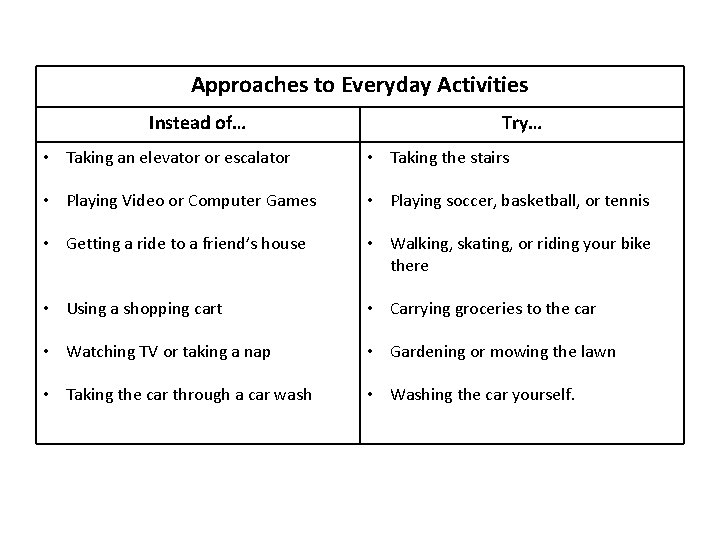
Approaches to Everyday Activities Instead of… Try… • Taking an elevator or escalator • Taking the stairs • Playing Video or Computer Games • Playing soccer, basketball, or tennis • Getting a ride to a friend’s house • Walking, skating, or riding your bike there • Using a shopping cart • Carrying groceries to the car • Watching TV or taking a nap • Gardening or mowing the lawn • Taking the car through a car wash • Washing the car yourself.
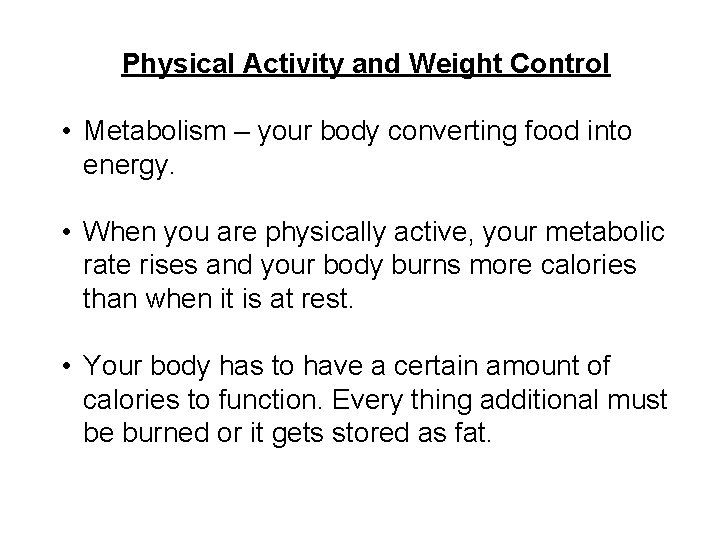
Physical Activity and Weight Control • Metabolism – your body converting food into energy. • When you are physically active, your metabolic rate rises and your body burns more calories than when it is at rest. • Your body has to have a certain amount of calories to function. Every thing additional must be burned or it gets stored as fat.
TWITTER: Bob works out at the gym 5 days a week. When he goes to the gym he only lifts weights. Do you think Bob is physically fit? Explain your answer. **Remember the definition of Physical Fitness** (the ability to carry out daily tasks easily and have enough reserve energy to respond to unexpected demands)
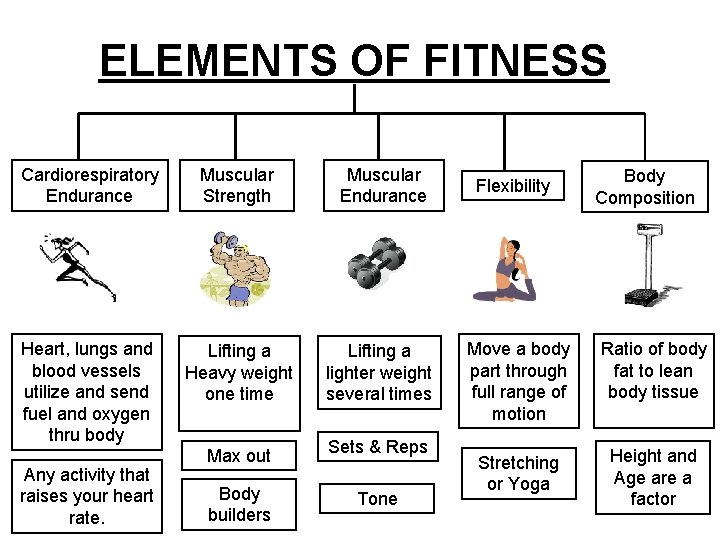
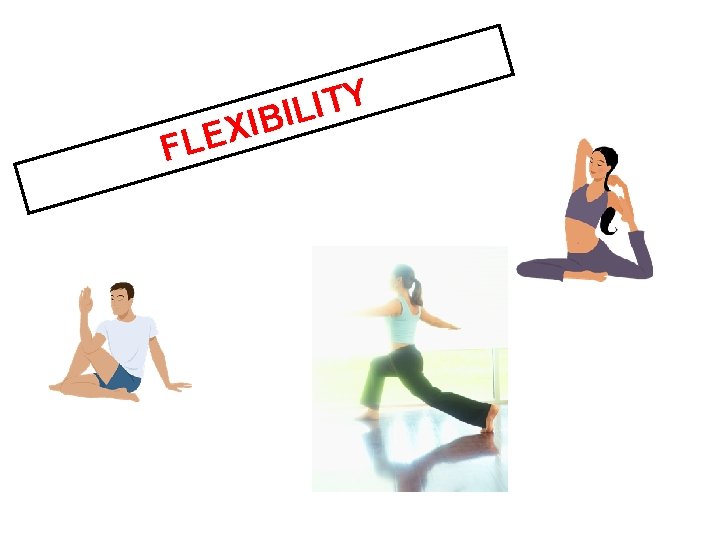
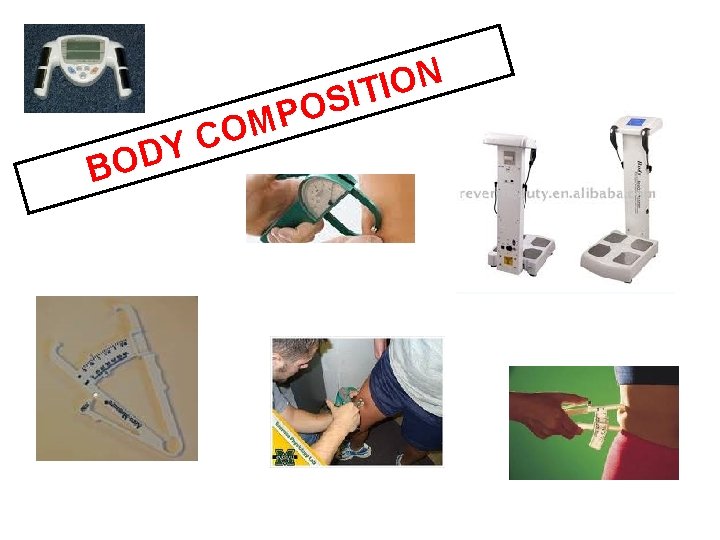
ELEMENTS OF FITNESS Cardiorespiratory Endurance Muscular Strength Muscular Endurance Heart, lungs and blood vessels utilize and send fuel and oxygen thru body Lifting a Heavy weight one time Lifting a lighter weight several times Any activity that raises your heart rate. Max out Body builders Sets & Reps Tone Flexibility Body Composition Move a body part through full range of motion Ratio of body fat to lean body tissue Stretching or Yoga Height and Age are a factor

Y R O T A R I P S E R E C O I N D A R CA ENDUR
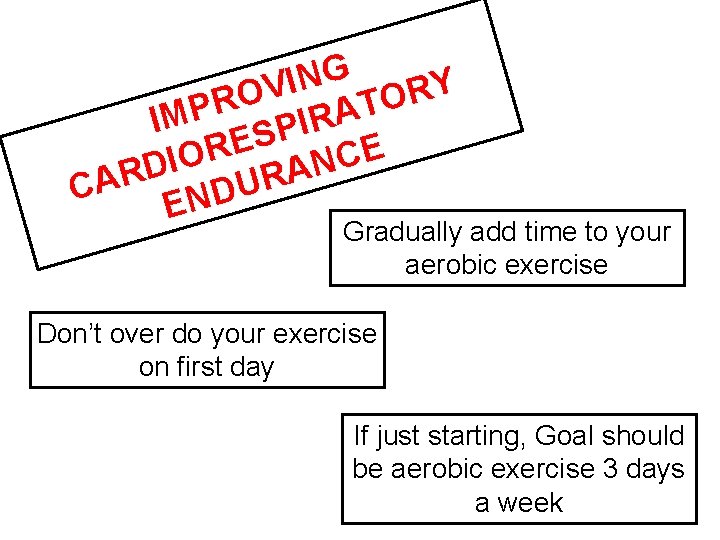
G N I Y V R O O R T P A R IM I P S E R E C O I N D A R R CA ENDU Gradually add time to your aerobic exercise Don’t over do your exercise on first day If just starting, Goal should be aerobic exercise 3 days a week
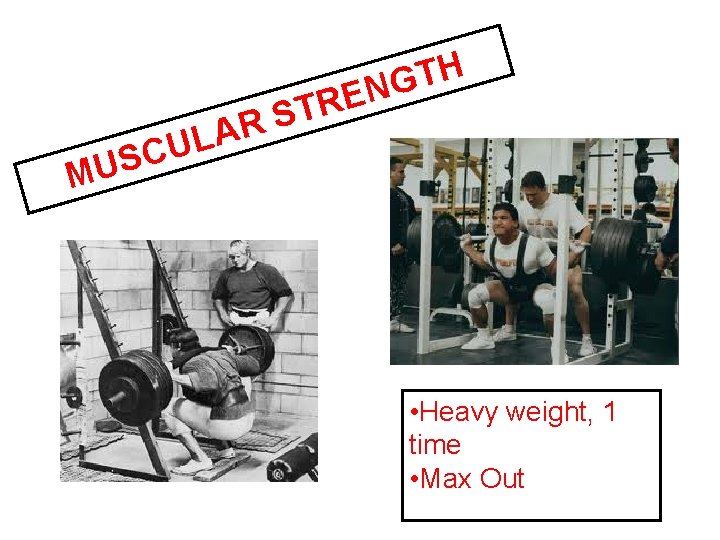
H T G EN R T S AR L U C S U M • Heavy weight, 1 time • Max Out
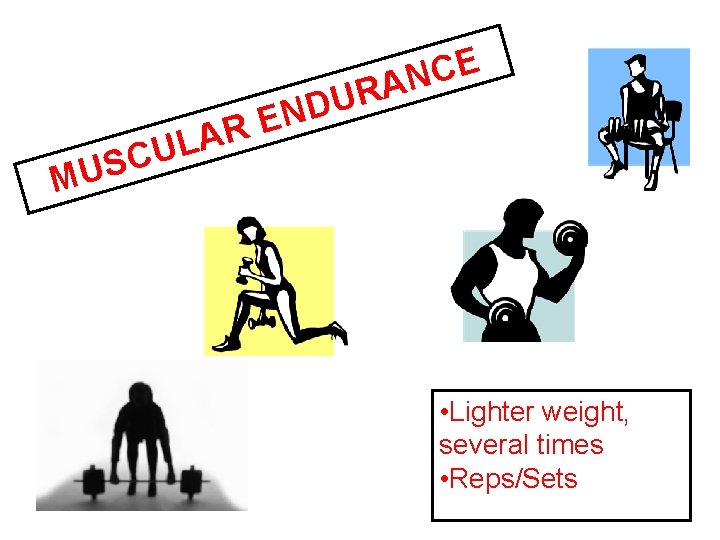
E C N RA U D N E R A L U C S MU • Lighter weight, several times • Reps/Sets
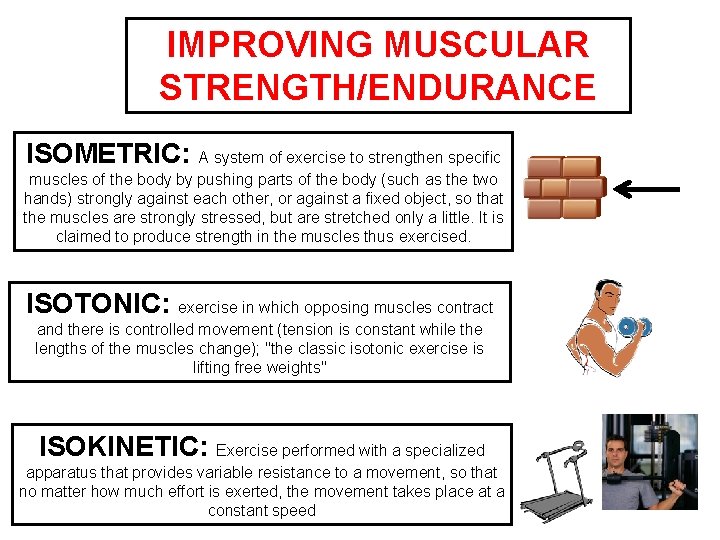
IMPROVING MUSCULAR STRENGTH/ENDURANCE ISOMETRIC: A system of exercise to strengthen specific muscles of the body by pushing parts of the body (such as the two hands) strongly against each other, or against a fixed object, so that the muscles are strongly stressed, but are stretched only a little. It is claimed to produce strength in the muscles thus exercised. ISOTONIC: exercise in which opposing muscles contract and there is controlled movement (tension is constant while the lengths of the muscles change); "the classic isotonic exercise is lifting free weights" ISOKINETIC: Exercise performed with a specialized apparatus that provides variable resistance to a movement, so that no matter how much effort is exerted, the movement takes place at a constant speed
FLE Y T I L I B I X
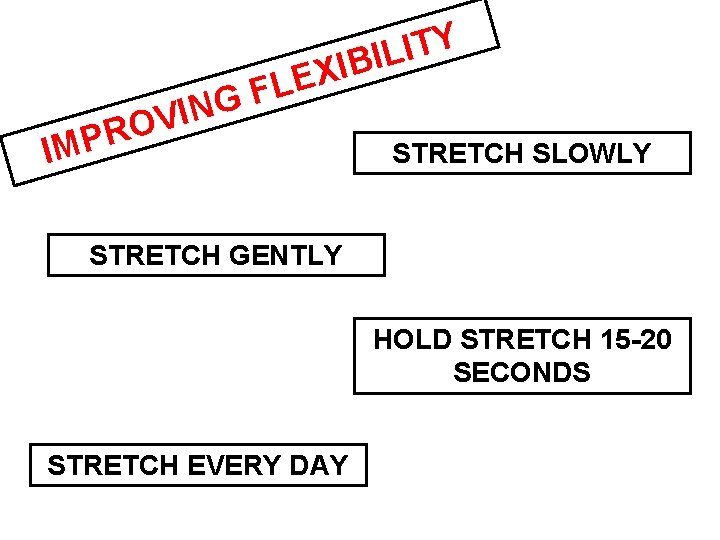
F G VIN Y T I BIL I X LE O R IMP STRETCH SLOWLY STRETCH GENTLY HOLD STRETCH 15 -20 SECONDS STRETCH EVERY DAY
Y D O B P M CO N O I T I S O
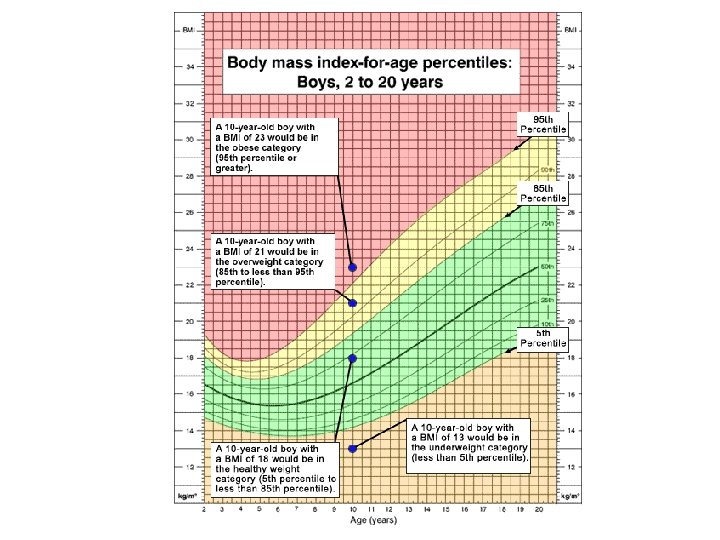
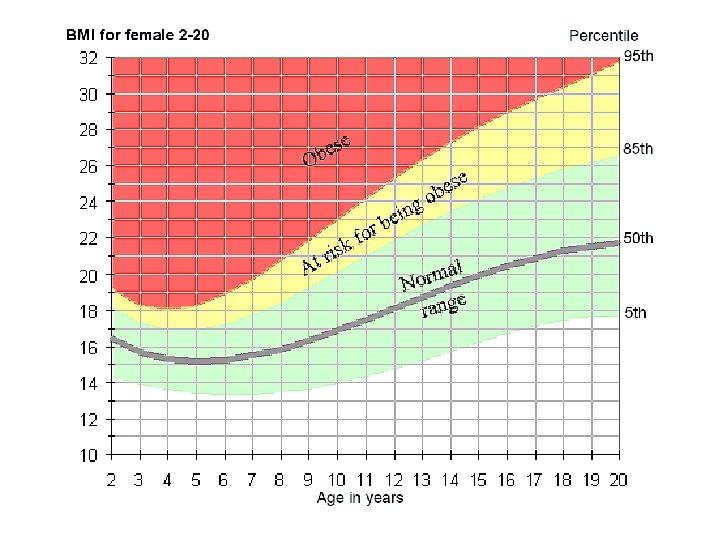
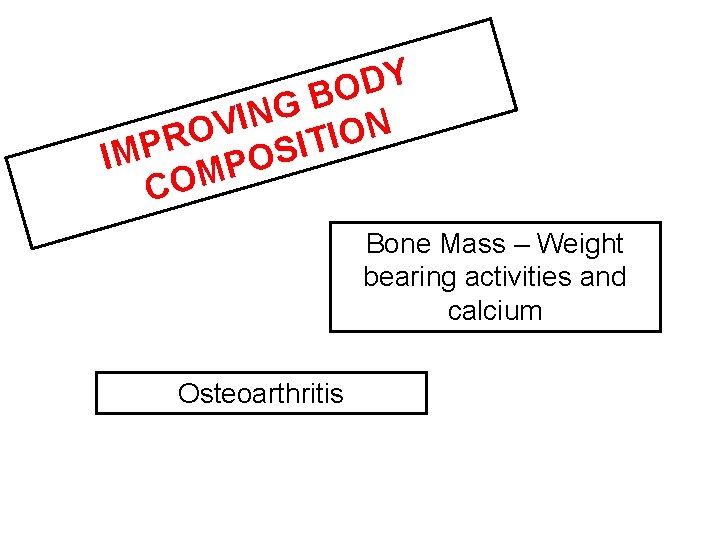
Y D O B G N I V N O O I R T I P S M I O P M CO Bone Mass – Weight bearing activities and calcium Osteoarthritis
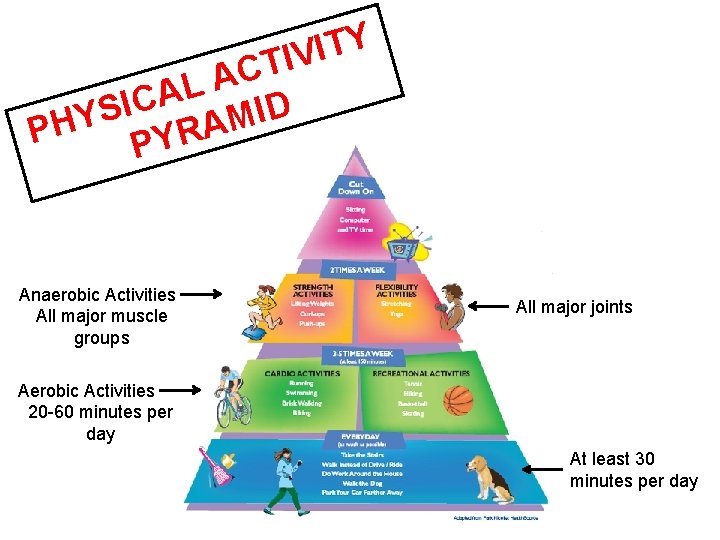
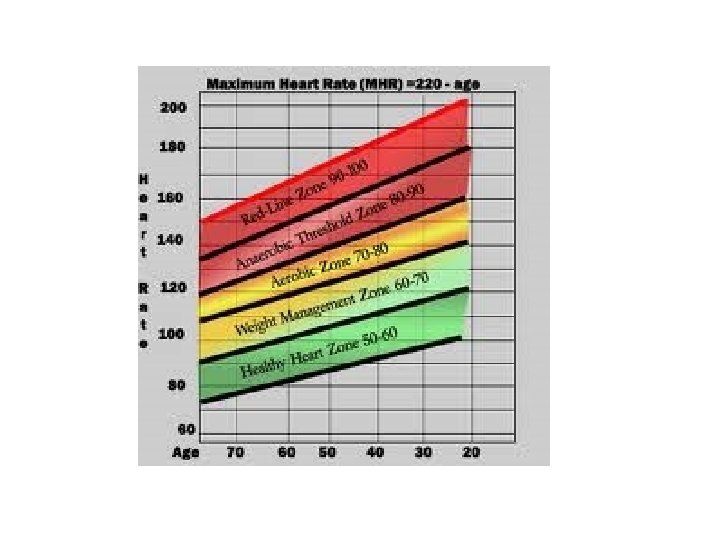
Y T I V I T C A L A C I D I S Y M A PH R PY Anaerobic Activities All major muscle groups All major joints Aerobic Activities 20 -60 minutes per day At least 30 minutes per day
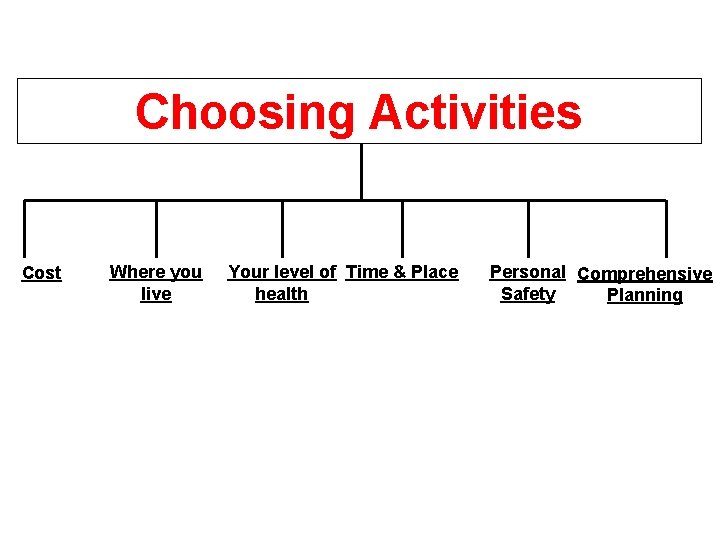
Choosing Activities Cost Where you live Your level of Time & Place health Personal Comprehensive Safety Planning
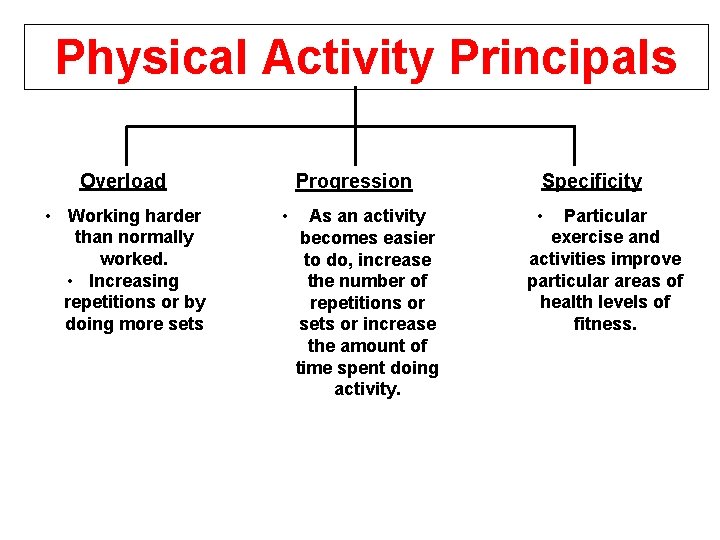
Physical Activity Principals Overload • Working harder than normally worked. • Increasing repetitions or by doing more sets • Progression Specificity As an activity becomes easier to do, increase the number of repetitions or sets or increase the amount of time spent doing activity. • Particular exercise and activities improve particular areas of health levels of fitness.
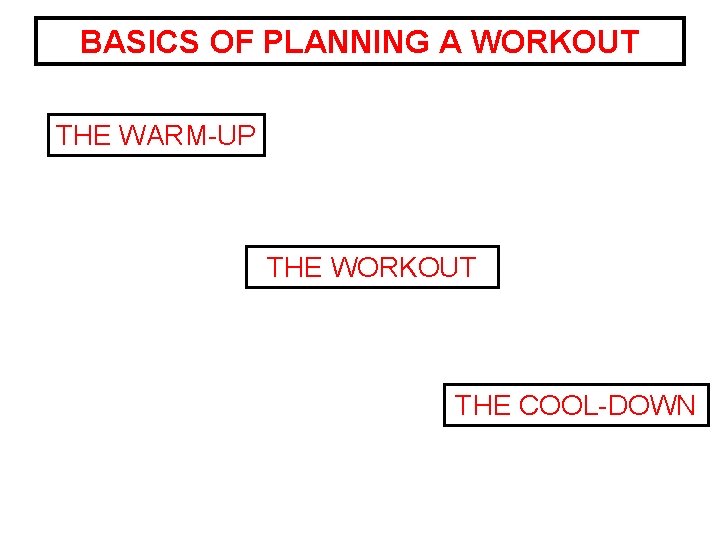
BASICS OF PLANNING A WORKOUT THE WARM-UP THE WORKOUT THE COOL-DOWN
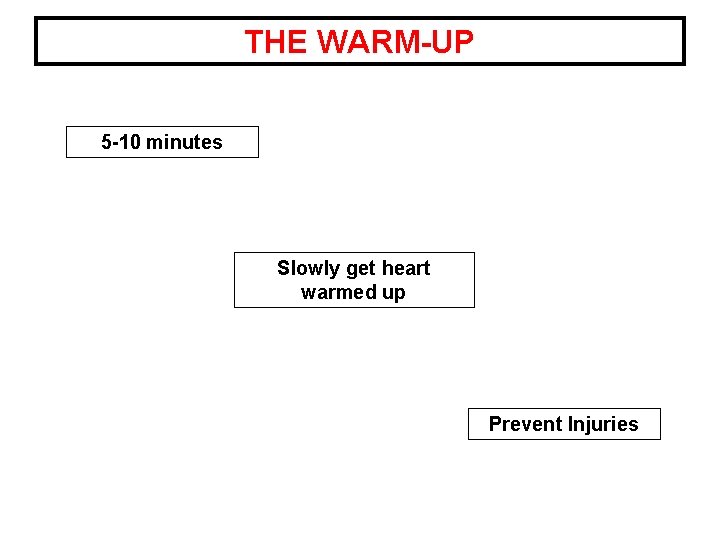
THE WARM-UP 5 -10 minutes Slowly get heart warmed up Prevent Injuries
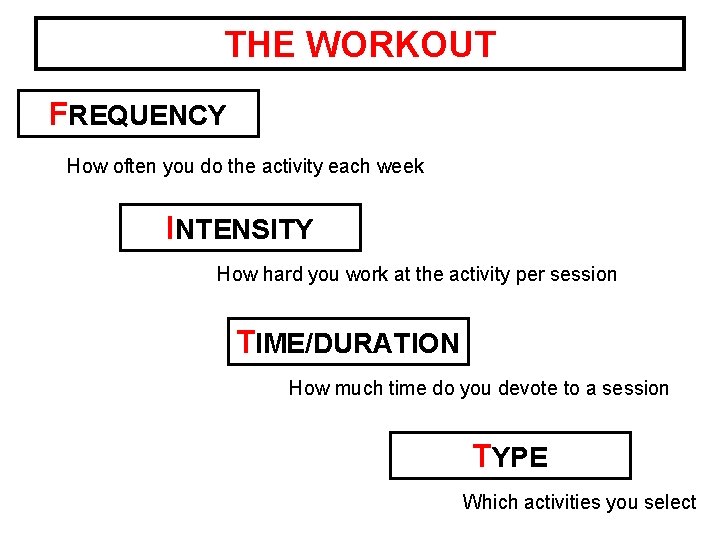
THE WORKOUT FREQUENCY How often you do the activity each week INTENSITY How hard you work at the activity per session TIME/DURATION How much time do you devote to a session TYPE Which activities you select
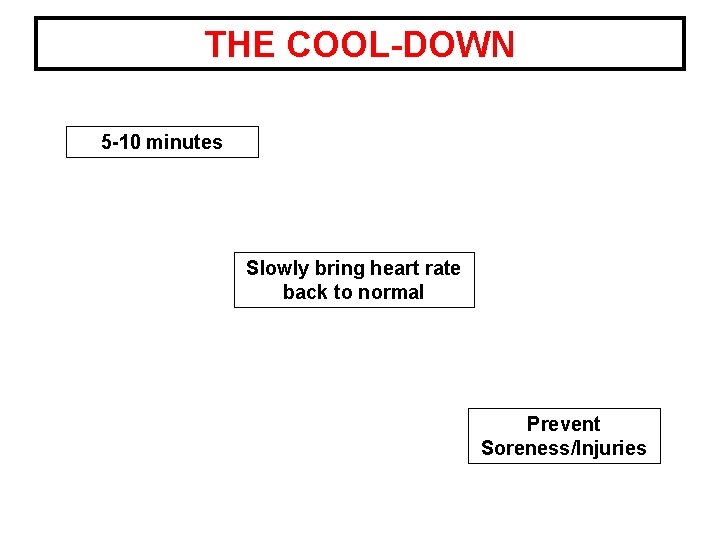
THE COOL-DOWN 5 -10 minutes Slowly bring heart rate back to normal Prevent Soreness/Injuries
- Slides: 30