
CHAPTER 4 PERIODIC TABLE Matter All the stuff
CHAPTER 4 PERIODIC TABLE
Matter � All the ‘stuff’ of the universe is composed of Matter. Ex: air, your table, a pencil, a star, etc… � Matter – anything that has mass, and takes up space. � The smallest particle of matter is an atom. � The structure of the atom determines the traits of matter. � Ex: Aluminum is different than Gold because it’s atoms are different.
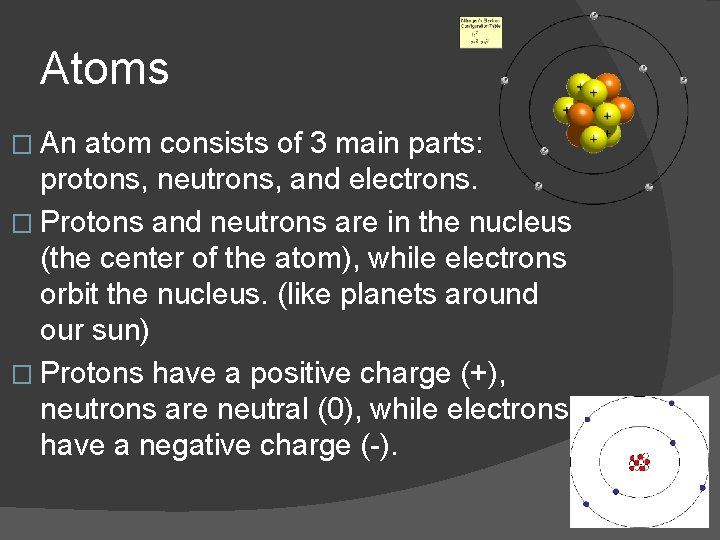
Atoms � An atom consists of 3 main parts: protons, neutrons, and electrons. � Protons and neutrons are in the nucleus (the center of the atom), while electrons orbit the nucleus. (like planets around our sun) � Protons have a positive charge (+), neutrons are neutral (0), while electrons have a negative charge (-).
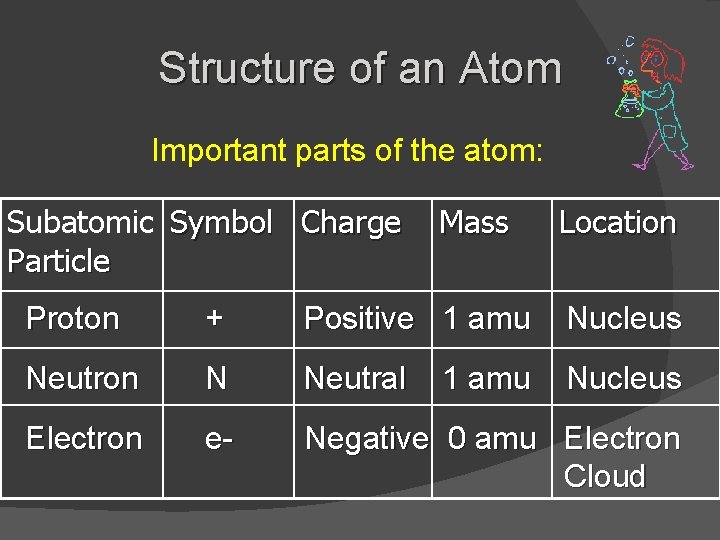
Structure of an Atom Important parts of the atom: Subatomic Symbol Charge Particle Mass Location Proton + Positive 1 amu Nucleus Neutron N Neutral Nucleus Electron e- Negative 0 amu Electron Cloud 1 amu
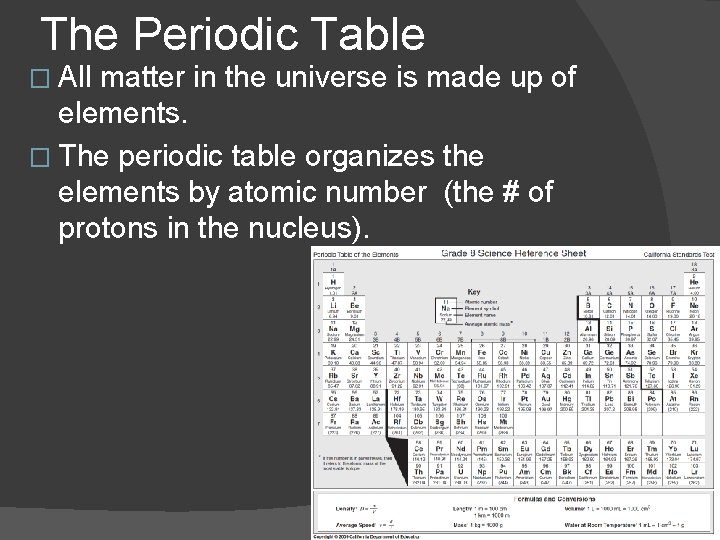
The Periodic Table � All matter in the universe is made up of elements. � The periodic table organizes the elements by atomic number (the # of protons in the nucleus).
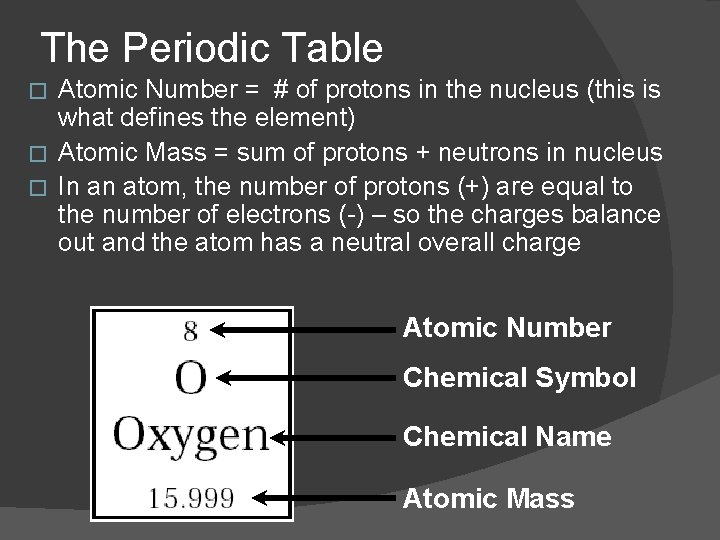
The Periodic Table Atomic Number = # of protons in the nucleus (this is what defines the element) � Atomic Mass = sum of protons + neutrons in nucleus � In an atom, the number of protons (+) are equal to the number of electrons (-) – so the charges balance out and the atom has a neutral overall charge � Atomic Number Chemical Symbol Chemical Name Atomic Mass
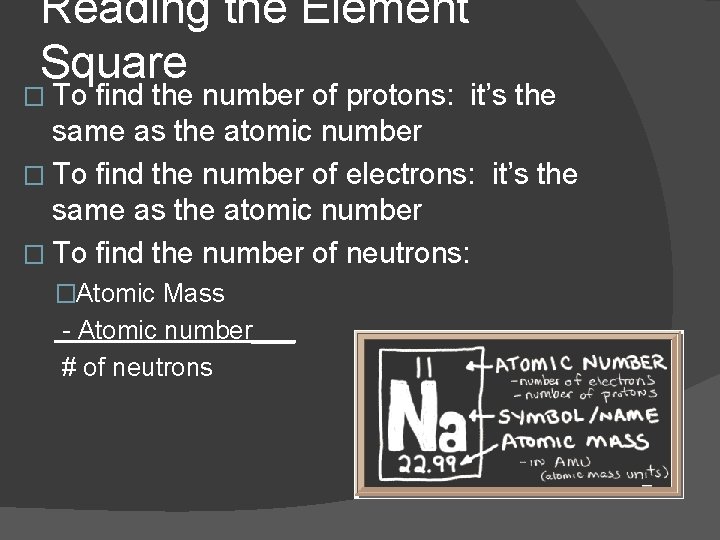
Reading the Element Square � To find the number of protons: it’s the same as the atomic number � To find the number of electrons: it’s the same as the atomic number � To find the number of neutrons: �Atomic Mass - Atomic number___ # of neutrons
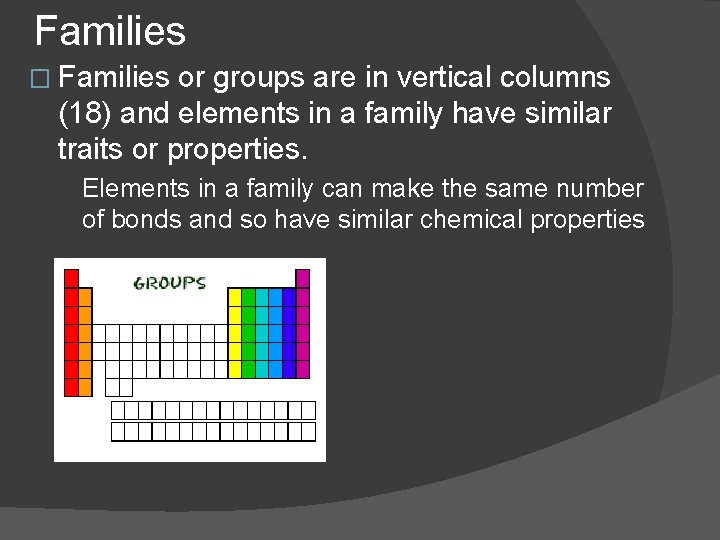
Families � Families or groups are in vertical columns (18) and elements in a family have similar traits or properties. Elements in a family can make the same number of bonds and so have similar chemical properties
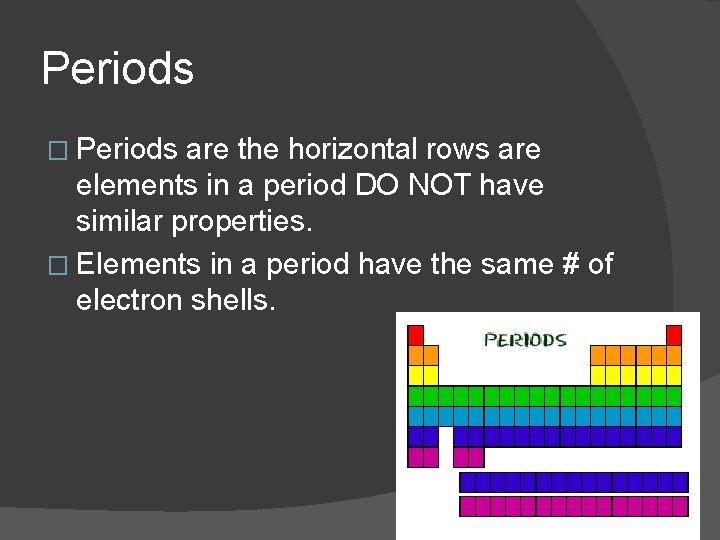
Periods � Periods are the horizontal rows are elements in a period DO NOT have similar properties. � Elements in a period have the same # of electron shells.
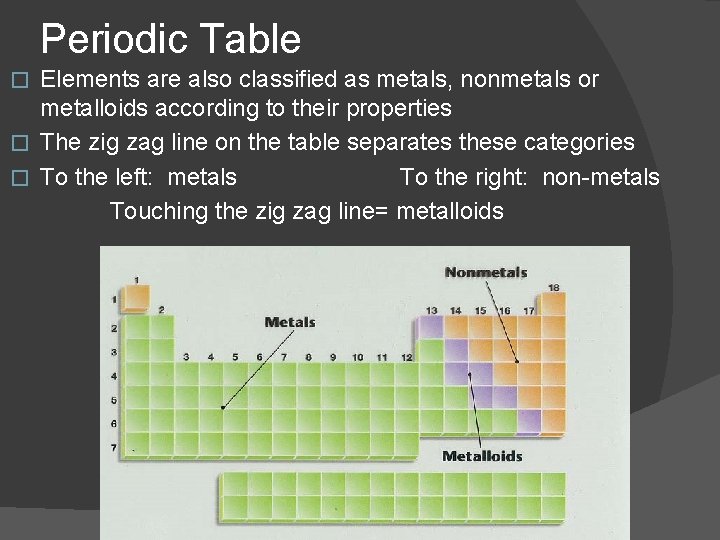
Periodic Table Elements are also classified as metals, nonmetals or metalloids according to their properties � The zig zag line on the table separates these categories � To the left: metals To the right: non-metals Touching the zig zag line= metalloids �
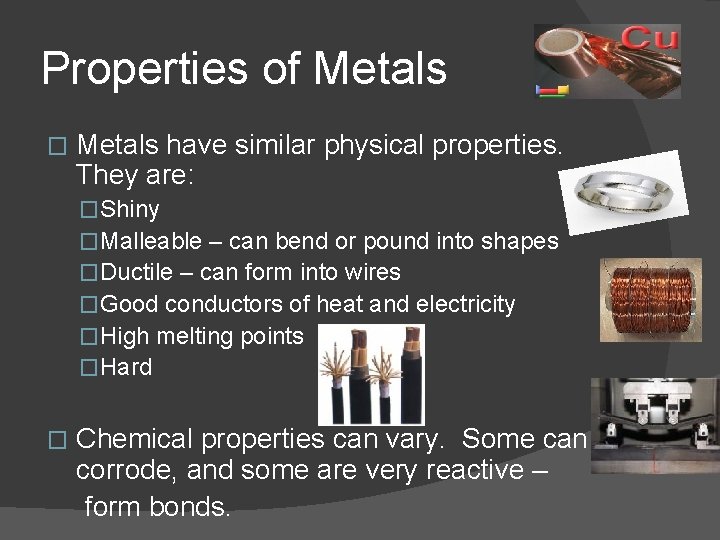
Properties of Metals � Metals have similar physical properties. They are: �Shiny �Malleable – can bend or pound into shapes �Ductile – can form into wires �Good conductors of heat and electricity �High melting points �Hard � Chemical properties can vary. Some can corrode, and some are very reactive – form bonds.
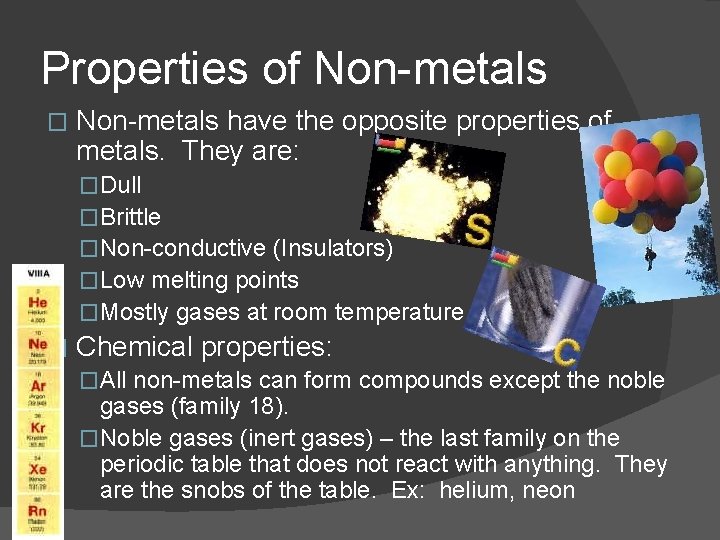
Properties of Non-metals � Non-metals have the opposite properties of metals. They are: �Dull �Brittle �Non-conductive (Insulators) �Low melting points �Mostly gases at room temperature � Chemical properties: �All non-metals can form compounds except the noble gases (family 18). �Noble gases (inert gases) – the last family on the periodic table that does not react with anything. They are the snobs of the table. Ex: helium, neon
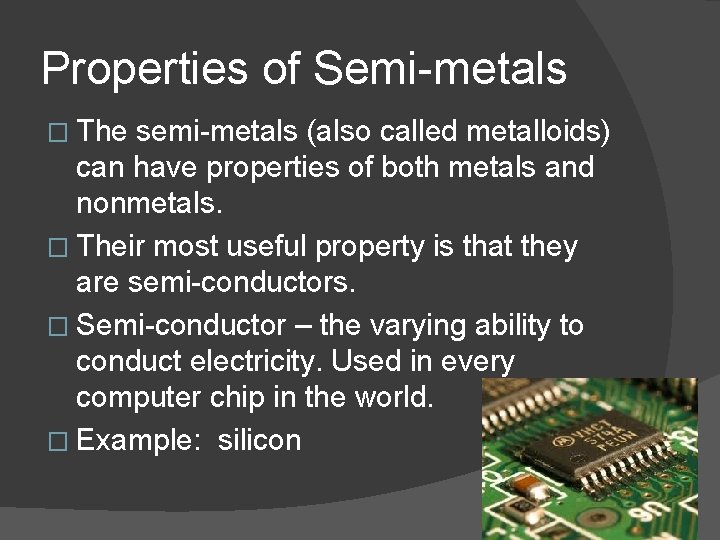
Properties of Semi-metals � The semi-metals (also called metalloids) can have properties of both metals and nonmetals. � Their most useful property is that they are semi-conductors. � Semi-conductor – the varying ability to conduct electricity. Used in every computer chip in the world. � Example: silicon
- Slides: 13