
Chapter 4 Part B Probability 2002 Thomson SouthWestern
Chapter 4, Part B Probability © 2002 Thomson / South-Western 1
Four Types of Probability • Marginal Probability • Union Probability • Joint Probability • Conditional Probability © 2002 Thomson / South-Western 2
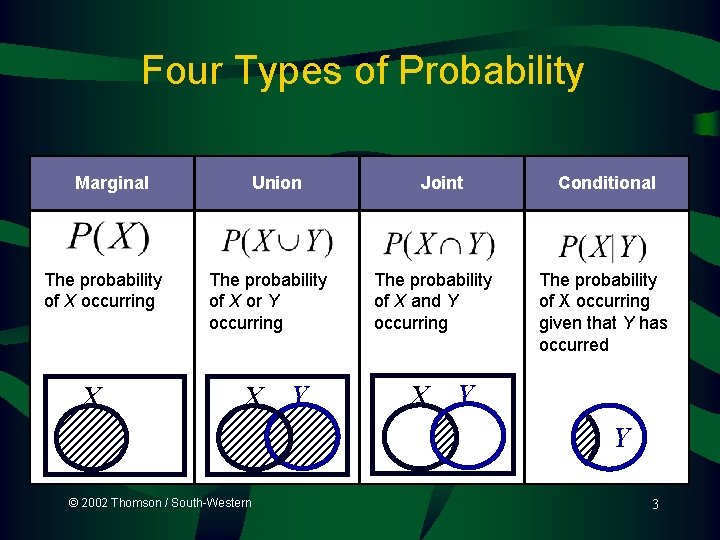
Four Types of Probability Marginal The probability of X occurring X Union The probability of X or Y occurring X Y Joint The probability of X and Y occurring Conditional The probability of X occurring given that Y has occurred X Y Y © 2002 Thomson / South-Western 3
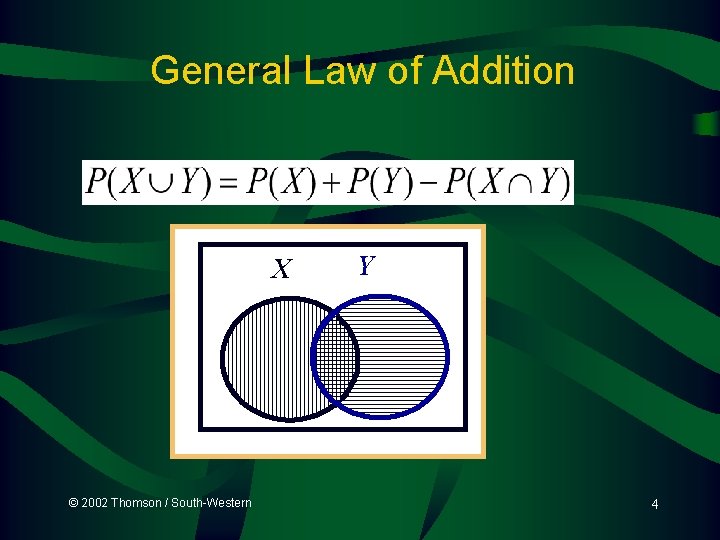
General Law of Addition X © 2002 Thomson / South-Western Y 4

General Law of Addition -- Example S N. 70 . 56 © 2002 Thomson / South-Western . 67 5
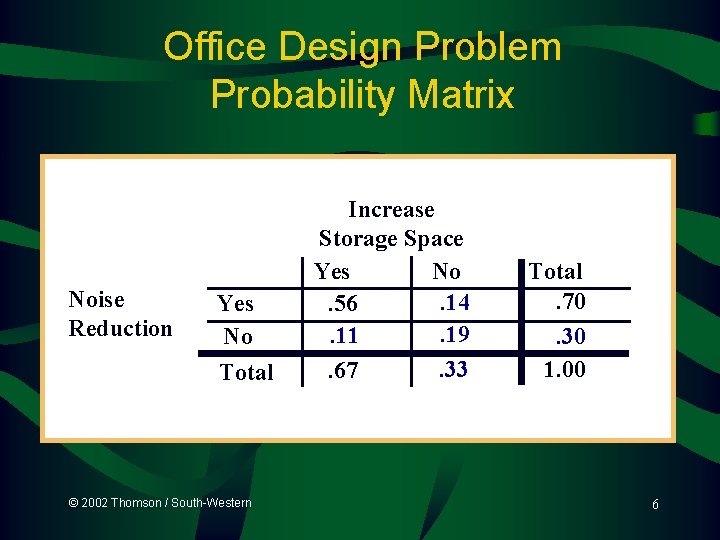
Office Design Problem Probability Matrix Noise Reduction Yes No Total © 2002 Thomson / South-Western Increase Storage Space Yes No. 14. 56. 19. 11. 33. 67 Total. 70. 30 1. 00 6

Office Design Problem Probability Matrix, continued (2) Noise Reduction Yes No Total © 2002 Thomson / South-Western Increase Storage Space Yes No. 14. 56. 19. 11. 33. 67 Total. 70. 30 1. 00 7
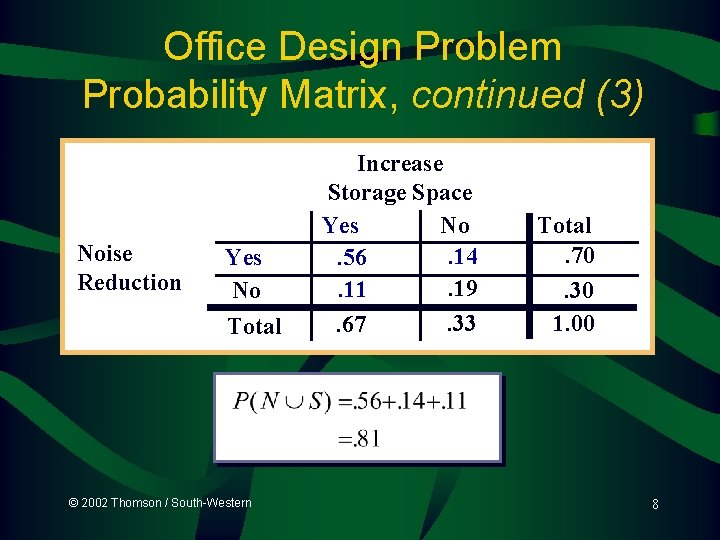
Office Design Problem Probability Matrix, continued (3) Noise Reduction Yes No Total © 2002 Thomson / South-Western Increase Storage Space Yes No. 14. 56. 19. 11. 33. 67 Total. 70. 30 1. 00 8
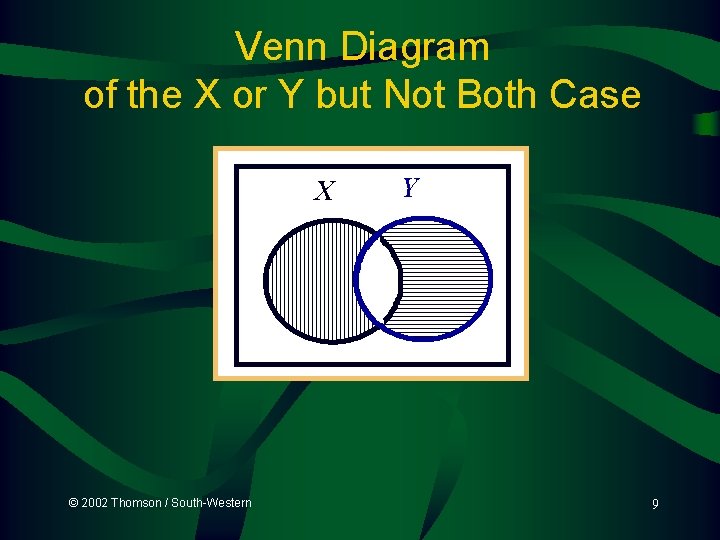
Venn Diagram of the X or Y but Not Both Case X © 2002 Thomson / South-Western Y 9
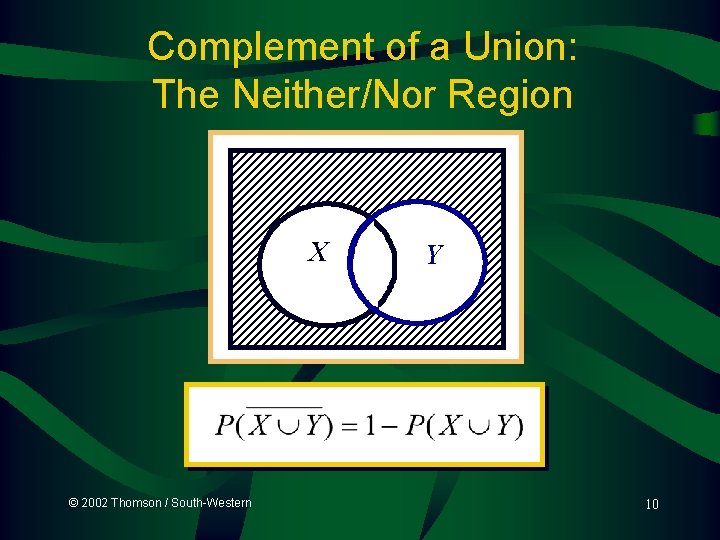
Complement of a Union: The Neither/Nor Region X © 2002 Thomson / South-Western Y 10
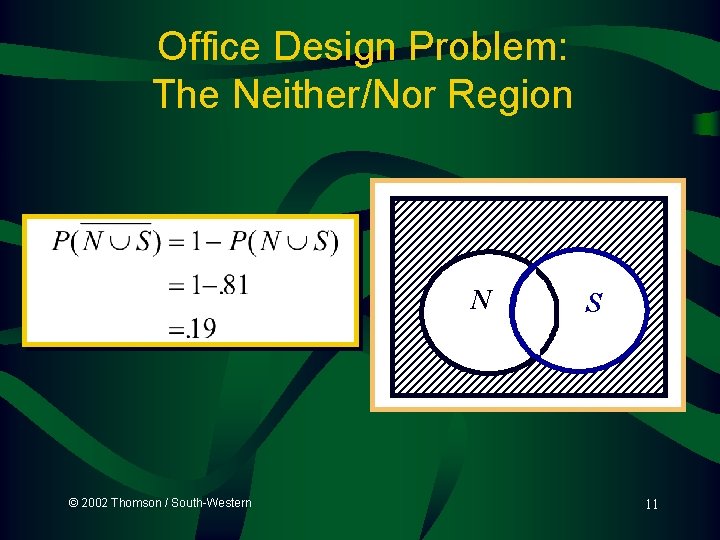
Office Design Problem: The Neither/Nor Region N © 2002 Thomson / South-Western S 11
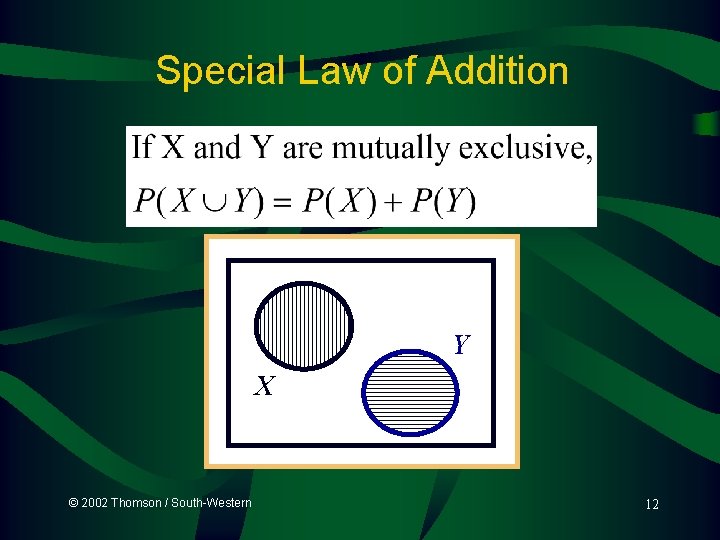
Special Law of Addition Y X © 2002 Thomson / South-Western 12
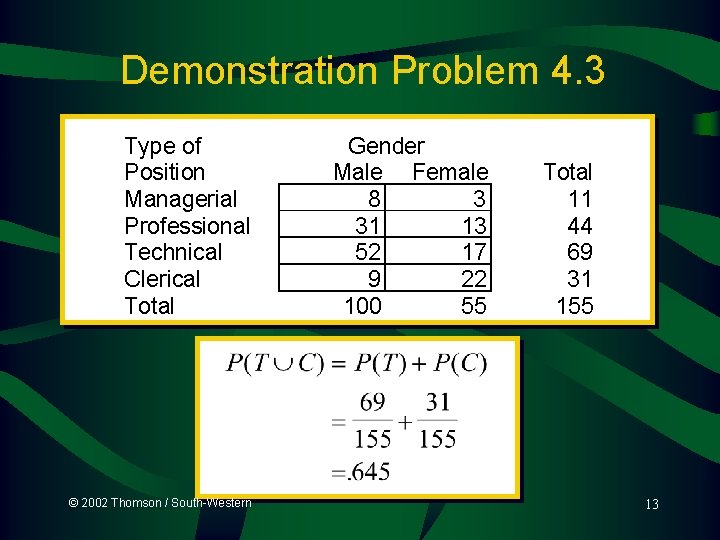
Demonstration Problem 4. 3 Type of Position Managerial Professional Technical Clerical Total © 2002 Thomson / South-Western Gender Male Female 8 3 31 13 52 17 9 22 100 55 Total 11 44 69 31 155 13
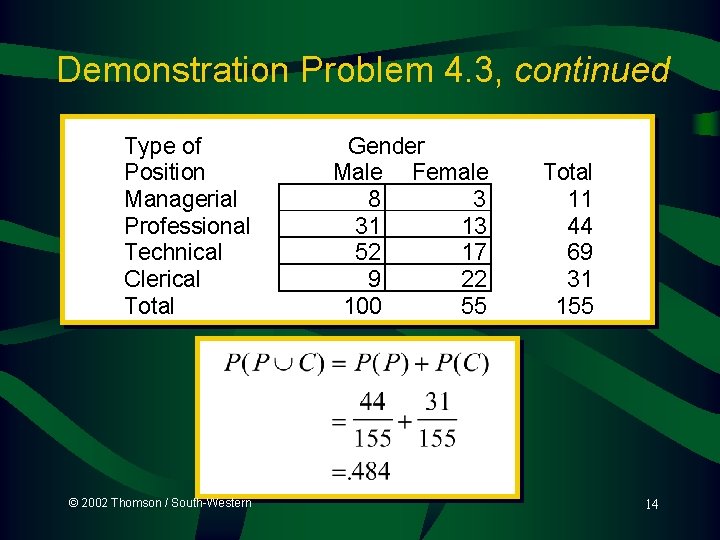
Demonstration Problem 4. 3, continued Type of Position Managerial Professional Technical Clerical Total © 2002 Thomson / South-Western Gender Male Female 8 3 31 13 52 17 9 22 100 55 Total 11 44 69 31 155 14
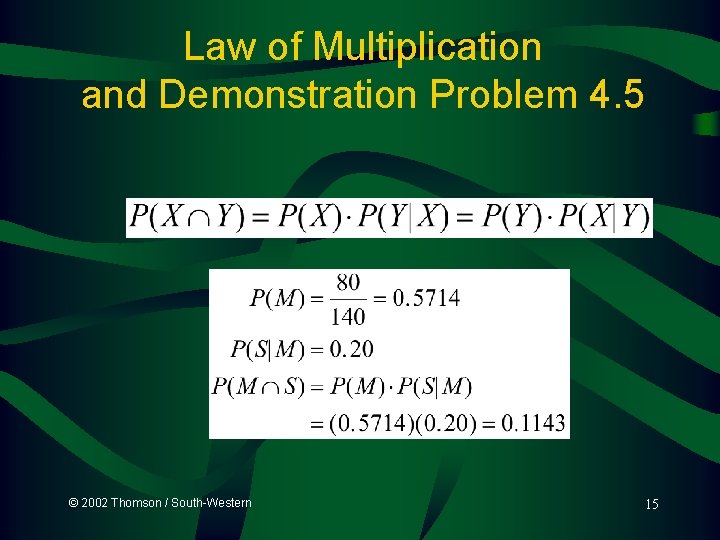
Law of Multiplication and Demonstration Problem 4. 5 © 2002 Thomson / South-Western 15
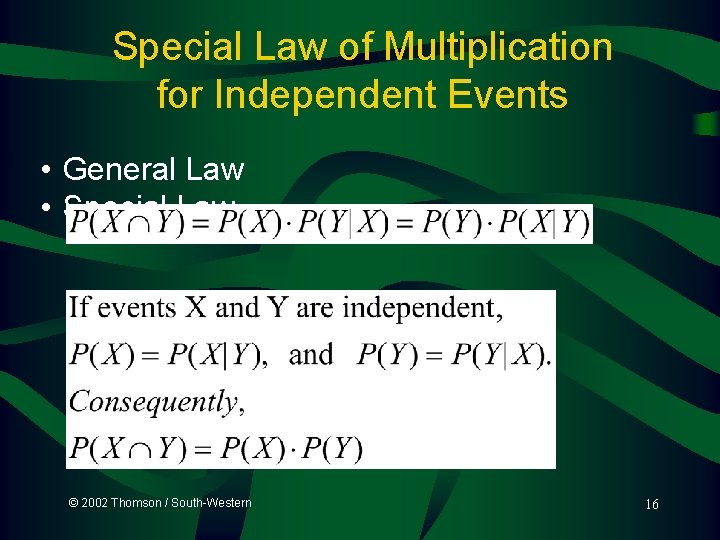
Special Law of Multiplication for Independent Events • General Law • Special Law © 2002 Thomson / South-Western 16
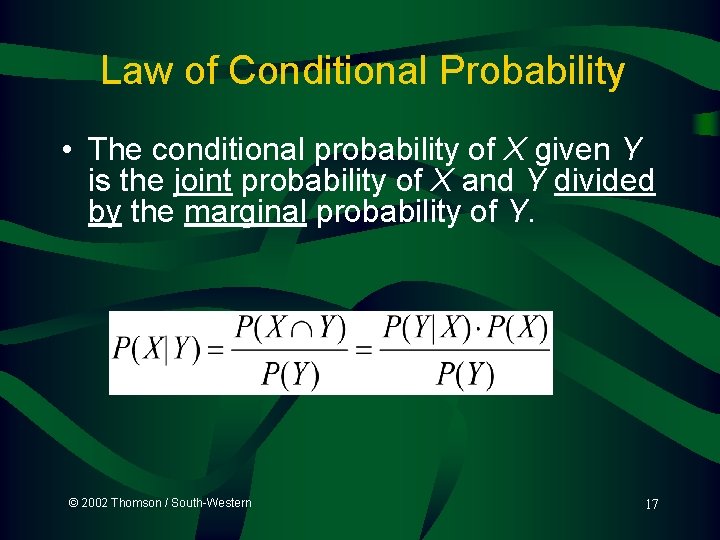
Law of Conditional Probability • The conditional probability of X given Y is the joint probability of X and Y divided by the marginal probability of Y. © 2002 Thomson / South-Western 17

Law of Conditional Probability and the Office Design Problem N S. 56 © 2002 Thomson / South-Western . 70 18
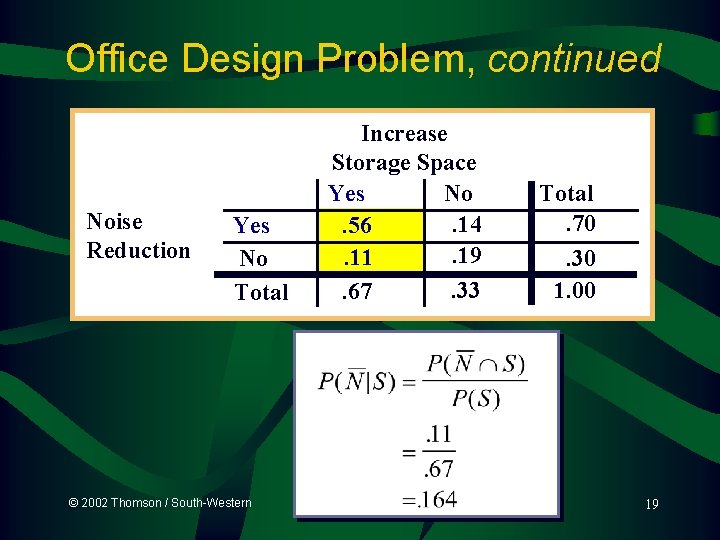
Office Design Problem, continued Noise Reduction Yes No Total © 2002 Thomson / South-Western Increase Storage Space Yes No. 14. 56. 19. 11. 33. 67 Total. 70. 30 1. 00 19
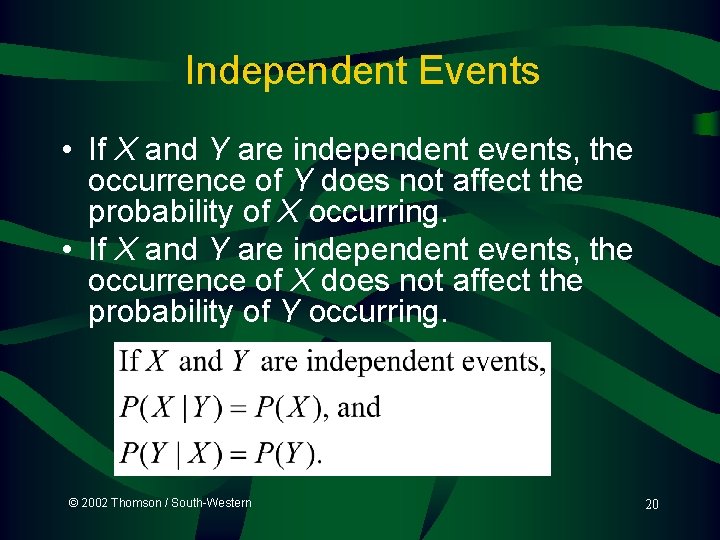
Independent Events • If X and Y are independent events, the occurrence of Y does not affect the probability of X occurring. • If X and Y are independent events, the occurrence of X does not affect the probability of Y occurring. © 2002 Thomson / South-Western 20
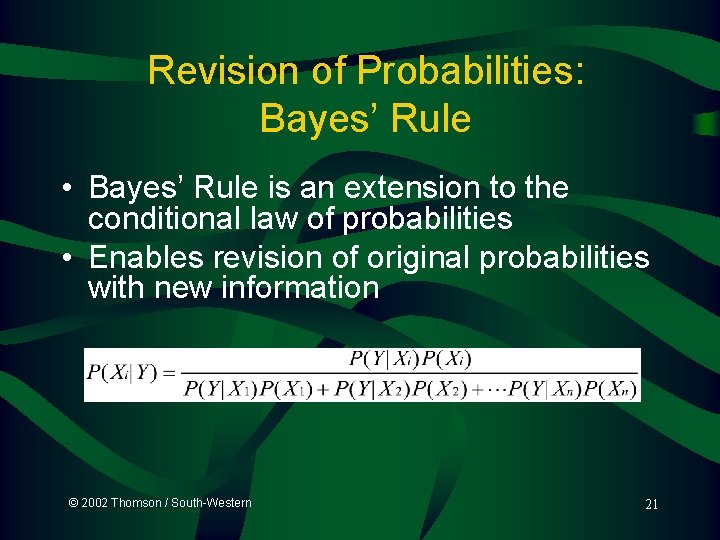
Revision of Probabilities: Bayes’ Rule • Bayes’ Rule is an extension to the conditional law of probabilities • Enables revision of original probabilities with new information © 2002 Thomson / South-Western 21
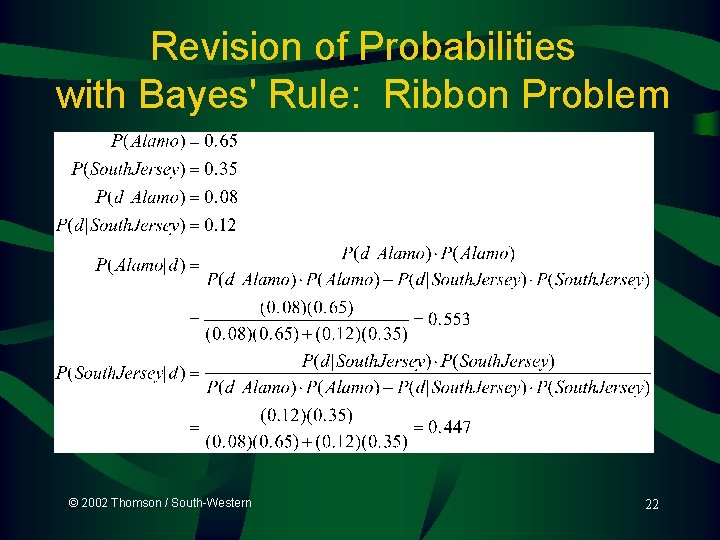
Revision of Probabilities with Bayes' Rule: Ribbon Problem © 2002 Thomson / South-Western 22
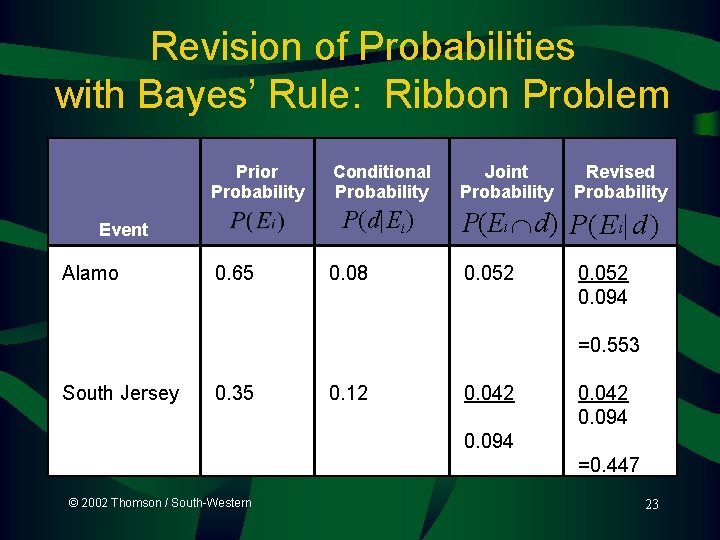
Revision of Probabilities with Bayes’ Rule: Ribbon Problem Prior Probability P(d| Ei ) Event Alamo Conditional Probability 0. 65 0. 08 Joint Probability Revised Probability P(Ei d) P( Ei| d ) 0. 052 0. 094 =0. 553 South Jersey 0. 35 0. 12 0. 042 0. 094 =0. 447 © 2002 Thomson / South-Western 23
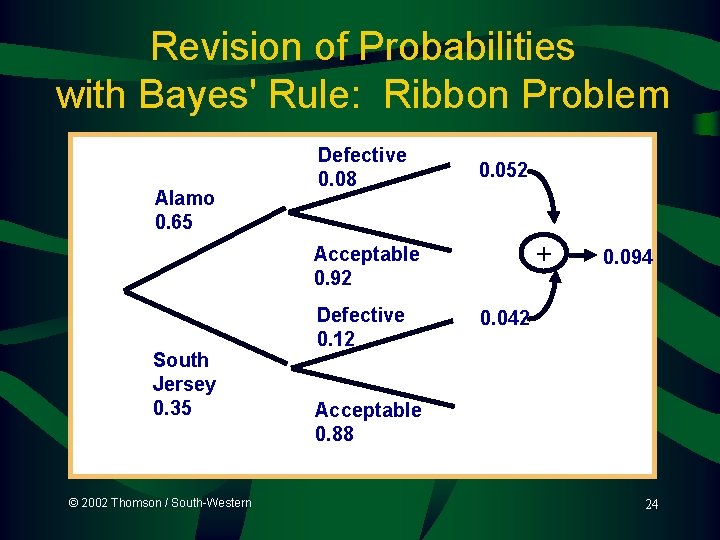
Revision of Probabilities with Bayes' Rule: Ribbon Problem Alamo 0. 65 Defective 0. 08 0. 052 + Acceptable 0. 92 South Jersey 0. 35 © 2002 Thomson / South-Western Defective 0. 12 0. 094 0. 042 Acceptable 0. 88 24
- Slides: 24