
Chapter 4 Part A Tissue The Living Fabric
Chapter 4 Part A Tissue: The Living Fabric © Annie Leibovitz/Contact Press Images © 2016 Pearson Education, Inc. Power. Point® Lecture Slides prepared by Karen Dunbar Kareiva Ivy Tech Community College
Tissue: The Living Fabric • Individual body cells are specialized • Tissues – Groups of cells similar in structure that perform common or related function • Histology – Study of tissues © 2016 Pearson Education, Inc.
© 2016 Pearson Education, Inc.
4. 2 Epithelial Tissue • Epithelial tissue (epithelium) is a sheet of cells that covers body surfaces or cavities • Two main forms: – Covering and lining epithelia – Glandular epithelia • Main functions: protection, absorption, filtration, excretion, secretion, and sensory reception © 2016 Pearson Education, Inc.
Special Characteristics of Epithelial Tissues • Epithelial tissue has five distinguishing characteristics: 1. 2. 3. 4. 5. Polarity Specialized contacts Supported by connective tissues Avascular, but innervated Regeneration © 2016 Pearson Education, Inc.

Special Characteristics of Epithelial Tissues (cont. ) • Polarity – Apical surface, upper free side, is exposed to surface or cavity – Basal surface, lower attached side, faces inwards toward body © 2016 Pearson Education, Inc.
Special Characteristics of Epithelial Tissues (cont. ) • Specialized contacts – Epithelial tissues need to fit closely together • Many form continuous sheets – Specialized contact points bind adjacent epithelial cells together • Lateral contacts include: – Tight junctions – Desmosomes © 2016 Pearson Education, Inc.
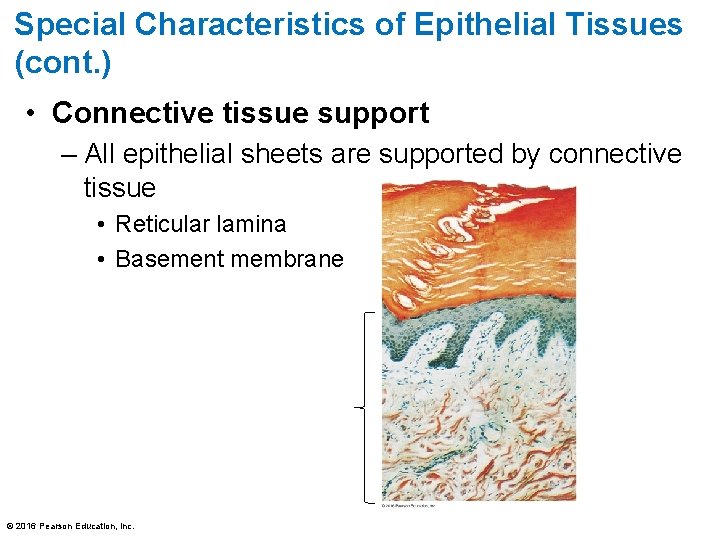
Special Characteristics of Epithelial Tissues (cont. ) • Connective tissue support – All epithelial sheets are supported by connective tissue • Reticular lamina • Basement membrane © 2016 Pearson Education, Inc.
Clinical – Homeostatic Imbalance 4. 1 • Cancerous epithelial cells are not contained by the basement membrane boundary • They penetrate the boundary and invade underlying tissues, resulting in spread of cancer © 2016 Pearson Education, Inc.
Special Characteristics of Epithelial Tissues (cont. ) • Avascular, but innervated – No blood vessels are found in epithelial tissue • Must be nourished by diffusion from underlying connective tissues – Epithelia are supplied by nerve fibers, however © 2016 Pearson Education, Inc.
Special Characteristics of Epithelial Tissues (cont. ) • Regeneration – Epithelial cells have high regenerative capacities – Stimulated by loss of apical-basal polarity and broken lateral contacts – Some cells are exposed to friction, some to hostile substances, resulting in damage • Must be replaced • Requires adequate nutrients and cell division © 2016 Pearson Education, Inc.
Classification of Epithelia • All epithelial tissues have two names – First name indicates number of cell layers • Simple epithelia 1 layer • Stratified epithelia 2+ layers – Second name indicates shape of cells in apical layer • Squamous: flattened and scale-like • Cuboidal: box-like, cube • Columnar: tall, column-like © 2016 Pearson Education, Inc.
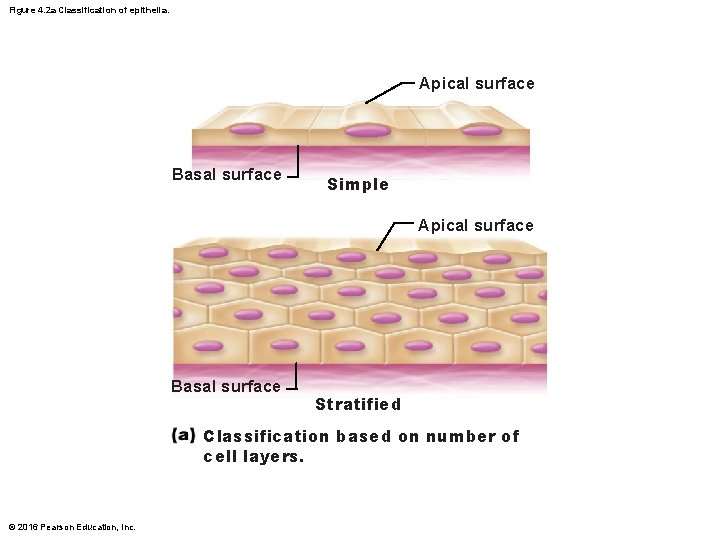
Figure 4. 2 a Classification of epithelia. Apical surface Basal surface Simple Apical surface Basal surface Stratified Classification based on number of cell layers. © 2016 Pearson Education, Inc.
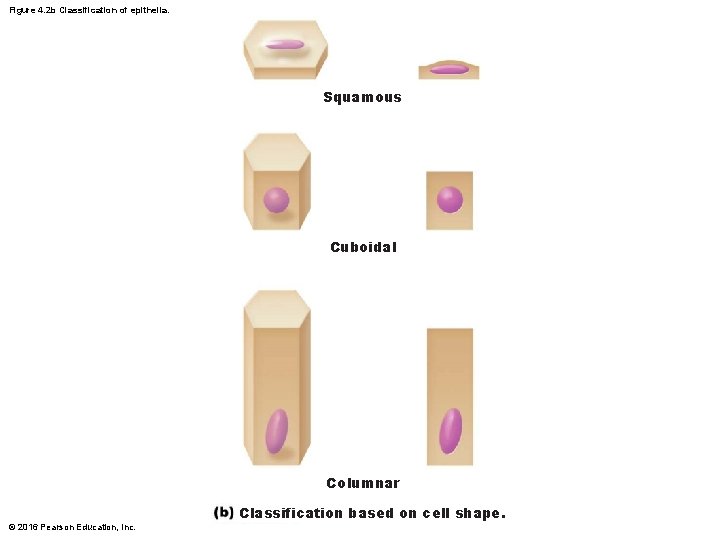
Figure 4. 2 b Classification of epithelia. Squamous Cuboidal Columnar © 2016 Pearson Education, Inc. Classification based on cell shape.
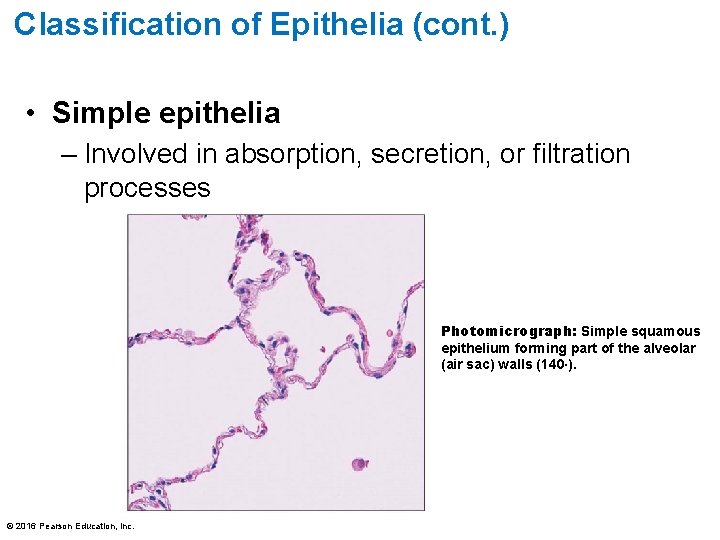
Classification of Epithelia (cont. ) • Simple epithelia – Involved in absorption, secretion, or filtration processes Photomicrograph: Simple squamous epithelium forming part of the alveolar (air sac) walls (140×). © 2016 Pearson Education, Inc.
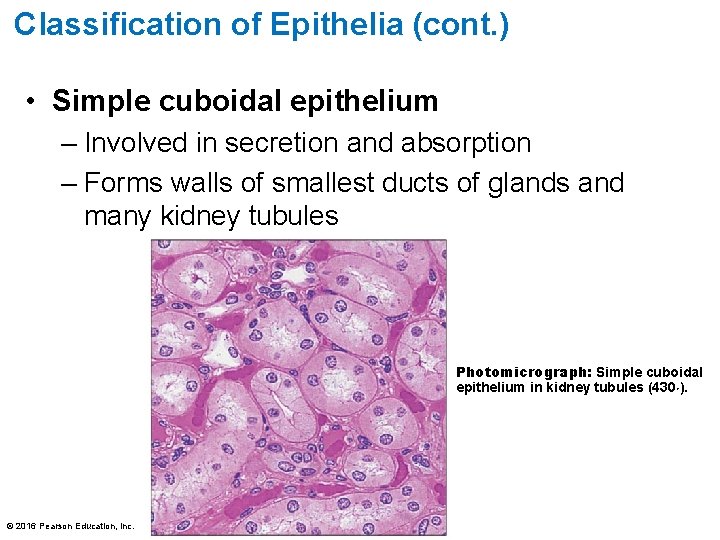
Classification of Epithelia (cont. ) • Simple cuboidal epithelium – Involved in secretion and absorption – Forms walls of smallest ducts of glands and many kidney tubules Photomicrograph: Simple cuboidal epithelium in kidney tubules (430×). © 2016 Pearson Education, Inc.
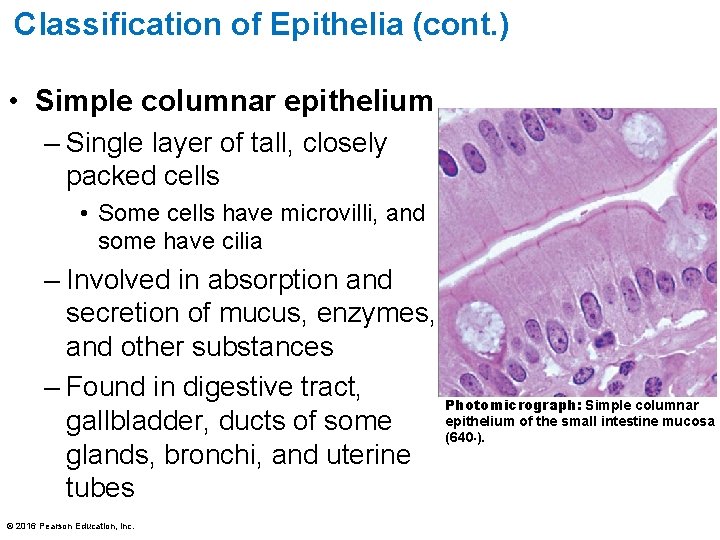
Classification of Epithelia (cont. ) • Simple columnar epithelium – Single layer of tall, closely packed cells • Some cells have microvilli, and some have cilia – Involved in absorption and secretion of mucus, enzymes, and other substances – Found in digestive tract, gallbladder, ducts of some glands, bronchi, and uterine tubes © 2016 Pearson Education, Inc. Photomicrograph: Simple columnar epithelium of the small intestine mucosa (640×).
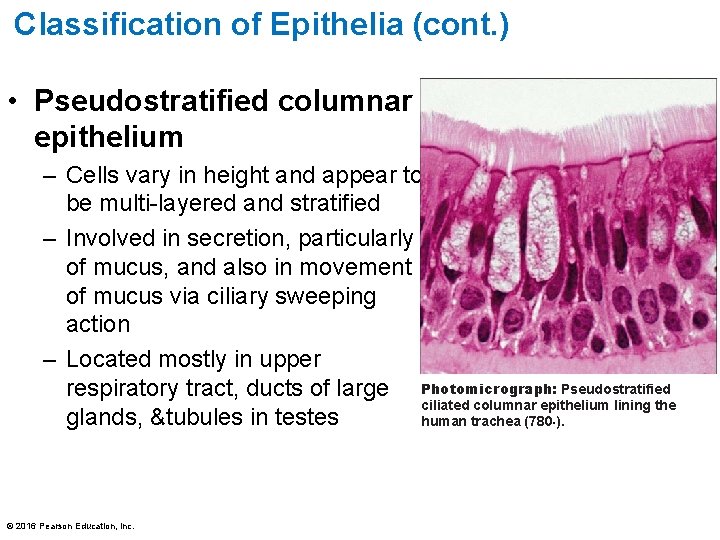
Classification of Epithelia (cont. ) • Pseudostratified columnar epithelium – Cells vary in height and appear to be multi-layered and stratified – Involved in secretion, particularly of mucus, and also in movement of mucus via ciliary sweeping action – Located mostly in upper respiratory tract, ducts of large Photomicrograph: Pseudostratified ciliated columnar epithelium lining the glands, &tubules in testes human trachea (780×). © 2016 Pearson Education, Inc.
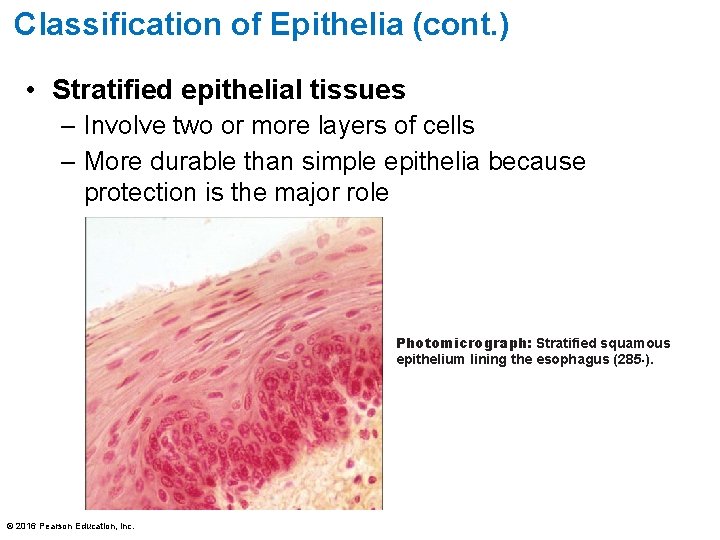
Classification of Epithelia (cont. ) • Stratified epithelial tissues – Involve two or more layers of cells – More durable than simple epithelia because protection is the major role Photomicrograph: Stratified squamous epithelium lining the esophagus (285×). © 2016 Pearson Education, Inc.
Classification of Epithelia (cont. ) • Stratified epithelial tissues (cont. ) – Stratified cuboidal epithelium • Quite rare • Found in some sweat and mammary glands • Typically only two cell layers thick – Stratified columnar epithelium • very limited distribution • in pharynx, in male urethra, and lining some glandular ducts • occurs at transition areas between two other types of epithelia • Only apical layer is columnar © 2016 Pearson Education, Inc.
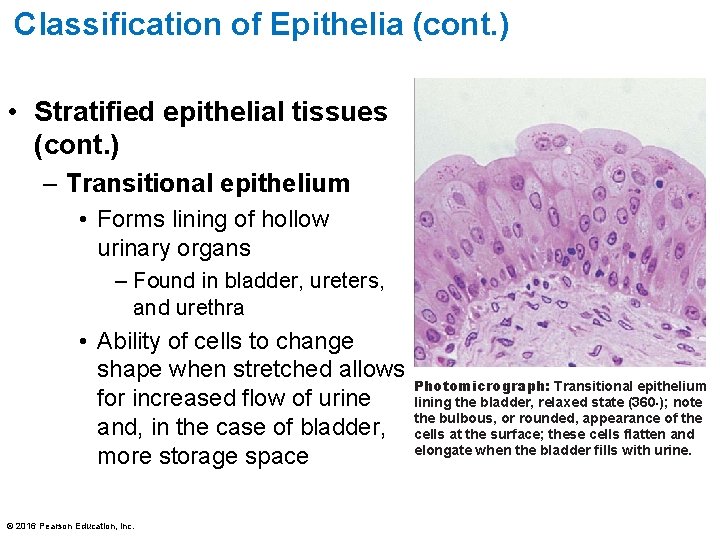
Classification of Epithelia (cont. ) • Stratified epithelial tissues (cont. ) – Transitional epithelium • Forms lining of hollow urinary organs – Found in bladder, ureters, and urethra • Ability of cells to change shape when stretched allows for increased flow of urine and, in the case of bladder, more storage space © 2016 Pearson Education, Inc. Photomicrograph: Transitional epithelium lining the bladder, relaxed state (360×); note the bulbous, or rounded, appearance of the cells at the surface; these cells flatten and elongate when the bladder fills with urine.
Glandular Epithelia • Gland – One or more cells that makes and secretes an aqueous fluid called a secretion • Classified by: – Site of product release: • Endocrine: internally secreting (example: hormones) • Exocrine: externally secreting (example: sweat) – Relative number of cells forming the gland • Unicellular (example: goblet cells) or multicellular (example: salivary) © 2016 Pearson Education, Inc.
Glandular Epithelia (cont. ) • Endocrine glands – Ductless glands • Secretions are not released into a duct; are released into surrounding interstitial fluid, which is picked up by circulatory system – Secrete (by exocytosis) hormones, messenger chemicals that travel through lymph or blood to their specific target organs – Target organs respond in some characteristic way © 2016 Pearson Education, Inc.
Glandular Epithelia (cont. ) • Exocrine glands – Secretions are released onto body surfaces, such as skin, or into body cavities – More numerous than endocrine glands – Secrete products into ducts – Examples include mucous, sweat, oil, and salivary glands – Can be: • Unicellular • Multicellular © 2016 Pearson Education, Inc.
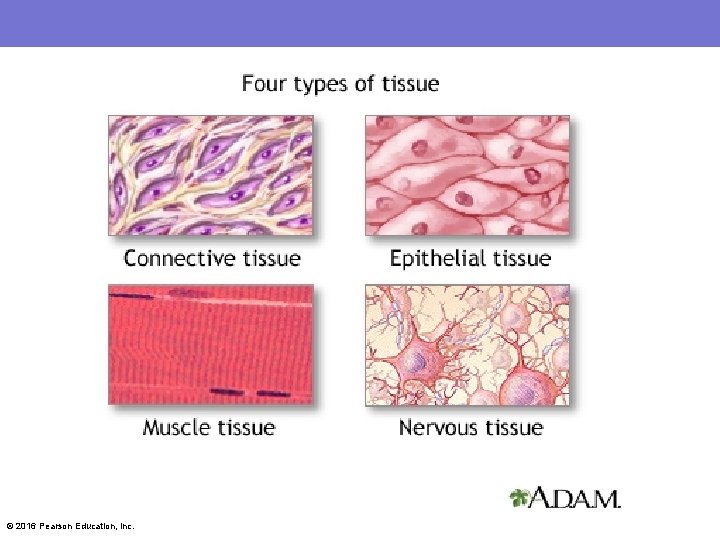
4. 3 Connective Tissue • Connective tissue is the most abundant and widely distributed of primary tissues • Major functions: binding and support, protecting, insulating, storing reserve fuel, and transporting substances (blood) • Four main classes – Connective tissue proper – Cartilage – Bone – Blood © 2016 Pearson Education, Inc.
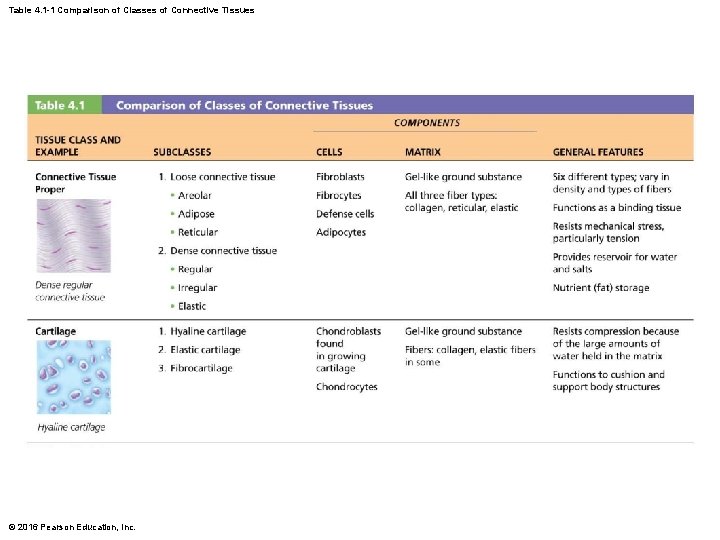
Table 4. 1 -1 Comparison of Classes of Connective Tissues © 2016 Pearson Education, Inc.
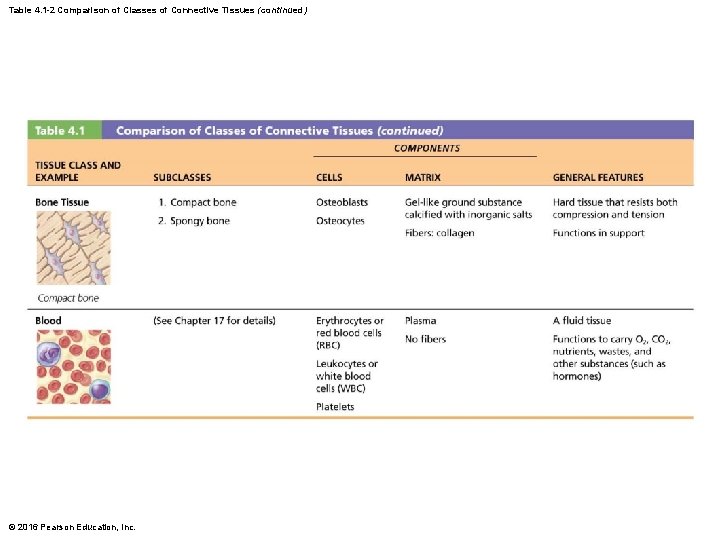
Table 4. 1 -2 Comparison of Classes of Connective Tissues (continued) © 2016 Pearson Education, Inc.
Structural Elements of Connective Tissue • All connective tissues have three main elements – Ground substance – Fibers – Cells • The first two elements (ground substance and fibers) together make up the extracellular matrix – Composition and arrangement of these three elements vary considerably in different types of connective tissues © 2016 Pearson Education, Inc.
Structural Elements of Connective Tissue (cont. ) • Connective tissue fibers • Three types of fibers provide support – Collagen • Strongest and most abundant type • Tough; provides high tensile strength – Elastic fibers • Networks of long, thin, elastin fibers that allow for stretch and recoil – Reticular • Short, fine, highly branched collagenous fibers (different chemistry and form from collagen fibers) • Branching forms networks that offer more “give” © 2016 Pearson Education, Inc.
Structural Elements of Connective Tissue (cont. ) • Cells – “Blast” cells • Immature form of cell that actively secretes ground substance and ECM fibers • Fibroblasts found in connective tissue proper • Chondroblasts found in cartilage • Osteoblasts found in bone • Hematopoietic stem cells in bone marrow – “Cyte” cells • Mature, less active form of “blast” cell that now becomes part of and helps maintain health of matrix © 2016 Pearson Education, Inc.
Structural Elements of Connective Tissue (cont. ) • Other cell types in connective tissues – Fat cells • Store nutrients – White blood cells • Neutrophils, eosinophils, lymphocytes • Tissue response to injury – Mast cells • Initiate local inflammatory response against foreign microorganisms they detect – Macrophages • Phagocytic cells that “eat” dead cells, microorganisms; function in immune system © 2016 Pearson Education, Inc.
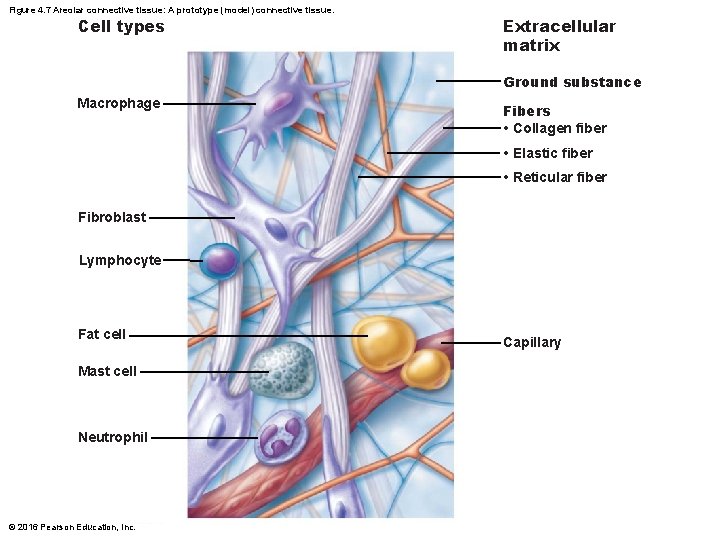
Figure 4. 7 Areolar connective tissue: A prototype (model) connective tissue. Cell types Extracellular matrix Ground substance Macrophage Fibers • Collagen fiber • Elastic fiber • Reticular fiber Fibroblast Lymphocyte Fat cell Mast cell Neutrophil © 2016 Pearson Education, Inc. Capillary
Types of Connective Tissues • There are four main classes of connective tissue: – Connective tissue proper – Cartilage – Bone – Blood © 2016 Pearson Education, Inc.
Types of Connective Tissues (cont. ) • Connective tissue proper – Consists of all connective tissues except bone, cartilage, and blood – Two subclasses • CT proper: loose connective tissues – Areolar – Adipose – Reticular • CT proper: dense connective tissues – Dense regular – Dense irregular – Elastic © 2016 Pearson Education, Inc.
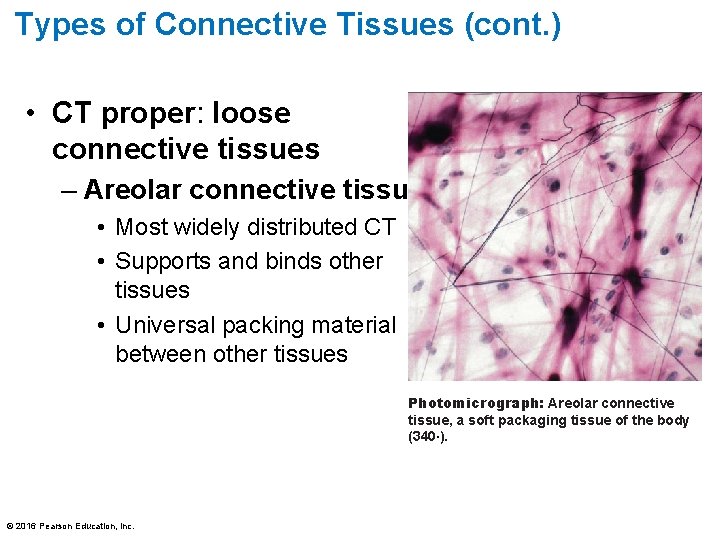
Types of Connective Tissues (cont. ) • CT proper: loose connective tissues – Areolar connective tissue • Most widely distributed CT • Supports and binds other tissues • Universal packing material between other tissues Photomicrograph: Areolar connective tissue, a soft packaging tissue of the body (340×). © 2016 Pearson Education, Inc.
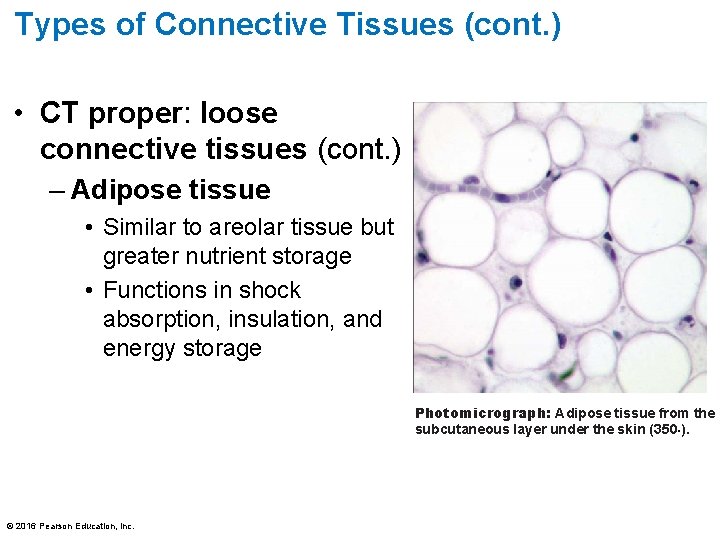
Types of Connective Tissues (cont. ) • CT proper: loose connective tissues (cont. ) – Adipose tissue • Similar to areolar tissue but greater nutrient storage • Functions in shock absorption, insulation, and energy storage Photomicrograph: Adipose tissue from the subcutaneous layer under the skin (350×). © 2016 Pearson Education, Inc.
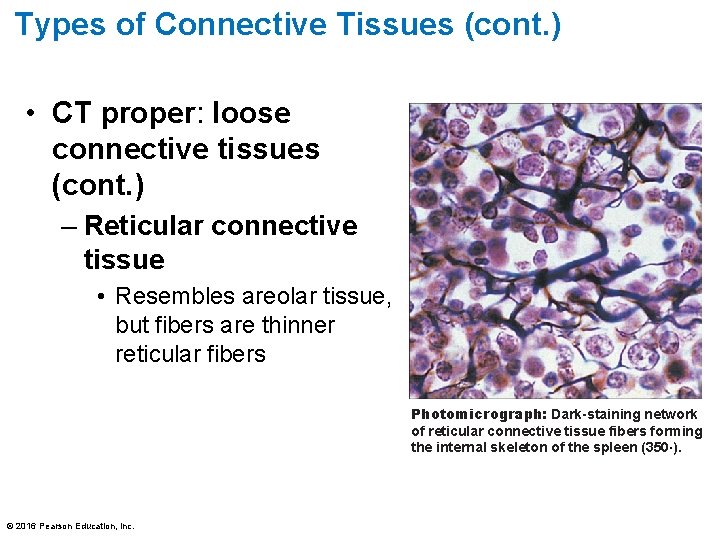
Types of Connective Tissues (cont. ) • CT proper: loose connective tissues (cont. ) – Reticular connective tissue • Resembles areolar tissue, but fibers are thinner reticular fibers Photomicrograph: Dark-staining network of reticular connective tissue fibers forming the internal skeleton of the spleen (350×). © 2016 Pearson Education, Inc.
Types of Connective Tissues (cont. ) • CT proper: dense connective tissues – Three varieties of dense connective tissue • Dense regular • Dense irregular • Elastic © 2016 Pearson Education, Inc.
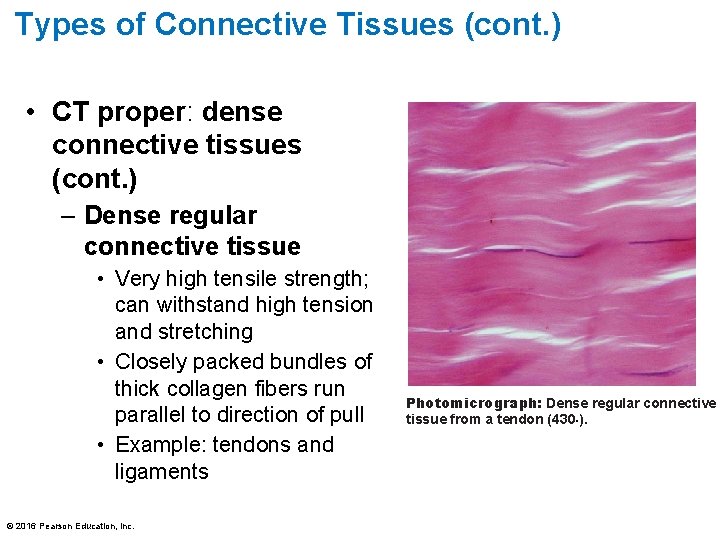
Types of Connective Tissues (cont. ) • CT proper: dense connective tissues (cont. ) – Dense regular connective tissue • Very high tensile strength; can withstand high tension and stretching • Closely packed bundles of thick collagen fibers run parallel to direction of pull • Example: tendons and ligaments © 2016 Pearson Education, Inc. Photomicrograph: Dense regular connective tissue from a tendon (430×).
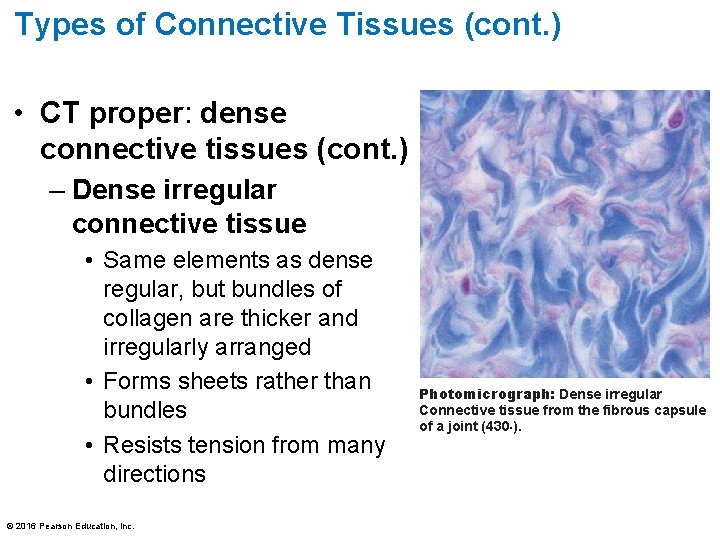
Types of Connective Tissues (cont. ) • CT proper: dense connective tissues (cont. ) – Dense irregular connective tissue • Same elements as dense regular, but bundles of collagen are thicker and irregularly arranged • Forms sheets rather than bundles • Resists tension from many directions © 2016 Pearson Education, Inc. Photomicrograph: Dense irregular Connective tissue from the fibrous capsule of a joint (430×).
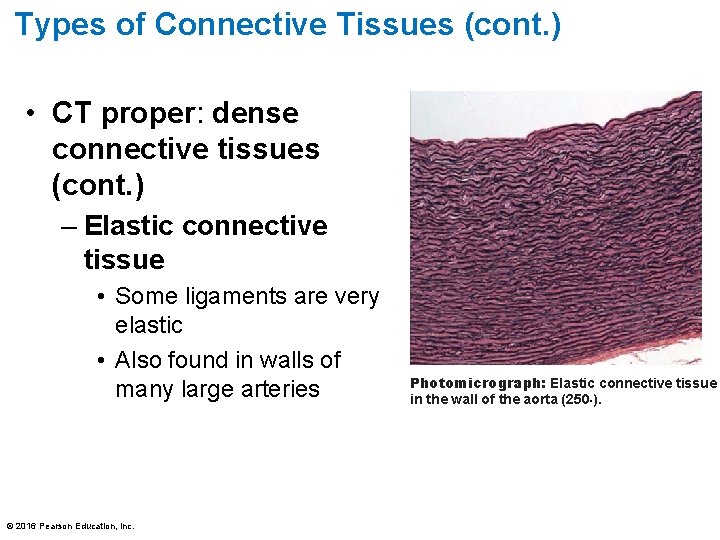
Types of Connective Tissues (cont. ) • CT proper: dense connective tissues (cont. ) – Elastic connective tissue • Some ligaments are very elastic • Also found in walls of many large arteries © 2016 Pearson Education, Inc. Photomicrograph: Elastic connective tissue in the wall of the aorta (250×).
Types of Connective Tissues (cont. ) • Cartilage – Matrix secreted from chondroblasts (during growth) and chondrocytes (adults) • 80% water – Tough yet flexible material that lacks nerve fibers – Avascular: receives nutrients from membrane surrounding it © 2016 Pearson Education, Inc.
Types of Connective Tissues (cont. ) • Three types of cartilage: – Hyaline cartilage • Most abundant; “gristle” • Appears as shiny bluish glass • Found at tips of long bones, nose, trachea, larynx, and cartilage of the ribs – Elastic cartilage • Similar to hyaline but with more elastic fibers • Found in ears and epiglottis – Fibrocartilage • Properties between hyaline and dense regular tissue • Strong, so found in areas such as intervertebral discs and knee © 2016 Pearson Education, Inc.
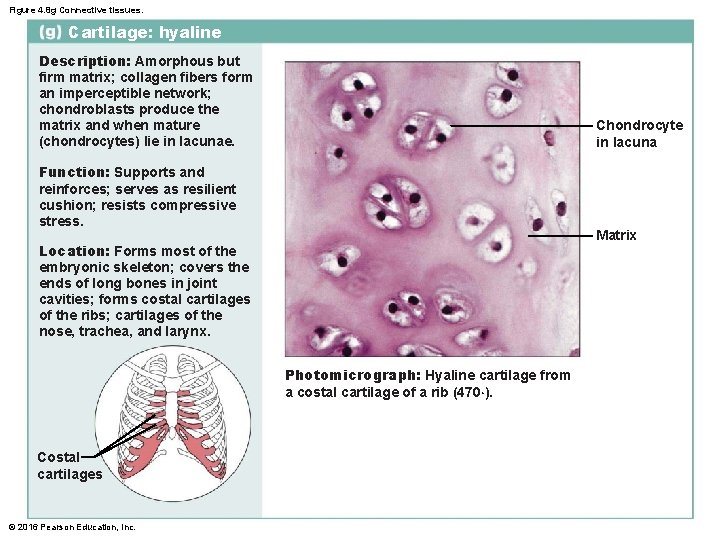
Figure 4. 8 g Connective tissues. Cartilage: hyaline Description: Amorphous but firm matrix; collagen fibers form an imperceptible network; chondroblasts produce the matrix and when mature (chondrocytes) lie in lacunae. Chondrocyte in lacuna Function: Supports and reinforces; serves as resilient cushion; resists compressive stress. Matrix Location: Forms most of the embryonic skeleton; covers the ends of long bones in joint cavities; forms costal cartilages of the ribs; cartilages of the nose, trachea, and larynx. Photomicrograph: Hyaline cartilage from a costal cartilage of a rib (470×). Costal cartilages © 2016 Pearson Education, Inc.
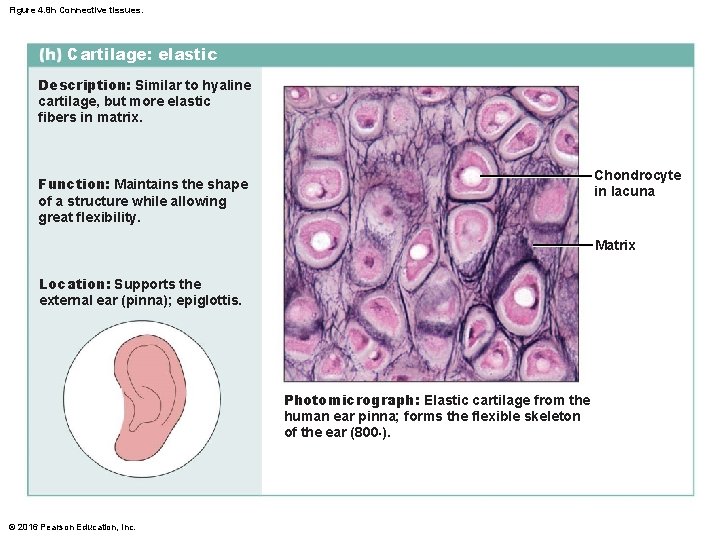
Figure 4. 8 h Connective tissues. Cartilage: elastic Description: Similar to hyaline cartilage, but more elastic fibers in matrix. Chondrocyte in lacuna Function: Maintains the shape of a structure while allowing great flexibility. Matrix Location: Supports the external ear (pinna); epiglottis. Photomicrograph: Elastic cartilage from the human ear pinna; forms the flexible skeleton of the ear (800×). © 2016 Pearson Education, Inc.
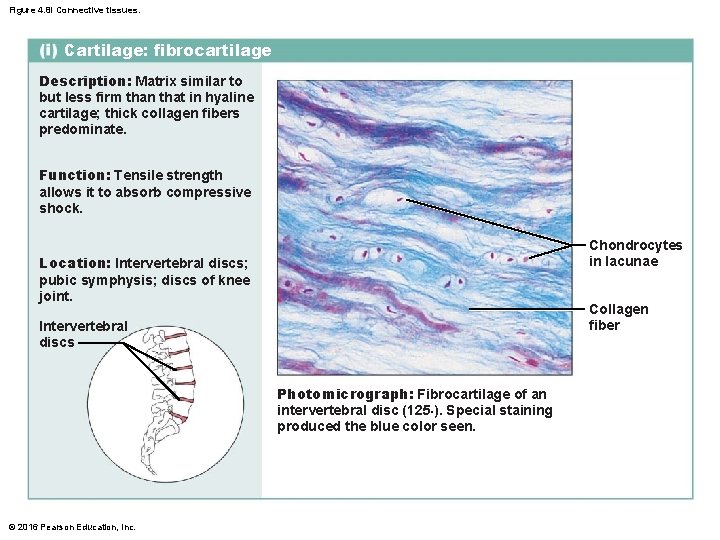
Figure 4. 8 i Connective tissues. Cartilage: fibrocartilage Description: Matrix similar to but less firm than that in hyaline cartilage; thick collagen fibers predominate. Function: Tensile strength allows it to absorb compressive shock. Chondrocytes in lacunae Location: Intervertebral discs; pubic symphysis; discs of knee joint. Collagen fiber Intervertebral discs Photomicrograph: Fibrocartilage of an intervertebral disc (125×). Special staining produced the blue color seen. © 2016 Pearson Education, Inc.
Types of Connective Tissues (cont. ) • Bone – Also called osseous tissue – Supports and protects body structures – Stores fat and synthesizes blood cells in cavities – Has more collagen compared to cartilage – Osteoblasts produce matrix – Osteocytes maintain the matrix • Reside in cavities in matrix called lacunae – Osteons: individual structural units – Richly vascularized © 2016 Pearson Education, Inc.
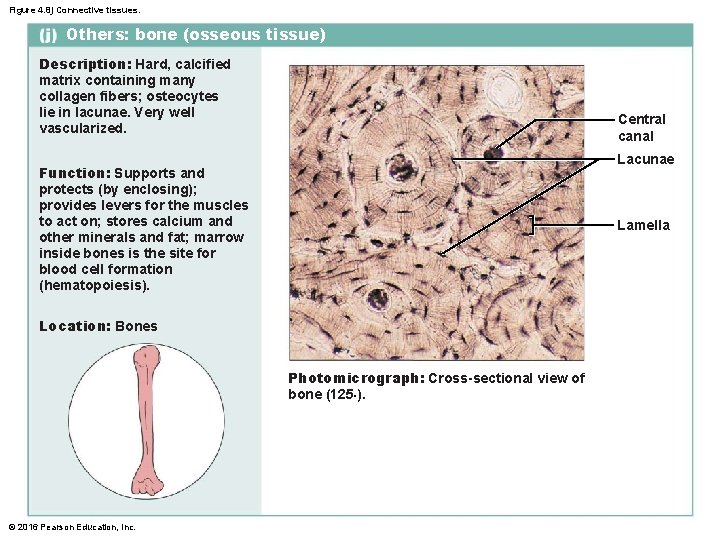
Figure 4. 8 j Connective tissues. Others: bone (osseous tissue) Description: Hard, calcified matrix containing many collagen fibers; osteocytes lie in lacunae. Very well vascularized. Central canal Lacunae Function: Supports and protects (by enclosing); provides levers for the muscles to act on; stores calcium and other minerals and fat; marrow inside bones is the site for blood cell formation (hematopoiesis). Lamella Location: Bones Photomicrograph: Cross-sectional view of bone (125×). © 2016 Pearson Education, Inc.
Types of Connective Tissues (cont. ) • Blood – Most atypical connective tissue because it is fluid • Consists of cells surrounded by matrix (plasma) – Red blood cells are most common cell type – Also contains white blood cells and platelets – Fibers are soluble proteins that precipitate during blood clotting – Functions in transport and in carrying nutrients, wastes, gases, and other substances © 2016 Pearson Education, Inc.
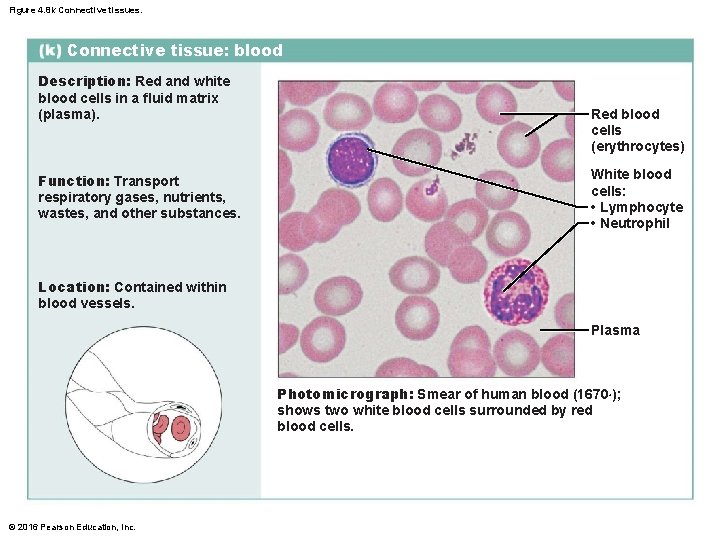
Figure 4. 8 k Connective tissues. Connective tissue: blood Description: Red and white blood cells in a fluid matrix (plasma). Function: Transport respiratory gases, nutrients, wastes, and other substances. Red blood cells (erythrocytes) White blood cells: • Lymphocyte • Neutrophil Location: Contained within blood vessels. Plasma Photomicrograph: Smear of human blood (1670×); shows two white blood cells surrounded by red blood cells. © 2016 Pearson Education, Inc.
4. 4 Muscle Tissue • Highly vascularized • Responsible for most types of movement – Muscle cells possess myofilaments made up of actin and myosin proteins that bring about contraction • Three types of muscle tissues: – Skeletal muscle – Cardiac muscle – Smooth muscle © 2016 Pearson Education, Inc.
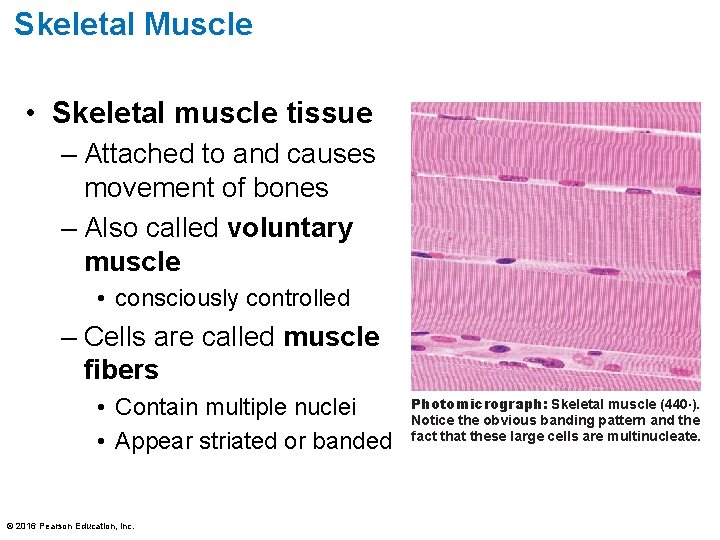
Skeletal Muscle • Skeletal muscle tissue – Attached to and causes movement of bones – Also called voluntary muscle • consciously controlled – Cells are called muscle fibers • Contain multiple nuclei • Appear striated or banded © 2016 Pearson Education, Inc. Photomicrograph: Skeletal muscle (440×). Notice the obvious banding pattern and the fact that these large cells are multinucleate.
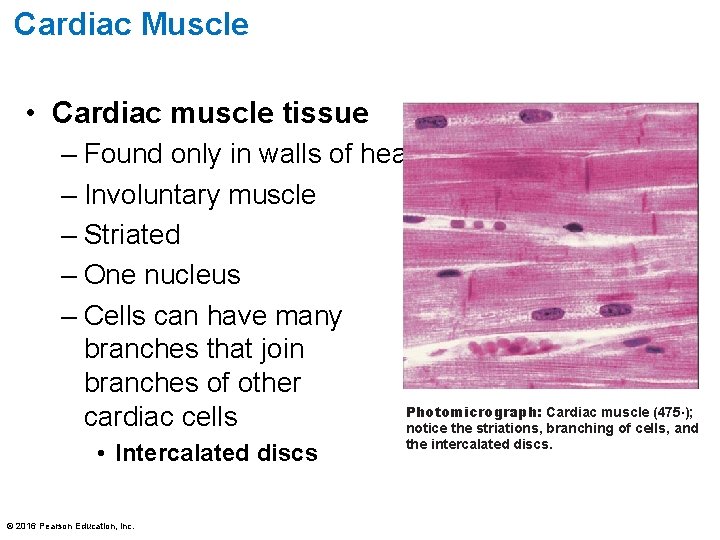
Cardiac Muscle • Cardiac muscle tissue – Found only in walls of heart – Involuntary muscle – Striated – One nucleus – Cells can have many branches that join branches of other Photomicrograph: Cardiac muscle (475×); cardiac cells notice the striations, branching of cells, and • Intercalated discs © 2016 Pearson Education, Inc. the intercalated discs.
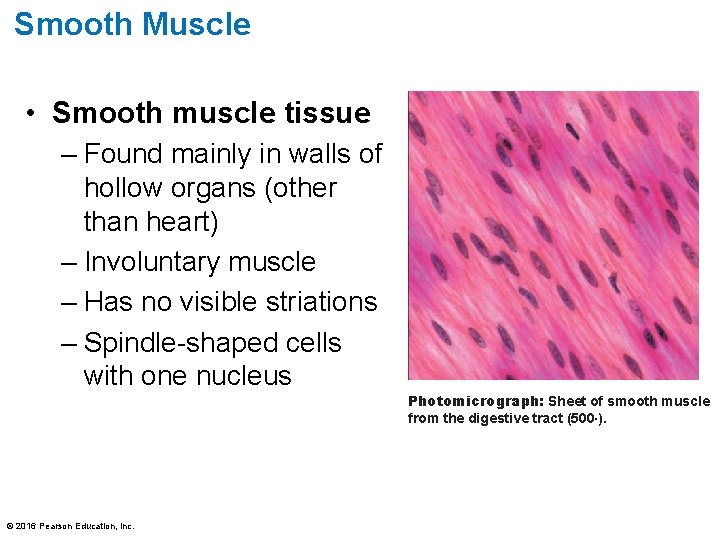
Smooth Muscle • Smooth muscle tissue – Found mainly in walls of hollow organs (other than heart) – Involuntary muscle – Has no visible striations – Spindle-shaped cells with one nucleus © 2016 Pearson Education, Inc. Photomicrograph: Sheet of smooth muscle from the digestive tract (500×).
4. 5 Nervous Tissue • Main component of nervous system (brain, spinal cord, nerves) – Regulates and controls body functions • Made up of two specialized cells: – Neurons: specialized nerve cells that generate and conduct nerve impulses – Supporting cells that support, insulate, and protect neurons © 2016 Pearson Education, Inc.
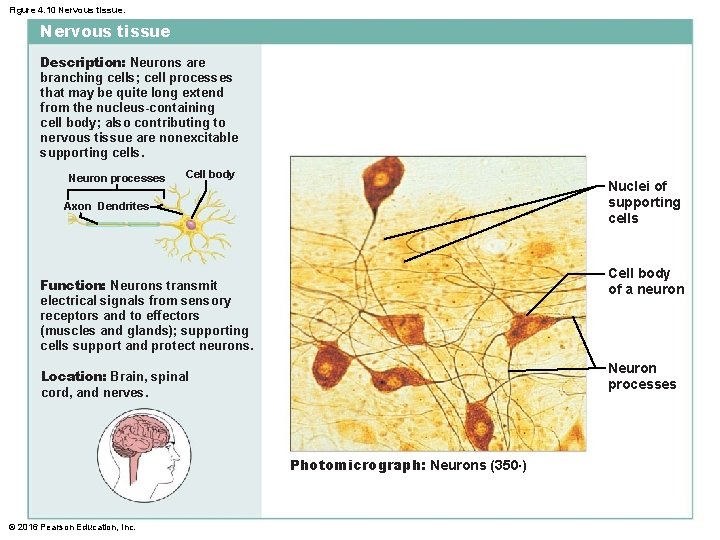
Figure 4. 10 Nervous tissue Description: Neurons are branching cells; cell processes that may be quite long extend from the nucleus-containing cell body; also contributing to nervous tissue are nonexcitable supporting cells. Neuron processes Cell body Nuclei of supporting cells Axon Dendrites Cell body of a neuron Function: Neurons transmit electrical signals from sensory receptors and to effectors (muscles and glands); supporting cells support and protect neurons. Neuron processes Location: Brain, spinal cord, and nerves. Photomicrograph: Neurons (350×) © 2016 Pearson Education, Inc.
4. 7 Tissue Repair • When the body’s barriers are compromised, the inflammatory and immune responses are activated • Repair starts very quickly • Repair is the function of the inflammatory process © 2016 Pearson Education, Inc.
Steps in Tissue Repair • Repair can occur in two major ways: – Regeneration: same kind of tissue replaces destroyed tissue, so original function is restored – Fibrosis: connective tissue replaces destroyed tissue, and original function lost • Step 1: Inflammation sets stage – Release of inflammatory chemicals causes: • Dilation of blood vessels • Increase in blood vessel permeability – Clotting of blood occurs © 2016 Pearson Education, Inc.
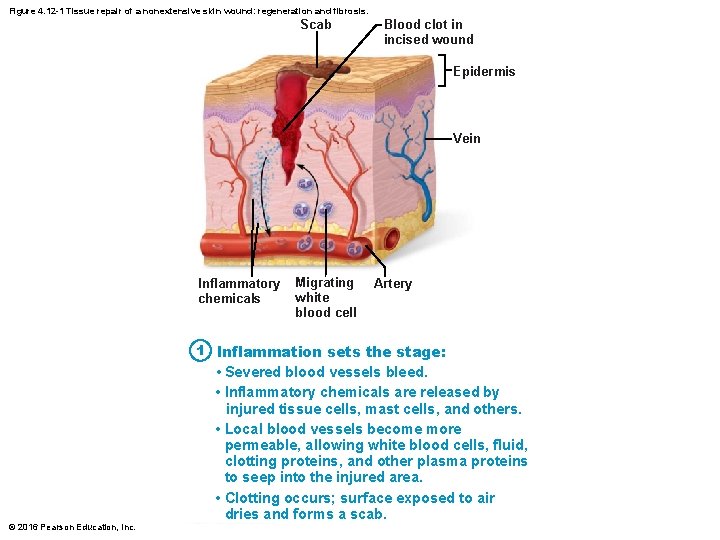
Figure 4. 12 -1 Tissue repair of a nonextensive skin wound: regeneration and fibrosis. Scab Blood clot in incised wound Epidermis Vein Inflammatory chemicals Migrating white blood cell Artery 1 Inflammation sets the stage: • Severed blood vessels bleed. • Inflammatory chemicals are released by injured tissue cells, mast cells, and others. • Local blood vessels become more permeable, allowing white blood cells, fluid, clotting proteins, and other plasma proteins to seep into the injured area. • Clotting occurs; surface exposed to air dries and forms a scab. © 2016 Pearson Education, Inc.
Steps in Tissue Repair (cont. ) • Step 2: Organization restores blood supply – Organization begins as the blood clot is replaced with granulation tissue (new capillaryenriched tissue) – Epithelium begins to regenerate – Fibroblasts produce collagen fibers to bridge the gap until regeneration is complete – Any debris in area is phagocytized © 2016 Pearson Education, Inc.
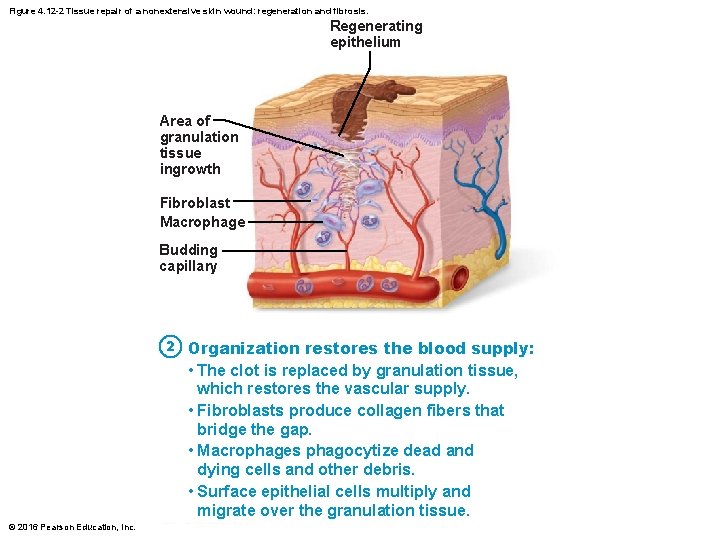
Figure 4. 12 -2 Tissue repair of a nonextensive skin wound: regeneration and fibrosis. Regenerating epithelium Area of granulation tissue ingrowth Fibroblast Macrophage Budding capillary 2 Organization restores the blood supply: • The clot is replaced by granulation tissue, which restores the vascular supply. • Fibroblasts produce collagen fibers that bridge the gap. • Macrophages phagocytize dead and dying cells and other debris. • Surface epithelial cells multiply and migrate over the granulation tissue. © 2016 Pearson Education, Inc.
Steps in Tissue Repair (cont. ) • Step 3: Regeneration and fibrosis effect permanent repair – The scab detaches – Fibrous tissue matures – Epithelium thickens and begins to resemble adjacent tissue – Results in a fully regenerated epithelium with underlying scar tissue, which may or may not be visible © 2016 Pearson Education, Inc.
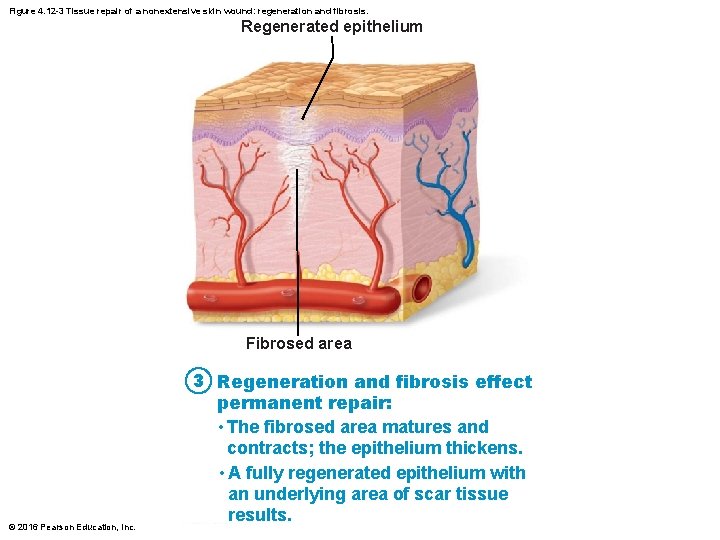
Figure 4. 12 -3 Tissue repair of a nonextensive skin wound: regeneration and fibrosis. Regenerated epithelium Fibrosed area © 2016 Pearson Education, Inc. 3 Regeneration and fibrosis effect permanent repair: • The fibrosed area matures and contracts; the epithelium thickens. • A fully regenerated epithelium with an underlying area of scar tissue results.
Regenerative Capacity of Different Tissues • Tissues that regenerate extremely well include: – Epithelial tissues, bone, areolar connective tissue, dense irregular connective tissue, bloodforming tissue • Tissue with moderate regenerating capacity: – Smooth muscle and dense regular connective tissue © 2016 Pearson Education, Inc.
Regenerative Capacity of Different Tissues (cont. ) • Tissues with virtually no functional regenerative capacity: – Cardiac muscle and nervous tissue of brain and spinal cord – New research shows cell division does occur, and efforts are underway to coax them to regenerate better © 2016 Pearson Education, Inc.
Clinical – Homeostatic Imbalance 4. 3 • Scar tissue that forms in organs, particularly the heart, can severely impair the function of that organ – May cause the organ to lose volume capacity – May block substances from moving through organ – May interfere with ability of muscles to contract or may impair nerve transmissions © 2016 Pearson Education, Inc.
Clinical – Homeostatic Imbalance 4. 3 • Scar adhesions may cause organs to adhere to neighboring structures, preventing normal functions • Scarring can potentially cause progressive failure of the organ, particularly the heart © 2016 Pearson Education, Inc.
- Slides: 67