
chapter 4 Paradigms additional materials Beginnings Computing in
chapter 4 Paradigms (additional materials)
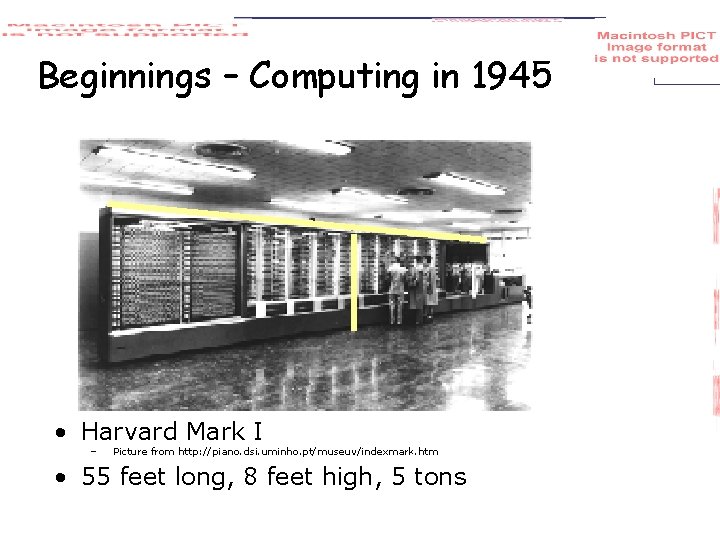
Beginnings – Computing in 1945 • Harvard Mark I – Picture from http: //piano. dsi. uminho. pt/museuv/indexmark. htm • 55 feet long, 8 feet high, 5 tons

Context - Computing in 1945 • Ballistics calculations • Physical switches (before microprocessor) • Paper tape • Simple arithmetic & fixed calculations (before programs) Picture from http: //www. gmcc. ab. ca/~supy/ • 3 seconds to multiply
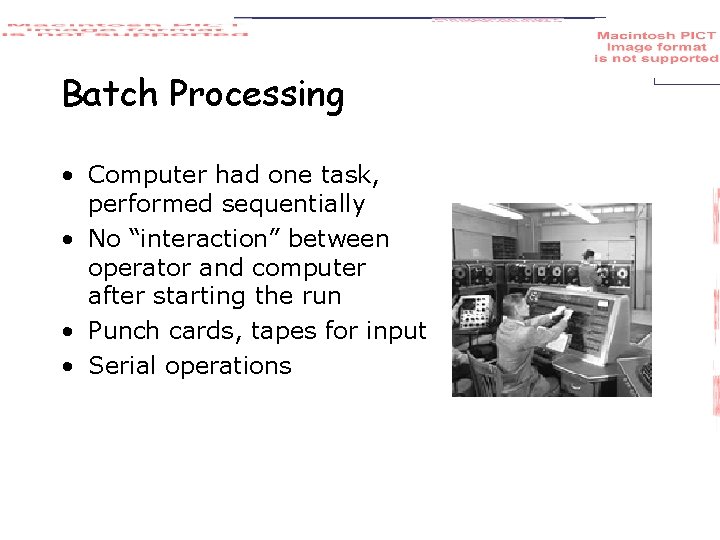
Batch Processing • Computer had one task, performed sequentially • No “interaction” between operator and computer after starting the run • Punch cards, tapes for input • Serial operations
People • Who are the people associated with various interactive paradigm shifts?
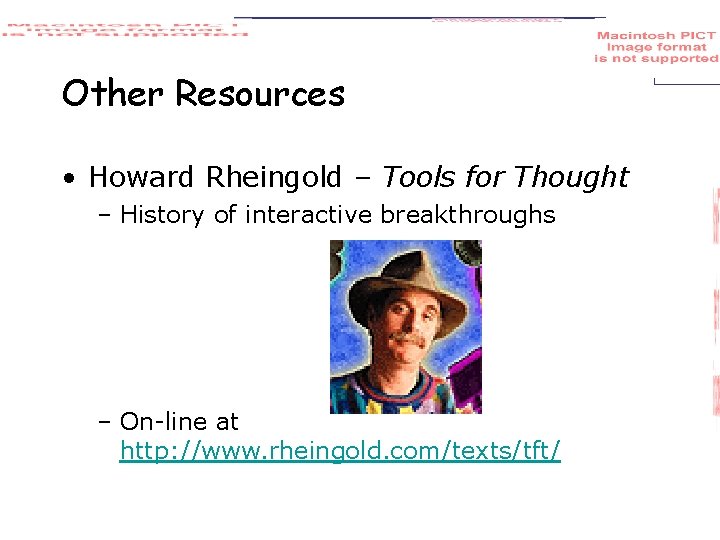
Other Resources • Howard Rheingold – Tools for Thought – History of interactive breakthroughs – On-line at http: //www. rheingold. com/texts/tft/
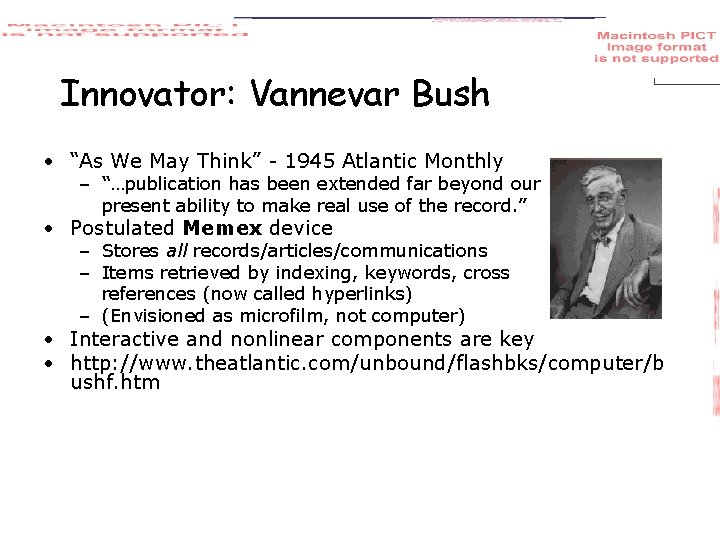
Innovator: Vannevar Bush • “As We May Think” - 1945 Atlantic Monthly – “…publication has been extended far beyond our present ability to make real use of the record. ” • Postulated Memex device – Stores all records/articles/communications – Items retrieved by indexing, keywords, cross references (now called hyperlinks) – (Envisioned as microfilm, not computer) • Interactive and nonlinear components are key • http: //www. theatlantic. com/unbound/flashbks/computer/b ushf. htm
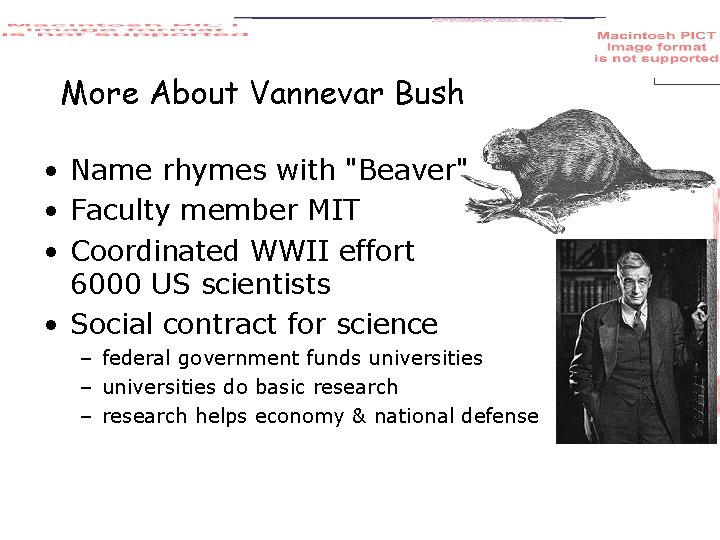
More About Vannevar Bush • Name rhymes with "Beaver" • Faculty member MIT • Coordinated WWII effort 6000 US scientists • Social contract for science – federal government funds universities – universities do basic research – research helps economy & national defense with
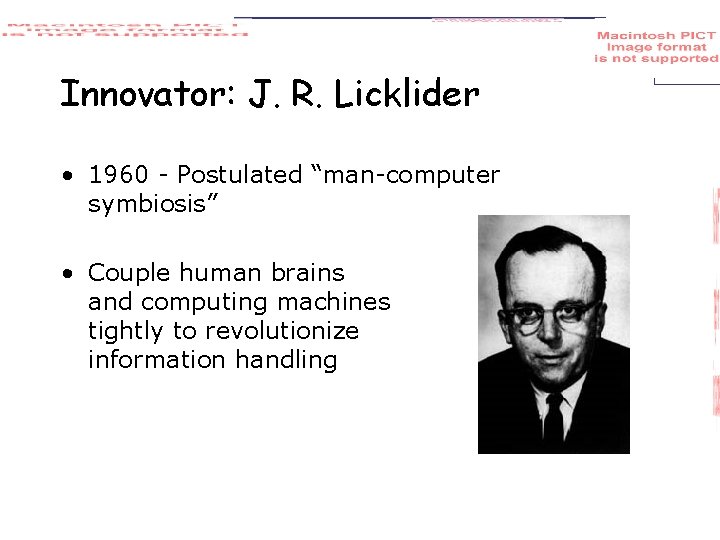
Innovator: J. R. Licklider • 1960 - Postulated “man-computer symbiosis” • Couple human brains and computing machines tightly to revolutionize information handling
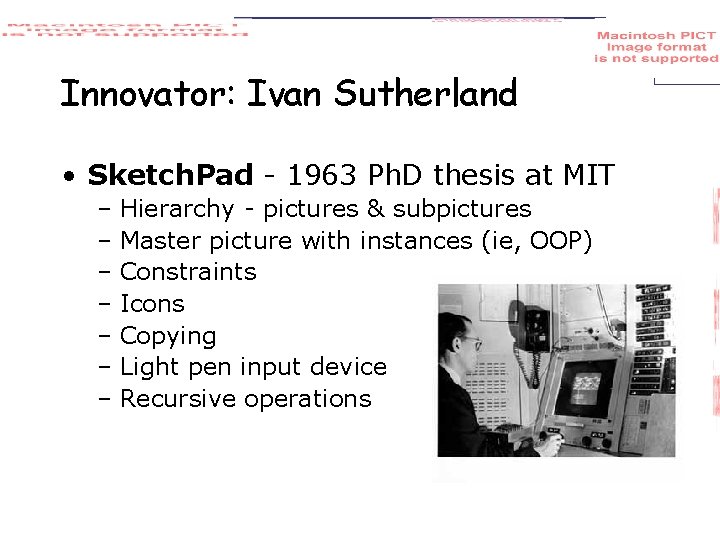
Innovator: Ivan Sutherland • Sketch. Pad - 1963 Ph. D thesis at MIT – Hierarchy - pictures & subpictures – Master picture with instances (ie, OOP) – Constraints – Icons – Copying – Light pen input device – Recursive operations
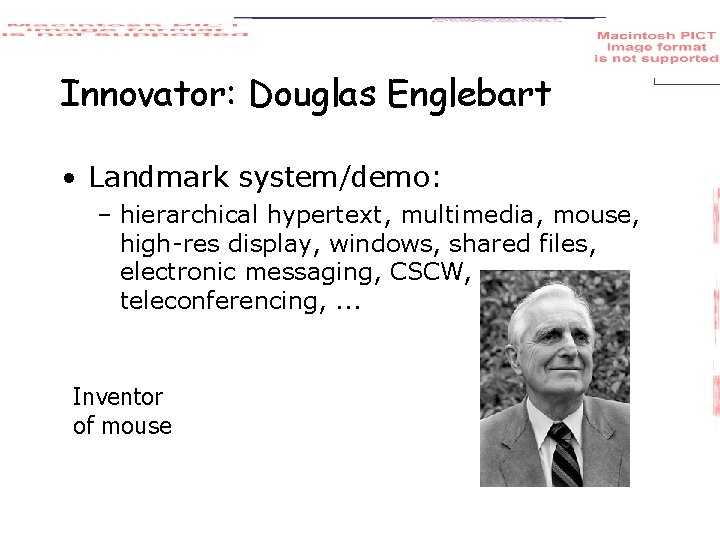
Innovator: Douglas Englebart • Landmark system/demo: – hierarchical hypertext, multimedia, mouse, high-res display, windows, shared files, electronic messaging, CSCW, teleconferencing, . . . Inventor of mouse
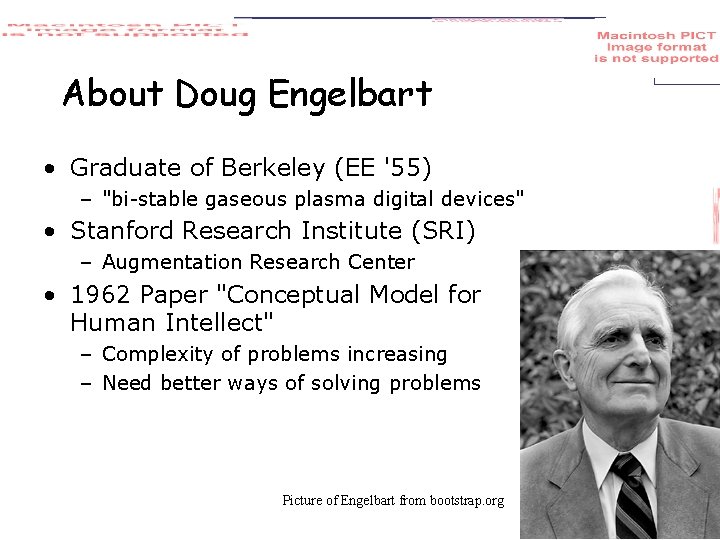
About Doug Engelbart • Graduate of Berkeley (EE '55) – "bi-stable gaseous plasma digital devices" • Stanford Research Institute (SRI) – Augmentation Research Center • 1962 Paper "Conceptual Model for Human Intellect" – Complexity of problems increasing – Need better ways of solving problems Picture of Engelbart from bootstrap. org Augmenting
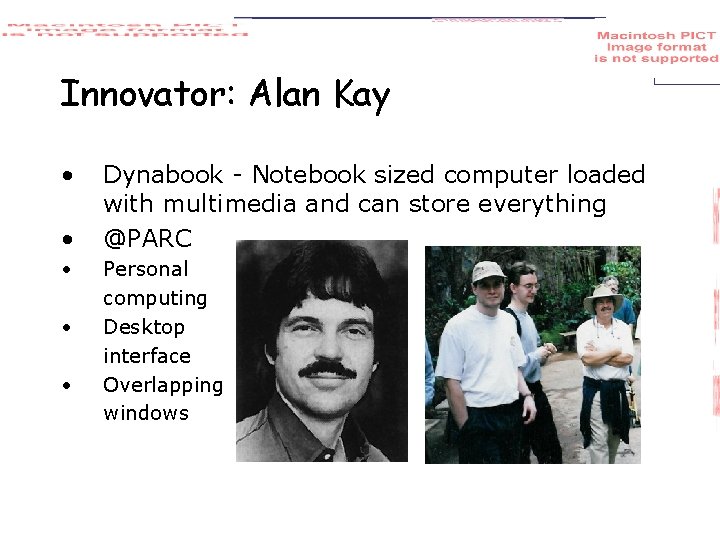
Innovator: Alan Kay • • • Dynabook - Notebook sized computer loaded with multimedia and can store everything @PARC Personal computing Desktop interface Overlapping windows
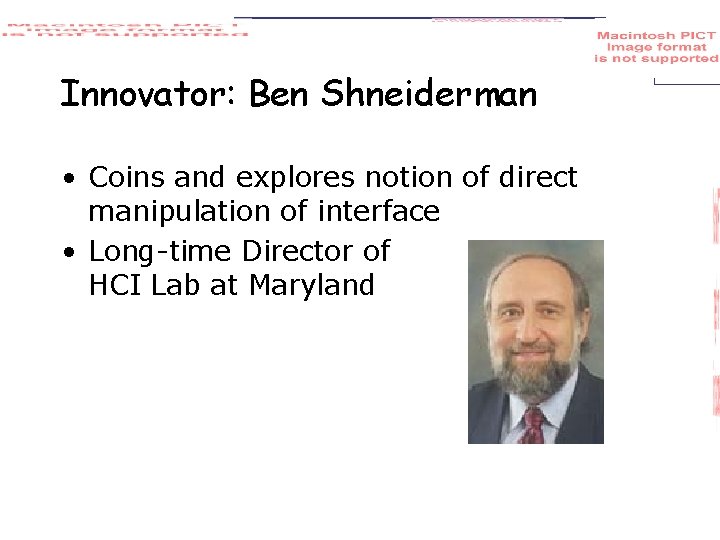
Innovator: Ben Shneiderman • Coins and explores notion of direct manipulation of interface • Long-time Director of HCI Lab at Maryland

Innovator: Ted Nelson • Computers can help people, not just business • Coined term “hypertext”
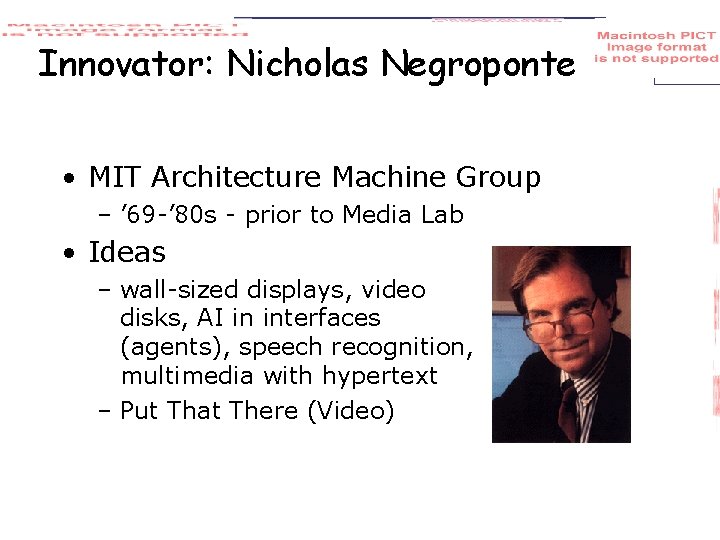
Innovator: Nicholas Negroponte • MIT Architecture Machine Group – ’ 69 -’ 80 s - prior to Media Lab • Ideas – wall-sized displays, video disks, AI in interfaces (agents), speech recognition, multimedia with hypertext – Put That There (Video)
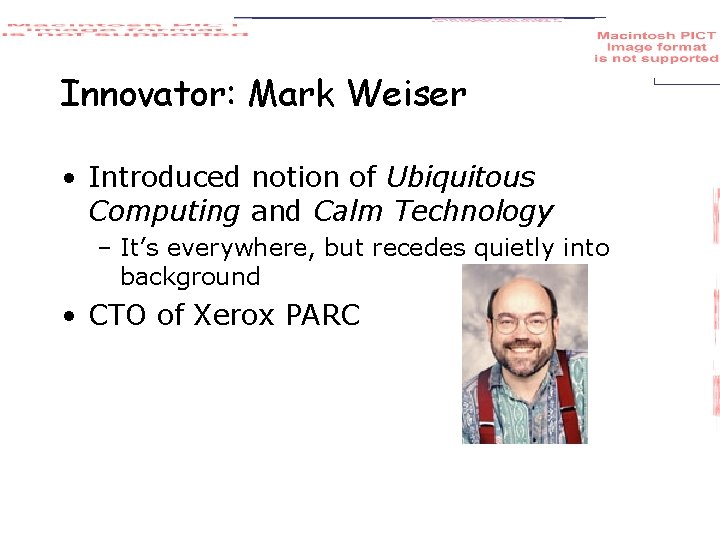
Innovator: Mark Weiser • Introduced notion of Ubiquitous Computing and Calm Technology – It’s everywhere, but recedes quietly into background • CTO of Xerox PARC
- Slides: 17