
Chapter 4 Overview Maxwells Equations Charge Distributions Volume
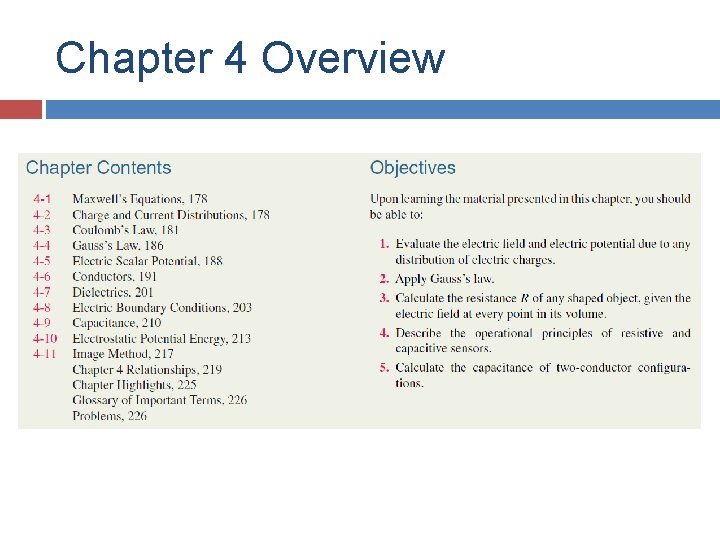
Chapter 4 Overview
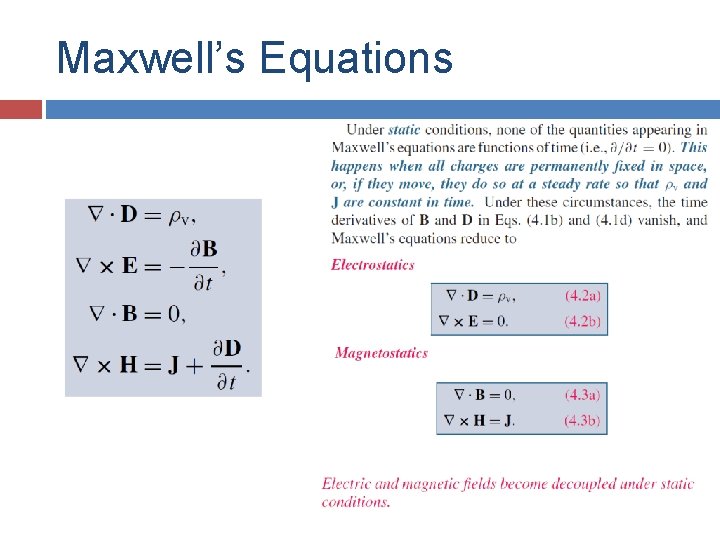
Maxwell’s Equations
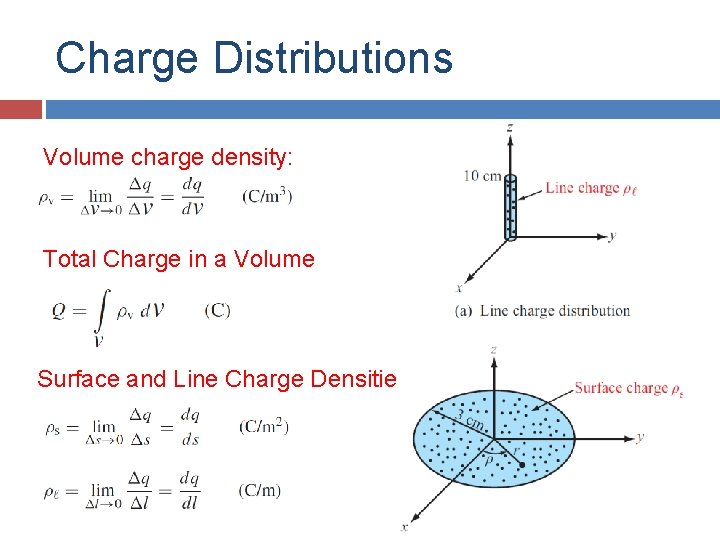
Charge Distributions Volume charge density: Total Charge in a Volume Surface and Line Charge Densities
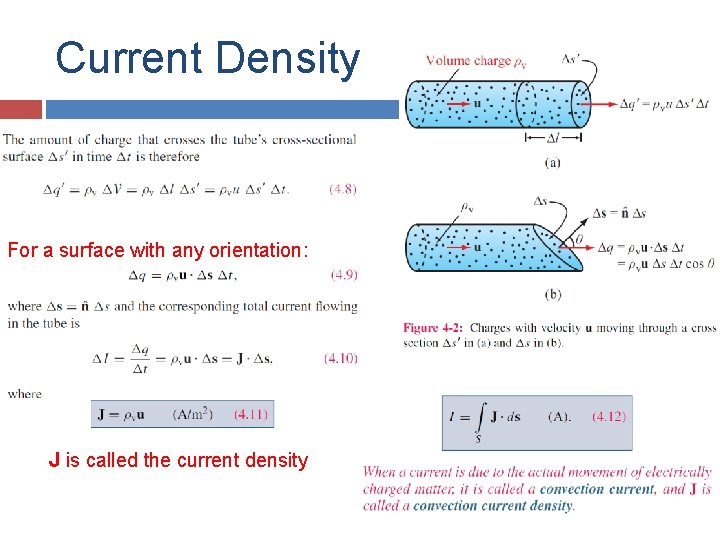
Current Density For a surface with any orientation: J is called the current density

Convection vs. Conduction
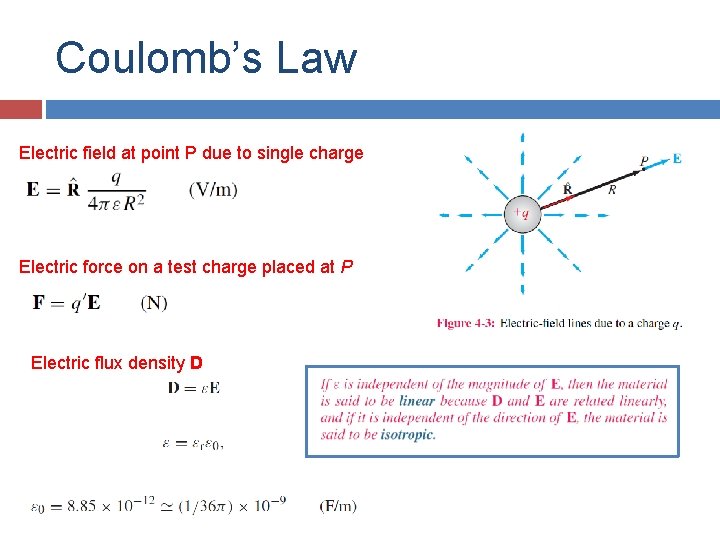
Coulomb’s Law Electric field at point P due to single charge Electric force on a test charge placed at P Electric flux density D
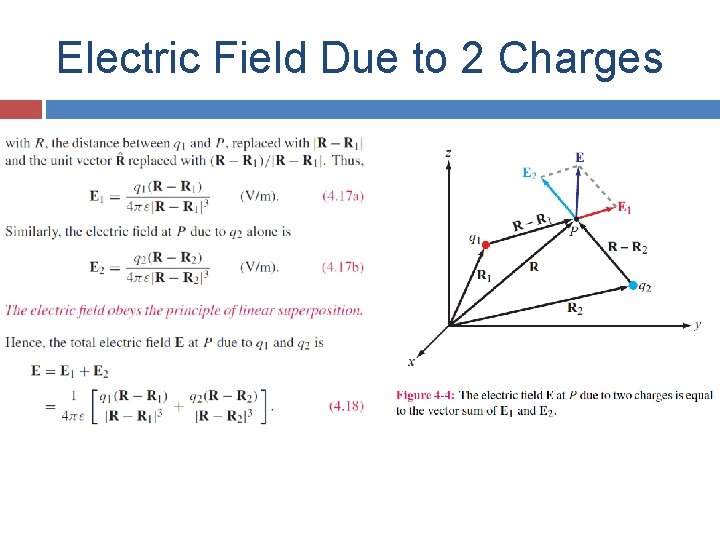
Electric Field Due to 2 Charges
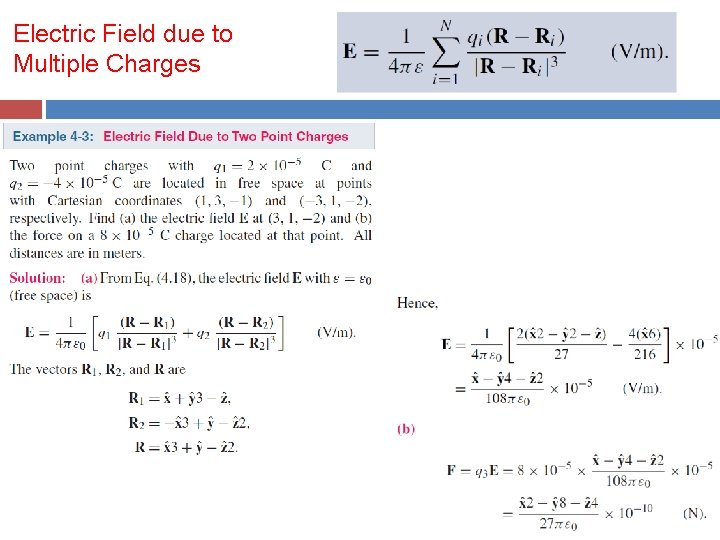
Electric Field due to Multiple Charges
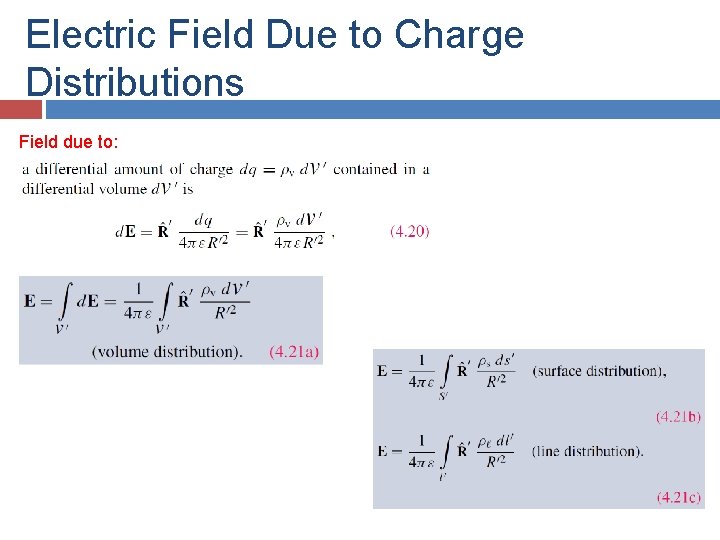
Electric Field Due to Charge Distributions Field due to:

Cont.
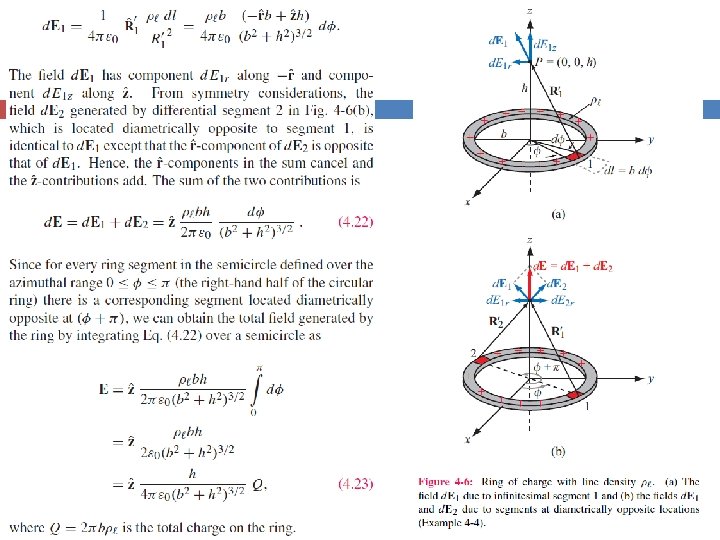

Cont.
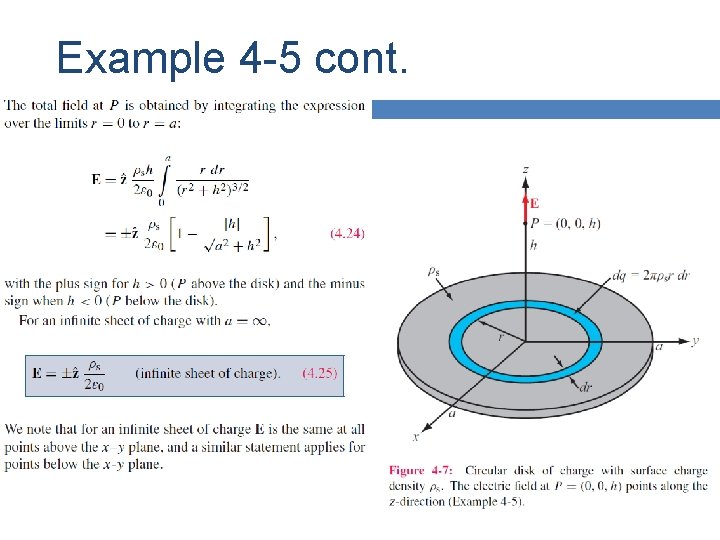
Example 4 -5 cont.
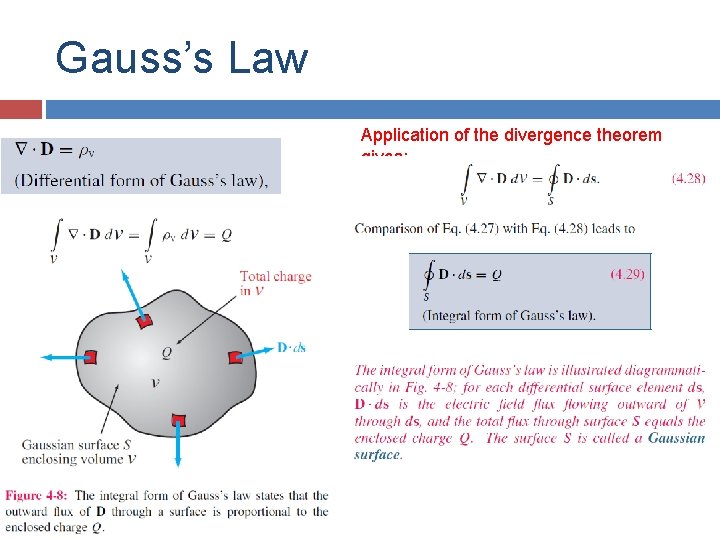
Gauss’s Law Application of the divergence theorem gives:
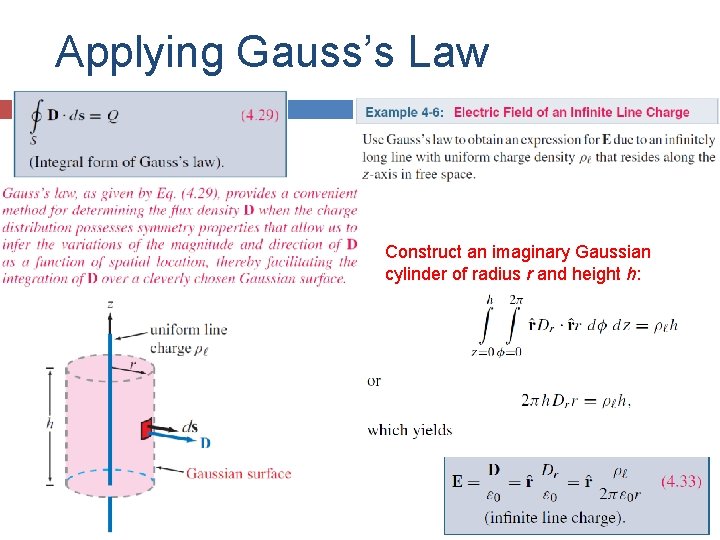
Applying Gauss’s Law Construct an imaginary Gaussian cylinder of radius r and height h:
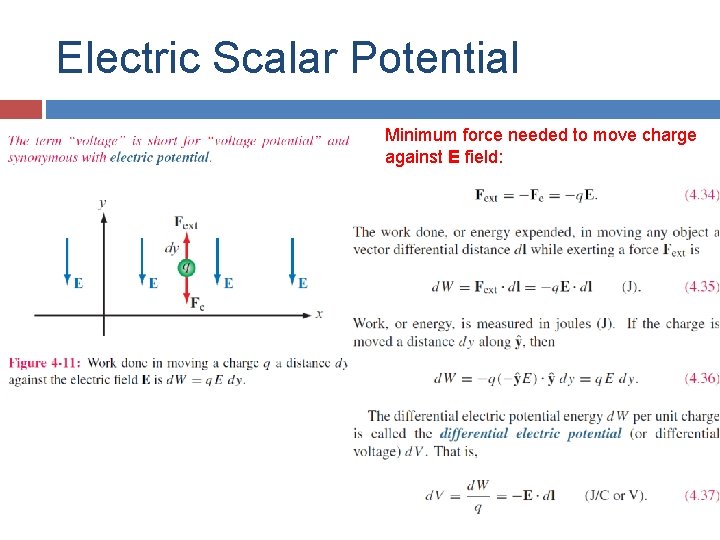
Electric Scalar Potential Minimum force needed to move charge against E field:
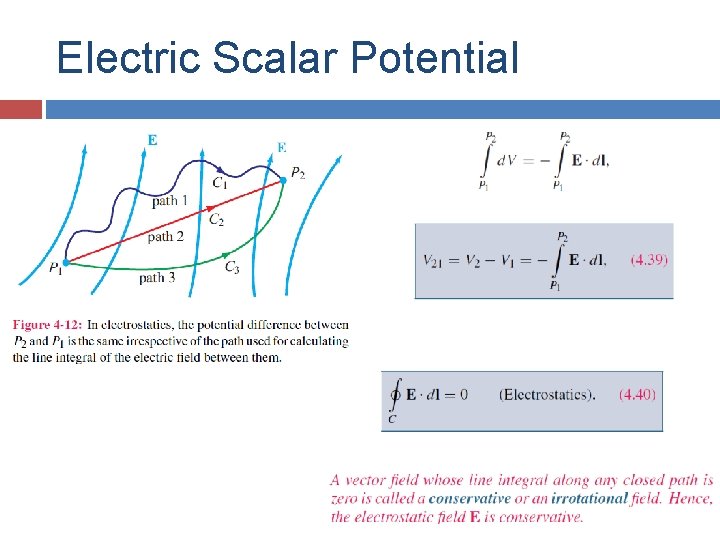
Electric Scalar Potential
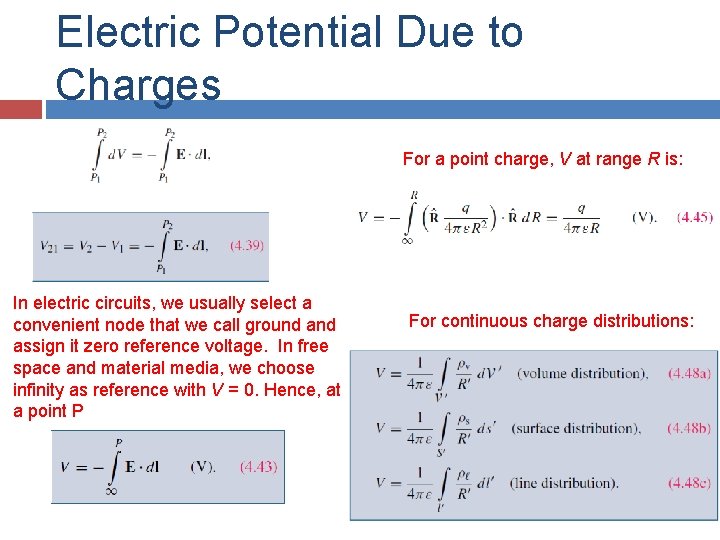
Electric Potential Due to Charges For a point charge, V at range R is: In electric circuits, we usually select a convenient node that we call ground assign it zero reference voltage. In free space and material media, we choose infinity as reference with V = 0. Hence, at a point P For continuous charge distributions:
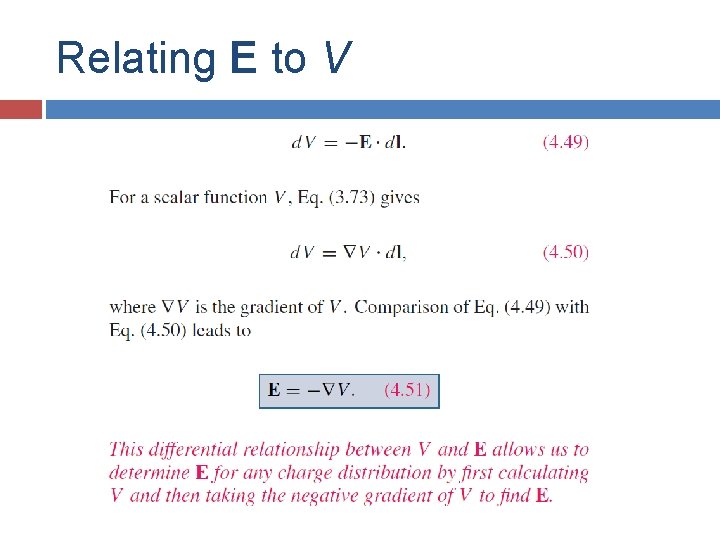
Relating E to V
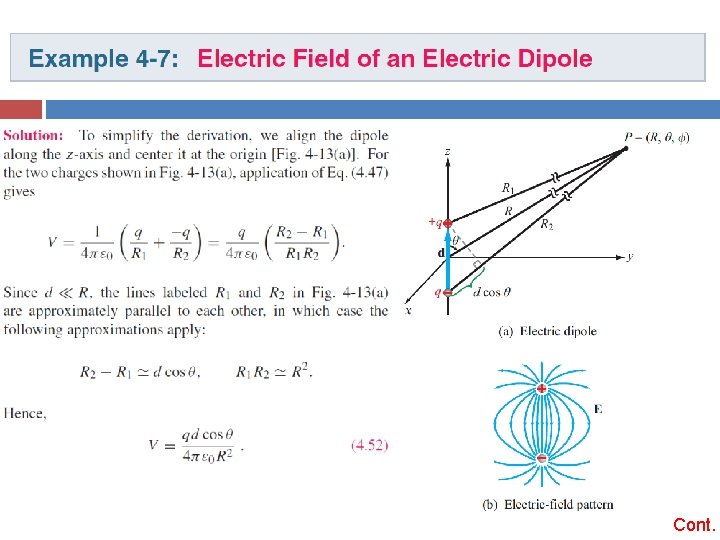
Cont.
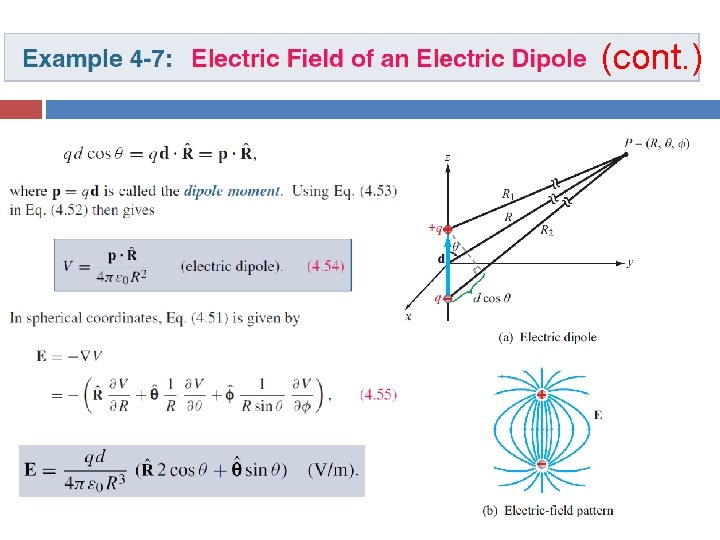
(cont. )
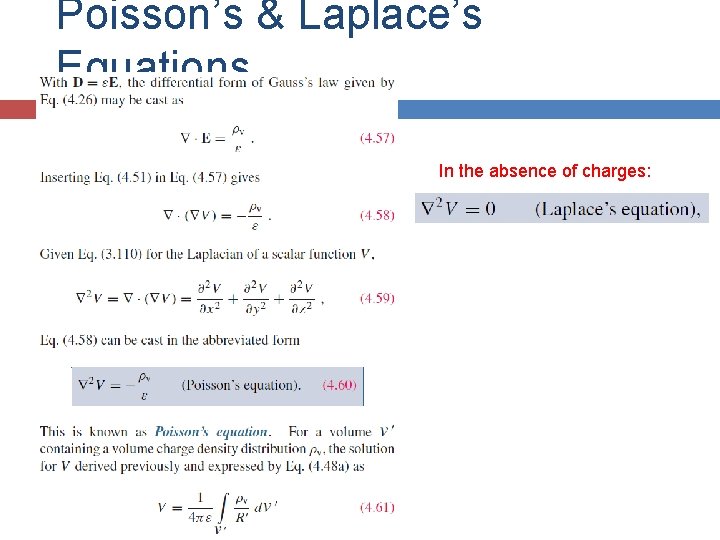
Poisson’s & Laplace’s Equations In the absence of charges:
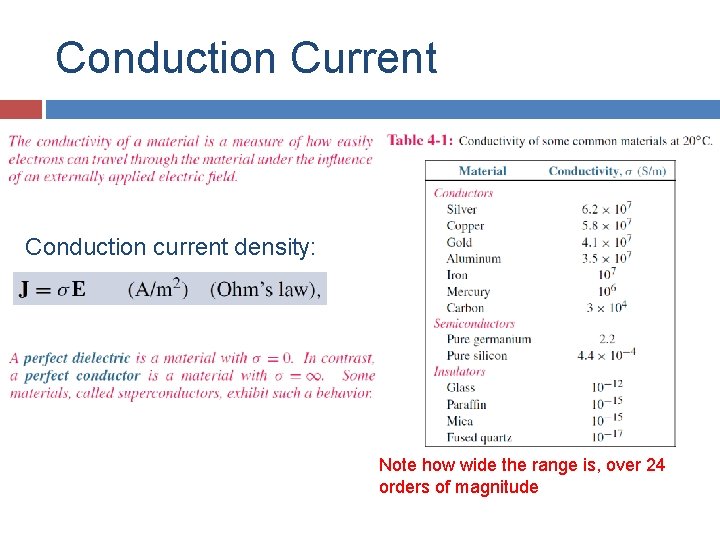
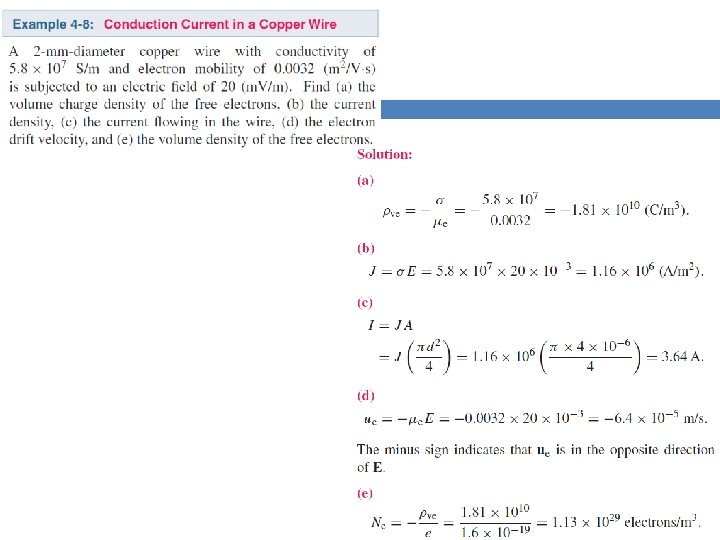
Conduction Current Conduction current density: Note how wide the range is, over 24 orders of magnitude

Conductivity ve = volume charge density of electrons vh = volume charge density of holes e = electron mobility h = hole mobility Ne = number of electrons per unit volume Nh = number of holes per unit volume
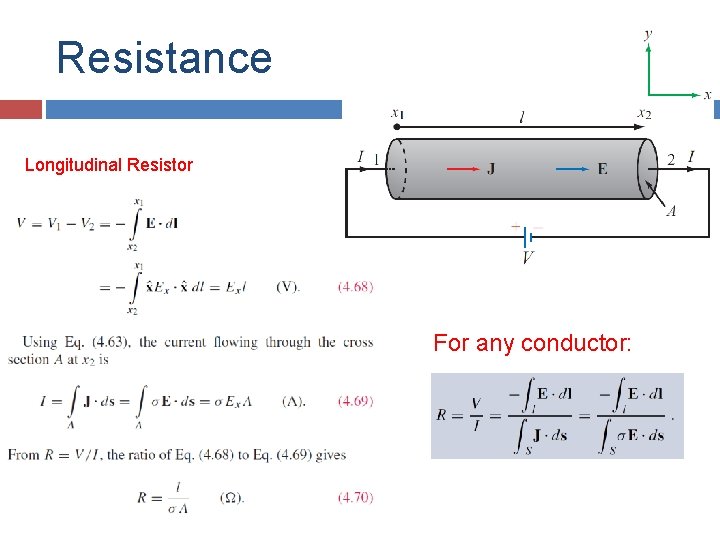
Resistance Longitudinal Resistor For any conductor:
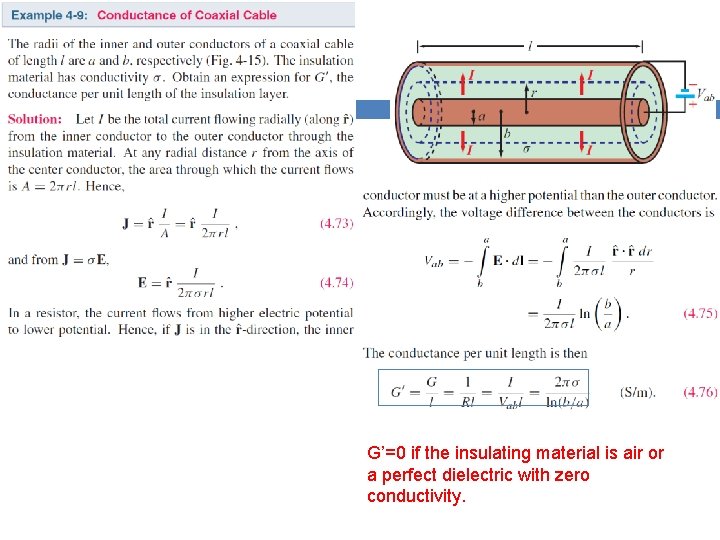
G’=0 if the insulating material is air or a perfect dielectric with zero conductivity.
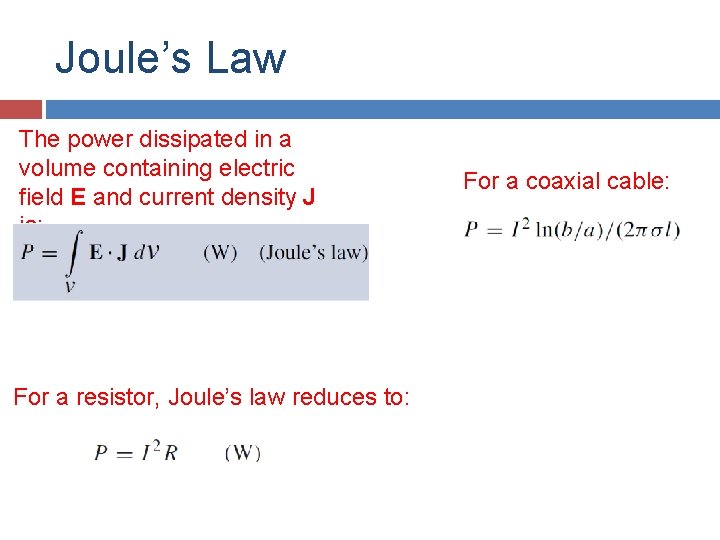
Joule’s Law The power dissipated in a volume containing electric field E and current density J is: For a resistor, Joule’s law reduces to: For a coaxial cable:
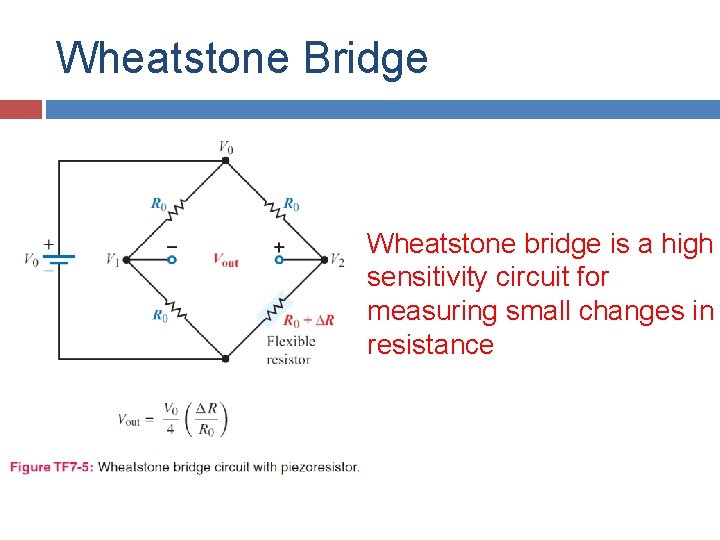
Wheatstone Bridge Wheatstone bridge is a high sensitivity circuit for measuring small changes in resistance
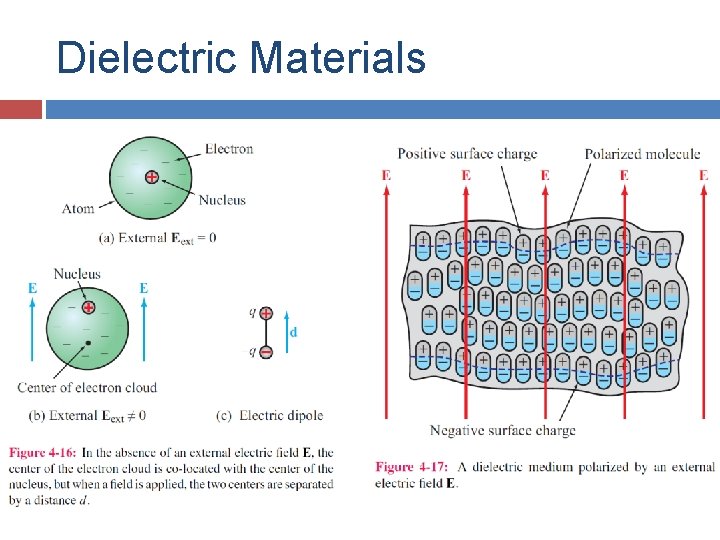
Dielectric Materials
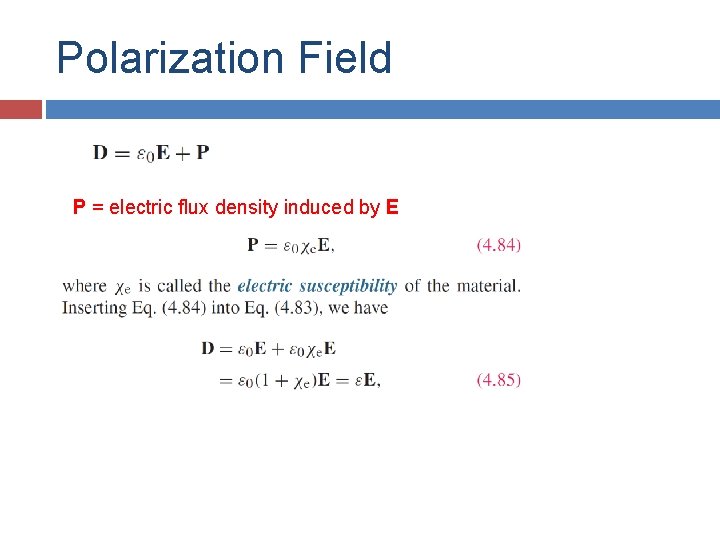
Polarization Field P = electric flux density induced by E
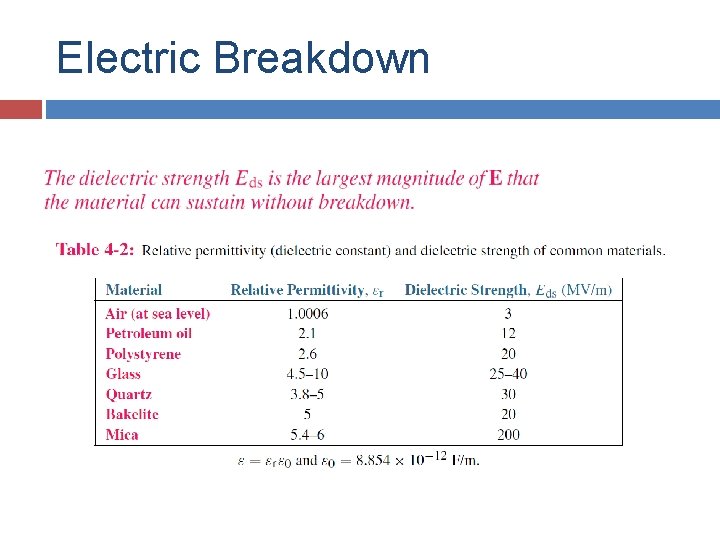
Electric Breakdown
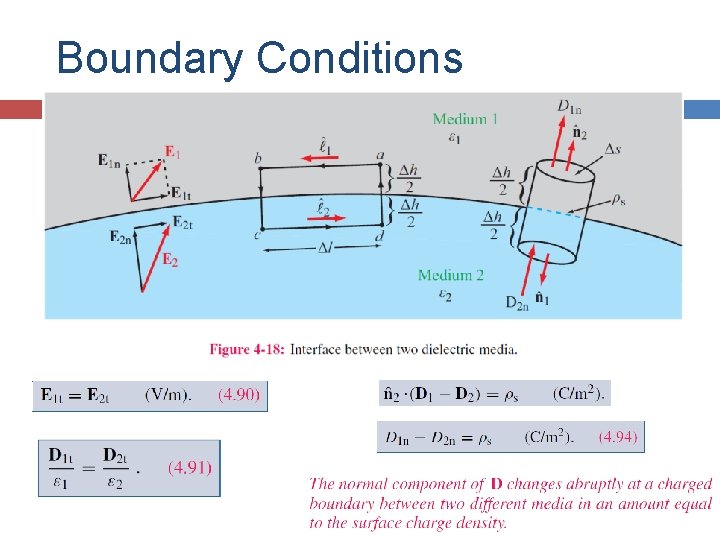
Boundary Conditions
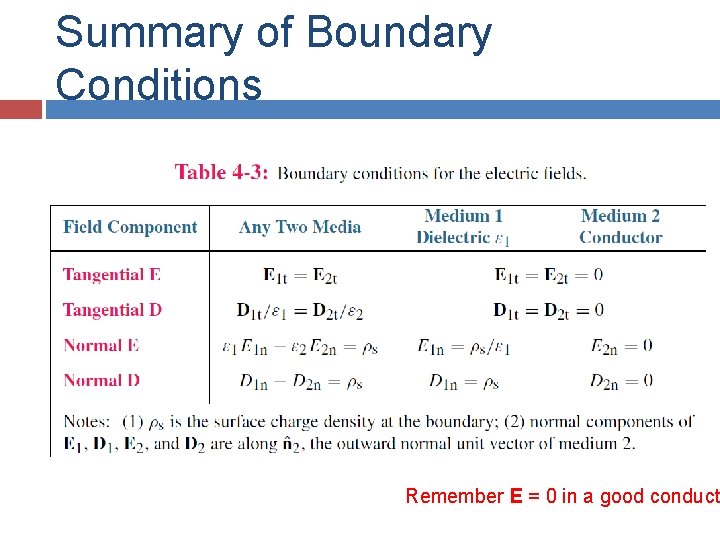
Summary of Boundary Conditions Remember E = 0 in a good conduct
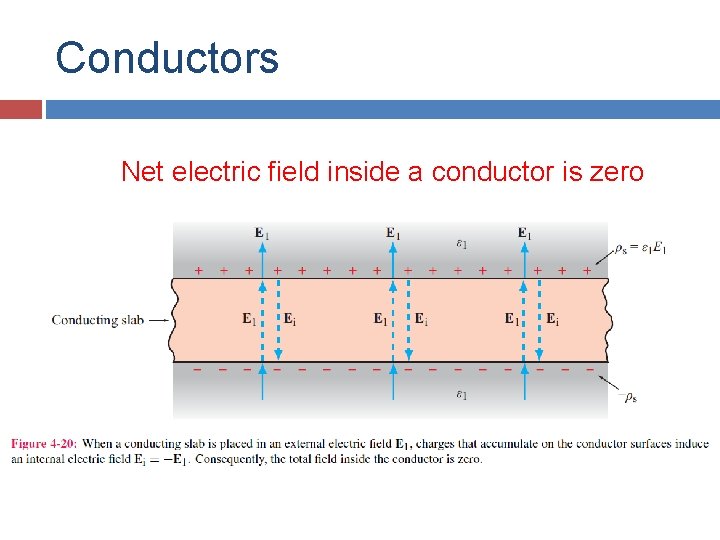
Conductors Net electric field inside a conductor is zero
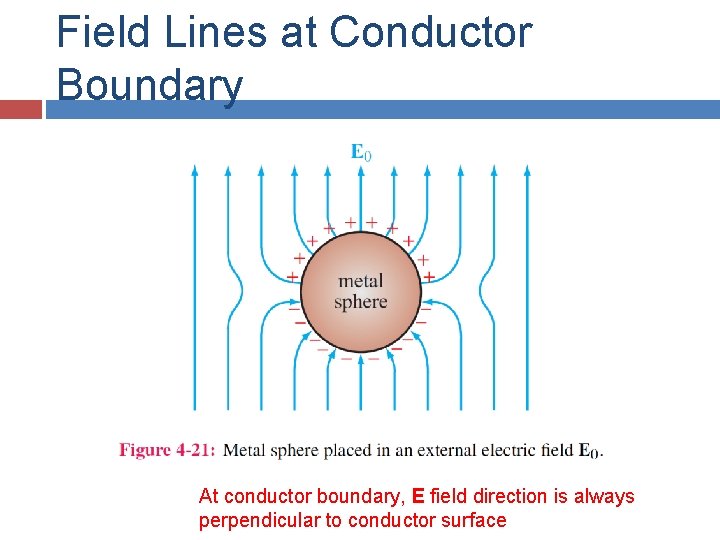
Field Lines at Conductor Boundary At conductor boundary, E field direction is always perpendicular to conductor surface
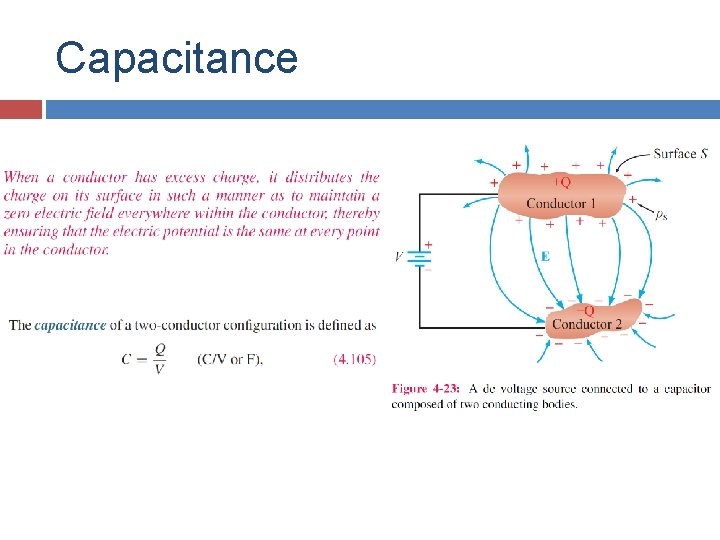
Capacitance
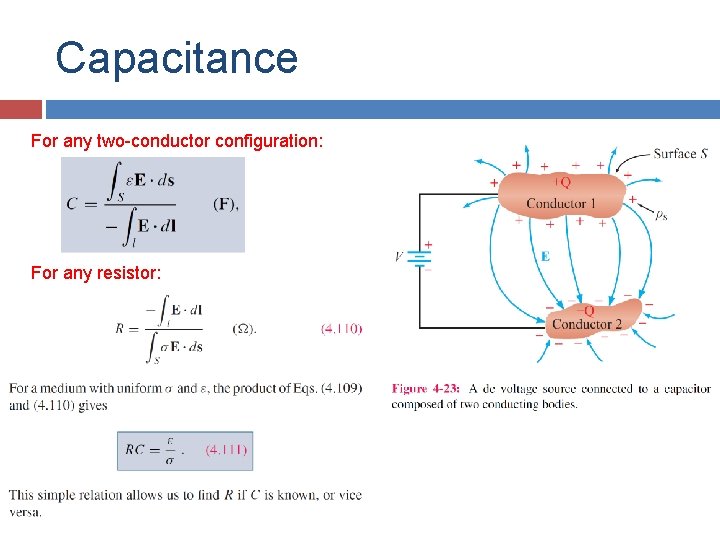
Capacitance For any two-conductor configuration: For any resistor:
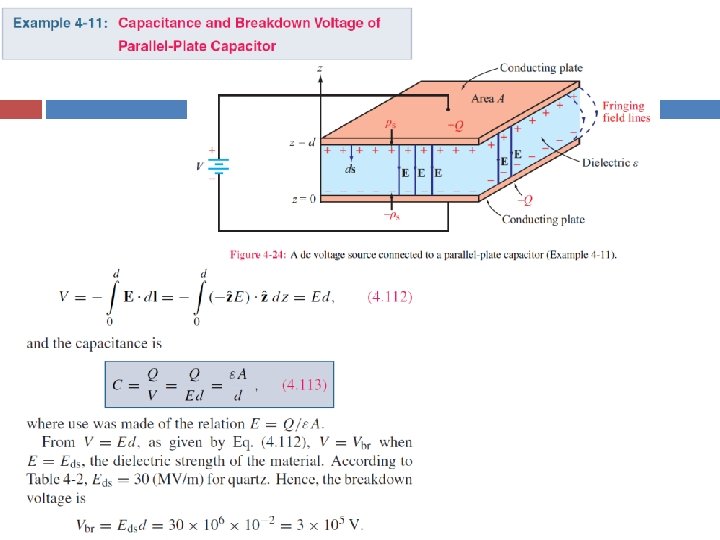
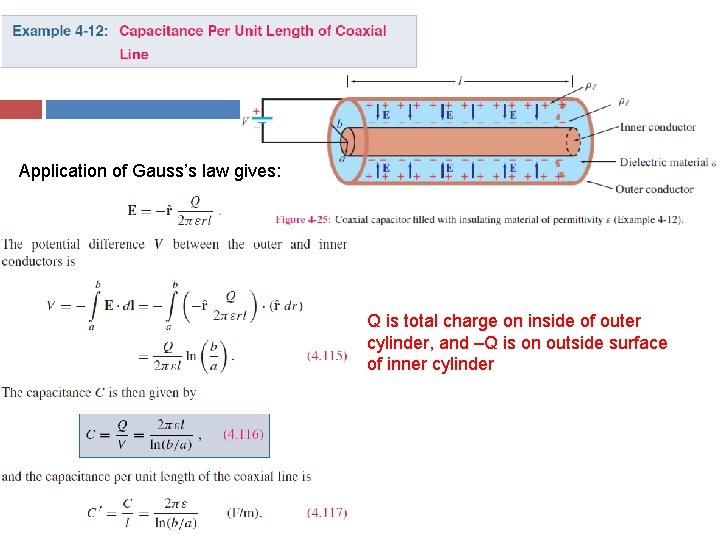
Application of Gauss’s law gives: Q is total charge on inside of outer cylinder, and –Q is on outside surface of inner cylinder
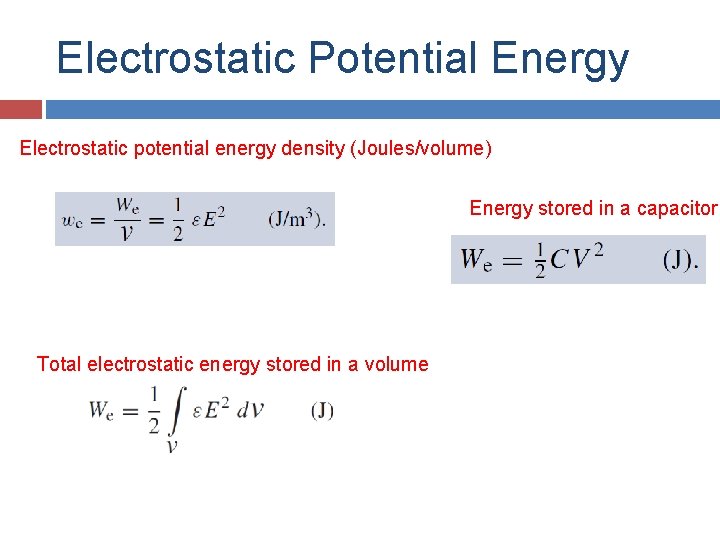
Electrostatic Potential Energy Electrostatic potential energy density (Joules/volume) Energy stored in a capacitor Total electrostatic energy stored in a volume
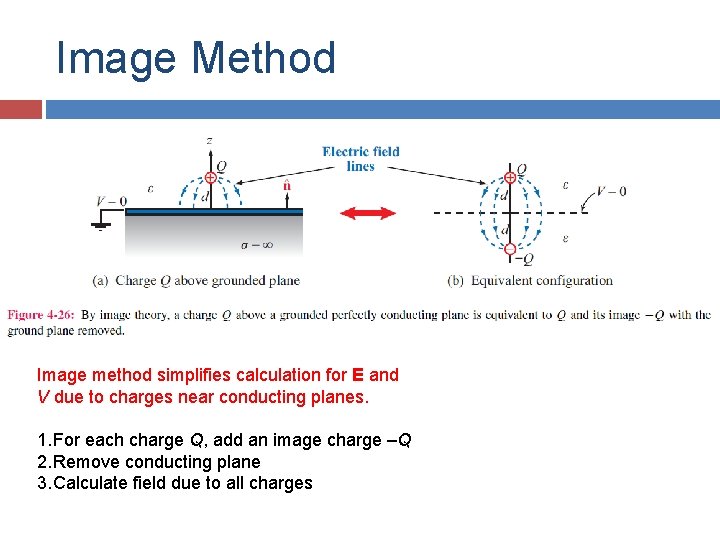
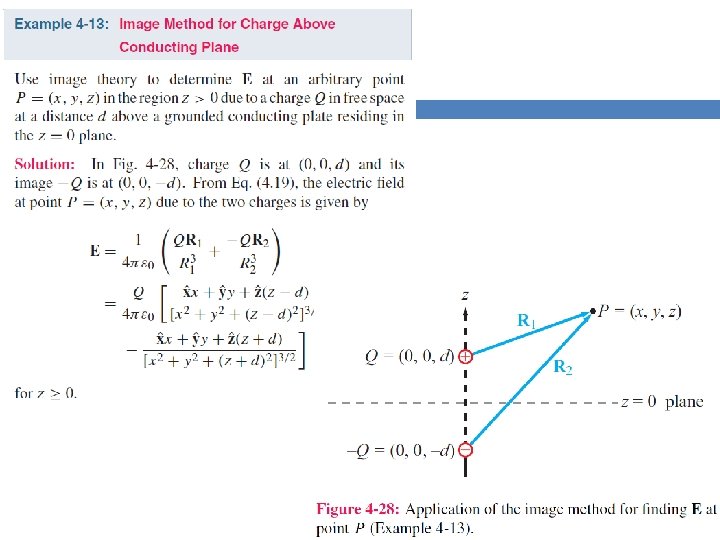
Image Method Image method simplifies calculation for E and V due to charges near conducting planes. 1. For each charge Q, add an image charge –Q 2. Remove conducting plane 3. Calculate field due to all charges
- Slides: 44