
Chapter 4 Notes Cell Physiology Biology Hamilton Science
Chapter 4 Notes Cell Physiology Biology Hamilton Science Department
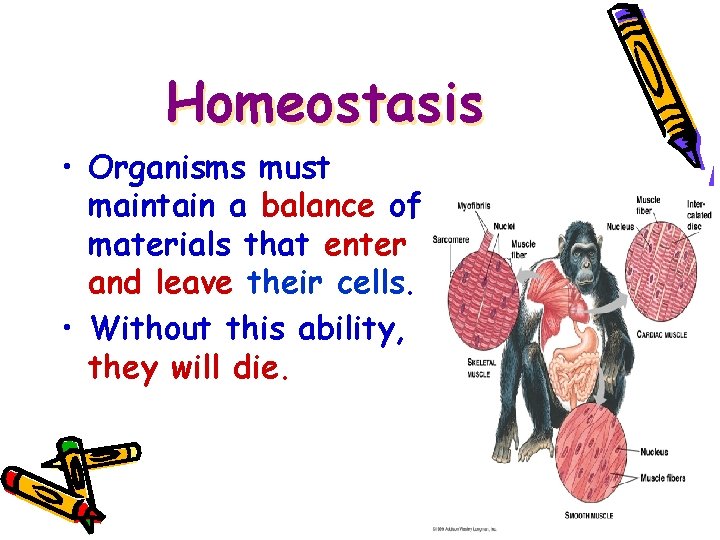
Homeostasis • Organisms must maintain a balance of materials that enter and leave their cells. • Without this ability, they will die.
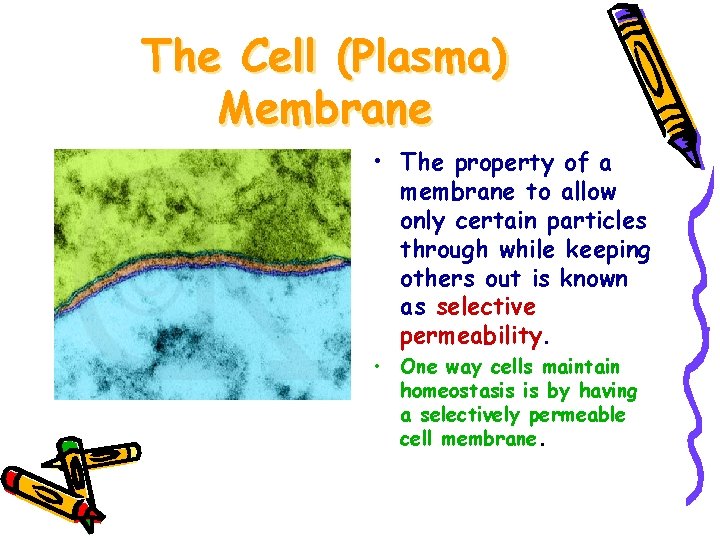
The Cell (Plasma) Membrane • The property of a membrane to allow only certain particles through while keeping others out is known as selective permeability. • One way cells maintain homeostasis is by having a selectively permeable cell membrane.
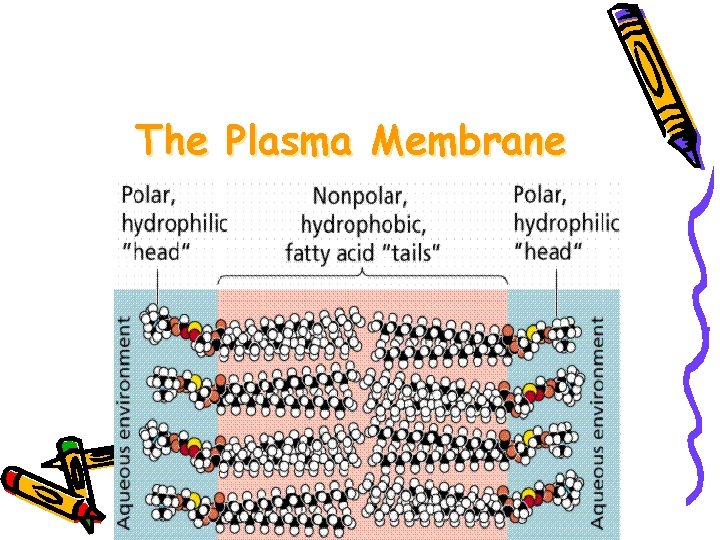
The Plasma Membrane
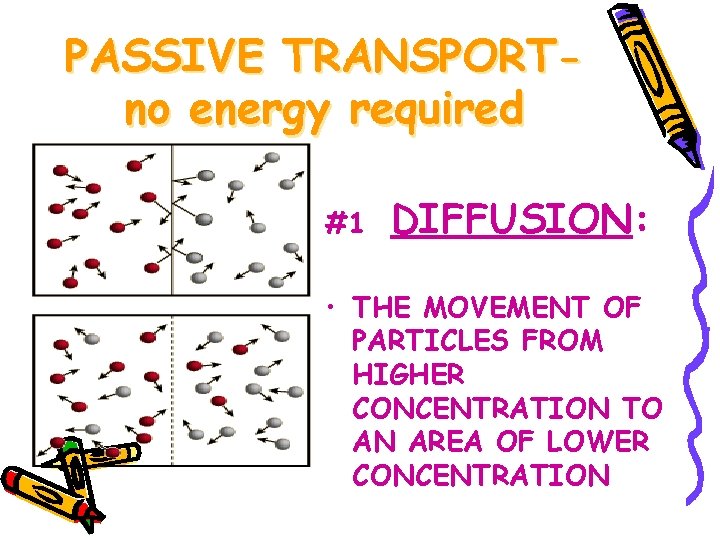
PASSIVE TRANSPORTno energy required #1 DIFFUSION: • THE MOVEMENT OF PARTICLES FROM HIGHER CONCENTRATION TO AN AREA OF LOWER CONCENTRATION
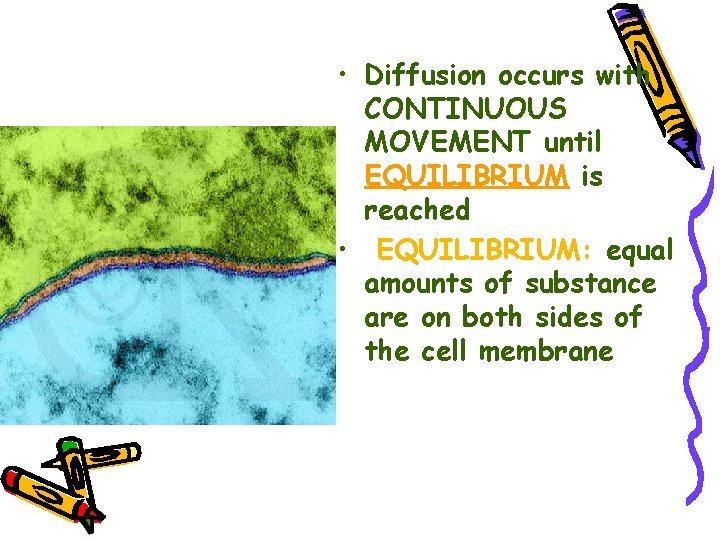
• Diffusion occurs with CONTINUOUS MOVEMENT until EQUILIBRIUM is reached • EQUILIBRIUM: equal amounts of substance are on both sides of the cell membrane
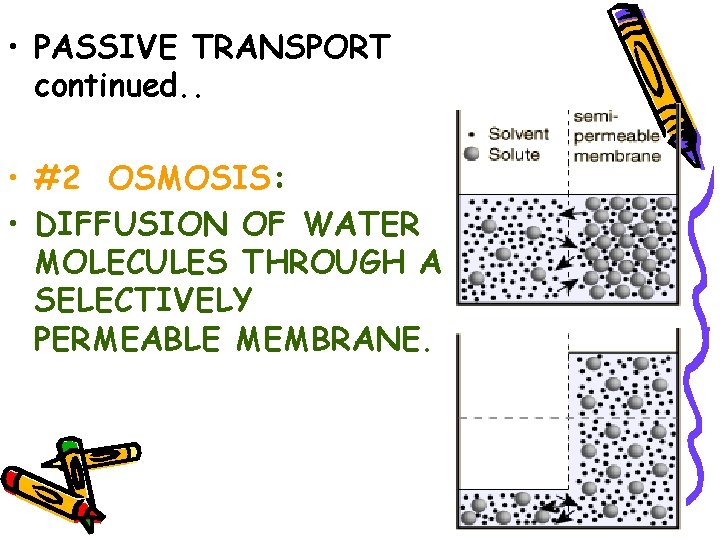
• PASSIVE TRANSPORT continued. . • #2 OSMOSIS: • DIFFUSION OF WATER MOLECULES THROUGH A SELECTIVELY PERMEABLE MEMBRANE.
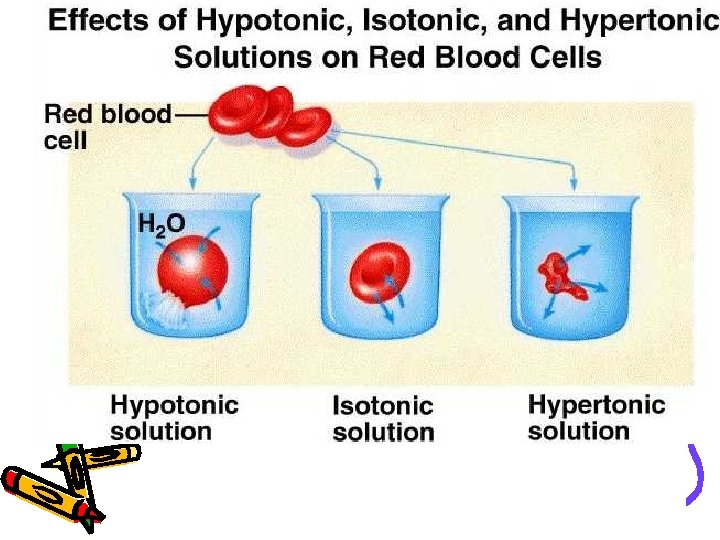
• 3 TYPES OF SOLUTIONS AROUND A CELL (3 Possibilities for the Direction of Water Movement around a Cell) • 1. ISOTONIC: CONCENTRATION OF DISSOLVED SUBSTANCES AND WATER SAME ON BOTH SIDES OF MEMBRANE • 2. HYPOTONIC: CONCENTRATION OF DISSOLVED SUBSTANCES IS LOWER THAN IN THE CELL (high concentration inside the cell—cell swells) • 3. HYPERTONIC: CONCENTRATION OF DISSOLVED SUBSTANCES IS HIGHER THAN IN THE CELL (low concentration inside the cell—cell shrinks)
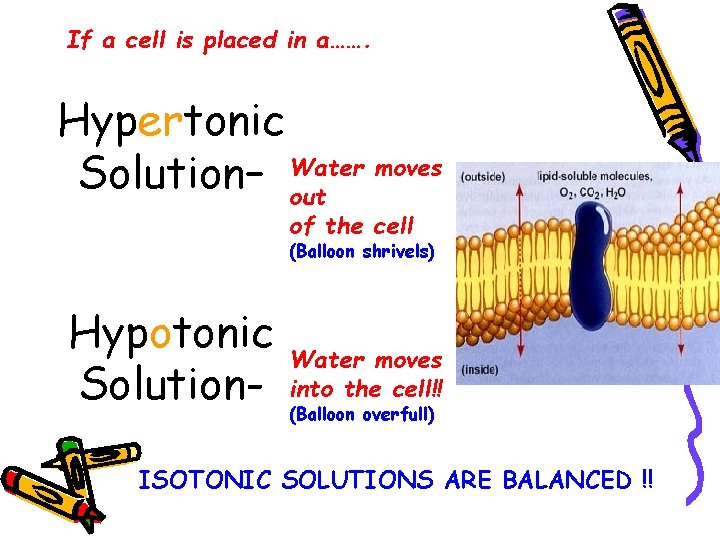
If a cell is placed in a……. Hypertonic moves Solution– Water out of the cell (Balloon shrivels) Hypotonic Solution- Water moves into the cell!! (Balloon overfull) ISOTONIC SOLUTIONS ARE BALANCED !!
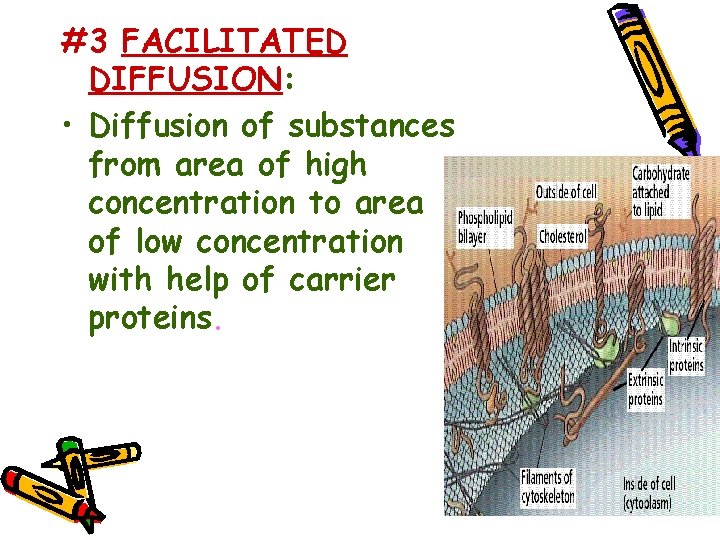
#3 FACILITATED DIFFUSION: • Diffusion of substances from area of high concentration to area of low concentration with help of carrier proteins.
#4 DIFFUSION THROUGH ION CHANNELS • Movement of ions ( Na+, K+, Cl-) through cell membrane by means of ion channel • Ion Channel: a transport protein with a polar pore through which ions can pass – Some ion channels have gates that open/close – Channels are specific to a certain kind of ion
• ACTIVE TRANSPORT • * REQUIRES ENERGY* • Energy used is from ATP • MOVEMENT OF SUBSTANCES FROM LOW CONCENTRATION. TO ALREADY HIGH CONCENTRATION • Opposite of Passive Transport • Substances move AGAINST GRADIENT (or opposite of equilibrium)
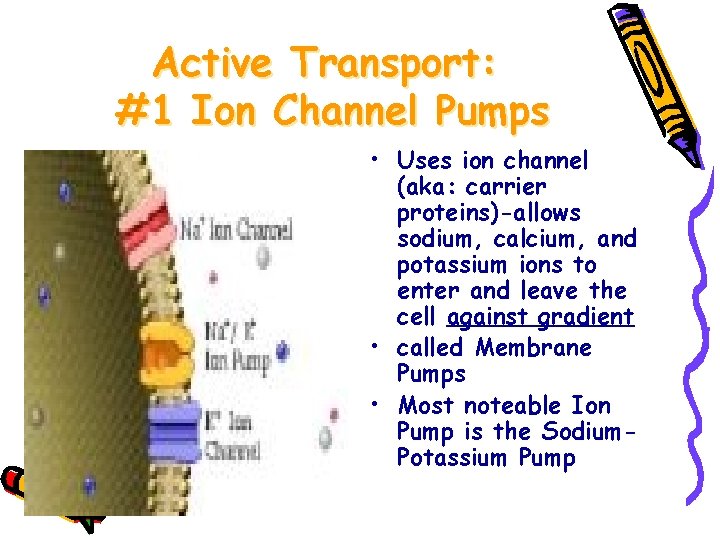
Active Transport: #1 Ion Channel Pumps • Uses ion channel (aka: carrier proteins)-allows sodium, calcium, and potassium ions to enter and leave the cell against gradient • called Membrane Pumps • Most noteable Ion Pump is the Sodium. Potassium Pump
Active Transport: • #2 Endocytosis and Exocytosis • For substances that are too big to be moved across cell membrance by carrier proteins • Examples: Proteins and Polysaccharides
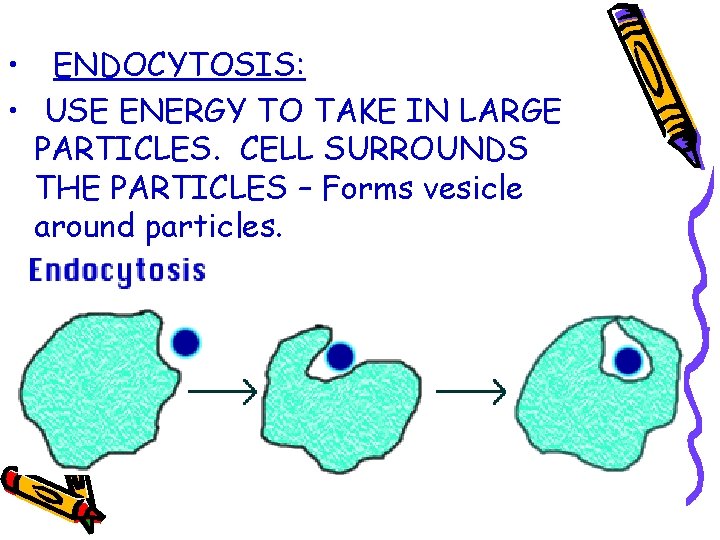
• ENDOCYTOSIS: • USE ENERGY TO TAKE IN LARGE PARTICLES. CELL SURROUNDS THE PARTICLES – Forms vesicle around particles.
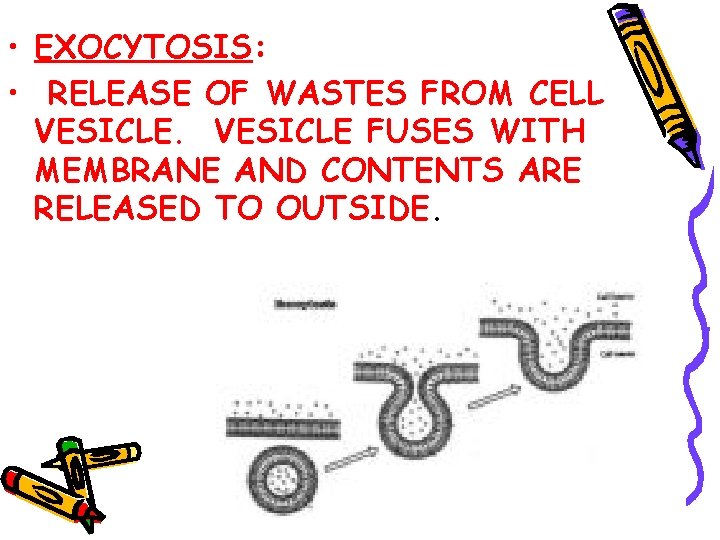
• EXOCYTOSIS: • RELEASE OF WASTES FROM CELL VESICLE FUSES WITH MEMBRANE AND CONTENTS ARE RELEASED TO OUTSIDE.
- Slides: 17