
CHAPTER 4 NONVERBAL COMMUNICATION OBJECTIVES Distinguish between verbal
CHAPTER 4 NONVERBAL COMMUNICATION
OBJECTIVES • Distinguish between verbal and nonverbal communication • Use body language to reinforce your verbal message • Recognize when someone is not telling the truth • Explain how the same gesture can have different meanings in different cultures
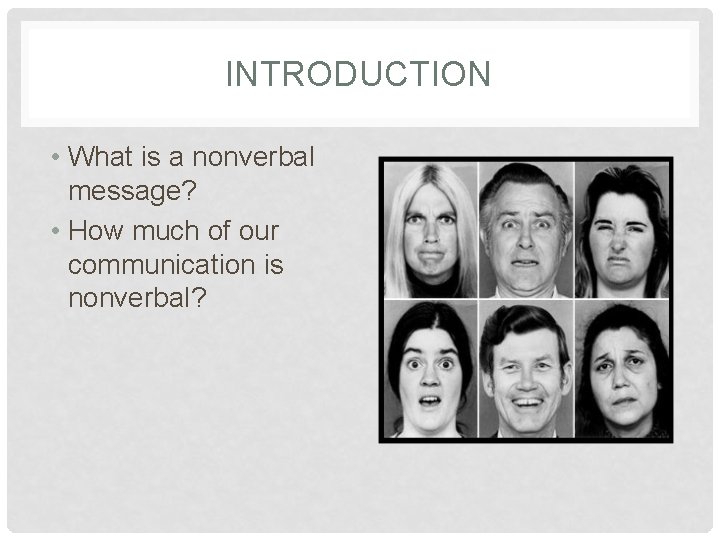
INTRODUCTION • What is a nonverbal message? • How much of our communication is nonverbal?
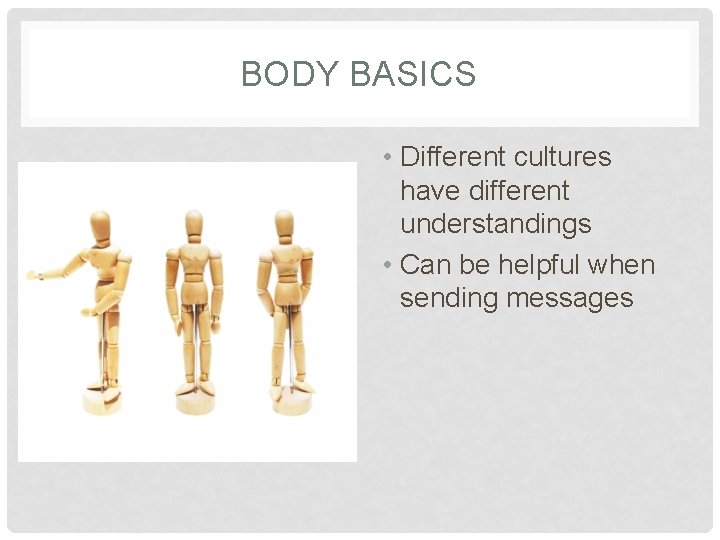
BODY BASICS • Different cultures have different understandings • Can be helpful when sending messages
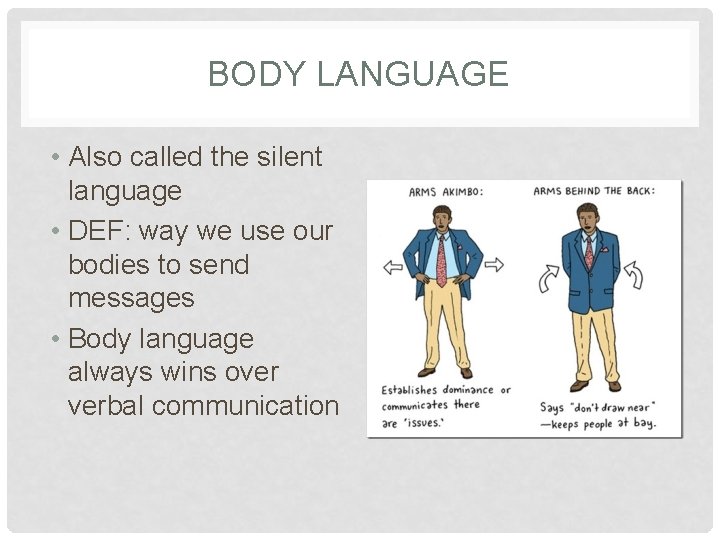
BODY LANGUAGE • Also called the silent language • DEF: way we use our bodies to send messages • Body language always wins over verbal communication
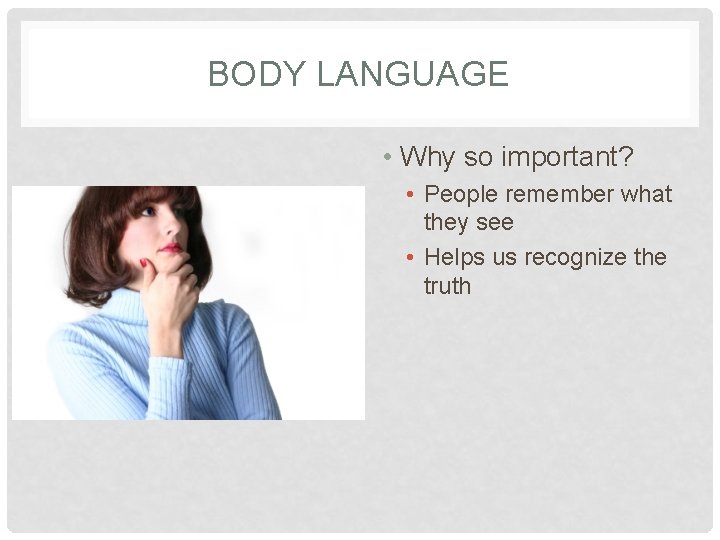
BODY LANGUAGE • Why so important? • People remember what they see • Helps us recognize the truth
BODY LANGUAGE • Often, complicated feelings spill out in the form of body language • “No mortal can keep a secret. If his lips are silent, he chatters with his fingertips”- Sigmund Freud • Facial expressions a leakage of feelings • Body language is also diverse
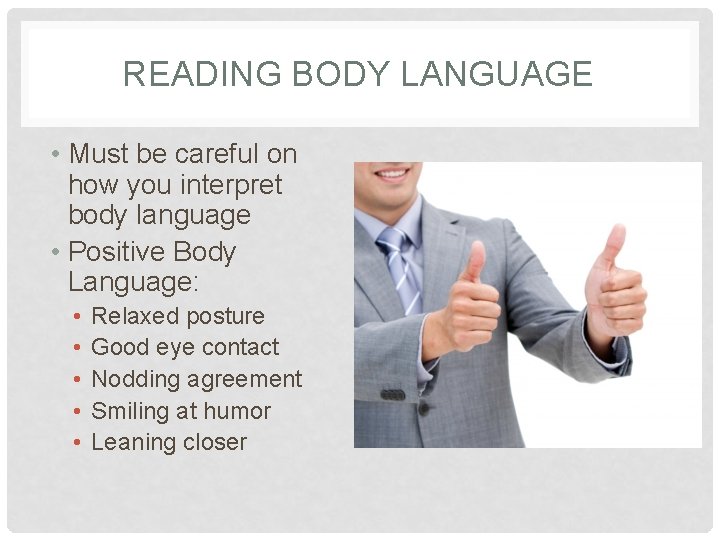
READING BODY LANGUAGE • Must be careful on how you interpret body language • Positive Body Language: • • • Relaxed posture Good eye contact Nodding agreement Smiling at humor Leaning closer
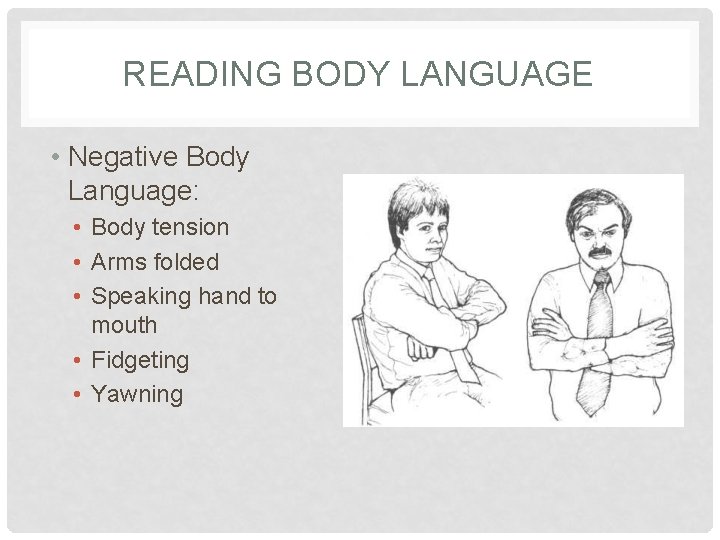
READING BODY LANGUAGE • Negative Body Language: • Body tension • Arms folded • Speaking hand to mouth • Fidgeting • Yawning
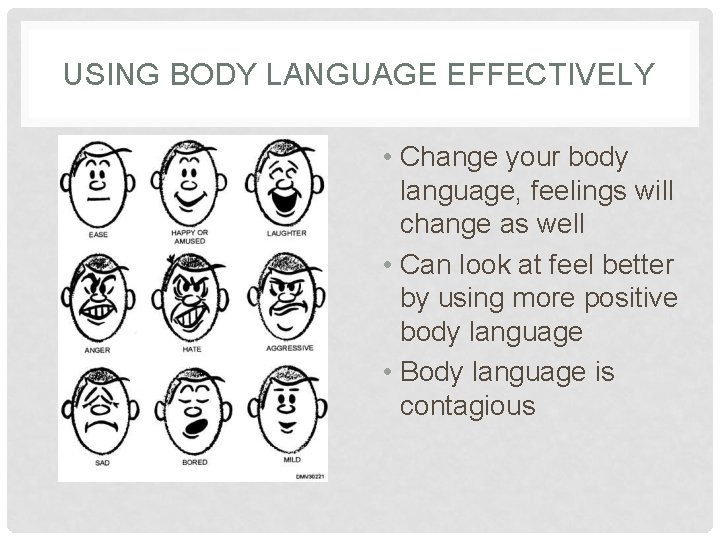
USING BODY LANGUAGE EFFECTIVELY • Change your body language, feelings will change as well • Can look at feel better by using more positive body language • Body language is contagious
INTERPRETING NONVERBAL MESSAGES • People express and interpret nonverbal messages differently • May sometimes put on a false front • We have learned to behave and hide our true feelings • Reading the true meaning of nonverbal messages • Don’t just look- observe • Be alert for variations of the norm • Remember that one signal alone may mean nothing, what you are looking for are clusters of signals
FACIAL EXPRESSIONS • Pay a great deal of attention to other people’s faces • Example: babies • Six emotions are the most popular • • • Surprise Fear Anger Disgust Happiness Sadness
FACIAL EXPRESSIONS • No single area of the face best reveals emotions • Certain features are important to certain emotions • • Disgust: nose cheek mouth Fear: eyes and eyelids Sadness: brows and forehead Happiness: cheeks and mouth
TONE OF VOICE • • Tone can offer a valuable clue into a speaker’s feelings Pitch, pauses, and rhythm important What meanings can the word “oh” have? Rate of speech can tell us about the speaker’s feelings
HOW TO TELL WHEN SOMEONE IS LYING • Control some parts of our bodies better than others • Easiest parts to control are the ones we are most aware of • Like smiles and frowns • General body postures can be revealing • Desmond Morris Study • • Decreased hand activity Increased face touching Stiff and rigid posture Increased body shifting
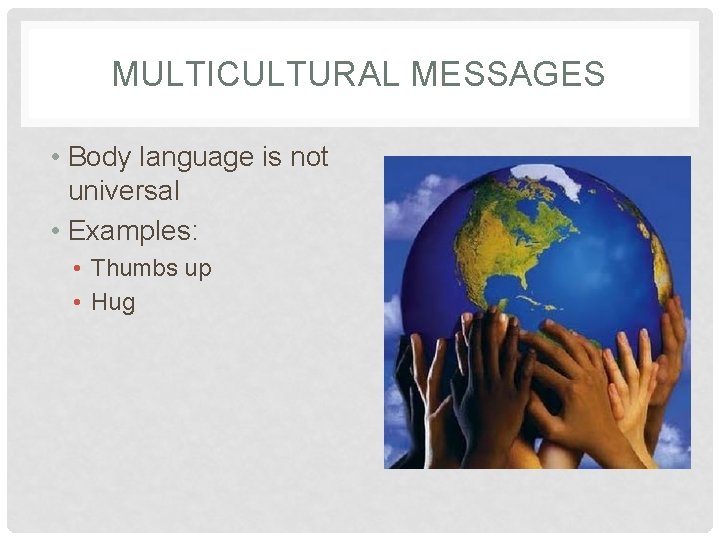
MULTICULTURAL MESSAGES • Body language is not universal • Examples: • Thumbs up • Hug
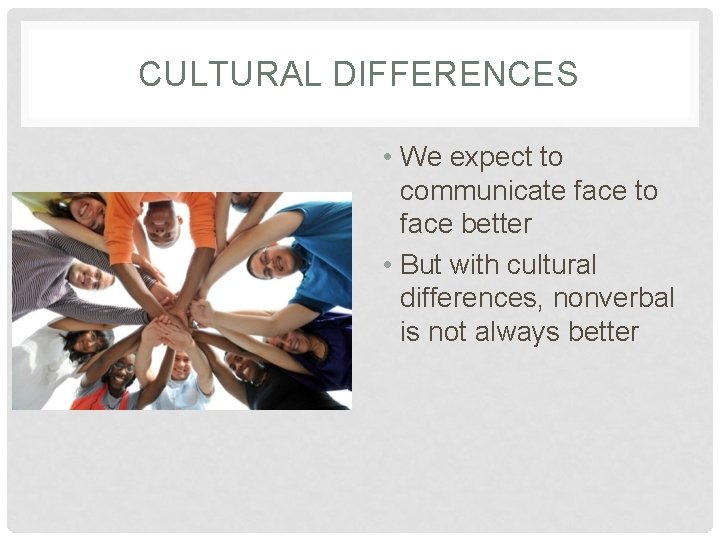
CULTURAL DIFFERENCES • We expect to communicate face to face better • But with cultural differences, nonverbal is not always better
GESTURES AROUND THE WORLD • Why do humans use the same gestures? • Examples: • Nodding • Tapping your head with forefinger • Scratching your head
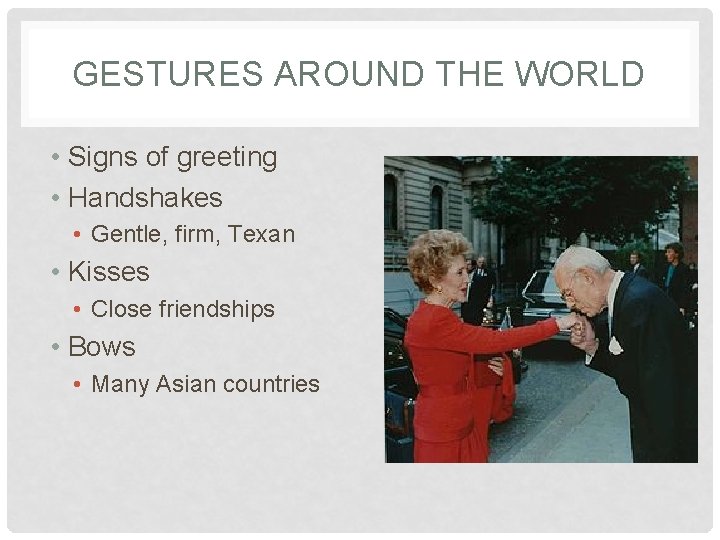
GESTURES AROUND THE WORLD • Signs of greeting • Handshakes • Gentle, firm, Texan • Kisses • Close friendships • Bows • Many Asian countries
TOUCHING CUSTOMS • • • Touching is a language of physical intimacy Can be the most powerful of communication channels Affects sexes differently Women respond more positively Men respond negatively
WATCHING MY SPACE • • • All like a bubble of personal space Represents our personal territory Americans- about 2 feet Latin Americans and Middle Easterners- much closer Types of space: • • Intimate Personal Social Public
- Slides: 21