
Chapter 4 MUSCULAR STRENGTH AND ENDURANCE Muscle Physiology

- Slides: 23
Chapter 4 MUSCULAR STRENGTH AND ENDURANCE
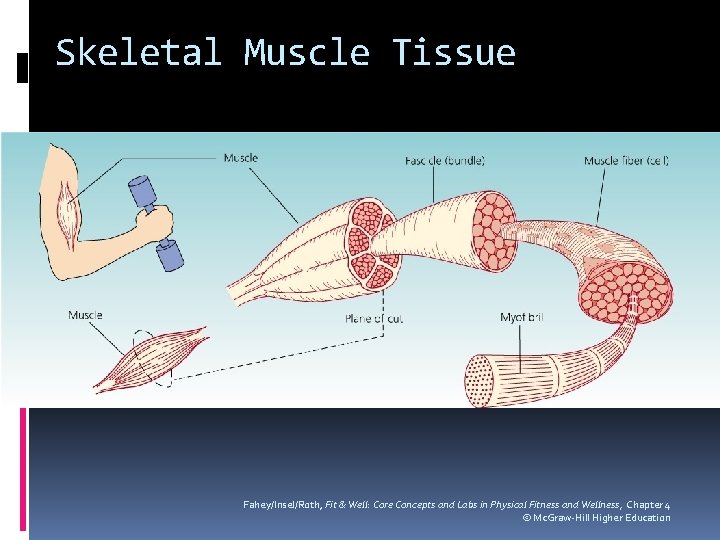
Muscle Physiology Muscles consist of many muscle fibers (cells) connected in bundles Muscle fibers are made up of myofibrils Strength training increases the number of myofibrils and the size of muscle fibers = hypertrophy Inactivity reverses the process = atrophy (smaller muscles)
Skeletal Muscle Tissue Fahey/Insel/Roth, Fit & Well: Core Concepts and Labs in Physical Fitness and Wellness, Chapter 4 © Mc. Graw-Hill Higher Education
Muscle Fibers Slow-twitch fibers Fatigue resistant Don’t contract as rapidly and forcefully as fast-twitch fibers Rely primarily on oxidative energy system Endurance activities Fast-twitch fibers Contract rapidly and forcefully Fatigue more quickly than slow-twitch fibers Rely more on non-oxidative energy system Strength and power activities
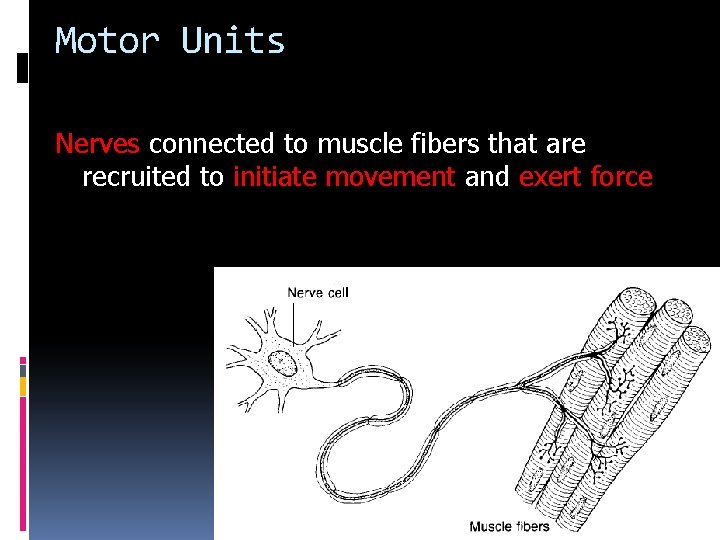
Motor Units Nerves connected to muscle fibers that are recruited to initiate movement and exert force
Physiological Effects of Strength Training Increased muscle mass and size of muscle fibers Increased utilization and coordination of motor units Increased strength of tendons, ligaments, and bones Increased storage of fuel in and blood supply to muscles
Benefits of Muscular Strength and Endurance Improved performance of physical activities Injury prevention Improved body composition Enhanced self-image and quality of life Improved muscle and bone health with aging Prevention and management of chronic disease
Assessing Muscular Strength and Endurance Muscular strength assessed by determining repetition maximum (1 RM), the maximum resistance that can be lifted once Muscular endurance assessed by counting the maximum number of repetitions of a muscular contraction
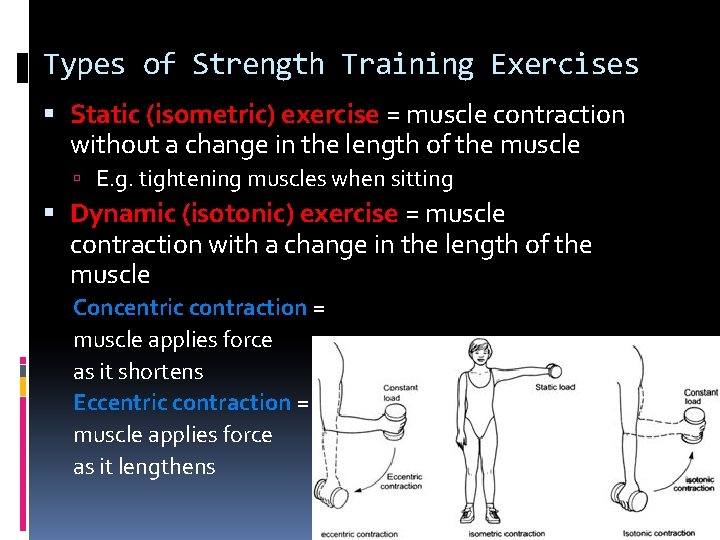
Types of Strength Training Exercises Static (isometric) exercise = muscle contraction without a change in the length of the muscle E. g. tightening muscles when sitting Dynamic (isotonic) exercise = muscle contraction with a change in the length of the muscle Concentric contraction = muscle applies force as it shortens Eccentric contraction = muscle applies force as it lengthens
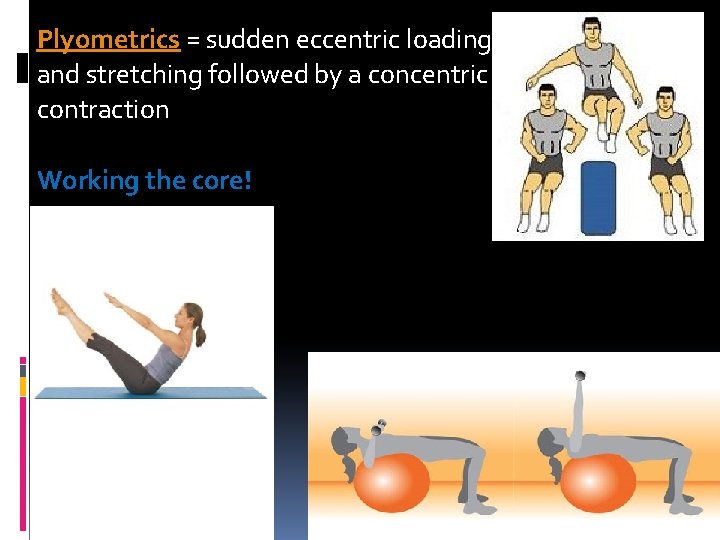
Plyometrics = sudden eccentric loading and stretching followed by a concentric contraction Working the core!
Creating a Successful Weight Training Program Choosing equipment: Weight machines versus free weights Resistance is provided by both types Exercise machines Safer, convenient, and easy to use Free weights Require more care, balance, and coordination Strength transfers to daily activities Fahey/Insel/Roth, Fit & Well: Core Concepts and Labs in Physical Fitness and Wellness, Chapter 4 © Mc. Graw-Hill Higher Education
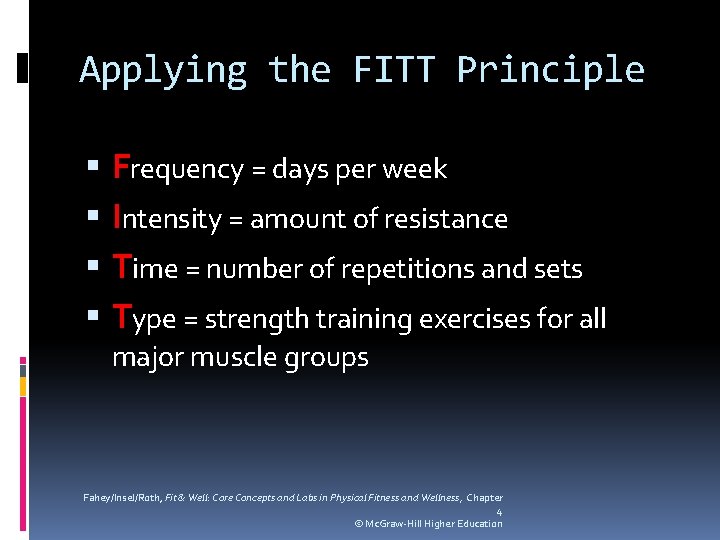
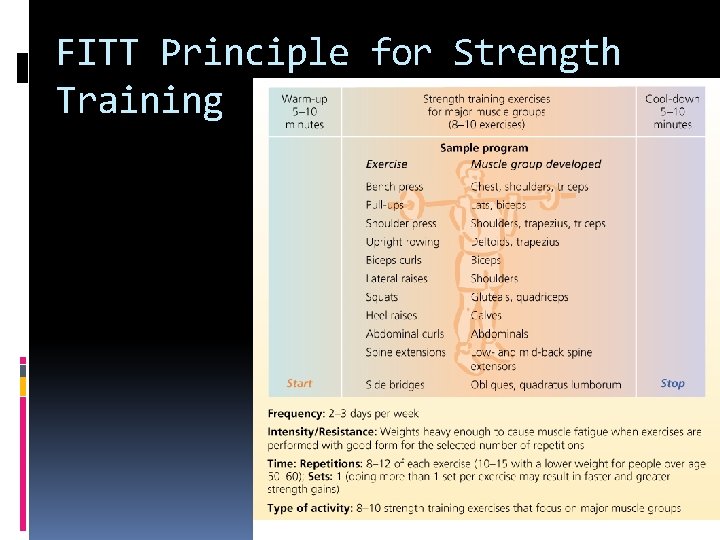
Applying the FITT Principle Frequency = days per week Intensity = amount of resistance Time = number of repetitions and sets Type = strength training exercises for all major muscle groups Fahey/Insel/Roth, Fit & Well: Core Concepts and Labs in Physical Fitness and Wellness, Chapter 4 © Mc. Graw-Hill Higher Education
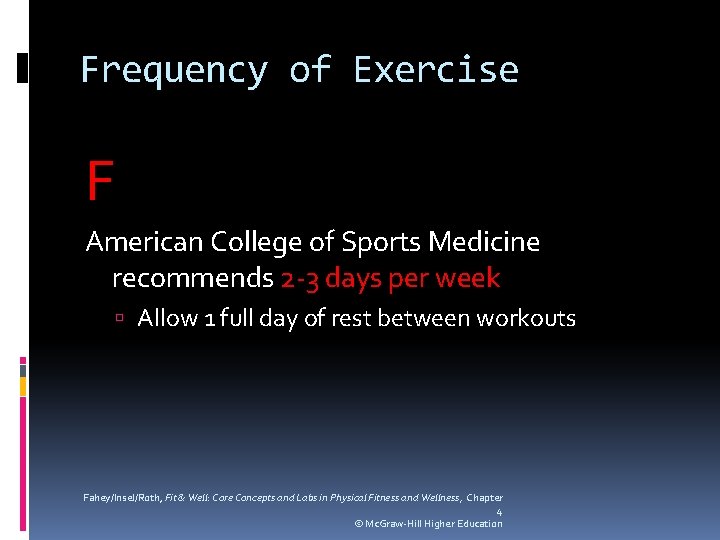
Frequency of Exercise F American College of Sports Medicine recommends 2 -3 days per week Allow 1 full day of rest between workouts Fahey/Insel/Roth, Fit & Well: Core Concepts and Labs in Physical Fitness and Wellness, Chapter 4 © Mc. Graw-Hill Higher Education
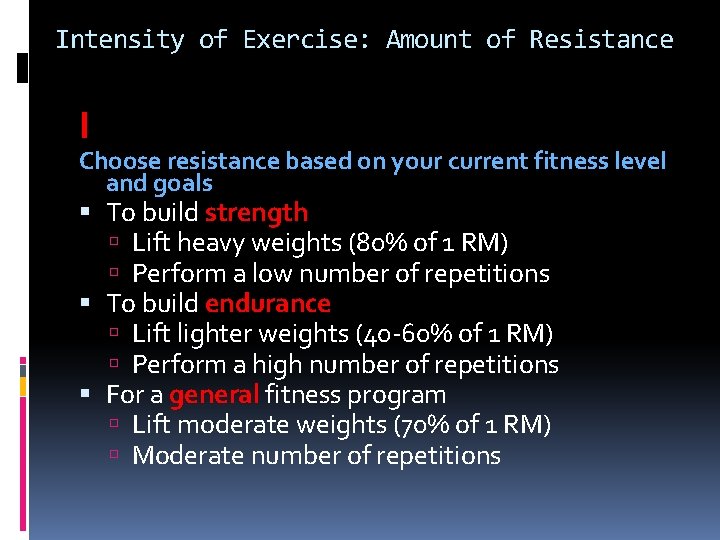
Intensity of Exercise: Amount of Resistance I Choose resistance based on your current fitness level and goals To build strength Lift heavy weights (80% of 1 RM) Perform a low number of repetitions To build endurance Lift lighter weights (40 -60% of 1 RM) Perform a high number of repetitions For a general fitness program Lift moderate weights (70% of 1 RM) Moderate number of repetitions
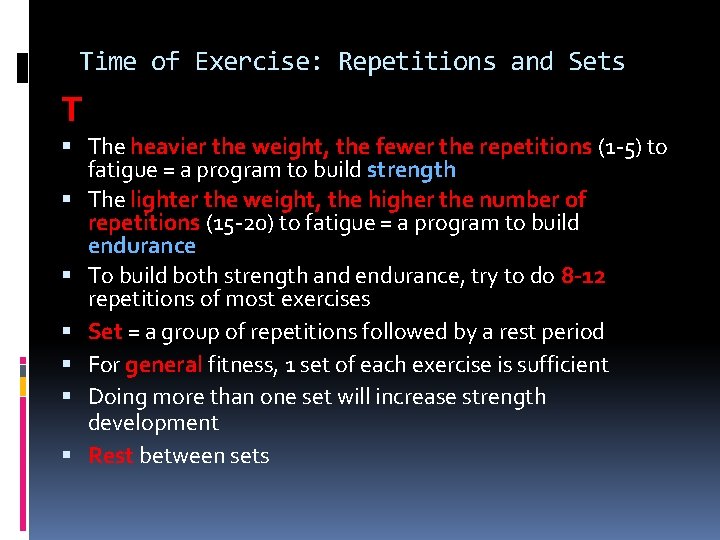
Time of Exercise: Repetitions and Sets T The heavier the weight, the fewer the repetitions (1 -5) to fatigue = a program to build strength The lighter the weight, the higher the number of repetitions (15 -20) to fatigue = a program to build endurance To build both strength and endurance, try to do 8 -12 repetitions of most exercises Set = a group of repetitions followed by a rest period For general fitness, 1 set of each exercise is sufficient Doing more than one set will increase strength development Rest between sets
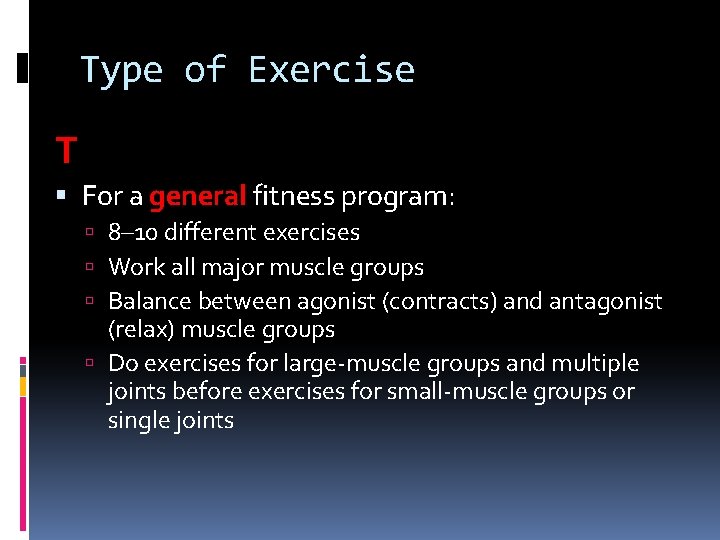
Type of Exercise T For a general fitness program: 8– 10 different exercises Work all major muscle groups Balance between agonist (contracts) and antagonist (relax) muscle groups Do exercises for large-muscle groups and multiple joints before exercises for small-muscle groups or single joints
Warm Up and Cool Down Warm up prior to each weight training session with a general warm-up and a warm-up for the exercises you will perform Cool down after weight training, relax for 5 -10 minutes, lower your heart rate
FITT Principle for Strength Training
Making Progress To start: Choose a weight with which you can do 8– 12 repetitions with good form To progress: Add resistance when you can do more than 12 repetitions Maintain good form at all times Track your progress
Sample Workout Card
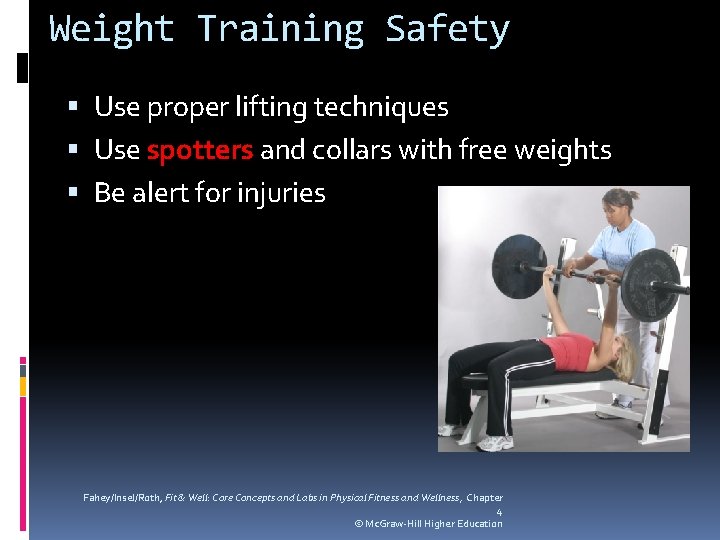
Weight Training Safety Use proper lifting techniques Use spotters and collars with free weights Be alert for injuries Fahey/Insel/Roth, Fit & Well: Core Concepts and Labs in Physical Fitness and Wellness, Chapter 4 © Mc. Graw-Hill Higher Education
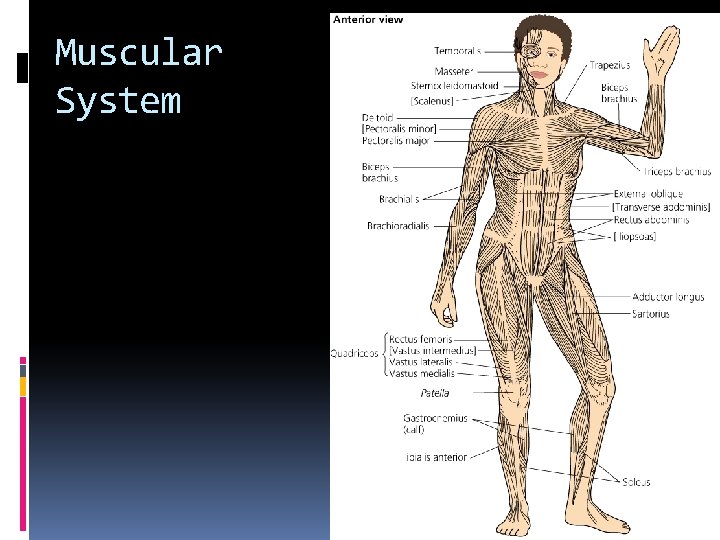
Muscular System
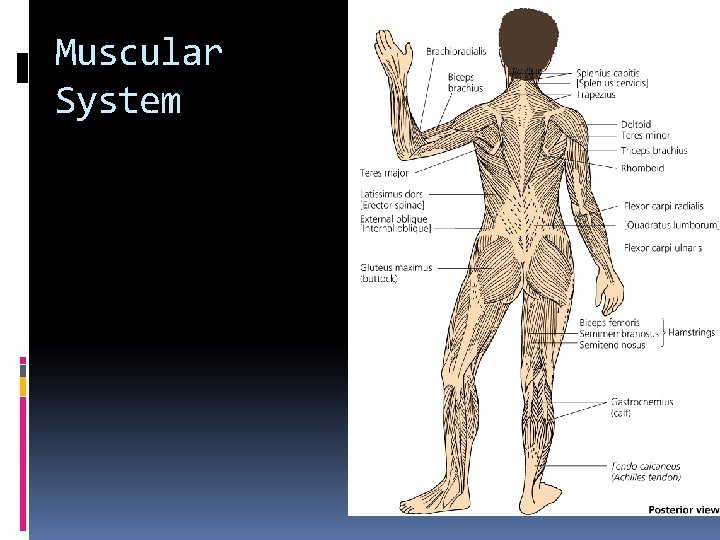
Muscular System