
Chapter 4 Module 9 Environmental systems analysis methodology
- Slides: 12
Chapter 4 Module 9 Environmental systems analysis methodology Can totally different sanitation systems be fairly compared? How are environmental impacts measured?
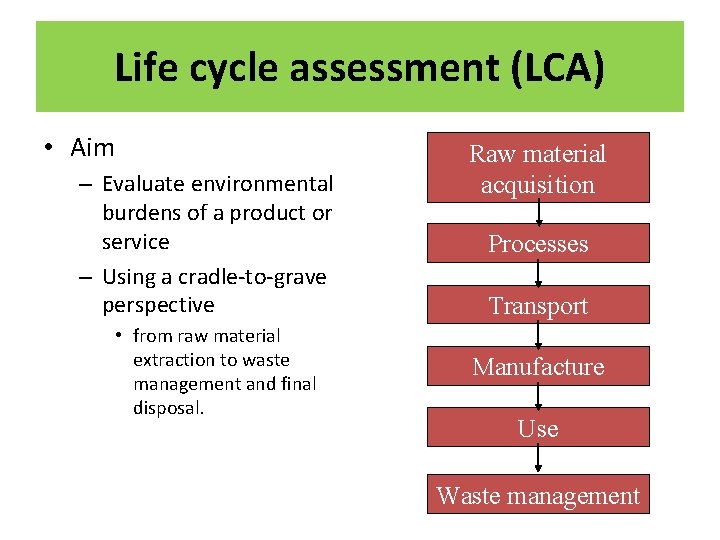
Life cycle assessment (LCA) • Aim – Evaluate environmental burdens of a product or service – Using a cradle-to-grave perspective • from raw material extraction to waste management and final disposal. Raw material acquisition Processes Transport Manufacture Use Waste management
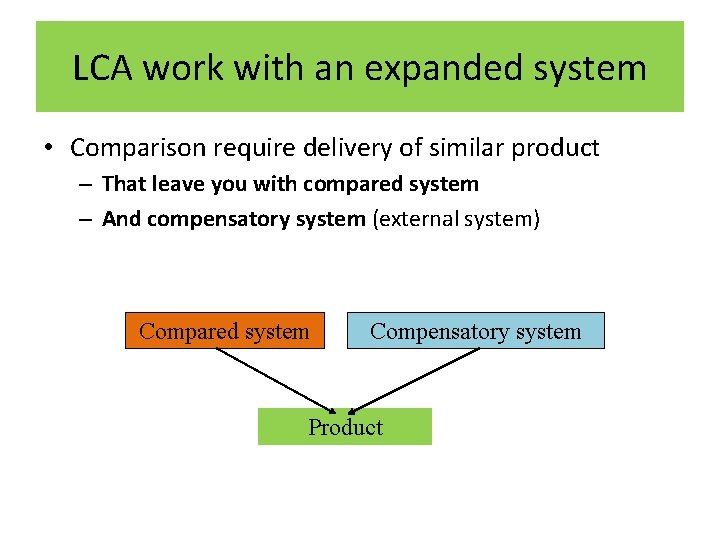
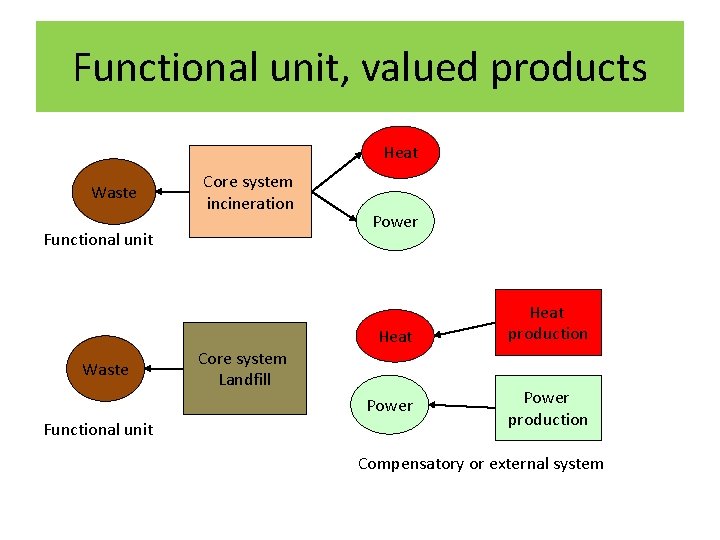
LCA work with an expanded system • Comparison require delivery of similar product – That leave you with compared system – And compensatory system (external system) Compared system Compensatory system Product
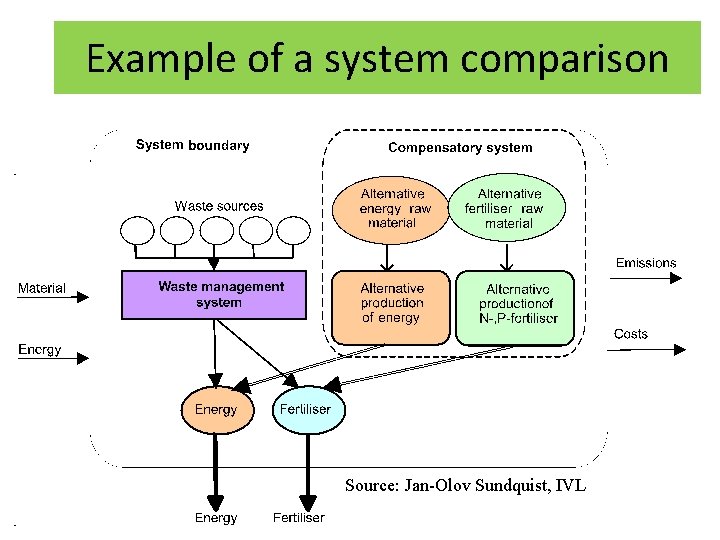
Example of a system comparison Source: Jan-Olov Sundquist, IVL
Functional unit, valued products Heat Waste Core system incineration Functional unit Power Heat Waste Core system Landfill Power Functional unit Heat production Power production Compensatory or external system
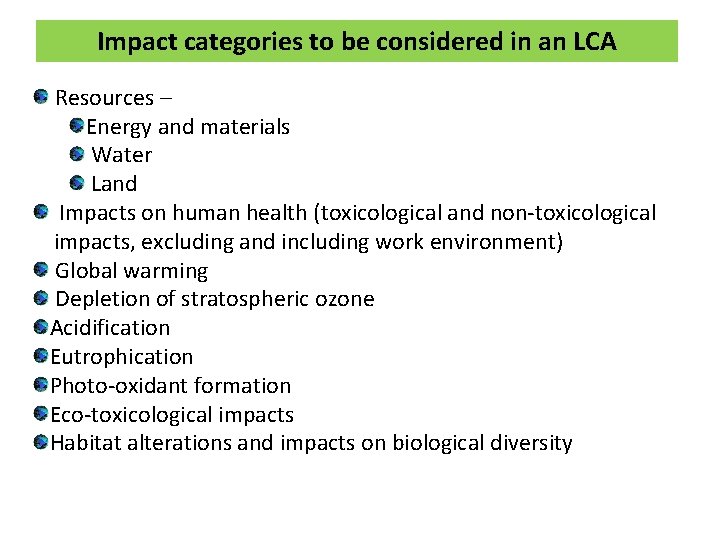
Impact categories to be considered in an LCA Resources – Energy and materials Water Land Impacts on human health (toxicological and non-toxicological impacts, excluding and including work environment) Global warming Depletion of stratospheric ozone Acidification Eutrophication Photo-oxidant formation Eco-toxicological impacts Habitat alterations and impacts on biological diversity
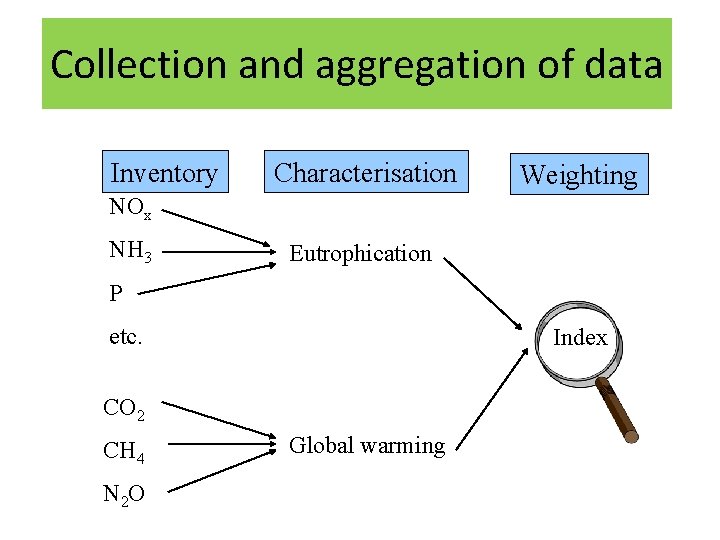
Collection and aggregation of data Inventory Characterisation Weighting NOx NH 3 Eutrophication P etc. Index CO 2 CH 4 N 2 O Global warming
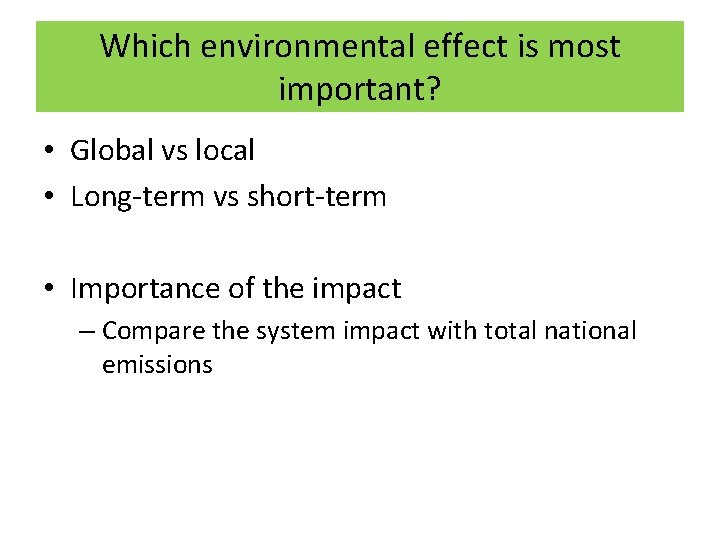
Which environmental effect is most important? • Global vs local • Long-term vs short-term • Importance of the impact – Compare the system impact with total national emissions
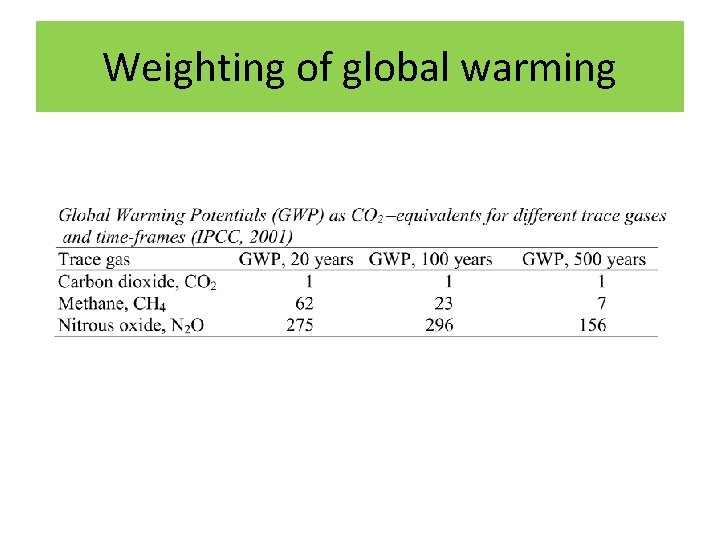
Weighting of global warming
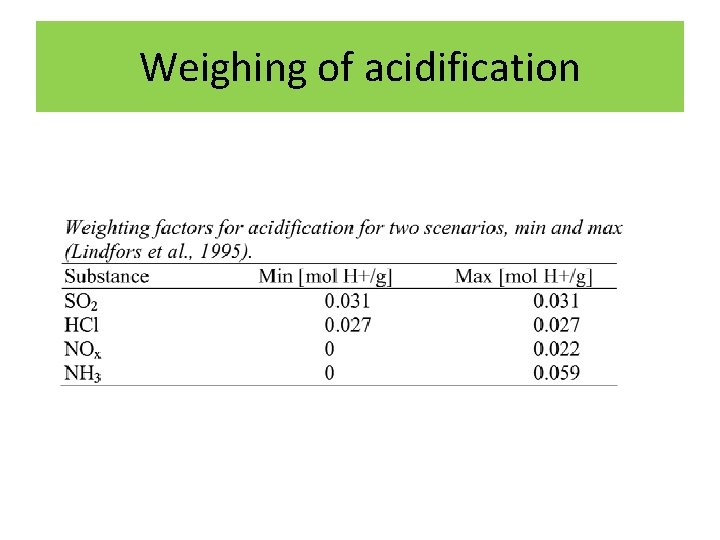
Weighing of acidification
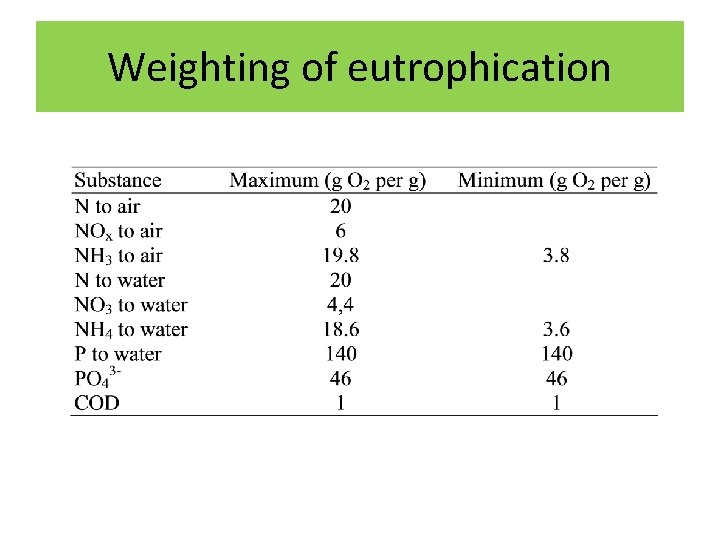
Weighting of eutrophication
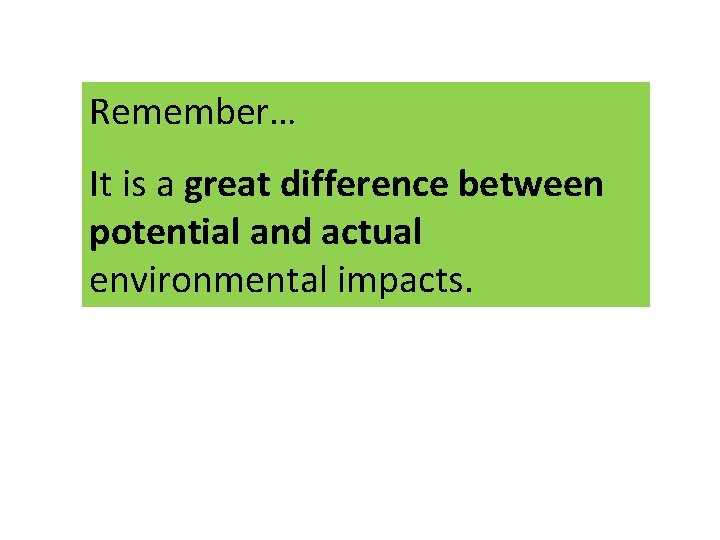
Remember… It is a great difference between potential and actual environmental impacts.