
CHAPTER 4 Managing Stress Coping With Loss Understanding
- Slides: 27
CHAPTER 4 Managing Stress & Coping With Loss
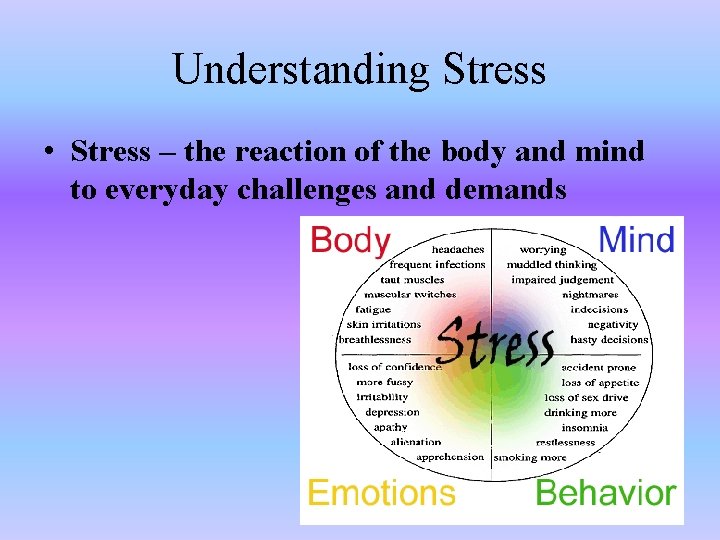
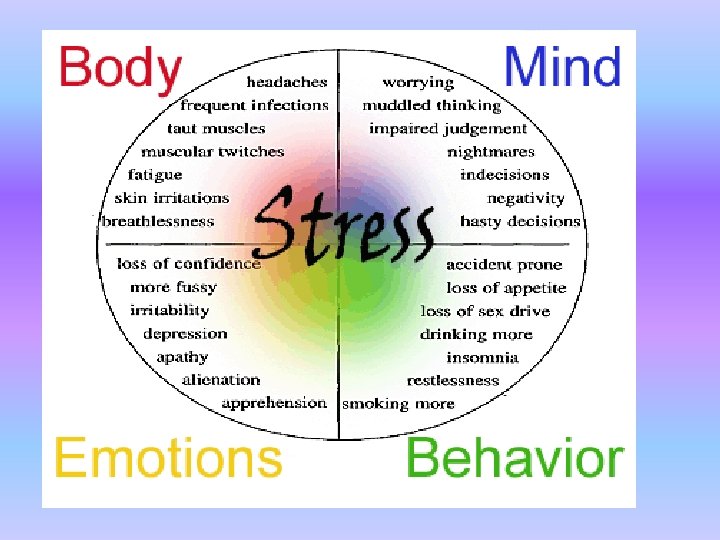
Understanding Stress • Stress – the reaction of the body and mind to everyday challenges and demands
Kinds of Stress – Eustress – good stress – Distress – bad stress
Perception • act of becoming aware through senses
What causes the stress? • Stressor – anything that causes stress
Kinds of stressors • Biological – chemical imbalance, illness, disability • Environmental – poverty, pollution, natural disasters • Cognitive (thinking) – perception of situations and how they affect you • Personal behavior – negative reactions in body dealing with alcohol, drugs, and no physical activity • Life situations – pet dies, divorce
Stress Response • Body Systems involved – Nervous System – Endocrine System • The body’s response is involuntary and automatic
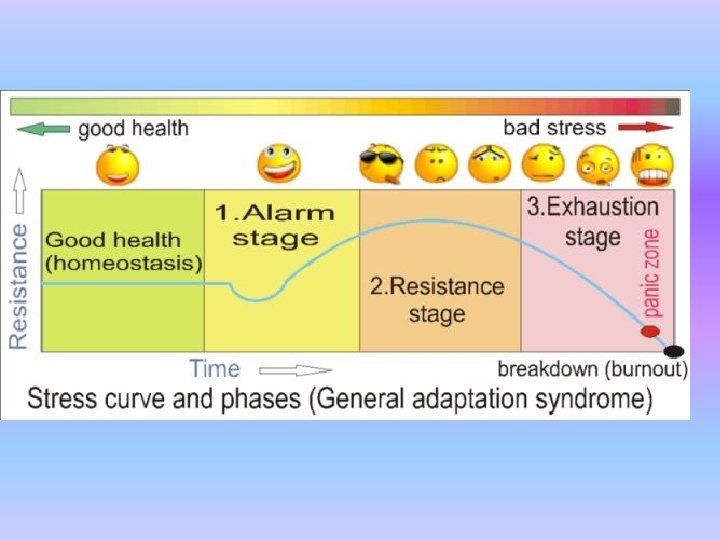
Stages • Alarm Stage – 1 st stage – where body and mind go on high alert – Fight – or – flight response – Hypothalamus receives signal from brain and releases hormone that acts on the pituitary gland, which secretes hormone that stimulates the adrenal gland, which secretes adrenaline – Adrenaline – emergency hormone
Alarm Stage (cont’d) • Physical symptoms – Dilated pupils – Increase in perspiration – Faster heart rate and pulse – Rise in blood pressure – Increase in muscle tension
Resistance Stage • 2 nd stage • where the body adapts to the rush of the alarm stage and returns to “normal”
Fatigue Stage • 3 rd stage • tired feeling and lower activity level
Types of Fatigue • Physical – long exercise, body produces waste • Pathological – depressed immunity • Psychological – constant worry
Psychosomatic response • a physical reaction that results from stress rather than from an injury or illness
Physical effects of stress • • • Headache weakened immune system high blood pressure bruxism – clenching the jaw or grinding teeth digestive disorders
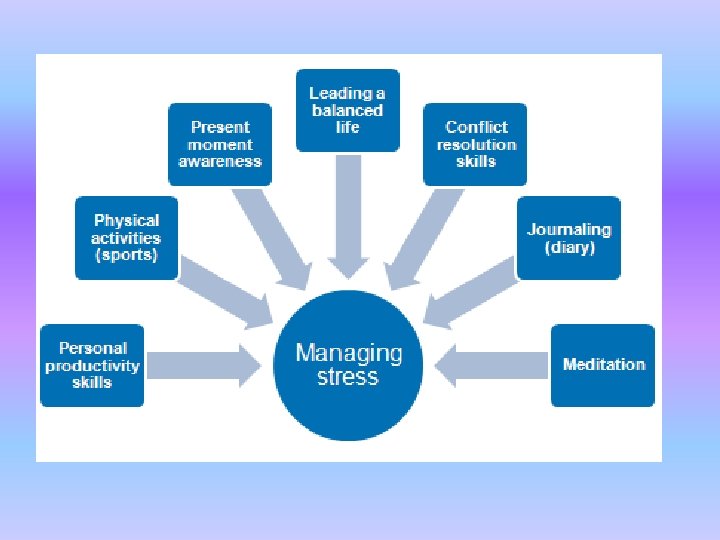
Managing Stress • Effects of stress are additive • Chronic stress – stress associated with longterm problems that are beyond person’s control
Stress management skills • skills that help individual handle stress in healthful effective ways – Avoid and Limit Stress by: • use refusal skills • plan ahead • think positively
Handling Stress and Reducing Its Effects • Practice relaxation techniques – Relaxation response – a state of calm that can be reached if one or more relaxation techniques are practiced regularly – Deep breathing, thinking pleasant thoughts, massage, stretch • redirect your energy • seek support
Staying Healthy and Building Resiliency • Get adequate rest • Get regular physical activity • Ear nutritious foods
Coping with Grief and Loss • Acknowledge the loss • Express the grief • Stages of grief - a variety of reactions that may surface as an individual makes sense of how a loss affects him or her
Stages of Grief • • denial or numbness emotional release anger bargaining depression remorse acceptance hope
Stages of Grief • closure – the acceptance of a loss • coping – dealing successfully with difficult changes in your life
Coping With Death • One of the most painful losses humans experience • Mourning – the act of showing sorrow or grief • Showing empathy – help person recall happy positive memories – be a sympathetic listener – don’t rush the grieving process
Coping with traumatic events • Traumatic event – any event that has a stressful impact sufficient to overwhelm your normal coping strategies