
Chapter 4 Local Area Networks Layer 2 The

- Slides: 37
Chapter 4 Local Area Networks
Layer 2: The Datalink Layer n n The datalink layer provides point-topoint connectivity between devices over the physical connections provided by the underlying physical layer The datalink layer breaks a data stream into chunks called frames, or cells.
Layer 2: The Datalink Layer n n The datalink layer provides a reliable communications link between devices. Three key functions: n n error detection error correction flow control In LANs the datalink layer can be broken down into two sublayers: media access control (MAC) and logical link control (LLC).
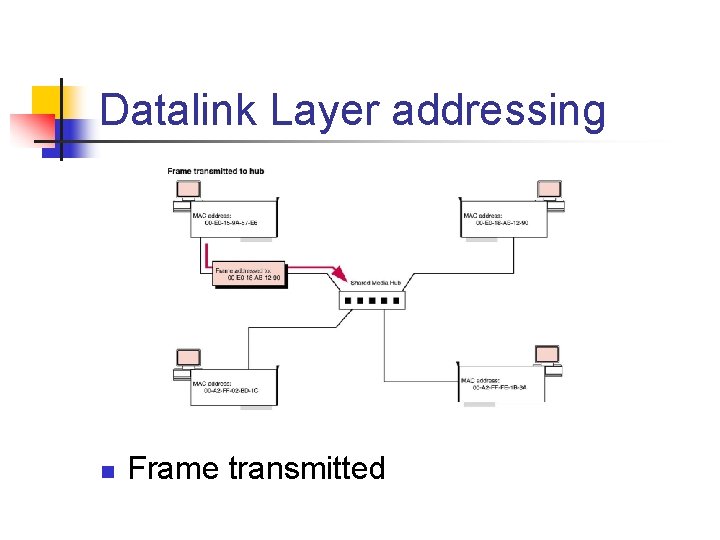
Datalink Layer addressing n Frame transmitted
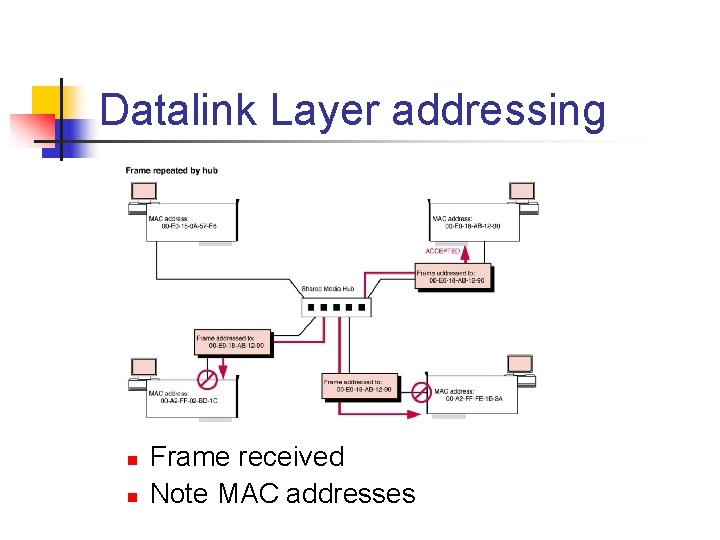
Datalink Layer addressing n n Frame received Note MAC addresses
LAN Architecture Model n n n A network’s architecture consists of a: Access methodology Logical topology Physical topology No single architecture is best in all circumstances.
Access Methodology n n CSMA/CD Token Passing
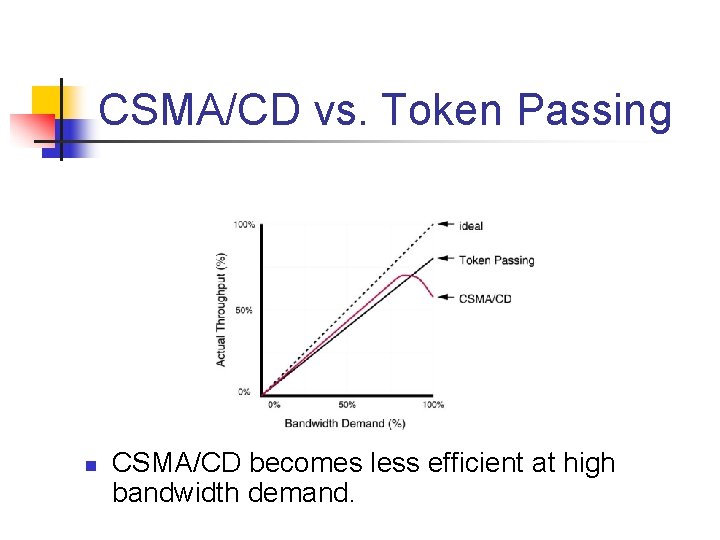
CSMA/CD vs. Token Passing n CSMA/CD becomes less efficient at high bandwidth demand.
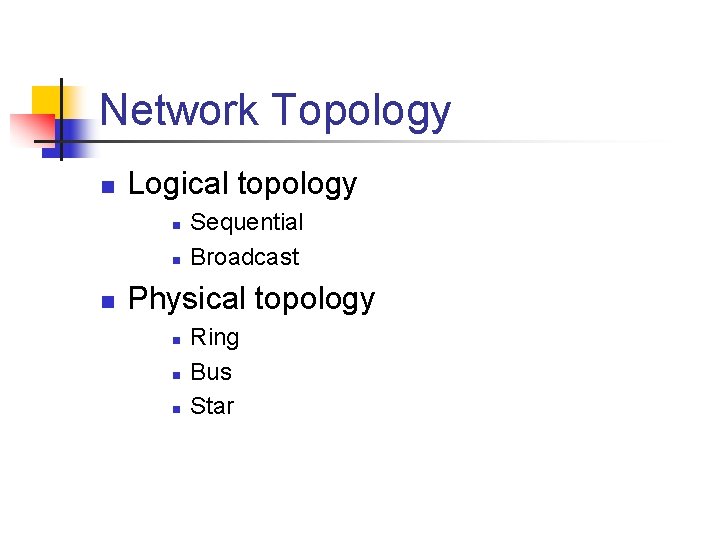
Network Topology n Logical topology n n n Sequential Broadcast Physical topology n n n Ring Bus Star
LAN Components A local area network, regardless of network architecture, requires the following components: n n A central wiring concentrator Media Network Interface Cards Network interface card drivers.
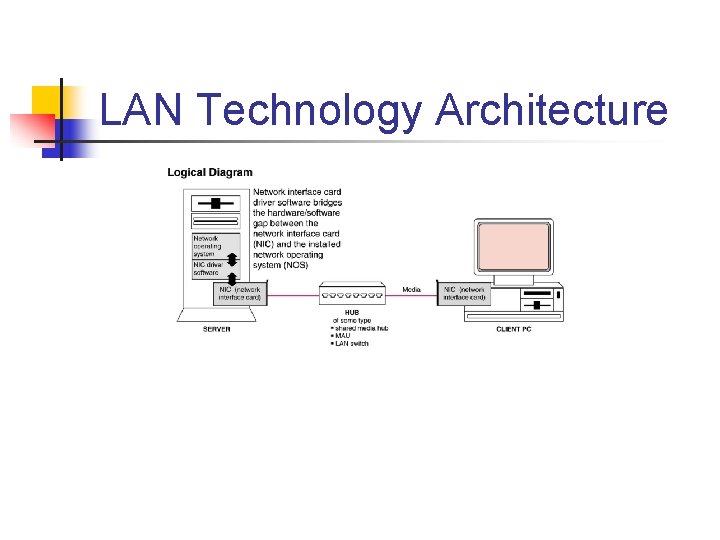
LAN Technology Architecture
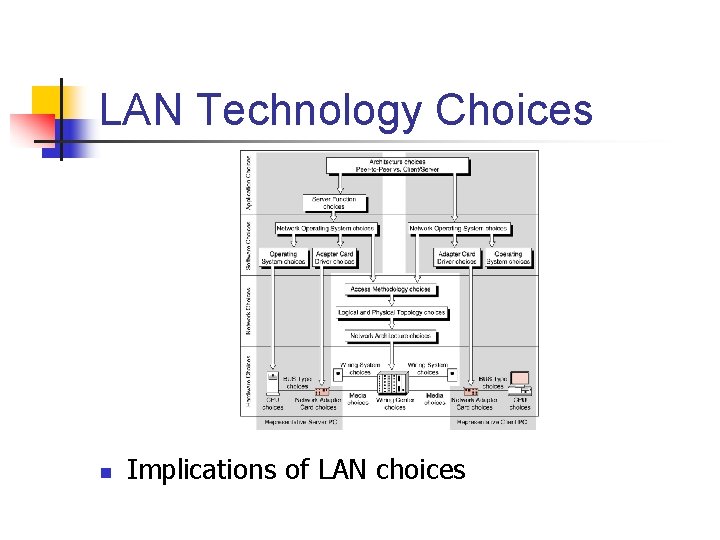
LAN Technology Choices n Implications of LAN choices
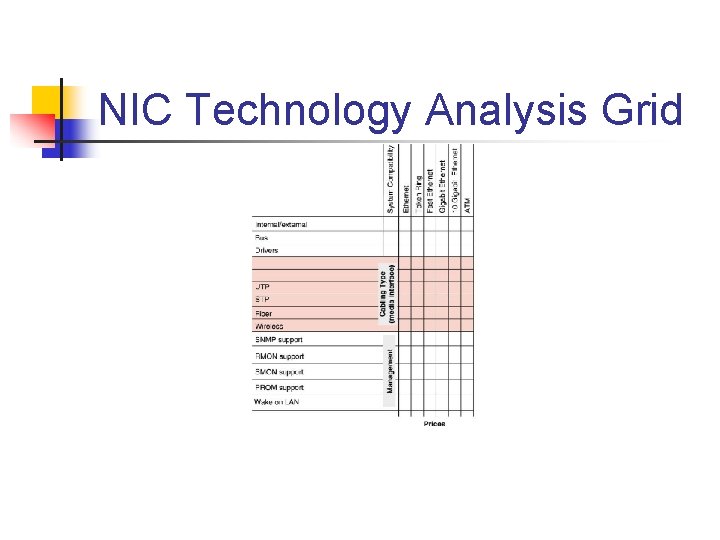
NIC Technology Analysis Grid
Ethernet n Traditional Ethernet can be defined as follows: n n n Access methodology: CSMA/CD Logical topology: Broadcast Physical Topology: Historically—bus, currently—star
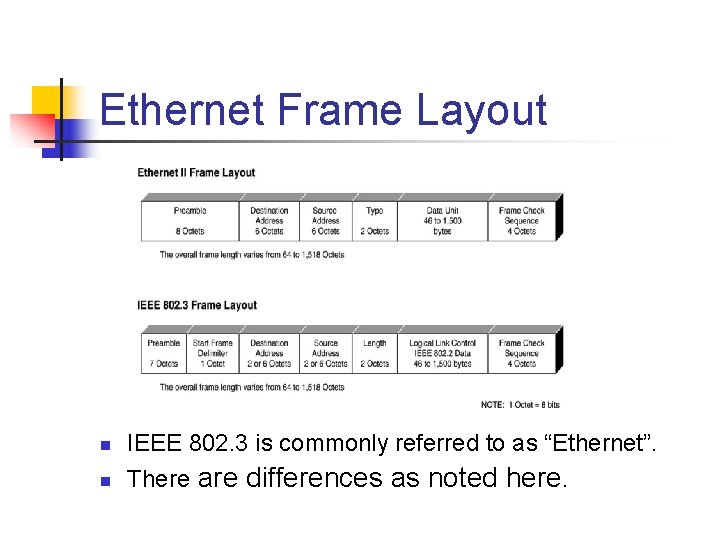
Ethernet Frame Layout n IEEE 802. 3 is commonly referred to as “Ethernet”. n There are differences as noted here.
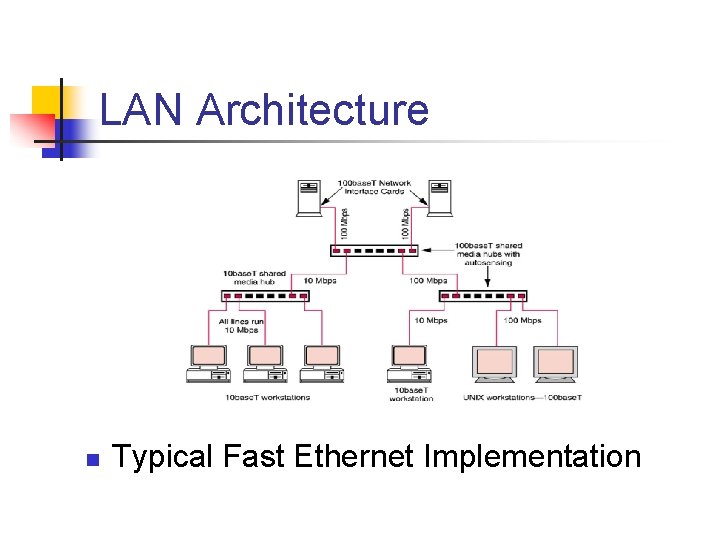
LAN Architecture n Typical Fast Ethernet Implementation
Gigabit Ethernet n Also known as 1000 Base. X, is an upgrade to fast Ethernet that was standardized as IEEE 802. 3 z : n n n 1000 Base. SX: uses short wavelength laser multimode fiber optic media, primarily for horizontal building cabling. 1000 Base. LX: uses long wavelength laser single mode fiber optic media, primarily for high-speed campus backbone applications. 1000 Base. TX: uses four pair of cat 5 UTP with a maximum distance of 100 m.
Token Ring n n n Access methodology: Token passing Logical Topology: Sequential Physical Topology: Star IEEE 802. 5 Once contended with 802. 3 New installations are uncommon
Wireless LANs n n n IEEE 802. 11 standard CSMA/CA at MAC layer 802. 11 frames are similar to Ethernet frames
Wireless LANs – 802. 11 b n n n 11 Mbps theoretical, 4 Mbps practical 2. 4 Ghz band – subject to interference from common electronic equipment Shared access – sensitive to number of simultaneous users Commonly available, inexpensive Range is measured in 100’s of feet, lower indoors.
Wireless LANs – 802. 11 g n n n Interoperates with, similar to 802. 11 b 54 Mbps theoretical Same band Similar range Also very common, inexpensive
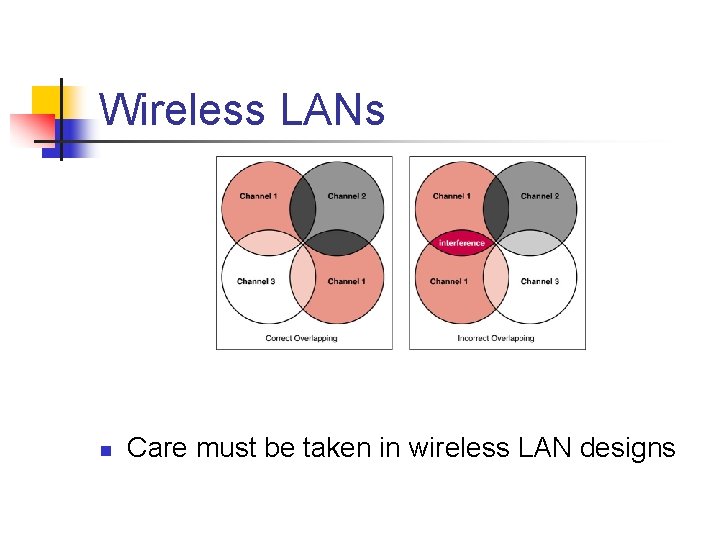
Wireless LANs n Care must be taken in wireless LAN designs
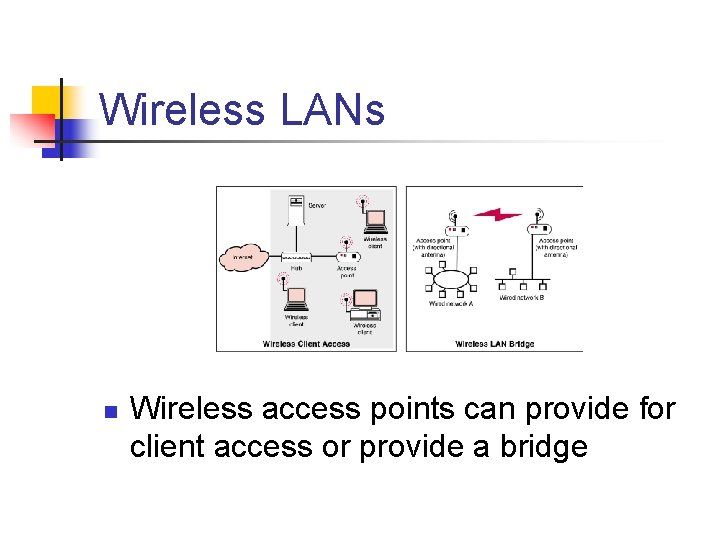
Wireless LANs n Wireless access points can provide for client access or provide a bridge
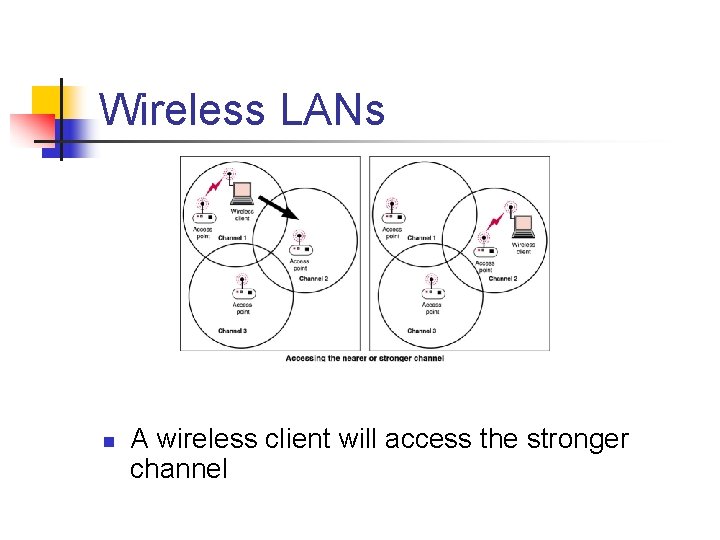
Wireless LANs n A wireless client will access the stronger channel
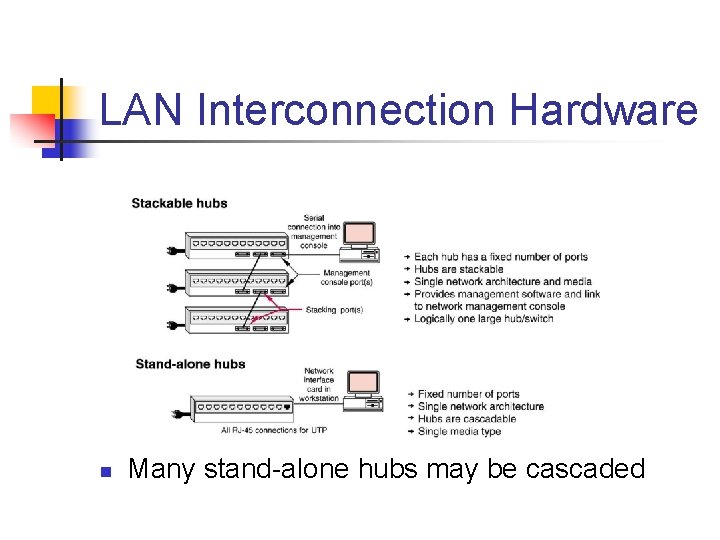
LAN Interconnection Hardware n Many stand-alone hubs may be cascaded
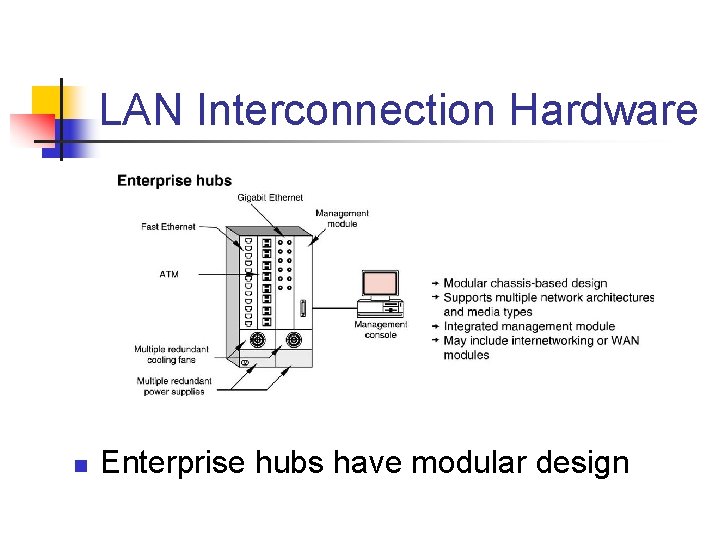
LAN Interconnection Hardware n Enterprise hubs have modular design
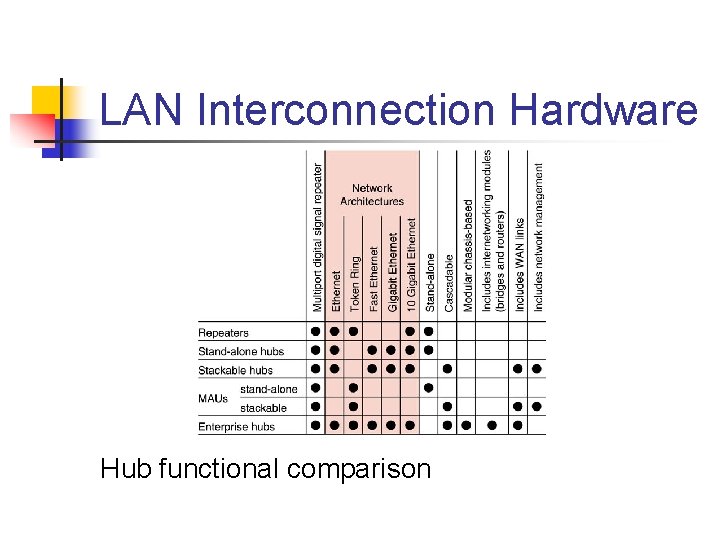
LAN Interconnection Hardware Hub functional comparison
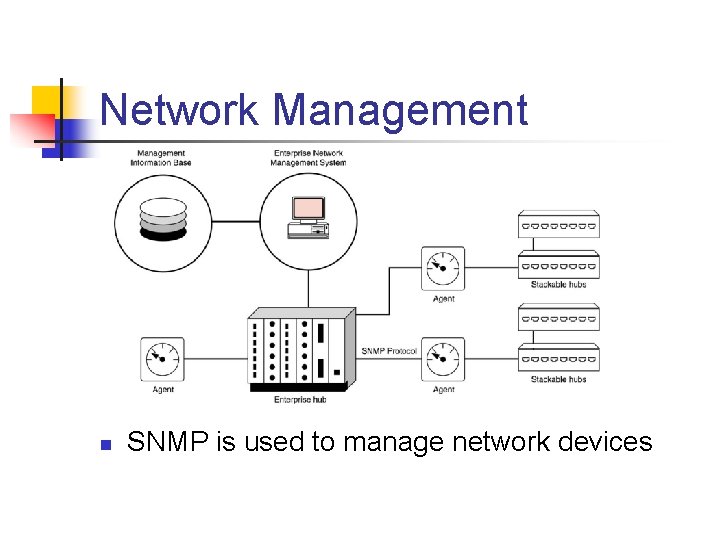
Network Management n SNMP is used to manage network devices
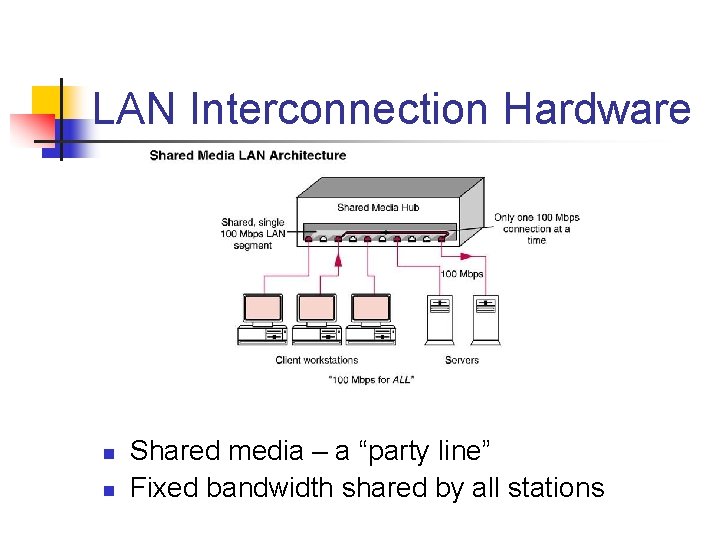
LAN Interconnection Hardware n n Shared media – a “party line” Fixed bandwidth shared by all stations
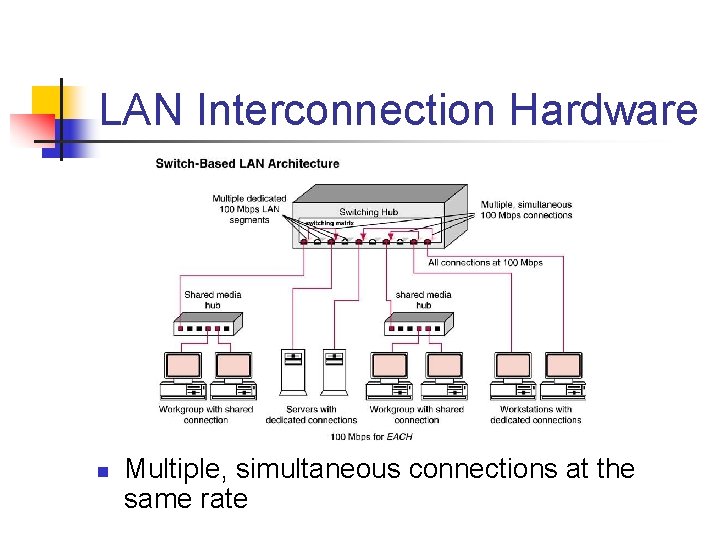
LAN Interconnection Hardware n Multiple, simultaneous connections at the same rate
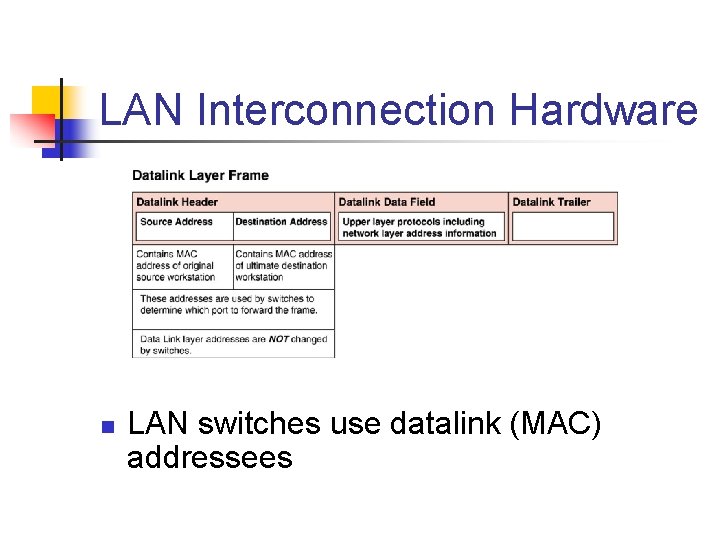
LAN Interconnection Hardware n LAN switches use datalink (MAC) addressees
Switching n n Switching is a datalink layer process, making forwarding decisions based on the contents of layer two frame addresses Switches are transparent devices, receiving every frame broadcast on a port
Switching n n A switch checks the source address of each frame it receives and adds that source address to the local address table (LAT) for the port. The switch is learning, without having to be manually reconfigured, about new workstations that might have been added to the network.
Store and Forward Switching n n The entire frame is read into switch memory. Bad frames are not forwarded.
Cut-through Switching n n n Only the address information in the header is read before beginning processing. Very fast Bad frames are forwarded.
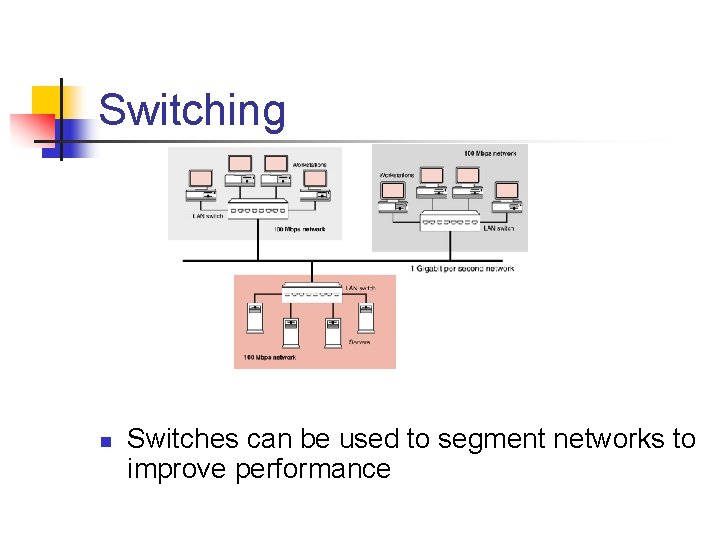
Switching n Switches can be used to segment networks to improve performance
Copyright 2004 John Wiley & Sons, Inc. All rights reserved. Reproduction or translation of this work beyond that permitted in section 117 of the 1976 United States Copyright Act without express permission of the copyright owner is unlawful. Request for further information should be addressed to the Permissions Department, John Wiley & Sons, Inc. The purchaser may make back-up copies for his/her own use only and not for distribution or resale. The Publisher assumes no responsibility for errors, omissions, or damages caused by the use of these programs or from the use of the information herein.