
Chapter 4 Listening Effectively Learning Objectives After reading
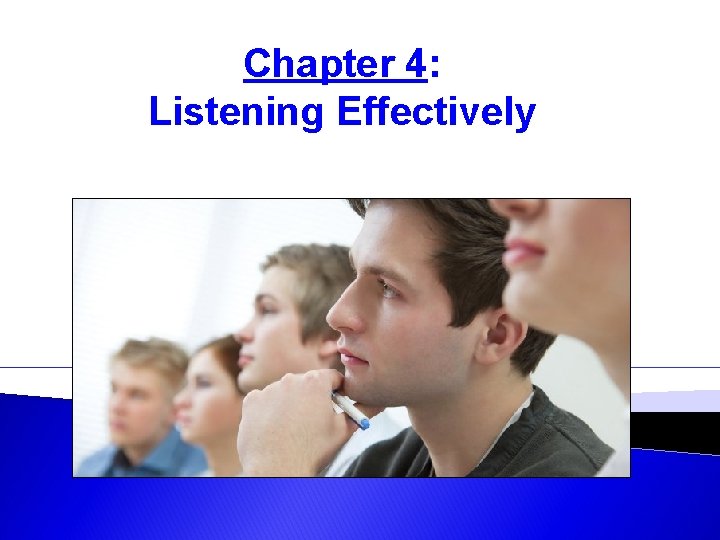
Chapter 4: Listening Effectively
Learning Objectives After reading your chapter, you will be able to: 1. 2. 3. 4. 5. 6. Explain the difference between listening and hearing Understand the value of listening Identify the three attributes of active listeners Recognize barriers to effective listening Employ strategies to engage listeners Provide constructive feedback as a listener 2
Hearing: • Physiological response to sound waves • Auditory Association occurs in brain 3
Listening: • Requires conscious attention • Different types of listening 4
Types of Listening: 1. 2. 3. 4. Appreciative Relational Empathic/Therapeutic Informational 5
Value of Listening: Strong correlation between listening and school success Allows for better impression on employers Increased self-esteem 6
Other Elements to Effective Listening: 1. Attention 2. Attitude 3. Adjustment 7
Barriers to Effective Listening: 1. Anticipating 2. Judging 3. Emotional Triggers 8
Strategies to Effective Listening: 1. 2. 3. 4. Keep an open mind Identify distractions Come prepared Take notes 9
Providing Speaker Feedback: • Nonverbal (Listener’s lean) • Verbal Feedback (Ask questions) 10
Encouraging Effective Listening: 1. 2. 3. 4. Write for the ear Appeal to intrinsic motivation Use active voice, repetition, & vocal emphasis Convince them to engage 11
Conclusion: • Difference between listening and hearing • Use active listening techniques • Avoid barriers to listening 12
- Slides: 12