
Chapter 4 Lesson1 Understanding Stress What is Stress




- Slides: 15
Chapter #4 Lesson#1 Understanding Stress
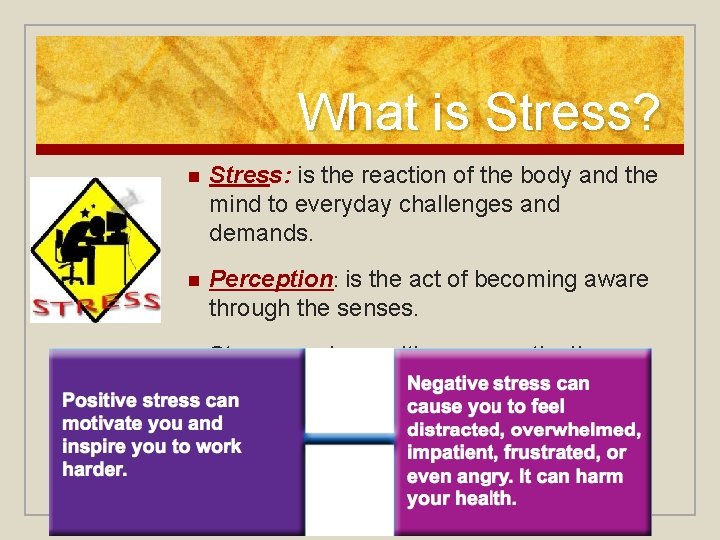
What is Stress? n Stress: is the reaction of the body and the mind to everyday challenges and demands. n Perception: is the act of becoming aware through the senses. n Stress can be positive or negative!!
Causes of Stress n Stressor : anything that causes stress. People, objects, places, events, and situations are all potential stresso
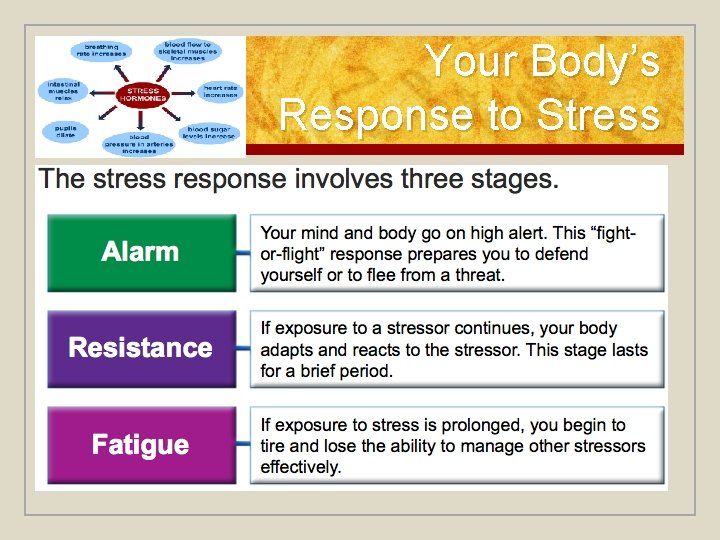
Your Body’s Response to Stress
Stress and Your Health n Psychosomatic Response: a physical reaction that results from stress rather than an injury or illness. n n n Headache Weakened immune system High blood pressure Bruxism- clenching of jawgrinding of teeth Digestive disorders
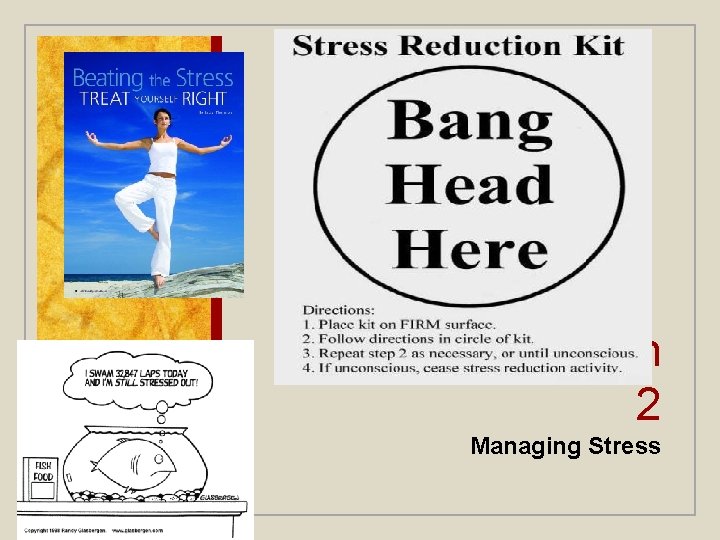
Chapter #4 Lesson 2 Managing Stress
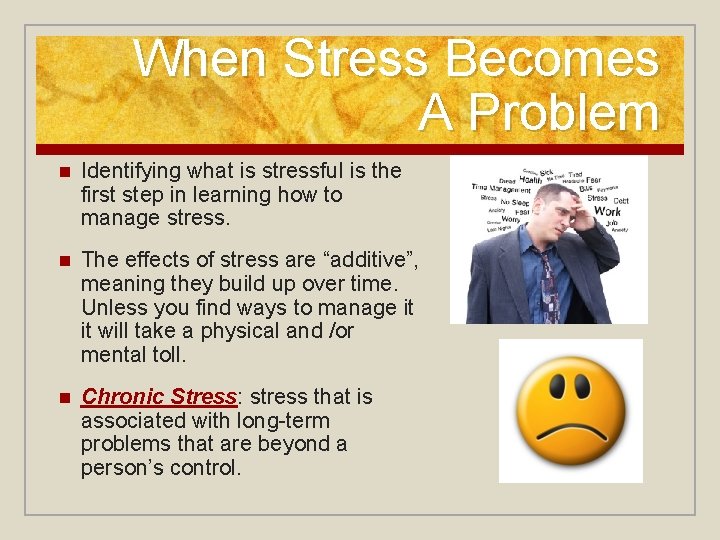
When Stress Becomes A Problem n Identifying what is stressful is the first step in learning how to manage stress. n The effects of stress are “additive”, meaning they build up over time. Unless you find ways to manage it it will take a physical and /or mental toll. n Chronic Stress: stress that is associated with long-term problems that are beyond a person’s control.
Stress Management Techniques Strategies for Avoiding and Limiting Stress
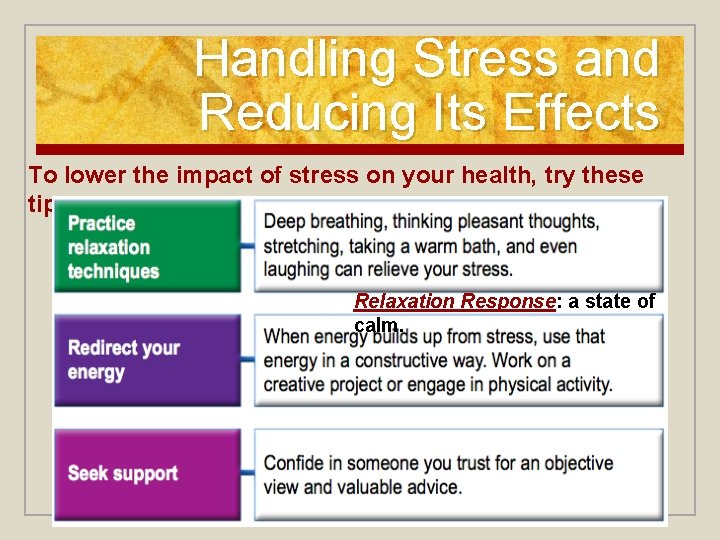
Handling Stress and Reducing Its Effects To lower the impact of stress on your health, try these tips: Relaxation Response: a state of calm.
Stay Healthy And Building Resiliency n Get Adequate Rest Adequate sleep can help you face the challenges and demands of the next day. Using time-management skills will allow you to get the eight to nine hours of sleep that you need each night. n Get Regular Physical Activity Participating in regular physical activity benefits your overall health. Physical activity can release pent-up energy, clear your mind, increase your energy level and your endurance, and help you sleep better. n Eat Nutritious Foods Eating a variety of healthful foods and drinking plenty of water not only helps your body function properly, but it also reduces the effects of stress. Poor eating habits can contribute to stress, causing weakness, fatigue, and a reduced ability to concentrate
Chapter #4 Lesson 3 Coping with Loss and Grief
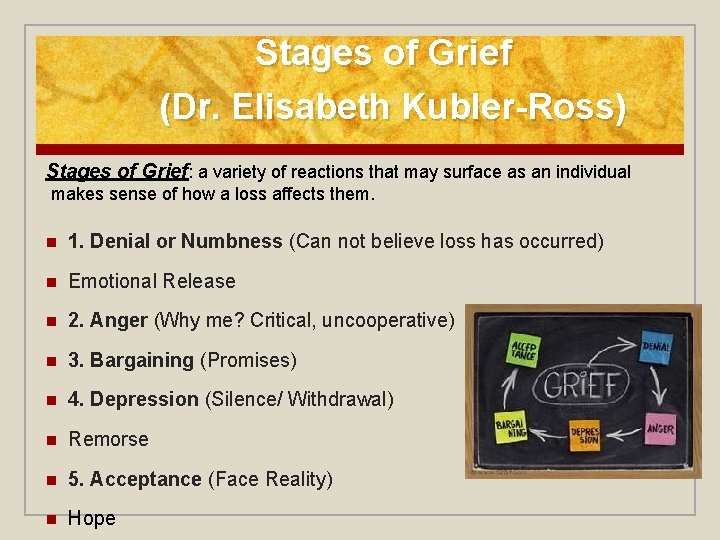
Stages of Grief (Dr. Elisabeth Kubler-Ross) Stages of Grief: a variety of reactions that may surface as an individual makes sense of how a loss affects them. n 1. Denial or Numbness (Can not believe loss has occurred) n Emotional Release n 2. Anger (Why me? Critical, uncooperative) n 3. Bargaining (Promises) n 4. Depression (Silence/ Withdrawal) n Remorse n 5. Acceptance (Face Reality) n Hope
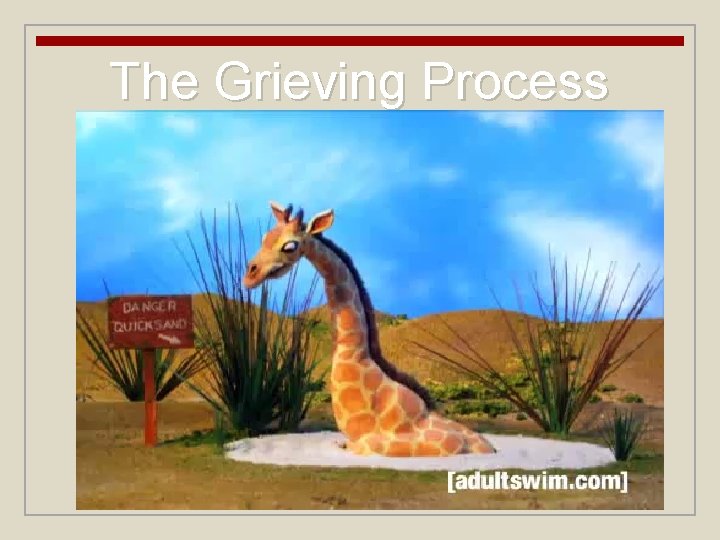
The Grieving Process
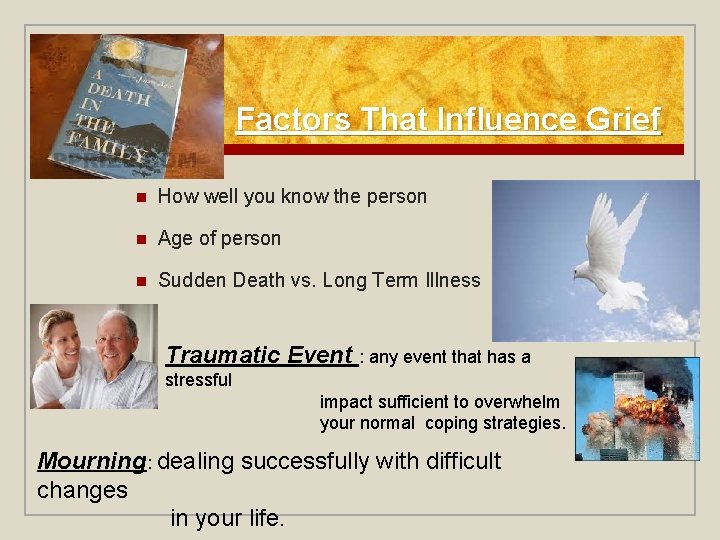
Factors That Influence Grief n How well you know the person n Age of person n Sudden Death vs. Long Term Illness Traumatic Event : any event that has a stressful impact sufficient to overwhelm your normal coping strategies. Mourning: dealing successfully with difficult changes in your life.
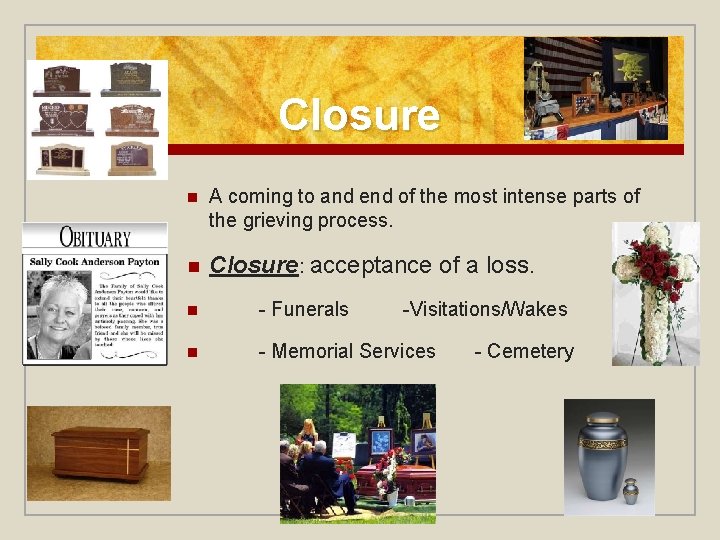
Closure n A coming to and end of the most intense parts of the grieving process. n Closure: acceptance of a loss. n - Funerals -Visitations/Wakes n - Memorial Services - Cemetery