
Chapter 4 Lesson 2 Fitness You Lesson Objectives

Chapter 4 Lesson 2 Fitness & You
Lesson Objectives � By the end of this lesson you will be able to: › Identify & describe the 5 areas of health-related fitness. › Examine the relationship among body composition, diet, & fitness. › Understand how to improve each of the 5 areas of health-related fitness. › Examine the effects of fitness on body systems.
Elements of Health-Related Fitness � Cardiorespiratory Endurance – the ability of the heart, lungs, and blood vessels to utilize and send fuel and oxygen to the body’s tissues during long periods of moderate to vigorous physical activity.
Health-Related Fitness Muscular Strength – the amount of force a muscle can exert. � Muscular Endurance – the ability of the muscle to perform physical tasks over a period of time without becoming fatigued. �
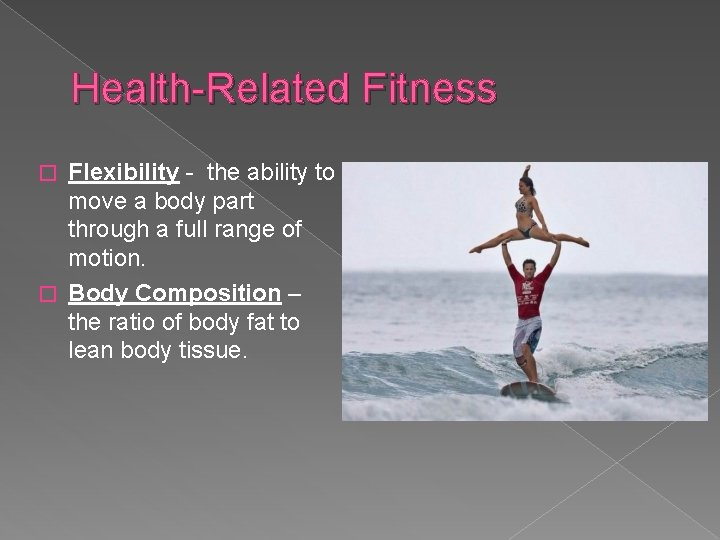
Health-Related Fitness Flexibility - the ability to move a body part through a full range of motion. � Body Composition – the ratio of body fat to lean body tissue. �
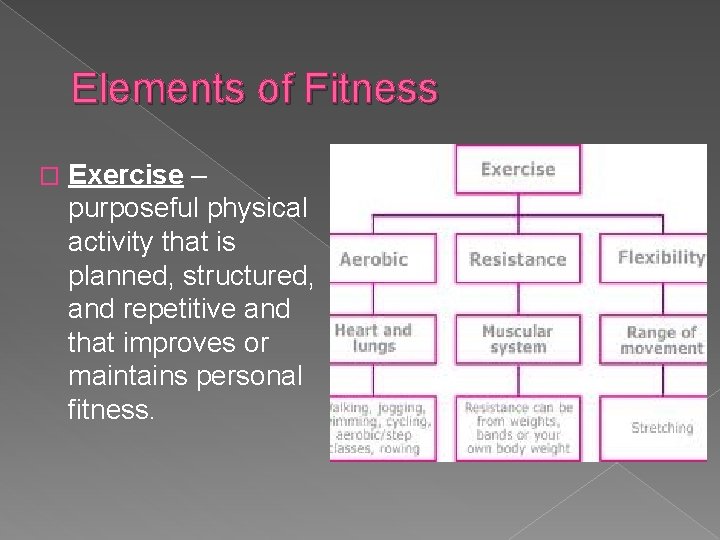
Elements of Fitness � Exercise – purposeful physical activity that is planned, structured, and repetitive and that improves or maintains personal fitness.
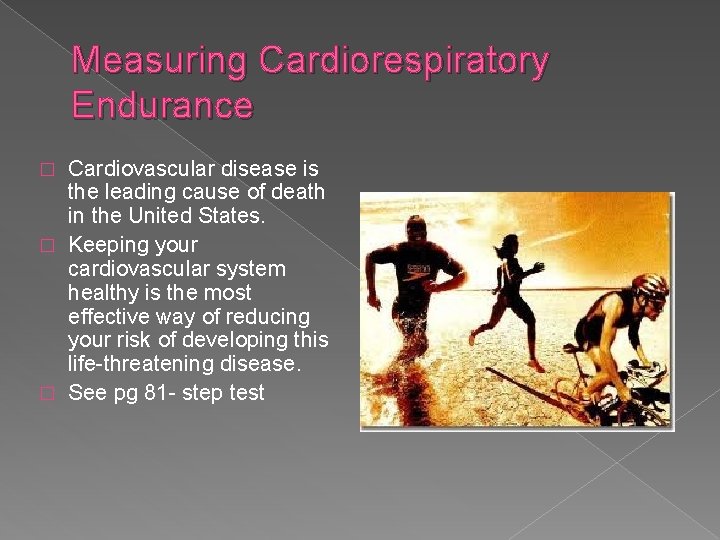
Measuring Cardiorespiratory Endurance Cardiovascular disease is the leading cause of death in the United States. � Keeping your cardiovascular system healthy is the most effective way of reducing your risk of developing this life-threatening disease. � See pg 81 - step test �
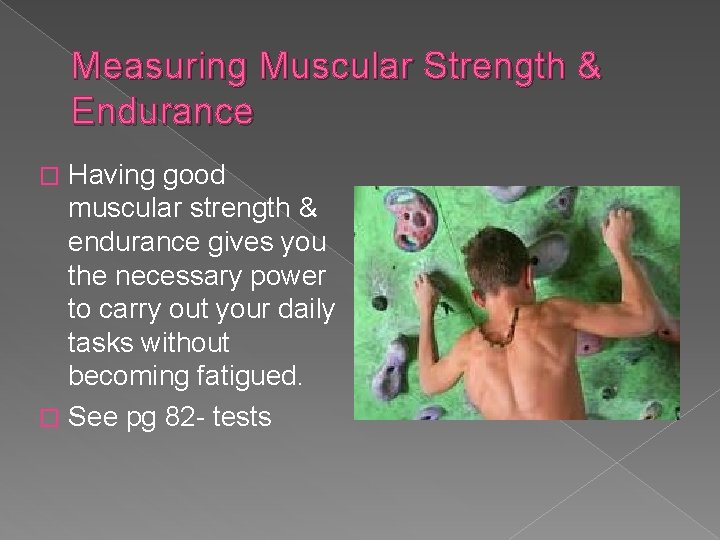
Measuring Muscular Strength & Endurance Having good muscular strength & endurance gives you the necessary power to carry out your daily tasks without becoming fatigued. � See pg 82 - tests �
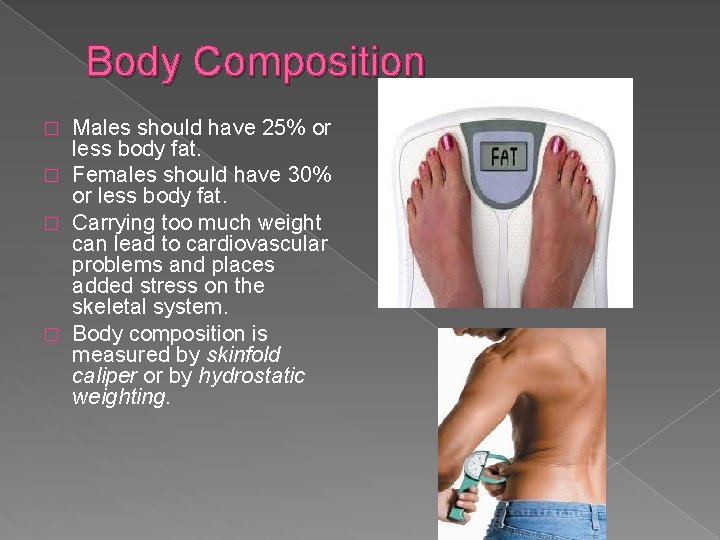
Body Composition Males should have 25% or less body fat. � Females should have 30% or less body fat. � Carrying too much weight can lead to cardiovascular problems and places added stress on the skeletal system. � Body composition is measured by skinfold caliper or by hydrostatic weighting. �
Types of Physical Activities Aerobic Exercise – any activity that uses large muscle groups, is rhythmic in nature, and can be maintained continuously for a least 20 -30 minutes. � Examples: running, cycling, swimming, and dancing. �
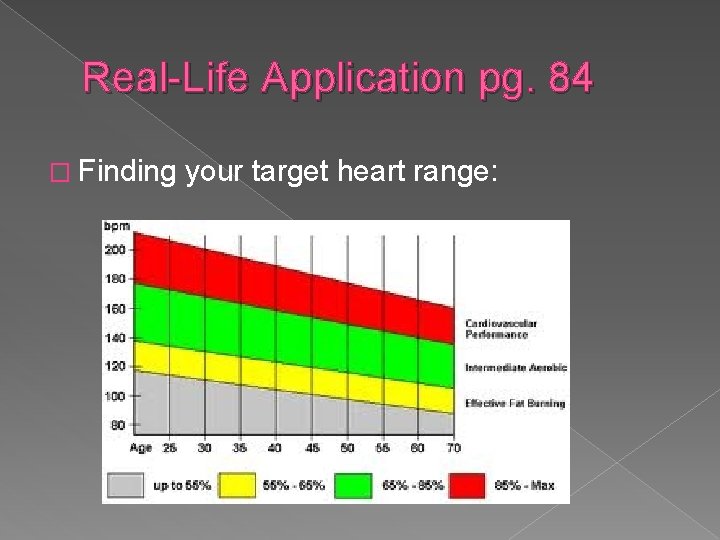
Real-Life Application pg. 84 � Finding your target heart range:
Improving Cardiorespiratory Endurance � When you do aerobic exercises, your HR increases & your heart sends more oxygen to your muscles to use as energy. � This strengthens the heart muscle, allowing it to pump blood more efficiently.
Types of Physical Activity � Anaerobic Exercise – involves intense short bursts of activity in which the muscles work so hard that they produce energy without using oxygen. Improves muscle strength and endurance. › Examples: Running 100 meter dash, lifting weights.
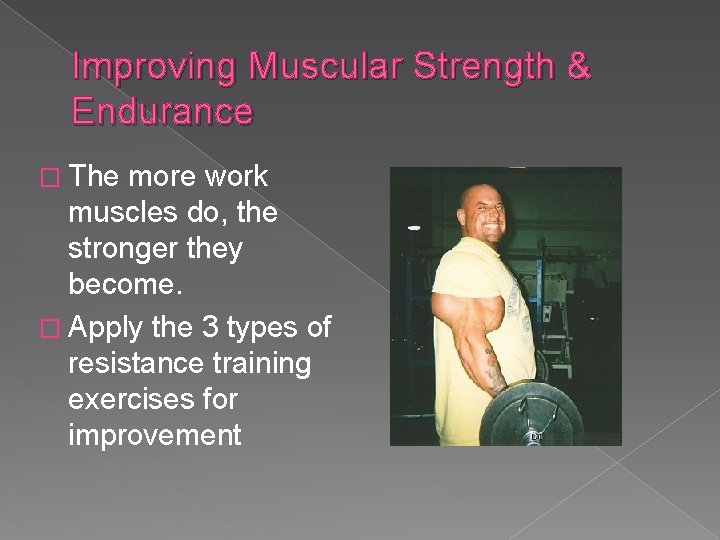
Improving Muscular Strength & Endurance � The more work muscles do, the stronger they become. � Apply the 3 types of resistance training exercises for improvement
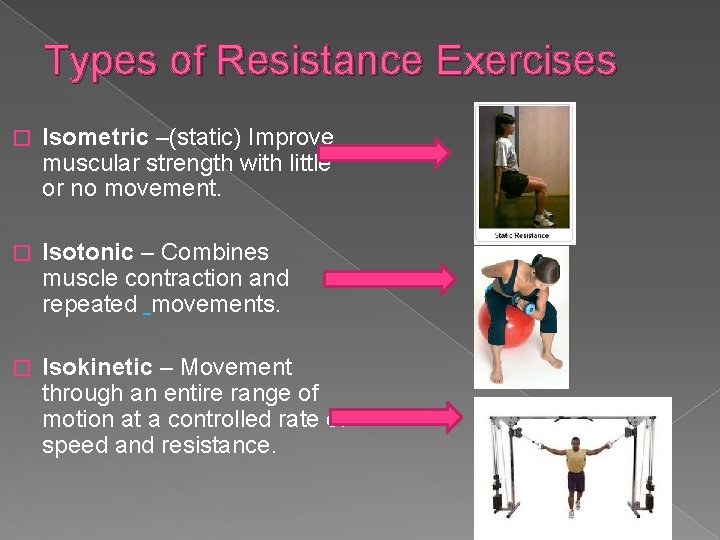
Types of Resistance Exercises � Isometric –(static) Improve muscular strength with little or no movement. � Isotonic – Combines muscle contraction and repeated movements. � Isokinetic – Movement through an entire range of motion at a controlled rate of speed and resistance.
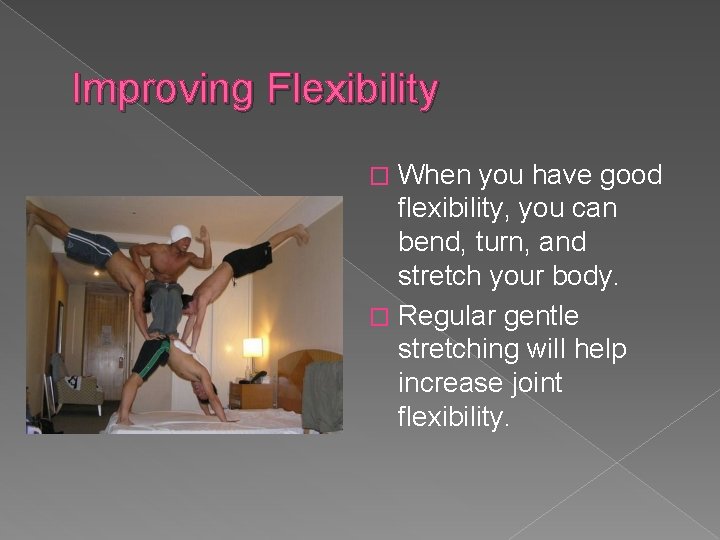
Improving Flexibility When you have good flexibility, you can bend, turn, and stretch your body. � Regular gentle stretching will help increase joint flexibility. �
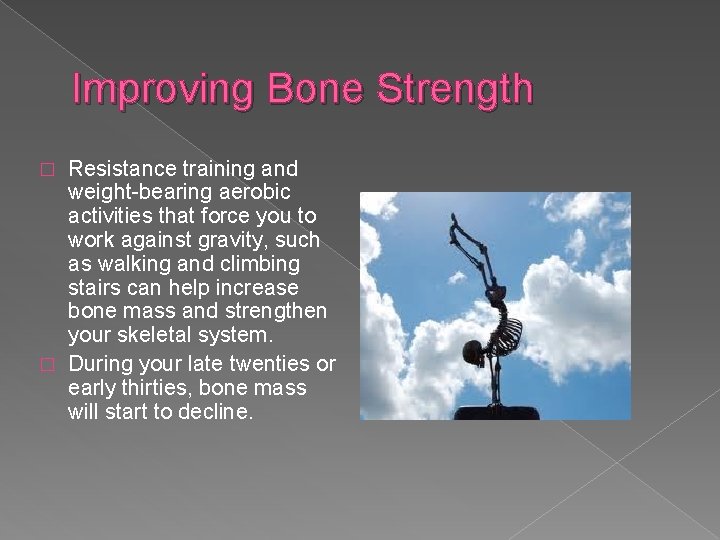
Improving Bone Strength Resistance training and weight-bearing aerobic activities that force you to work against gravity, such as walking and climbing stairs can help increase bone mass and strengthen your skeletal system. � During your late twenties or early thirties, bone mass will start to decline. �

Lesson 2 Review p. 86 Answer questions 1 -5
- Slides: 18