
Chapter 4 Ionic Compounds Chemical Bonds 2 types
Chapter 4 Ionic Compounds
Chemical Bonds • 2 -types of bonding are found in compounds – Ionic bond – Chapter 4 – Covalent bond – Chapter 5
Ions • Ionic compounds – substances comprised of ions of a metal combined with ions of a nonmetal or group of non-metals
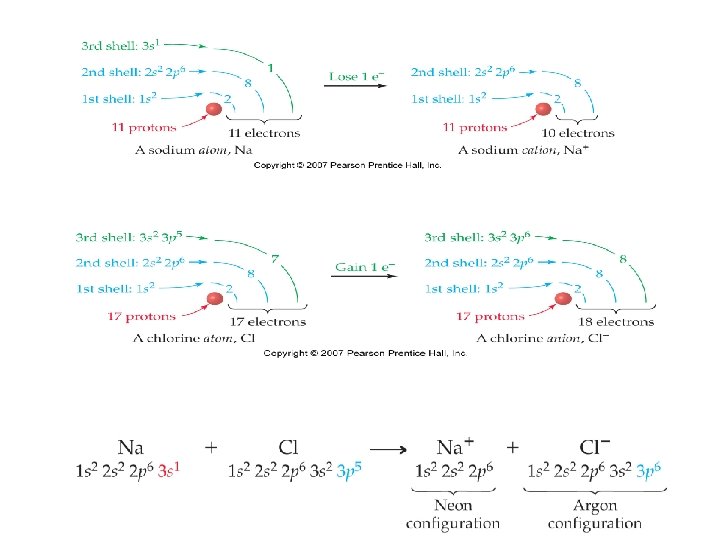
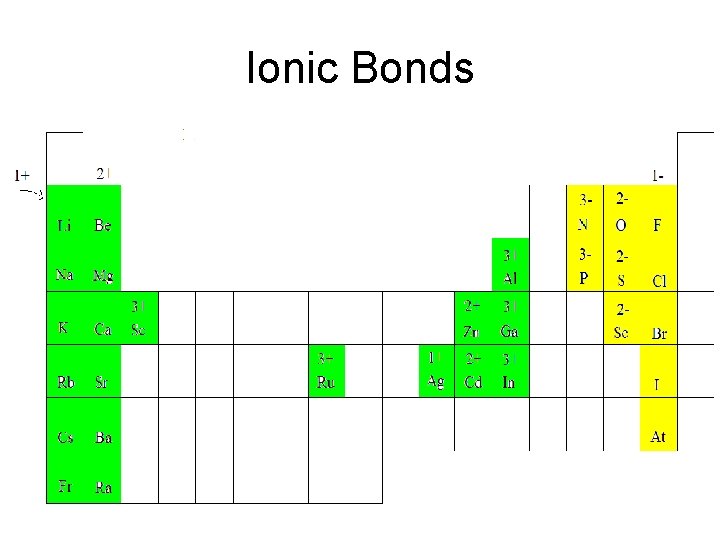
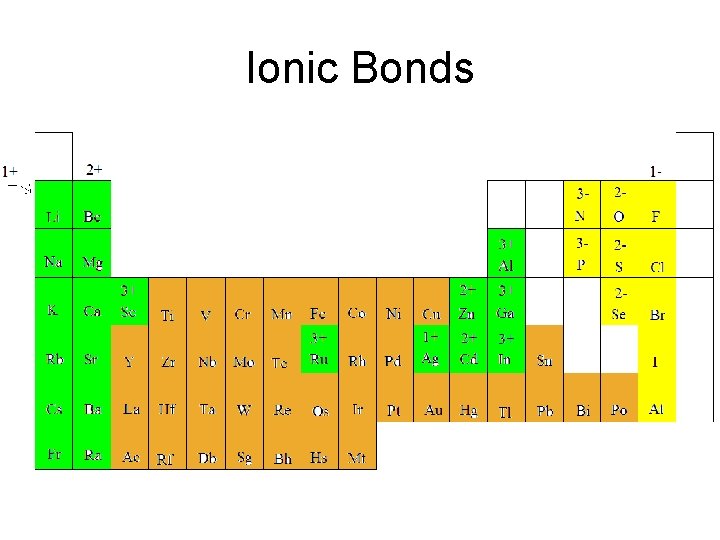
Ions • Metals – Lose electrons – Forms a cation • Nonmetals – Gain electrons – Forms an anion
Ions and the Octet Rule • Stated – Metals form cations – Nonmetals form anions • Why? – An ion is formed so that the atom achieves noble gas configuration • Octet Rule – main group elements tend to undergo reactions that leave them with 8 electrons in outer shell – Outer shell – valence shell – highest period # – Outer electrons – valence electrons – e- in highest period #
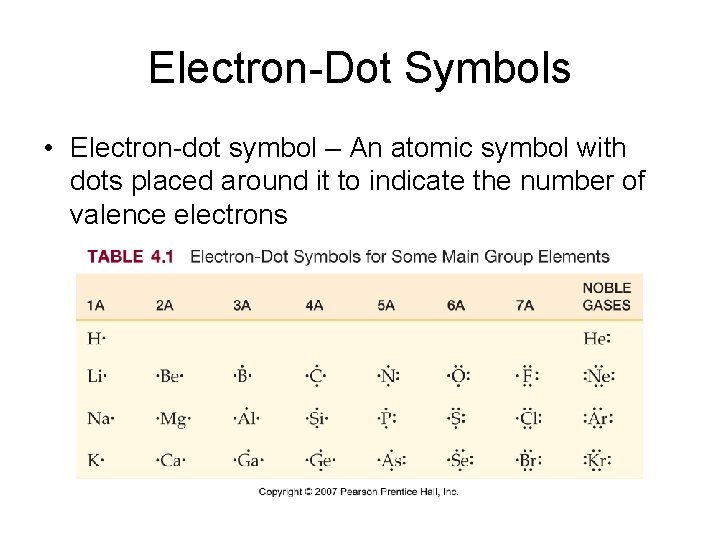
Electron-Dot Symbols • Electron-dot symbol – An atomic symbol with dots placed around it to indicate the number of valence electrons
Periodic Properties and Ion Formation • Ease by which an element forms a cation or anion is determined by the energy involved
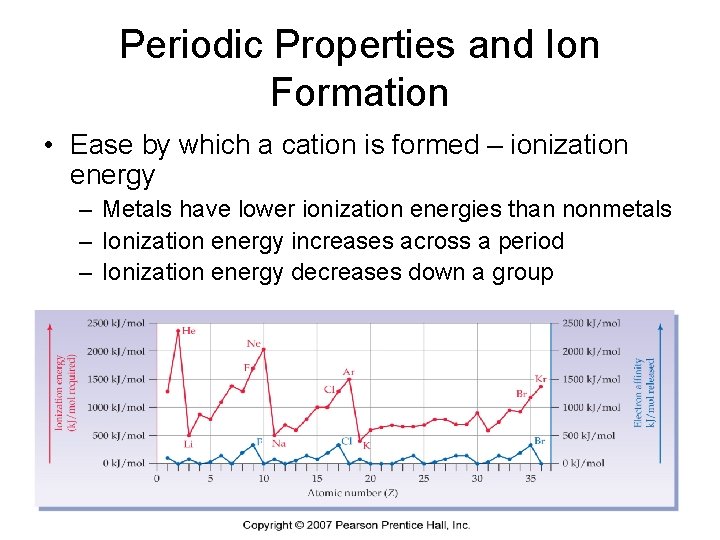
Periodic Properties and Ion Formation • Ease by which a cation is formed – ionization energy – Metals have lower ionization energies than nonmetals – Ionization energy increases across a period – Ionization energy decreases down a group
Periodic Properties and Ion Formation • Ease by which an anion is formed – electron affinity – Nonmetals have larger electron affinities – Electron affinity values become more negative across a group – Electron affinity values become less negative down a group
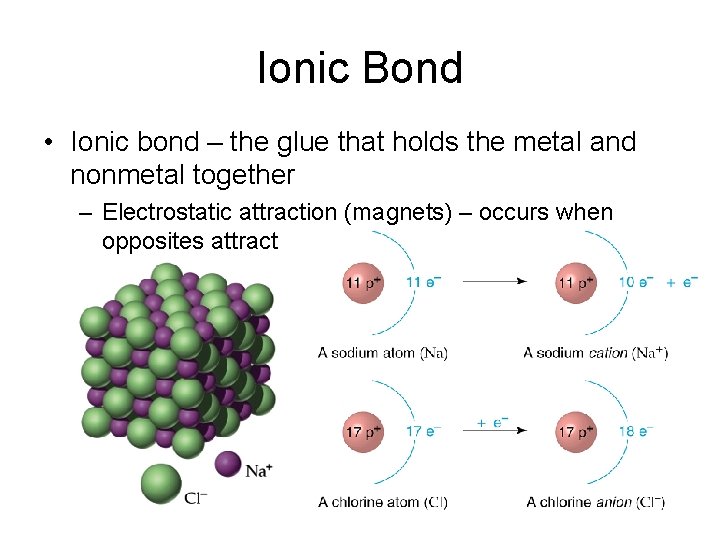
Ionic Bond • Ionic bond – the glue that holds the metal and nonmetal together – Electrostatic attraction (magnets) – occurs when opposites attract
Some Properties of Ionic Compounds • Usually crystalline • Ions in a solid do not move – do not conduct electricity • Once dissolved – ions move freely and conduct electricity • High melting and boiling points • Ionic solids shatter if struck hard • Ionic compounds dissolve in water if the attraction of ions to water is greater than the ions attraction to each other
Ionic Bonds
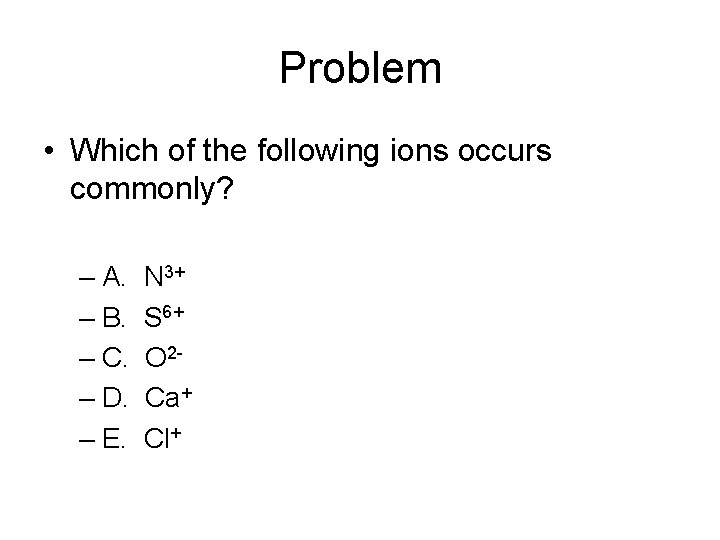
Problem • Which of the following ions occurs commonly? – A. N 3+ – B. S 6+ – C. O 2– D. Ca+ – E. Cl+
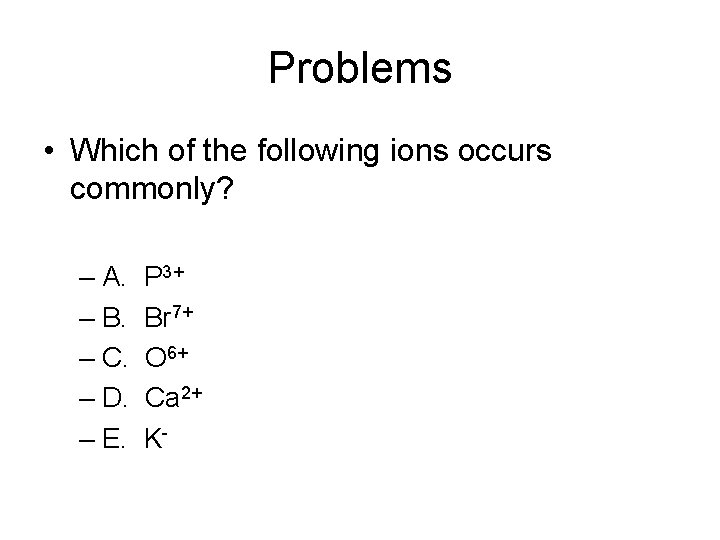
Problems • Which of the following ions occurs commonly? – A. P 3+ – B. Br 7+ – C. O 6+ – D. Ca 2+ – E. K-
Ionic Bonds
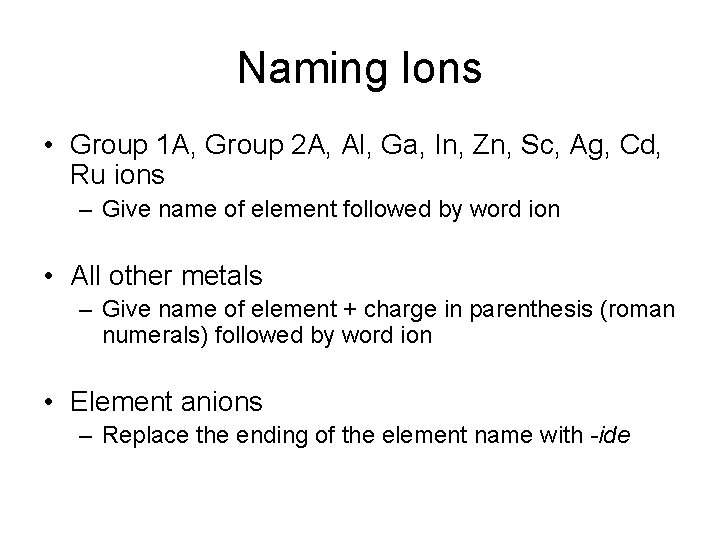
Naming Ions • Group 1 A, Group 2 A, Al, Ga, In, Zn, Sc, Ag, Cd, Ru ions – Give name of element followed by word ion • All other metals – Give name of element + charge in parenthesis (roman numerals) followed by word ion • Element anions – Replace the ending of the element name with -ide
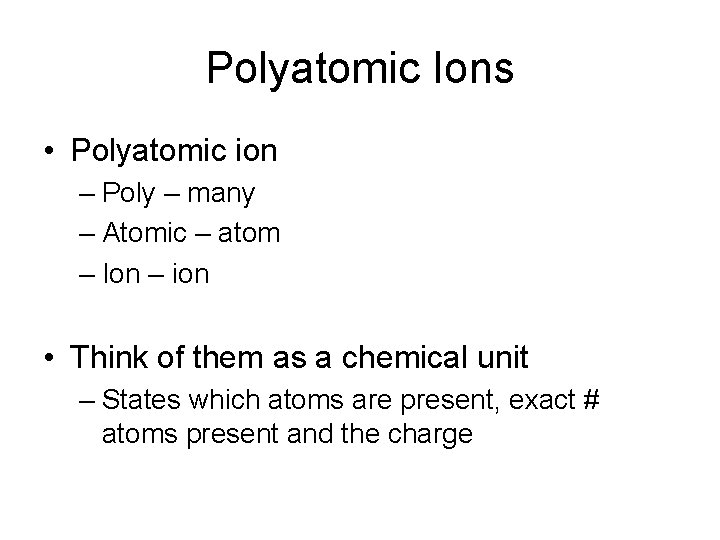
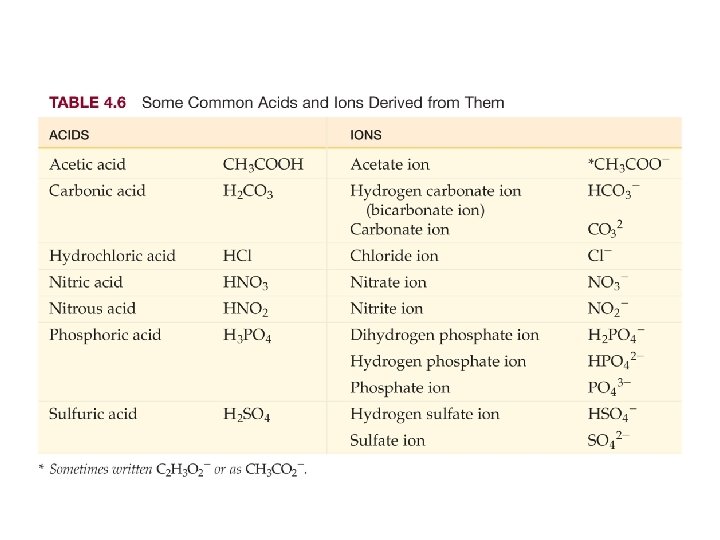
Polyatomic Ions • Polyatomic ion – Poly – many – Atomic – atom – Ion – ion • Think of them as a chemical unit – States which atoms are present, exact # atoms present and the charge
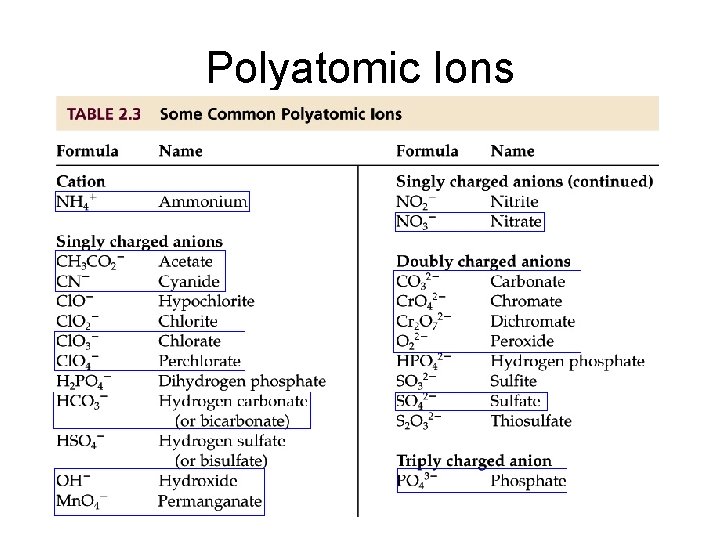
Polyatomic Ions
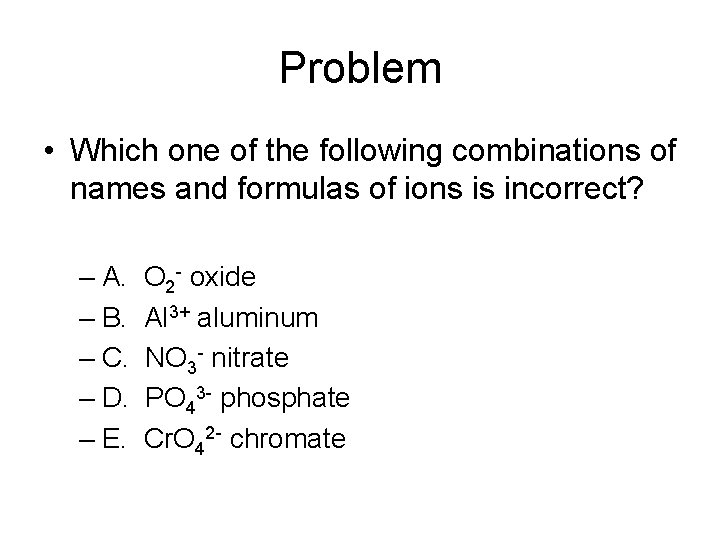
Problem • Which one of the following combinations of names and formulas of ions is incorrect? – A. O 2 - oxide – B. Al 3+ aluminum – C. NO 3 - nitrate – D. PO 43 - phosphate – E. Cr. O 42 - chromate
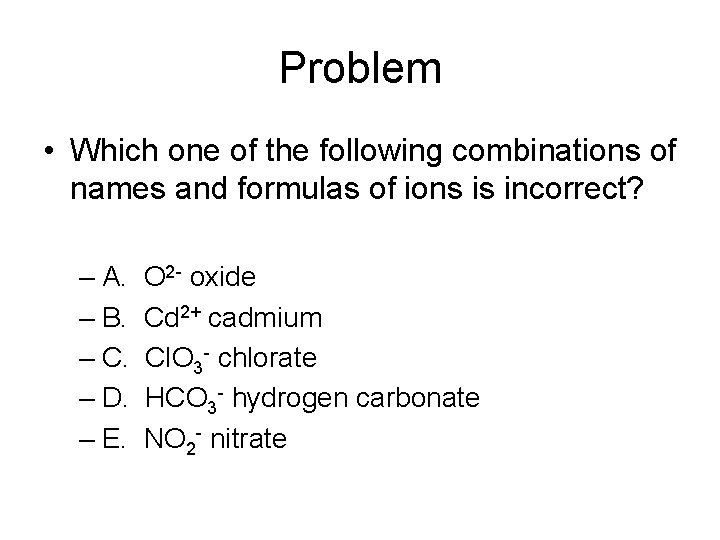
Problem • Which one of the following combinations of names and formulas of ions is incorrect? – A. O 2 - oxide – B. Cd 2+ cadmium – C. Cl. O 3 - chlorate – D. HCO 3 - hydrogen carbonate – E. NO 2 - nitrate

Problem • Which one of the following combinations of names and formulas of ions is incorrect? – A. Ba 2+ barium – B. S 2 - sulfate – C. CN- cyanide – D. Cl. O 4 - perchlorate – E. HCO 3 - bicarbonate
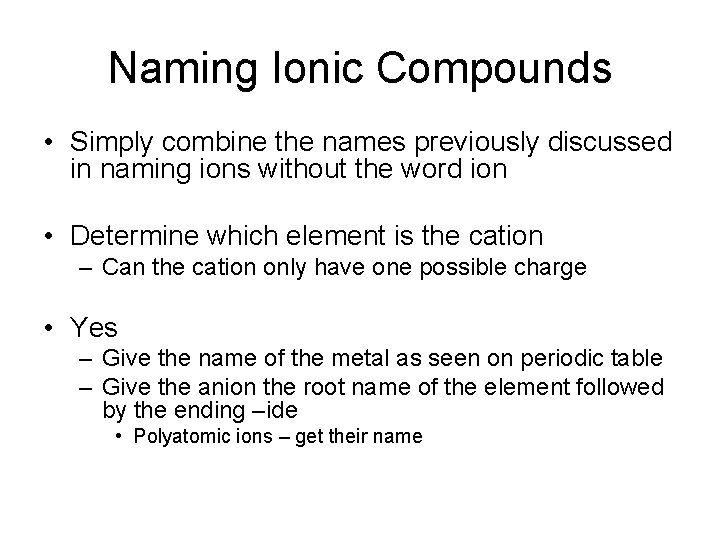
Naming Ionic Compounds • Simply combine the names previously discussed in naming ions without the word ion • Determine which element is the cation – Can the cation only have one possible charge • Yes – Give the name of the metal as seen on periodic table – Give the anion the root name of the element followed by the ending –ide • Polyatomic ions – get their name
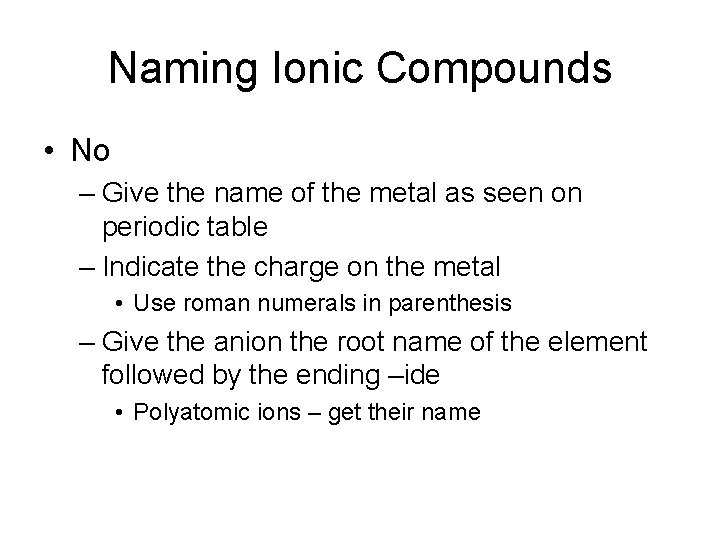
Naming Ionic Compounds • No – Give the name of the metal as seen on periodic table – Indicate the charge on the metal • Use roman numerals in parenthesis – Give the anion the root name of the element followed by the ending –ide • Polyatomic ions – get their name
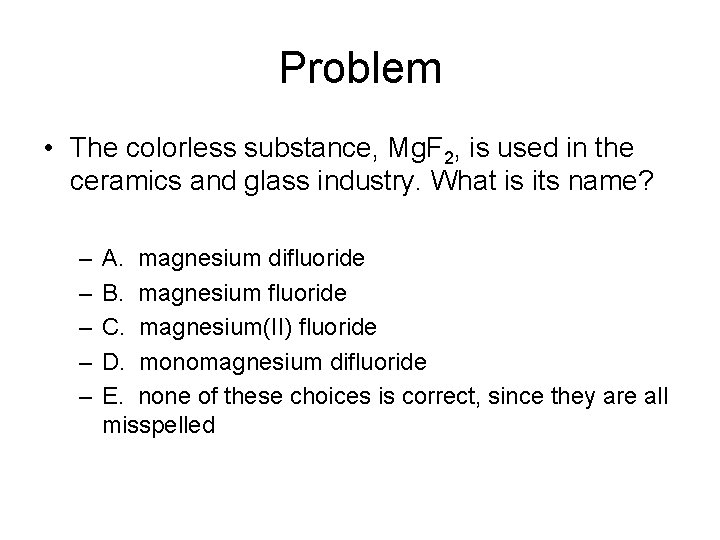
Problem • The colorless substance, Mg. F 2, is used in the ceramics and glass industry. What is its name? – – – A. magnesium difluoride B. magnesium fluoride C. magnesium(II) fluoride D. monomagnesium difluoride E. none of these choices is correct, since they are all misspelled
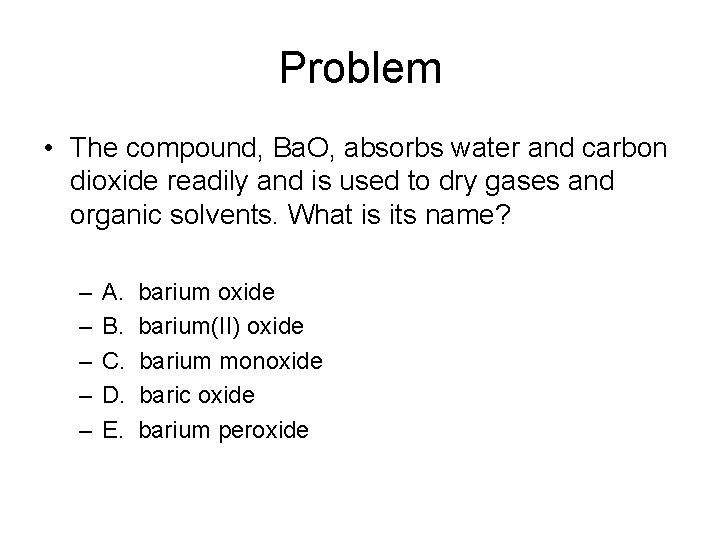
Problem • The compound, Ba. O, absorbs water and carbon dioxide readily and is used to dry gases and organic solvents. What is its name? – – – A. barium oxide B. barium(II) oxide C. barium monoxide D. baric oxide E. barium peroxide
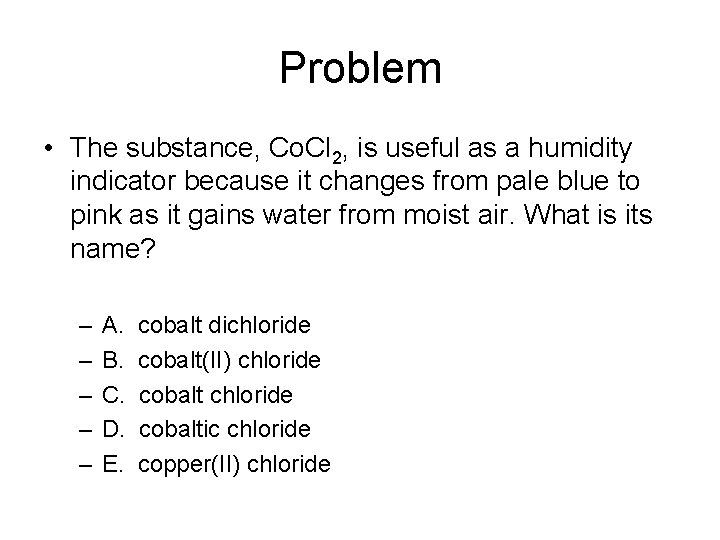
Problem • The substance, Co. Cl 2, is useful as a humidity indicator because it changes from pale blue to pink as it gains water from moist air. What is its name? – – – A. cobalt dichloride B. cobalt(II) chloride C. cobalt chloride D. cobaltic chloride E. copper(II) chloride
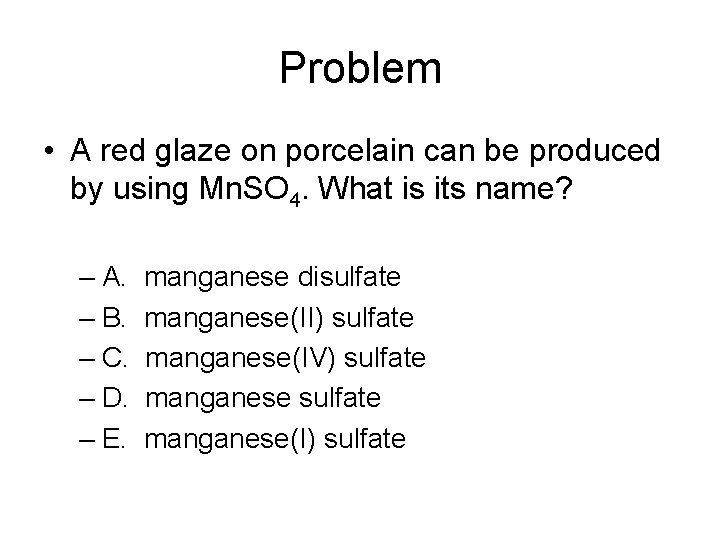
Problem • A red glaze on porcelain can be produced by using Mn. SO 4. What is its name? – A. manganese disulfate – B. manganese(II) sulfate – C. manganese(IV) sulfate – D. manganese sulfate – E. manganese(I) sulfate
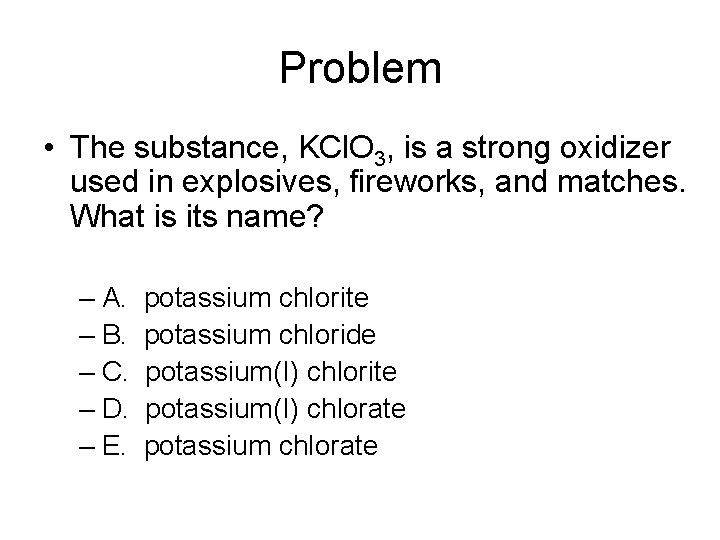
Problem • The substance, KCl. O 3, is a strong oxidizer used in explosives, fireworks, and matches. What is its name? – A. potassium chlorite – B. potassium chloride – C. potassium(I) chlorite – D. potassium(I) chlorate – E. potassium chlorate
Problem • The compound, (NH 4)2 S, can be used in analysis for trace amounts of metals present in a sample. What is its name? – A. ammonium sulfide – B. diammonium sulfide – C. ammonium sulfite – D. ammonia(I) sulfite – E. ammonium(I) sulfide
Problem • The substance, Ca. Se, is used in materials which are electron emitters. What is its name? – A. calcium monoselenide – B. calcium(II) selenide – C. calcium selenide – D. calcium(I) selenide – E. calcium(II) selenium
Formulas of Ionic Compounds • Chemical compounds must posses NO charge • Formulas – Determine ions involved – Determine charge on each ion – Cross and drop the magnitude • If the magnitude dropped beside a polyatomic is greater than 1, place the polyatomic ion in parenthesis and magnitude dropped as subscript outside parenthesis – Simplify if the subscripts are divisible by same #
Problem • Sodium oxide combines violently with water. Which of the following gives the formula for sodium oxide? – A. Na. O – B. Na 1 O 1 – C. Na 2 O 1 – D. Na 2 O – E. Na 2 O 2
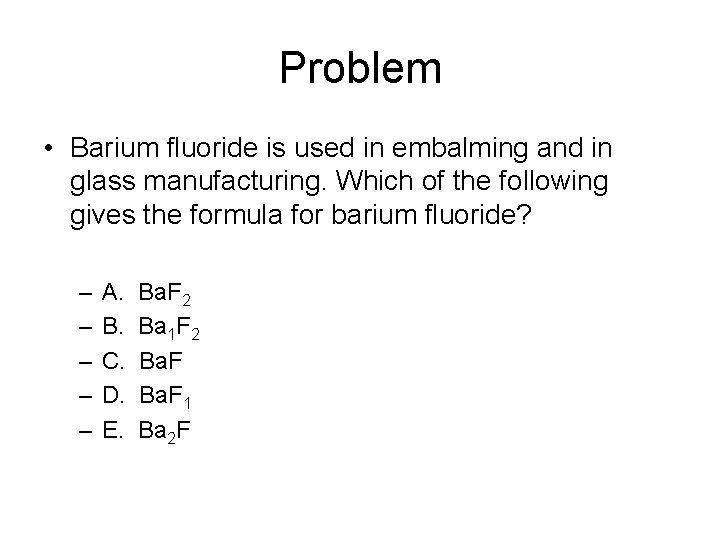
Problem • Barium fluoride is used in embalming and in glass manufacturing. Which of the following gives the formula for barium fluoride? – – – A. Ba. F 2 B. Ba 1 F 2 C. Ba. F D. Ba. F 1 E. Ba 2 F
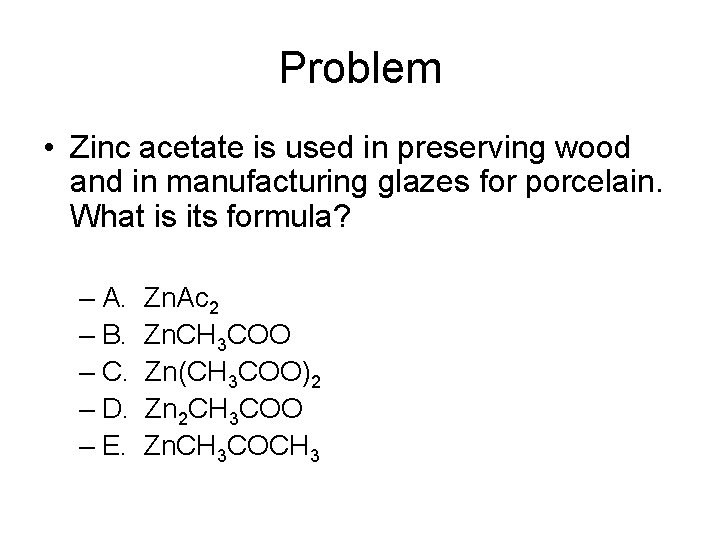
Problem • Zinc acetate is used in preserving wood and in manufacturing glazes for porcelain. What is its formula? – A. Zn. Ac 2 – B. Zn. CH 3 COO – C. Zn(CH 3 COO)2 – D. Zn 2 CH 3 COO – E. Zn. CH 3 COCH 3
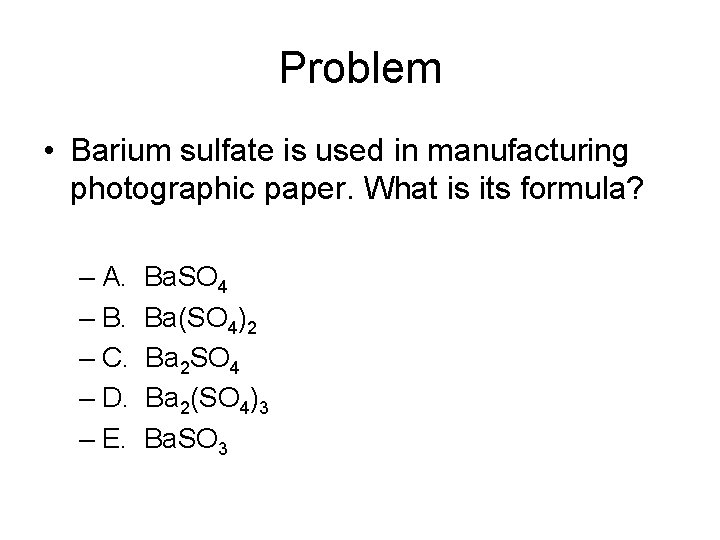
Problem • Barium sulfate is used in manufacturing photographic paper. What is its formula? – A. Ba. SO 4 – B. Ba(SO 4)2 – C. Ba 2 SO 4 – D. Ba 2(SO 4)3 – E. Ba. SO 3
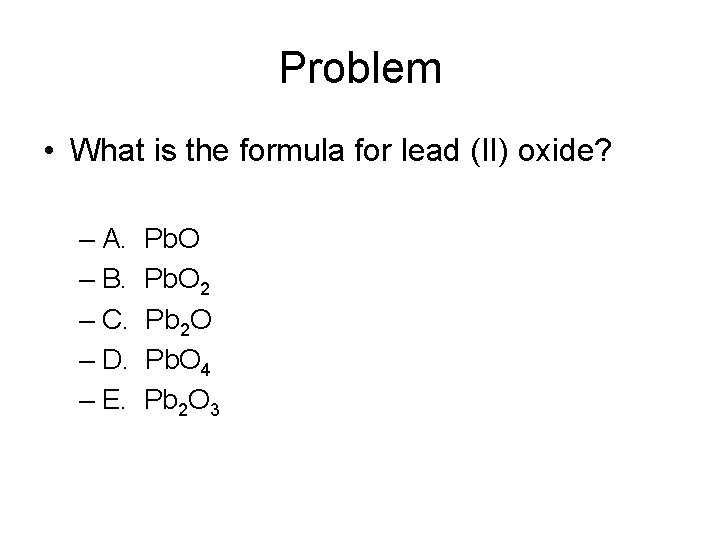
Problem • What is the formula for lead (II) oxide? – A. Pb. O – B. Pb. O 2 – C. Pb 2 O – D. Pb. O 4 – E. Pb 2 O 3
H+ and OH- Ions: An Introduction to Acids and Bases • The importance of the H+ cation and the OH- anion is that they are fundamental to the concepts of acids and bases. • Acid: A substance that provides H+ ions in water; for example, HCl H+ + Cl • Base: A substance that provides OH- ions in water; for example, Na. OH Na+ + OH-

Optional Homework • Text – 4. 31, 4. 32, 4. 33, 4. 38, 4. 46, 4. 48, 4. 50, 4. 52, 4. 54, 4. 56, 4. 60, 4. 62, 4. 64, 4. 66, 4. 68, 4. 70, 4. 72, 4. 74, 4. 76, 4. 90, 4. 92, 4. 96, 4. 98 • Chapter 2 Homework – from website
Required Homework • Assignment 4
- Slides: 41