
CHAPTER 4 Interpersonal Communication 4 2 Learning Outcomes
- Slides: 60
CHAPTER 4 Interpersonal Communication
4 -2 Learning Outcomes 4. 1 Identify elements and types of communication. 4. 2 Relate communication to human behavior and needs. 4. 3 Categorize positive and negative communication.
4 -3 Learning Outcomes (cont. ) 4. 5 Carry out therapeutic communication skills. 4. 6 Use effective communication strategies with patients in special circumstances. 4. 7 Carry out positive communication with coworkers and management.
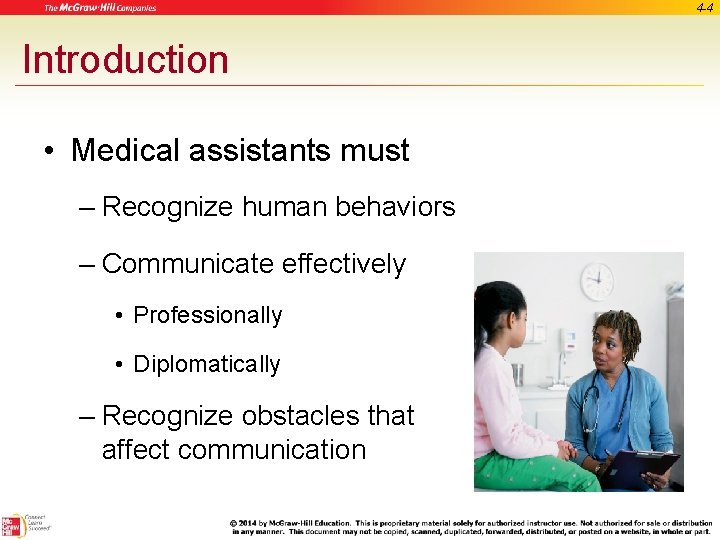
4 -4 Introduction • Medical assistants must – Recognize human behaviors – Communicate effectively • Professionally • Diplomatically – Recognize obstacles that affect communication
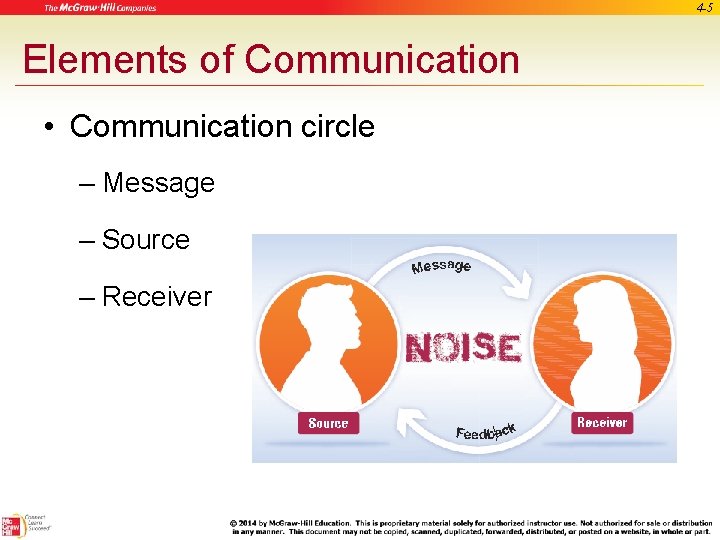
4 -5 Elements of Communication • Communication circle – Message – Source – Receiver
4 -6 Elements of Communication (cont. ) • Feedback – Verbal or nonverbal – Verification of understanding • Noise – Sounds – Physical or emotional discomforts
4 -7 Apply Your Knowledge What are the elements of the communication circle and what can cause interference in the process? ANSWER: The elements are: message, source, and receiver. Noise can interfere with the communication circle.
4 -8 Human Behavior and Needs • Different personality types – require different communication styles • Humanistic role in the healthcare process – Attention – respect
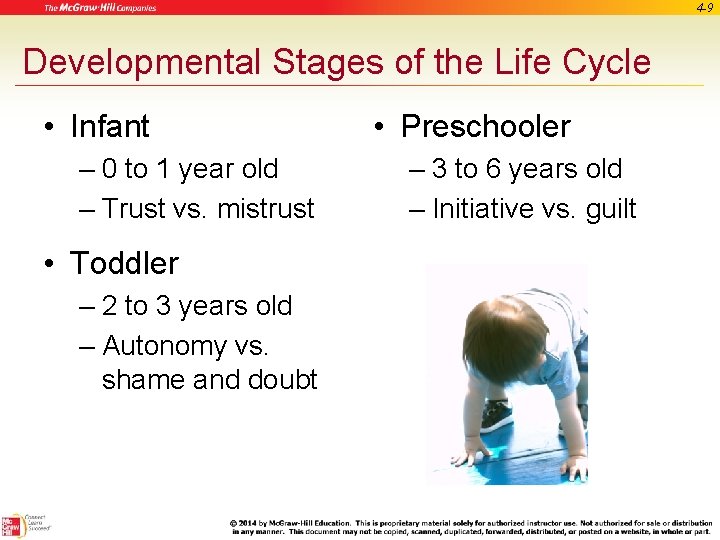
4 -9 Developmental Stages of the Life Cycle • Infant – 0 to 1 year old – Trust vs. mistrust • Toddler – 2 to 3 years old – Autonomy vs. shame and doubt • Preschooler – 3 to 6 years old – Initiative vs. guilt
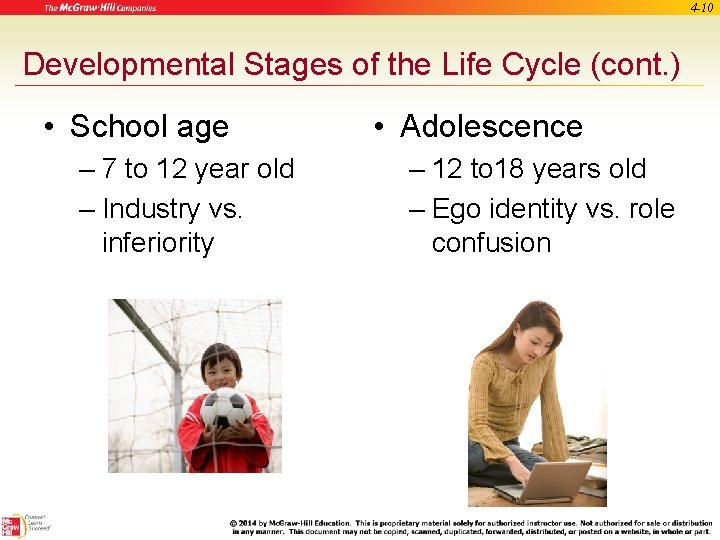
4 -10 Developmental Stages of the Life Cycle (cont. ) • School age – 7 to 12 year old – Industry vs. inferiority • Adolescence – 12 to 18 years old – Ego identity vs. role confusion
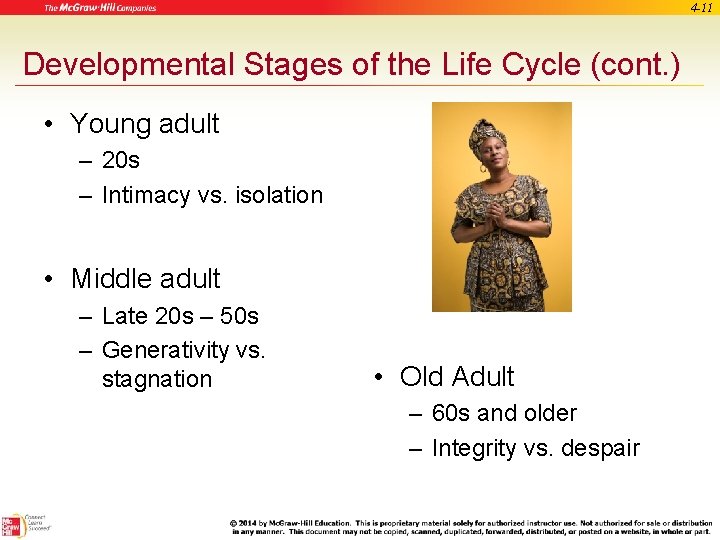
4 -11 Developmental Stages of the Life Cycle (cont. ) • Young adult – 20 s – Intimacy vs. isolation • Middle adult – Late 20 s – 50 s – Generativity vs. stagnation • Old Adult – 60 s and older – Integrity vs. despair
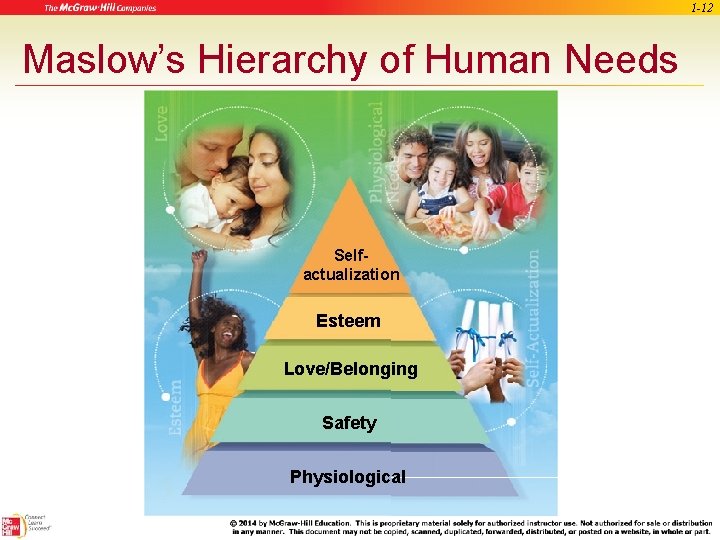
1 -12 Maslow’s Hierarchy of Human Needs Selfactualization Esteem Love/Belonging Safety Physiological
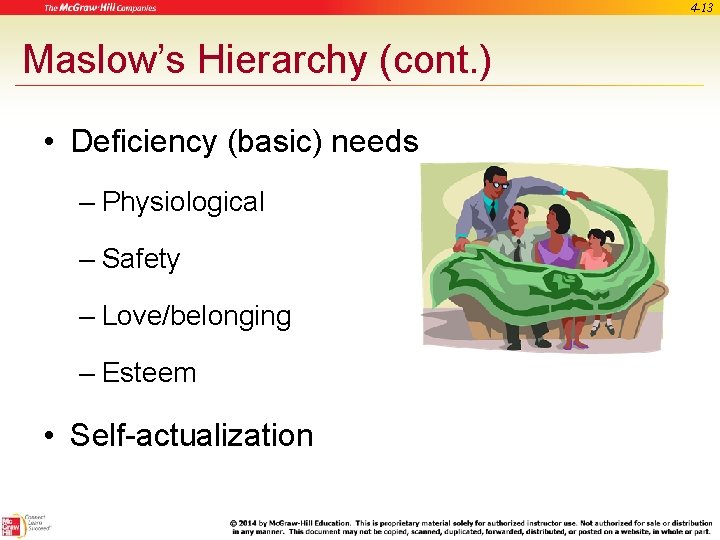
4 -13 Maslow’s Hierarchy (cont. ) • Deficiency (basic) needs – Physiological – Safety – Love/belonging – Esteem • Self-actualization
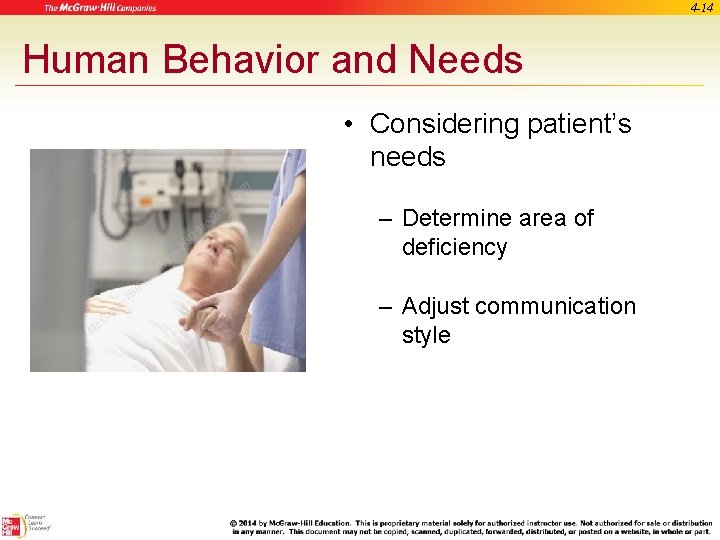
4 -14 Human Behavior and Needs • Considering patient’s needs – Determine area of deficiency – Adjust communication style
4 -15 Apply Your Knowledge You can communicate with all people in the same way. Is this statement true or false, and why? ANSWER: The statement is false. Not all people are at the same place on Maslow’s hierarchy of human needs. To communicate effectively with a person, you need to understand what he or she is deficient in. For example, you would use different communication styles when talking to a homeless person who may have psychological and safety needs than when talking to an elderly person who is lonely and depressed due to the recent loss of his or her spouse.
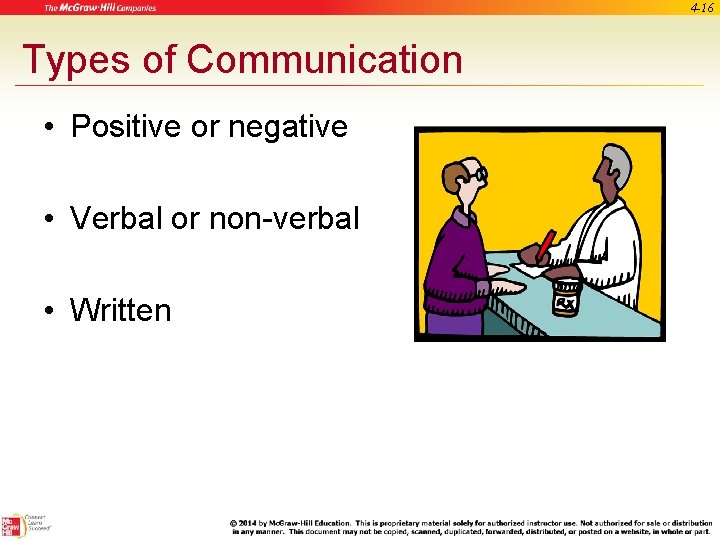
4 -16 Types of Communication • Positive or negative • Verbal or non-verbal • Written
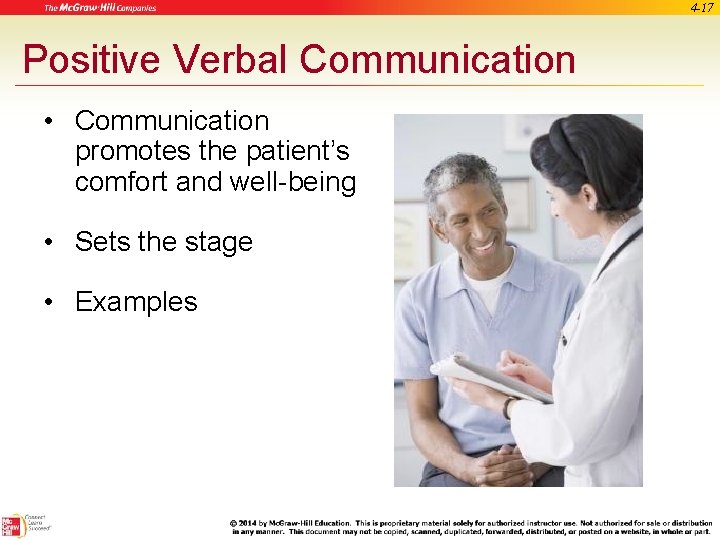
4 -17 Positive Verbal Communication • Communication promotes the patient’s comfort and well-being • Sets the stage • Examples
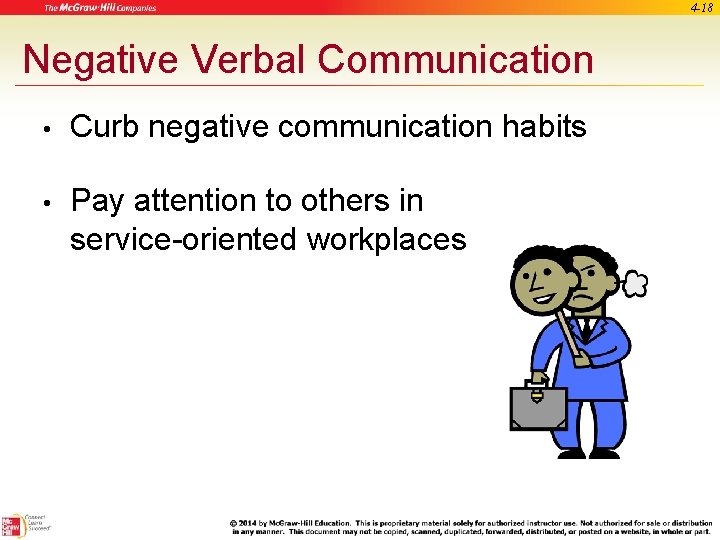
4 -18 Negative Verbal Communication • Curb negative communication habits • Pay attention to others in service-oriented workplaces
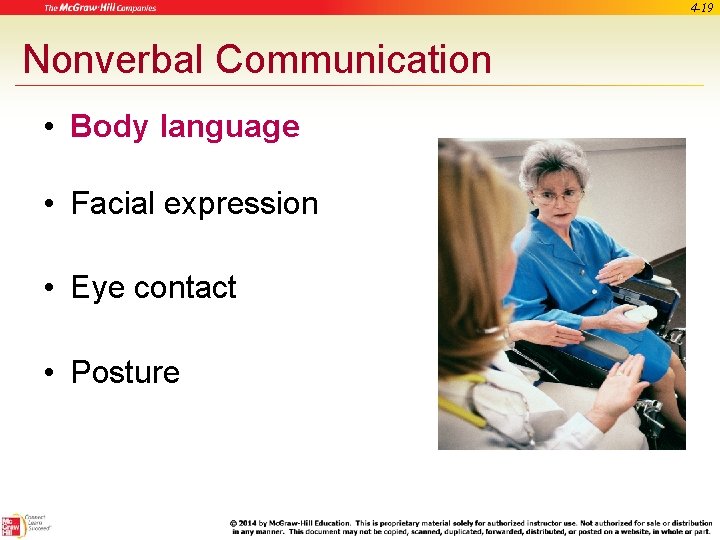
4 -19 Nonverbal Communication • Body language • Facial expression • Eye contact • Posture
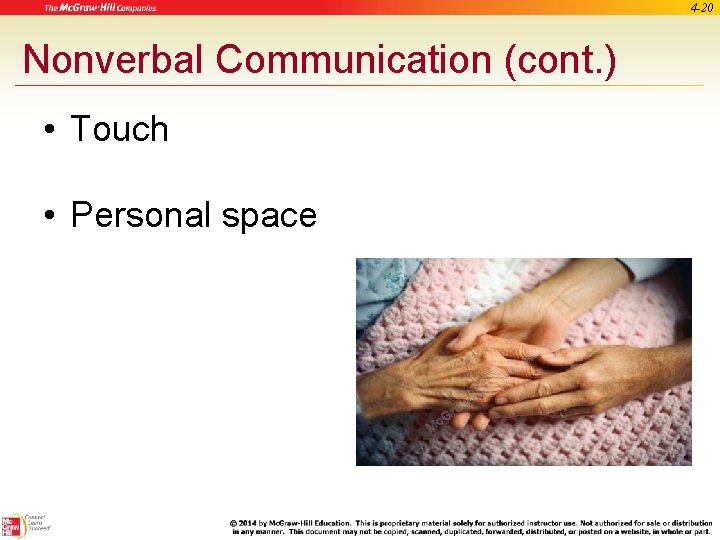
4 -20 Nonverbal Communication (cont. ) • Touch • Personal space
4 -21 Apply Your Knowledge YEA! Mr. Garcia comes to the desk to check in and asks if he will be seen on time. The receptionist continues with her paperwork, points to the signin sheet, and tells Mr. Garcia: “Just sign in. The doctor will be with you when he can. ” Explain why this is an example of negative communication. ANSWER: This is an example of negative communication because the receptionist: • Did not stop what he or she was doing – was not friendly or attentive • Did not greet Mr. Garcia or make eye contact with him • Did not give a satisfactory answer to Mr. Garcia’s question • Did not make sure Mr. Garcia understood when he would be seen
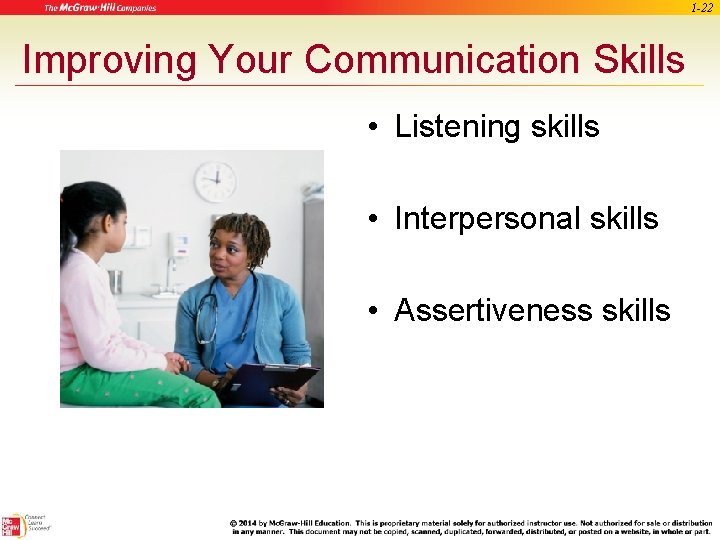
1 -22 Improving Your Communication Skills • Listening skills • Interpersonal skills • Assertiveness skills
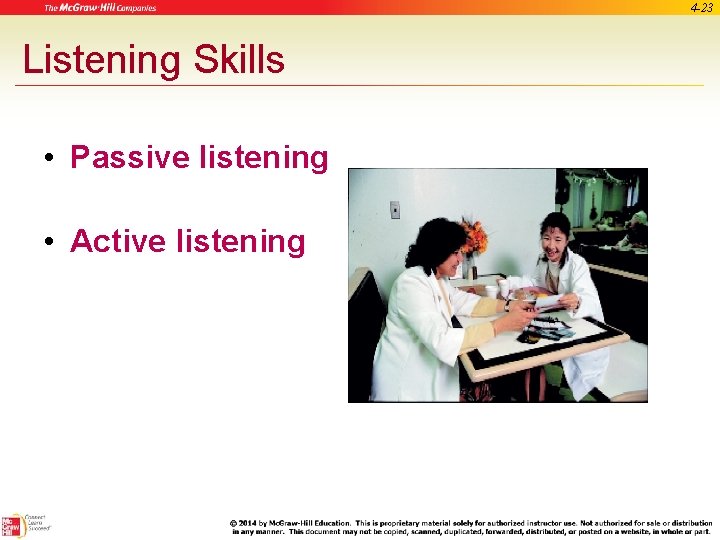
4 -23 Listening Skills • Passive listening • Active listening
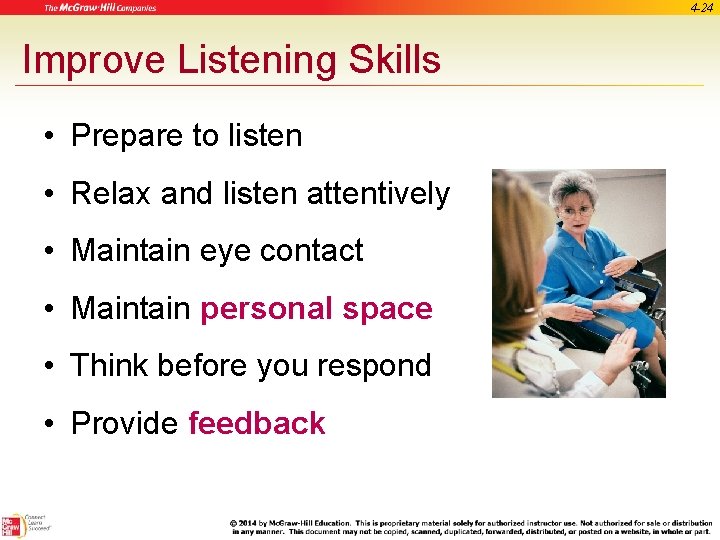
4 -24 Improve Listening Skills • Prepare to listen • Relax and listen attentively • Maintain eye contact • Maintain personal space • Think before you respond • Provide feedback
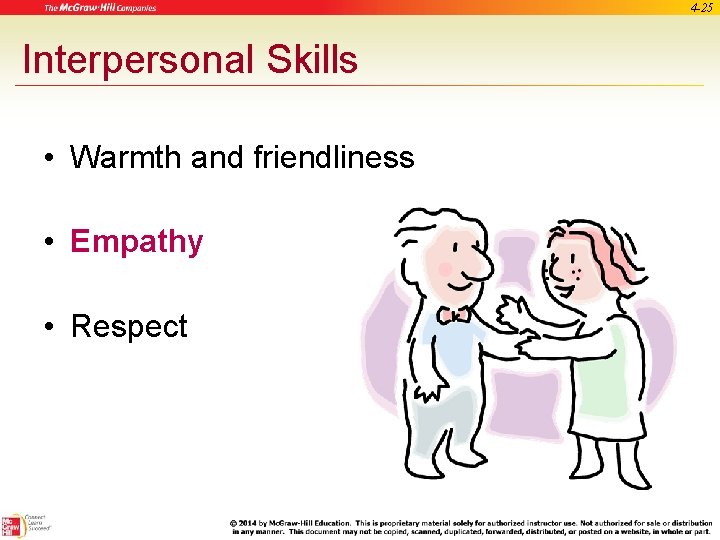
4 -25 Interpersonal Skills • Warmth and friendliness • Empathy • Respect
4 -26 Interpersonal Skills (cont. ) • Genuineness • Openness • Consideration and sensitivity
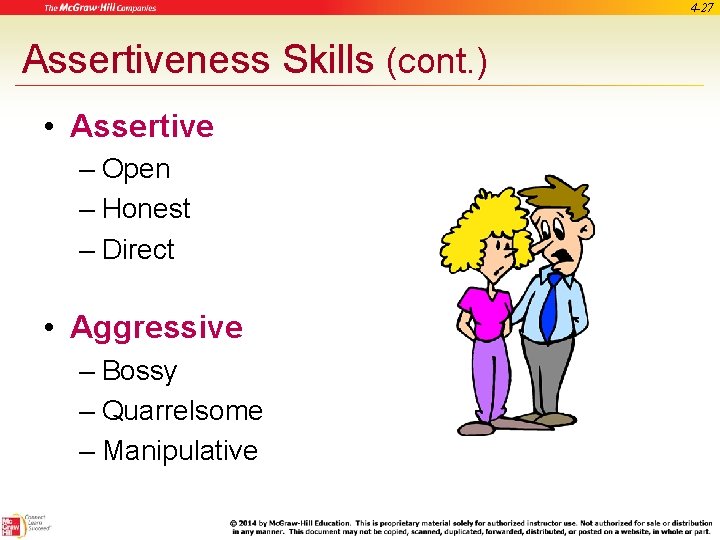
4 -27 Assertiveness Skills (cont. ) • Assertive – Open – Honest – Direct • Aggressive – Bossy – Quarrelsome – Manipulative
4 -28 Apply Your Knowledge What is the difference between being aggressive and being assertive? ANSWER: Assertiveness means standing by your principles while showing respect for others. You trust your instincts, feelings, and opinions and act on them. An aggressive person tries to impose his or her own position on others or tries to manipulate them. He or she is bossy, may be quarrelsome, and does not consider another’s feelings, needs, thoughts, ideas, or opinions.
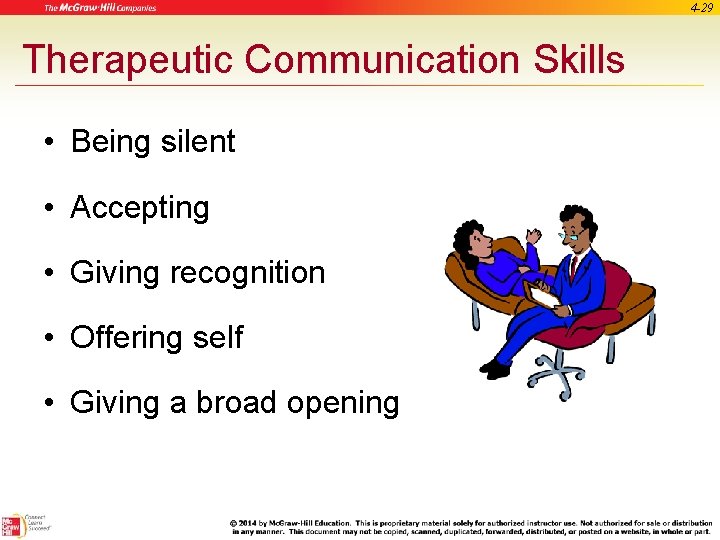
4 -29 Therapeutic Communication Skills • Being silent • Accepting • Giving recognition • Offering self • Giving a broad opening
4 -30 Therapeutic Communication (cont. ) • Offering general leads • Making observations • Encouraging communication • Mirroring • Reflecting
4 -31 Therapeutic Communication (cont. ) • Focusing • Exploring • Clarifying • Summarizing
1 -32 Ineffective Therapeutic Communication • Reassuring • Giving approval • Disapproving • Agreeing/disagreeing • Advising
4 -33 Ineffective Therapeutic Communication • Probing • Defending • Requesting an explanation • Minimizing feelings • Making stereotyped comments
4 -34 Defense Mechanisms • Adaptive • Nonadaptive
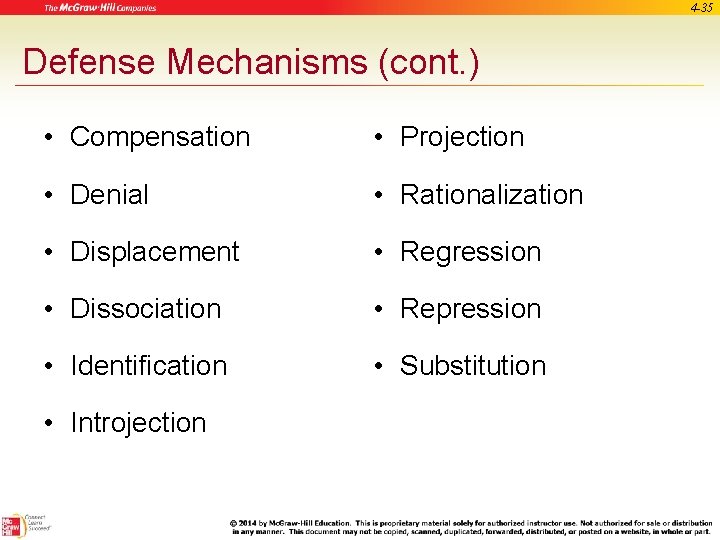
4 -35 Defense Mechanisms (cont. ) • Compensation • Projection • Denial • Rationalization • Displacement • Regression • Dissociation • Repression • Identification • Substitution • Introjection
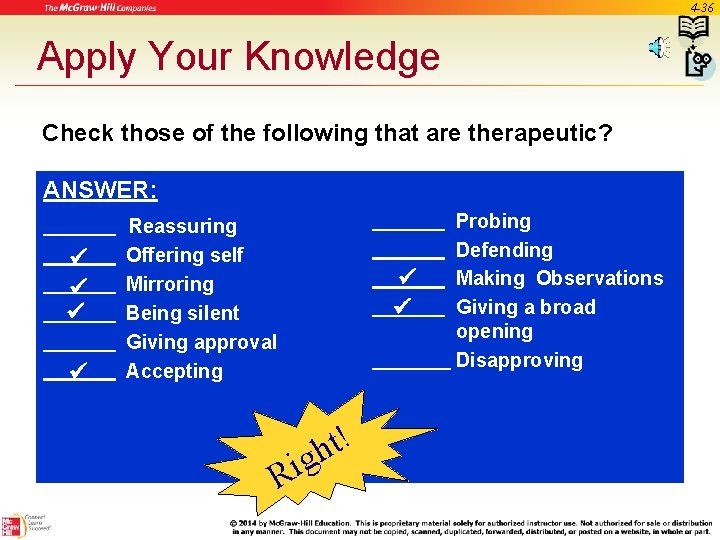
4 -36 Apply Your Knowledge Check those of the following that are therapeutic? ANSWER: Reassuring Offering self Mirroring Being silent Giving approval Accepting R t! h ig Probing Defending Making Observations Giving a broad opening Disapproving
4 -37 Communicating in Special Circumstances • Some special circumstances inhibit communication – Heightened emotions – Cultural differences – Impairment or disability – Terminal illnesses
4 -38 The Anxious Patient • May not listen well or pay attention to what you are saying • Observe for signs • Acknowledge • Identify source • Use communication skills
4 -39 The Angry Patient • Reasons for anger • Do not take personally • Goal ~ help refocus to solve problem
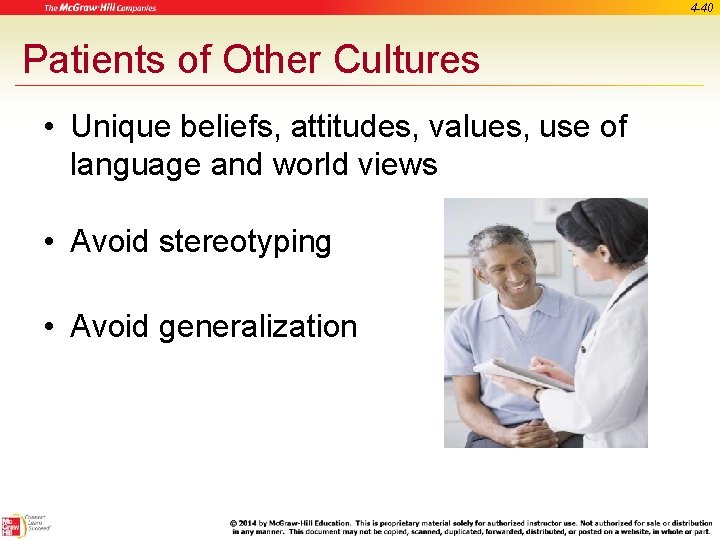
4 -40 Patients of Other Cultures • Unique beliefs, attitudes, values, use of language and world views • Avoid stereotyping • Avoid generalization
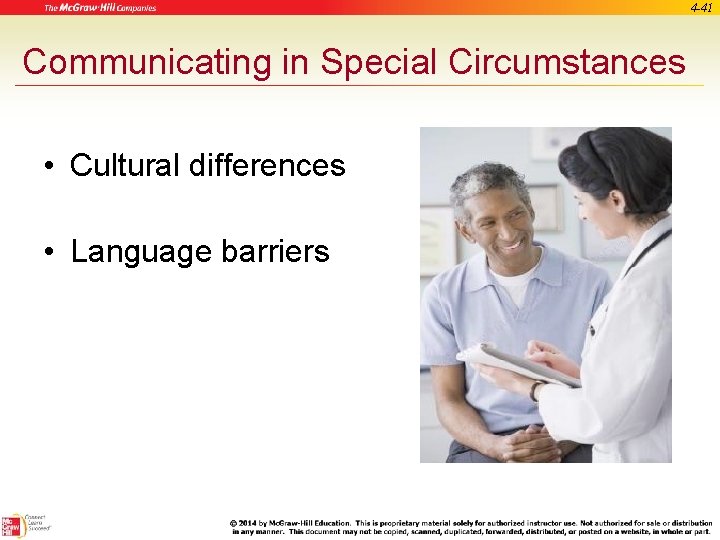
4 -41 Communicating in Special Circumstances • Cultural differences • Language barriers
4 -42 Communicating in Special Circumstances • Limited reading skills • Cultural competence
The Patient Who is Mentally or Emotionally Disturbed • Determine what level of communication the patient can understand • Suggestions – Remain calm if the patient becomes agitated or confused – Avoid raising your voice – Avoid appearing impatient 4 -43
4 -44 Terminally Ill Patients • Respect rights • Treat with dignity • Kübler-Ross’s Stages of Dying – Denial – Anger – Bargaining – Depression – Acceptance
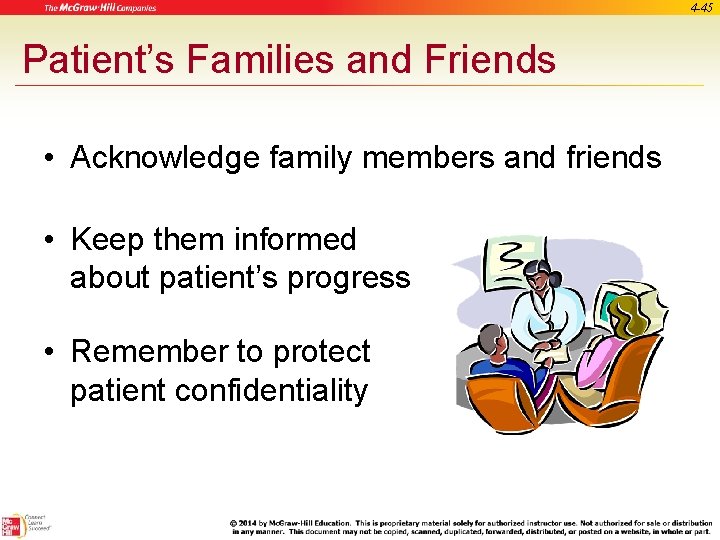
4 -45 Patient’s Families and Friends • Acknowledge family members and friends • Keep them informed about patient’s progress • Remember to protect patient confidentiality
4 -46 The Patient With AIDS or the Patient Who is HIV-Positive • Stigma of disease • Have accurate information about the disease and the risks involved • Provide human contact and treat with dignity
4 -47 Apply Your Knowledge What can you do to better communicate with the anxious patient? ANSWER: Identify signs of anxiety, acknowledge the patient’s anxiety, identify possible sources of the anxiety, ease any physical discomfort, and create a climate of acceptance and trust. Use appropriate communication skills: do not belittle the patient’s thoughts and feelings, be empathetic to the patient’s concerns. Help the patient recognize and cope with the anxiety.
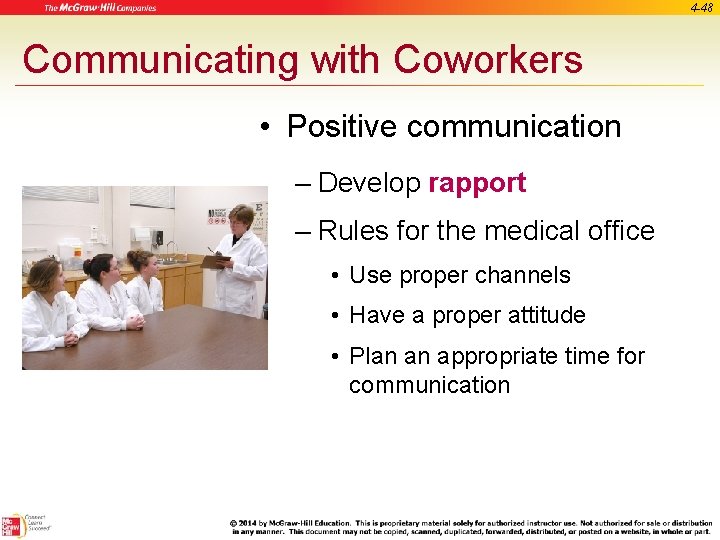
4 -48 Communicating with Coworkers • Positive communication – Develop rapport – Rules for the medical office • Use proper channels • Have a proper attitude • Plan an appropriate time for communication
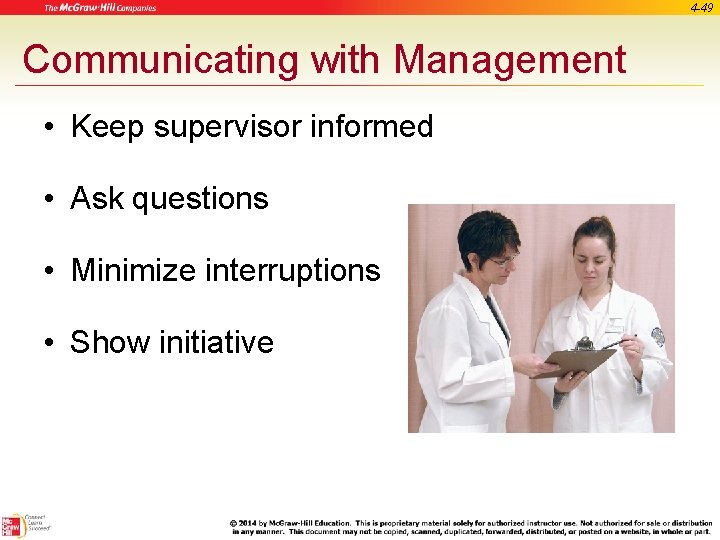
4 -49 Communicating with Management • Keep supervisor informed • Ask questions • Minimize interruptions • Show initiative
1 -50 Dealing With Conflict • Do not feed into negative attitudes • Be personable and supportive of coworkers • Do not judge or stereotype others • Do not gossip • Do not jump to conclusions
Setting Boundaries in the Healthcare Environment • Boundaries may be physical or psychological • Limits undesirable behavior • Action will depend upon who the aggressor is 4 -51
4 -52 Apply Your Knowledge What strategies can you use to avoid conflict in the workplace? ANSWER: You can use the following strategies to avoid conflict in the workplace: • Do not “feed into” others’ negative attitudes • Be personable and supportive • Refrain from passing judgments • Do not gossip • Do not jump to conclusions
4 -53 In Summary 4. 1 The communication circle involves a message being sent, a source, and a receiver that responds. Feedback is the response to a message, and noise is anything that may interfere with or change the message.
4 -54 In Summary 4. 2 Understanding human behavior and needs, and their correlation with professional relationships, is necessary to practicing as a medical assistant. Understanding the various stages of human life assists you in your communication skills with patients.
4 -55 In Summary (cont. ) 4. 3 Communication that promotes comfort and well-being is considered positive communication. Negative communication can be a turn-off. Lack of eye contact with patients, except in specific cultures, or speaking sharply to a patient is considered negative communication.
4 -56 In Summary (cont. ) 4. 4 Listening and other interpersonal skills can be improved by becoming more involved in the communication process by offering feedback or asking questions of the patient. Understand that assertive medical assistants trust their instincts. They respect their selfworth, while still making the patient feel comfortable and important. Aggressive medical assistants try to impose their positions through manipulation techniques.
1 -57 In Summary 4. 5 Therapeutic communication is the ability to communicate with patients in terms that they can understand and, at the same time, feel at ease and comfortable in what you are saying. Positive therapeutic skills can enhance communication. Be aware of negative therapeutic skills that can disrupt the communication. Recognize defense mechanisms in patients and note whether the patient is using them to cope or is not able to cope.
4 -58 In Summary 4. 6 Learning about the special needs of patients and polishing your communication skills will help you become an effective communicator. This will assist you with handling diversity in the workplace, handling anxious and annoyed patients, and in dealing with patients who may have language barriers.
4 -59 In Summary 4. 7 The quality of communication you have with your coworkers and your supervisor greatly influences the development of a positive or negative work climate. Use proper channels of communication. Be open-minded. Keep supervisors informed of office problems as they arise and show initiative in your work habits.
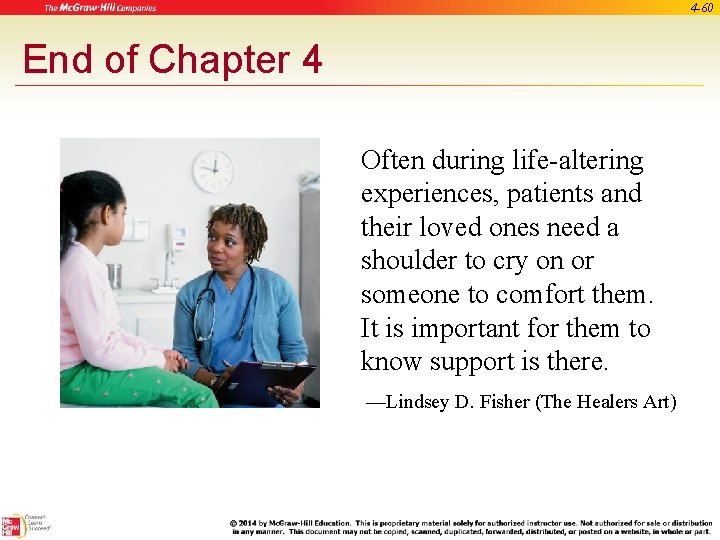
4 -60 End of Chapter 4 Often during life-altering experiences, patients and their loved ones need a shoulder to cry on or someone to comfort them. It is important for them to know support is there. —Lindsey D. Fisher (The Healers Art)