
Chapter 4 Internal Analysis Resources Capabilities and Core
Chapter 4 Internal Analysis: Resources, Capabilities, and Core Competencies Copyright © 2015 Mc. Graw-Hill Education. All rights reserved. No reproduction or distribution without the prior written consent of Mc. Graw-Hill Education.
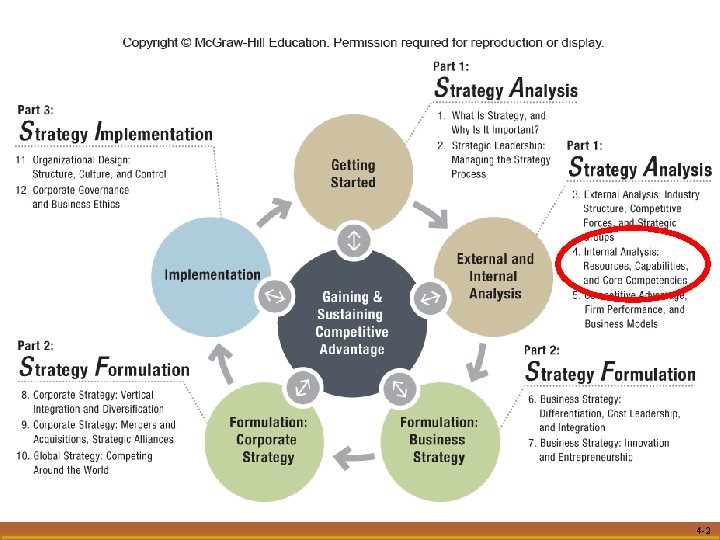
4 -2
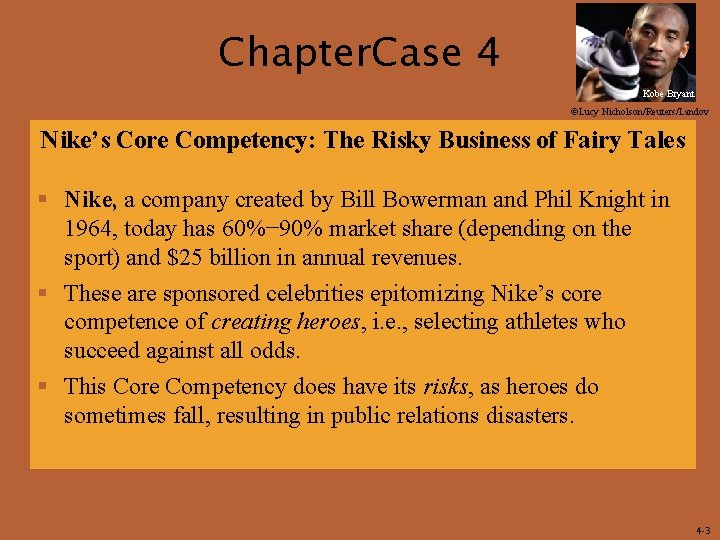
Chapter. Case 4 Kobe Bryant ©Lucy Nicholson/Reuters/Landov Nike’s Core Competency: The Risky Business of Fairy Tales § Nike, a company created by Bill Bowerman and Phil Knight in 1964, today has 60%− 90% market share (depending on the sport) and $25 billion in annual revenues. § These are sponsored celebrities epitomizing Nike’s core competence of creating heroes, i. e. , selecting athletes who succeed against all odds. § This Core Competency does have its risks, as heroes do sometimes fall, resulting in public relations disasters. 4 -3
4. 1 Looking Inside the Firm for Core Competencies Competitive advantage derives from core competencies, which enable: • Differentiation of products/services creating perceived value, or • Cost leadership – offering products/services of comparable value at lower cost NIKE – Core Competence – Just Do It • Unlocking human potential • Anyone can be a hero 4 -4
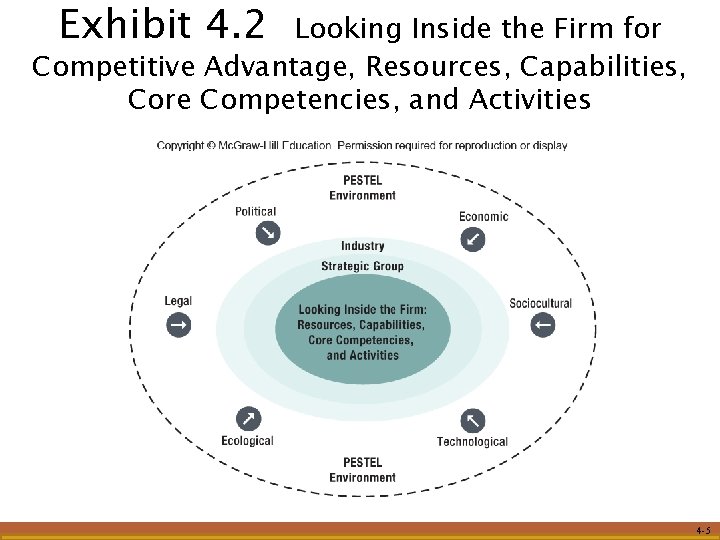
Exhibit 4. 2 Looking Inside the Firm for Competitive Advantage, Resources, Capabilities, Core Competencies, and Activities 4 -5
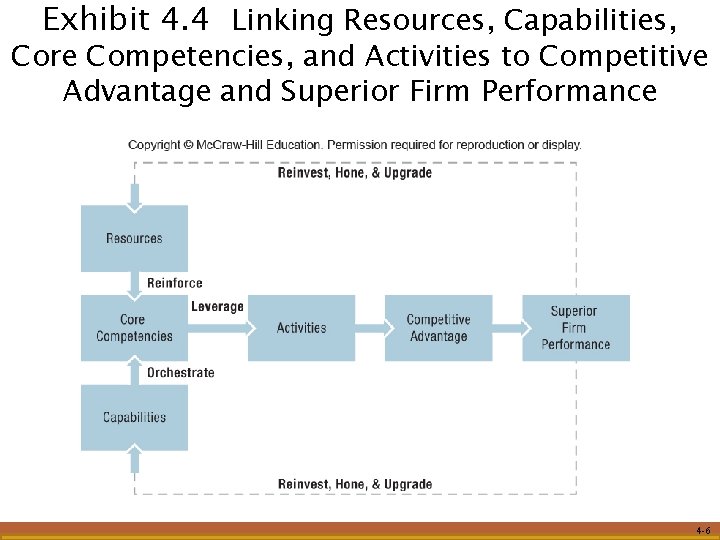
Exhibit 4. 4 Linking Resources, Capabilities, Core Competencies, and Activities to Competitive Advantage and Superior Firm Performance 4 -6

4. 2 The Resource-Based View § Competitive advantage is more likely to develop from intangible rather than tangible resources. . § Tangible and Intangible Resources – Examples: § Apple • Tangible Resource Value: $15 Billion • Intangible Resource Value: $180 Billion § Google • Tangible Resource Value: $8 Billion • Intangible Resource Value: $110 Billion 4 -7
Two Critical Assumptions The two assumptions – that firms may control – are critical in explaining superior firm performance for the resource-based model: 1. Resource Heterogeneity • Model assumption that a firm is a bundle of resources and capabilities differ across firms 2. Resource Immobility • Model assumption that a firm has resources that tend to be “sticky” and that do not move easily from firm to firm 4 -8
The VRIO Framework § Valuable • Attractive features • Lower costs (& price) ü Higher profits • Honda – design & build engines § Rare • Only a few firms possess • Toyota – lean manufacturing ü Temporary competitive advantage § Costly to Imitate • Unable to develop or buy at a reasonable price • Nike – Yes • Crocs - No § Organized to Capture • Exploit competitive potential ü Structure ü Coordinating systems • Xerox PARC – No 4 -9
Strategy Highlight 4. 1 Applying VRIO: The Rise and Fall of Groupon Mason’s Strategic Vision for Groupon Was To Be the Global Leader in Local Commerce: § 2008 – 27 -year-old Andrew Mason founded Groupon § Groupon creates marketplaces, i. e. , a group-coupon § Internal Analysis – VRIO framework application would have predicted Groupon’s first mover competitive advantage as temporary at best. § External Analysis – The five forces model would have predicted low industry profit potential. 4 -10
HOW TO SUSTAIN A COMPETITIVE ADVANTAGE SUMMARY Taken together, a firm may be able to protect its competitive advantage – even for long periods of time – when its managers have consistently: 1. Better expectations about the future value of resources 2. Have accumulated a resource advantage that can be imitated only over long periods of time 3. When the source of their competitive advantage is causally ambiguous or socially complex 4 -11
Strategy Highlight 4. 2 Bill “Lucky” Gates § Bill Gates is one of the richest people in the world. § He is also “rich” in LUCK. § In 8 th grade his school got a computer and software programs. § In 1975 founded Microsoft with long-time friend Paul Allen. § In 1980 his mother heard IBM was looking for an operating system… § Bill Gates didn’t have one, but he knew where to get one. § He then sold copies of MS-DOS to IBM (through a non-exclusive license), and thus kept the copyright. 4 -12
4. 3 The Dynamic Capabilities Perspective § A firm’s ability to create, deploy, modify, reconfigure, upgrade, or leverage its resources in its quest for competitive advantage § Essential to create a sustained competitive advantage • A dynamic fit between internal strengths and external opportunities § Resource stocks – current level of intangible resources § Resource flows – investments to maintain or build a resource 4 -13
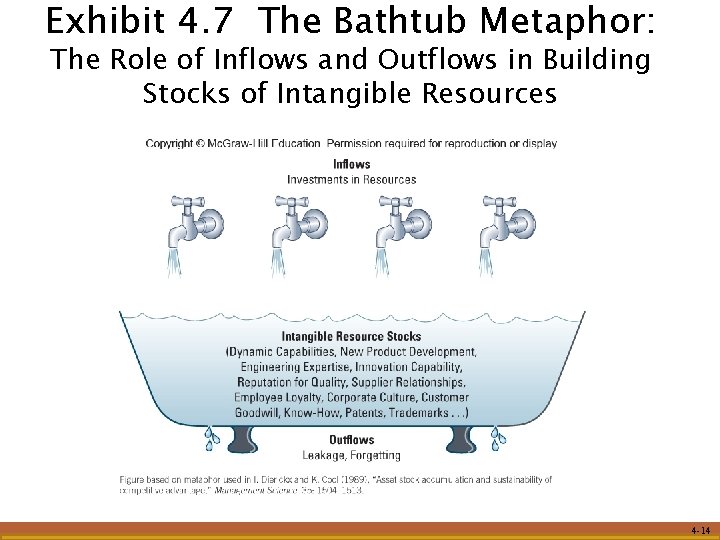
Exhibit 4. 7 The Bathtub Metaphor: The Role of Inflows and Outflows in Building Stocks of Intangible Resources 4 -14
4. 4 The Value Chain Analysis § The internal activities a firm engages in when transforming inputs into outputs § Each activity adds incremental value and associated costs. § This concept can be applied to any firm – goods or service. § The value chain helps to assess which parts add value and which do not. 4 -15
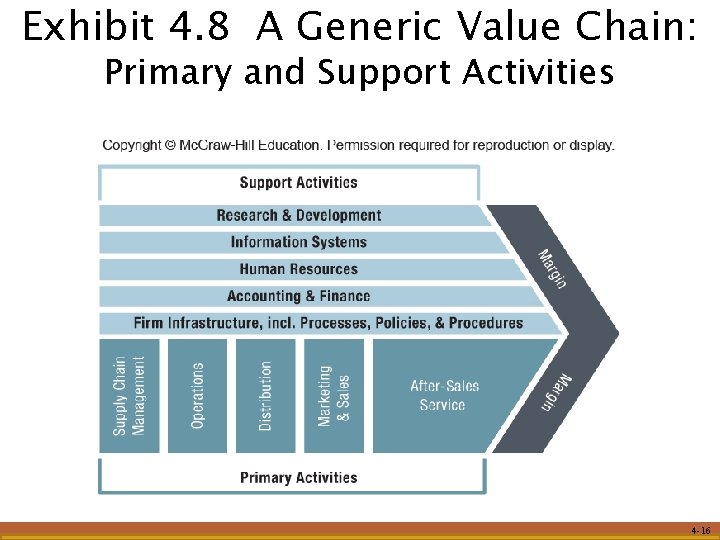
Exhibit 4. 8 A Generic Value Chain: Primary and Support Activities 4 -16
4. 5 Implications for the Strategist USING SWOT ANALYSIS TO COMBINE EXTERNAL AND INTERNAL ANALYSIS § Synthesizes internal analysis of the company’s strengths and weaknesses (S and W) with those from an analysis of external opportunities and threats (O and T) § SWOT = • VRIO framework plus • PESTEL plus • Porter’s five forces analyses 4 -17
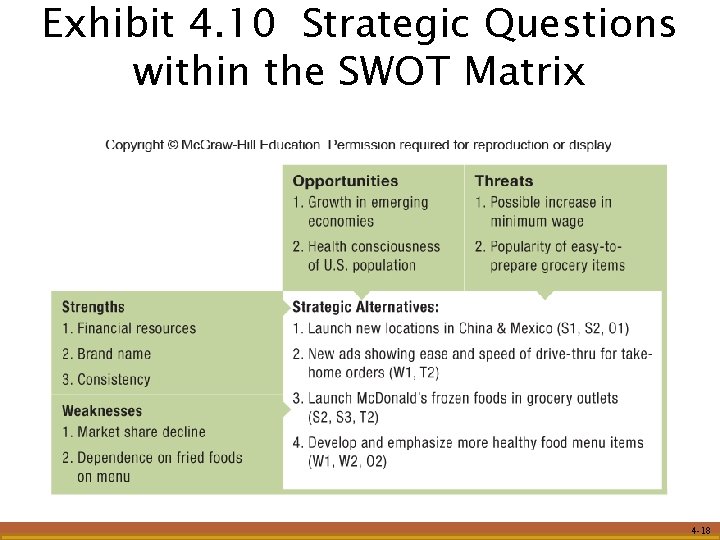
Exhibit 4. 10 Strategic Questions within the SWOT Matrix 4 -18
Using SWOT Analysis to Combine External and Internal Analysis SWOT Limitations § SWOT analysis – widely used management tool § However, a strength can also be a weakness, and an opportunity can also be a threat. § The answer is – it depends… § To be an effective management tool, the strategist must conduct thorough external and internal analyses, grounding these analyses in rigorous theoretical frameworks, in order to derive a set of strategic options. 4 -19
Chapter. Case 4 Kobe Bryant ©Lucy Nicholson/Reuters/Landov Consider This… • Nike’s strategy of building its core competency by creating heroes is not without risks. • Time and time again Nike’s heroes have fallen from grace. • Although Nike’s co-founder and chairman Phil Knight declared that scandals surrounding its superstar endorsement athletes are “part of the game, ” too many of these public relations disasters could damage the company’s brand lead to a loss of competitive advantage. 4 -20
4 -21
- Slides: 21