
Chapter 4 Igneous Rocks Characteristics of magma Igneous

- Slides: 55
Chapter 4 Igneous Rocks
Characteristics of magma Igneous rocks form as molten magma cools and solidifies General Characteristic of magma • Parent material of igneous rocks • Forms from partial melting of rocks inside the Earth • Magma that reaches the surface is called lava
Characteristics of magma General Characteristic of magma • Rocks formed from lava at the surface are classified as extrusive, or volcanic rocks • Rocks formed from magma that crystallizes at depth are termed intrusive, or plutonic rocks
Characteristics of magma The nature of magma • Consists of three components: – A liquid portion, called melt, that is composed of mobile ions – Solids, if any, are silicate minerals that have already crystallized from the melt – Volatiles, which are gases dissolved in the melt, including water vapor (H 2 O), carbon dioxide (CO 2), and sulfur dioxide (SO 2)
Characteristics of magma Crystallization of magma • Texture in igneous rocks is determined by the size and arrangement of mineral grains • Igneous rocks are typically classified by – Texture – Mineral composition
Igneous textures Factors affecting crystal size • Rate of cooling – Slow rate promotes the growth of fewer but larger crystals – Fast rate forms many small crystals – Very fast rate forms glass • Amount of silica (Si. O 2) present • Amount of dissolved gases
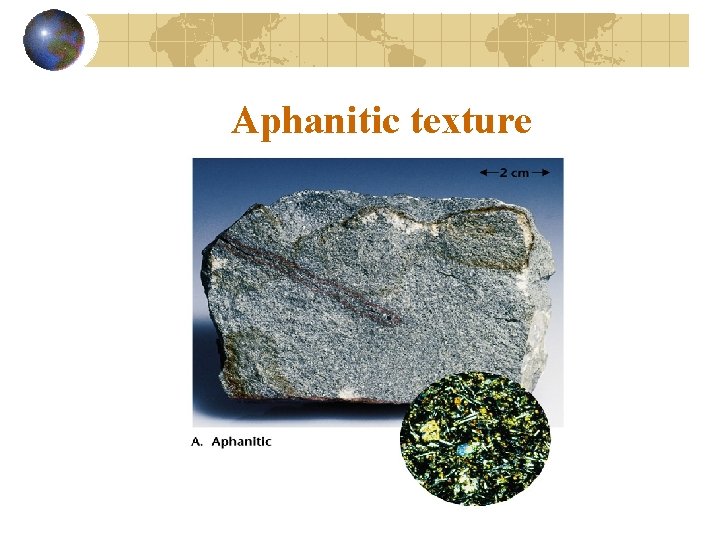
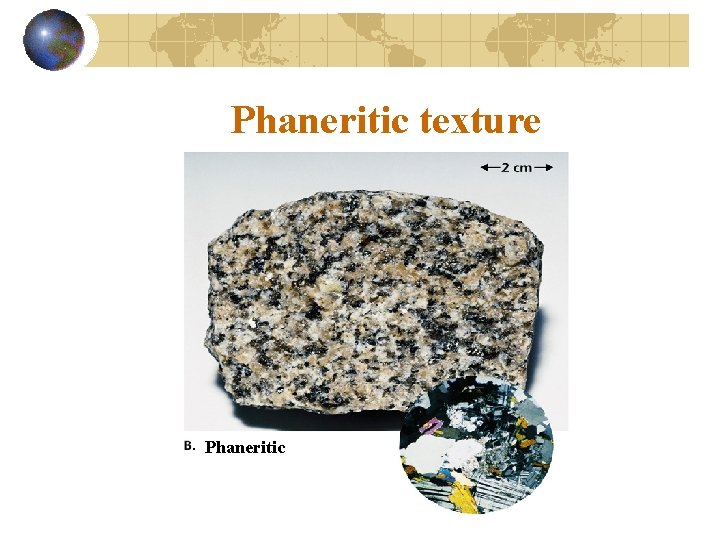
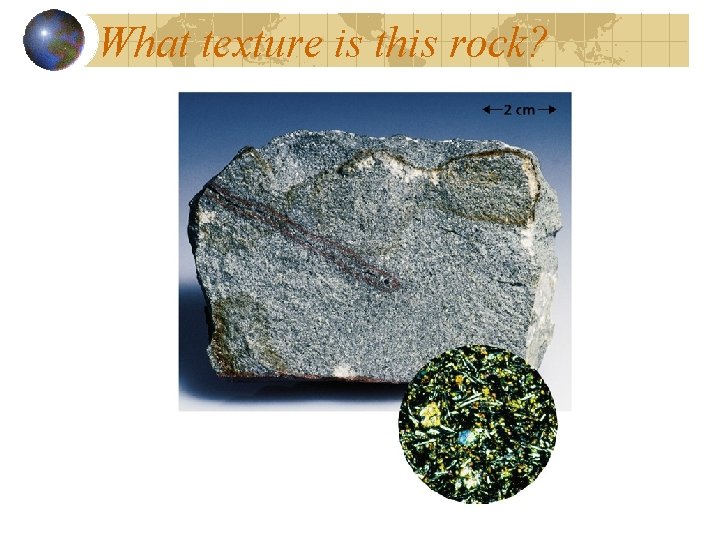
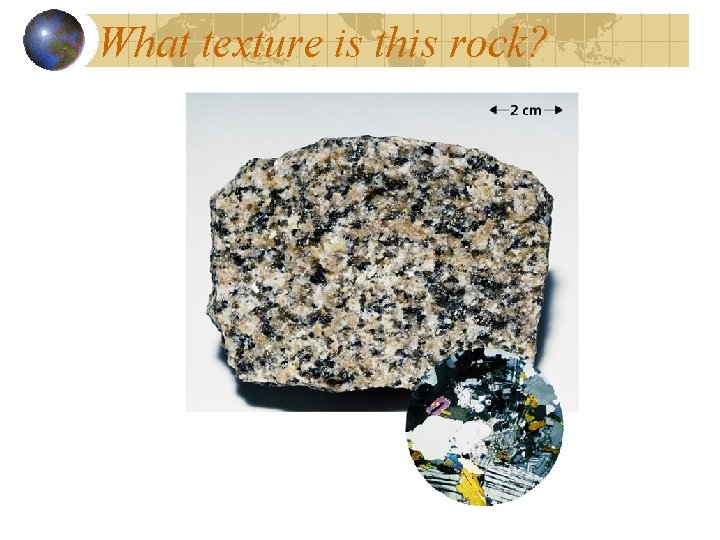
Igneous textures Types of igneous textures • Aphanitic (fine-grained) texture – Rapid rate of cooling of lava or magma – Microscopic crystals – May contain vesicles (holes from gas bubbles) • Phaneritic (coarse-grained) texture – Slow cooling – Crystals can be identified without a microscope
Aphanitic texture
Phaneritic texture Phaneritic
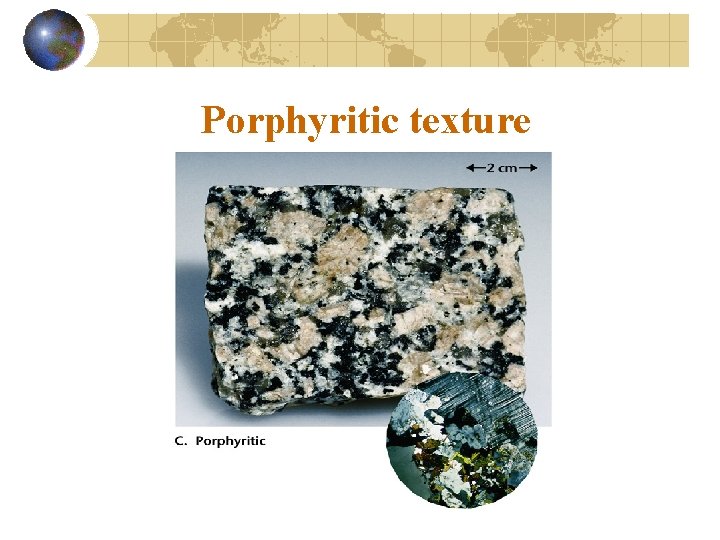
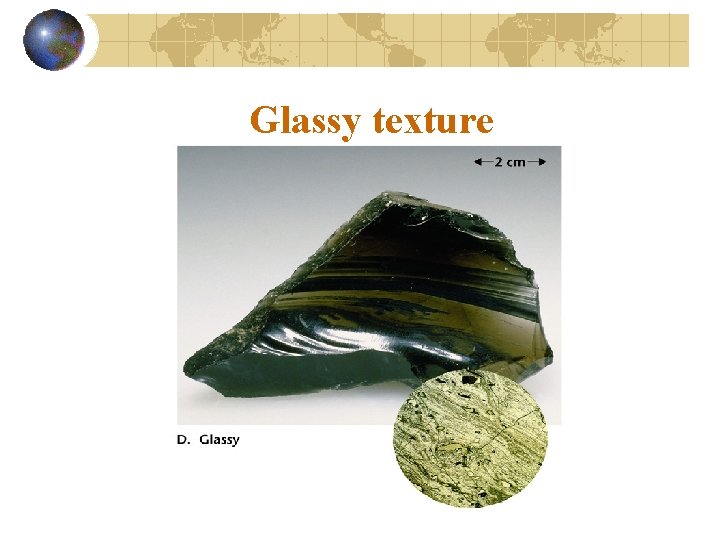
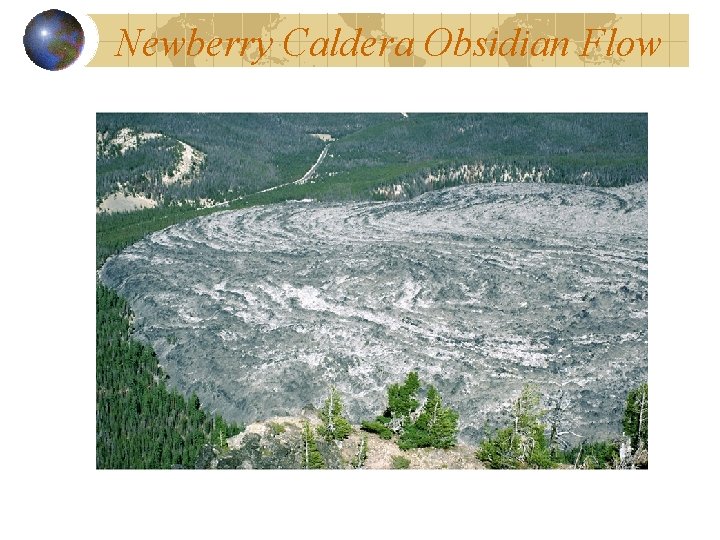
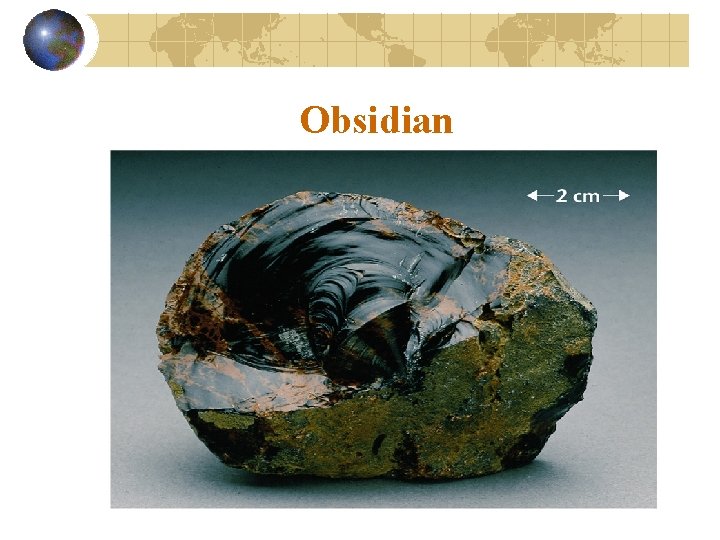
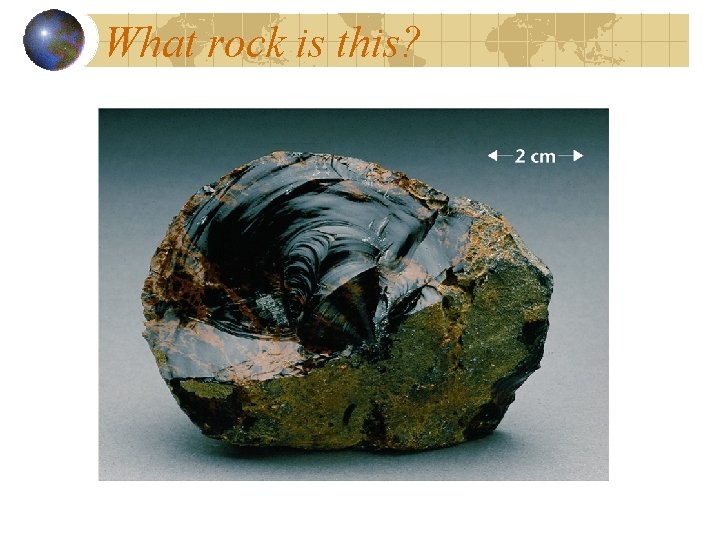
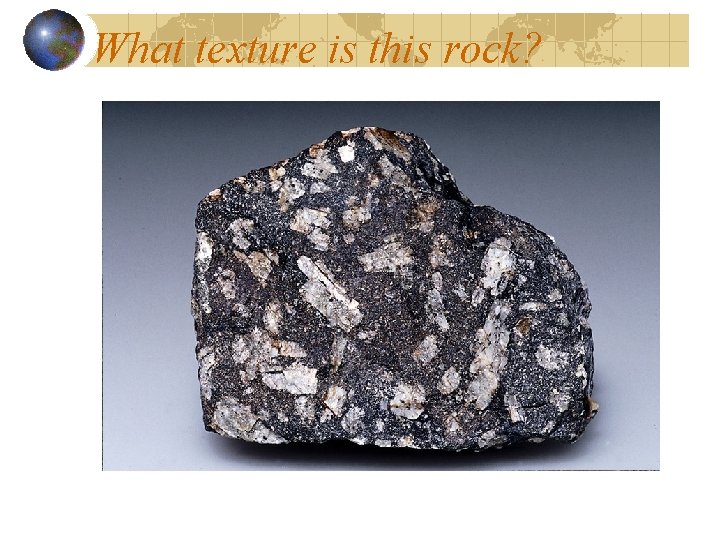
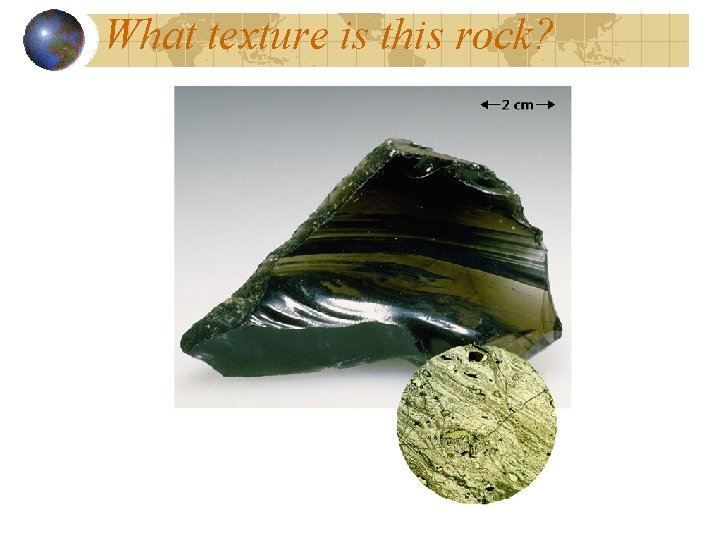
Igneous textures Types of igneous textures • Porphyritic texture – Minerals form at different temperatures as well as differing rates – Large crystals, called phenocrysts, are embedded in a matrix of smaller crystals, called the groundmass • Glassy texture – Very rapid cooling of molten rock – Resulting rock is called obsidian
Porphyritic texture
Glassy texture
Newberry Caldera Obsidian Flow
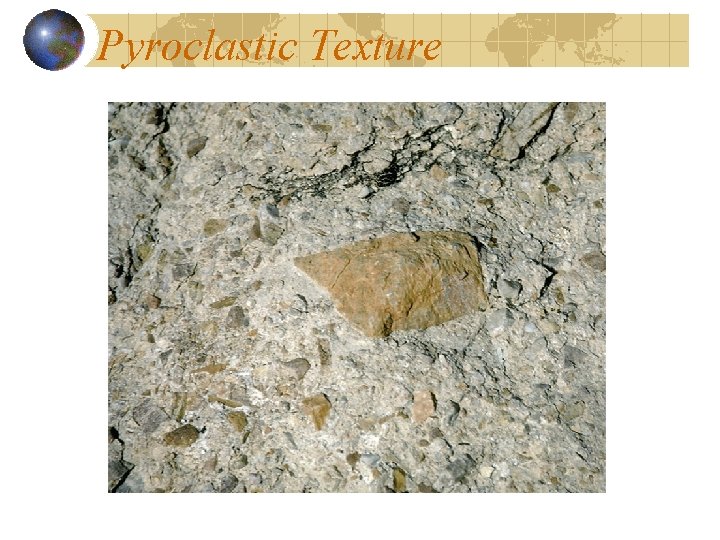
Igneous textures Types of igneous textures • Pyroclastic texture – Various fragments ejected during a violent volcanic eruption – Textures often appear to more similar to sedimentary rocks • Pegmatitic texture – Exceptionally coarse grained – Form in late stages of crystallization of granitic magmas
Pyroclastic Texture
Igneous Compositions Felsic (feldspar and silica) rocks are composed of light colored minerals Light (or nonferromagnesian) silicates – Quartz – Muscovite mica – Feldspars Major constituents of continental crust
Igneous Compositions Mafic (magnesium and ferrum, for iron) rocks contain dark silicates and calcium-rich feldspars Dark (or ferromagnesian) silicates – Olivine – Pyroxene – Amphibole – Biotite mica Comprise the ocean floor as well as many volcanic islands
Igneous compositions Other compositional groups • Intermediate composition – Contain at least 25 percent dark silicate minerals – Associated with explosive volcanic activity • Ultramafic composition – Rare composition that is high in magnesium and iron – Composed entirely of ferromagnesian silicates
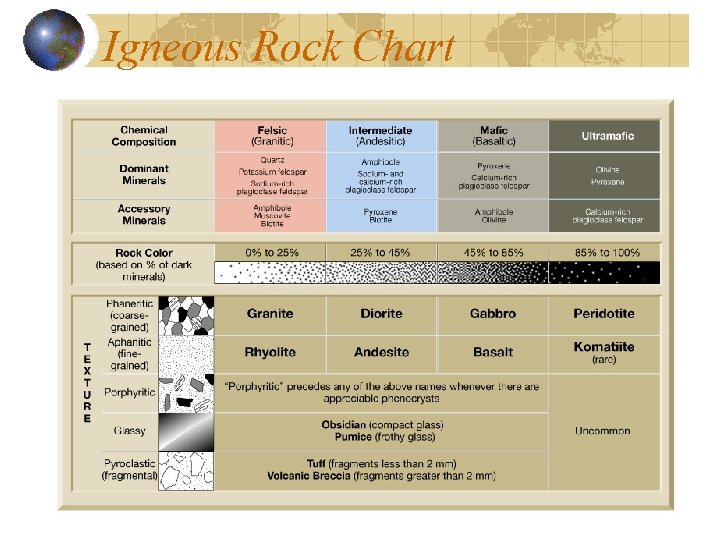
Igneous Rock Chart
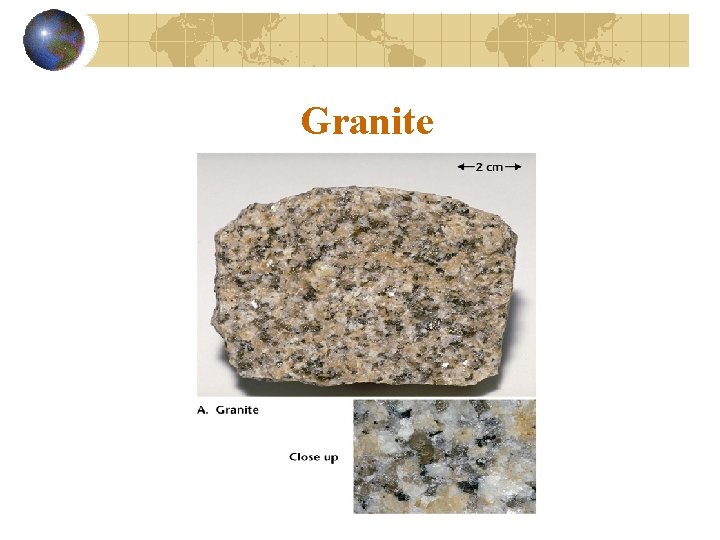
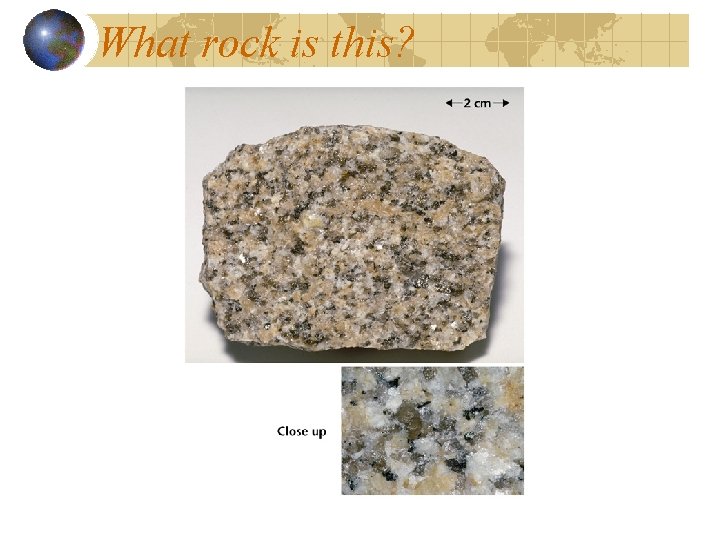
Igneous compositions Naming igneous rocks – felsic rocks • Granite – Phaneritic – Over 25 percent quartz, about 65 percent or more feldspar – May exhibit a porphyritic texture – Very abundant as it is often associated with mountain building – The term granite covers a wide range of mineral compositions
Granite
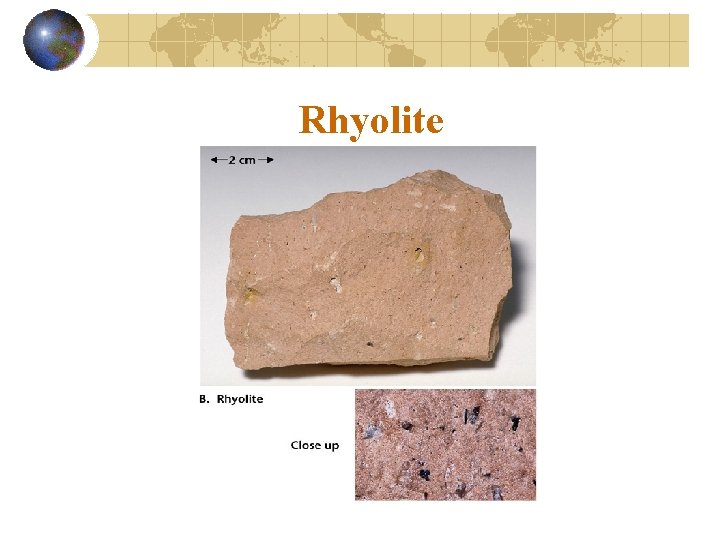
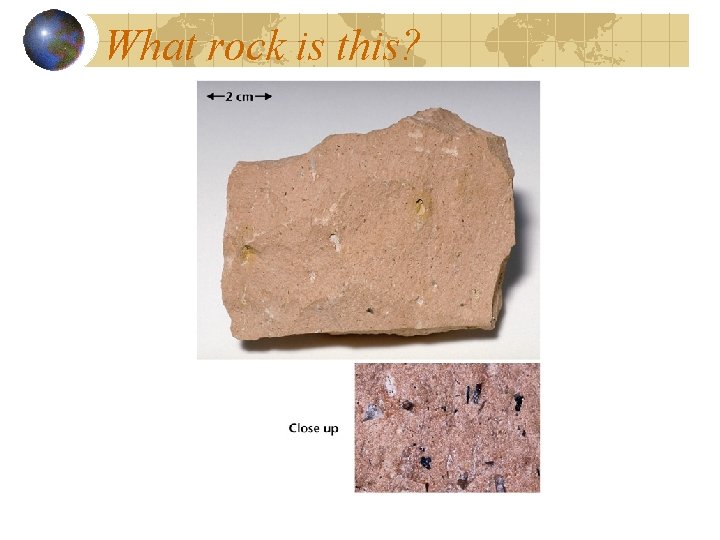
Igneous compositions Naming igneous rocks –felsic rocks • Rhyolite – Extrusive equivalent of granite – May contain glass fragments and vesicles – Aphanitic texture – Less common and less voluminous than granite
Rhyolite
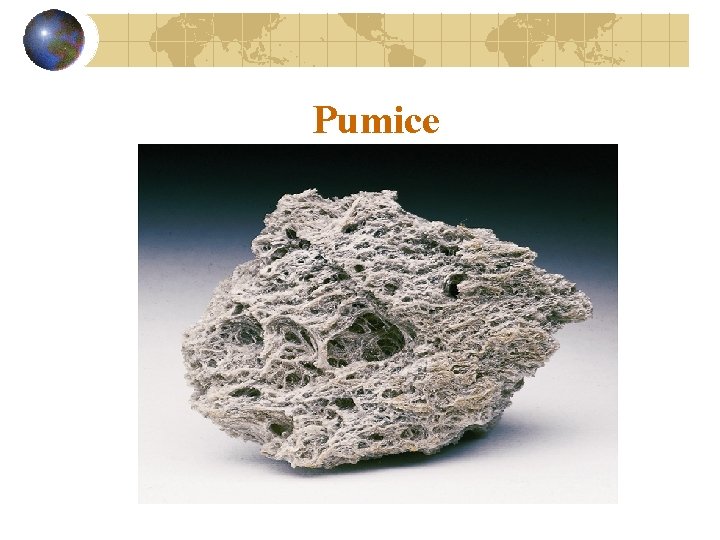
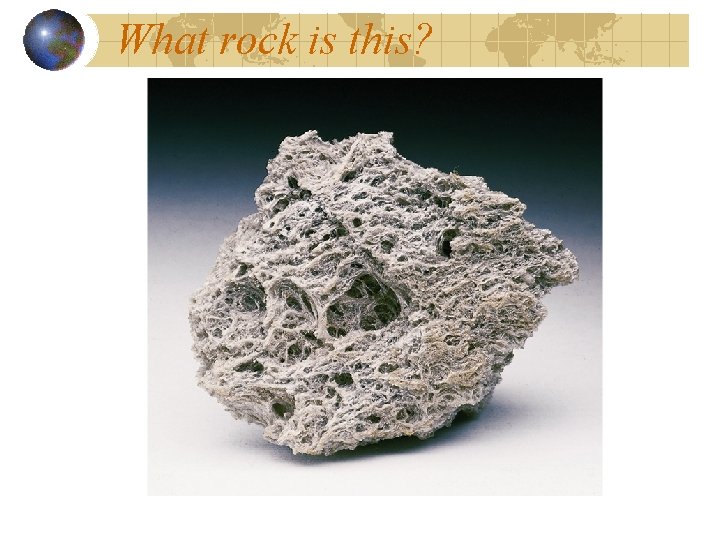
Igneous compositions Naming igneous rocks –felsic rocks • Obsidian – Dark colored – Glassy texture • Pumice – Volcanic – Glassy texture – Frothy appearance with numerous voids
Obsidian
Pumice
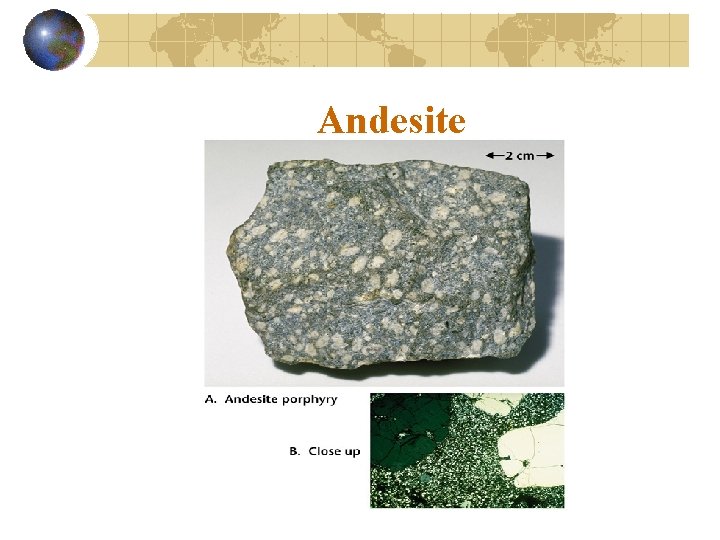
Igneous compositions Naming igneous rocks – intermediate rocks • Andesite – Volcanic origin – Aphanitic texture – Often resembles rhyolite
Andesite
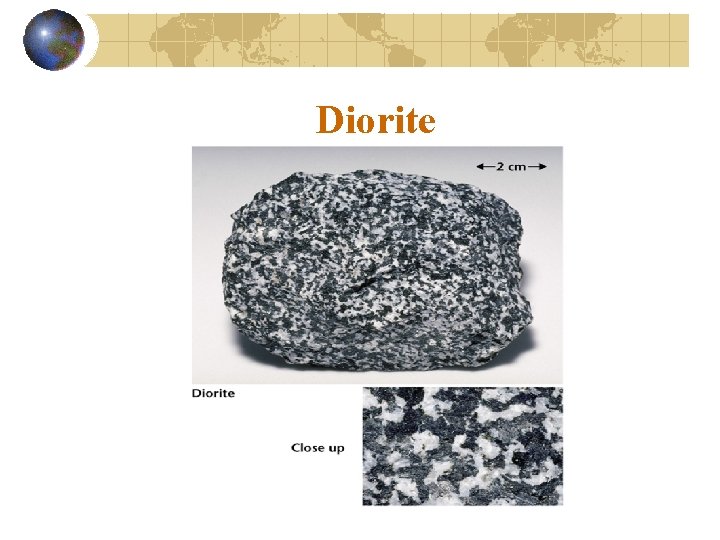
Igneous compositions Naming igneous rocks – intermediate rocks • Diorite – Plutonic equivalent of andesite – Coarse grained – Intrusive – Composed mainly of intermediate feldspar and amphibole
Diorite
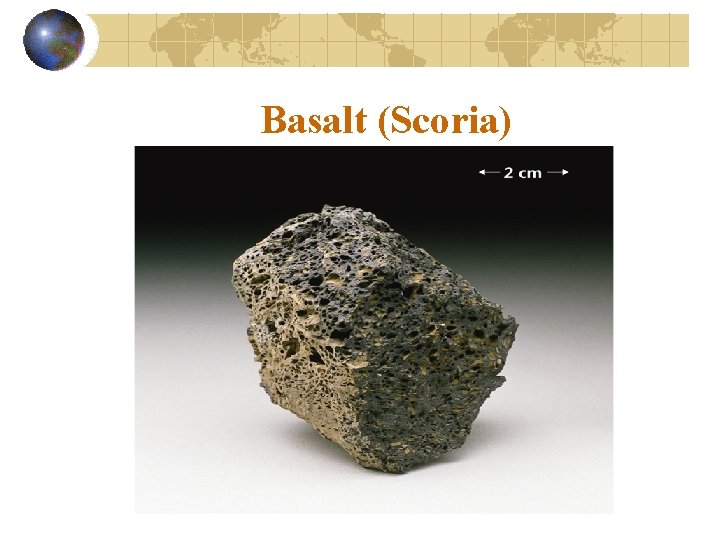
Igneous compositions Naming igneous rocks –mafic rocks • Basalt – Volcanic origin – Aphanitic texture – Composed mainly of pyroxene and calciumrich plagioclase feldspar – Most common extrusive igneous rock
Basalt (Scoria)
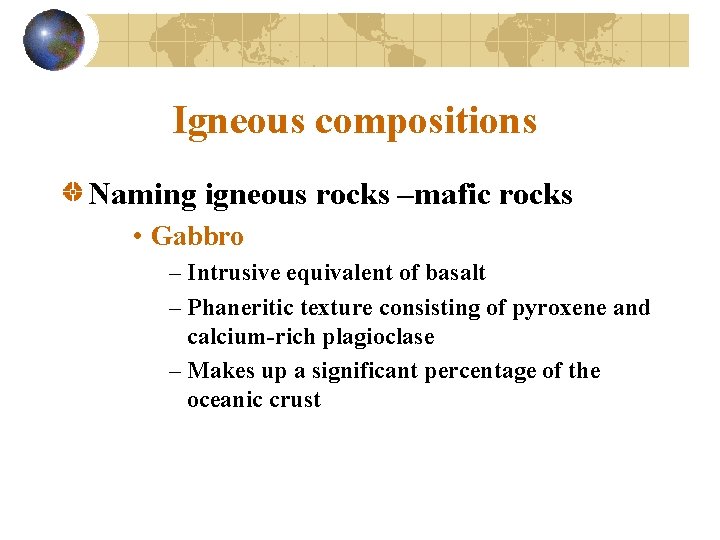
Igneous compositions Naming igneous rocks –mafic rocks • Gabbro – Intrusive equivalent of basalt – Phaneritic texture consisting of pyroxene and calcium-rich plagioclase – Makes up a significant percentage of the oceanic crust
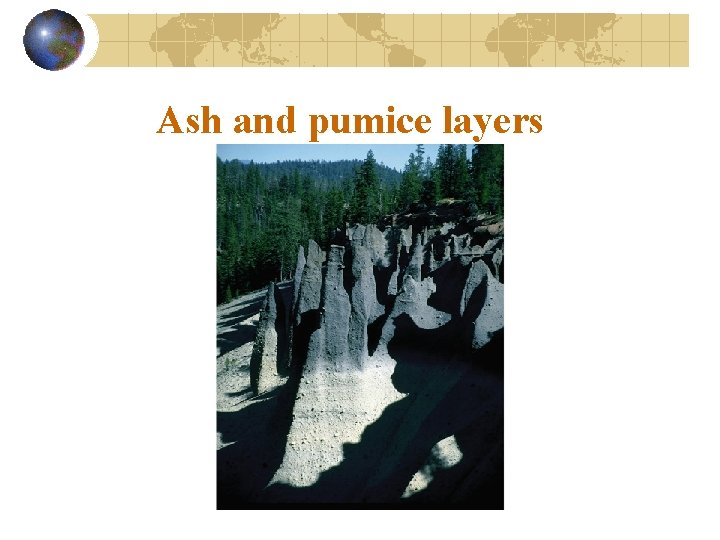
Igneous compositions Naming igneous rocks – pyroclastic rocks • Composed of fragments ejected during a volcanic eruption • Varieties – Tuff – ash-sized fragments – Volcanic breccia – particles larger than ash
Ash and pumice layers
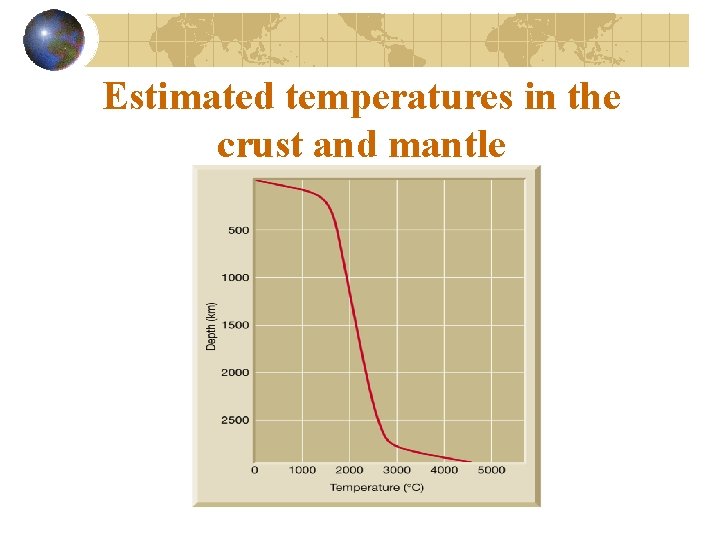
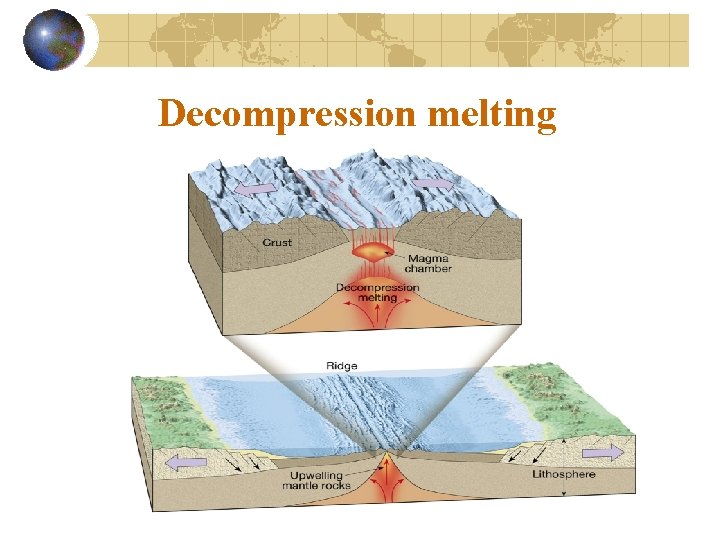
Origin of Magma Highly debated topic Generating magma from solid rock • Produced from partial melting of rocks in the crust and upper mantle • Role of heat – Temperature increases within Earth’s upper crust (called the geothermal gradient) • Role of pressure – When confining pressures drop, decompression melting occurs • Role of volatiles – Volatiles (primarily water) cause rocks to melt at lower temperatures
Estimated temperatures in the crust and mantle
Decompression melting
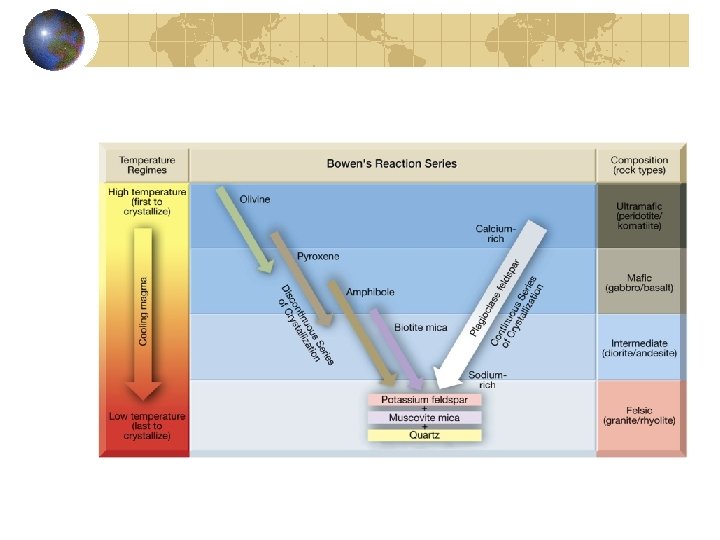
Evolution of magmas A single volcano may extrude lavas exhibiting very different compositions Bowen’s reaction series and the composition of igneous rocks • N. L. Bowen demonstrated that as a magma cools, minerals crystallize in a systematic fashion based on their melting points
Evolution of magmas Bowen’s reaction series • During crystallization, the composition of the liquid portion of the magma continually changes – Composition changes due to removal of elements by earlier-forming minerals – The silica component of the melt becomes enriched as crystallization proceeds – Minerals in the melt can chemically react and change
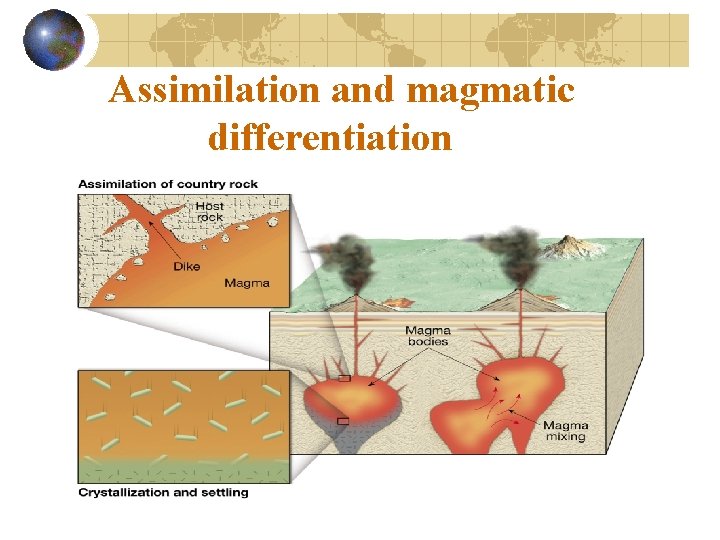
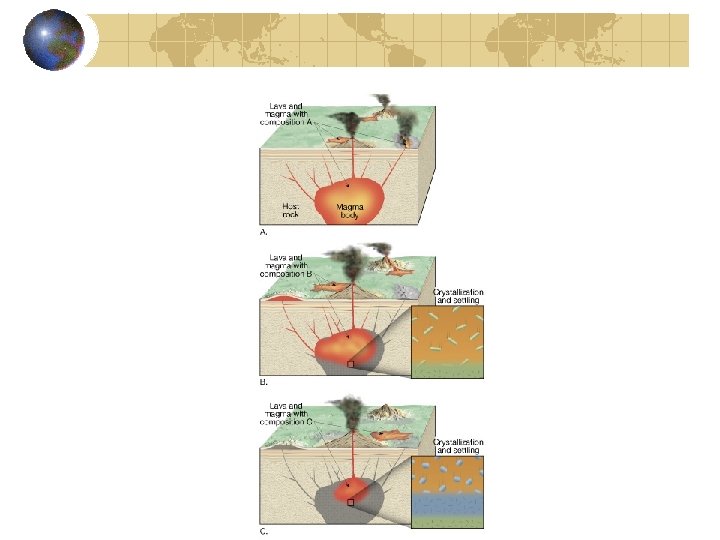
Evolution of magmas Processes responsible for changing a magma’s composition • Magmatic differentiation – Separation of a melt from earlier formed crystals to form a different composition of magma • Assimilation – Changing a magma’s composition by the incorporation of foreign matter (surrounding rock bodies) into a magma • Magma mixing – Involves two bodies of magma intruding one another
Assimilation and magmatic differentiation
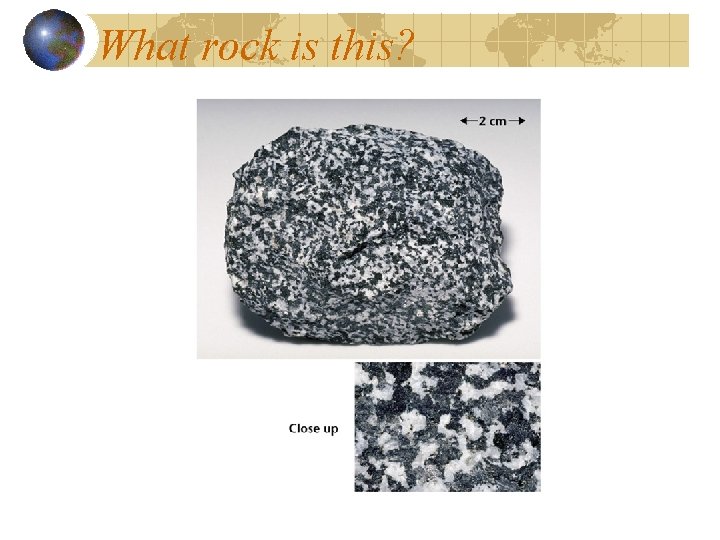
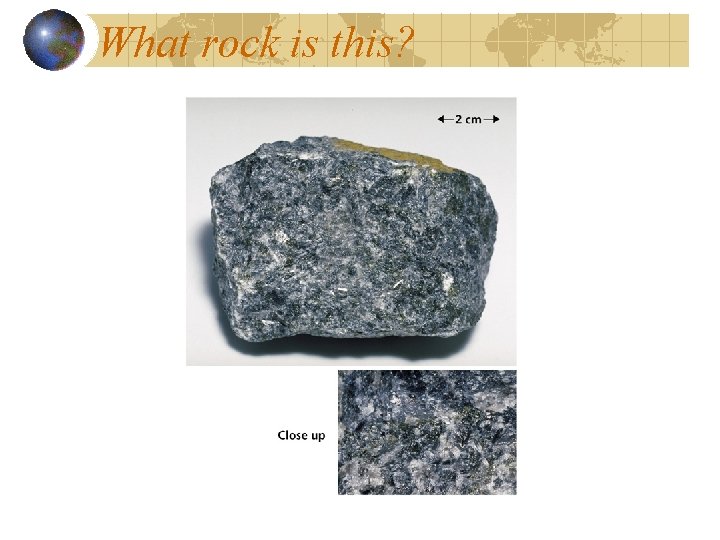
What rock is this?
What rock is this?
What texture is this rock?
What texture is this rock?
What texture is this rock?
What texture is this rock?
What rock is this?
What rock is this?
What rock is this?
What rock is this?