
Chapter 4 I Too By Langston Hughes Images
Chapter 4 ‘I Too’ By Langston Hughes
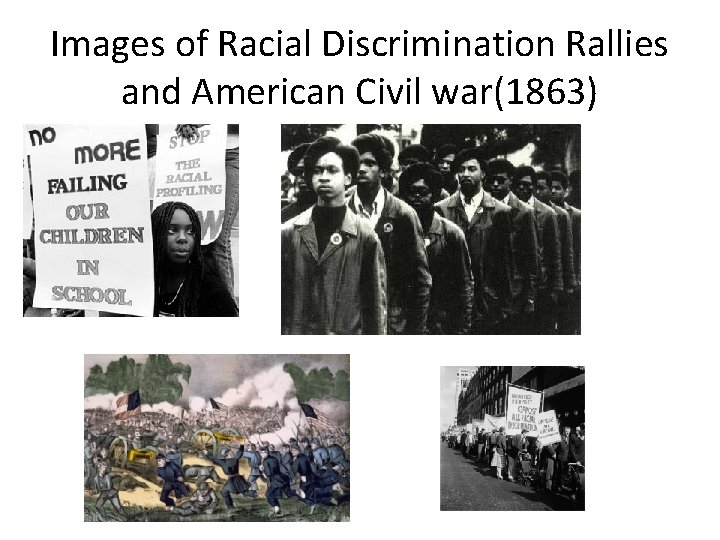
Images of Racial Discrimination Rallies and American Civil war(1863)
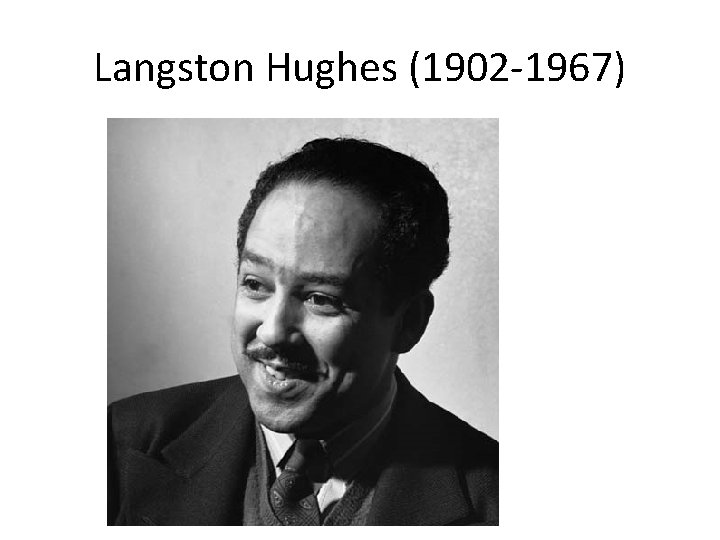
Langston Hughes (1902 -1967)
About the Poet • An American poet, novelist, playwright, story writer and a columnist • An innovator of new literary form called Jazz Poetry • An important writer of Harlem Renaissance, a cultural movement in America that spanned from 1920’s to 1930’s. • His work reflects pride in African American identity and its diverse culture. • An appreciator of the courage, strength and humor of the blacks in the face of racial discrimination by the whites • Championed racial consciousness as a source of inspiration for black artists
About the Poem -the theme • Set against the background of racial bias and the predicament of the Africans living in America • Celebration of the optimistic spirit of the blacks • Presumably the experience of the black slave boy in the house of the white master
The development of Idea/Thought in the poem ‘I Too’ • The narrator the I of the poem gives his experience in the house of his white master • The poem consists of two parts – the first introduces the narrator as the ‘darker brother’ indicating the color of the skin • The very first line “I too sing America” suggests the patriotic fervor of the speaker and his complete identification as the citizen of America
• The idea of sending the black boy to eat in the kitchen when the guests arrive is reflective of the biased attitude of the whites, the dominating section of society • The first part winds up on an optimistic note laced with the lighter spirit of the black boy who thinks his sending to the kitchen shall offer him an opportunity to eat well and grow strong for the promising ‘tomorrow. ’
• The ‘tomorrow’ of the previous part is taken up further in the second paragraph. Tomorrow will not be an ordinary day but a day of revolution and change in the social set up of society. • The poet conveys the message of hope for the blacks and speaks through the narrator that tomorrow, “I will sit at the table/When company comes/Nobody ‘ll dare/Say to me/Eat in the kitchen. ”
• The change in the attitude of society is reflected in the acknowledgement of positive qualities in the black race suggested in the line “They ‘ll see how beautiful I am”. • The poet is certain that the day will come when the blacks will be treated at par with the whites and the society shall repent for their wrong doings in the form of their mistreatment to the other race.
Thank you
- Slides: 10