
Chapter 4 Group Behavior 1 Learning Objectives n
Chapter 4 Group Behavior 1
Learning Objectives n n n Describe a group and distinguish among organizational groups – functional, cross-functional, project, virtual, and interestfriendship. Explain the stages of group development. Discuss the importance of roles, norms, status, cohesiveness, and group size to group behavior. Describe how communication and decision-making styles, risk taking, and creativity affect group decisions. List ways in which groups try to gain power over other groups. Identify ways to resolve intergroup conflict. 2
Definition of a Group A group is a social unit of two or more independent, interactive people striving for common goals 3
Types of Groups A functional group is composed of individuals performing the same tasks n A cross-functional group is a group composed of individuals from two or more functional areas n A project group includes members from many different backgrounds n 4
Types of Groups (contd. ) A virtual group is a task-focused group that meets without all the members being present in the same locale or at the same time n Interest-friendship groups are formed on the basis of common beliefs, concerns, or activities n 5

Stages of Group Development The FORMING stage is characterized by efforts to determine initial direction n The STORMING stage is characterized by confrontation, questioning, and resistance n The NORMING stage is characterized by cooperation and teamwork n The PERFORMING stage is characterized by openness and collaboration n 6

Roles A role is an expected behavior Role ambiguity occurs when the job description is vague In role conflict, two roles are mutually incompatible 7
Norms and Status Norms are rules of conduct adopted by group members Status is the relative ranking of an individual in a group Status incongruence is a discrepancy between a person’s supposed status and the way the individual is treated Status discrepancy occurs when people do things that do not fit in with their status in the group 8

Figure 4. 2 Cohesion and Productivity Group X Norm of Group X Productivity High Group Y Average Organization’s Norm of Group Y Group Z Low Norm of Group Z = Productivity of individual group member 9
Communication Roles n n n The OPINION LEADER is typically the informal leader The GATEKEEPER controls the flow of information to the group members The LIAISON links the group to other groups The ISOLATE is a person who is generally ignored The FOLLOWER goes along with the opinion leader or group at large 10
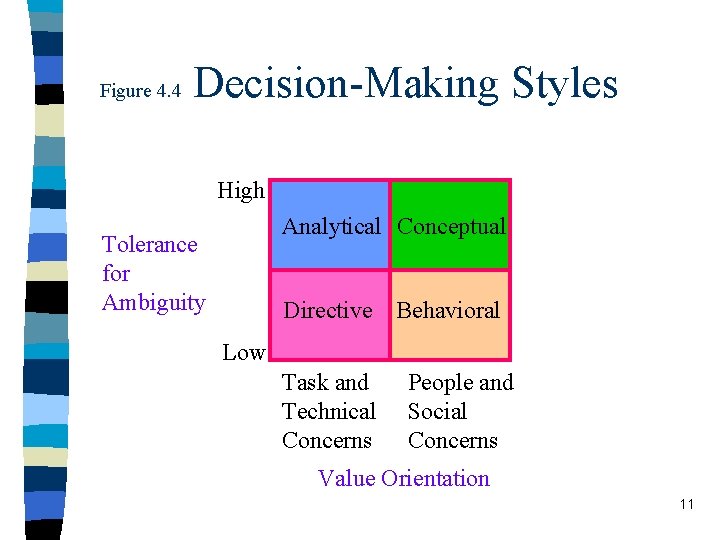
Figure 4. 4 Decision-Making Styles High Analytical Conceptual Tolerance for Ambiguity Directive Behavioral Low Task and Technical Concerns People and Social Concerns Value Orientation 11

Phases in Creative Thinking 1. 2. 3. 4. Preparation Incubation Illumination Verification 12
Left-Brain, Right-Brain Thinking Left-brain people are logical, rational, and detailed Right-brain people are spontaneous, emotional, and visual 13
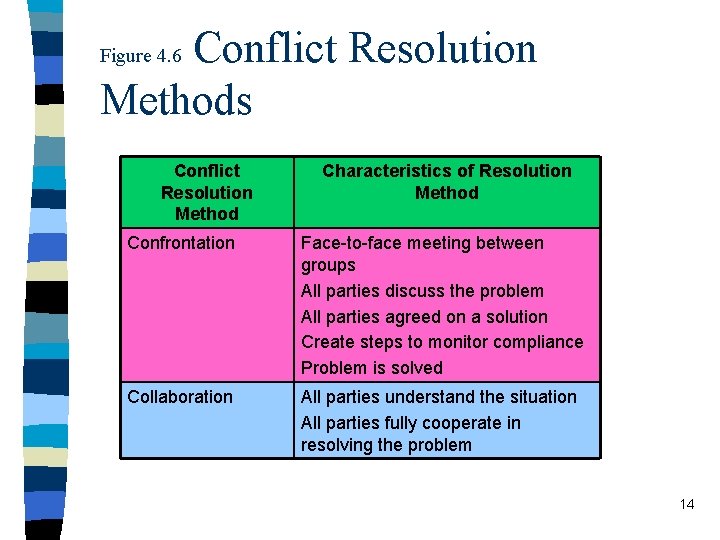
Conflict Resolution Methods Figure 4. 6 Conflict Resolution Method Characteristics of Resolution Method Confrontation Face-to-face meeting between groups All parties discuss the problem All parties agreed on a solution Create steps to monitor compliance Problem is solved Collaboration All parties understand the situation All parties fully cooperate in resolving the problem 14
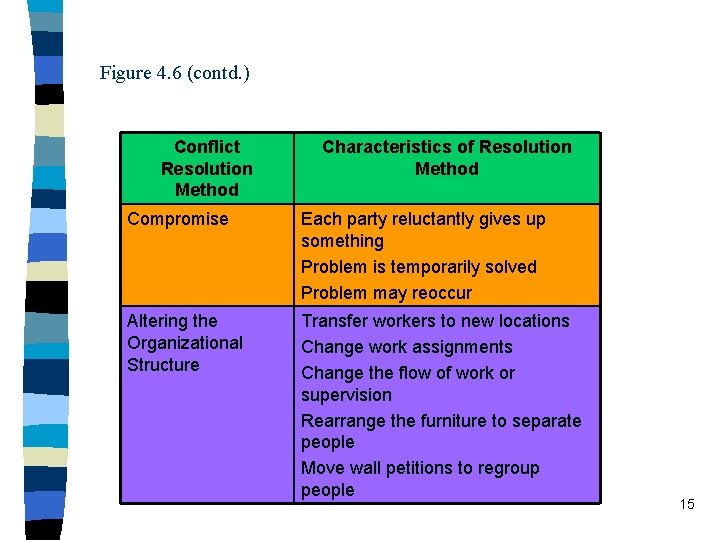
Figure 4. 6 (contd. ) Conflict Resolution Method Characteristics of Resolution Method Compromise Each party reluctantly gives up something Problem is temporarily solved Problem may reoccur Altering the Organizational Structure Transfer workers to new locations Change work assignments Change the flow of work or supervision Rearrange the furniture to separate people Move wall petitions to regroup people 15
Key Terms in the Chapter n n n Group Functional group Cross-functional group Project group Virtual group Interest-friendship group Forming stage Storming stage Norming stage Performing stage Role n n n Role ambiguity Role conflict Norms Status incongruence Status discrepancy Cohesiveness Opinion leader Gatekeeper Liaison Isolate 16
Key Terms in the Chapter (contd. ) n n n Follower Risky-shift phenomenon Brainstorming Dialectic inquiry Empathic design Left-brain people Right-brain people Goal conflict Confrontation Collaboration Compromise 17
- Slides: 17