
Chapter 4 Formation of Compounds 4 1 The
- Slides: 31
Chapter 4 Formation of Compounds 4. 1 The Variety of Compounds 4. 2 How Elements Form Compounds
4. 1 The Variety of Compounds
Objectives • Distinguish the properties of compounds from • • those of elements of which they are composed. Compare and contrast the properties of sodium chloride, water and carbon dioxide. Analyze evidence to conclude the differences exist in the ways compounds form.
Salt: A Familiar Compound • Chemical Name: Sodium Chloride • Formula: Na. Cl • Very abundant in nature – Large, solid, underground deposits – Dissolved in the oceans • Salt can be obtained by mining the solid deposits or evaporating the seawater
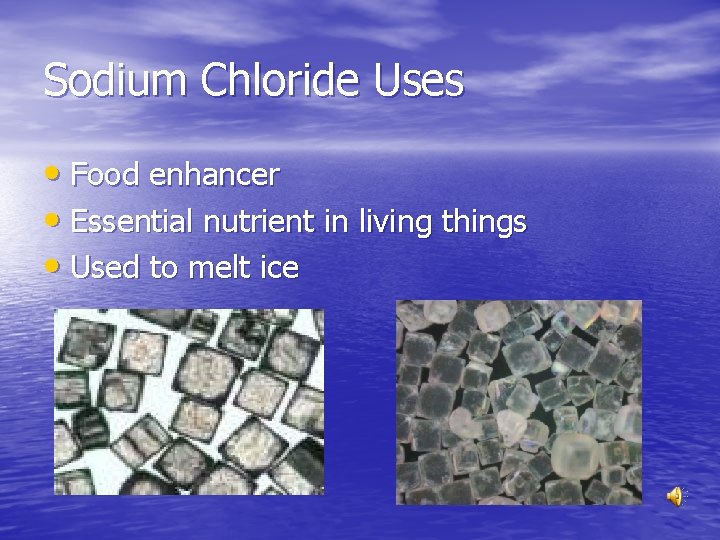
Sodium Chloride Uses • Food enhancer • Essential nutrient in living things • Used to melt ice
Physical Properties of Na. Cl • White solid at room temperature • Crystalline • Brittle • Melting point: 800°C • Dissolves easily in water • Salt water is an excellent conductor of electricity
Chemical Properties of Na. Cl • Does not react readily with other substances. • Does not degrade quickly • No special handling procedures
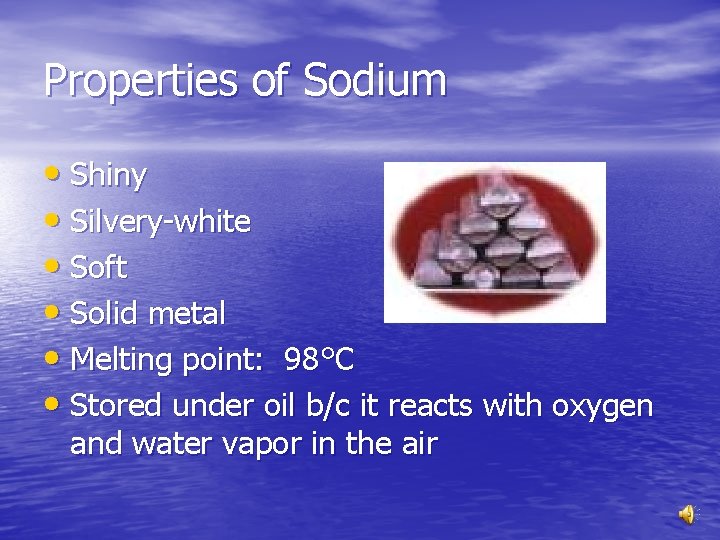
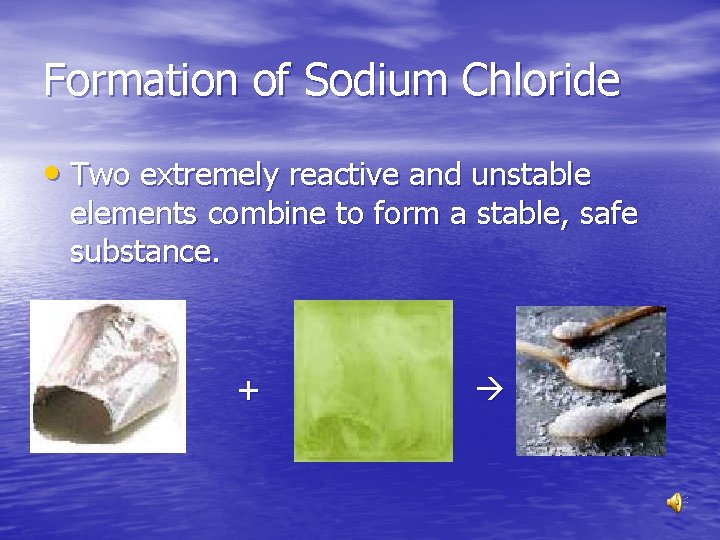
Properties of Sodium • Shiny • Silvery-white • Soft • Solid metal • Melting point: 98°C • Stored under oil b/c it reacts with oxygen and water vapor in the air
Properties of Sodium • One of the most reactive of the common elements • Free element sodium is never found in the environment • Always combined with another element
Properties of Chlorine • Pale green • Poisonous gas • Choking odor • Kills living cells • Slightly soluble in water • Excellent disinfectant for water supplies and pools
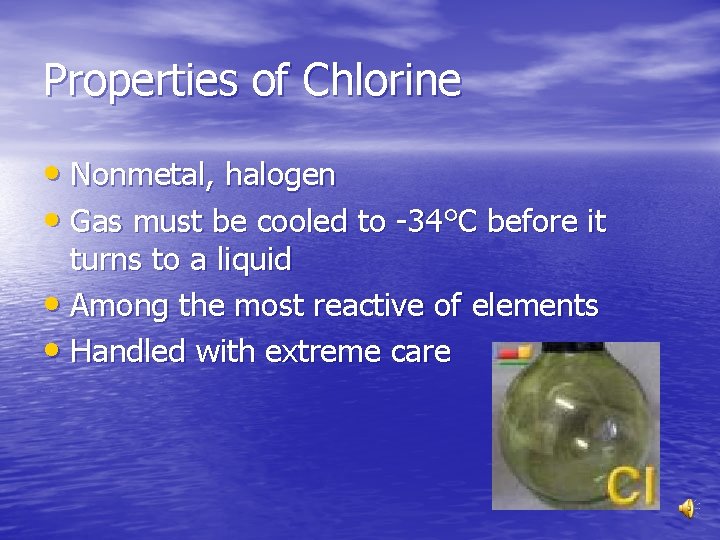
Properties of Chlorine • Nonmetal, halogen • Gas must be cooled to -34°C before it turns to a liquid • Among the most reactive of elements • Handled with extreme care
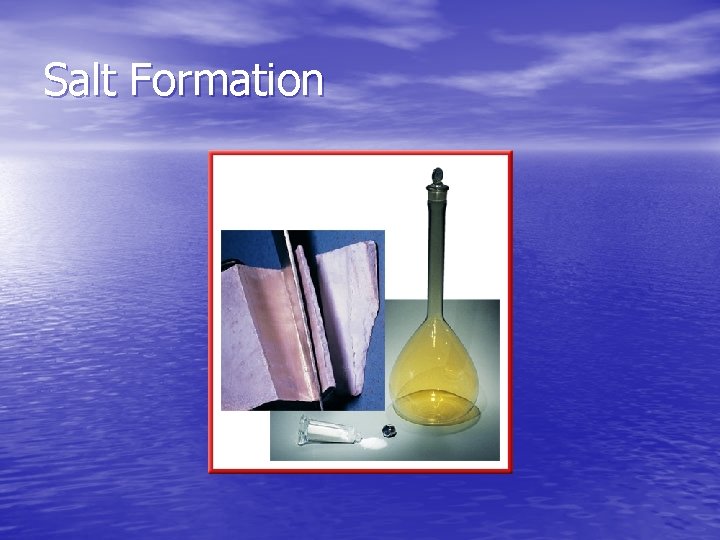
Salt Formation
Formation of Sodium Chloride • Two extremely reactive and unstable elements combine to form a stable, safe substance. +
Review 1. What are two physical properties of 2. 3. 4. Sodium Chloride? What is a chemical property of Sodium Chloride? What are two physical properties of Sodium? What are two physical properties of Chlorine?
4. 1 The Variety of Compounds (Continued)
Carbon Dioxide: A Gas to Exhale • Formula: CO 2 • Colorless gas • We exhale carbon dioxide as a result of respiration • Plants use carbon dioxide and release oxygen during photosynthesis
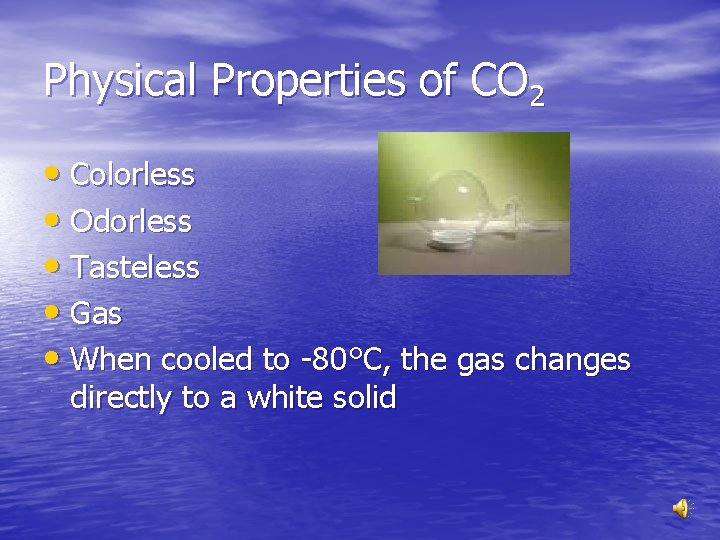
Physical Properties of CO 2 • Colorless • Odorless • Tasteless • Gas • When cooled to -80°C, the gas changes directly to a white solid
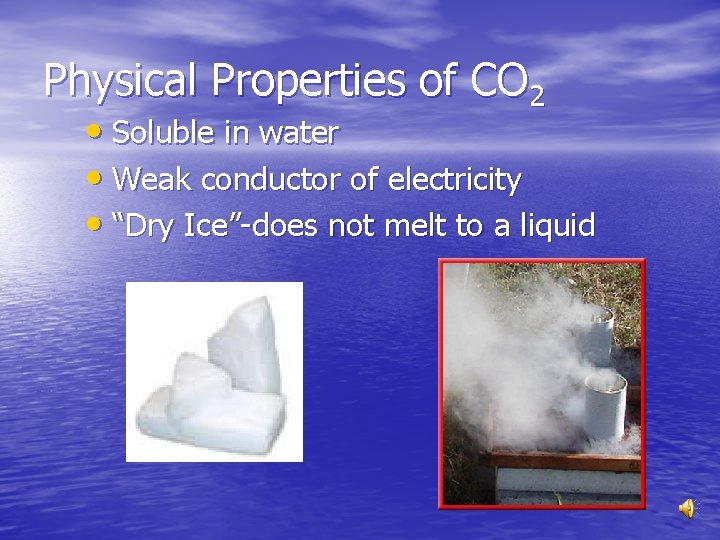
Physical Properties of CO 2 • Soluble in water • Weak conductor of electricity • “Dry Ice”-does not melt to a liquid
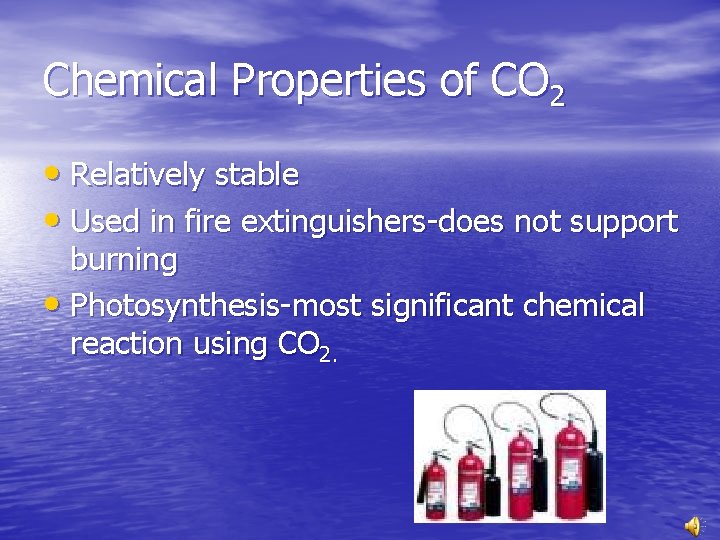
Chemical Properties of CO 2 • Relatively stable • Used in fire extinguishers-does not support burning • Photosynthesis-most significant chemical reaction using CO 2.
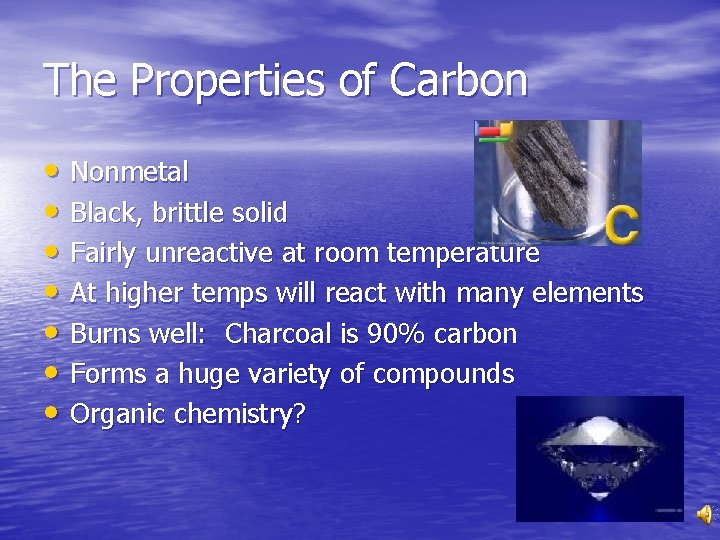
The Properties of Carbon • Nonmetal • Black, brittle solid • Fairly unreactive at room temperature • At higher temps will react with many elements • Burns well: Charcoal is 90% carbon • Forms a huge variety of compounds • Organic chemistry?
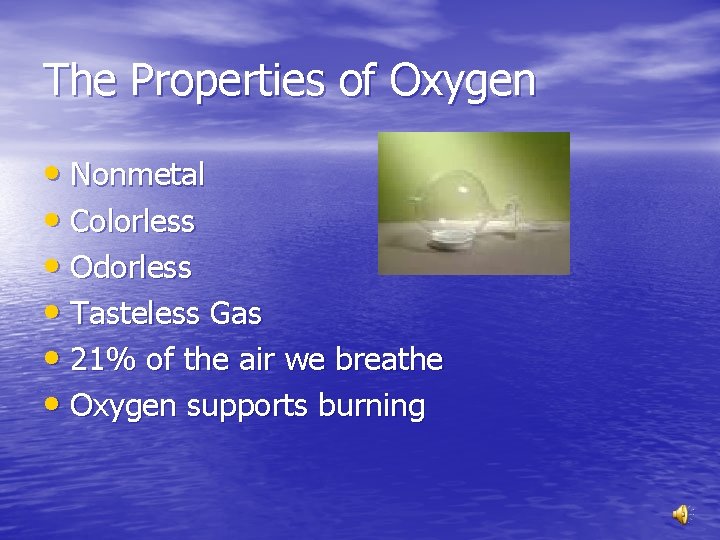
The Properties of Oxygen • Nonmetal • Colorless • Odorless • Tasteless Gas • 21% of the air we breathe • Oxygen supports burning
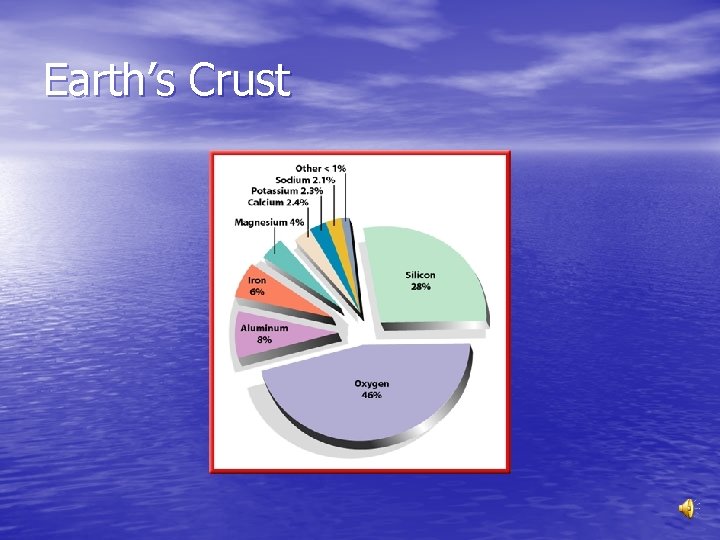
The Properties of Oxygen • Becomes a liquid when cooled to -183°C • Slightly soluble in water • More reactive than carbon – Rusting • Combines with many elements • Most abundant element in Earth’s crust
Earth’s Crust
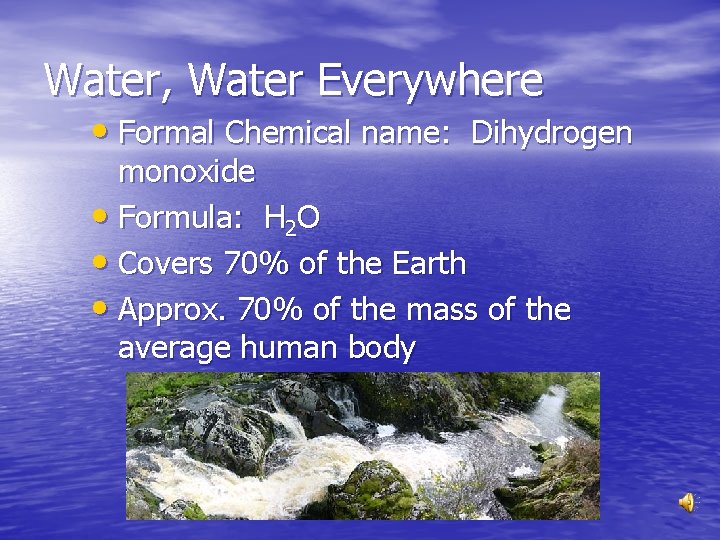
Water, Water Everywhere • Formal Chemical name: Dihydrogen monoxide • Formula: H 2 O • Covers 70% of the Earth • Approx. 70% of the mass of the average human body
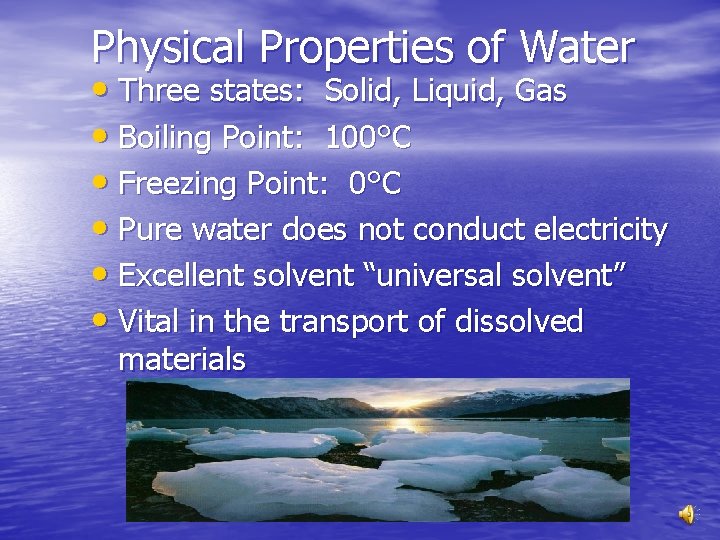
Physical Properties of Water • Three states: Solid, Liquid, Gas • Boiling Point: 100°C • Freezing Point: 0°C • Pure water does not conduct electricity • Excellent solvent “universal solvent” • Vital in the transport of dissolved materials
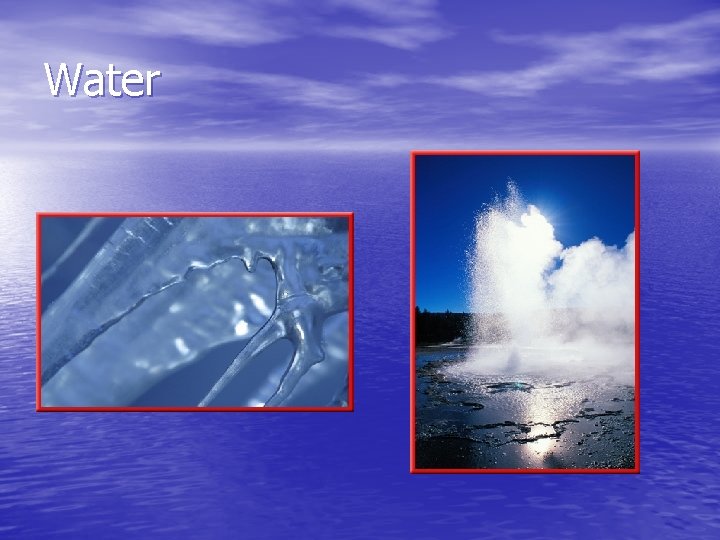
Water
Chemical Properties of Water • Stable • Does not react with many other substances • Medium in which many chemical reactions occur (human body) • Starting material for photosynthesis
Properties of Hydrogen • Lightest element • Most abundant element in the universe • Nonmetal • Reactive element • Odorless • Colorless • tasteless
Properties of Hydrogen • Seldom found as a free element • React vigorously with many elements, including oxygen forming water • Becomes a liquid at -253°C • Does not conduct electricity • Only slightly soluble in water
Using Clues to Make a Case • Elements combine to form compounds with different properties • Elements do not always combine in the same way or all compounds would have similar properties • We will examine how elements combine in the Section 4. 2
Review • What are some properties of Carbon Dioxide? • What are some properties of Carbon? • What are some properties of Oxygen? • What are some properties of Water? • What are some properties of Hydrogen?