
Chapter 4 Focusing Marketing Strategy with Segmentation and


- Slides: 26
Chapter 4 Focusing Marketing Strategy with Segmentation and Positioning For use only with Perreault/Cannon/ Mc. Carthy texts, © 2009 Mc. Graw-Hill Companies, Inc. Mc. Graw-Hill/Irwin www. mhhe. com/fourps
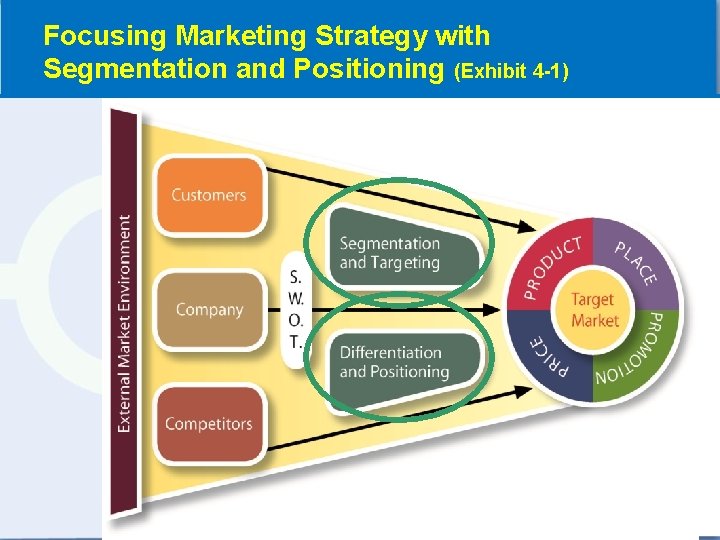
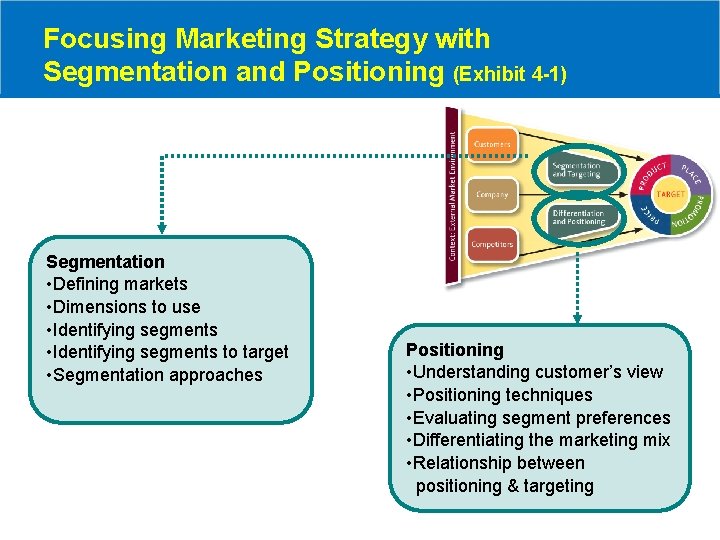
Focusing Marketing Strategy with Segmentation and Positioning (Exhibit 4 -1)
Focusing Marketing Strategy with Segmentation and Positioning (Exhibit 4 -1) Segmentation • Defining markets • Dimensions to use • Identifying segments to target • Segmentation approaches Positioning • Understanding customer’s view • Positioning techniques • Evaluating segment preferences • Differentiating the marketing mix • Relationship between positioning & targeting
Taking Advantage of Opportunities
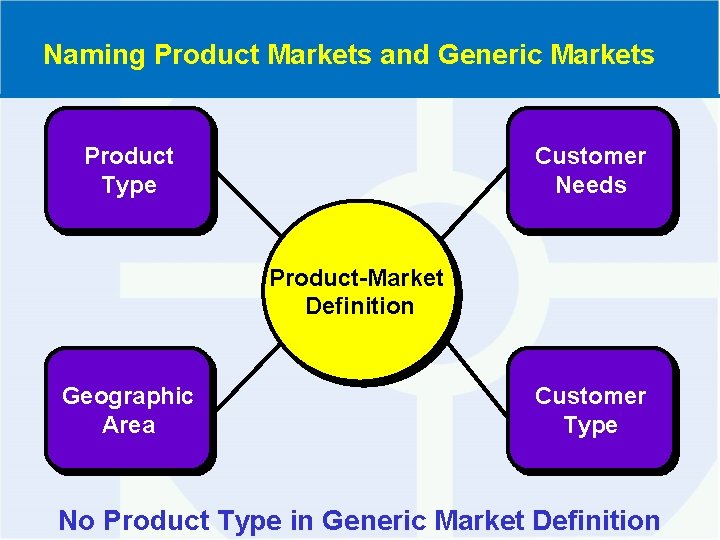
Naming Product Markets and Generic Markets Product Type Customer Needs Product-Market Definition Geographic Area Customer Type No Product Type in Generic Market Definition
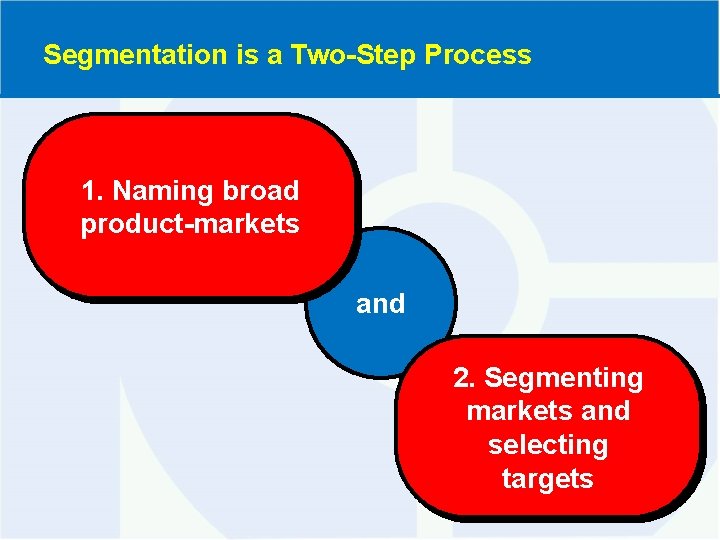
Segmentation is a Two-Step Process 1. Naming broad product-markets and 2. Segmenting markets and selecting targets
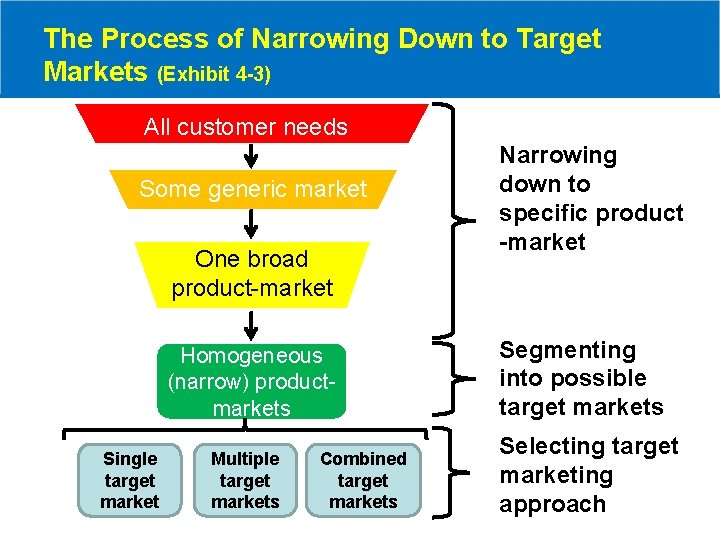
The Process of Narrowing Down to Target Markets (Exhibit 4 -3) All customer needs Some generic market One broad product-market Homogeneous (narrow) productmarkets Single target market Multiple target markets Combined target markets Narrowing down to specific product -market Segmenting into possible target markets Selecting target marketing approach
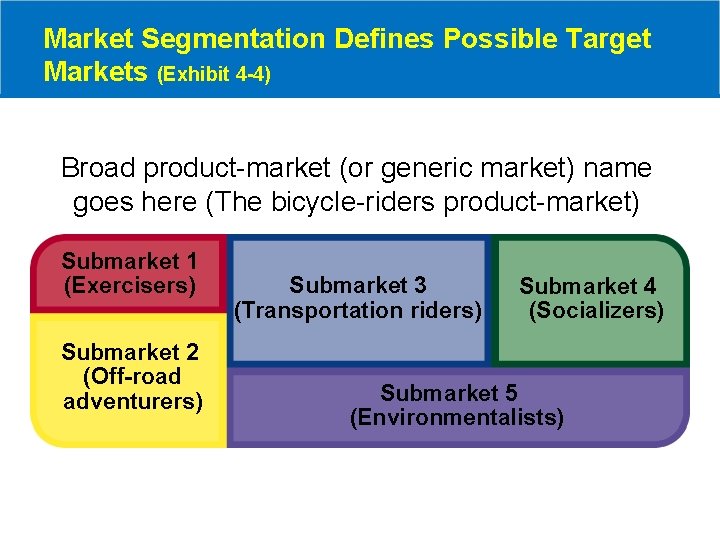
Market Segmentation Defines Possible Target Markets (Exhibit 4 -4) Broad product-market (or generic market) name goes here (The bicycle-riders product-market) Submarket 1 (Exercisers) Submarket 2 (Off-road adventurers) Submarket 3 (Transportation riders) Submarket 4 (Socializers) Submarket 5 (Environmentalists)
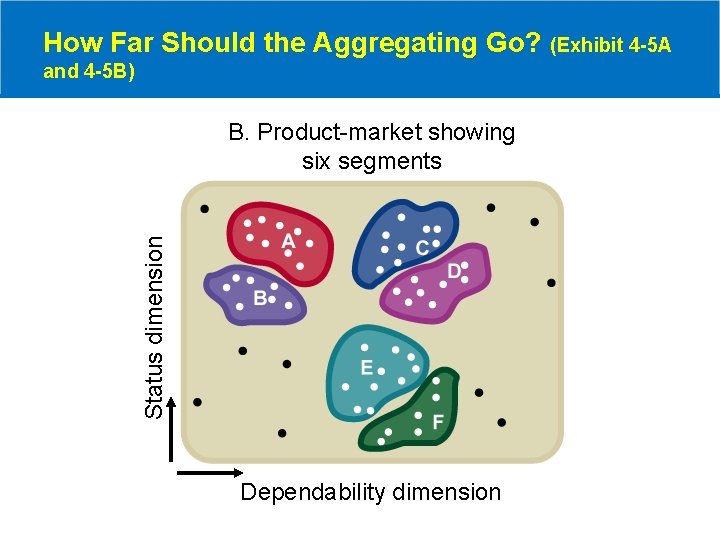
How Far Should the Aggregating Go? (Exhibit 4 -5 A and 4 -5 B) Status dimension B. Product-market showing A. six segments three segments Dependability dimension
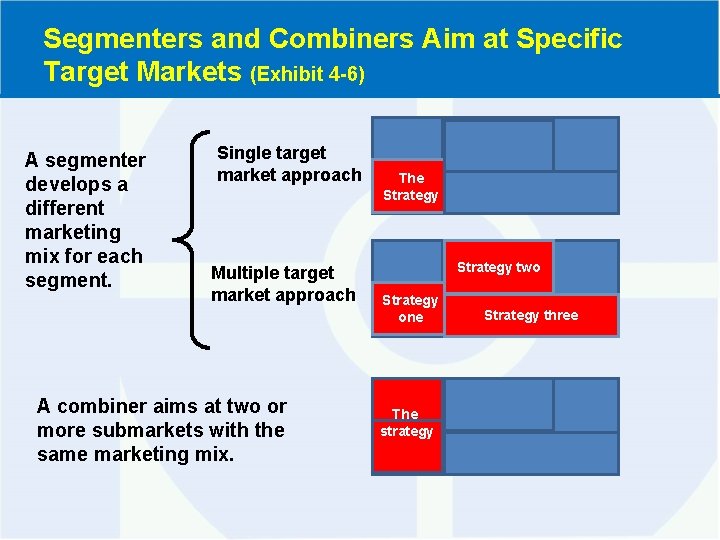
Segmenters and Combiners Aim at Specific Target Markets (Exhibit 4 -6) A segmenter develops a different marketing mix for each segment. Single target market approach Multiple target market approach A combiner aims at two or more submarkets with the same marketing mix. The Strategy two Strategy one The strategy Strategy three
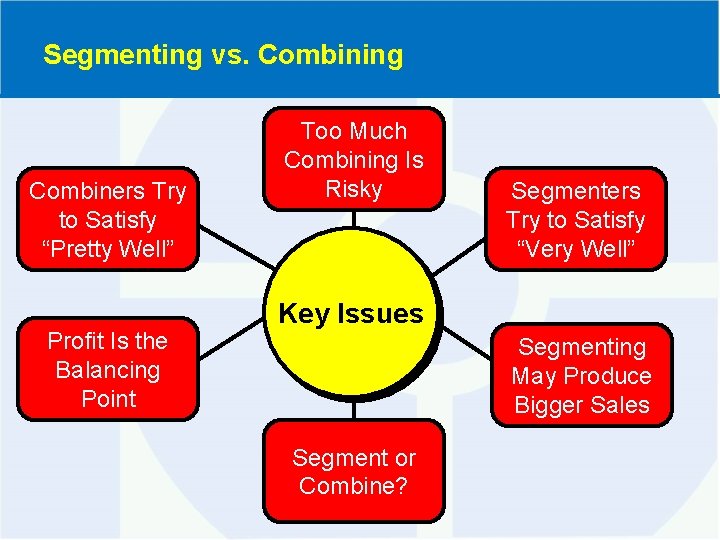
Segmenting vs. Combining Combiners Try to Satisfy “Pretty Well” Profit Is the Balancing Point Too Much Combining Is Risky Segmenters Try to Satisfy “Very Well” Key Issues Segmenting May Produce Bigger Sales Segment or Combine?
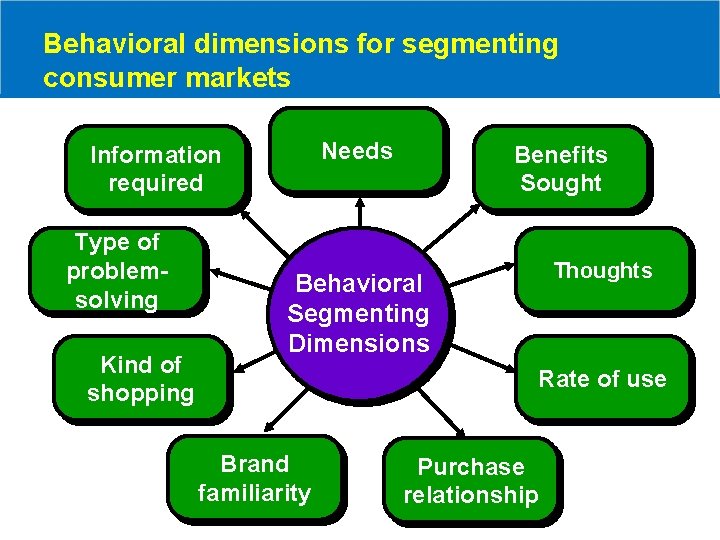
Behavioral dimensions for segmenting consumer markets Needs Information required Type of problemsolving Kind of shopping Benefits Sought Thoughts Behavioral Segmenting Dimensions Rate of use Brand familiarity Purchase relationship
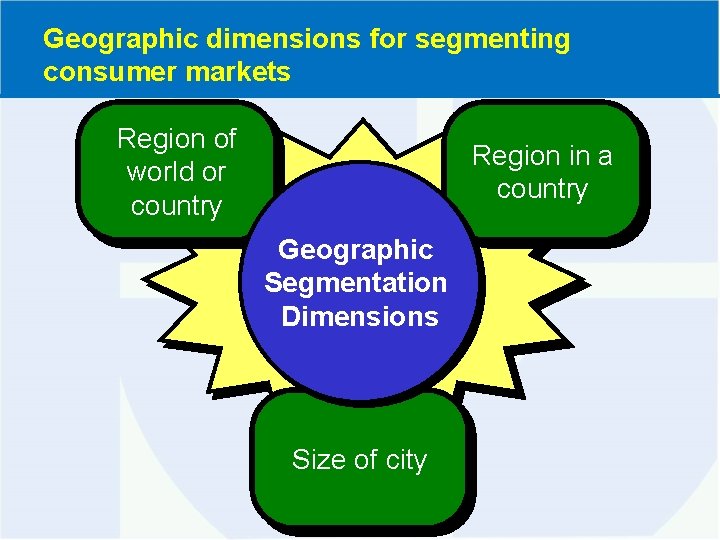
Geographic dimensions for segmenting consumer markets Region of world or country Region in a country Geographic Segmentation Dimensions Size of city
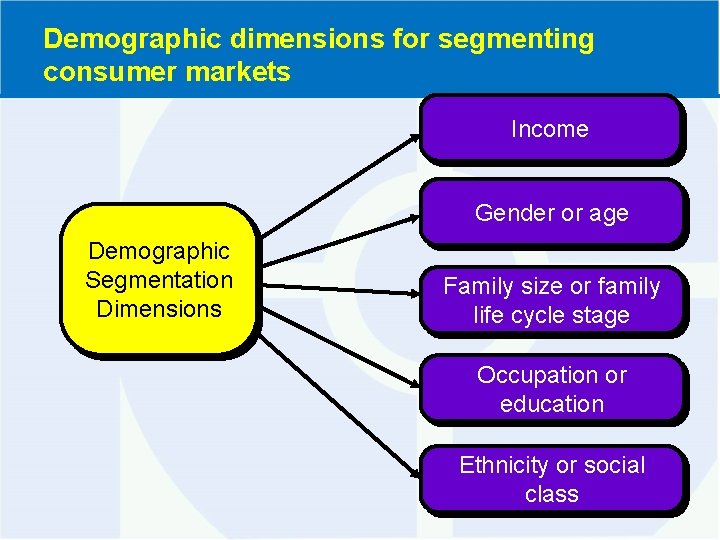
Demographic dimensions for segmenting consumer markets Income Gender or age Demographic Segmentation Dimensions Family size or family life cycle stage Occupation or education Ethnicity or social class
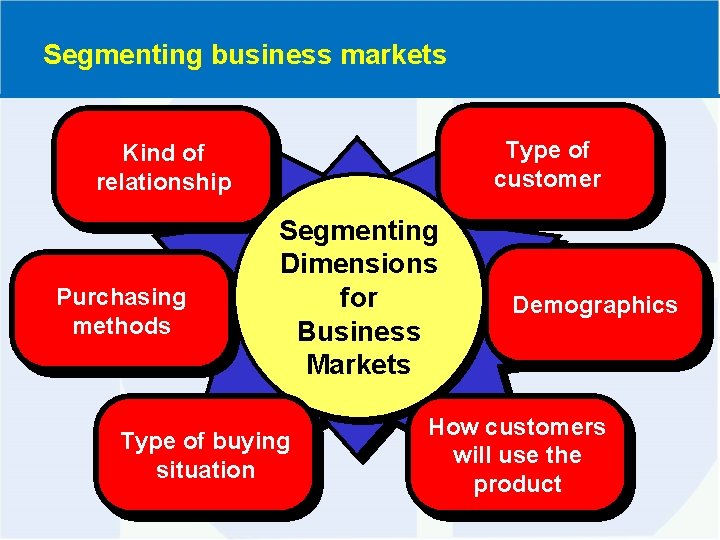
Segmenting business markets Type of customer Kind of relationship Purchasing methods Segmenting Dimensions for Business Markets Type of buying situation Demographics How customers will use the product
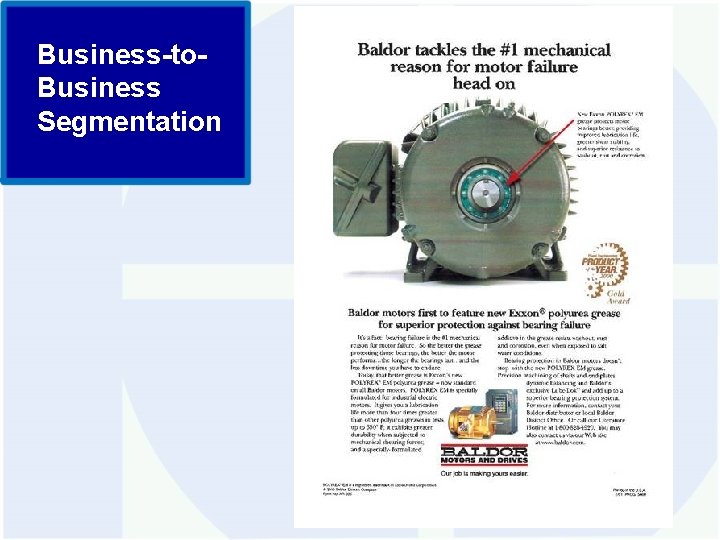
Business-to. Business Segmentation
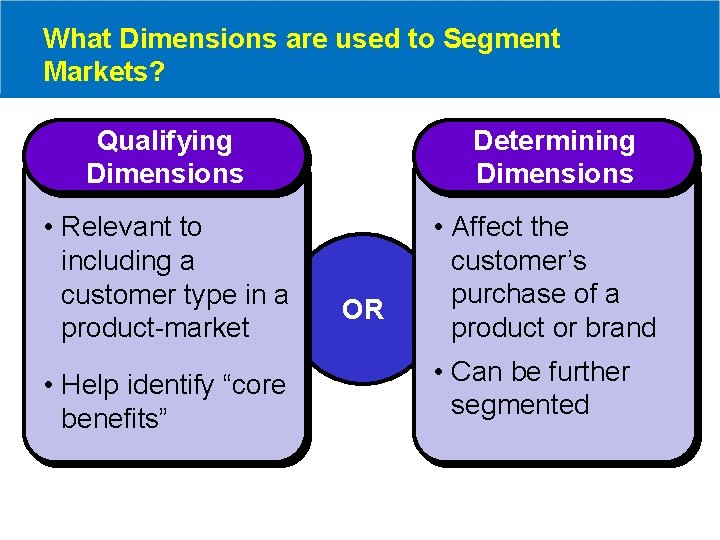
What Dimensions are used to Segment Markets? Qualifying Dimensions • Relevant to including a customer type in a product-market • Help identify “core benefits” Determining Dimensions OR • Affect the customer’s purchase of a product or brand • Can be further segmented
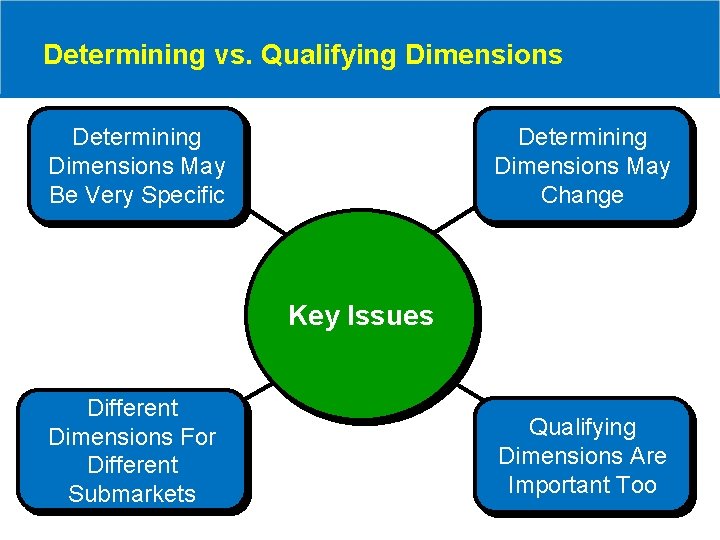
Determining vs. Qualifying Dimensions Determining Dimensions May Change Determining Dimensions May Be Very Specific Key Issues Different Dimensions For Different Submarkets Qualifying Dimensions Are Important Too
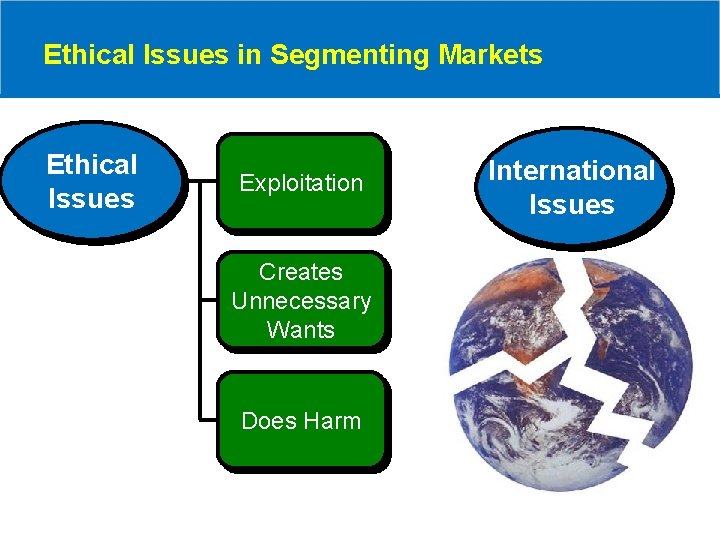
Ethical Issues in Segmenting Markets Ethical Issues Exploitation Creates Unnecessary Wants Does Harm International Issues
Psychographic Segmentation © 2009 Mc. Graw-Hill Companies, Inc. , Mc. Graw-Hill/Irwin
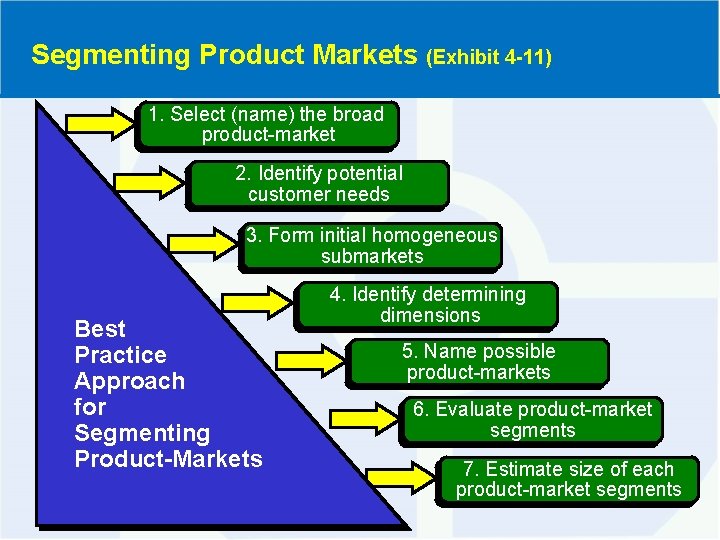
Segmenting Product Markets (Exhibit 4 -11) 1. Select (name) the broad product-market 2. Identify potential customer needs 3. Form initial homogeneous submarkets Best Practice Approach for Segmenting Product-Markets 4. Identify determining dimensions 5. Name possible product-markets 6. Evaluate product-market segments 7. Estimate size of each product-market segments
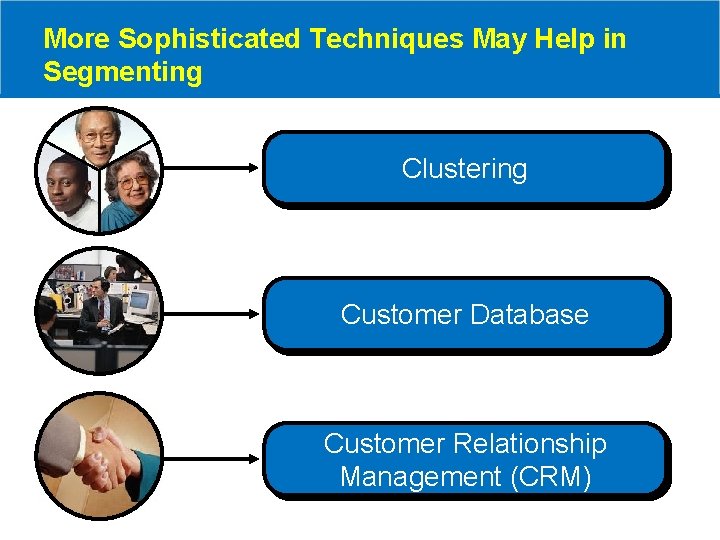
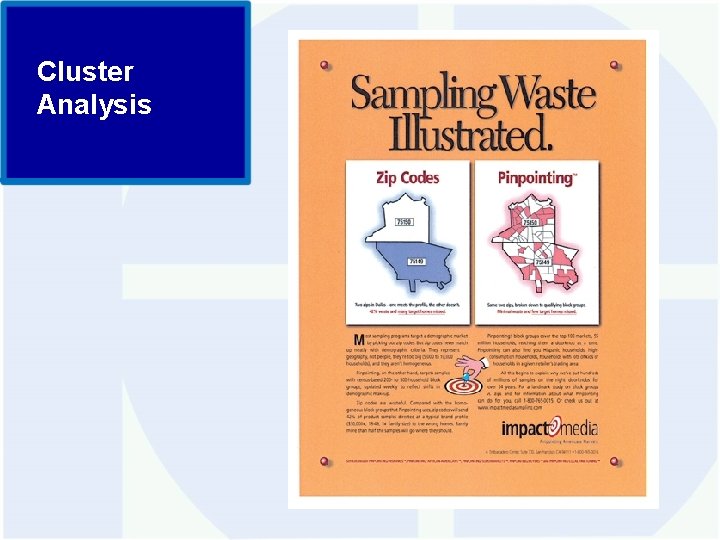
More Sophisticated Techniques May Help in Segmenting Clustering Customer Database Customer Relationship Management (CRM)
Cluster Analysis
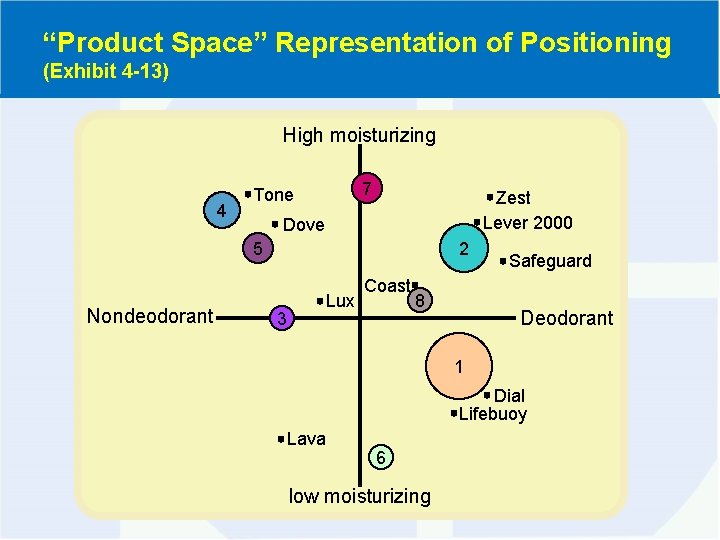
“Product Space” Representation of Positioning (Exhibit 4 -13) High moisturizing 4 7 Tone Zest Lever 2000 Dove 2 5 Nondeodorant 3 Lux Coast 8 Safeguard Deodorant 1 Dial Lifebuoy Lava 6 low moisturizing
You should now be able to: 1. 2. 3. 4. 5. 6. Know about defining generic markets and product-markets. Know what market segmentation is and how to segment product-markets into submarkets. Know three approaches to marketoriented strategy planning. Know dimensions that may be useful for segmenting markets. Know a seven-step approach to market segmentation that you can do yourself. Know what positioning is and why it is useful.
Key Terms • • • Market Generic market Product market Market segmentation Segmenting Market segment Single target market approach Multiple target market approach Combined target market approach • • Combiners Segmenters Qualifying dimensions Determining dimensions Clustering techniques Customer relationship management (CRM) Positioning