
Chapter 4 Evolution and Biodiversity Chapter Overview Questions
Chapter 4 Evolution and Biodiversity
Chapter Overview Questions Ø How do scientists account for the development of life on earth? Ø What is biological evolution by natural selection, and how can it account for the current diversity of organisms on the earth? Ø How can geologic processes, climate change and catastrophes affect biological evolution? Ø What is an ecological niche, and how does it help a population adapt to changing the environmental conditions?
Chapter Overview Questions (cont’d) Ø How do extinction of species and formation of new species affect biodiversity? Ø What is the future of evolution, and what role should humans play in this future? Ø How did we become such a powerful species in a short time?
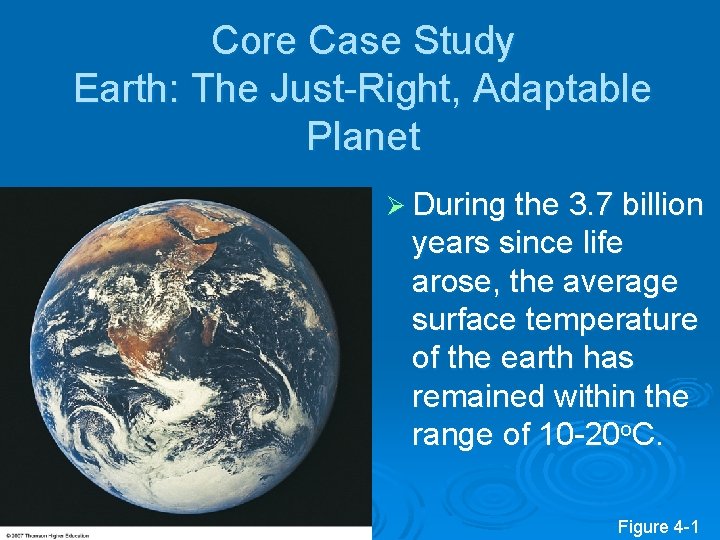
Core Case Study Earth: The Just-Right, Adaptable Planet Ø During the 3. 7 billion years since life arose, the average surface temperature of the earth has remained within the range of 10 -20 o. C. Figure 4 -1

ORIGINS OF LIFE Ø 1 billion years of chemical change to form the first cells, followed by about 3. 7 billion years of biological change. Figure 4 -2
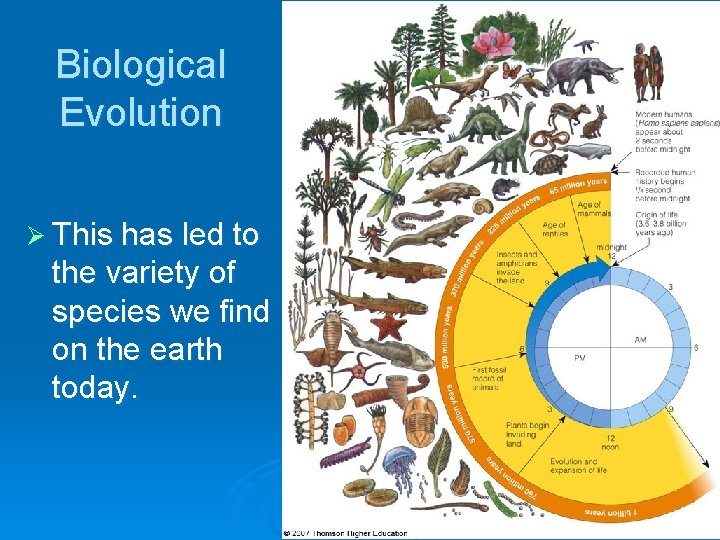
Biological Evolution Ø This has led to the variety of species we find on the earth today. Figure 4 -2
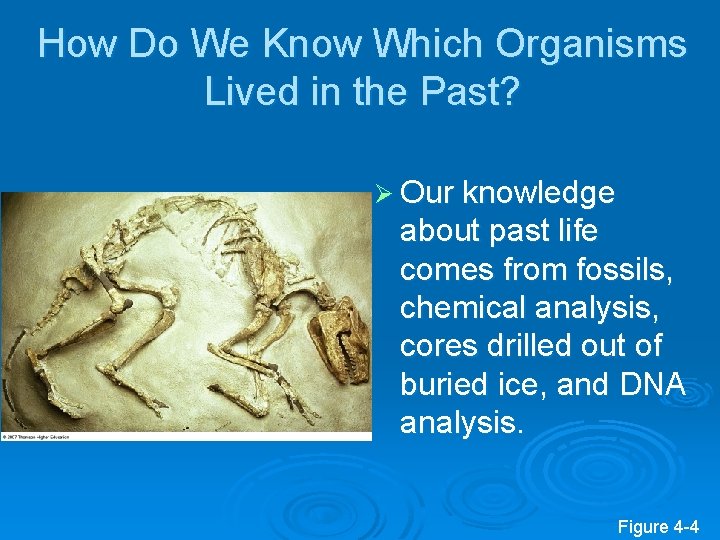
How Do We Know Which Organisms Lived in the Past? Ø Our knowledge about past life comes from fossils, chemical analysis, cores drilled out of buried ice, and DNA analysis. Figure 4 -4
EVOLUTION, NATURAL SELECTION, AND ADAPTATION Ø Biological evolution by natural selection involves the change in a population’s genetic makeup through successive generations. l l l genetic variability Mutations: random changes in the structure or number of DNA molecules in a cell that can be inherited by offspring.
Natural Selection and Adaptation: Leaving More Offspring With Beneficial Traits Ø Three conditions are necessary for biological evolution: l l l Genetic variability Traits must be heritable Trait must lead to differential reproduction.

Coevolution: A Biological Arms Race Ø Interacting species can engage in a back and forth genetic contest in which each gains a temporary genetic advantage over the other. l This often happens between predators and prey species.
Hybridization and Gene Swapping: other Ways to Exchange Genes Ø New species can arise through hybridization. l Occurs when individuals to two distinct species crossbreed to produce an fertile offspring. Ø Some species (mostly microorganisms) can exchange genes without sexual reproduction. l Horizontal gene transfer
Limits on Adaptation through Natural Selection Ø A population’s ability to adapt to new environmental conditions through natural selection is limited by its gene pool and how fast it can reproduce. l Humans have a relatively slow generation time (decades) and output (# of young) versus some other species.
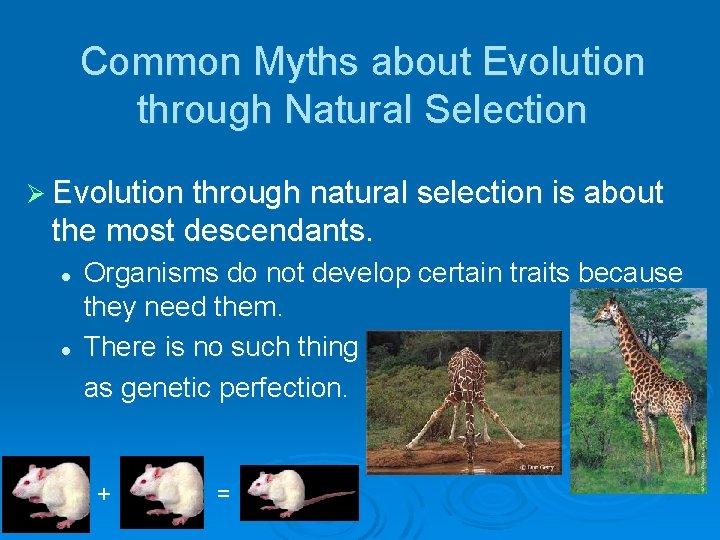
Common Myths about Evolution through Natural Selection Ø Evolution through natural selection is about the most descendants. l l Organisms do not develop certain traits because they need them. There is no such thing as genetic perfection. + =
GEOLOGIC PROCESSES, CLIMATE CHANGE, CATASTROPHES, AND EVOLUTION Ø The movement of solid (tectonic) plates making up the earth’s surface, volcanic eruptions, and earthquakes can wipe out existing species and help form new ones. l l The locations of continents and oceanic basins influence climate. The movement of continents have allowed species to move.
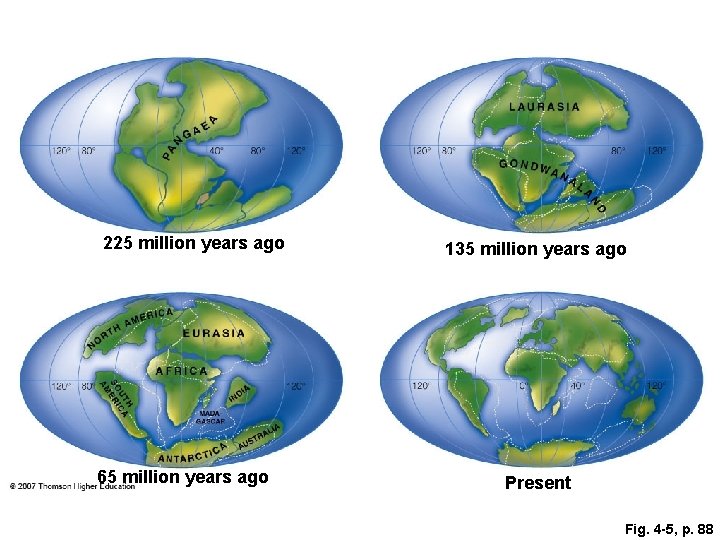
225 million years ago 65 million years ago 135 million years ago Present Fig. 4 -5, p. 88
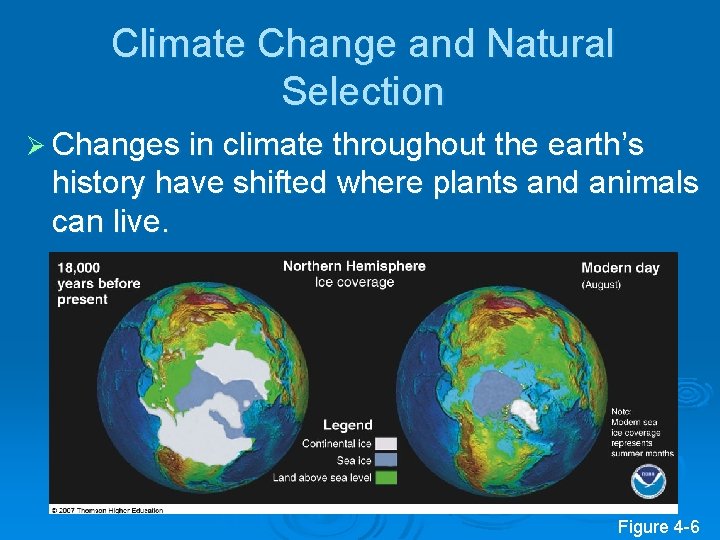
Climate Change and Natural Selection Ø Changes in climate throughout the earth’s history have shifted where plants and animals can live. Figure 4 -6
ECOLOGICAL NICHES AND ADAPTATION Ø Each species in an ecosystem has a specific role or way of life. l l Fundamental niche: the full potential range of physical, chemical, and biological conditions and resources a species could theoretically use. Realized niche: to survive and avoid competition, a species usually occupies only part of its fundamental niche.
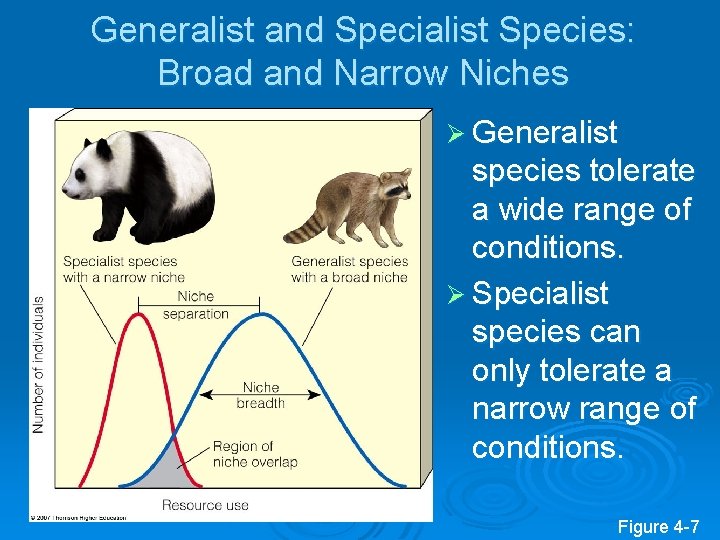
Generalist and Specialist Species: Broad and Narrow Niches Ø Generalist species tolerate a wide range of conditions. Ø Specialist species can only tolerate a narrow range of conditions. Figure 4 -7
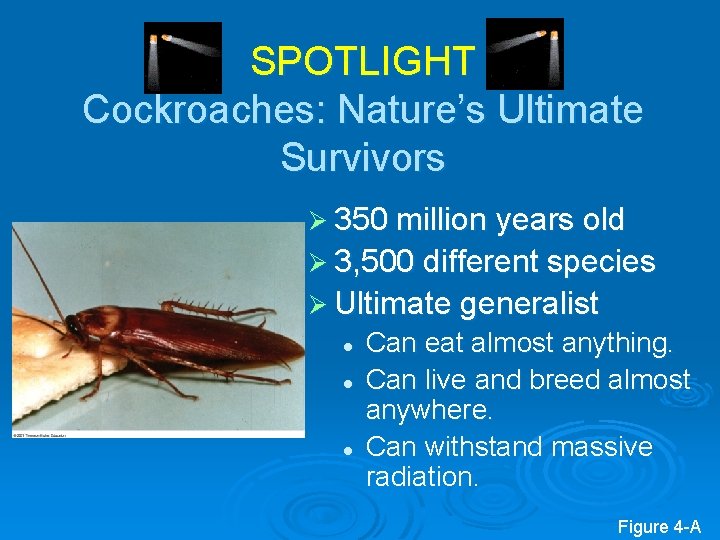
SPOTLIGHT Cockroaches: Nature’s Ultimate Survivors Ø 350 million years old Ø 3, 500 different species Ø Ultimate generalist l l l Can eat almost anything. Can live and breed almost anywhere. Can withstand massive radiation. Figure 4 -A
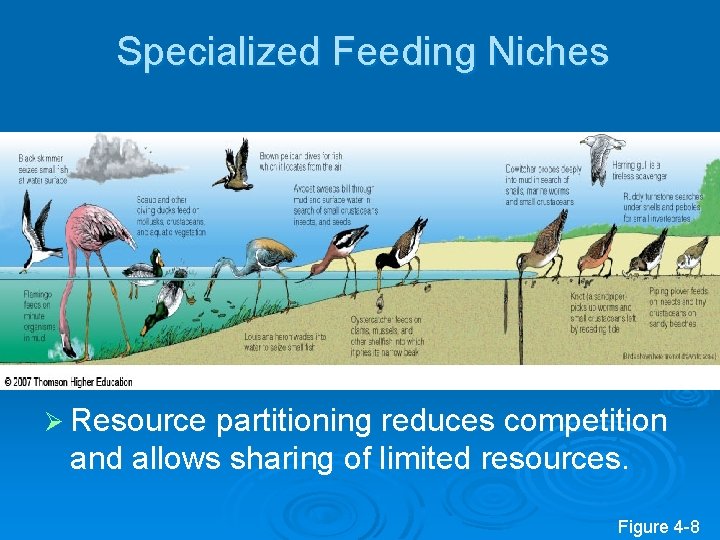
Specialized Feeding Niches Ø Resource partitioning reduces competition and allows sharing of limited resources. Figure 4 -8
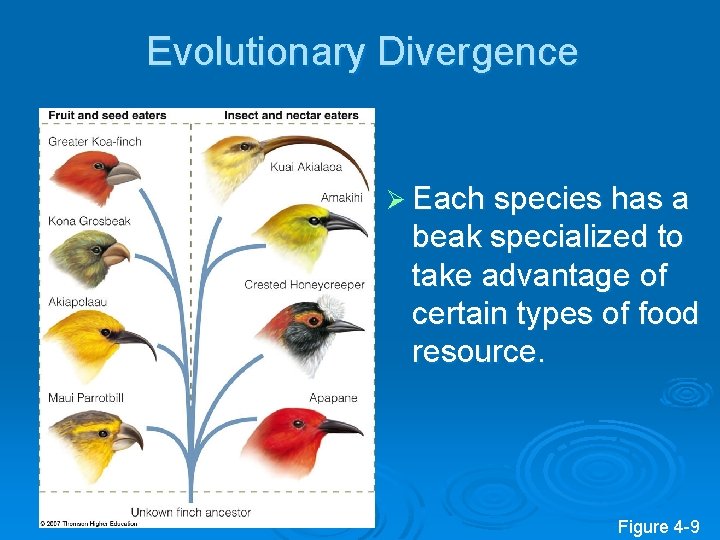
Evolutionary Divergence Ø Each species has a beak specialized to take advantage of certain types of food resource. Figure 4 -9
SPECIATION, EXTINCTION, AND BIODIVERSITY Ø Speciation: A new species can arise when member of a population become isolated for a long period of time. l Genetic makeup changes, preventing them from producing fertile offspring with the original population if reunited.
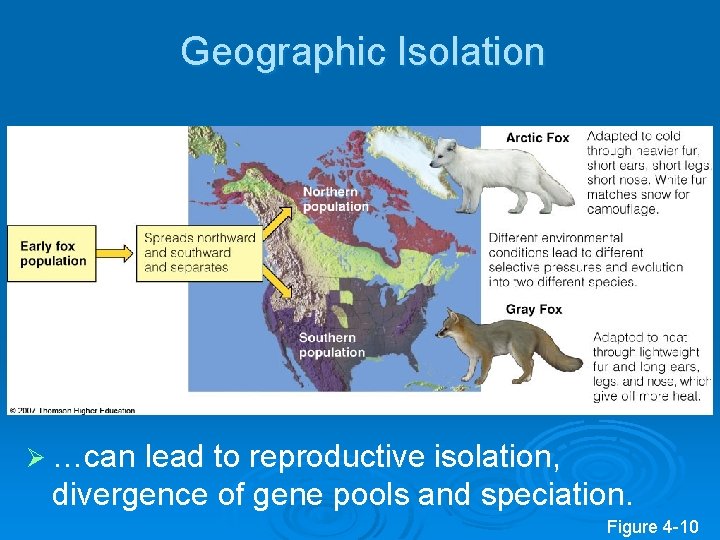
Geographic Isolation Ø …can lead to reproductive isolation, divergence of gene pools and speciation. Figure 4 -10
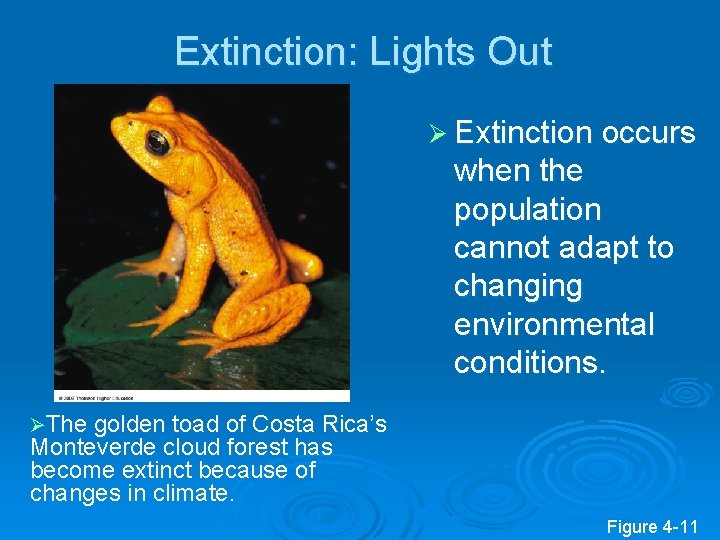
Extinction: Lights Out Ø Extinction occurs when the population cannot adapt to changing environmental conditions. ØThe golden toad of Costa Rica’s Monteverde cloud forest has become extinct because of changes in climate. Figure 4 -11
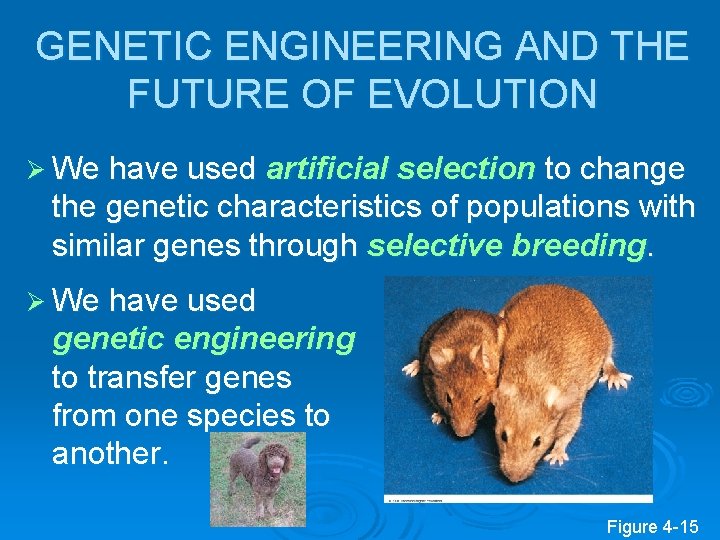
GENETIC ENGINEERING AND THE FUTURE OF EVOLUTION Ø We have used artificial selection to change the genetic characteristics of populations with similar genes through selective breeding. Ø We have used genetic engineering to transfer genes from one species to another. Figure 4 -15
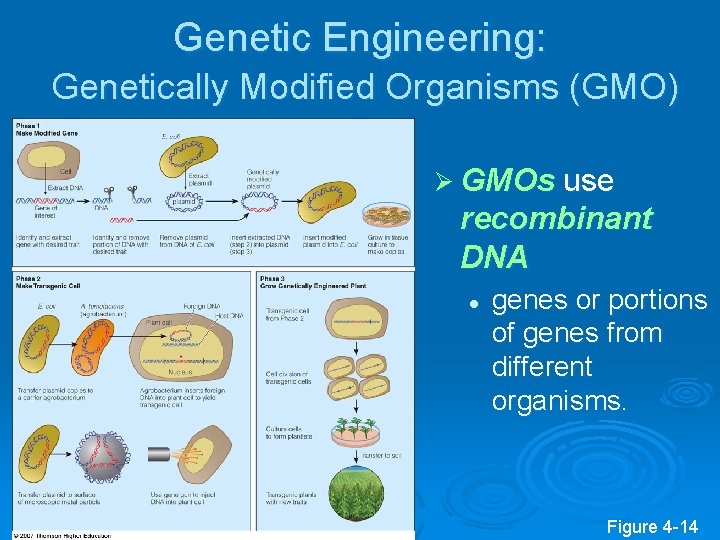
Genetic Engineering: Genetically Modified Organisms (GMO) Ø GMOs use recombinant DNA l genes or portions of genes from different organisms. Figure 4 -14
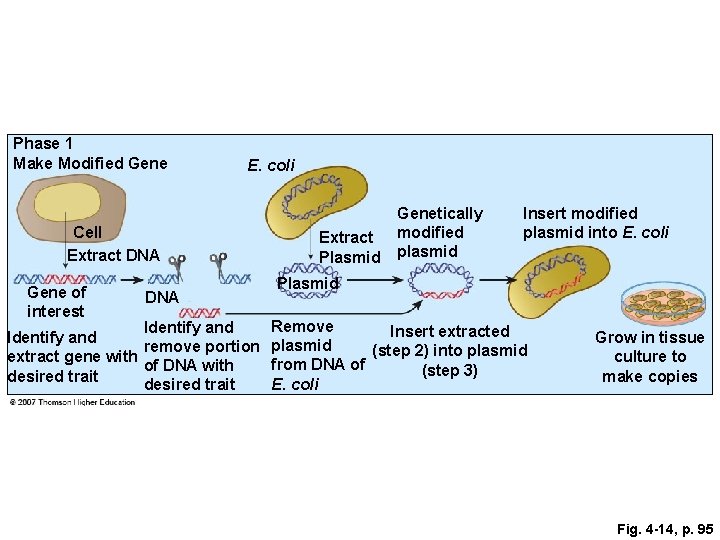
Phase 1 Make Modified Gene E. coli Cell Extract DNA Gene of interest DNA Identify and remove portion extract gene with of DNA with desired trait Extract Plasmid Genetically modified plasmid Insert modified plasmid into E. coli Plasmid Remove Insert extracted plasmid (step 2) into plasmid from DNA of (step 3) E. coli Grow in tissue culture to make copies Fig. 4 -14, p. 95
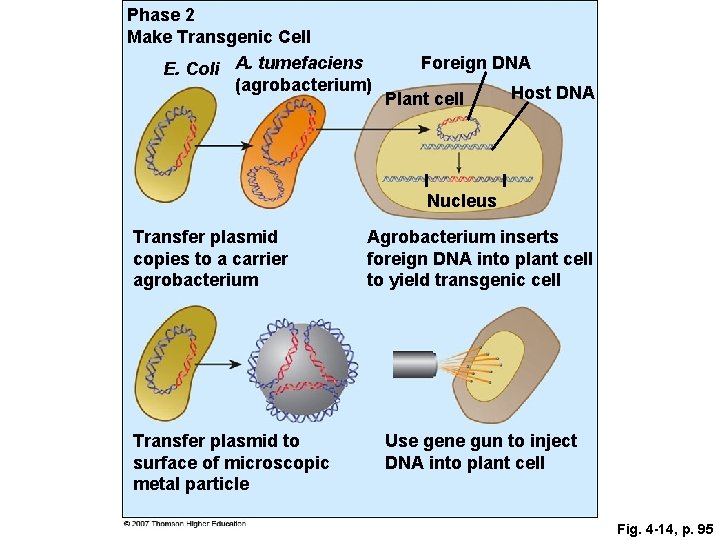
Phase 2 Make Transgenic Cell E. Coli A. tumefaciens (agrobacterium) Foreign DNA Plant cell Host DNA Nucleus Transfer plasmid copies to a carrier agrobacterium Transfer plasmid to surface of microscopic metal particle Agrobacterium inserts foreign DNA into plant cell to yield transgenic cell Use gene gun to inject DNA into plant cell Fig. 4 -14, p. 95
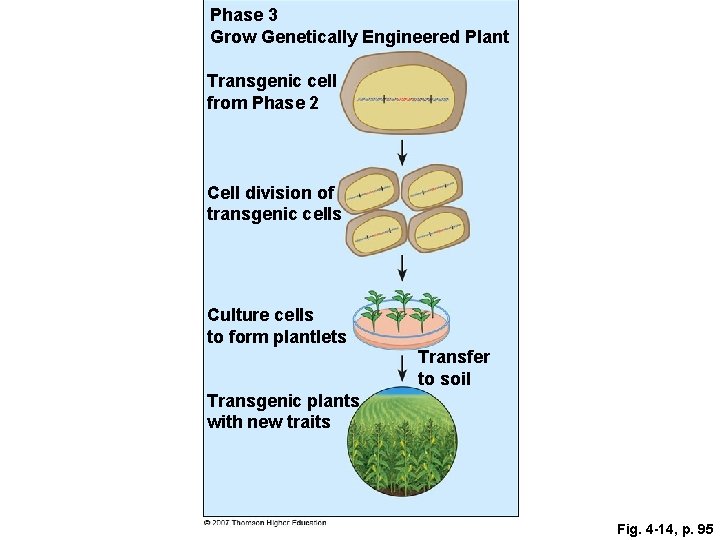
Phase 3 Grow Genetically Engineered Plant Transgenic cell from Phase 2 Cell division of transgenic cells Culture cells to form plantlets Transfer to soil Transgenic plants with new traits Fig. 4 -14, p. 95
Controversy Over Genetic Engineering Ø There a number of privacy, ethical, legal and environmental issues. Ø Should genetic engineering and development be regulated? Ø What are the long-term environmental consequences?
Case Study: How Did We Become Such a Powerful Species so Quickly? Ø We lack: l l l strength, speed, agility. weapons (claws, fangs), protection (shell). poor hearing and vision. Ø We have thrived as a species because of our: l opposable thumbs, ability to walk upright, complex brains (problem solving).
- Slides: 31