
CHAPTER 4 Ethics and Social Responsibility Andrew J
CHAPTER 4 Ethics and Social Responsibility Andrew J. Du. Brin Essentials of Management, 6/e South-Western College Publishing Copyright © 2003 Screen graphics created by: Jana F. Kuzmicki, Ph. D, Christian Brothers University
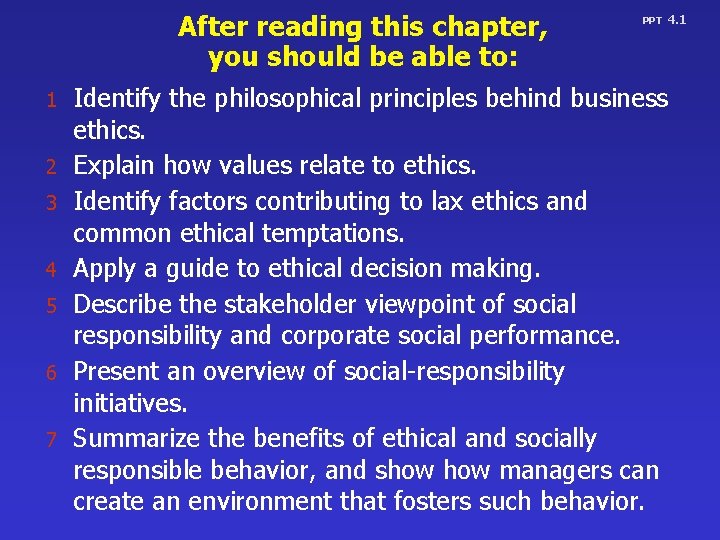
After reading this chapter, you should be able to: 1 2 3 4 5 6 7 PPT 4. 1 Identify the philosophical principles behind business ethics. Explain how values relate to ethics. Identify factors contributing to lax ethics and common ethical temptations. Apply a guide to ethical decision making. Describe the stakeholder viewpoint of social responsibility and corporate social performance. Present an overview of social-responsibility initiatives. Summarize the benefits of ethical and socially responsible behavior, and show managers can create an environment that fosters such behavior.
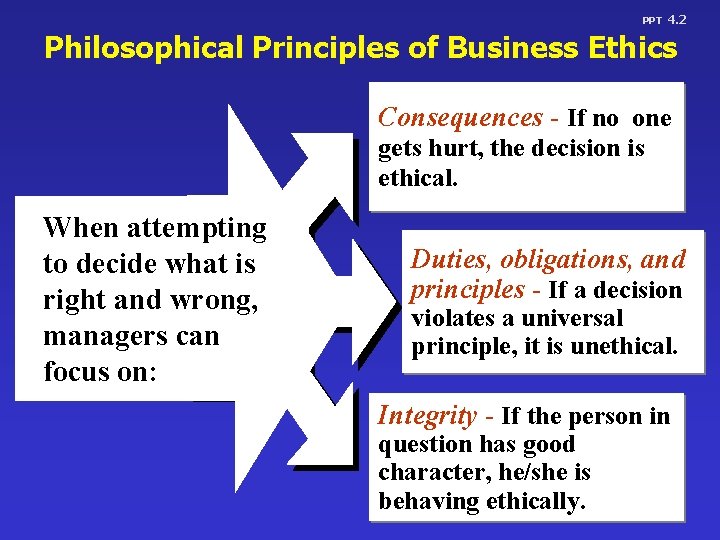
PPT 4. 2 Philosophical Principles of Business Ethics Consequences - If no one gets hurt, the decision is ethical. When attempting to decide what is right and wrong, managers can focus on: Duties, obligations, and principles - If a decision violates a universal principle, it is unethical. Integrity - If the person in question has good character, he/she is behaving ethically.
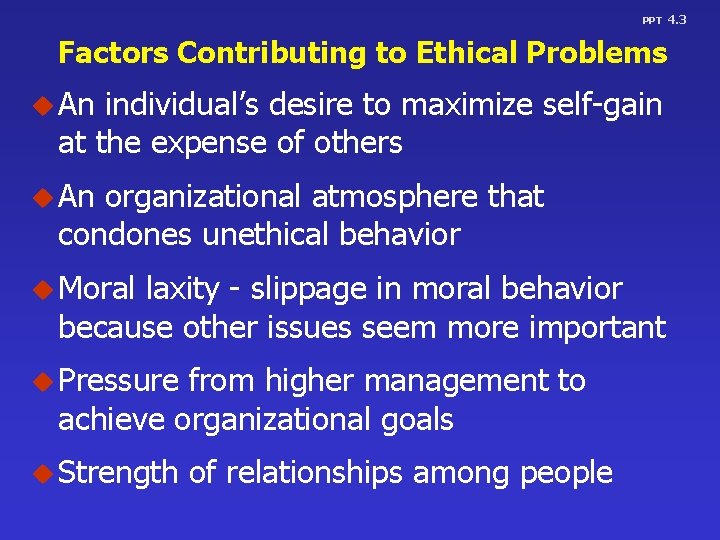
PPT Factors Contributing to Ethical Problems u An individual’s desire to maximize self-gain at the expense of others u An organizational atmosphere that condones unethical behavior u Moral laxity - slippage in moral behavior because other issues seem more important u Pressure from higher management to achieve organizational goals u Strength of relationships among people 4. 3
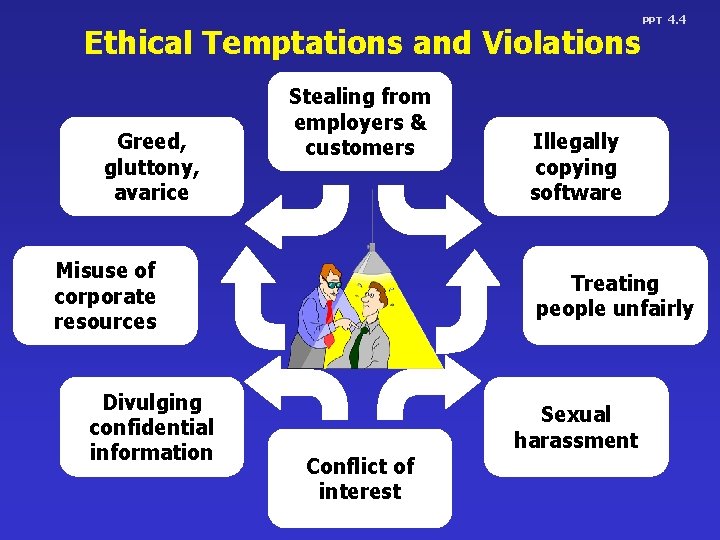
Ethical Temptations and Violations Greed, gluttony, avarice Stealing from employers & customers Misuse of corporate resources Divulging confidential information PPT 4. 4 Illegally copying software Treating people unfairly Sexual harassment Conflict of interest
A Guide to Ethical Decision Making PPT 4. 5 1 Is it right? 2 Is it fair? 3 Who gets hurt? 4 Would you be comfortable if the details of your decision were reported on the front page of your newspaper or throughout the company? 4 Would you tell your child to do it? 6 How does it smell?
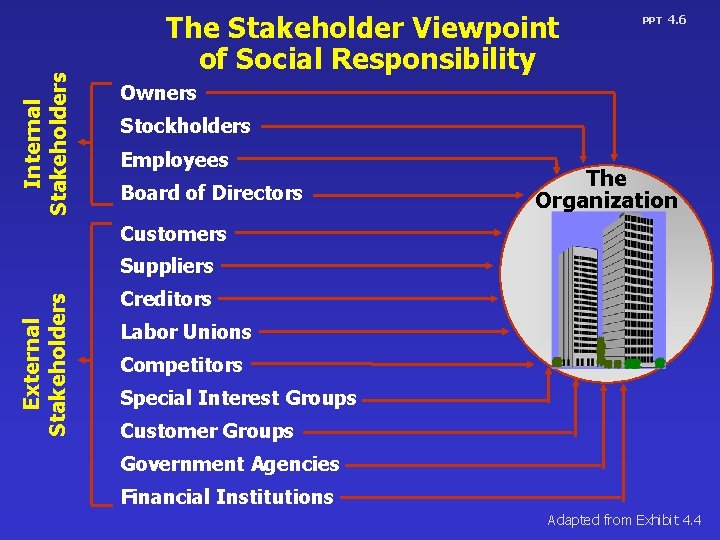
Internal Stakeholders The Stakeholder Viewpoint of Social Responsibility PPT 4. 6 Owners Stockholders Employees Board of Directors The Organization Customers External Stakeholders Suppliers Creditors Labor Unions Competitors Special Interest Groups Customer Groups Government Agencies Financial Institutions Adapted from Exhibit 4. 4
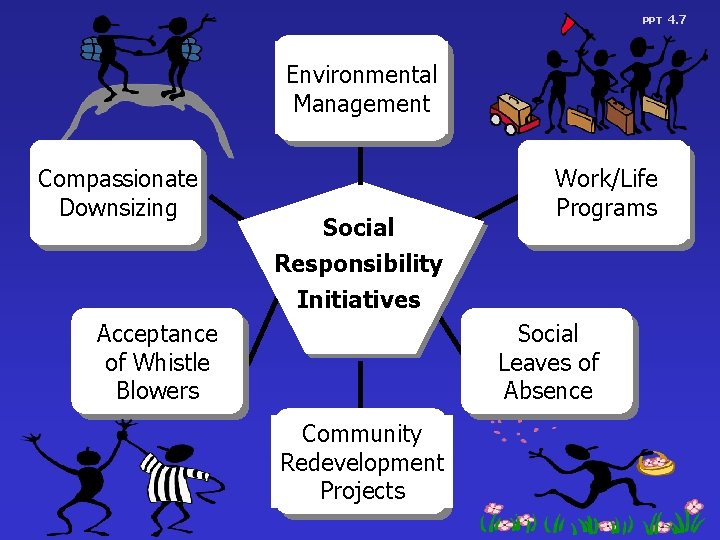
PPT Environmental Management Compassionate Downsizing Social Work/Life Programs Responsibility Initiatives Acceptance of Whistle Blowers Social Leaves of Absence Community Redevelopment Projects 4. 7
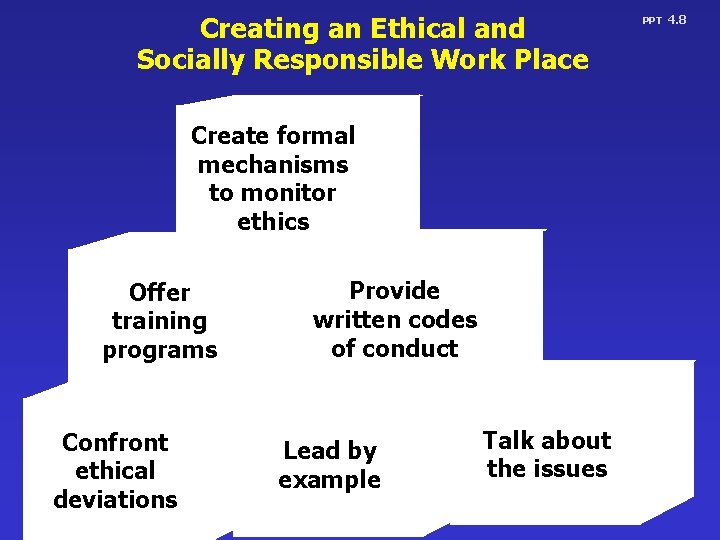
Creating an Ethical and Socially Responsible Work Place Create formal mechanisms to monitor ethics Offer training programs Confront ethical deviations Provide written codes of conduct Lead by example Talk about the issues PPT 4. 8
- Slides: 9