
CHAPTER 4 Environmental Scanning and Industry Analysis STRATEGIC
- Slides: 29
CHAPTER 4 Environmental Scanning and Industry Analysis STRATEGIC MANAGEMENT & BUSINESS POLICY 10 TH EDITION THOMAS L. WHEELEN J. DAVID HUNGER 1
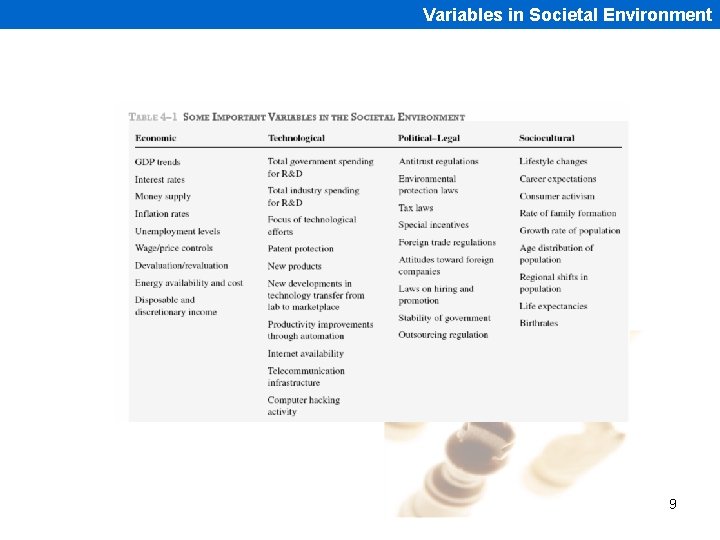
Environmental Scanning Societal environment -–Economic forces –Technological forces –Political-legal forces –Sociocultural forces 2
Societal Environment Economic Forces -–Regulate exchange of materials, money, energy and information 3
Societal Environment Technological Forces -–Generate problem-solving inventions 4
Societal Environment Political-legal Forces -–Allocate power; provide laws and regulations 5
Societal Environment Sociocultural Forces -–Regulate values, mores, and customs of society 6
Task Environment Task environment -–Elements or groups that directly affect a corporation and are affected by it 7
Task Environment Industry Analysis -–In-depth examination of key factors within a corporation’s task environment 8
Variables in Societal Environment 9
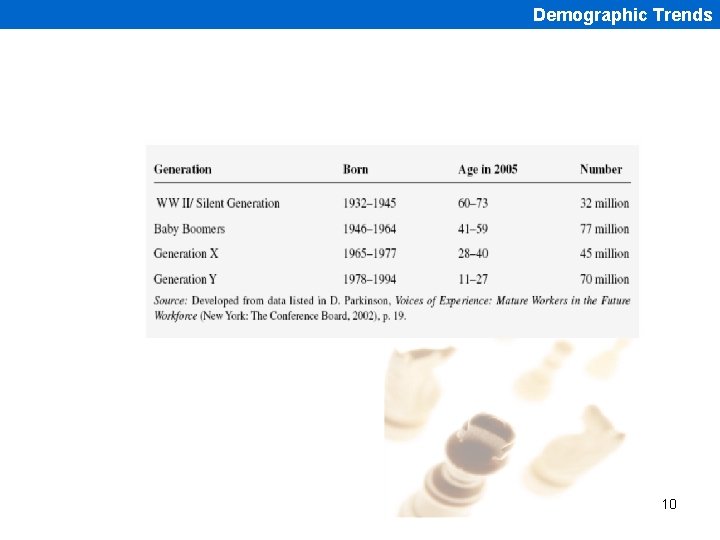
Demographic Trends 10
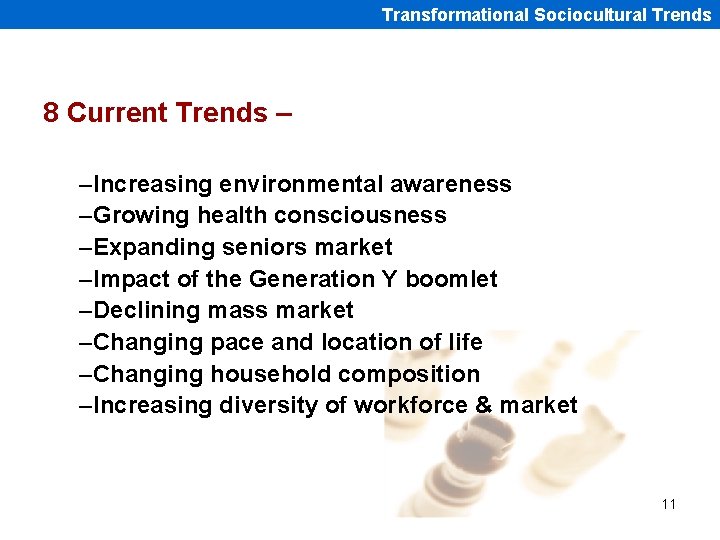
Transformational Sociocultural Trends 8 Current Trends – –Increasing environmental awareness –Growing health consciousness –Expanding seniors market –Impact of the Generation Y boomlet –Declining mass market –Changing pace and location of life –Changing household composition –Increasing diversity of workforce & market 11
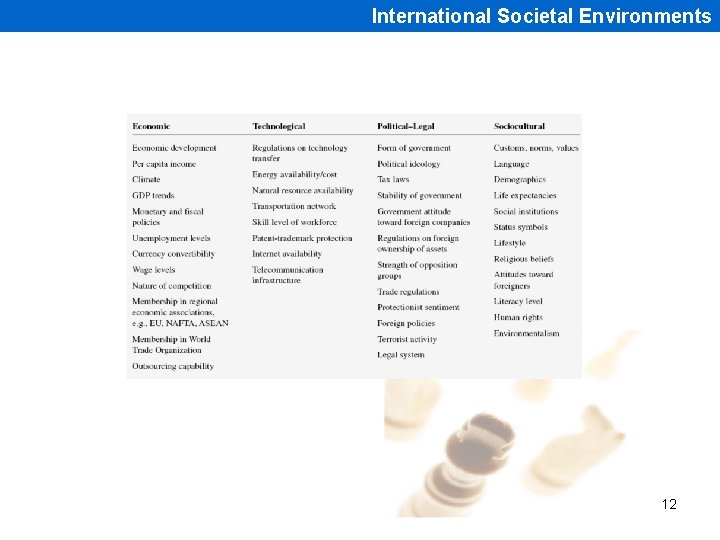
International Societal Environments 12
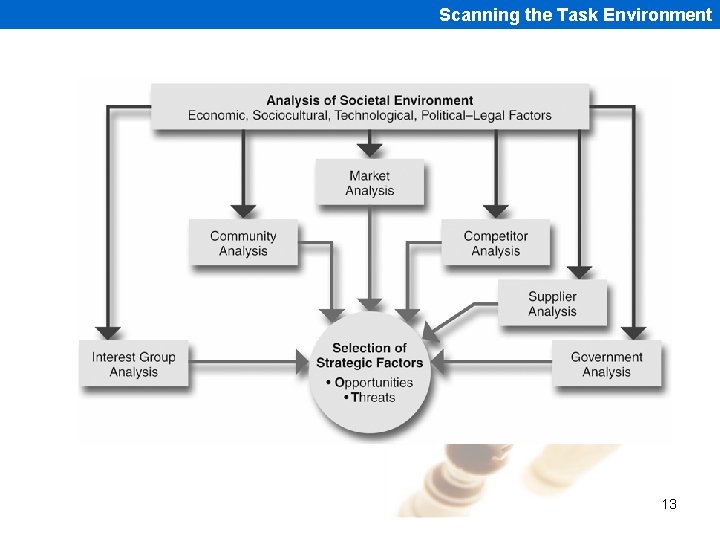
Scanning the Task Environment 13
Ethical Behavior “business ethics” –Argument that there is no such thing … it is an oxymoron 14
Ethical Decision Making Corporate practices -–Massive write-downs and restatements of profit –Misclassification of expenses as capital expenditures –Pirating corporate assets for personal gain 15
External Strategic Factors Strategic myopia -–Willingness to reject unfamiliar as well as negative information 16
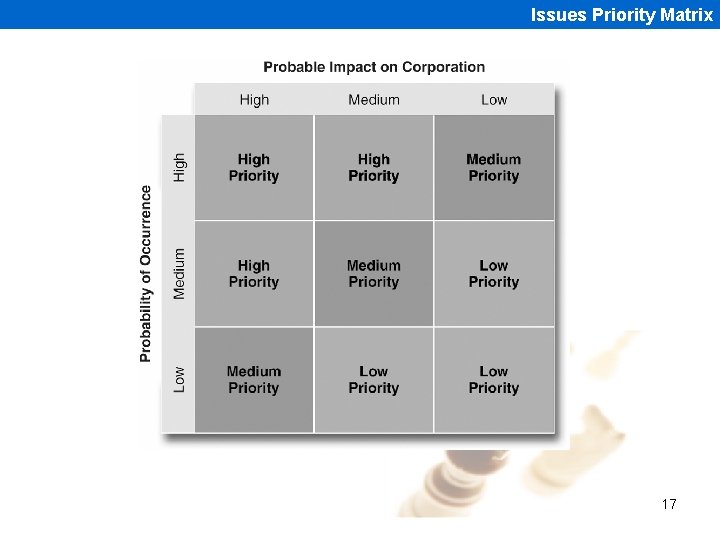
Issues Priority Matrix 17
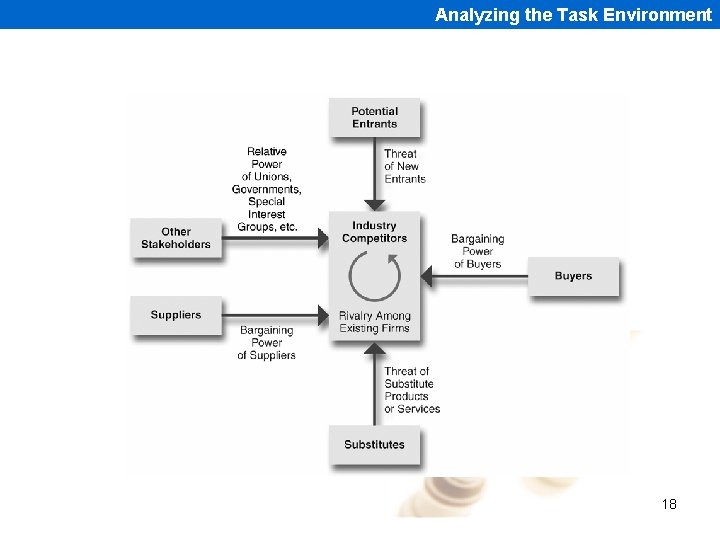
Analyzing the Task Environment 18
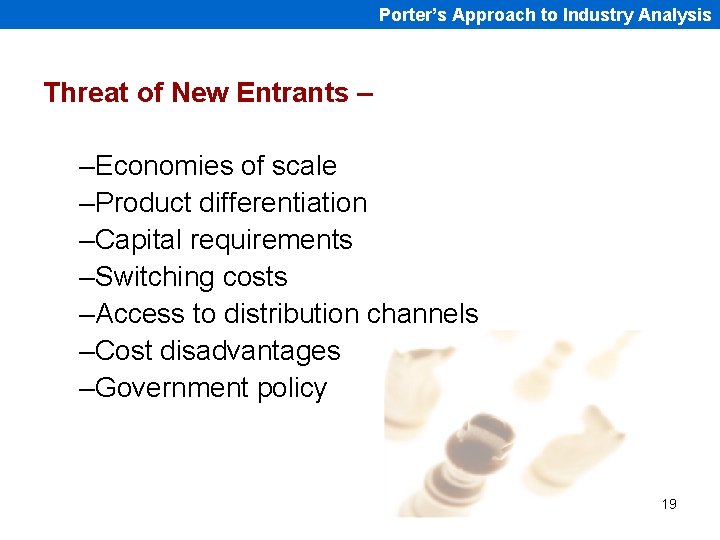
Porter’s Approach to Industry Analysis Threat of New Entrants – –Economies of scale –Product differentiation –Capital requirements –Switching costs –Access to distribution channels –Cost disadvantages –Government policy 19
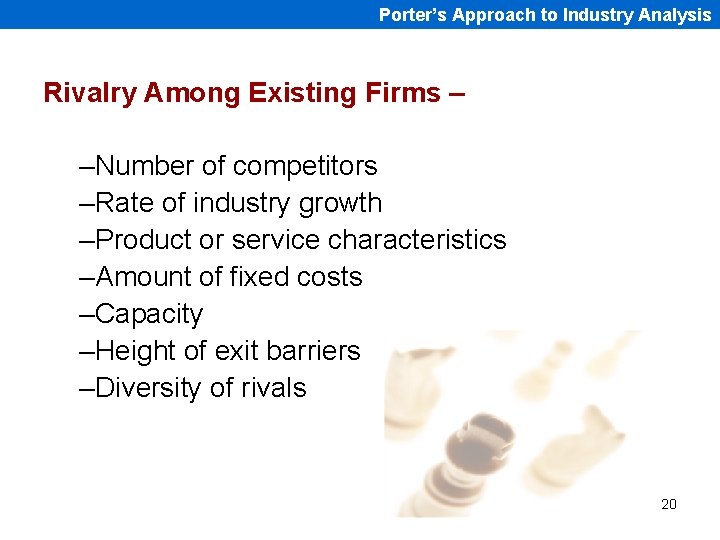
Porter’s Approach to Industry Analysis Rivalry Among Existing Firms – –Number of competitors –Rate of industry growth –Product or service characteristics –Amount of fixed costs –Capacity –Height of exit barriers –Diversity of rivals 20
Porter’s Approach to Industry Analysis • Threat of Substitute Products or Services • Bargaining Power of Buyers • Bargaining Power of Suppliers • Relative Power of Other Stakeholders 21
Industry Evolution Fragmented Industry – –No dominant industry 22
Industry Evolution Consolidated Industry – –Dominated by a few large firms 23
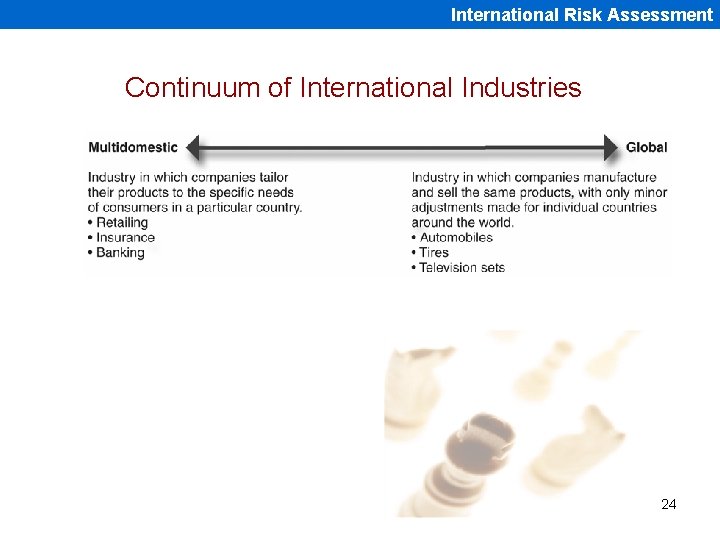
International Risk Assessment Continuum of International Industries 24
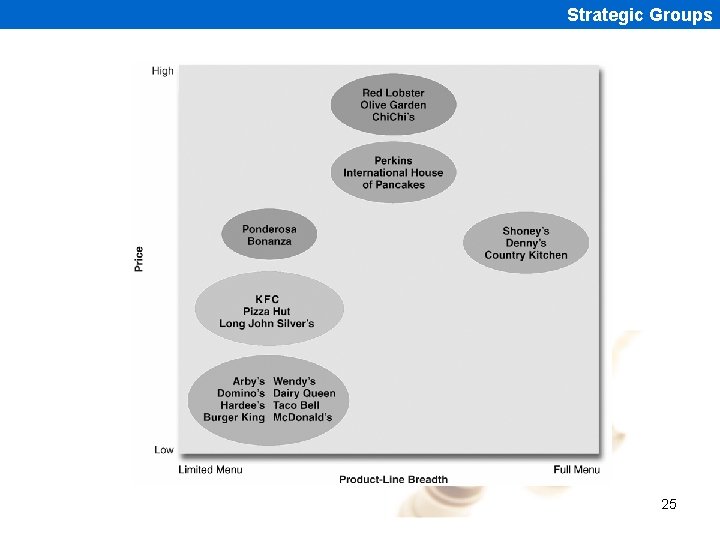
Strategic Groups 25
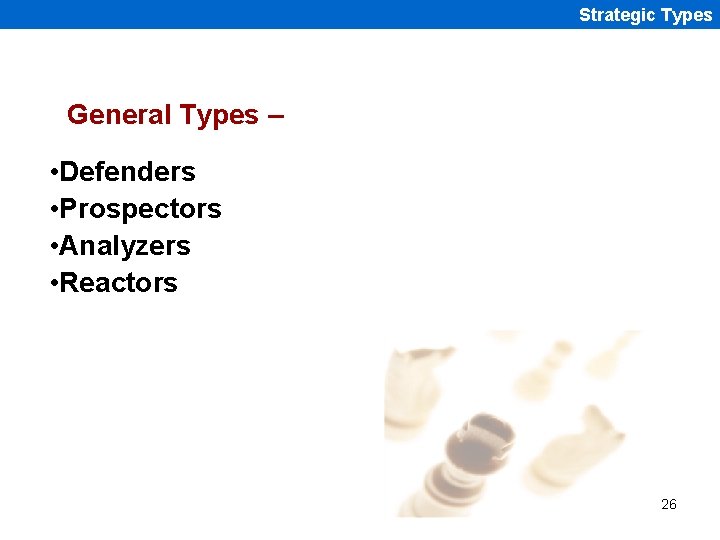
Strategic Types General Types – • Defenders • Prospectors • Analyzers • Reactors 26
Competitive Intelligence Called business intelligence Gathering information on a company’s competitors 27
Forecasting Techniques -–Extrapolation –Brainstorming –Expert opinion –Delphi technique –Statistical modeling –Scenario writing 28
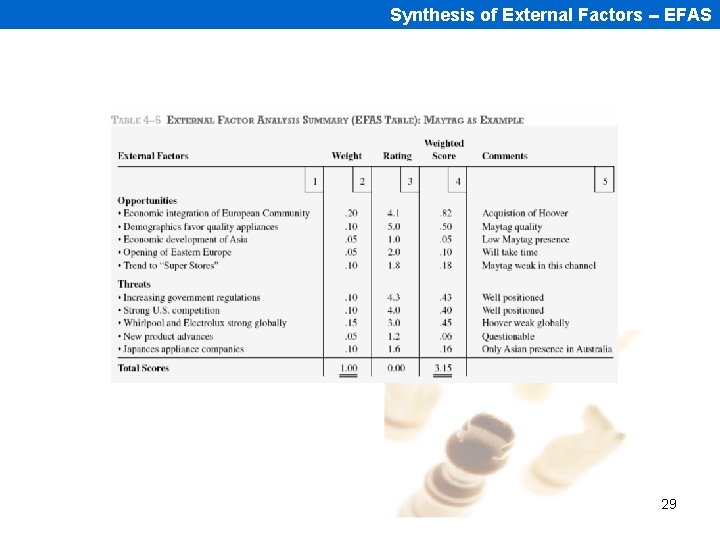
Synthesis of External Factors -- EFAS 29