
Chapter 4 Design Phase 2 Formulating Solutions Steps
- Slides: 16
Chapter 4 Design Phase 2: Formulating Solutions - Steps and Decision Making 1
Two-day’s Menu Developing alternatives n Evaluating alternatives n 2
4. 1 Defining Design Parameters 4. 1. 1 Innovation Versus Origination § Keep in mind that the task is to provide a solution, not necessarily be inventive! In many cases, design solutions are both partially original and partially innovative § Designing often relies on using existing components to reach a cost-effective solution. . . Regardless of design excellence, successful products also need appropriate marketing 3
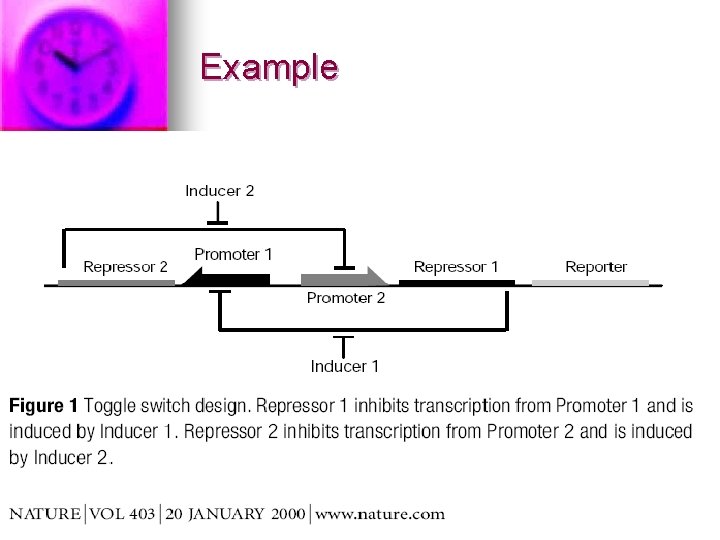
Example 4
4. 1. 2 Considering External Factors § One § external factor is industrial, professional and government regulation For example, for cars (with 4 wheels) a vehicle must: § have air bags for safety § burn fuel efficiently to lower pollution and conserve petroleum resources 5
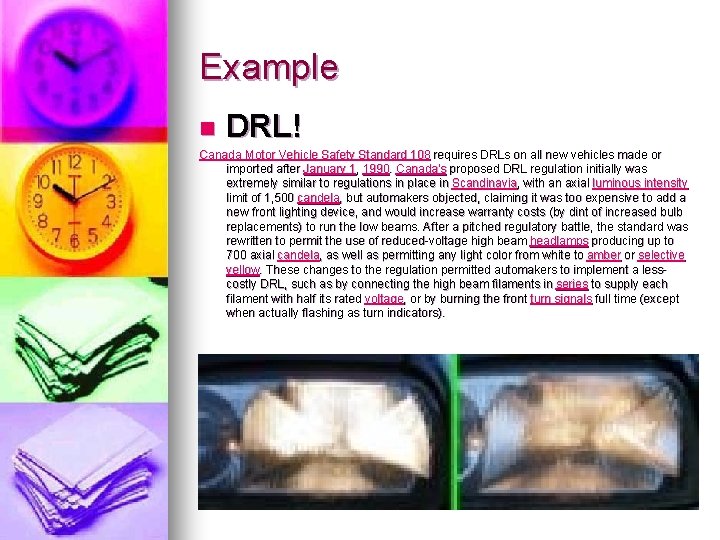
Example n DRL! Canada Motor Vehicle Safety Standard 108 requires DRLs on all new vehicles made or imported after January 1, 1, 1990. Canada's proposed DRL regulation initially was extremely similar to regulations in place in Scandinavia, with an axial luminous intensity limit of 1, 500 candela, but automakers objected, claiming it was too expensive to add a new front lighting device, and would increase warranty costs (by dint of increased bulb replacements) to run the low beams. After a pitched regulatory battle, the standard was rewritten to permit the use of reduced-voltage high beam headlamps producing up to 700 axial candela, as well as permitting any light color from white to amber or selective yellow. These changes to the regulation permitted automakers to implement a lesscostly DRL, such as by connecting the high beam filaments in series to supply each filament with half its rated voltage, or by burning the front turn signals full time (except when actually flashing as turn indicators). 6
4. 2 Identifying Alternatives 4. 2. 1 Brainstorming § The § goal is generating as many ideas as possible for solving a certain problem in a relatively short period of time Guidelines for brainstorming include: • • Criticism is ruled out: No judgment Creative and imaginative thinking is encouraged Quantity is metric: generating diverse alternatives Combining and extending are good: recombining ideas is welcomed § Clarity is a success key § Visual aids are very helpful try it 7
4. 2. 2 Lateral Thinking § Challenging Assumptions: Identify assumptions to see how they are affecting the generated ideas § Reversal Method: Take a design problem as it is and turn it around § Random Stimulation: Use irrelevant cues or unrelated information to stimulate new ideas 8
Example From http: //www. folj. com/lateral/ 1. You are driving down the road in your car on a wild, stormy night, when you pass by a bus stop and you see three people waiting for the bus • An old lady who looks as if she is about to die. • An old friend who once saved your life. • The perfect partner you have been dreaming about. 9
4. 2. 3 Delphi and Nominal Group Techniques § These two techniques are variations of brainstorming- more structured perhaps! How to generate a Delphi technique? 1. Identify members and ask them to Generate ideas 2. Share ideas (note cards, papers, verbal communication) 3. Collect ideas and list them 4. Clarify concepts and ideas 5. Ask experts to rank ideas 6. Obtain an average ranking 10
Examples n n A group of accountants working on improving a management report has a strongly structured work style, and consequently use NGT rather than Brainstorming to come up with the right format. A sales manager, wanting to put together a presentation for a key customer, brings together the account manager, the product marketing manager and the two key product engineers. The quality manager facilitates a session for them, where they quickly find the key product benefits over the competing products, and come up with 11 a compelling value proposition.
Home-Heating Challenge I have a home heated by an old thermo-pump plus fuel-burning furnace n I want to save money on heating bills long-term, but n Without breaking the bank, short term: n What are my options? n 12
4. 3 Evaluating and Analyzing Alternatives 4. 3. 1 Systematic Decision Grids § Once the grid has been created, the team can discuss the functional requirements and parameters of the design 13
4. 3. 2 Force-Field Analysis § Identify all forces as positive or negative § Assign a numerical weight to each force § Add up the positives and negatives § Lessen the magnitude of negative forces 14
4. 4 Selecting a Solution § Time is a very important factor § Keep it simple § Remember upgrades 15
In summary n n n Problems rarely have one solution Finding and developing a large number of diverse solutions is key Evaluating a solution involves identifying all the pros and cons of that solution Weighing the pros and cons to get to an ‘optimal’ agreed-on solution is not easy Finally, even a good design might not sell well in the real world 16