
Chapter 4 DEPOSITIONAL ENVIRONMENTS Continental Non Marine Fluvial
- Slides: 35
Chapter 4 DEPOSITIONAL ENVIRONMENTS
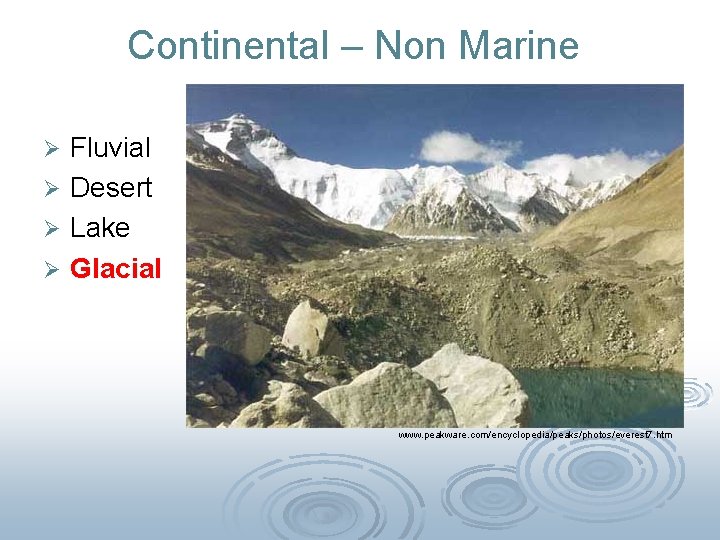
Continental – Non Marine Fluvial Ø Desert Ø Lake Ø Glacial Ø www. peakware. com/encyclopedia/peaks/photos/everest 7. htm
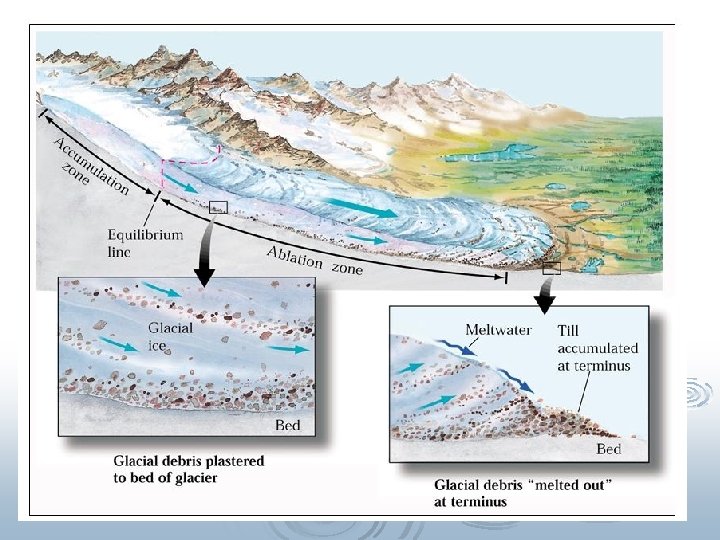
GLACIAL ENVIRONMENTS Glacial : permanent accumulations of ice and snow Ice, water and air are clearly fluid media but we can also consider ice as a fluid because over long time periods it moves across the land surface, albeit very slowly. Ice is therefore a rather high viscosity fluid that is capable of transporting large amounts of clastic debris. Movement of detritus by ice is significant in and around polar ice caps and in mountainous areas in the low latitudes with glaciers. The volume of material moved by ice has been very great at times of extensive glaciation. Ø Ø Continental glaciers Marine glaciers
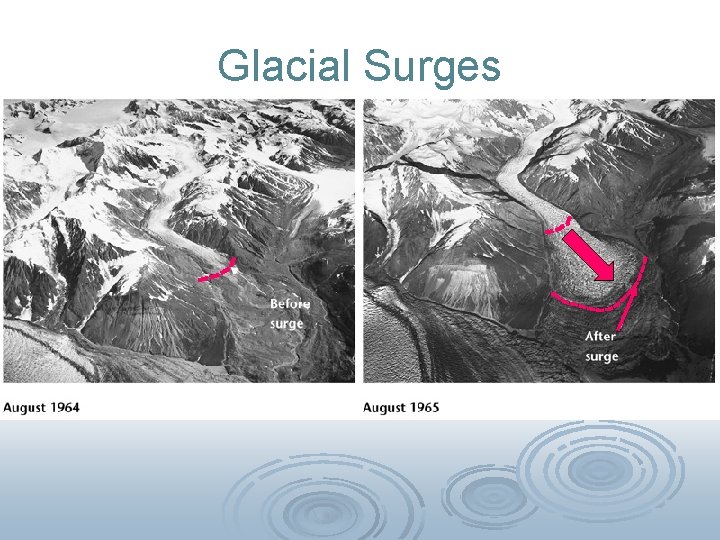
Glacial Surges
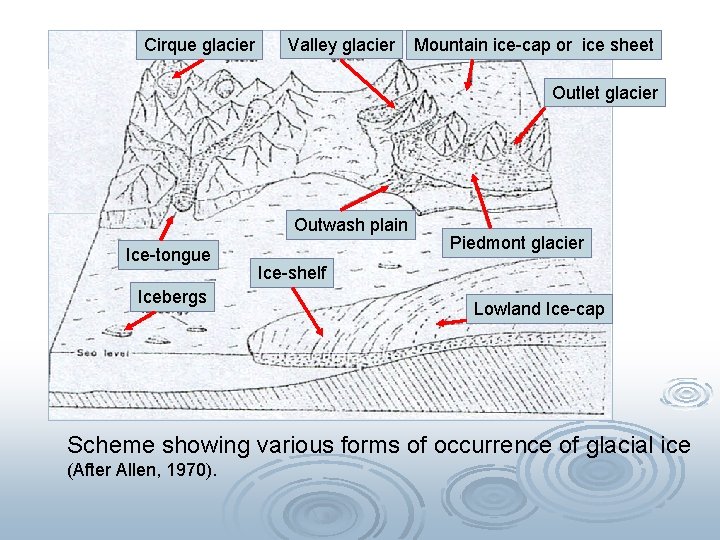
Cirque glacier Valley glacier Mountain ice-cap or ice sheet Outlet glacier Outwash plain Ice-tongue Icebergs Piedmont glacier Ice-shelf Lowland Ice-cap Scheme showing various forms of occurrence of glacial ice (After Allen, 1970).
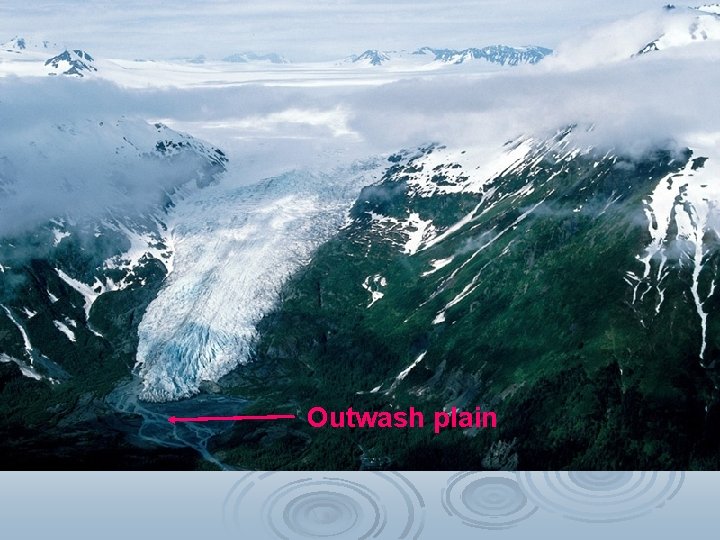
Outwash plain
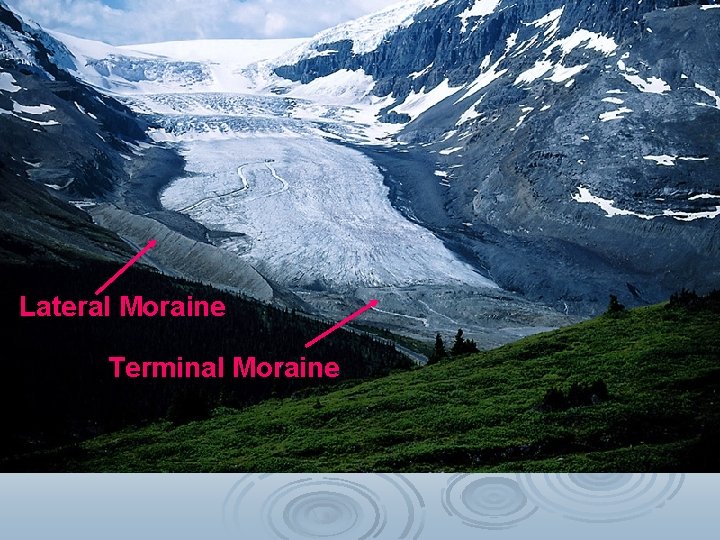
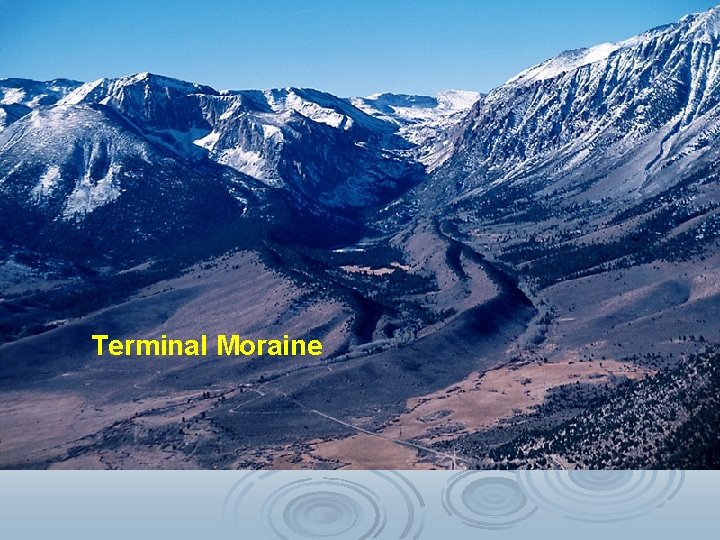
Lateral Moraine Terminal Moraine
Medial Glaciers
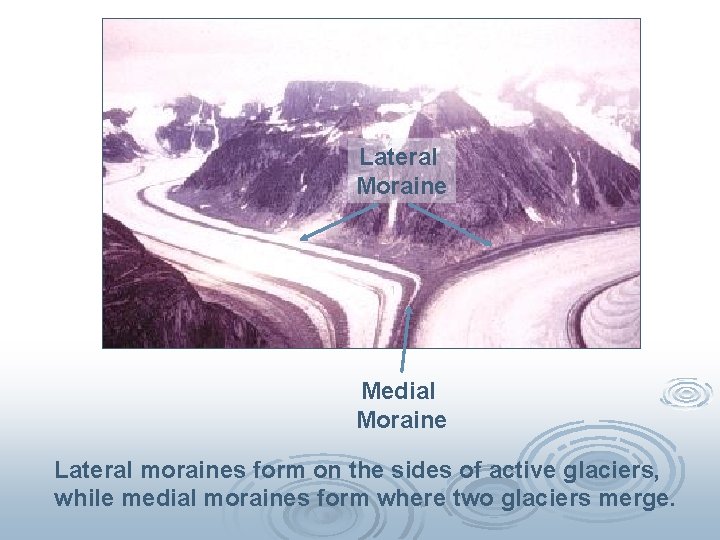
Lateral Moraine Medial Moraine Lateral moraines form on the sides of active glaciers, while medial moraines form where two glaciers merge.
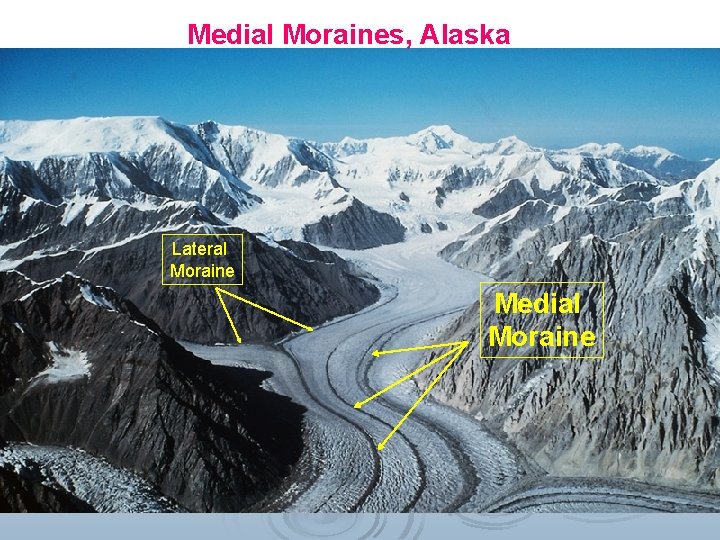
Medial Moraines, Alaska Lateral Moraine Medial Moraine
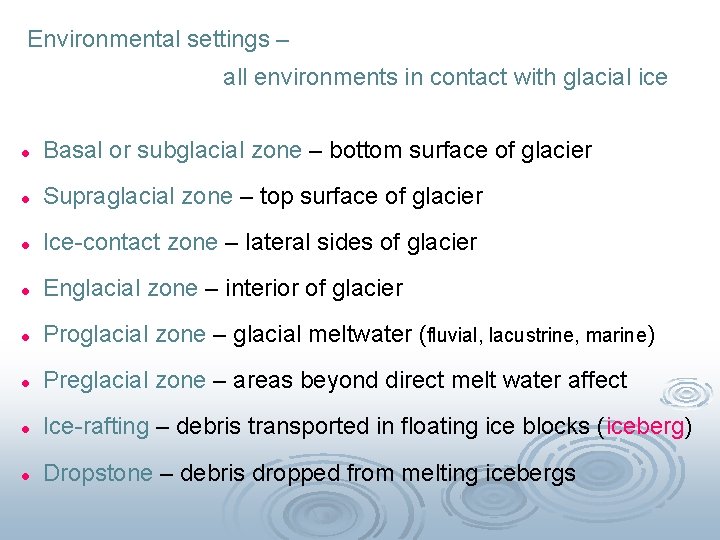
Environmental settings – all environments in contact with glacial ice l Basal or subglacial zone – bottom surface of glacier l Supraglacial zone – top surface of glacier l Ice-contact zone – lateral sides of glacier l Englacial zone – interior of glacier l Proglacial zone – glacial meltwater (fluvial, lacustrine, marine) l Preglacial zone – areas beyond direct melt water affect l Ice-rafting – debris transported in floating ice blocks (iceberg) l Dropstone – debris dropped from melting icebergs
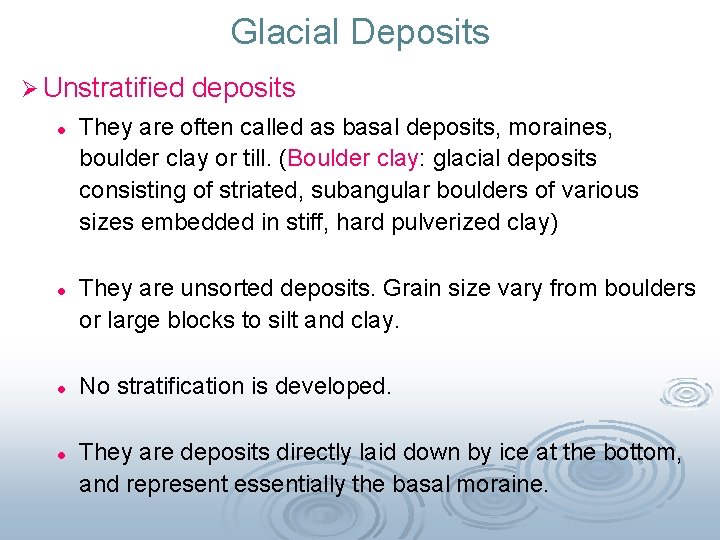
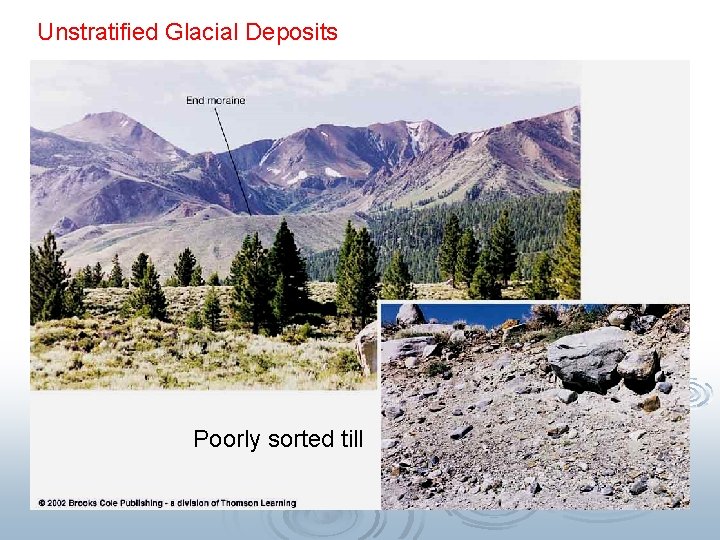
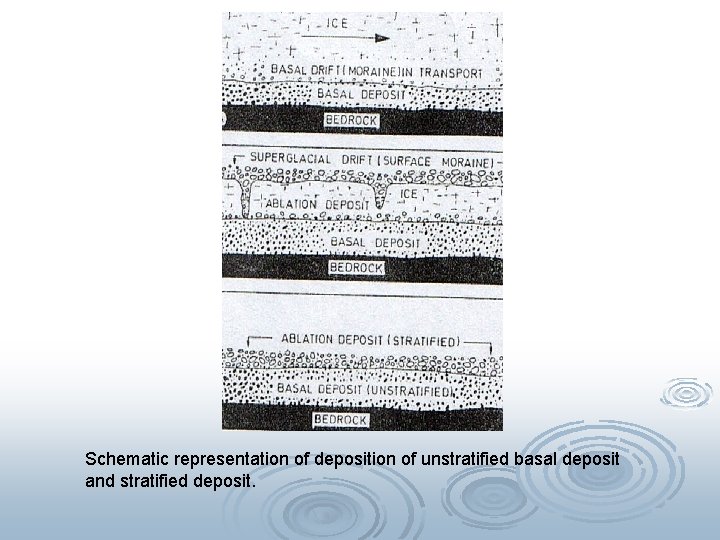
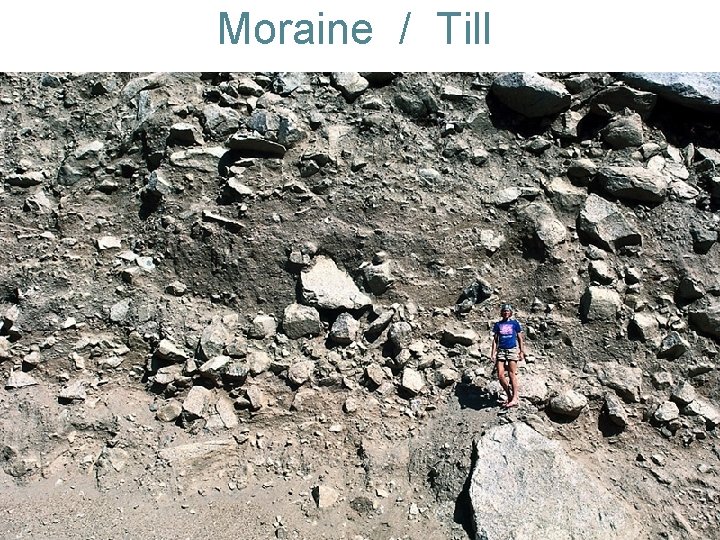
Glacial Deposits Ø Unstratified l l deposits They are often called as basal deposits, moraines, boulder clay or till. (Boulder clay: glacial deposits consisting of striated, subangular boulders of various sizes embedded in stiff, hard pulverized clay) They are unsorted deposits. Grain size vary from boulders or large blocks to silt and clay. No stratification is developed. They are deposits directly laid down by ice at the bottom, and represent essentially the basal moraine.
Unstratified Glacial Deposits Poorly sorted till
Glacial Deposits Ø Stratified deposits l l l They are often called as ablation deposits (moraine). Sorting is better than the associated unstratified deposits, especially silt and clay is rather low. Some stratification is developed. The stratification represents englacial and surface moraines which have been laid down during rapid melting of ice. Some of them are laid down by subglacial streams. Melt water plays an important role in deposition of stratified deposits.
Schematic representation of deposition of unstratified basal deposit and stratified deposit.
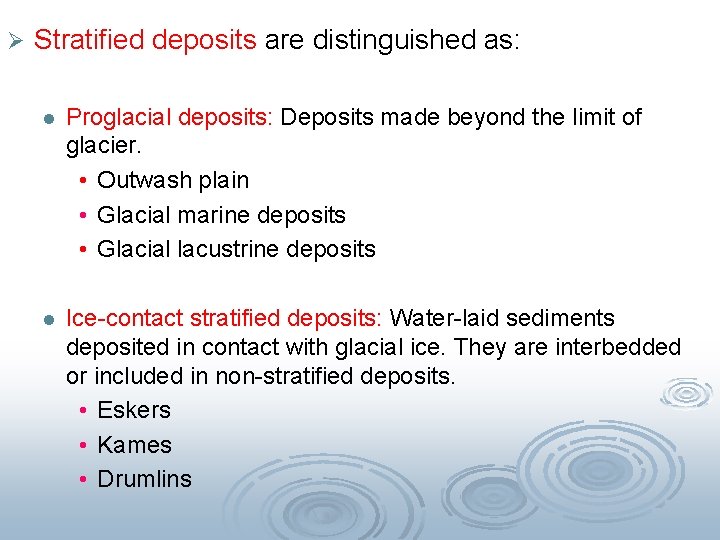
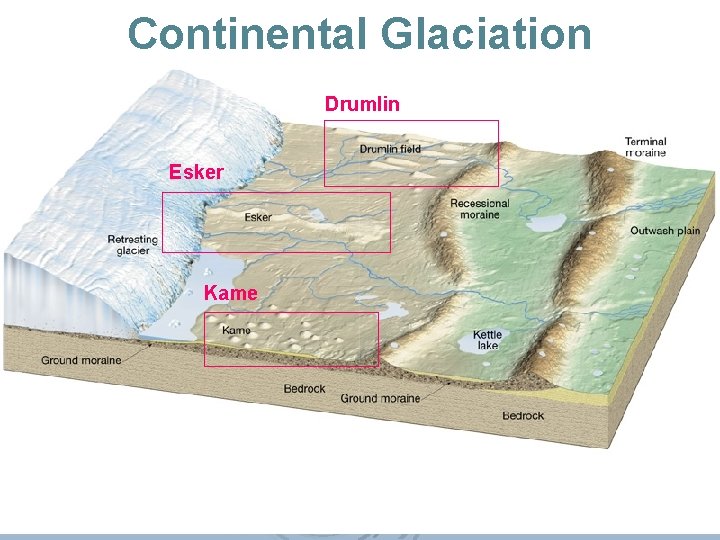
Ø Stratified deposits are distinguished as: l Proglacial deposits: Deposits made beyond the limit of glacier. • Outwash plain • Glacial marine deposits • Glacial lacustrine deposits l Ice-contact stratified deposits: Water-laid sediments deposited in contact with glacial ice. They are interbedded or included in non-stratified deposits. • Eskers • Kames • Drumlins
Continental Glaciation Drumlin Esker Kame
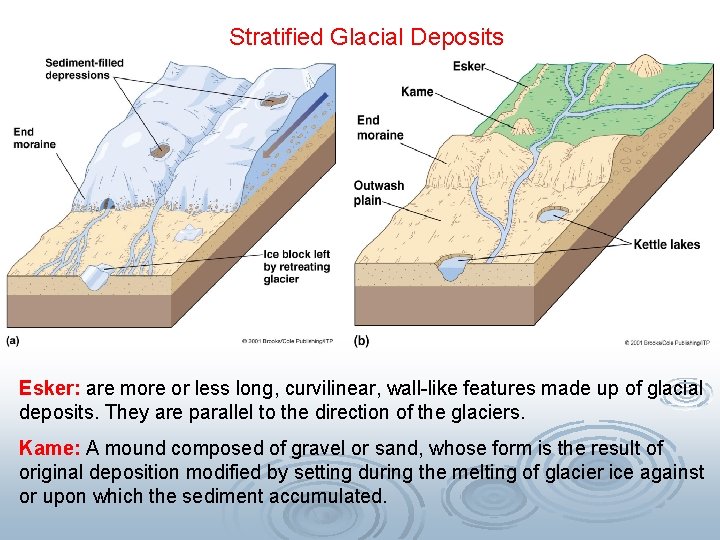
Stratified Glacial Deposits Esker: are more or less long, curvilinear, wall-like features made up of glacial deposits. They are parallel to the direction of the glaciers. Kame: A mound composed of gravel or sand, whose form is the result of original deposition modified by setting during the melting of glacier ice against or upon which the sediment accumulated.
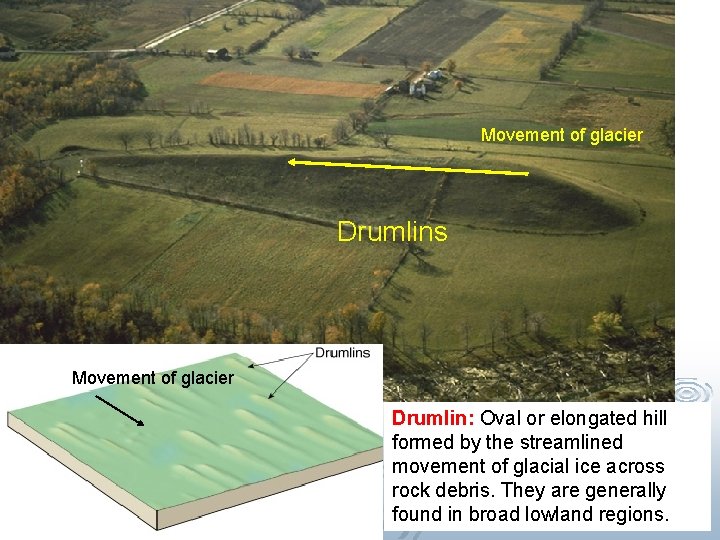
Movement of glacier Drumlins Movement of glacier Drumlin: Oval or elongated hill formed by the streamlined movement of glacial ice across rock debris. They are generally found in broad lowland regions.
Terminal Moraine
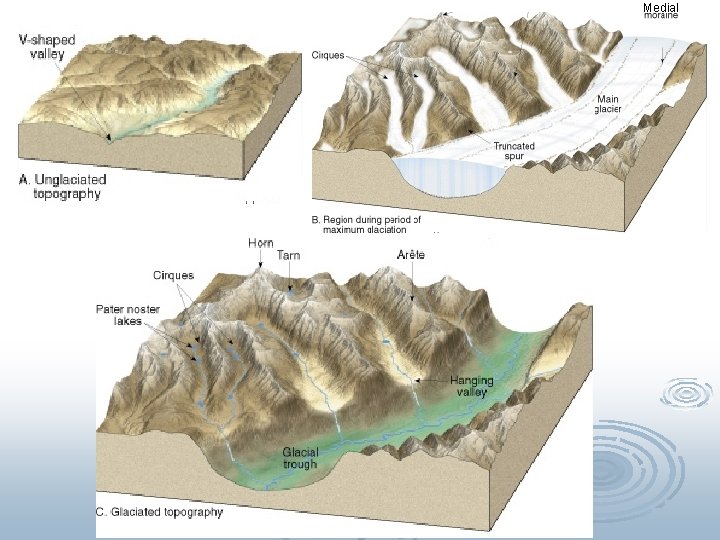
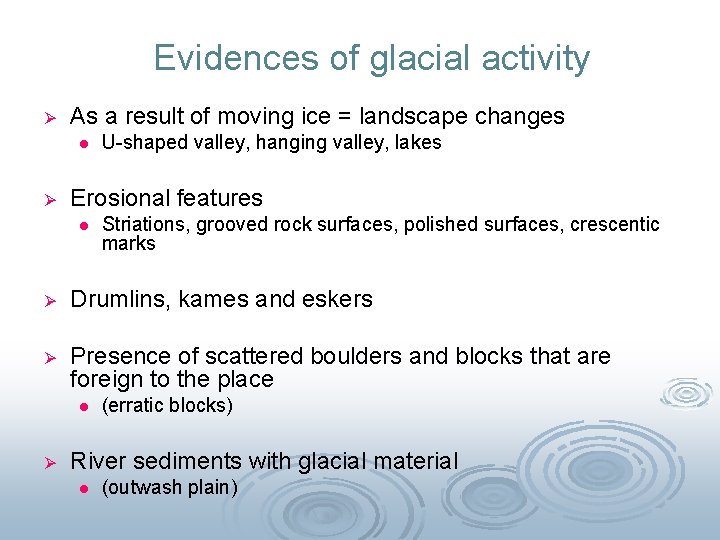
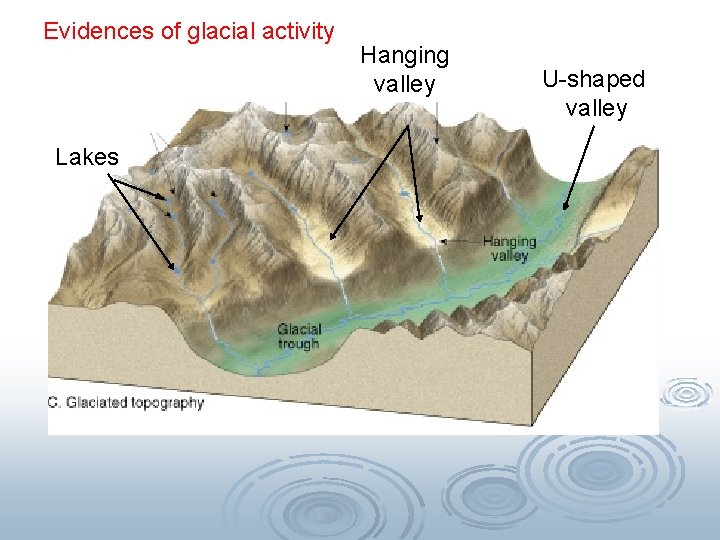
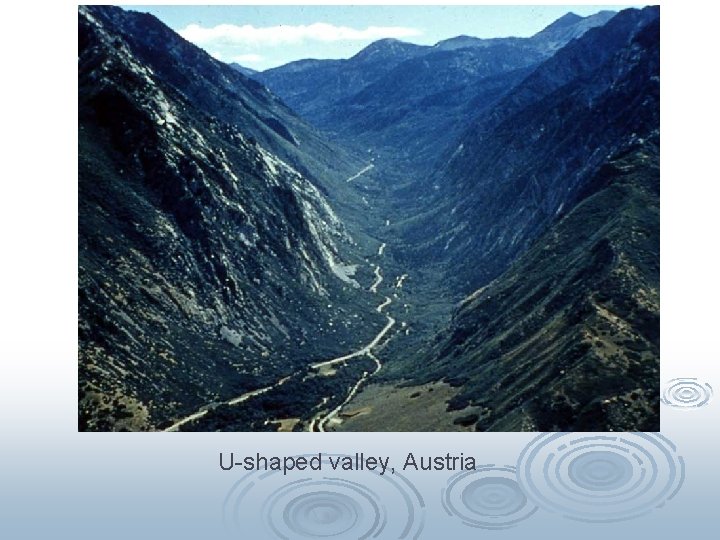
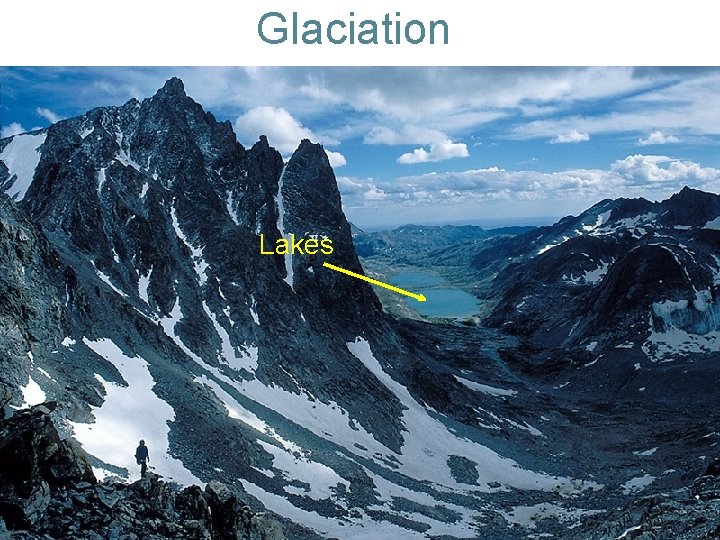
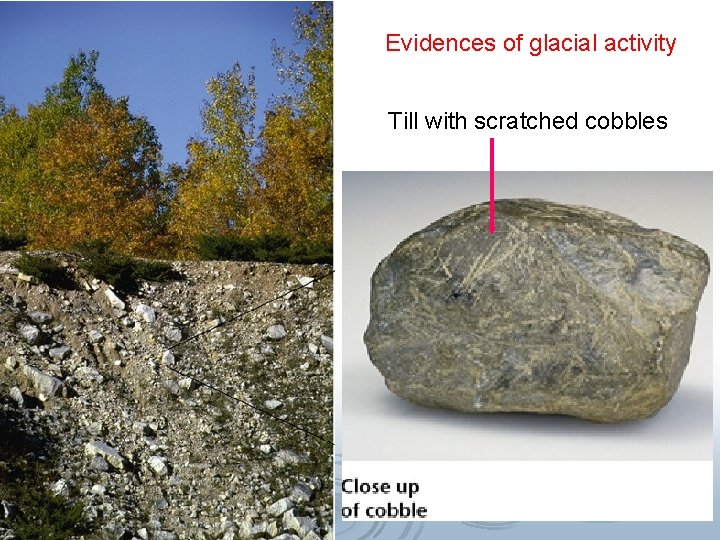
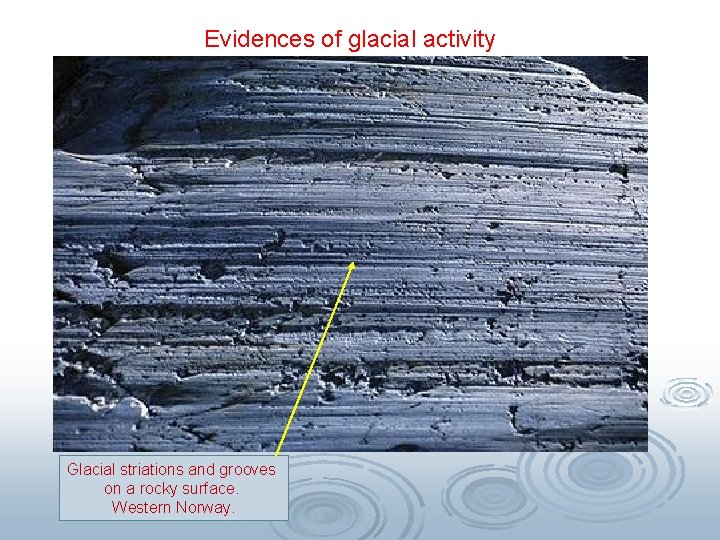
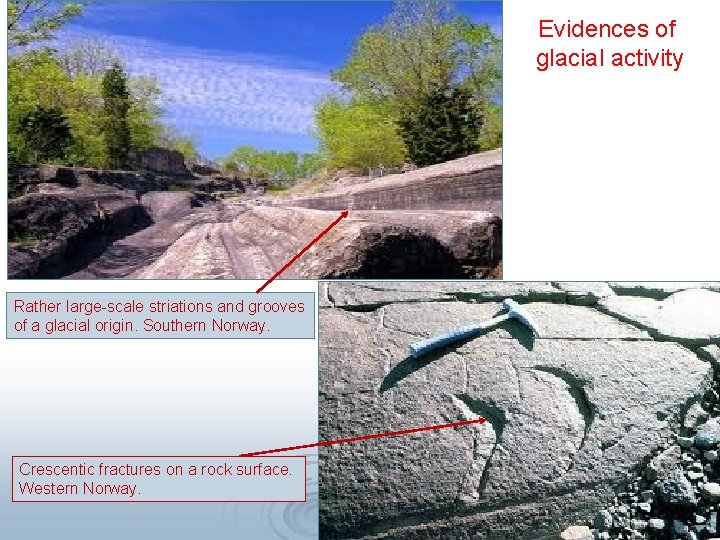
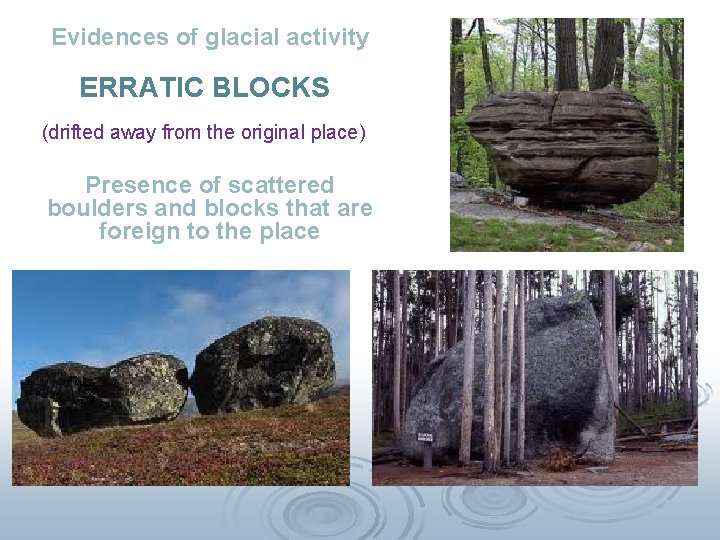
Evidences of glacial activity Ø As a result of moving ice = landscape changes l Ø U-shaped valley, hanging valley, lakes Erosional features l Striations, grooved rock surfaces, polished surfaces, crescentic marks Ø Drumlins, kames and eskers Ø Presence of scattered boulders and blocks that are foreign to the place l Ø (erratic blocks) River sediments with glacial material l (outwash plain)
Evidences of glacial activity Lakes Hanging valley U-shaped valley
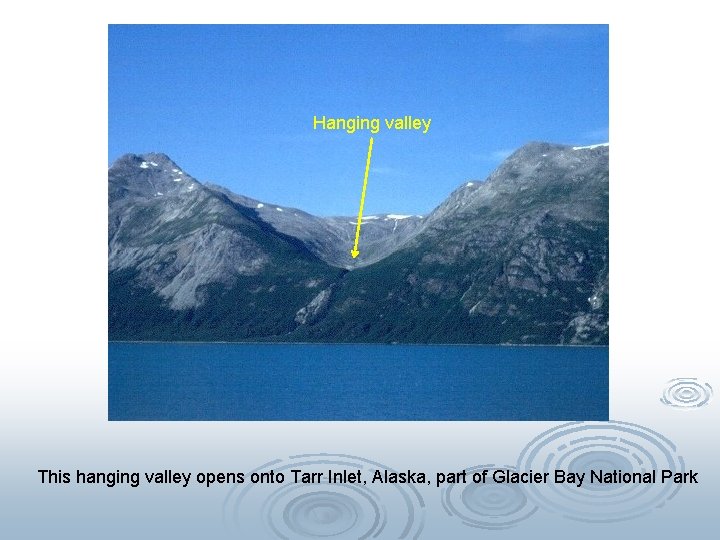
Hanging valley This hanging valley opens onto Tarr Inlet, Alaska, part of Glacier Bay National Park
U-shaped valley, Austria
Glaciation Lakes
Moraine / Till
Evidences of glacial activity Till with scratched cobbles
Evidences of glacial activity Glacial striations and grooves on a rocky surface. Western Norway.
Evidences of glacial activity Rather large-scale striations and grooves of a glacial origin. Southern Norway. Crescentic fractures on a rock surface. Western Norway.
Evidences of glacial activity ERRATIC BLOCKS (drifted away from the original place) Presence of scattered boulders and blocks that are foreign to the place
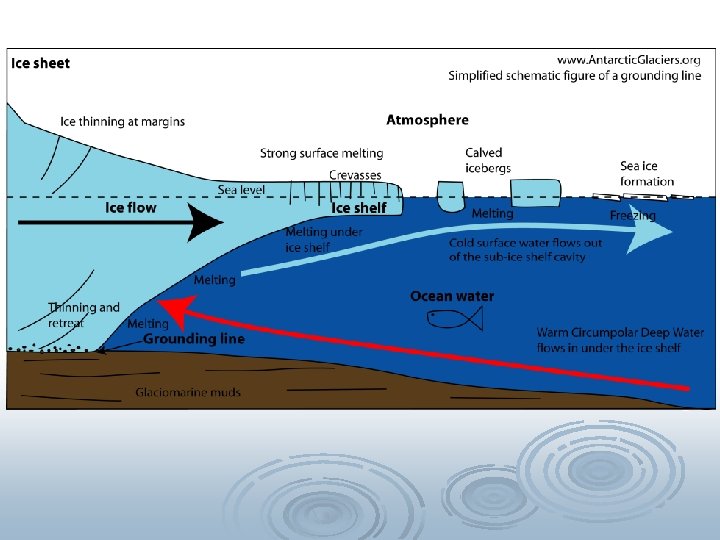
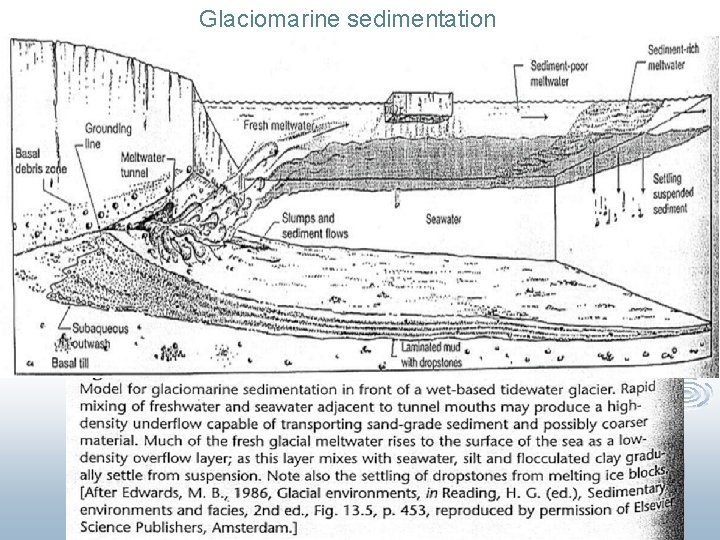
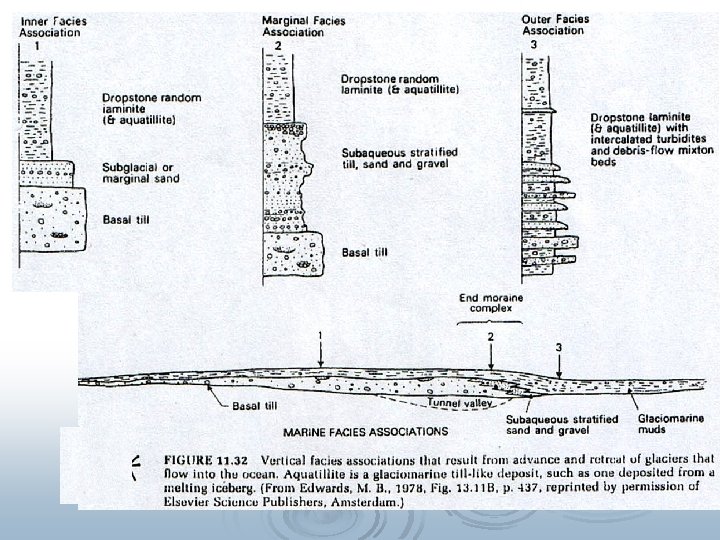
Glaciomarine sedimentation
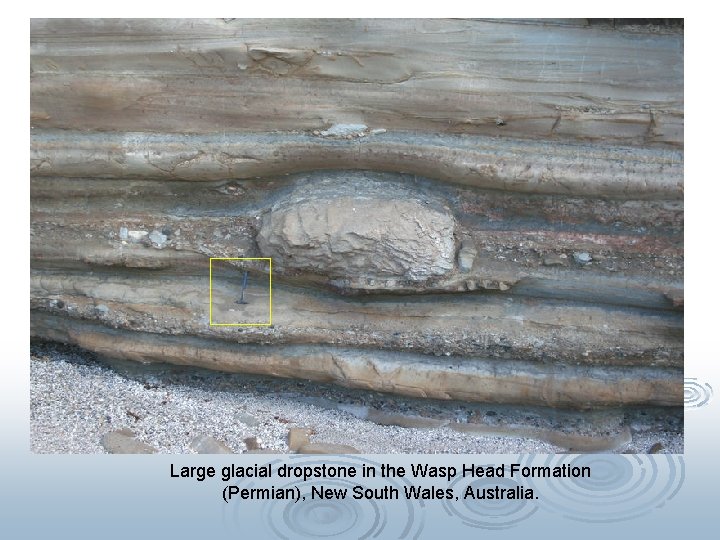
Large glacial dropstone in the Wasp Head Formation (Permian), New South Wales, Australia.