
Chapter 4 Demand What is Demand The ability
Chapter 4 Demand

What is Demand? • The ability, desire and willingness to buy something. • Individual demand vs Market demand • Demand Schedules vs Demand Graphs
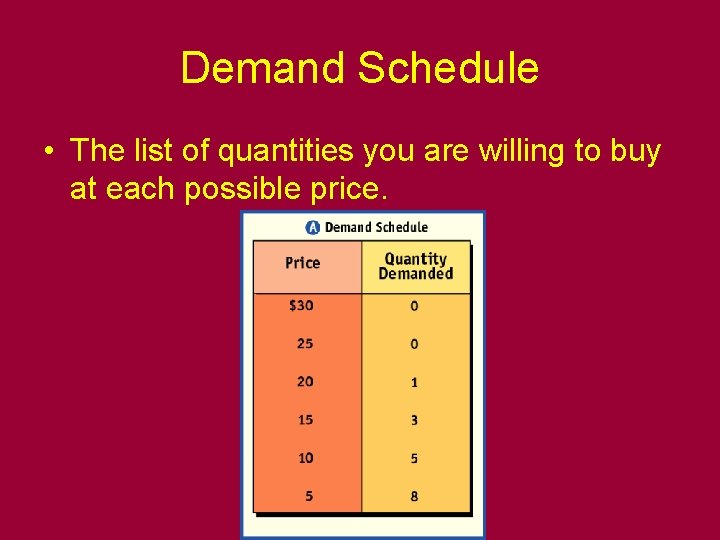
Demand Schedule • The list of quantities you are willing to buy at each possible price.
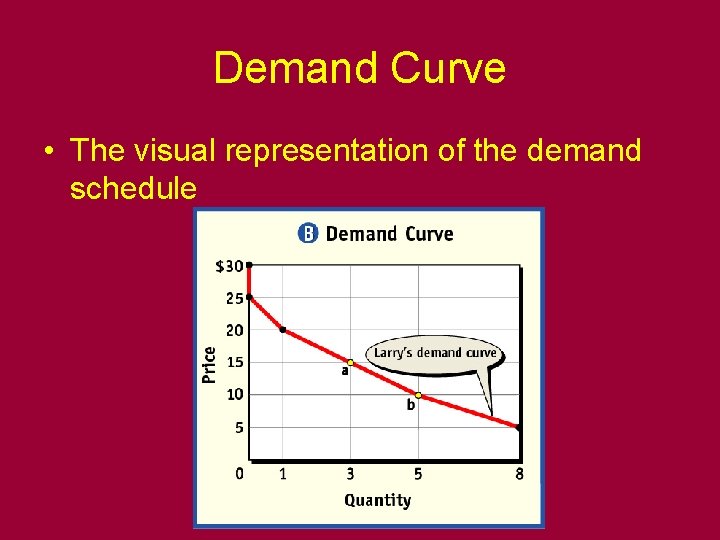
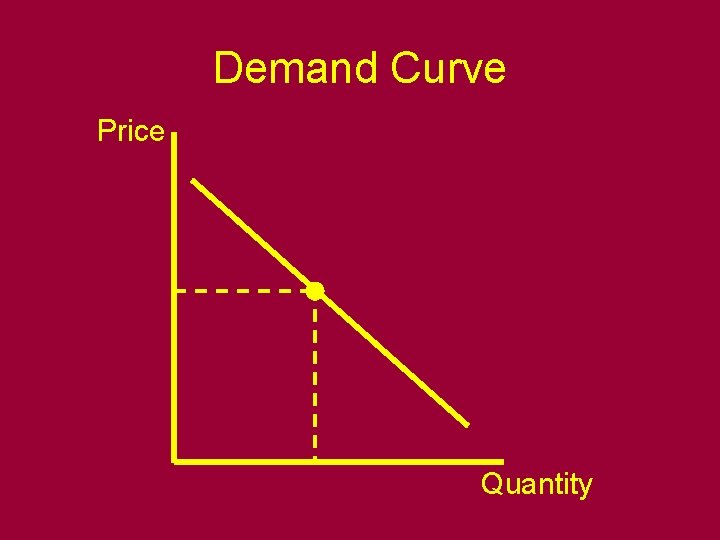
Demand Curve • The visual representation of the demand schedule

Demand Curve • Will always slope down • Why?
Law of Demand • When the price goes up, quantity demanded goes down. • When the price goes down, quantity demanded goes up.
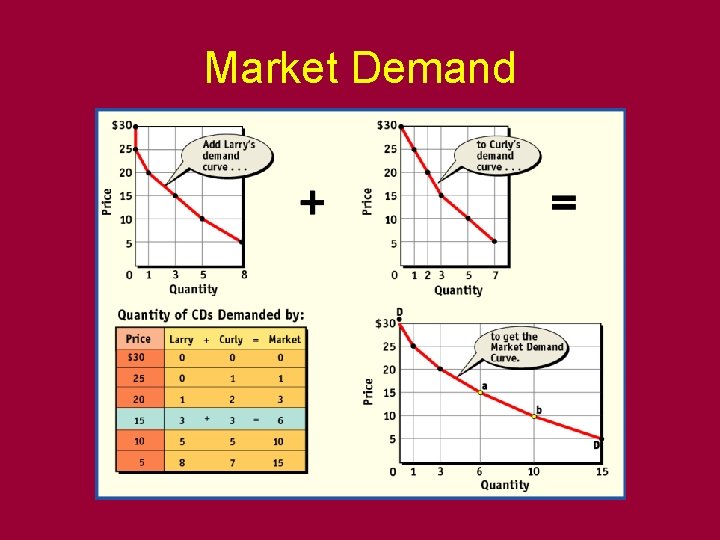
Market Demand
Demand Curve Price Quantity
Marginal Utility • The extra satisfaction from one more unit of product • If one is good, is two better? • Is three?
Diminishing Marginal Utility • At some point we don’t receive the same utility from another unit. • E. g. The 10 th unit doesn’t make us as happy as the 1 st one did. • We are willing to pay a little less for each extra unit.
Change in Quantity Demanded • A change in QUANTITY Demanded only occurs when the price changes. • If the price increases then Quantity Demanded decreases, and vice versa. • This is partly because of the Income effect – When prices decrease, we feel richer – Our money goes farther than before

Change in Quantity Demanded • This change is illustrated by a MOVEMENT along the line.
Changes in Demand (TIPSE) • • • Tastes Incomes Population Substitutes & Complements Expectations
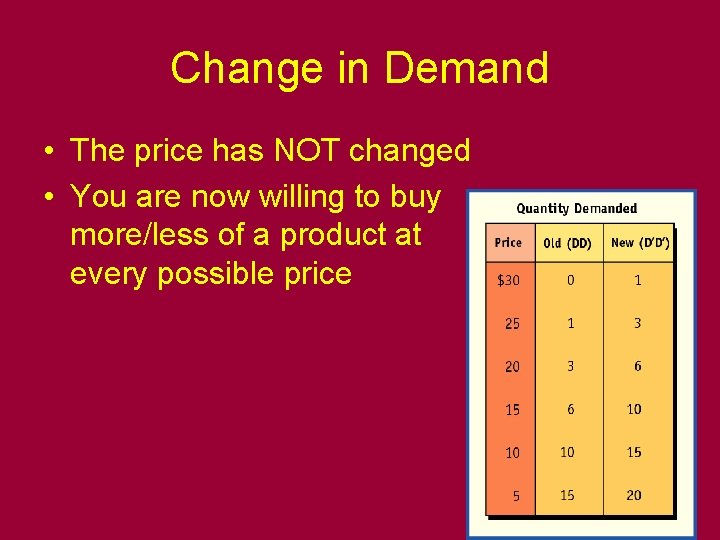
Change in Demand • The price has NOT changed • You are now willing to buy more/less of a product at every possible price
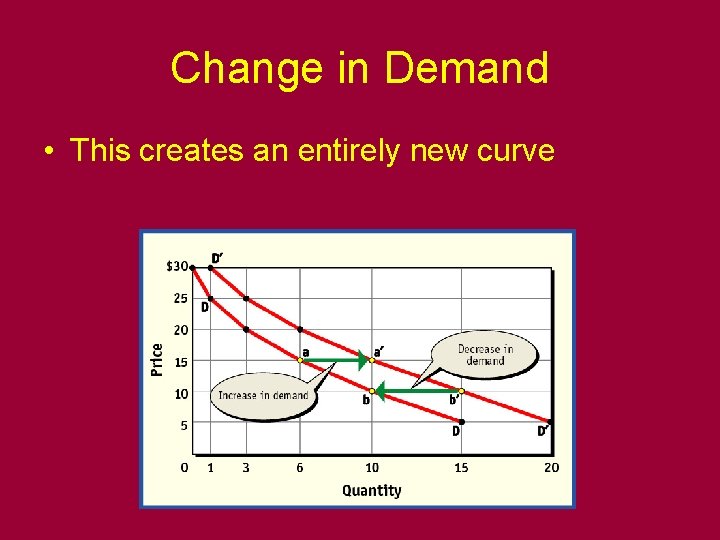
Change in Demand • This creates an entirely new curve
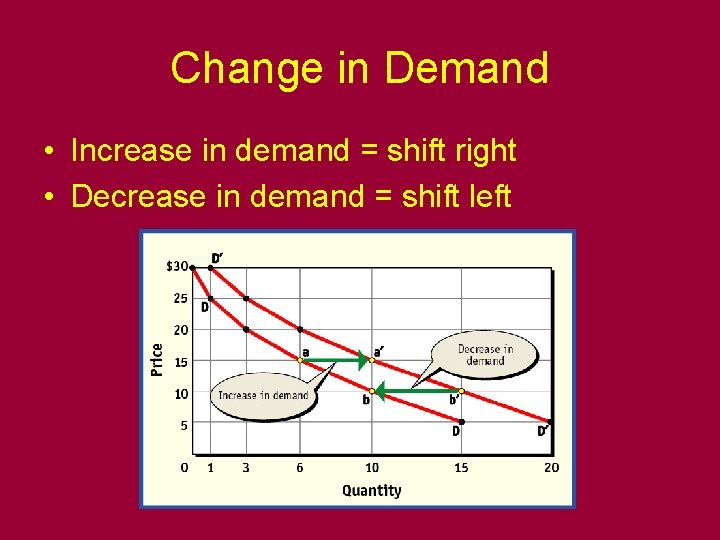
Change in Demand • Increase in demand = shift right • Decrease in demand = shift left
Why Demand Changes Consumer Income • Change in consumer income can cause a change in demand • When income goes up, you can afford to buy more
Change in Demand • Population (Number of Buyers): An increase in the number of buyers in a market area results in higher demand – A decrease results in lower demand – How do buyers increase and decrease?
Change in Demand • Tastes and Preferences of consumer: People’s preferences affect how much of a good they buy. – A change in favor of a good moves the curve to the right – A change NOT in favor of the good moves the curve to the left
Why Demand Changes Substitutes • Products used in place of other products. • the demand for a product tends to increase if the price of its substitute goes up
Why Demand Changes Complements • the use of one increases the use of the other • Personal computers and software two complementary goods.
Why Demand Changes Change in Expectations • “Expectations” refers to the way people think about the future. • If future shortages of a product are predicted, this might cause demand to increase,
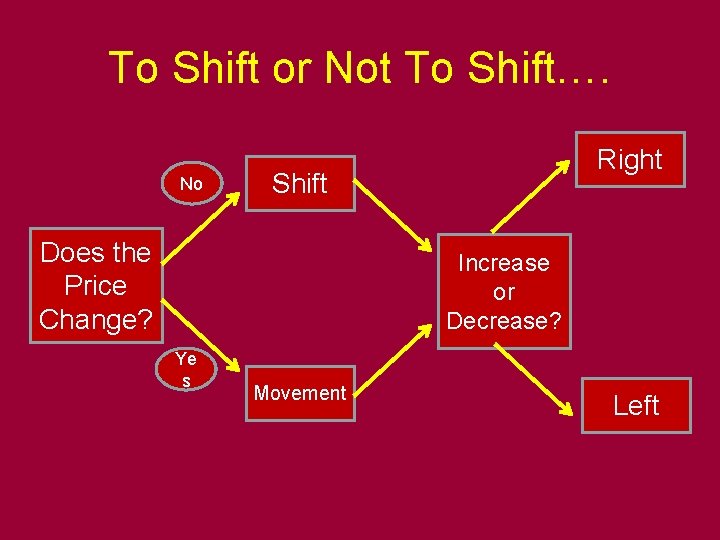
To Shift or Not To Shift…. No Right Shift Does the Price Change? Increase or Decrease? Ye s Movement Left
What do the letters stand for? (TIPSE) • • • T I P S E
Elasticity • An important cause-and-effect relationship in economics • Elasticity is a measure of HOW MUCH we respond to price
Demand Elasticity • We know how much price changes but how much does that change quantity demanded? • Elasticity tells us just how sensitive consumers are to price changes.
Elastic Demand • demand is elastic when a given change in price causes a larger change in quantity demanded. • E. g. fresh garden vegetables – prices are lower in the summer, consumers increase the amount they purchase.
Inelastic Demand • a change in price causes a smaller change in the quantity demanded • E. g. Table Salt – If the price of salt was cut in half, the quantity demanded would not increase by much – If the price doubled, we would expect consumers to demand about the same amount
Elastic or Inelastic • Change in Price > Change in Quantity = Inelastic • Change in Price < Change in Quantity = Elastic
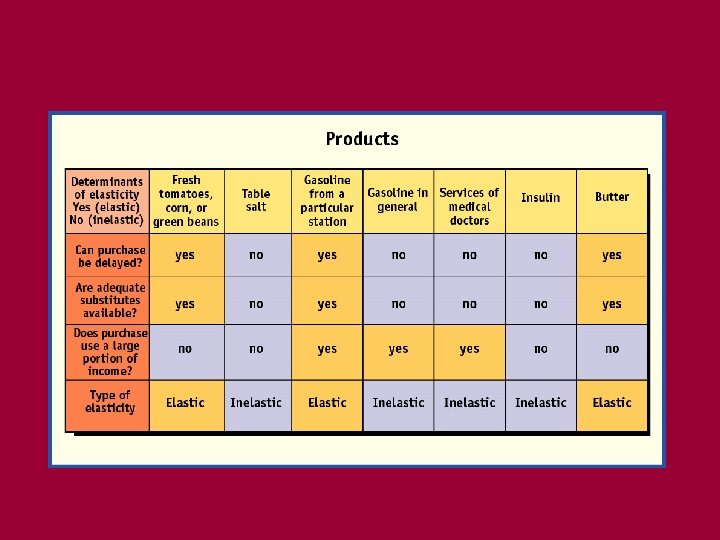
Determinants of Demand Elasticity • There are three questions we can ask to determine whether the demand is elastic or inelastic. – Can the purchase be delayed? – Are adequate substitutes available? – Does the purchase use a large portion of income?
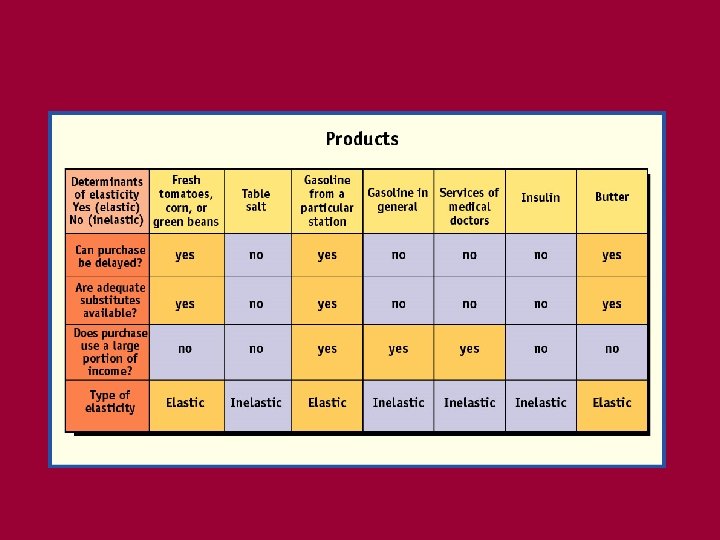
Can the Purchase Be Delayed? • Sometimes a consumer’s need urgent and cannot be put off • When this happens, demand tends to be inelastic • Being able to delay the purchase is a characteristic of elastic demand.
Are Adequate Substitutes Available? • If substitutes are available, consumers can switch back and forth to take advantage of the best price. • The fewer substitutes available the more inelastic the demand • More substitutes = more elastic
Does the Purchase Use a Large Portion of Income? • Whenever the answer is yes, then demand tends to be elastic. • Demand tends to be inelastic whenever the answer to this question is no
- Slides: 35