
CHAPTER 4 DEMAND CHAPTER 4 1 Microeconomics Economic


- Slides: 34
CHAPTER 4 DEMAND
CHAPTER 4. 1 §Microeconomics §Economic theory that deals with behavior and decision making by individuals and companies §Demand §Combination of desire, ability, and willingness to buy a product
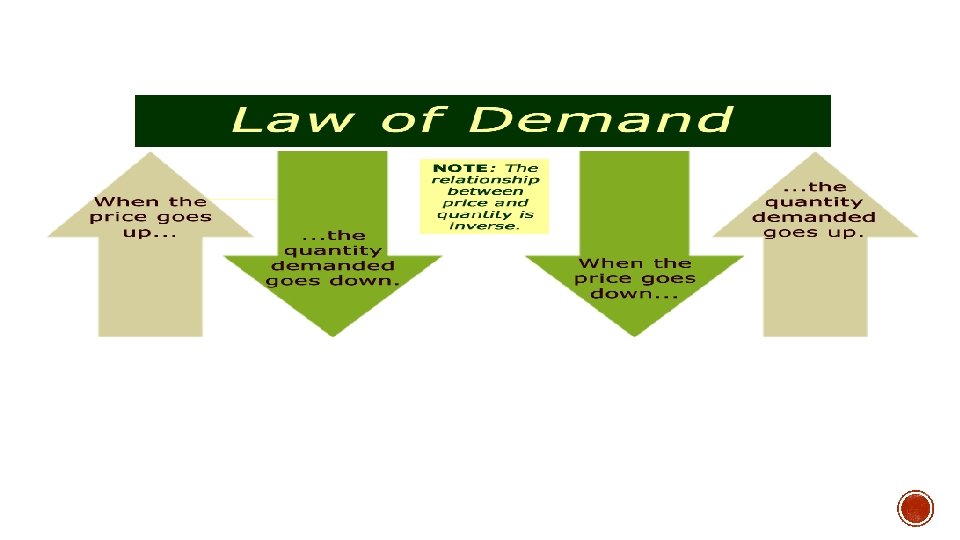
§Demand depends on two variables: 1. The price of a product 2. Quantity available at a given point § In general, when the price of a product goes down, people are willing to buy, or demand, more of it. § When the price goes up, people are willing to buy less. §You create demand for a product when you wish to buy it, and have the money to pay for it
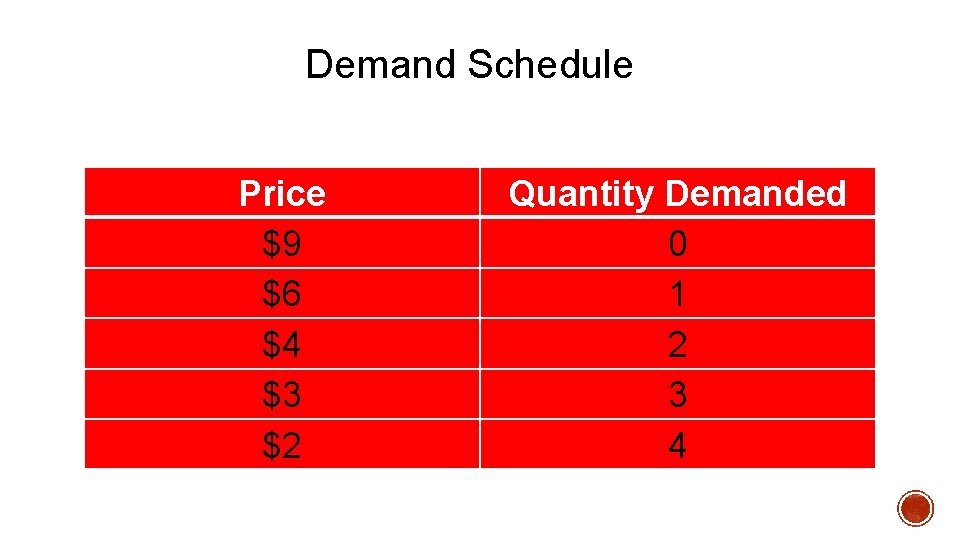
§Economists §Analyze demand by listing prices, and quantities in a demand schedule §Demand schedule §Lists the various quantities demanded of a product at all prices that might prevail
Demand Schedule Price $9 $6 $4 $3 $2 Quantity Demanded 0 1 2 3 4
DEMAND CURVE §Shows the quantity of a product demanded at each price that might prevail in the market §When graphed it forms a demand curve with downward slope
• The Law of Demand states that the quantity demanded of a product varies inversely with its price • The Law of Demand is called a “law” because it has proven true after repeated studies and tests, and it is consistent with common sense and observation
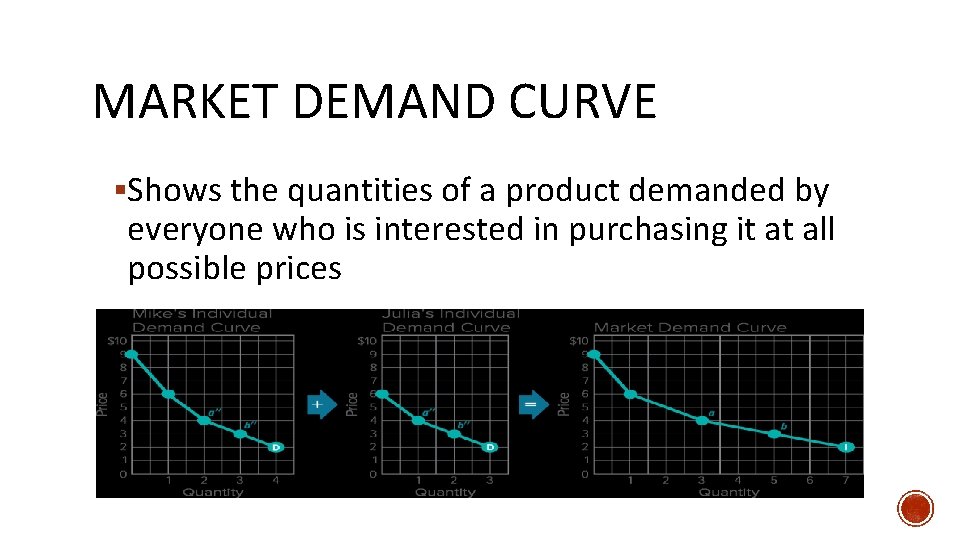
MARKET DEMAND CURVE §Shows the quantities of a product demanded by everyone who is interested in purchasing it at all possible prices
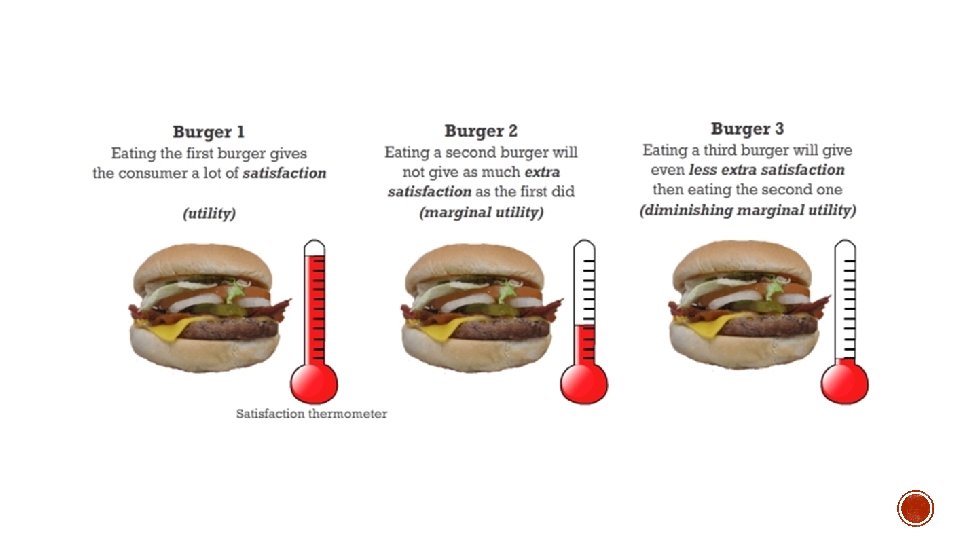
§Marginal utility § Extra satisfaction or additional usefulness obtained by acquiring multiple units of a product. • Diminishing marginal utility § As we use more and more of a product, the extra satisfaction we get from using additional quantities begins to decline § People are not usually willing to pay as much for the second, third, or fourth unit as they did for the first unit
4. 2 Factors Affecting Demand
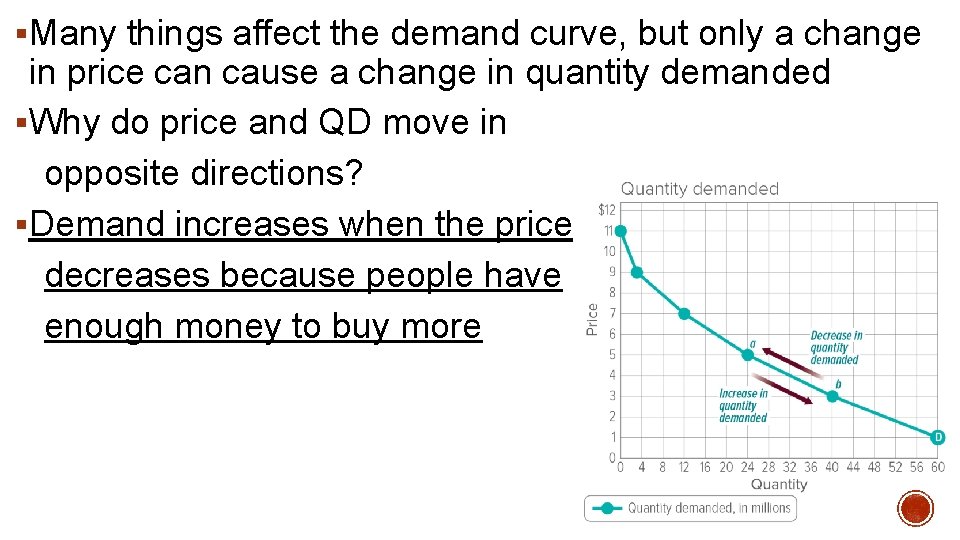
§Many things affect the demand curve, but only a change in price can cause a change in quantity demanded §Why do price and QD move in opposite directions? §Demand increases when the price decreases because people have enough money to buy more
§Income effect § Change in quantity demanded because a change in price made the consumer feel richer or poorer §Substitution effect § Consumers substitute an alternative less expensive product for one that has more expensive
CHANGE IN DEMAND §Demand can change because of changes in various factors: 1. Change in income §As incomes rise, consumers are able to buy more products §A loss in income would cause them to buy less of a product
2. Consumer tastes § Consumers often change their minds about products to buy § Advertising, fashion trends, seasons, peer pressure, etc. 3. Substitutes § Products used in place of other products. § Example: a rise in the price of butter will cause an increase in the demand margarine 4. Complements § Other related goods
Change in Expectations §“Expectations” refers to the way people think about the future §If future shortages of a product are predicted, this might cause demand to increase 5.
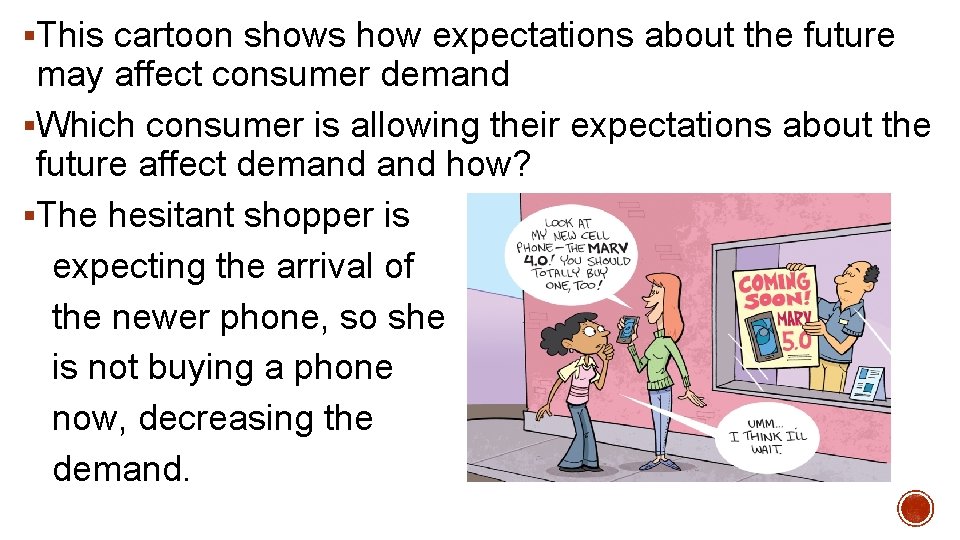
§This cartoon shows how expectations about the future may affect consumer demand §Which consumer is allowing their expectations about the future affect demand how? §The hesitant shopper is expecting the arrival of the newer phone, so she is not buying a phone now, decreasing the demand.
6. Number of consumers § Increase in consumers would shift the demand curve to the right § Decrease in consumers would shift the demand curve to the left § What would happen to the demand curve for toys if the birthrate declined? § The demand curve would shift to the left because there would be a decline in demand for toys at each and every price.
4. 3 Elasticity of Demand
ELASTICITY § An important cause-and-effect relationship in economics § Measure of responsiveness that tells how a dependent variable (quantity), responds to a change in an independent variable (price) § Measures how sensitive consumers are to price changes § Price is almost always the independent variable
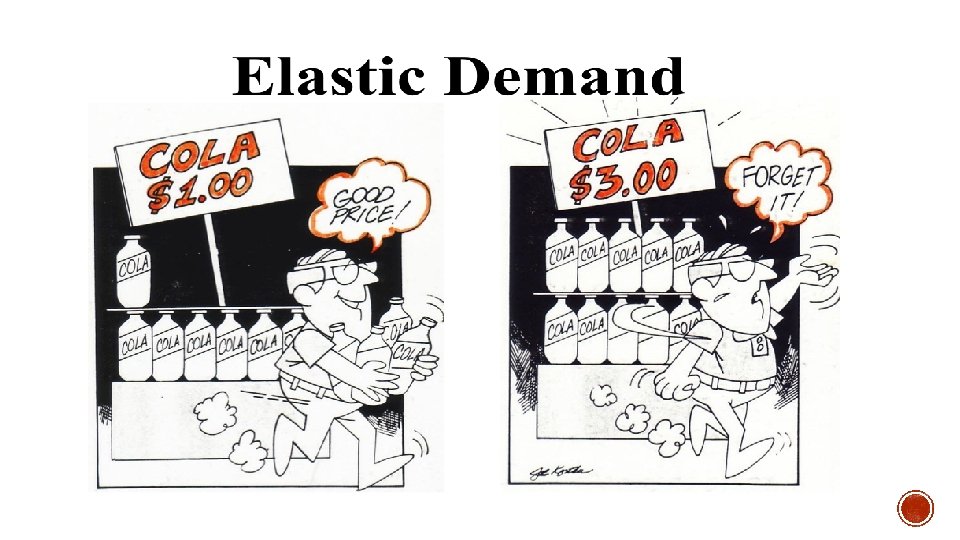
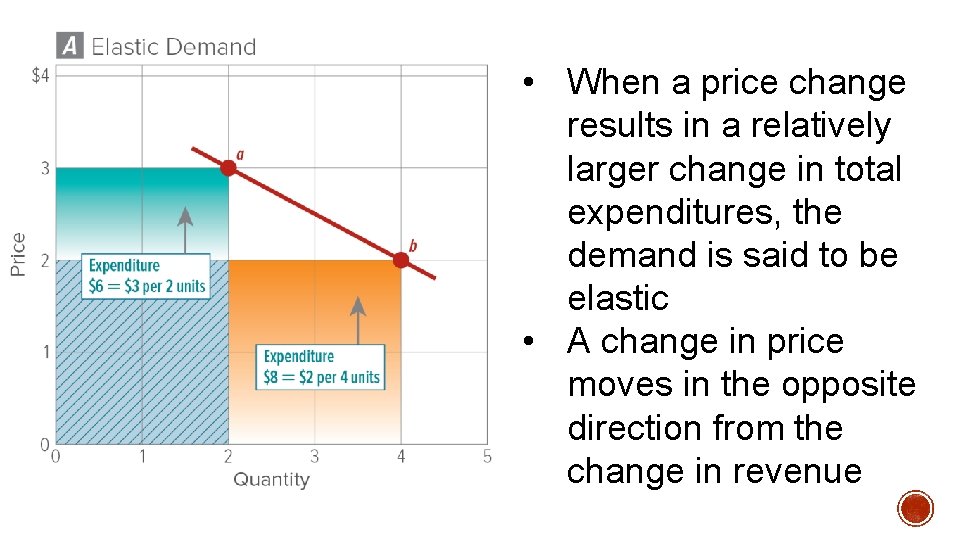
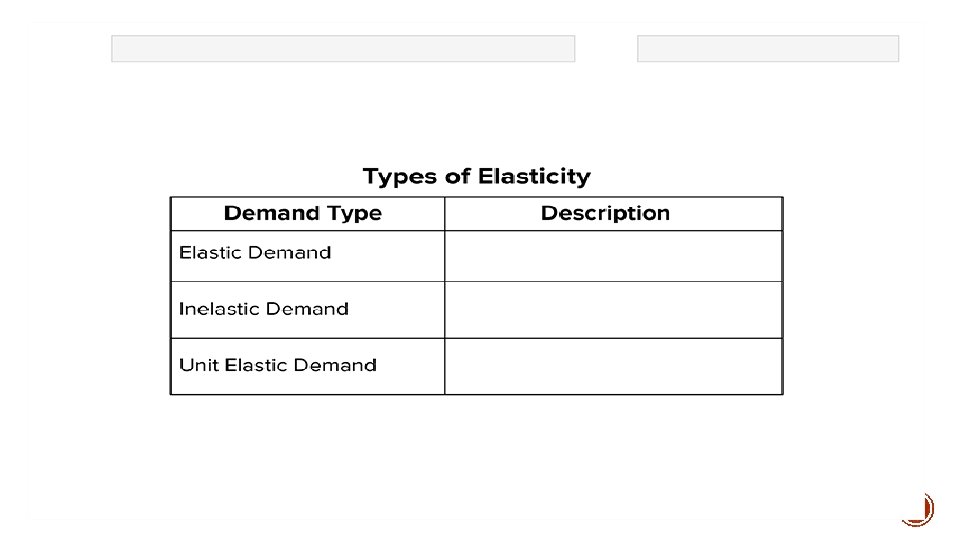
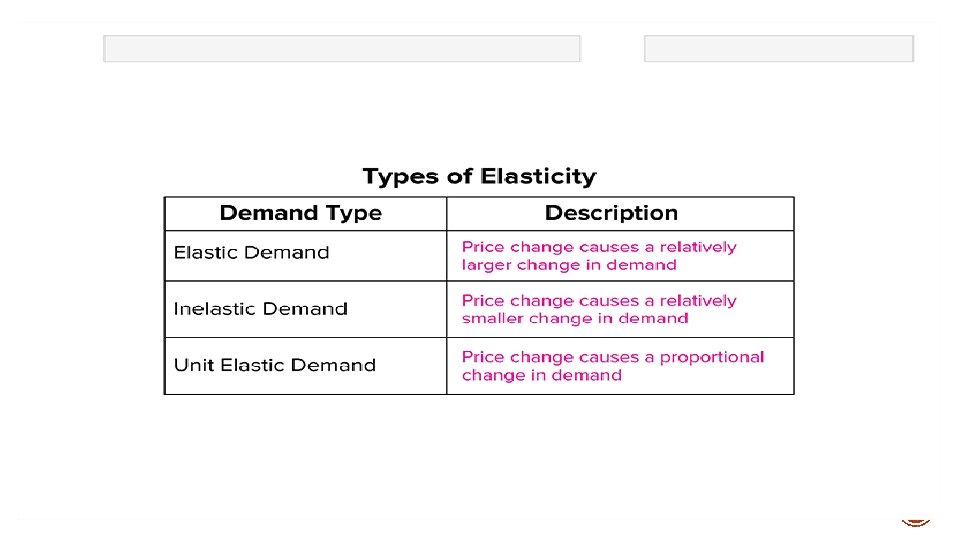
§Demand elasticity § Extent to which a change in price causes a change in quantity demanded (QD) §Elastic § When a change in price causes a relatively larger change in QD § the need for a product is NOT urgent § the doubling of price to increase revenue would result in a dramatic decline in revenue
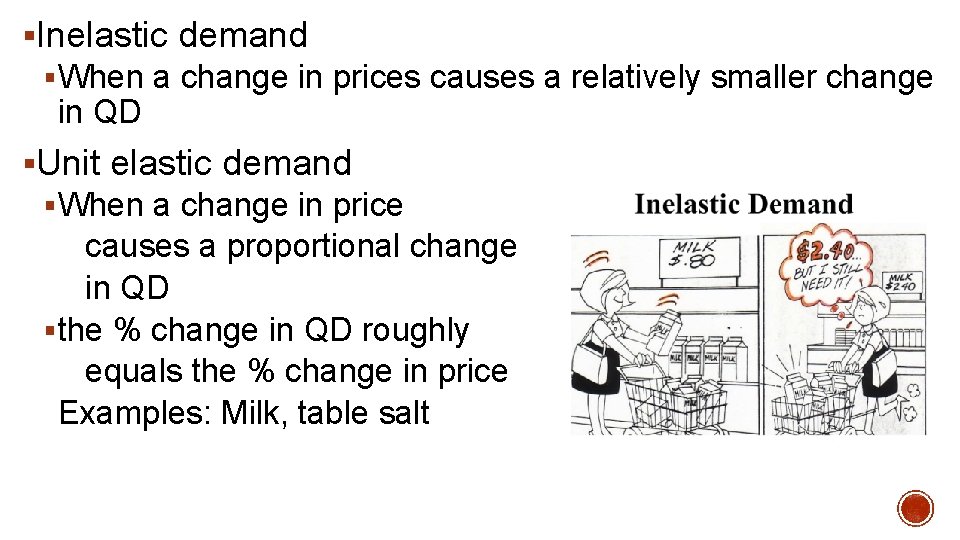
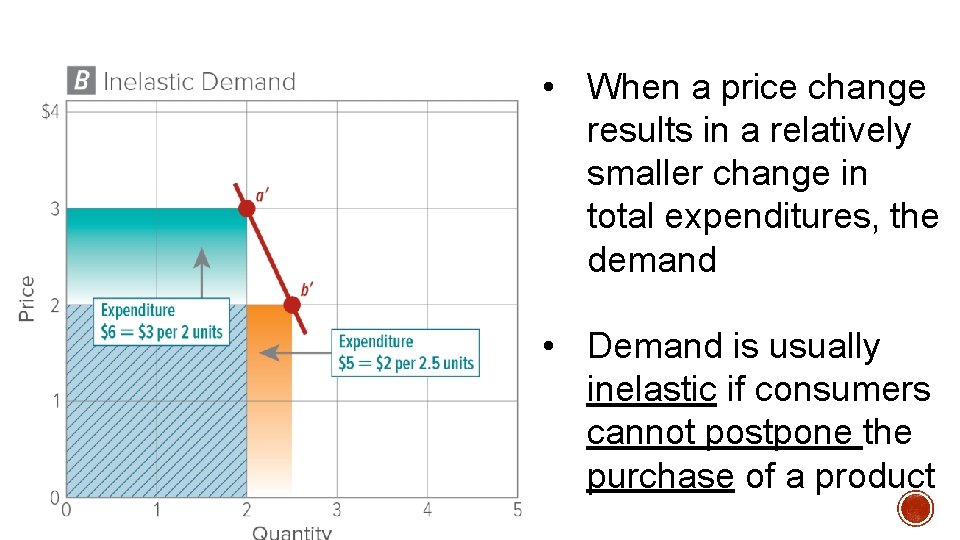
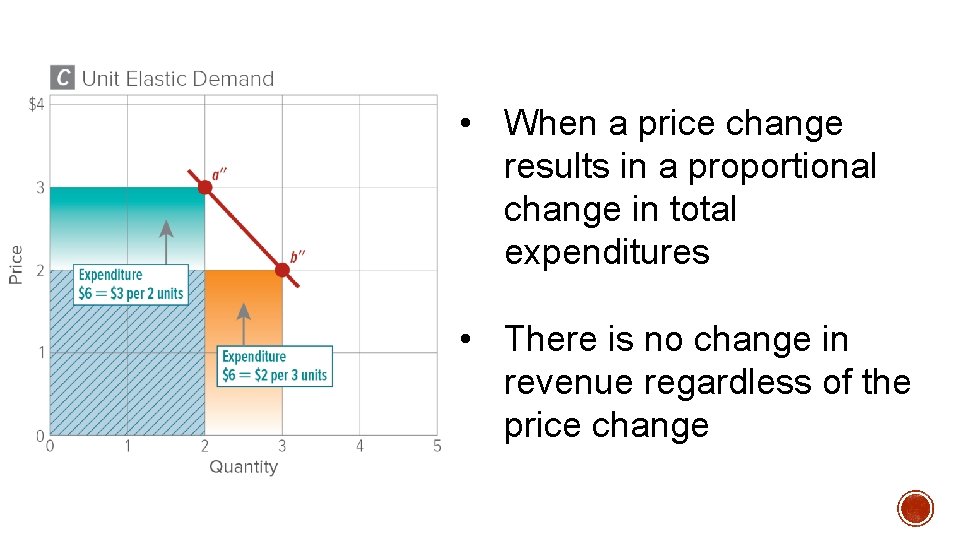
§Inelastic demand § When a change in prices causes a relatively smaller change in QD §Unit elastic demand § When a change in price causes a proportional change in QD § the % change in QD roughly equals the % change in price Examples: Milk, table salt
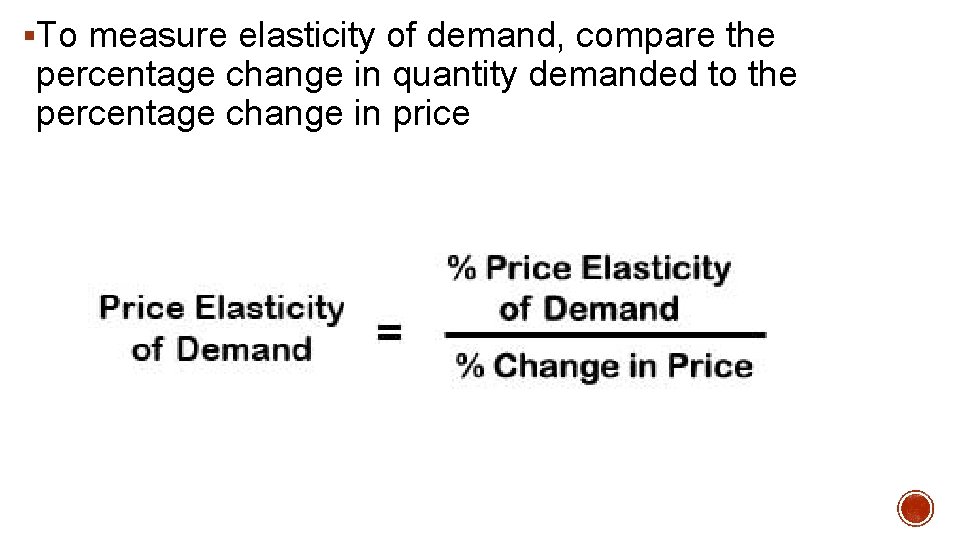
§To measure elasticity of demand, compare the percentage change in quantity demanded to the percentage change in price
THREE FACTORS DETERMINE A PRODUCT’S DEMAND ELASTICITY 1. Can purchase be delayed? (inelastic – QD is not sensitive to P 2. Is there adequate substitutes? (many: elastic); or (few: inelastic) 3. The amount of income required to make purchase. (Large: elastic) (Small: inelastic)
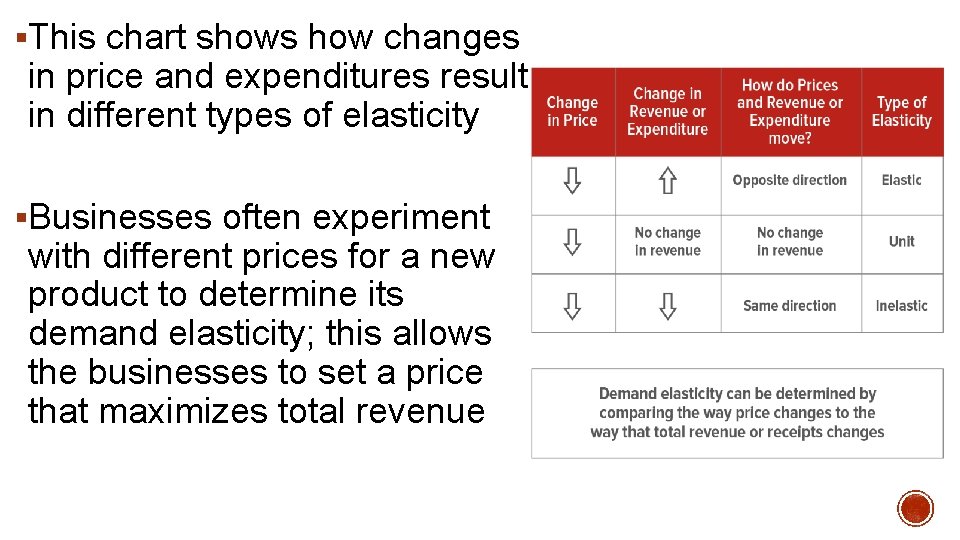
• When a price change results in a relatively larger change in total expenditures, the demand is said to be elastic • A change in price moves in the opposite direction from the change in revenue
• When a price change results in a relatively smaller change in total expenditures, the demand • Demand is usually inelastic if consumers cannot postpone the purchase of a product
• When a price change results in a proportional change in total expenditures • There is no change in revenue regardless of the price change
§This chart shows how changes in price and expenditures result in different types of elasticity §Businesses often experiment with different prices for a new product to determine its demand elasticity; this allows the businesses to set a price that maximizes total revenue
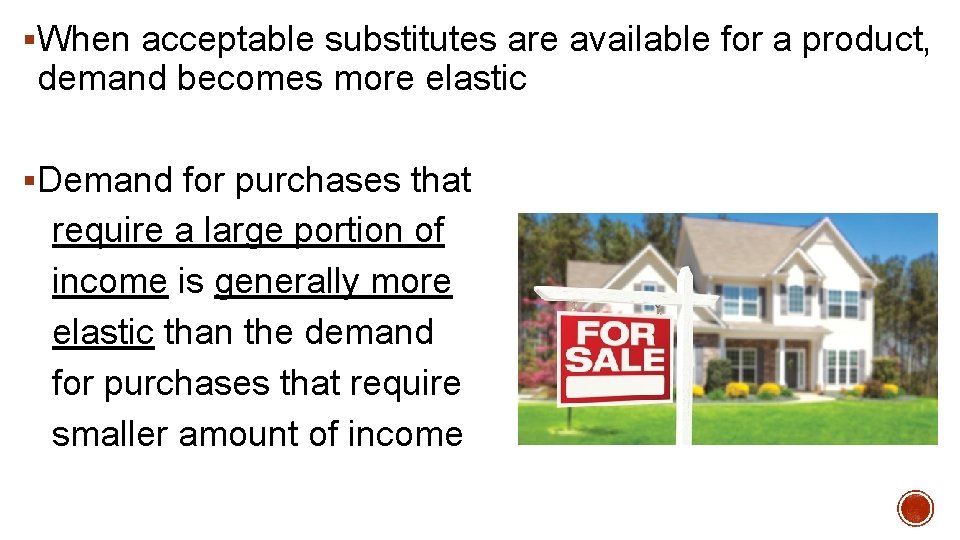
§When acceptable substitutes are available for a product, demand becomes more elastic §Demand for purchases that require a large portion of income is generally more elastic than the demand for purchases that require smaller amount of income