
Chapter 4 Consumer Behavior Consumer behavior Analyzing consumer
Chapter 4 Consumer Behavior
Consumer behavior? ?
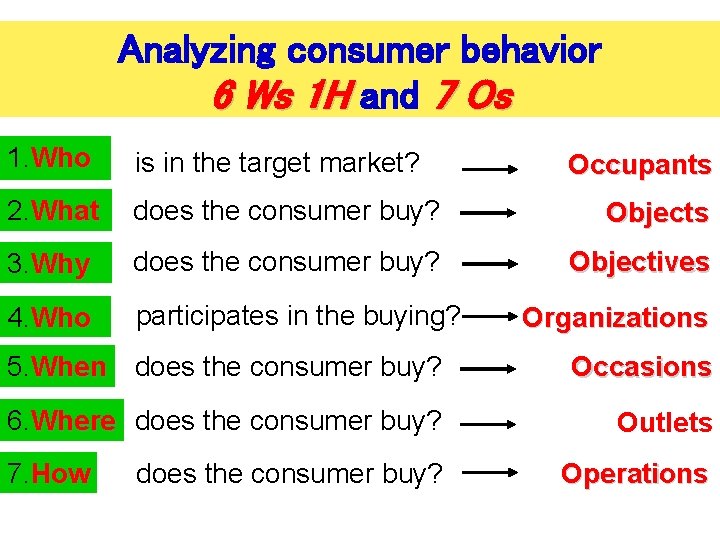
Analyzing consumer behavior 6 Ws 1 H and 7 Os 1. Who is in the target market? 2. What does the consumer buy? Objects 3. Why does the consumer buy? Objectives 4. Who participates in the buying? Occupants Organizations 5. When does the consumer buy? Occasions 6. Where does the consumer buy? Outlets 7. How does the consumer buy? Operations
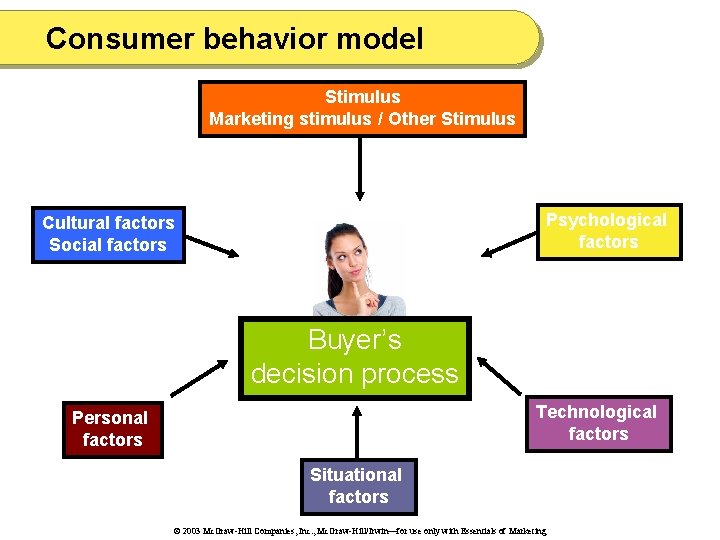
Consumer behavior model Stimulus Marketing stimulus / Other Stimulus Psychological factors Cultural factors Social factors Buyer’s decision process Technological factors Personal factors Situational factors © 2003 Mc. Graw-Hill Companies, Inc. , Mc. Graw-Hill/Irwin—for use only with Essentials of Marketing
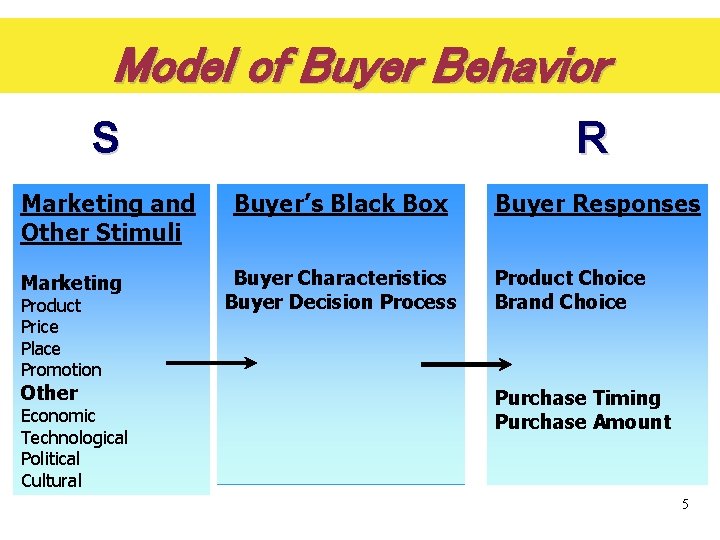
Model of Buyer Behavior S Marketing and Other Stimuli Marketing Product Price Place Promotion Other Economic Technological Political Cultural R Buyer’s Black Box Buyer Characteristics Buyer Decision Process Buyer Responses Product Choice Brand Choice Purchase Timing Purchase Amount 5
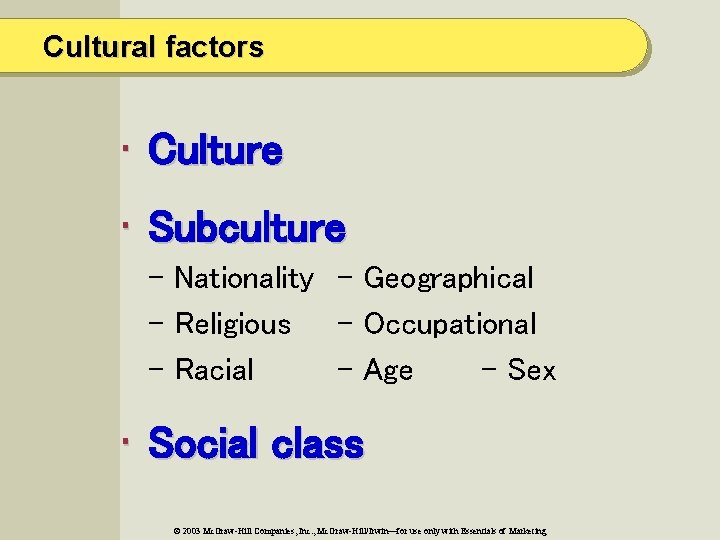
Cultural factors • Culture • Subculture - Nationality - Geographical - Religious - Occupational - Racial - Age - Sex • Social class © 2003 Mc. Graw-Hill Companies, Inc. , Mc. Graw-Hill/Irwin—for use only with Essentials of Marketing
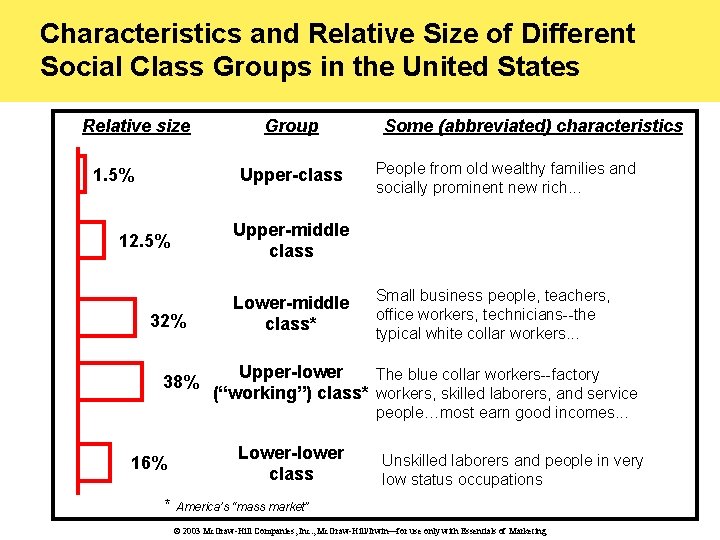
Characteristics and Relative Size of Different Social Class Groups in the United States Relative size 1. 5% Group Upper-class Some (abbreviated) characteristics People from old wealthy families and socially prominent new rich. . . Upper-middle class 12. 5% 32% 38% Lower-middle class* Small business people, teachers, office workers, technicians--the typical white collar workers. . . Upper-lower The blue collar workers--factory (“working”) class* workers, skilled laborers, and service people…most earn good incomes. . . 16% Lower-lower class Unskilled laborers and people in very low status occupations * America’s “mass market” © 2003 Mc. Graw-Hill Companies, Inc. , Mc. Graw-Hill/Irwin—for use only with Essentials of Marketing
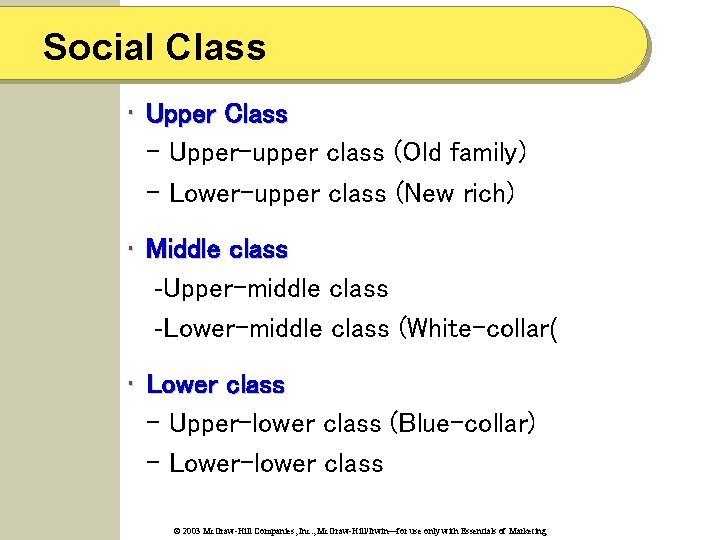
Social Class • Upper Class - Upper-upper class (Old family) - Lower-upper class (New rich) • Middle class -Upper-middle class -Lower-middle class (White-collar( • Lower class - Upper-lower class (Blue-collar) - Lower-lower class © 2003 Mc. Graw-Hill Companies, Inc. , Mc. Graw-Hill/Irwin—for use only with Essentials of Marketing
Social (intra-personal) Influences on Consumers • Reference groups • Family • Roles and status © 2003 Mc. Graw-Hill Companies, Inc. , Mc. Graw-Hill/Irwin—for use only with Essentials of Marketing
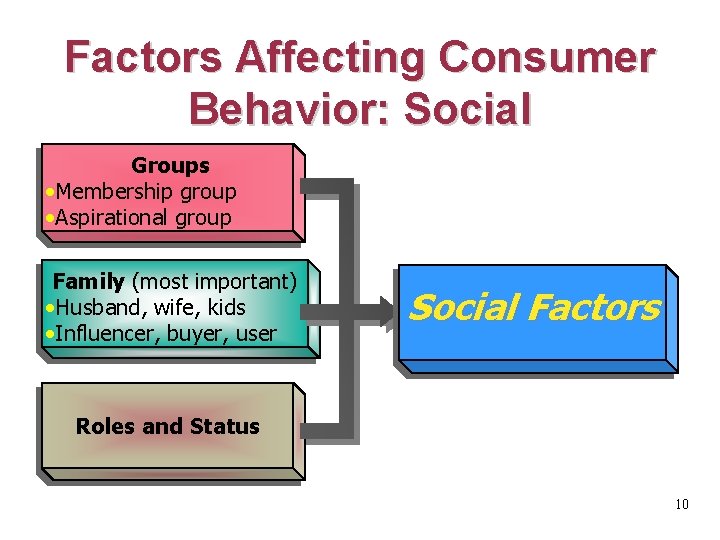
Factors Affecting Consumer Behavior: Social Groups • Membership group • Aspirational group Family (most important) • Husband, wife, kids • Influencer, buyer, user S o c i a l Fa c t o r s Roles and Status 10
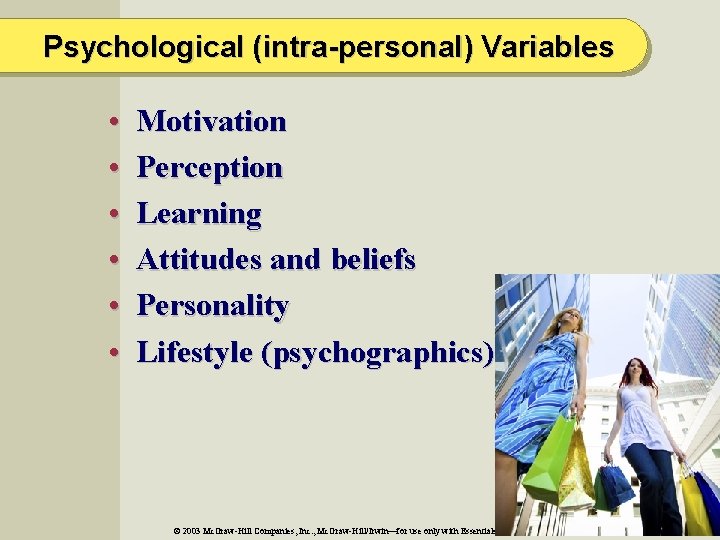
Psychological (intra-personal) Variables • • • Motivation Perception Learning Attitudes and beliefs Personality Lifestyle (psychographics) © 2003 Mc. Graw-Hill Companies, Inc. , Mc. Graw-Hill/Irwin—for use only with Essentials of Marketing
Possible Needs Motivating a Person to Some Action © 2003 Mc. Graw-Hill Companies, Inc. , Mc. Graw-Hill/Irwin—for use only with Essentials of Marketing
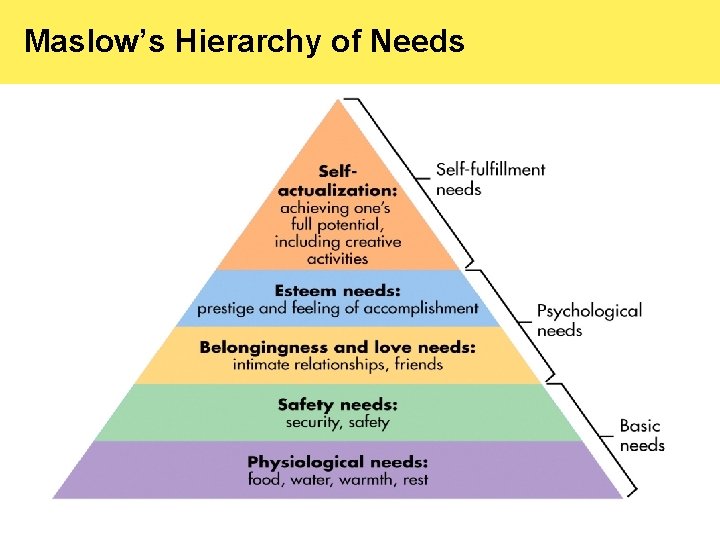
Maslow’s Hierarchy of Needs
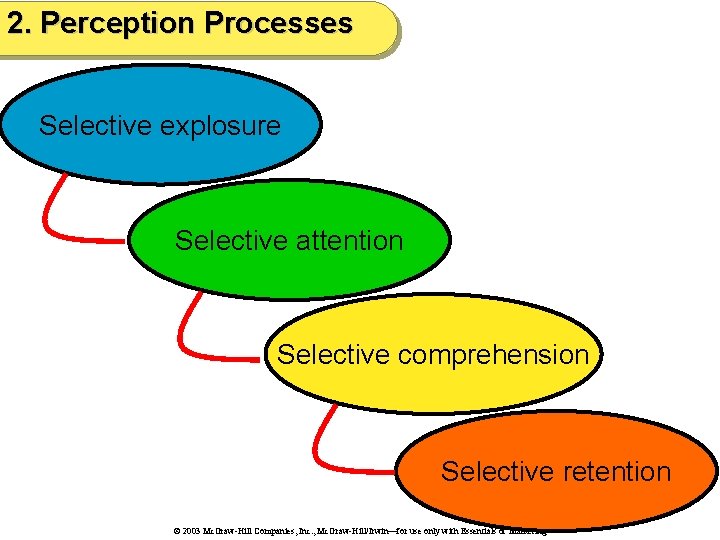
2. Perception Processes Selective explosure Selective attention Selective comprehension Selective retention © 2003 Mc. Graw-Hill Companies, Inc. , Mc. Graw-Hill/Irwin—for use only with Essentials of Marketing
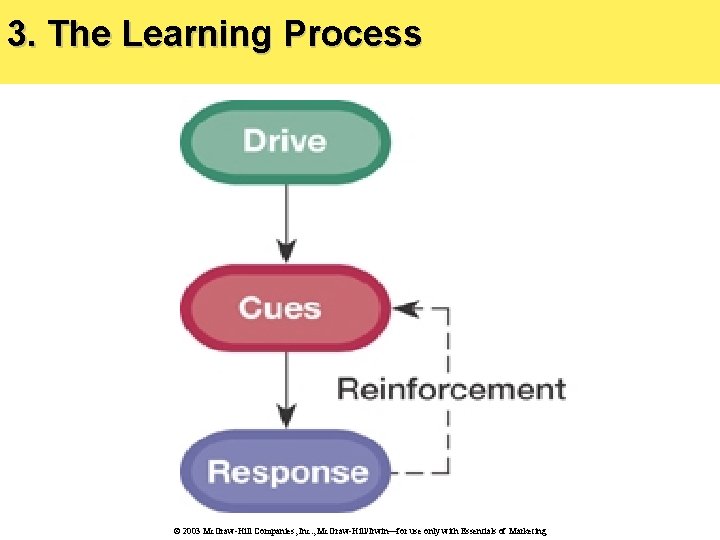
3. The Learning Process © 2003 Mc. Graw-Hill Companies, Inc. , Mc. Graw-Hill/Irwin—for use only with Essentials of Marketing
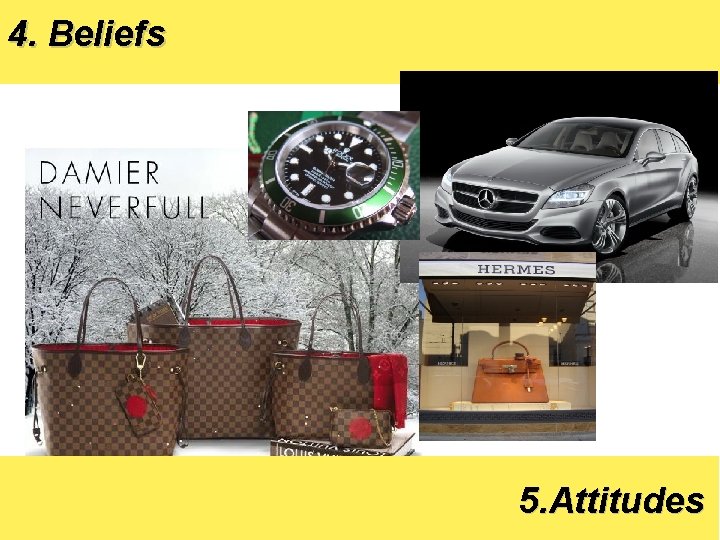
4. Beliefs 5. Attitudes © 2003 Mc. Graw-Hill Companies, Inc. , Mc. Graw-Hill/Irwin—for use only with Essentials of Marketing
6. Personality Brand personality 1. Sincerity 2. Excitement 3. Competence 4. Sophistication 5. Ruggedness Freud’s theory of motivation Id Ego Superego © 2003 Mc. Graw-Hill Companies, Inc. , Mc. Graw-Hill/Irwin—for use only with Essentials of Marketing
Personal factors 1. 2. 3. 4. 5. 6. Age Family lifecycle (FLC) Occupation Income Education Value and lifestyle © 2003 Mc. Graw-Hill Companies, Inc. , Mc. Graw-Hill/Irwin—for use only with Essentials of Marketing
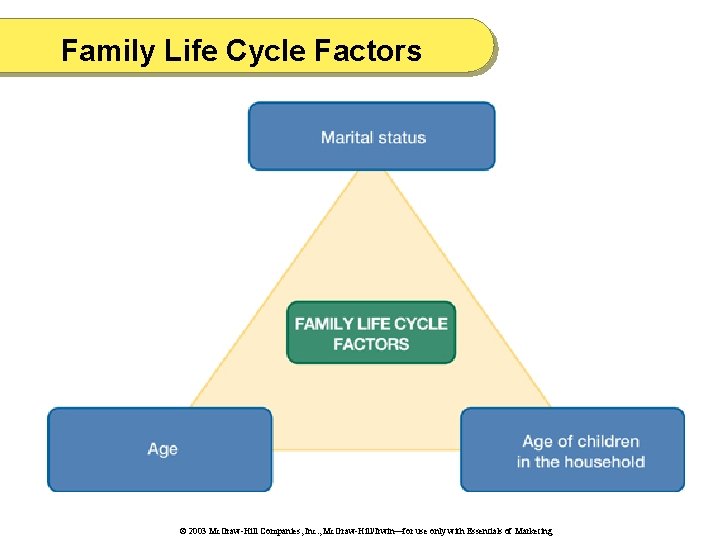
Family Life Cycle Factors © 2003 Mc. Graw-Hill Companies, Inc. , Mc. Graw-Hill/Irwin—for use only with Essentials of Marketing
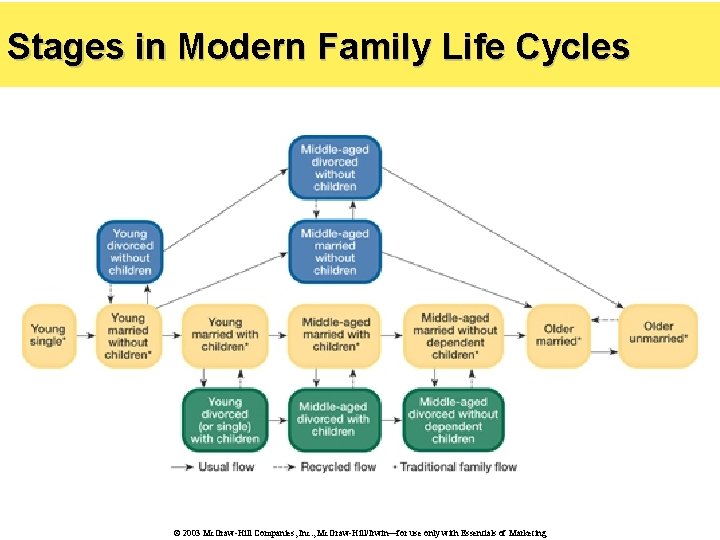
Stages in Modern Family Life Cycles © 2003 Mc. Graw-Hill Companies, Inc. , Mc. Graw-Hill/Irwin—for use only with Essentials of Marketing
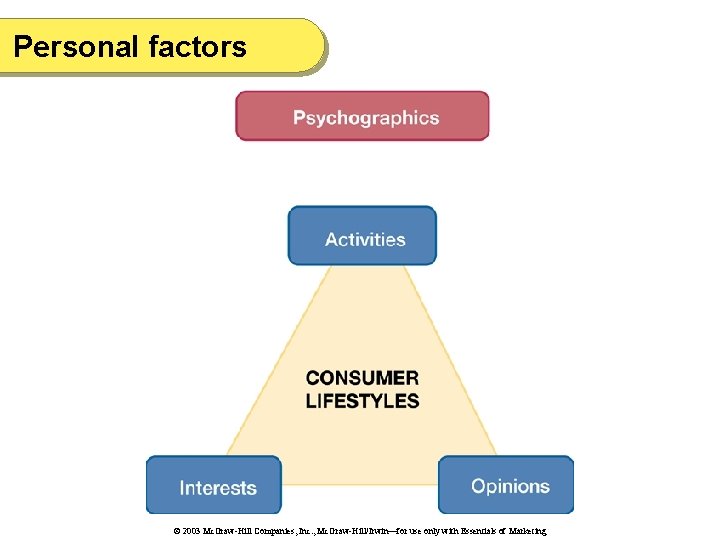
Personal factors © 2003 Mc. Graw-Hill Companies, Inc. , Mc. Graw-Hill/Irwin—for use only with Essentials of Marketing
Lifestyle Dimensions (and some related demographic dimensions) © 2003 Mc. Graw-Hill Companies, Inc. , Mc. Graw-Hill/Irwin—for use only with Essentials of Marketing
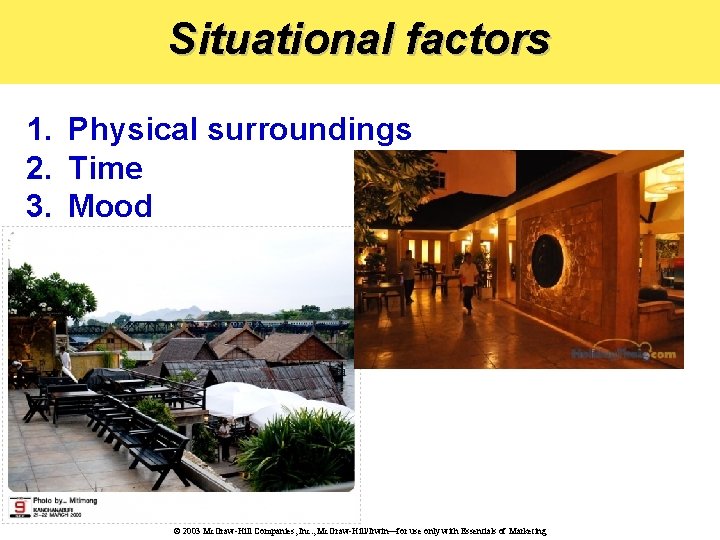
Situational factors 1. Physical surroundings 2. Time 3. Mood © 2003 Mc. Graw-Hill Companies, Inc. , Mc. Graw-Hill/Irwin—for use only with Essentials of Marketing
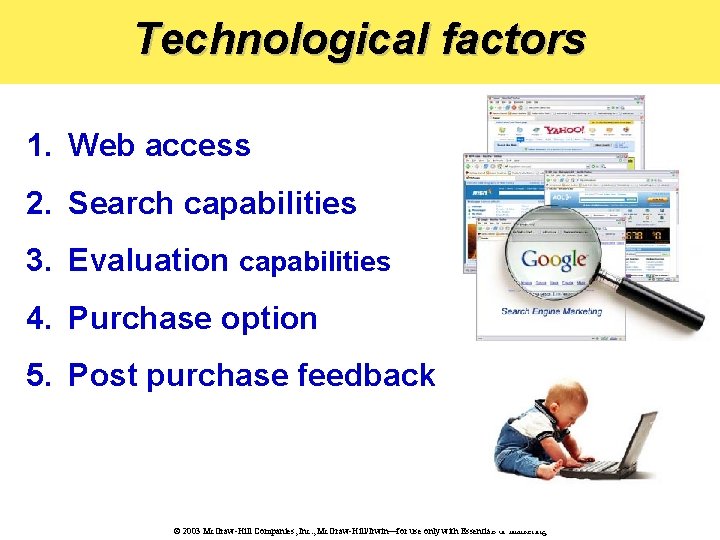
Technological factors 1. Web access 2. Search capabilities 3. Evaluation capabilities 4. Purchase option 5. Post purchase feedback © 2003 Mc. Graw-Hill Companies, Inc. , Mc. Graw-Hill/Irwin—for use only with Essentials of Marketing
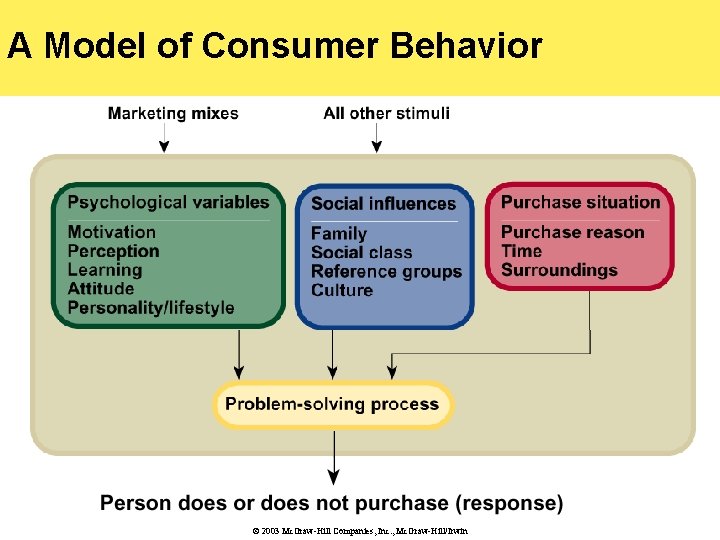
A Model of Consumer Behavior © 2003 Mc. Graw-Hill Companies, Inc. , Mc. Graw-Hill/Irwin
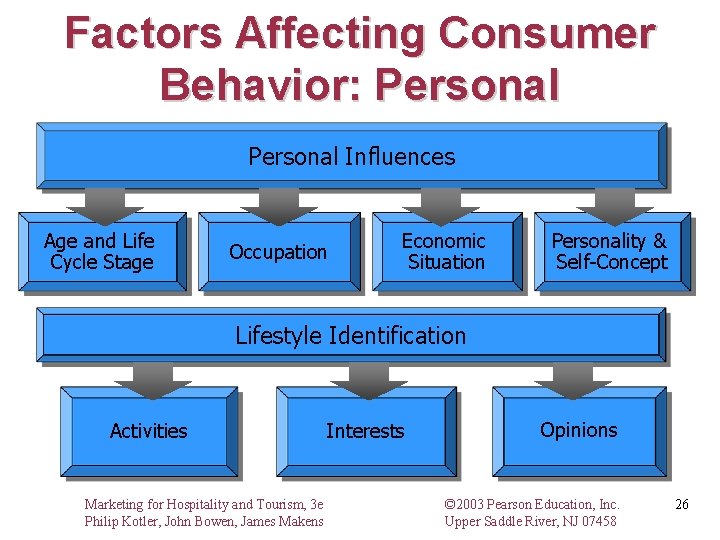
Factors Affecting Consumer Behavior: Personal Influences Age and Life Cycle Stage Occupation Economic Situation Personality & Self-Concept Lifestyle Identification Activities Marketing for Hospitality and Tourism, 3 e Philip Kotler, John Bowen, James Makens Interests Opinions © 2003 Pearson Education, Inc. Upper Saddle River, NJ 07458 26
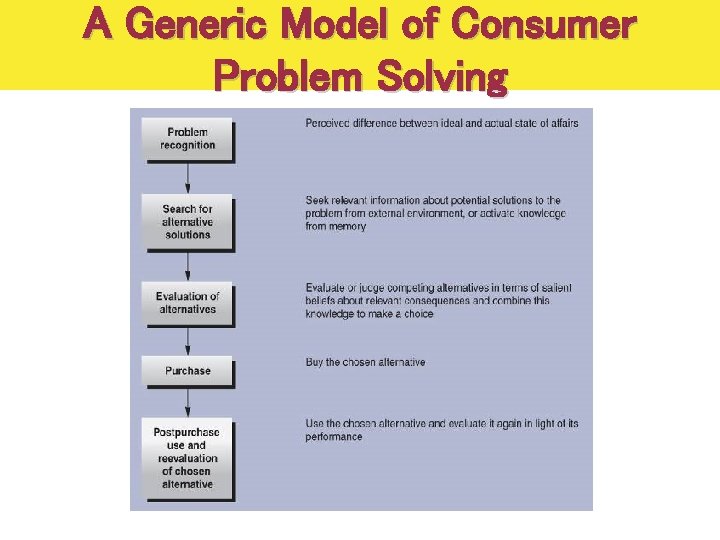
A Generic Model of Consumer Problem Solving
Decision Making as Problem Solving (cont. ) • Five basic stages or sub processes – Problem recognition – Search for alternative solutions – Evaluation of alternatives – Purchase – Postpurchase use and reevaluation of chosen alternative • Generic model often provides an imperfect account of actual problem-solving processes
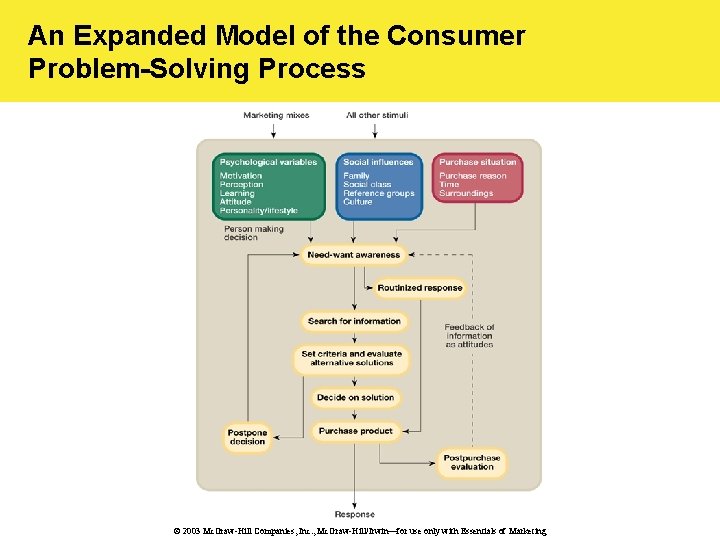
An Expanded Model of the Consumer Problem-Solving Process © 2003 Mc. Graw-Hill Companies, Inc. , Mc. Graw-Hill/Irwin—for use only with Essentials of Marketing
Relation of Problem-Solving Process, Adoption Process, and Learning (given a problem) • Problem-solving steps – Becoming aware of or interested in the problem – Gathering information about possible solutions – Evaluating alternative solutions, perhaps trying some out – Deciding on the appropriate solution – Evaluating the decision • Adoption process steps – Awareness and interest – Interest and evaluation – Evaluation, maybe trial – Decision – Confirmation • Learning steps – Drive – Cues – Response – Reinforcement © 2003 Mc. Graw-Hill Companies, Inc. , Mc. Graw-Hill/Irwin—for use only with Essentials of Marketing
- Slides: 30