
Chapter 4 Climate and Climate Change Section 1
- Slides: 15
Chapter 4: Climate and Climate Change Section 1: What Causes Climate
n Weather: condition of the atmosphere at a particular place and time (short term) n Climate: average conditions of temperature, precipitation, winds and clouds in an area (long term)
What Causes Climate? n Temperature (cold or warm climate) n Precipitation (dry or humid climate)
Factors Affecting Temperature n n Latitude Altitude Distance From Large Bodies of Water Ocean Currents
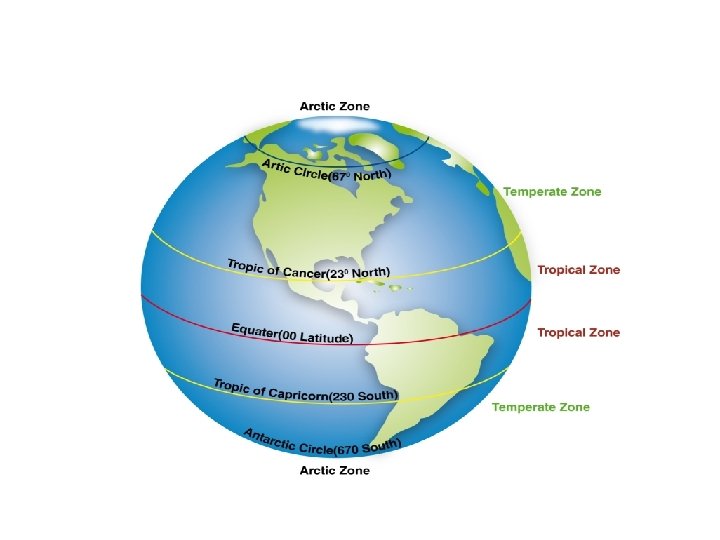
Latitude n n Latitude: The distance from the equator measured in degrees Temperature Zones § Tropical Zones: warm climates § Temperate Zones: ranging temperatures § Polar Zones: cold climates
Altitude n n Altitude: elevation above sea level High land areas have cooler climates Higher altitudes = cooler temperatures Lower altitudes = warmer temperatures
Distance From Large Bodies of Water n n Marine Climates: warmer winters and cooler summers Continental Climates: colder winters and warmer summers
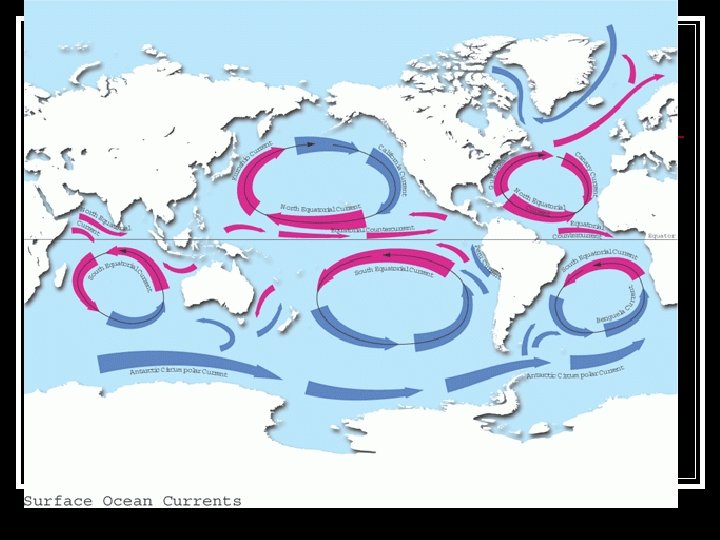
Ocean Currents Oceans and lakes can affect temperatures/climate n Ocean Currents- streams of water within the ocean that move in regular patterns n 3 examples: Gulf Stream, North Atlantic Drift, California Current n
Factors Affecting Precipitation n n Prevailing Winds Mountain Ranges
Prevailing Winds n n n movement of air masses caused by directional winds in a region The amount of water vapor in an air mass influences how much rain or snow will fall The amount of water vapor in the prevailing wind depends on where the wind comes from
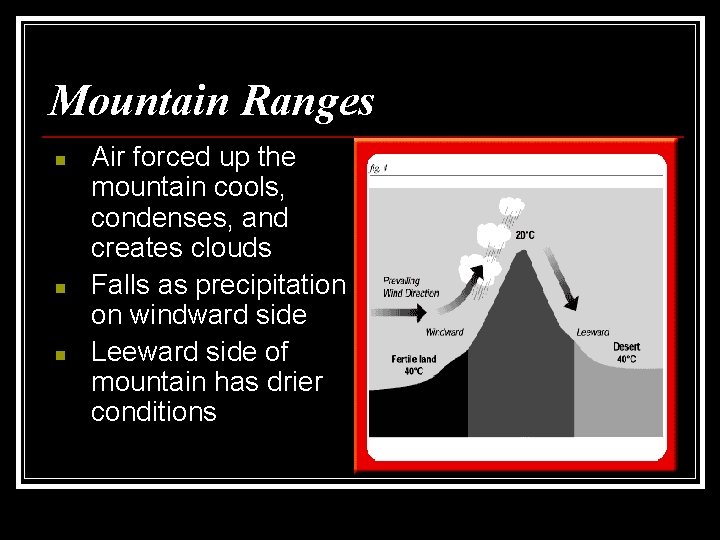
Mountain Ranges n n n Air forced up the mountain cools, condenses, and creates clouds Falls as precipitation on windward side Leeward side of mountain has drier conditions
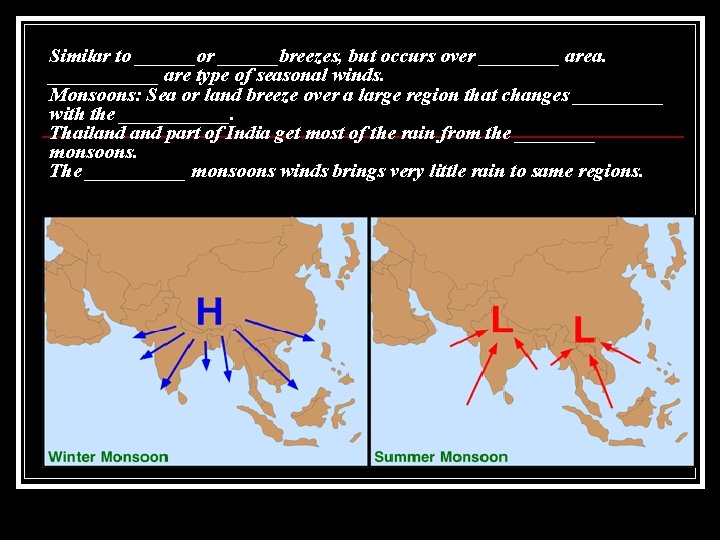
Similar to ______or ______breezes, but occurs over ____ area. ______ are type of seasonal winds. Monsoons: Sea or land breeze over a large region that changes _____ with the ______. Thailand part of India get most of the rain from the ____ monsoons. The _____ monsoons winds brings very little rain to same regions.
Microclimates n Microclimates: small region with specific climate conditions n Examples: parks, cities, areas near lakes or ponds, gardens, etc.