
Chapter 4 CELLS Cell Lab For each prepared
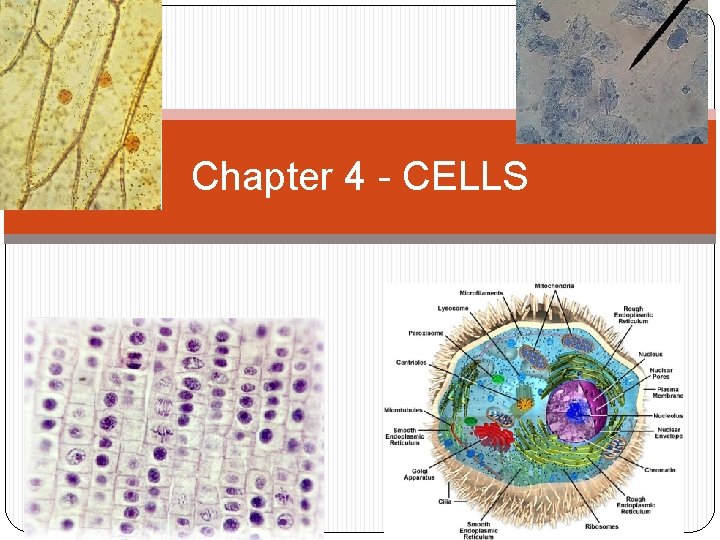
Chapter 4 - CELLS
Cell Lab For each prepared slide 1) Draw each cell – remember to draw the field of view and label any structures you can identify. § Cell Membrane, Cell Wall, Cytoplasm, Nucleus, DNA? , Chloroplasts, Central Vacuole 2) Record the magnification of each 3) Make observations of the cells. Include items such as color, structures, size, etc…. 4) Conclusion: Write a conclusion paragraph stating similarities and differences in cells. Why do you see the similarities and differences?
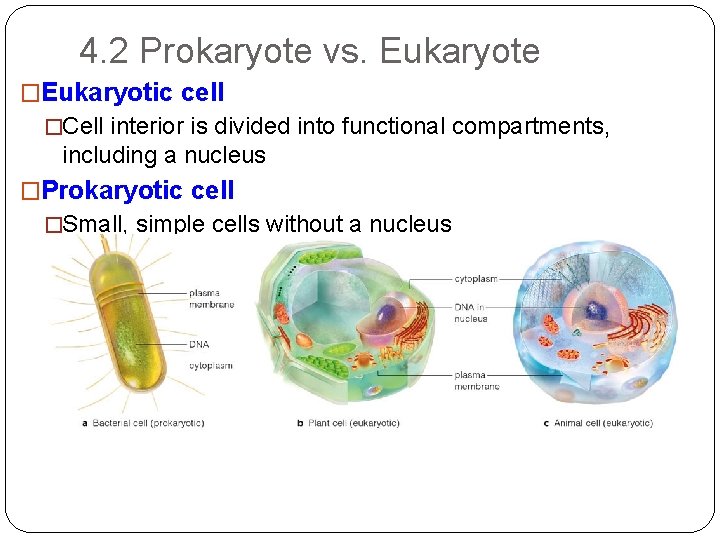
4. 2 Prokaryote vs. Eukaryote �Eukaryotic cell �Cell interior is divided into functional compartments, including a nucleus �Prokaryotic cell �Small, simple cells without a nucleus
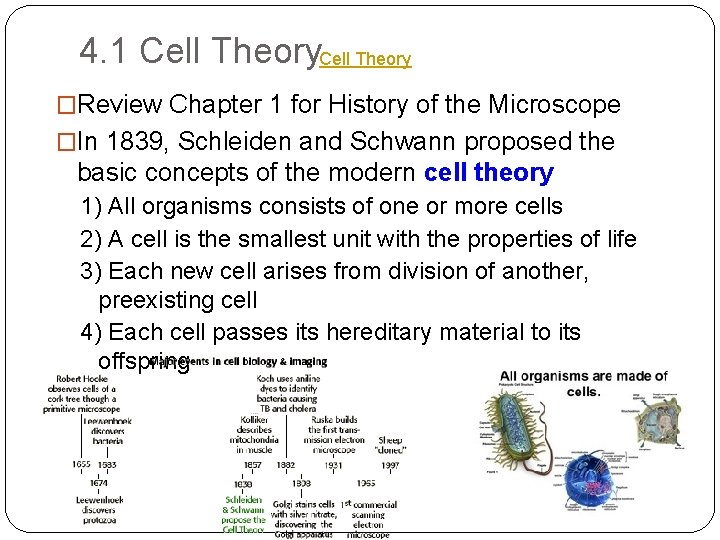
4. 1 Cell Theory �Review Chapter 1 for History of the Microscope �In 1839, Schleiden and Schwann proposed the basic concepts of the modern cell theory 1) All organisms consists of one or more cells 2) A cell is the smallest unit with the properties of life 3) Each new cell arises from division of another, preexisting cell 4) Each cell passes its hereditary material to its offspring
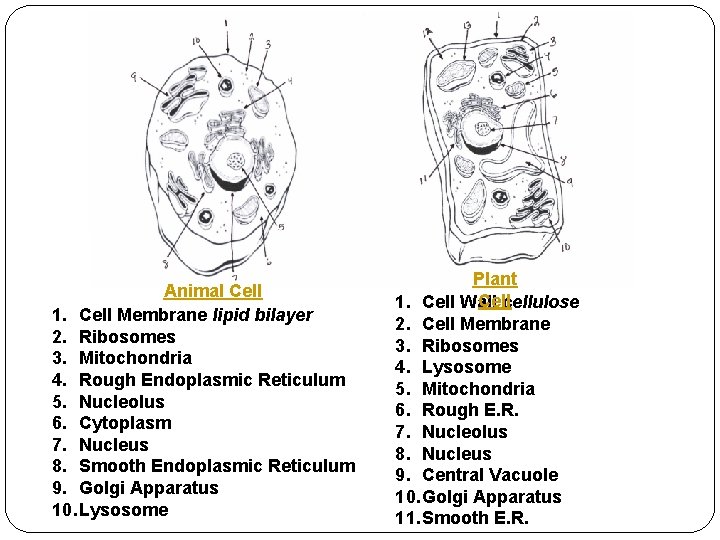
Animal Cell 1. Cell Membrane lipid bilayer 2. Ribosomes 3. Mitochondria 4. Rough Endoplasmic Reticulum 5. Nucleolus 6. Cytoplasm 7. Nucleus 8. Smooth Endoplasmic Reticulum 9. Golgi Apparatus 10. Lysosome Plant Cell 1. Cell Wall cellulose 2. Cell Membrane 3. Ribosomes 4. Lysosome 5. Mitochondria 6. Rough E. R. 7. Nucleolus 8. Nucleus 9. Central Vacuole 10. Golgi Apparatus 11. Smooth E. R.
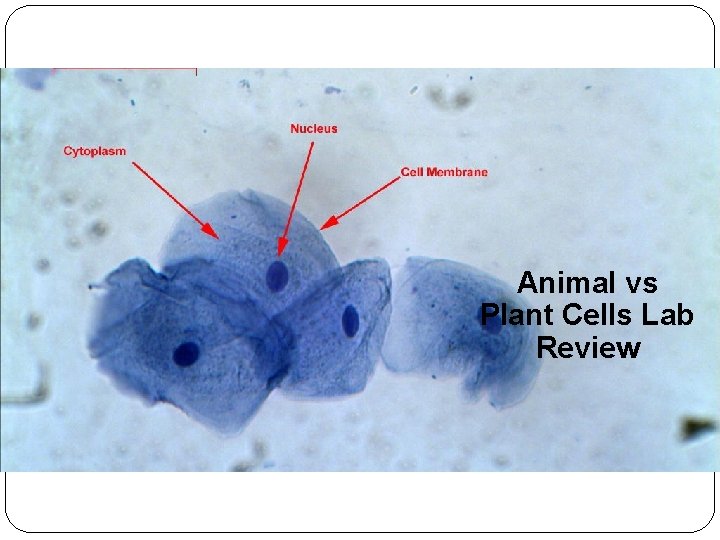
Animal vs Plant Cells Lab Review
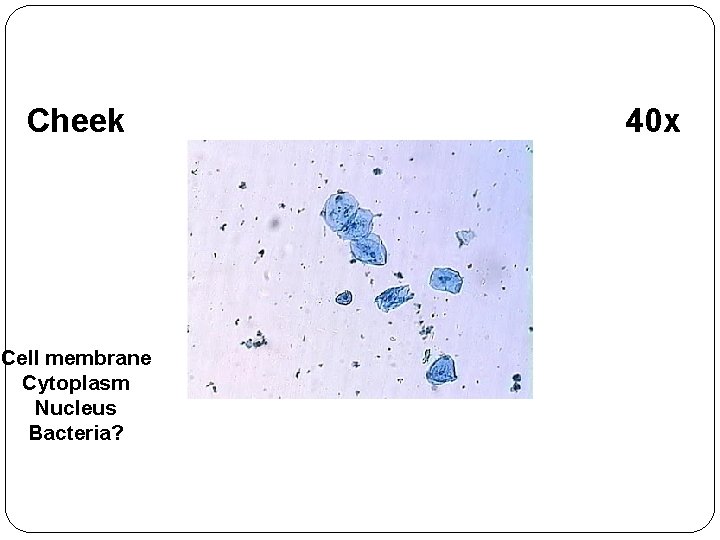
Cheek Cell membrane Cytoplasm Nucleus Bacteria? 40 x
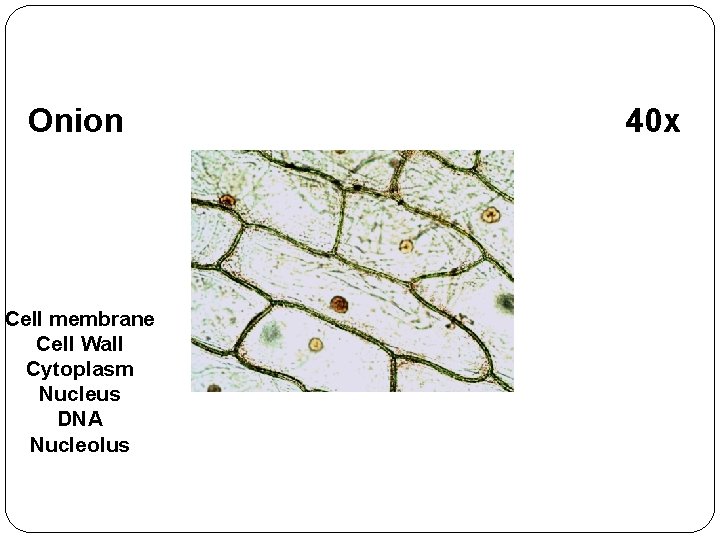
Onion Cell membrane Cell Wall Cytoplasm Nucleus DNA Nucleolus 40 x
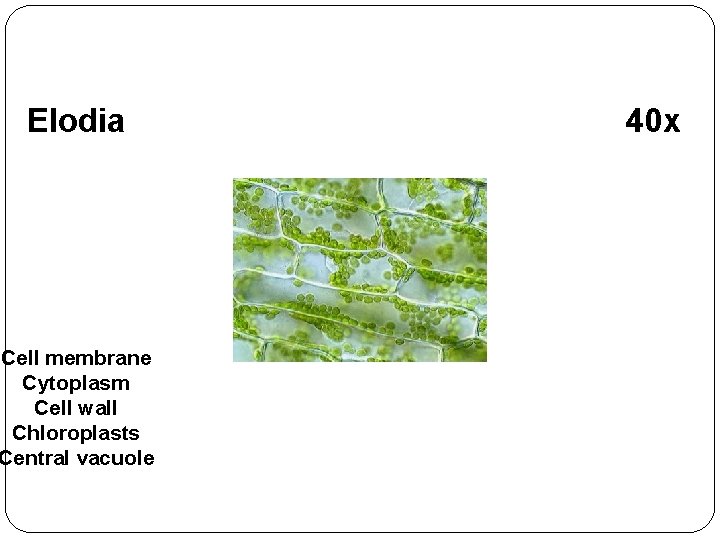
Elodia Cell membrane Cytoplasm Cell wall Chloroplasts Central vacuole 40 x
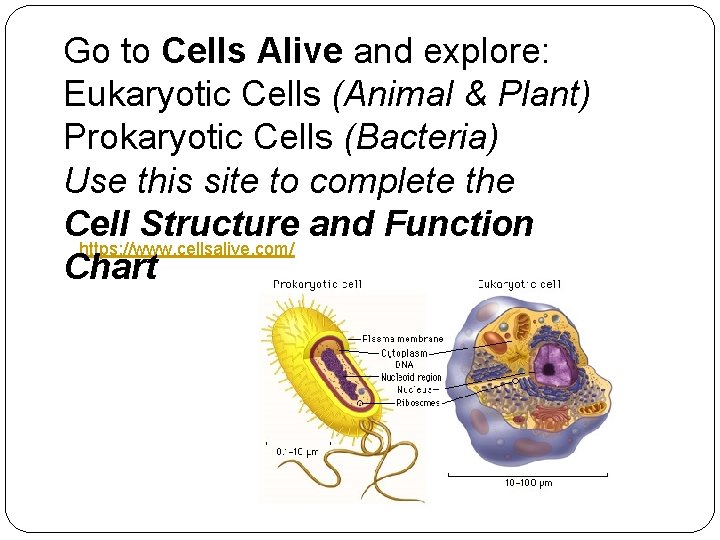
Go to Cells Alive and explore: Eukaryotic Cells (Animal & Plant) Prokaryotic Cells (Bacteria) Use this site to complete the Cell Structure and Function https: //www. cellsalive. com/ Chart
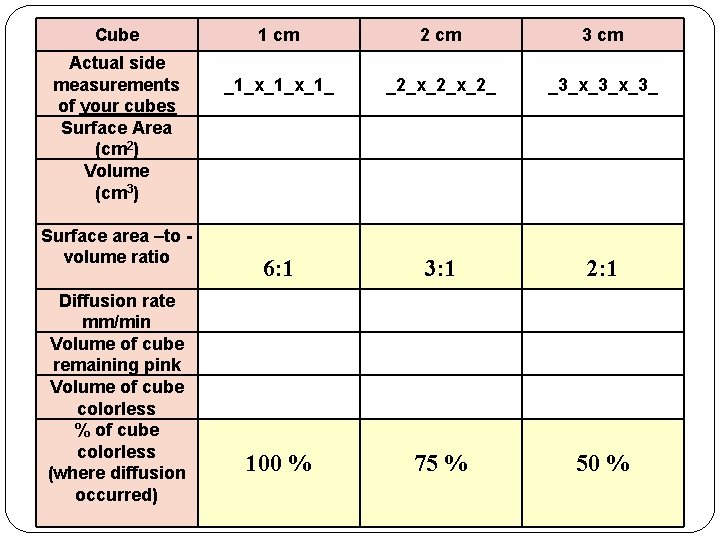
Cube Actual side measurements of your cubes Surface Area (cm 2) Volume (cm 3) Surface area –to volume ratio Diffusion rate mm/min Volume of cube remaining pink Volume of cube colorless % of cube colorless (where diffusion occurred) 1 cm 2 cm 3 cm _1_x_1_ _2_x_2_ _3_x_3_ 6: 1 3: 1 2: 1 100 % 75 % 50 %
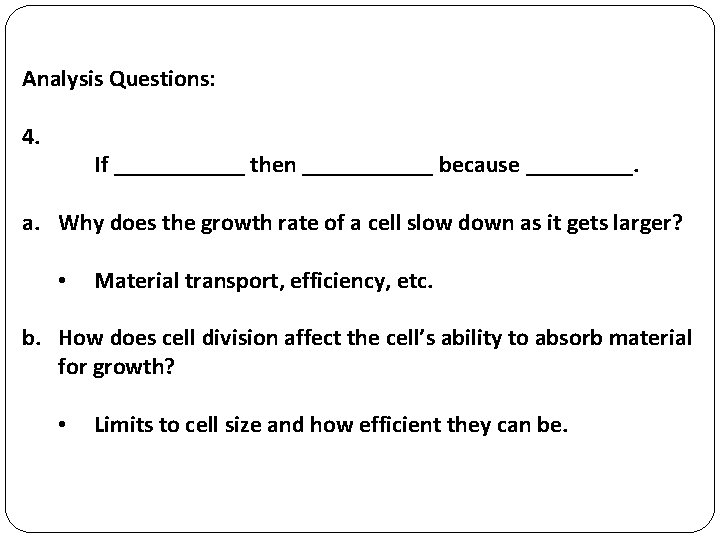
Analysis Questions: 4. If ______ then ______ because _____. a. Why does the growth rate of a cell slow down as it gets larger? • Material transport, efficiency, etc. b. How does cell division affect the cell’s ability to absorb material for growth? • Limits to cell size and how efficient they can be.
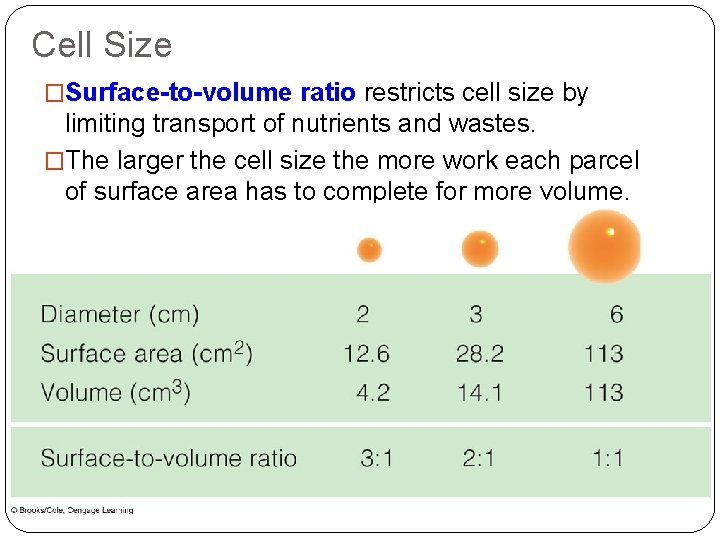
Cell Size �Surface-to-volume ratio restricts cell size by limiting transport of nutrients and wastes. �The larger the cell size the more work each parcel of surface area has to complete for more volume.
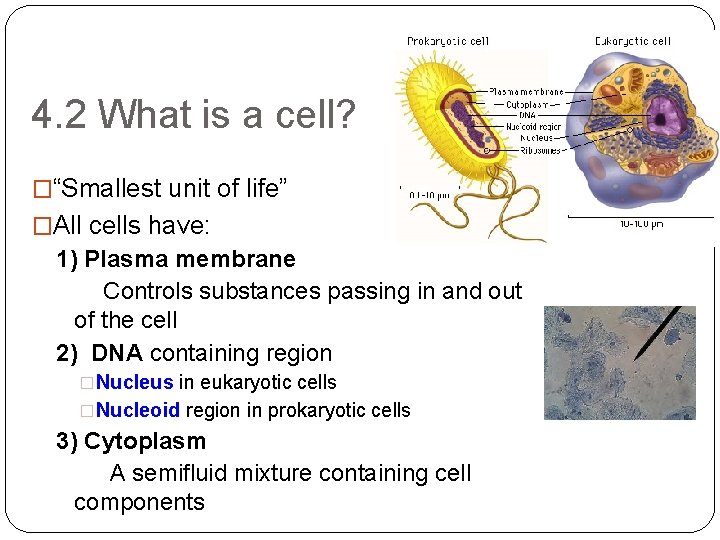
4. 2 What is a cell? �“Smallest unit of life” �All cells have: 1) Plasma membrane Controls substances passing in and out of the cell 2) DNA containing region �Nucleus in eukaryotic cells �Nucleoid region in prokaryotic cells 3) Cytoplasm A semifluid mixture containing cell components
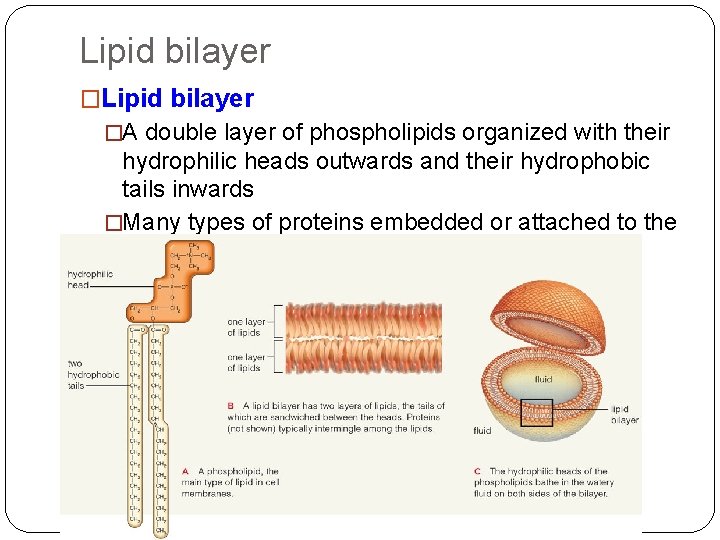
Lipid bilayer �A double layer of phospholipids organized with their hydrophilic heads outwards and their hydrophobic tails inwards �Many types of proteins embedded or attached to the bilayer carry out membrane functions
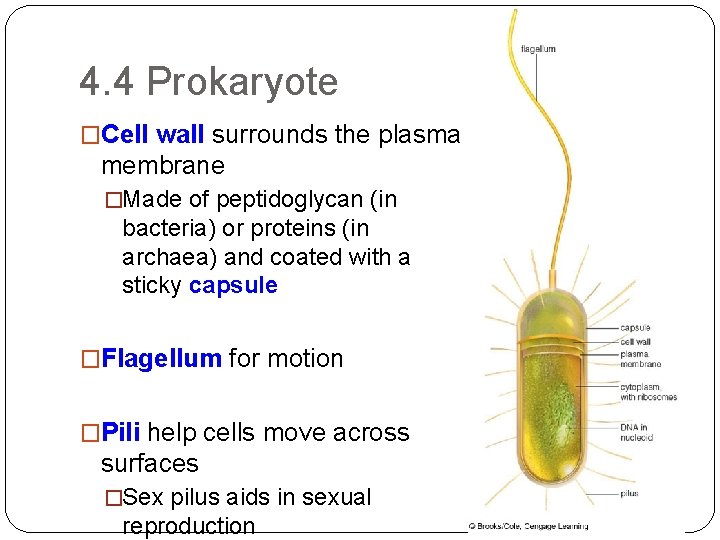
4. 4 Prokaryote �Cell wall surrounds the plasma membrane �Made of peptidoglycan (in bacteria) or proteins (in archaea) and coated with a sticky capsule �Flagellum for motion �Pili help cells move across surfaces �Sex pilus aids in sexual reproduction
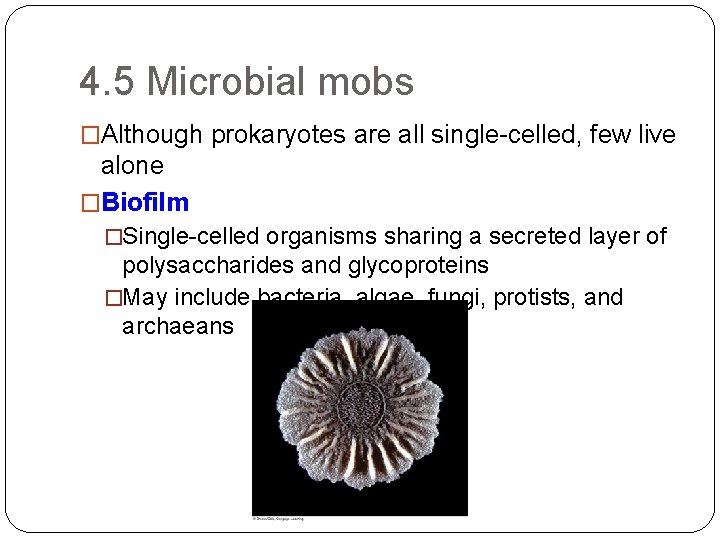
4. 5 Microbial mobs �Although prokaryotes are all single-celled, few live alone �Biofilm �Single-celled organisms sharing a secreted layer of polysaccharides and glycoproteins �May include bacteria, algae, fungi, protists, and archaeans
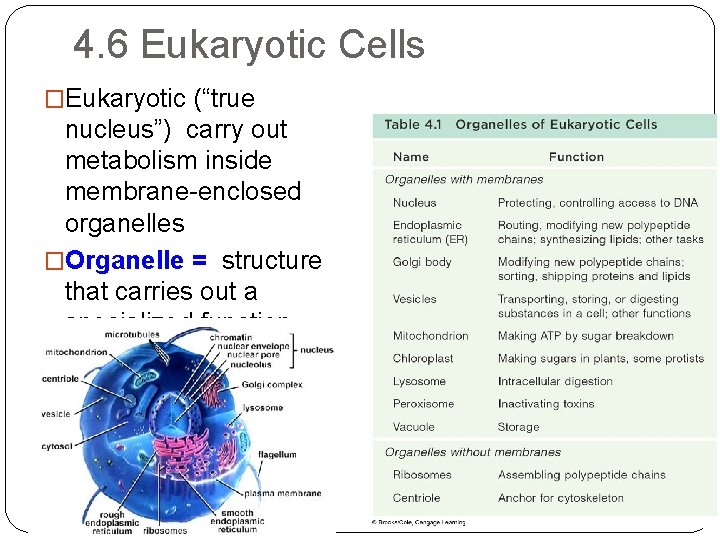
4. 6 Eukaryotic Cells �Eukaryotic (“true nucleus”) carry out metabolism inside membrane-enclosed organelles �Organelle = structure that carries out a specialized function within a cell
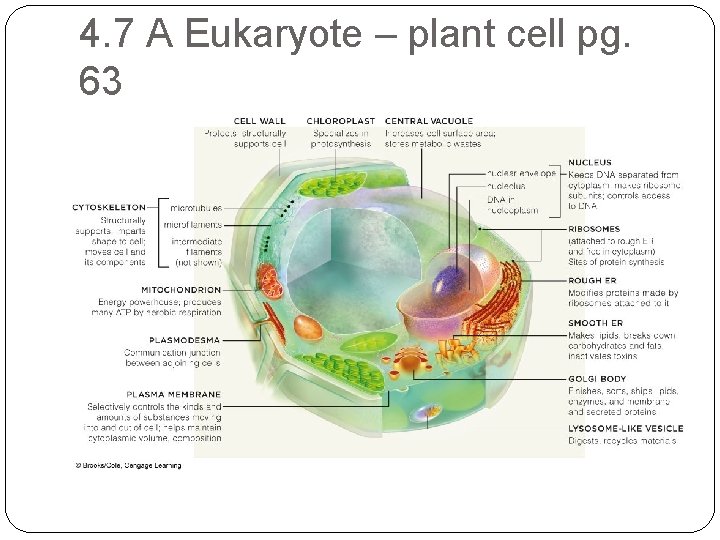
4. 7 A Eukaryote – plant cell pg. 63
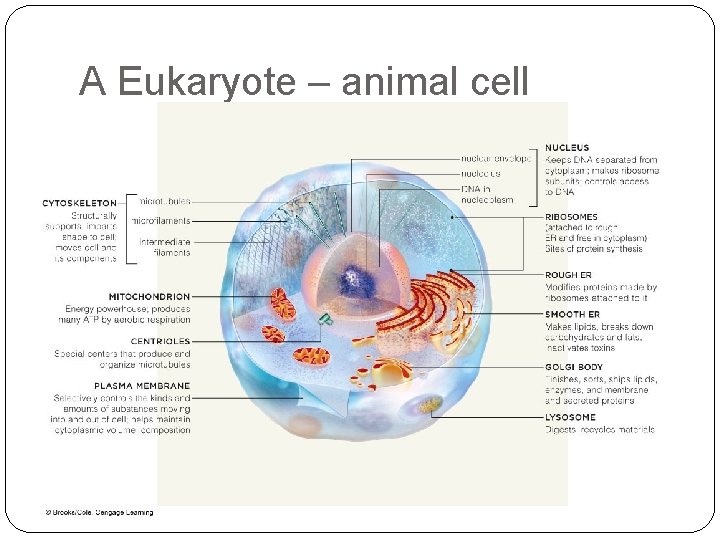
A Eukaryote – animal cell
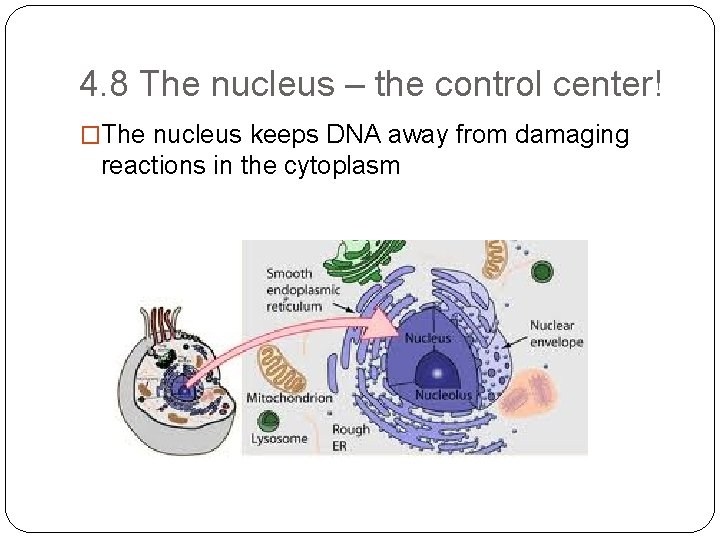
4. 8 The nucleus – the control center! �The nucleus keeps DNA away from damaging reactions in the cytoplasm
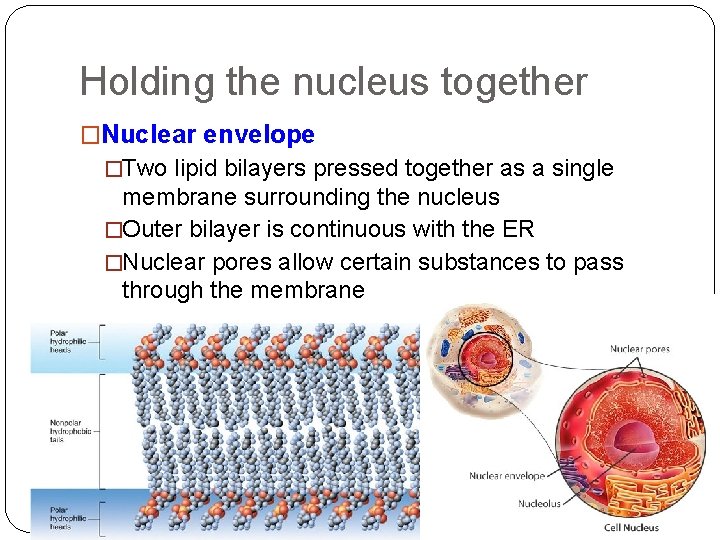
Holding the nucleus together �Nuclear envelope �Two lipid bilayers pressed together as a single membrane surrounding the nucleus �Outer bilayer is continuous with the ER �Nuclear pores allow certain substances to pass through the membrane
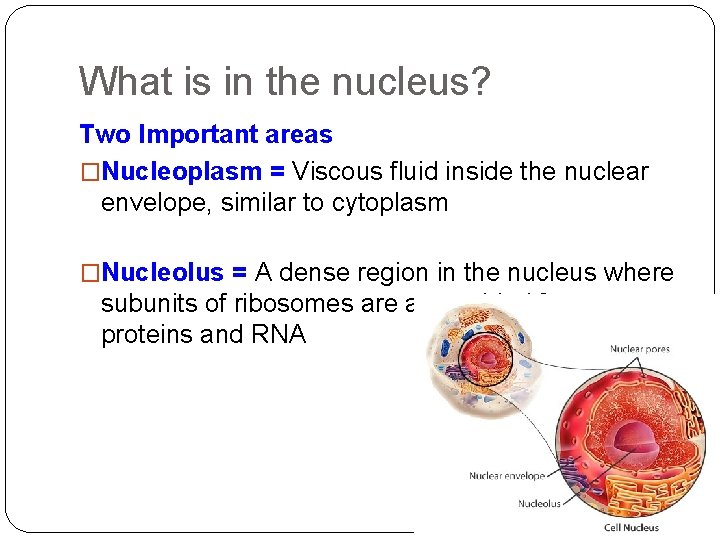
What is in the nucleus? Two Important areas �Nucleoplasm = Viscous fluid inside the nuclear envelope, similar to cytoplasm �Nucleolus = A dense region in the nucleus where subunits of ribosomes are assembled from proteins and RNA
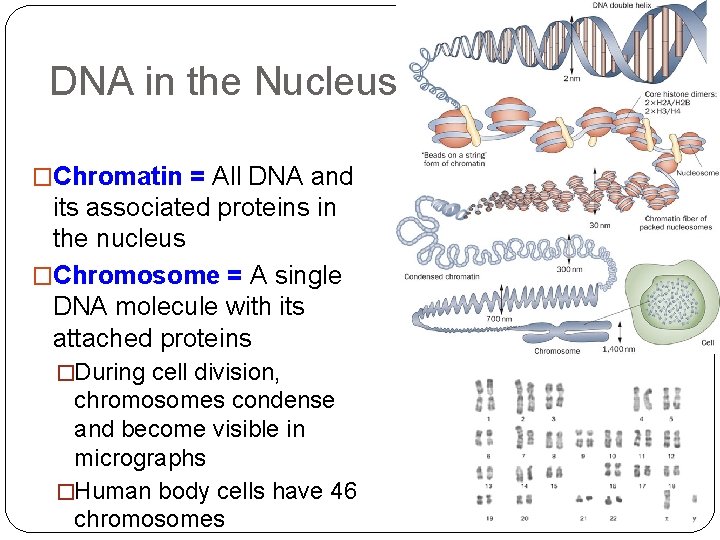
DNA in the Nucleus �Chromatin = All DNA and its associated proteins in the nucleus �Chromosome = A single DNA molecule with its attached proteins �During cell division, chromosomes condense and become visible in micrographs �Human body cells have 46 chromosomes
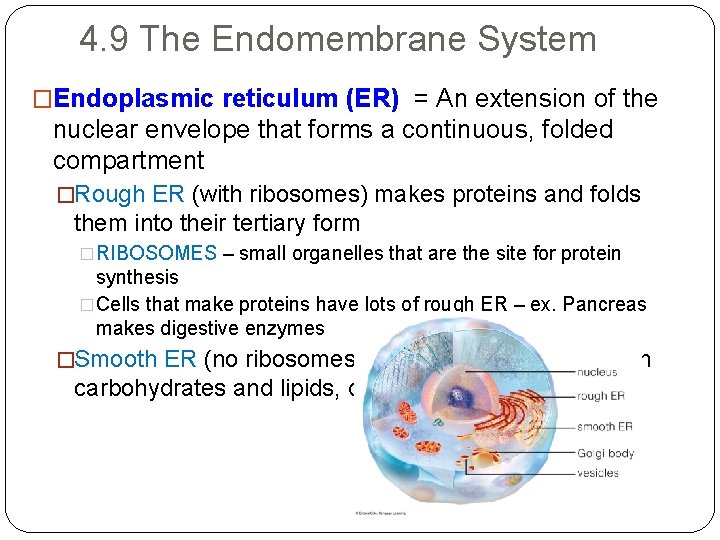
4. 9 The Endomembrane System �Endoplasmic reticulum (ER) = An extension of the nuclear envelope that forms a continuous, folded compartment �Rough ER (with ribosomes) makes proteins and folds them into their tertiary form �RIBOSOMES – small organelles that are the site for protein synthesis �Cells that make proteins have lots of rough ER – ex. Pancreas makes digestive enzymes �Smooth ER (no ribosomes) makes lipids, breaks down carbohydrates and lipids, detoxifies poisons
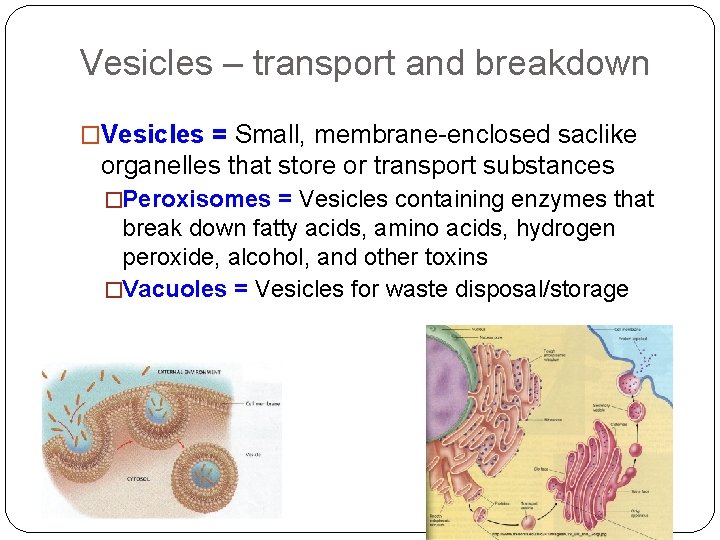
Vesicles – transport and breakdown �Vesicles = Small, membrane-enclosed saclike organelles that store or transport substances �Peroxisomes = Vesicles containing enzymes that break down fatty acids, amino acids, hydrogen peroxide, alcohol, and other toxins �Vacuoles = Vesicles for waste disposal/storage
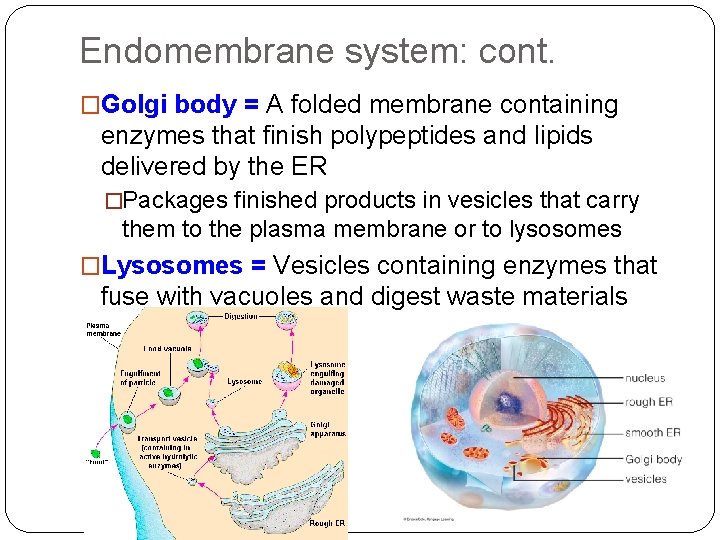
Endomembrane system: cont. �Golgi body = A folded membrane containing enzymes that finish polypeptides and lipids delivered by the ER �Packages finished products in vesicles that carry them to the plasma membrane or to lysosomes �Lysosomes = Vesicles containing enzymes that fuse with vacuoles and digest waste materials
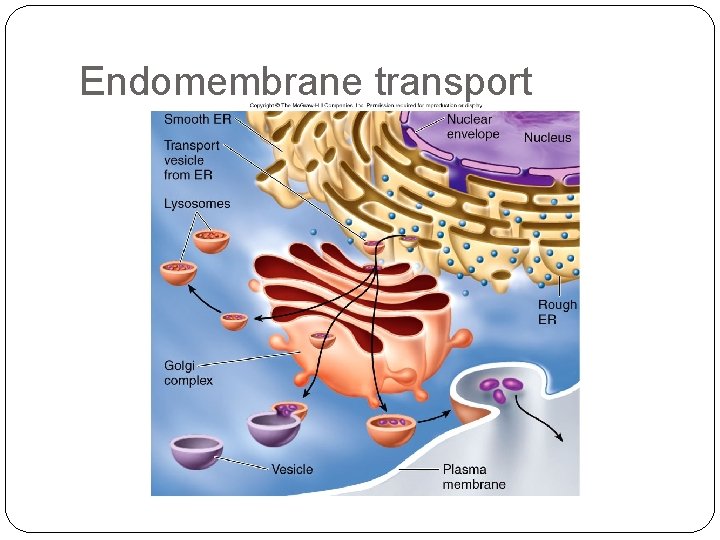
Endomembrane transport
4. 10 Lysosome malfunction – for your info �When lysosomes do not work properly, some cellular materials are not properly recycled, which can have devastating results �Different kinds of molecules are broken down by lysosomal enzymes �There are more than 40 known lysosomal storage diseases: �Fabry disease - causes kidney and heart problems, pain and a skin rash �Gaucher disease - causes the spleen to enlarge, anemia and bone lesions if untreated �Pompe disease - an often fatal storage disease in which glycogen builds up in the liver, heart and muscle, especially during infancy (also known as acid maltase deficiency) �Tay-Sachs disease - a lysosomal storage disease that
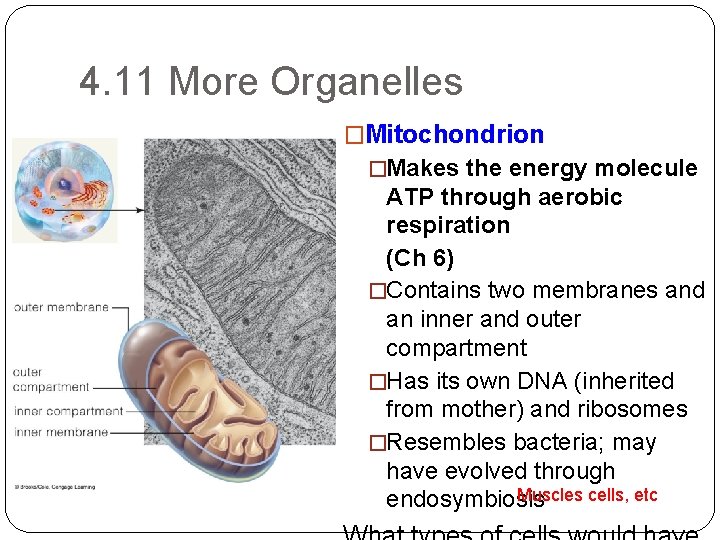
4. 11 More Organelles �Mitochondrion �Makes the energy molecule ATP through aerobic respiration (Ch 6) �Contains two membranes and an inner and outer compartment �Has its own DNA (inherited from mother) and ribosomes �Resembles bacteria; may have evolved through Muscles cells, etc endosymbiosis
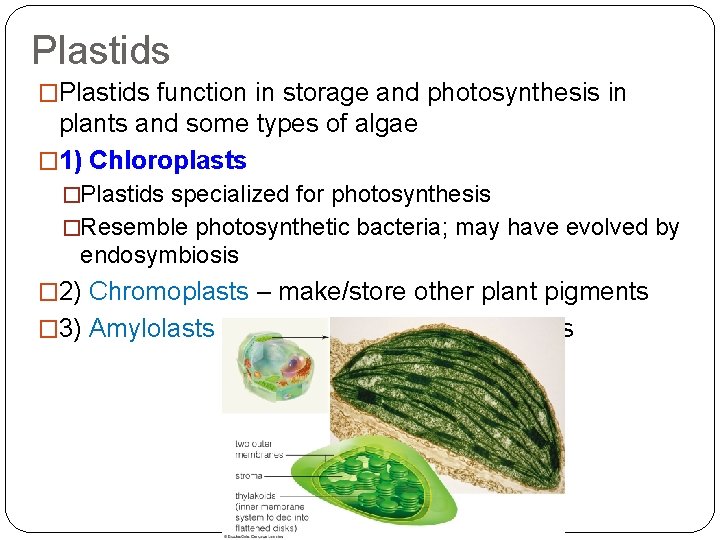
Plastids �Plastids function in storage and photosynthesis in plants and some types of algae � 1) Chloroplasts �Plastids specialized for photosynthesis �Resemble photosynthetic bacteria; may have evolved by endosymbiosis � 2) Chromoplasts – make/store other plant pigments � 3) Amylolasts – colorless, store starch grains
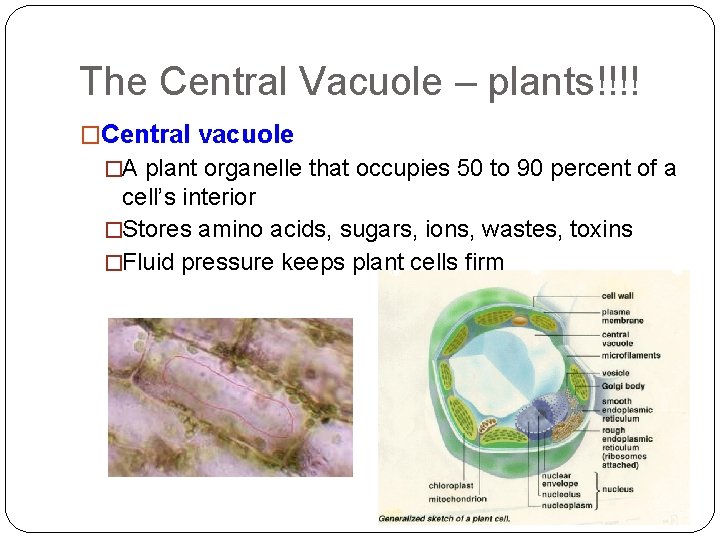
The Central Vacuole – plants!!!! �Central vacuole �A plant organelle that occupies 50 to 90 percent of a cell’s interior �Stores amino acids, sugars, ions, wastes, toxins �Fluid pressure keeps plant cells firm
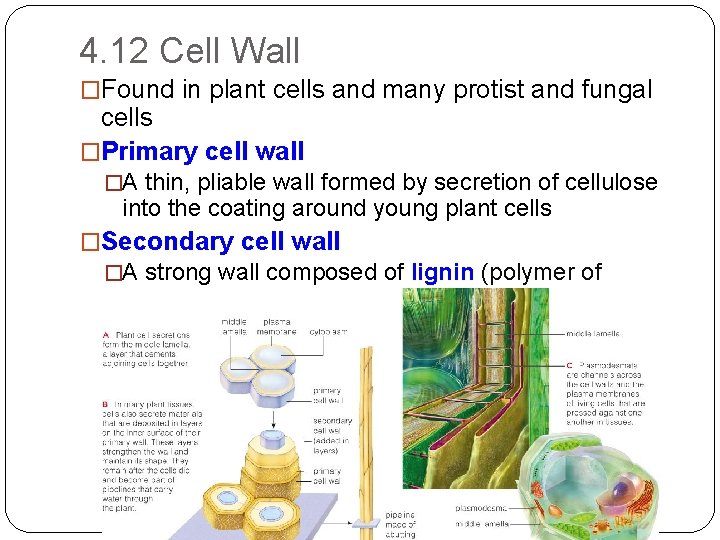
4. 12 Cell Wall �Found in plant cells and many protist and fungal cells �Primary cell wall �A thin, pliable wall formed by secretion of cellulose into the coating around young plant cells �Secondary cell wall �A strong wall composed of lignin (polymer of alcohols), formed in some plant stems and roots after maturity
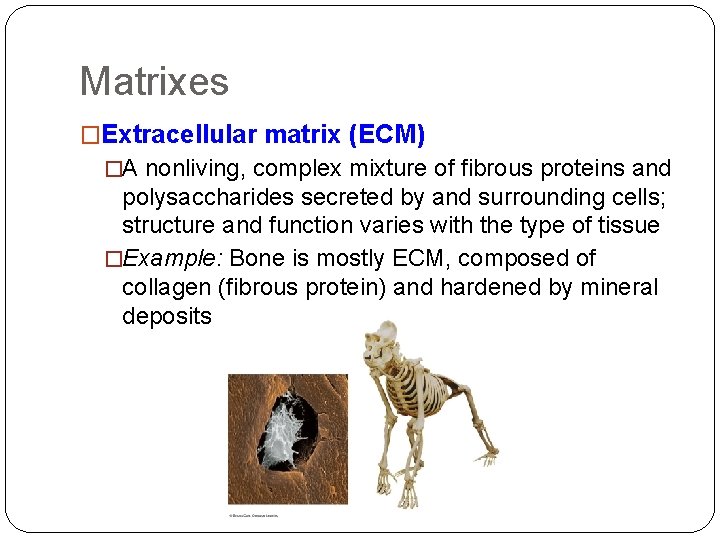
Matrixes �Extracellular matrix (ECM) �A nonliving, complex mixture of fibrous proteins and polysaccharides secreted by and surrounding cells; structure and function varies with the type of tissue �Example: Bone is mostly ECM, composed of collagen (fibrous protein) and hardened by mineral deposits
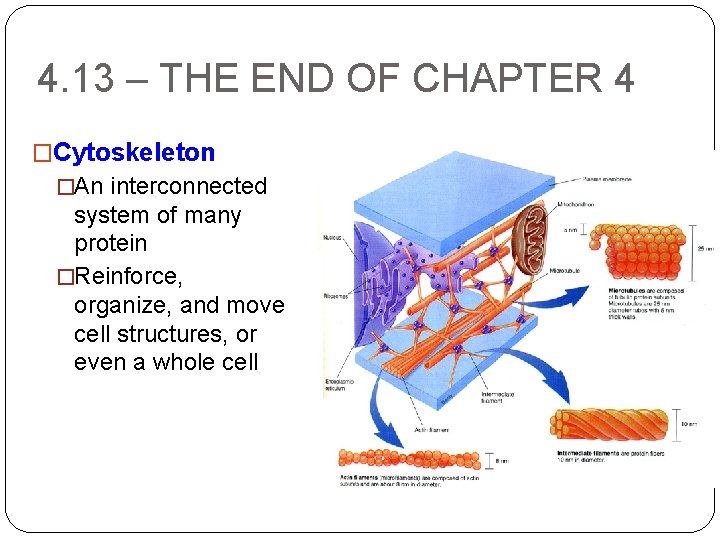
4. 13 – THE END OF CHAPTER 4 �Cytoskeleton �An interconnected system of many protein �Reinforce, organize, and move cell structures, or even a whole cell
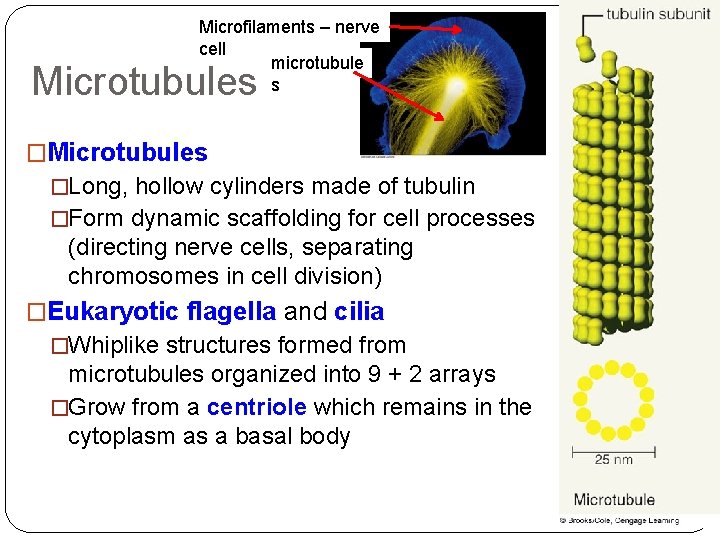
Microfilaments – nerve cell microtubule s Microtubules �Long, hollow cylinders made of tubulin �Form dynamic scaffolding for cell processes (directing nerve cells, separating chromosomes in cell division) �Eukaryotic flagella and cilia �Whiplike structures formed from microtubules organized into 9 + 2 arrays �Grow from a centriole which remains in the cytoplasm as a basal body
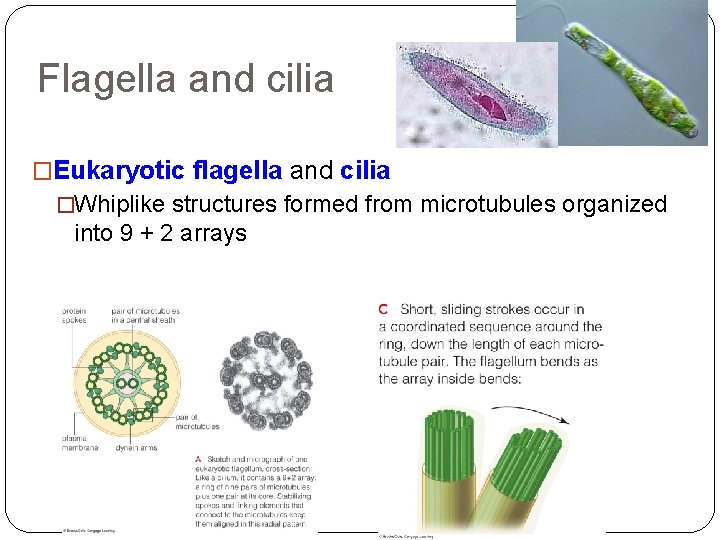
Flagella and cilia �Eukaryotic flagella and cilia �Whiplike structures formed from microtubules organized into 9 + 2 arrays
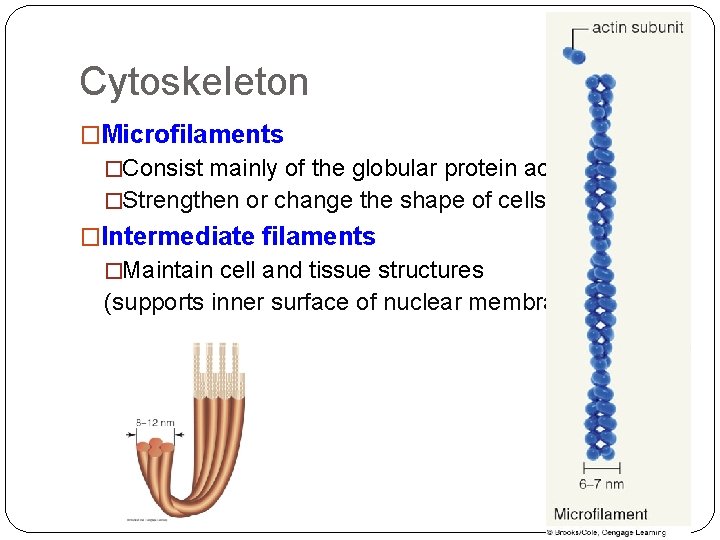
Cytoskeleton �Microfilaments �Consist mainly of the globular protein actin �Strengthen or change the shape of cells �Intermediate filaments �Maintain cell and tissue structures (supports inner surface of nuclear membrane)
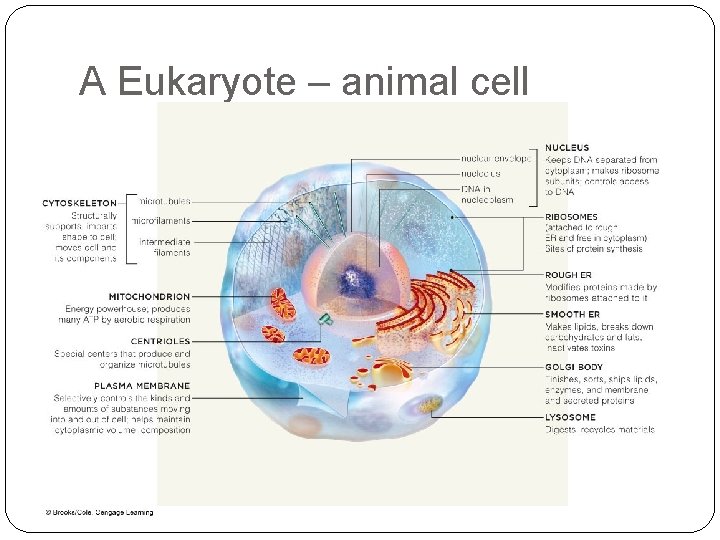
A Eukaryote – animal cell
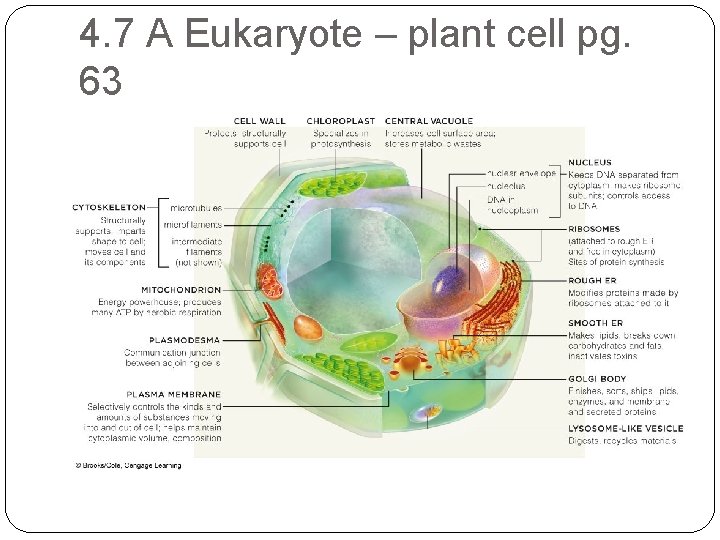
4. 7 A Eukaryote – plant cell pg. 63
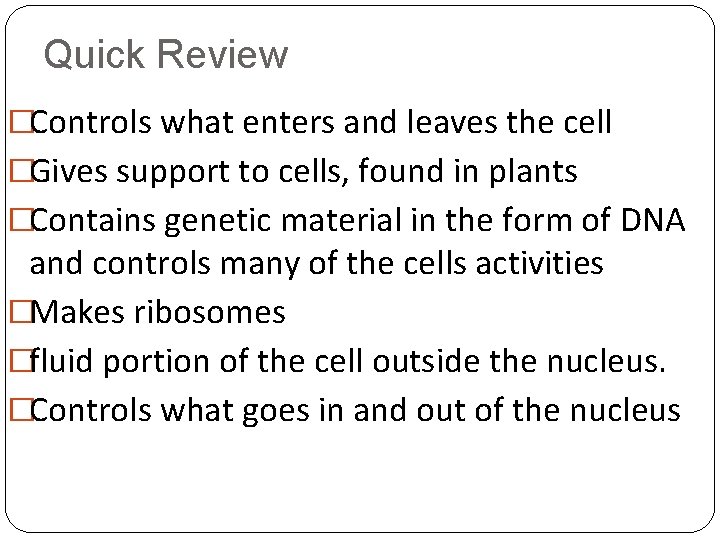
Quick Review �Controls what enters and leaves the cell �Gives support to cells, found in plants �Contains genetic material in the form of DNA and controls many of the cells activities �Makes ribosomes �fluid portion of the cell outside the nucleus. �Controls what goes in and out of the nucleus
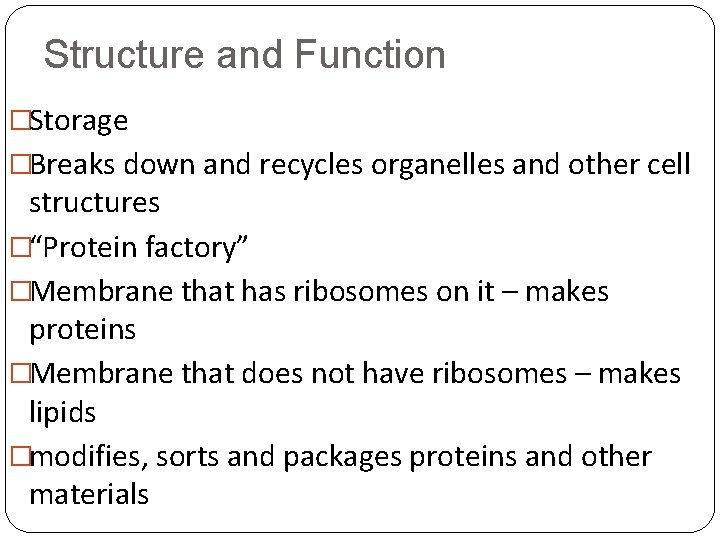
Structure and Function �Storage �Breaks down and recycles organelles and other cell structures �“Protein factory” �Membrane that has ribosomes on it – makes proteins �Membrane that does not have ribosomes – makes lipids �modifies, sorts and packages proteins and other materials
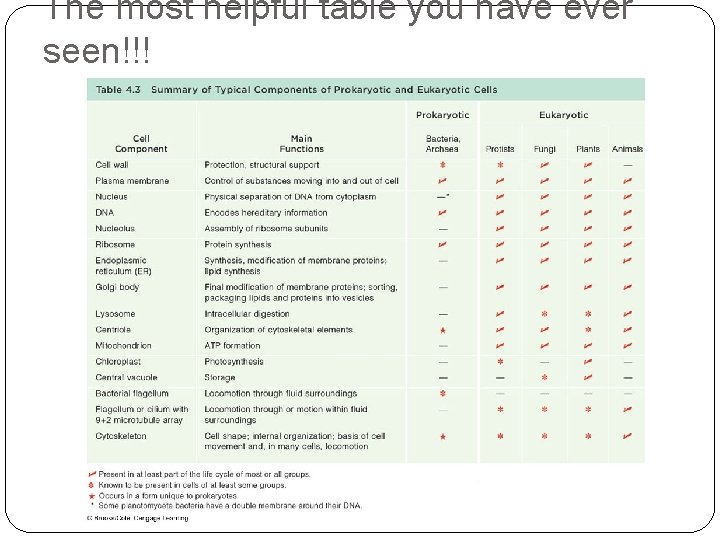
The most helpful table you have ever seen!!!
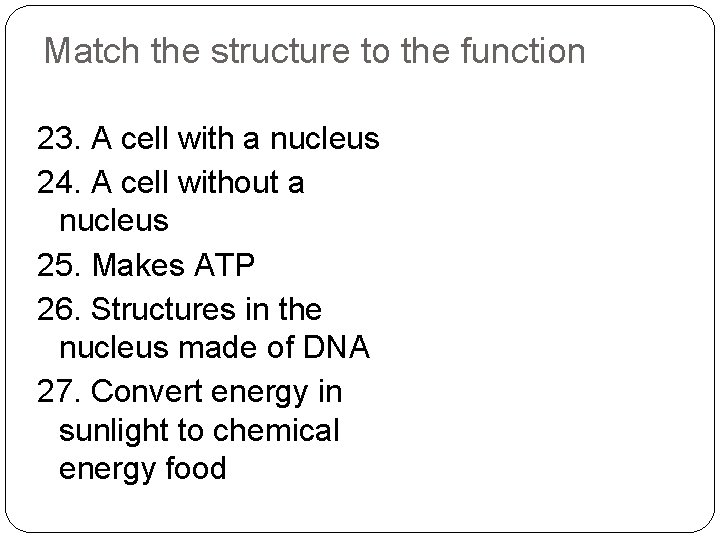
Match the structure to the function 23. A cell with a nucleus 24. A cell without a nucleus 25. Makes ATP 26. Structures in the nucleus made of DNA 27. Convert energy in sunlight to chemical energy food
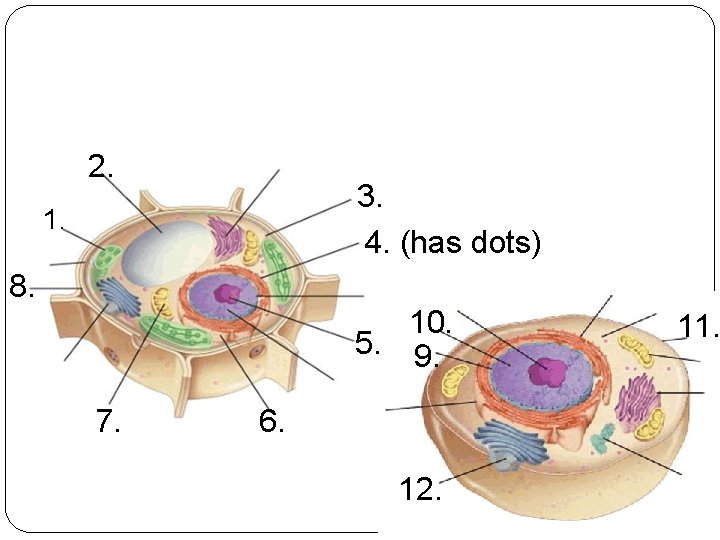
2. 3. 4. (has dots) 1. 8. 10. 5. 9. 7. 6. 12. 11.
Cell Junctions �Cell junctions allow cells to interact with each other and the environment �In plants, plasmodesmata extend through cell walls to connect the cytoplasm of two cells �Animals have three types of cell junctions: �tight junctions – seal cells tightly (gastrointestinal) �adhering junctions – anchor cells (strengthen heart muscles) � gap junctions – open channels that connect cytoplasm of adjoining cells (allow heart muscles to contract as a unit)
- Slides: 46