
Chapter 4 Cell structure Eukaryotic cell Main components
- Slides: 15
Chapter 4: Cell structure
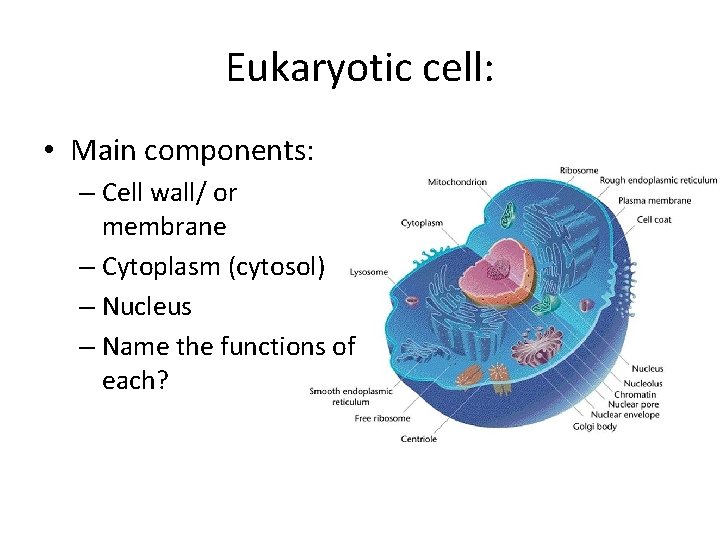
Eukaryotic cell: • Main components: – Cell wall/ or membrane – Cytoplasm (cytosol) – Nucleus – Name the functions of each?
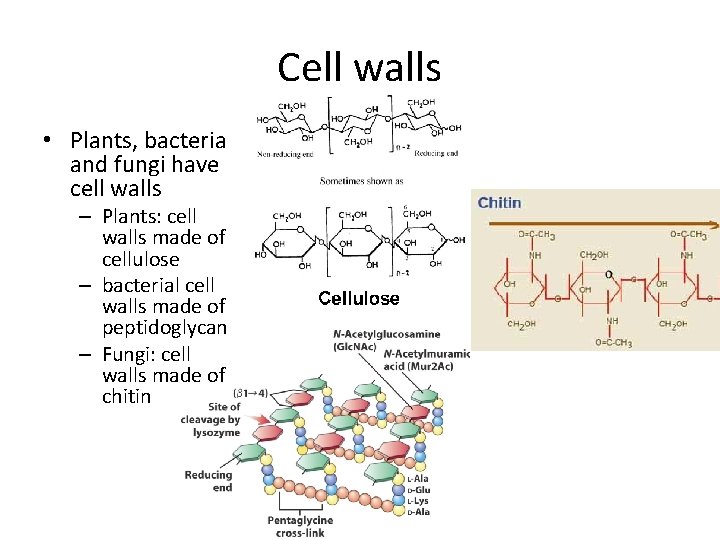
Cell walls • Plants, bacteria and fungi have cell walls – Plants: cell walls made of cellulose – bacterial cell walls made of peptidoglycan – Fungi: cell walls made of chitin
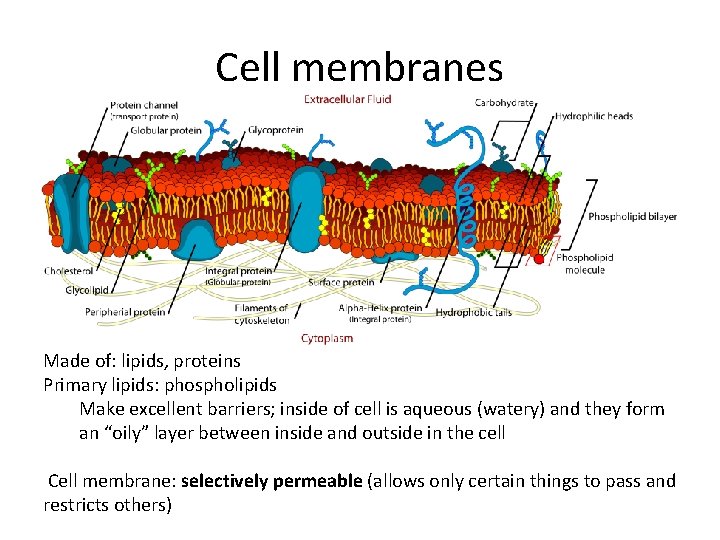
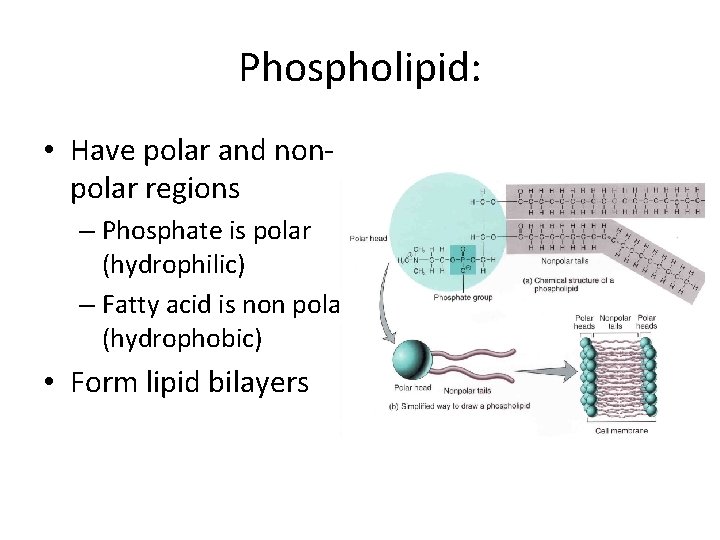
Cell membranes Made of: lipids, proteins Primary lipids: phospholipids Make excellent barriers; inside of cell is aqueous (watery) and they form an “oily” layer between inside and outside in the cell Cell membrane: selectively permeable (allows only certain things to pass and restricts others)
Phospholipid: • Have polar and nonpolar regions – Phosphate is polar (hydrophilic) – Fatty acid is non polar (hydrophobic) • Form lipid bilayers
4 ways substances cross cell membrane • • 1. Simple diffusion 2. Facilitated diffusion 3. Active transport 4. Bulk transport
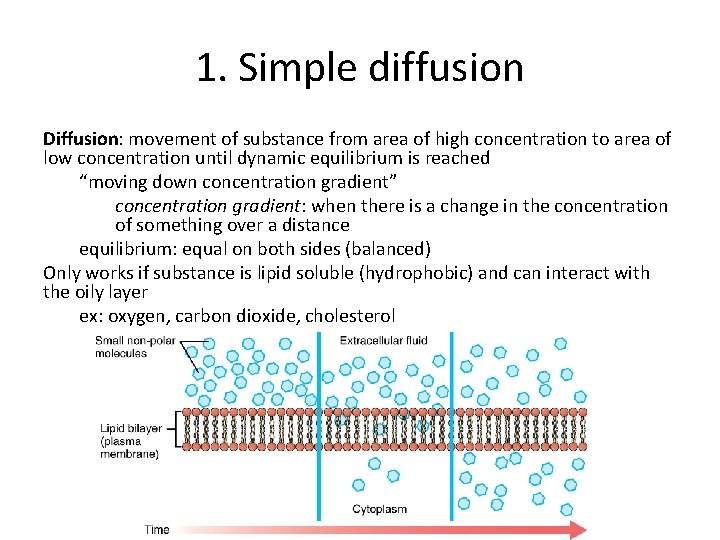
1. Simple diffusion Diffusion: movement of substance from area of high concentration to area of low concentration until dynamic equilibrium is reached “moving down concentration gradient” concentration gradient: when there is a change in the concentration of something over a distance equilibrium: equal on both sides (balanced) Only works if substance is lipid soluble (hydrophobic) and can interact with the oily layer ex: oxygen, carbon dioxide, cholesterol
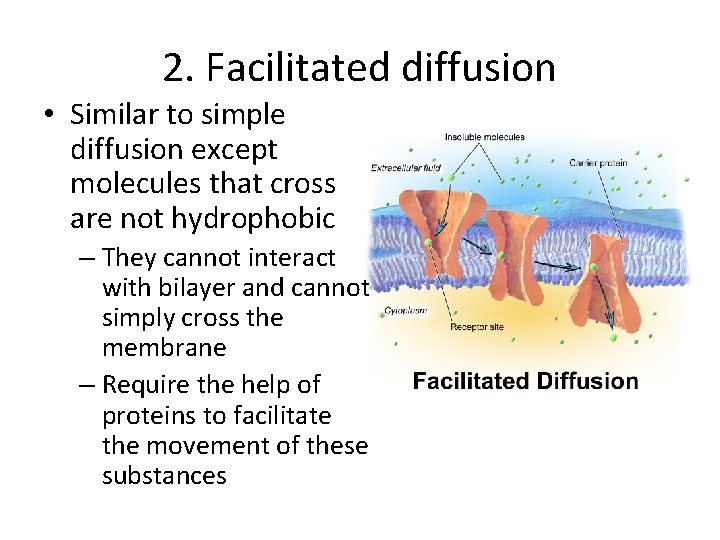
2. Facilitated diffusion • Similar to simple diffusion except molecules that cross are not hydrophobic – They cannot interact with bilayer and cannot simply cross the membrane – Require the help of proteins to facilitate the movement of these substances
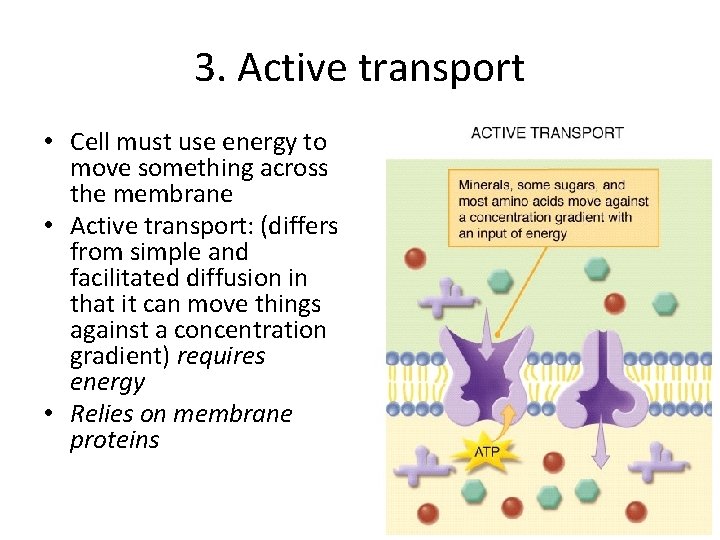
3. Active transport • Cell must use energy to move something across the membrane • Active transport: (differs from simple and facilitated diffusion in that it can move things against a concentration gradient) requires energy • Relies on membrane proteins
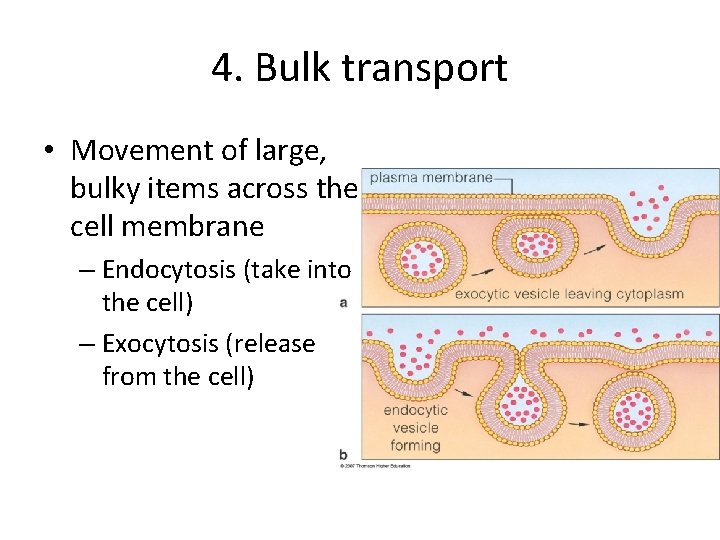
4. Bulk transport • Movement of large, bulky items across the cell membrane – Endocytosis (take into the cell) – Exocytosis (release from the cell)
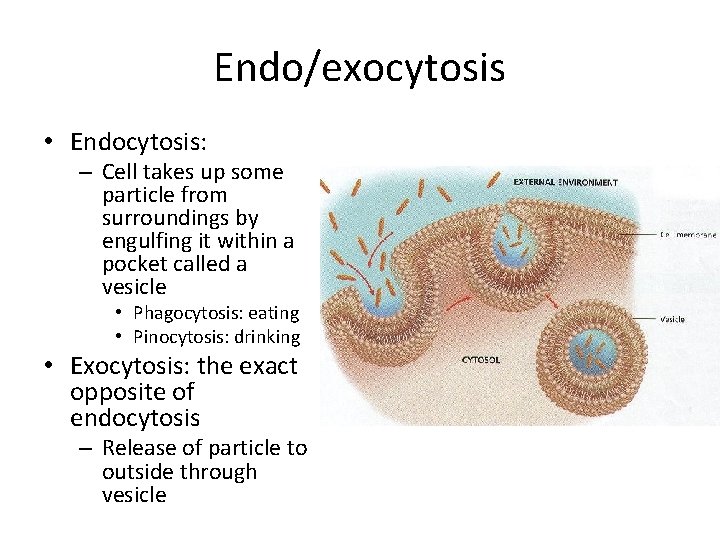
Endo/exocytosis • Endocytosis: – Cell takes up some particle from surroundings by engulfing it within a pocket called a vesicle • Phagocytosis: eating • Pinocytosis: drinking • Exocytosis: the exact opposite of endocytosis – Release of particle to outside through vesicle
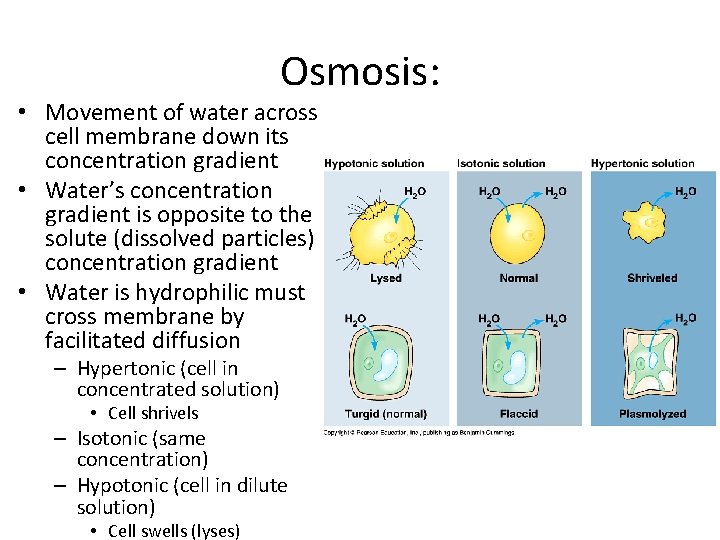
Osmosis: • Movement of water across cell membrane down its concentration gradient • Water’s concentration gradient is opposite to the solute (dissolved particles) concentration gradient • Water is hydrophilic must cross membrane by facilitated diffusion – Hypertonic (cell in concentrated solution) • Cell shrivels – Isotonic (same concentration) – Hypotonic (cell in dilute solution) • Cell swells (lyses)
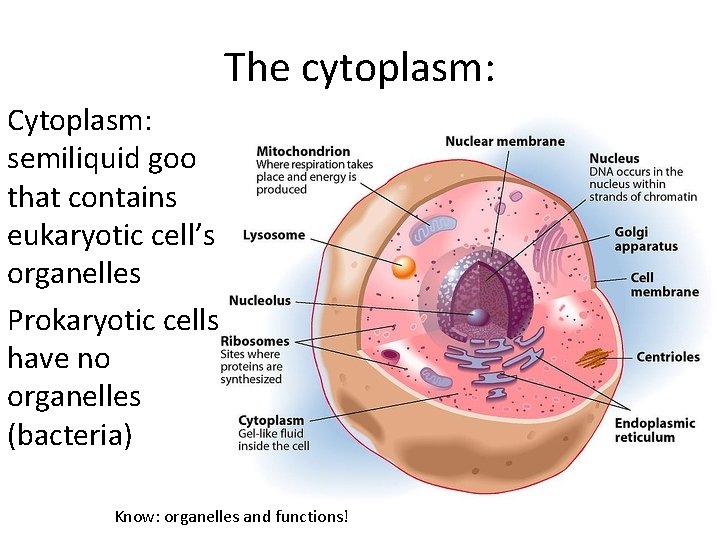
The cytoplasm: Cytoplasm: semiliquid goo that contains eukaryotic cell’s organelles Prokaryotic cells: have no organelles (bacteria) Know: organelles and functions!
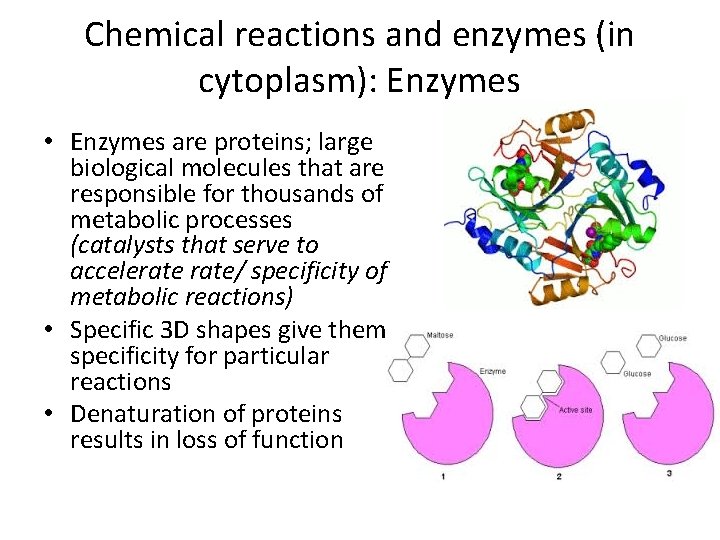
Chemical reactions and enzymes (in cytoplasm): Enzymes • Enzymes are proteins; large biological molecules that are responsible for thousands of metabolic processes (catalysts that serve to accelerate/ specificity of metabolic reactions) • Specific 3 D shapes give them specificity for particular reactions • Denaturation of proteins results in loss of function
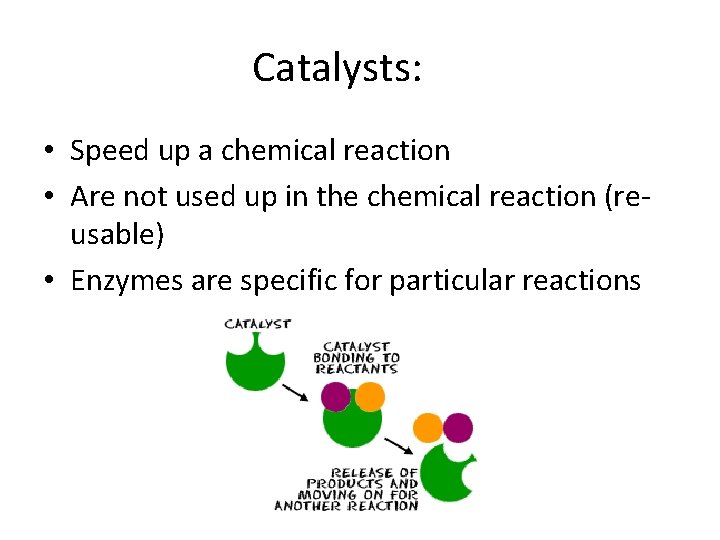
Catalysts: • Speed up a chemical reaction • Are not used up in the chemical reaction (reusable) • Enzymes are specific for particular reactions