
Chapter 4 Cell Structure A Tour of the
- Slides: 54
Chapter 4 Cell Structure: A Tour of the Cell
Cell: A basic unit of living matter separated from its environment by a plasma membrane. The smallest structural unit of life.
Microscopy First observations of cells were made with light microscopes: Robert Hooke (1665): Used primitive microscope to observe cork (dead plant cells). Coined the word cell. Anton van Leeuenhoeck (1670 s): Made single lens microscopes. First person to observe live cells under microscope: “animalcules” (protists) in water, red blood cells, sperm, bacteria, and insect eggs. Theodor Schwann (1830 s): Observed harder to view animal cells. Called cells “elementary particles” of both plants and animals.
Cell Theory: Developed in late 1800 s. 1. All living organisms are made up of one or more cells. 2. The smallest living organisms are single cells, and cells are the functional units of multicellular organisms. 3. All cells arise from preexisting cells.
Microscope Features Magnification: u Increase in apparent size of an object. u Ratio of image size to specimen size. Resolving power: Measures clarity of image. u Ability to see fine detail. u Ability to distinguish two objects as separate. u Minimum distance between 2 points at which they can be distinguished as separate and distinct.
Microscopes Light Microscopes: Earliest microscopes used. Lenses pass visible light through a specimen. u Magnification: Highest possible from 1000 X to 2000 X. u Resolving power: Up to 0. 2 mm (1 mm = 1/1000 mm).
Types of Microscope Electron Microscopes: Developed in 1950 s. Electron beam passes through specimen. u Magnification: Up to 200, 000 X. u Resolving power: Up to 0. 2 nm (1 nm = 1/1’ 000, 000 mm). Two types of electron microscopes: 1. Scanning Electron Microscope: Used to study cell or virus surfaces. 2. Transmission Electron Microscope: Used to study internal cell structures.
Components of All Cells: 1. Plasma membrane: Separates cell contents from outside environment. Made up of phospholipid bilayers and proteins. 2. Cytoplasm: Liquid, jelly-like material inside cell. 3. Ribosomes: Necessary for protein synthesis.
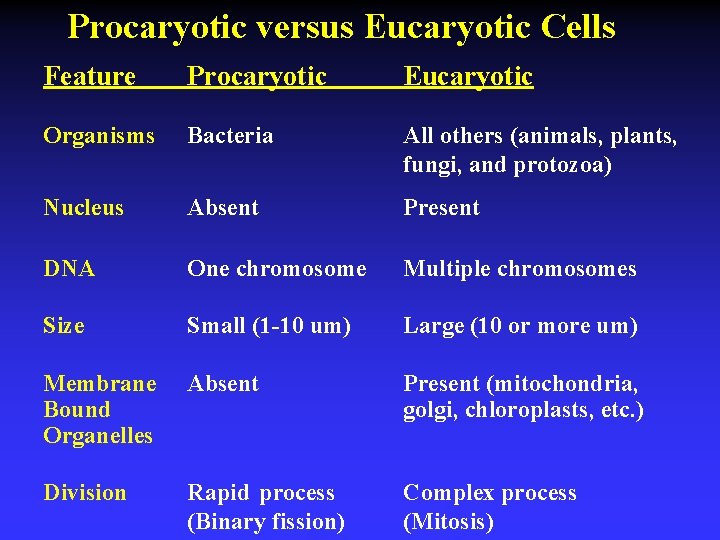
Procaryotic versus Eucaryotic Cells Feature Procaryotic Eucaryotic Organisms Bacteria All others (animals, plants, fungi, and protozoa) Nucleus Absent Present DNA One chromosome Multiple chromosomes Size Small (1 -10 um) Large (10 or more um) Membrane Bound Organelles Absent Present (mitochondria, golgi, chloroplasts, etc. ) Division Rapid process (Binary fission) Complex process (Mitosis)
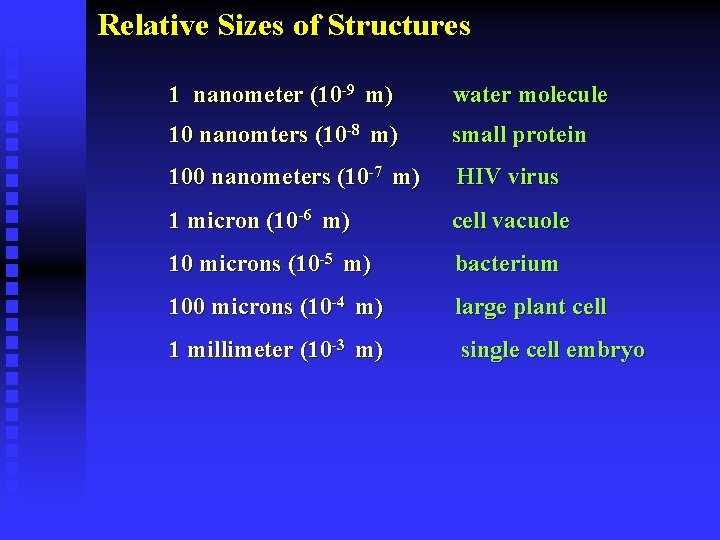
Relative Sizes of Structures 1 nanometer (10 -9 m) water molecule 10 nanomters (10 -8 m) small protein 100 nanometers (10 -7 m) HIV virus 1 micron (10 -6 m) cell vacuole 10 microns (10 -5 m) bacterium 100 microns (10 -4 m) large plant cell 1 millimeter (10 -3 m) single cell embryo
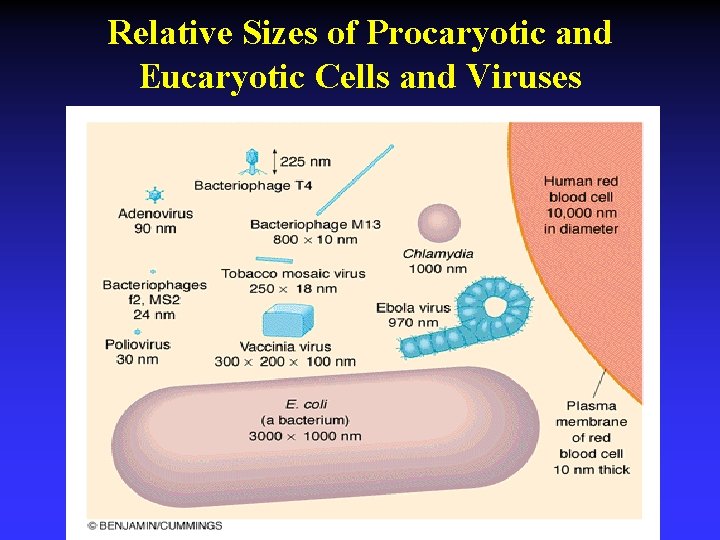
Relative Sizes of Procaryotic and Eucaryotic Cells and Viruses
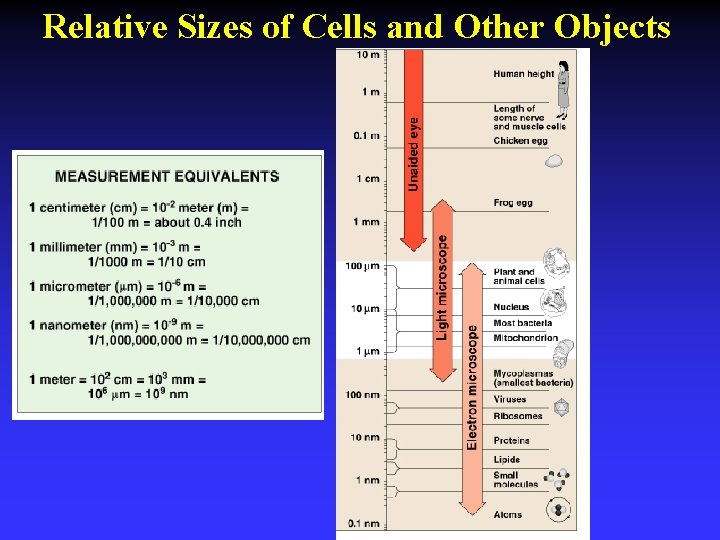
Relative Sizes of Cells and Other Objects
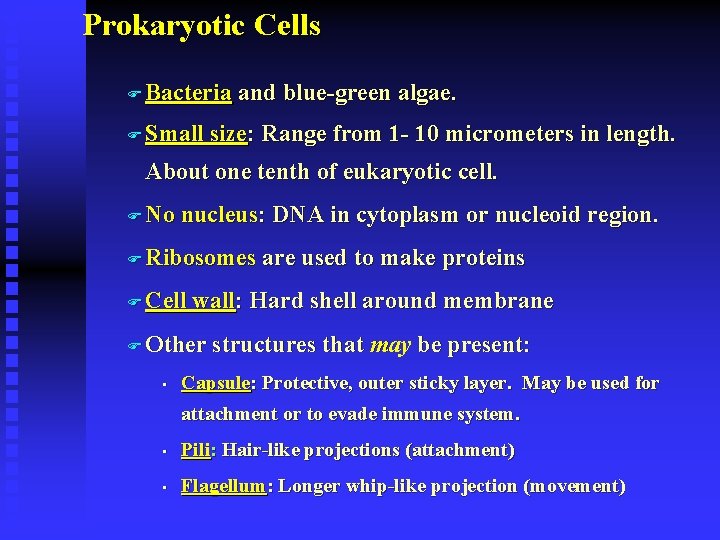
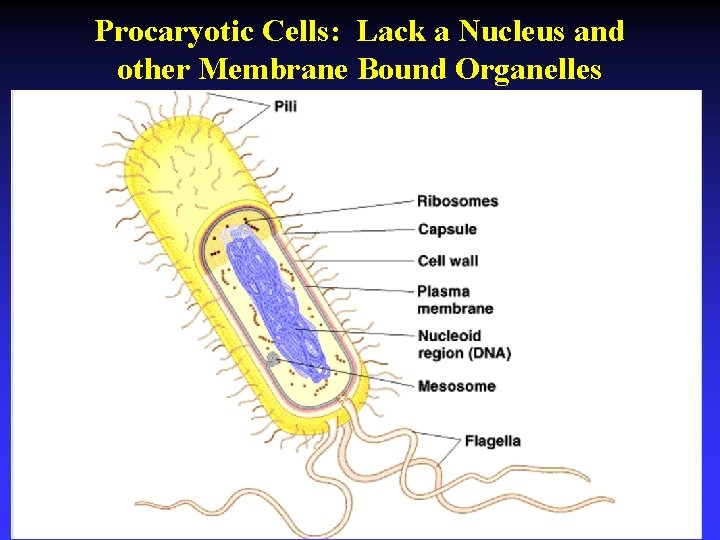
Prokaryotic Cells F Bacteria F Small and blue-green algae. size: Range from 1 - 10 micrometers in length. About one tenth of eukaryotic cell. F No nucleus: DNA in cytoplasm or nucleoid region. F Ribosomes F Cell wall: Hard shell around membrane F Other • are used to make proteins structures that may be present: Capsule: Protective, outer sticky layer. May be used for attachment or to evade immune system. • Pili: Hair-like projections (attachment) • Flagellum: Longer whip-like projection (movement)
Procaryotic Cells: Lack a Nucleus and other Membrane Bound Organelles
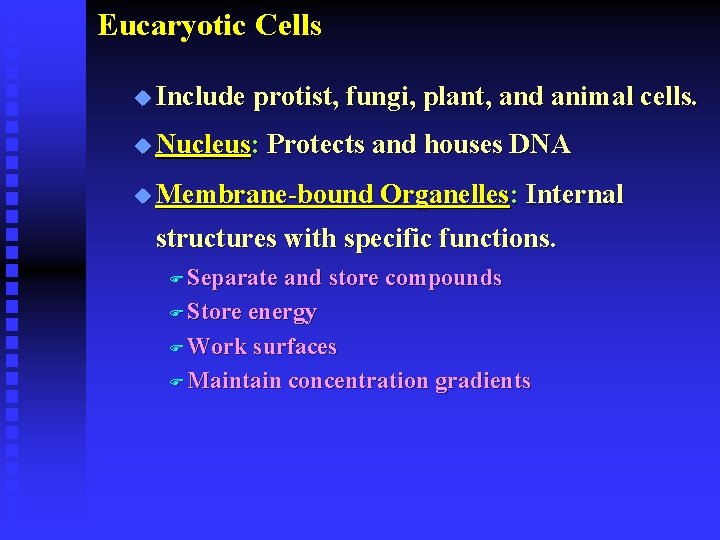
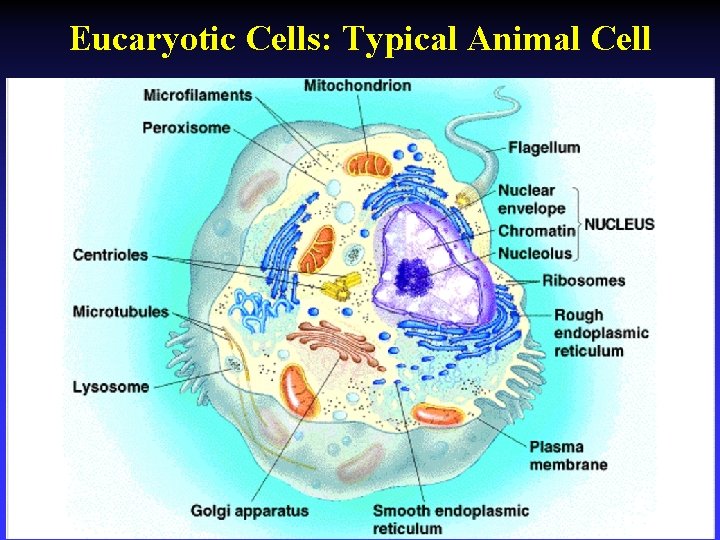
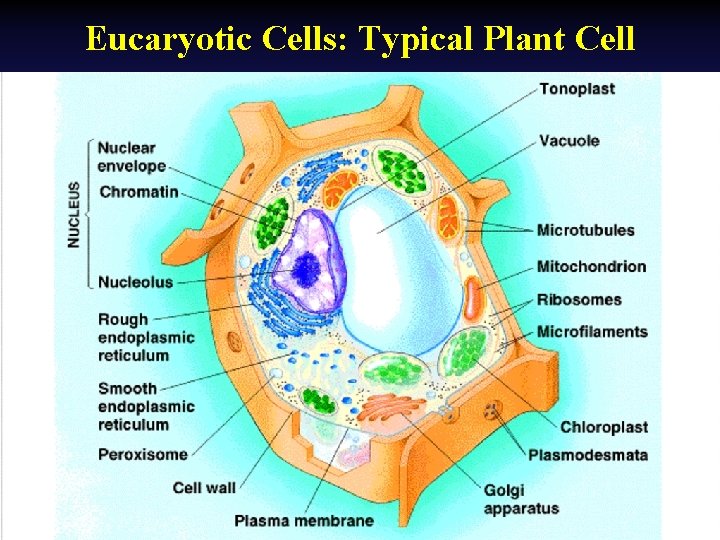
Eucaryotic Cells u Include protist, fungi, plant, and animal cells. u Nucleus: Protects and houses DNA u Membrane-bound Organelles: Internal structures with specific functions. F Separate and store compounds F Store energy F Work surfaces F Maintain concentration gradients
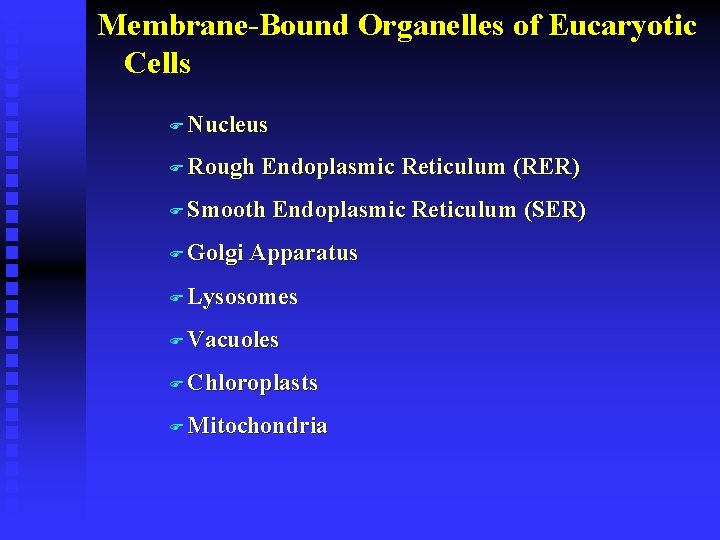
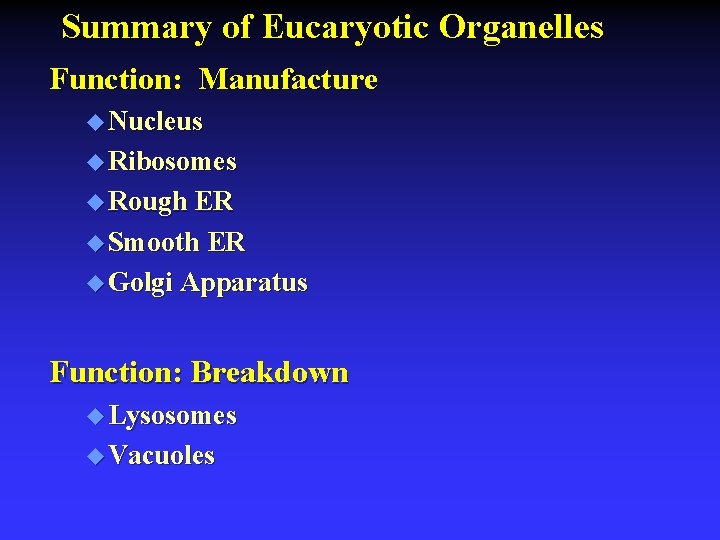
Membrane-Bound Organelles of Eucaryotic Cells F Nucleus F Rough Endoplasmic Reticulum (RER) F Smooth F Golgi Endoplasmic Reticulum (SER) Apparatus F Lysosomes F Vacuoles F Chloroplasts F Mitochondria
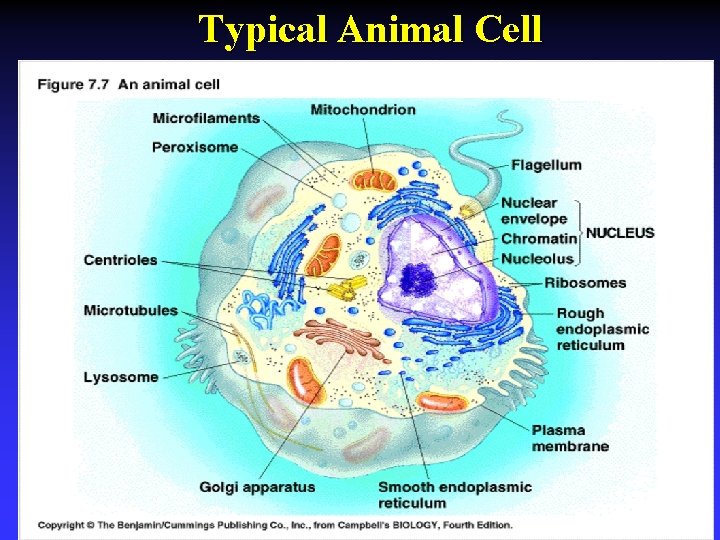
Eucaryotic Cells: Typical Animal Cell
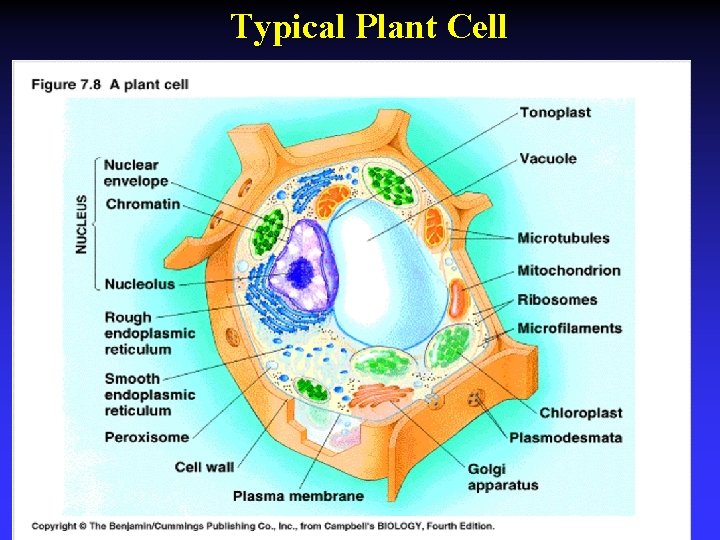
Eucaryotic Cells: Typical Plant Cell
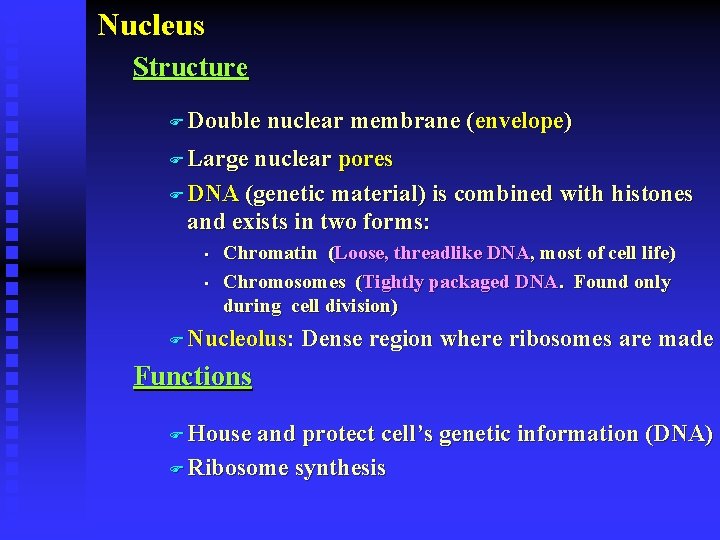
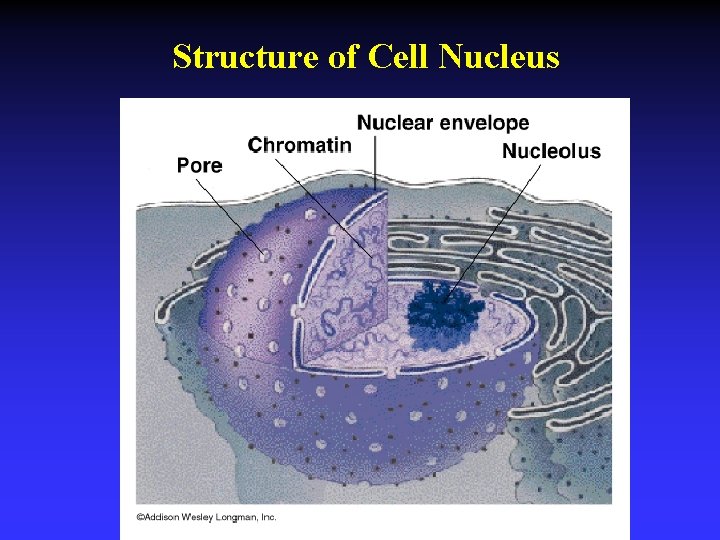
Nucleus Structure F Double nuclear membrane (envelope) F Large nuclear pores F DNA (genetic material) is combined with histones and exists in two forms: • • Chromatin (Loose, threadlike DNA, most of cell life) Chromosomes (Tightly packaged DNA. Found only during cell division) F Nucleolus: Dense region where ribosomes are made Functions F House and protect cell’s genetic information (DNA) F Ribosome synthesis
Structure of Cell Nucleus
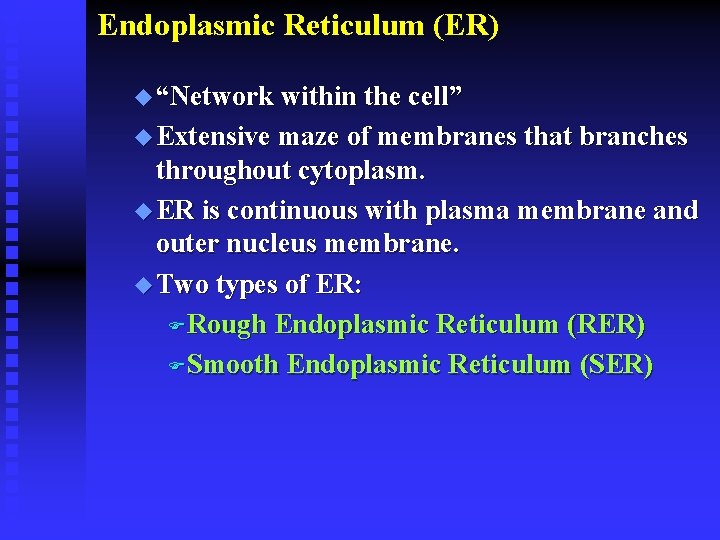
Endoplasmic Reticulum (ER) u “Network within the cell” u Extensive maze of membranes that branches throughout cytoplasm. u ER is continuous with plasma membrane and outer nucleus membrane. u Two types of ER: F Rough Endoplasmic Reticulum (RER) F Smooth Endoplasmic Reticulum (SER)
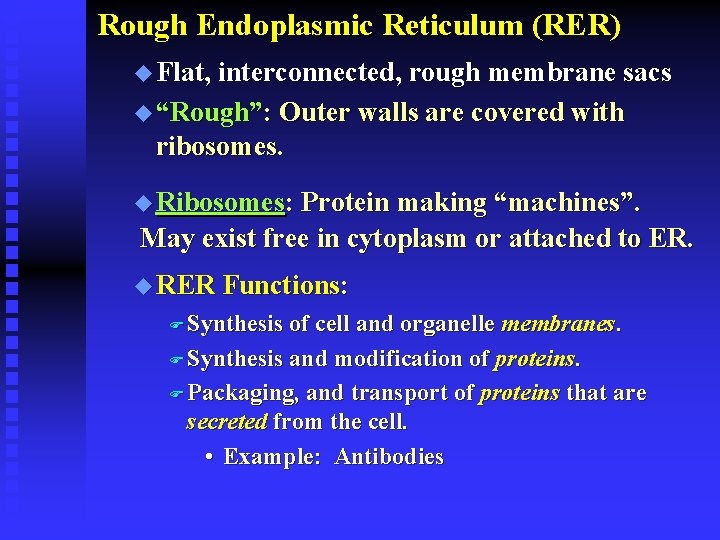
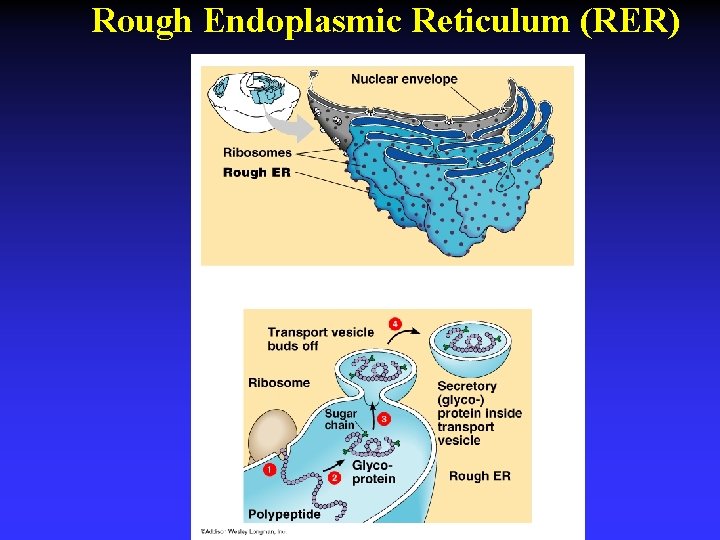
Rough Endoplasmic Reticulum (RER) u Flat, interconnected, rough membrane sacs u “Rough”: Outer walls are covered with ribosomes. u Ribosomes: Protein making “machines”. May exist free in cytoplasm or attached to ER. u RER Functions: F Synthesis of cell and organelle membranes. F Synthesis and modification of proteins. F Packaging, and transport of proteins that are secreted from the cell. • Example: Antibodies
Rough Endoplasmic Reticulum (RER)
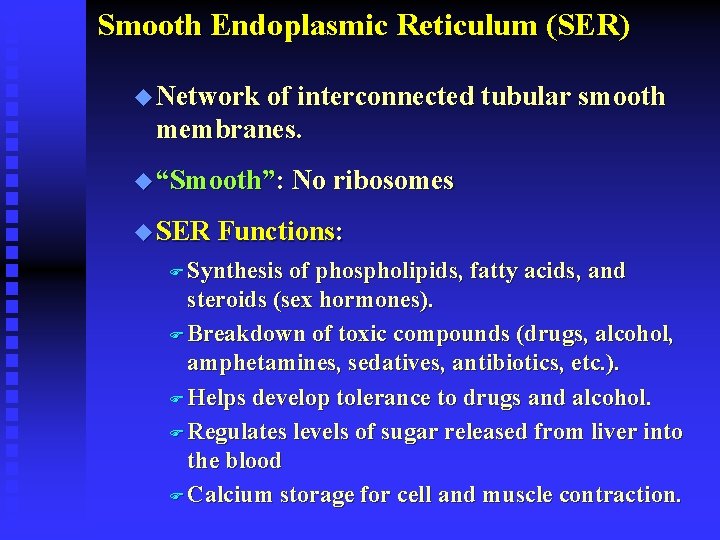
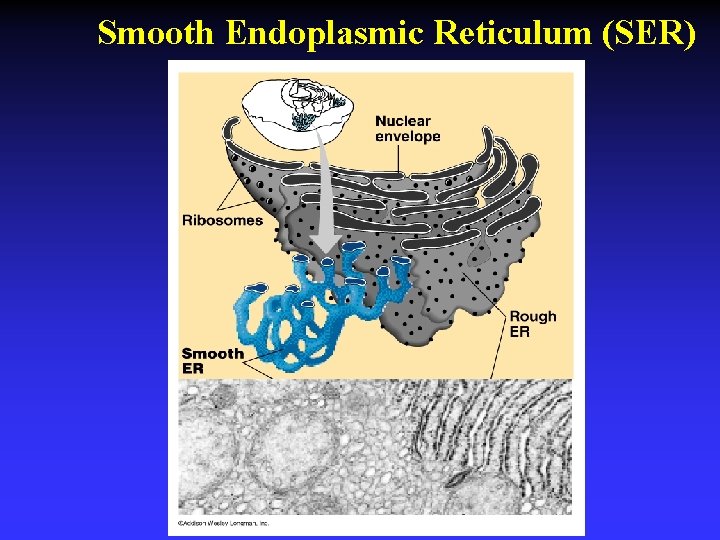
Smooth Endoplasmic Reticulum (SER) u Network of interconnected tubular smooth membranes. u “Smooth”: No ribosomes u SER Functions: F Synthesis of phospholipids, fatty acids, and steroids (sex hormones). F Breakdown of toxic compounds (drugs, alcohol, amphetamines, sedatives, antibiotics, etc. ). F Helps develop tolerance to drugs and alcohol. F Regulates levels of sugar released from liver into the blood F Calcium storage for cell and muscle contraction.
Smooth Endoplasmic Reticulum (SER)
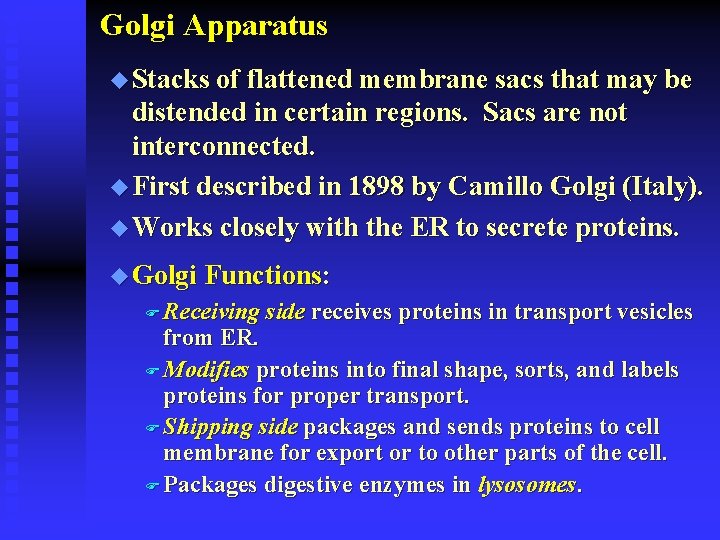
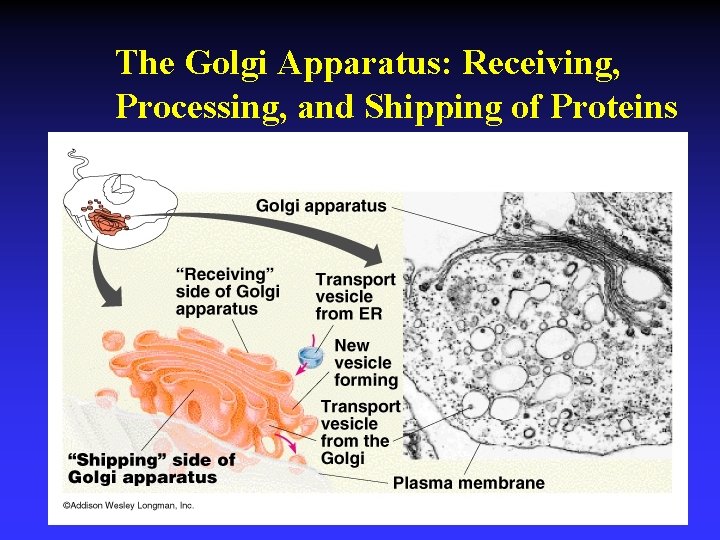
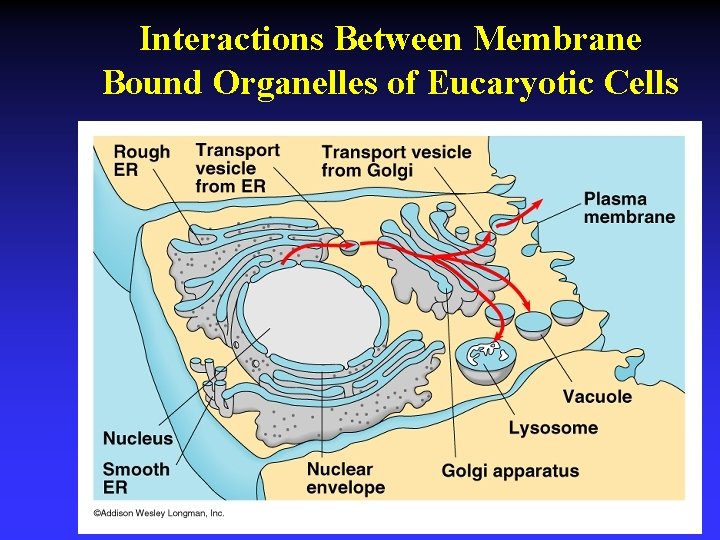
Golgi Apparatus u Stacks of flattened membrane sacs that may be distended in certain regions. Sacs are not interconnected. u First described in 1898 by Camillo Golgi (Italy). u Works closely with the ER to secrete proteins. u Golgi Functions: F Receiving side receives proteins in transport vesicles from ER. F Modifies proteins into final shape, sorts, and labels proteins for proper transport. F Shipping side packages and sends proteins to cell membrane for export or to other parts of the cell. F Packages digestive enzymes in lysosomes.
The Golgi Apparatus: Receiving, Processing, and Shipping of Proteins
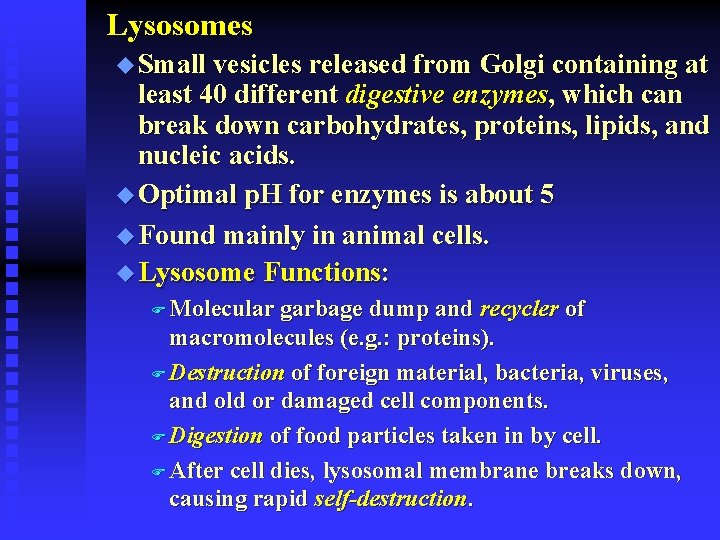
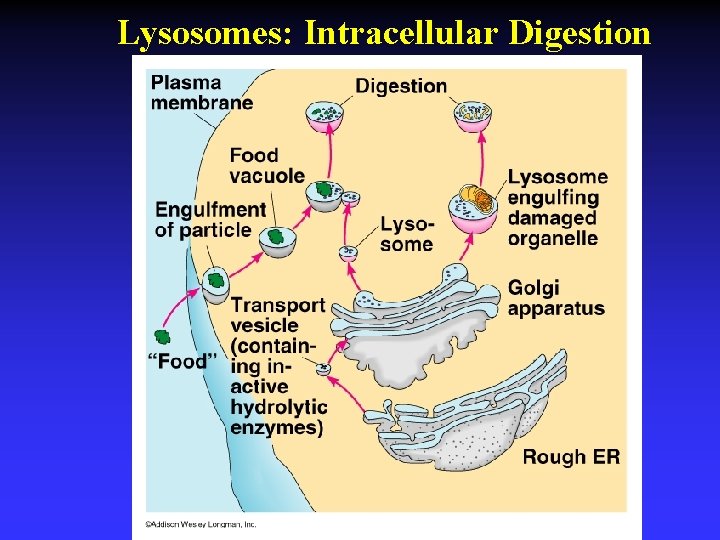
Lysosomes u Small vesicles released from Golgi containing at least 40 different digestive enzymes, which can break down carbohydrates, proteins, lipids, and nucleic acids. u Optimal p. H for enzymes is about 5 u Found mainly in animal cells. u Lysosome Functions: F Molecular garbage dump and recycler of macromolecules (e. g. : proteins). F Destruction of foreign material, bacteria, viruses, and old or damaged cell components. F Digestion of food particles taken in by cell. F After cell dies, lysosomal membrane breaks down, causing rapid self-destruction.
Lysosomes: Intracellular Digestion
Lysosomes, Aging, and Disease u As we get older, our lysosomes become leaky, releasing enzymes which cause tissue damage and inflammation. F Example: Cartilage damage in arthritis. u Steroids or cortisone-like anti-inflammatory agents stabilize lysosomal membranes, but have other undesirable effects (affect immune function). u Diseases from “mutant” lysosome enzymes are usually fatal: F Pompe’s disease: Defective glycogen breakdown in liver. F Tay-Sachs disease: Defective lipid breakdown in brain. Common genetic disorder among Jewish people.
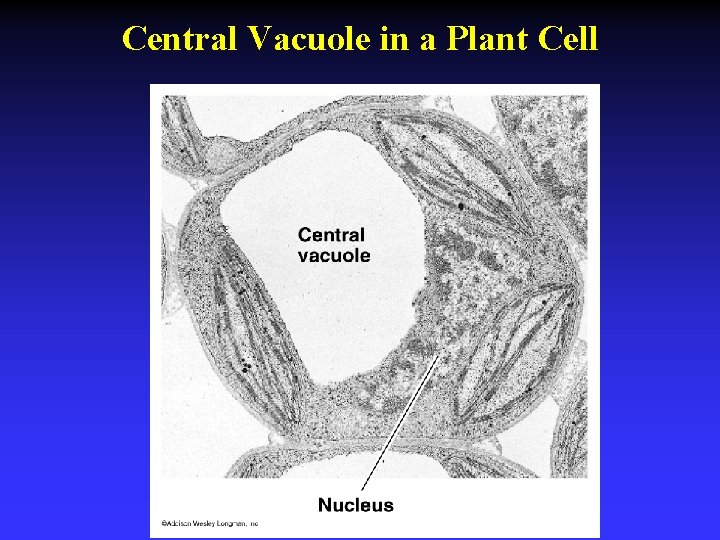
Vacuoles u Membrane bound sac. u Different sizes, shapes, and functions: F Central vacuole: In plant cells. Store starch, water, pigments, poisons, and wastes. May occupy up to 90% of cell volume. F Contractile vacuole: Regulate water balance, by removing excess water from cell. Found in many aquatic protists. F Food or Digestion Vacuole: Engulf nutrients in many protozoa (protists). Fuse with lysosomes to digest food particles.
Central Vacuole in a Plant Cell
Interactions Between Membrane Bound Organelles of Eucaryotic Cells
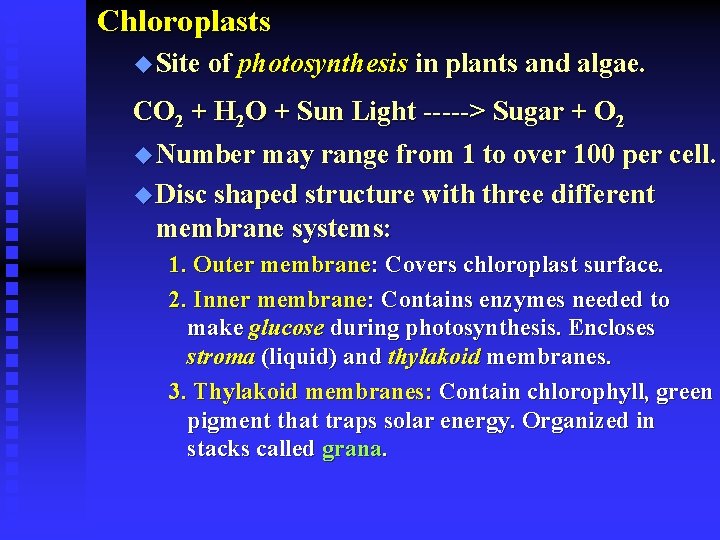
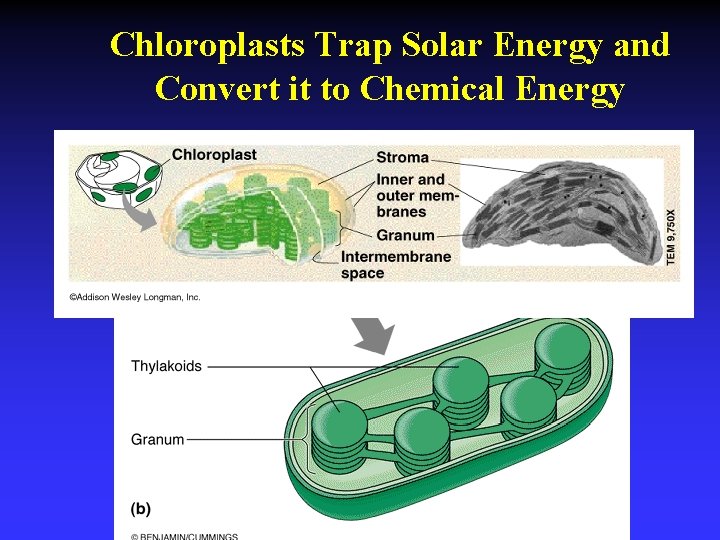
Chloroplasts u Site of photosynthesis in plants and algae. CO 2 + H 2 O + Sun Light -----> Sugar + O 2 u Number may range from 1 to over 100 per cell. u Disc shaped structure with three different membrane systems: 1. Outer membrane: Covers chloroplast surface. 2. Inner membrane: Contains enzymes needed to make glucose during photosynthesis. Encloses stroma (liquid) and thylakoid membranes. 3. Thylakoid membranes: Contain chlorophyll, green pigment that traps solar energy. Organized in stacks called grana.
Chloroplasts Trap Solar Energy and Convert it to Chemical Energy
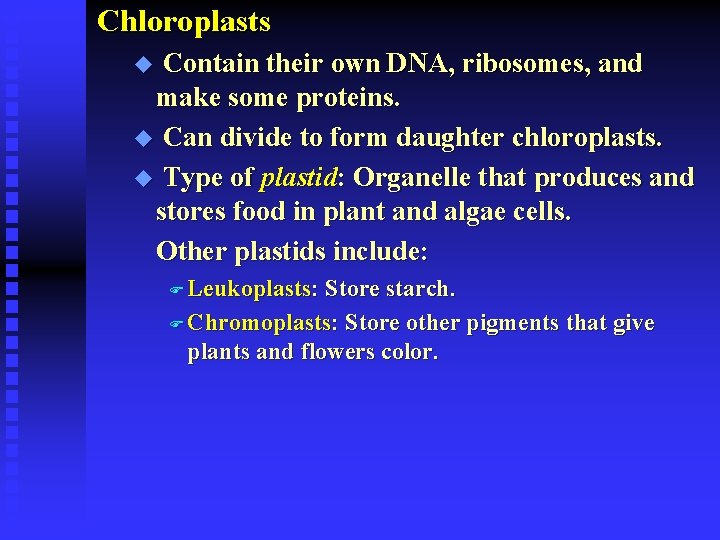
Chloroplasts Contain their own DNA, ribosomes, and make some proteins. u Can divide to form daughter chloroplasts. u Type of plastid: Organelle that produces and stores food in plant and algae cells. Other plastids include: u F Leukoplasts: Store starch. F Chromoplasts: Store other pigments that give plants and flowers color.
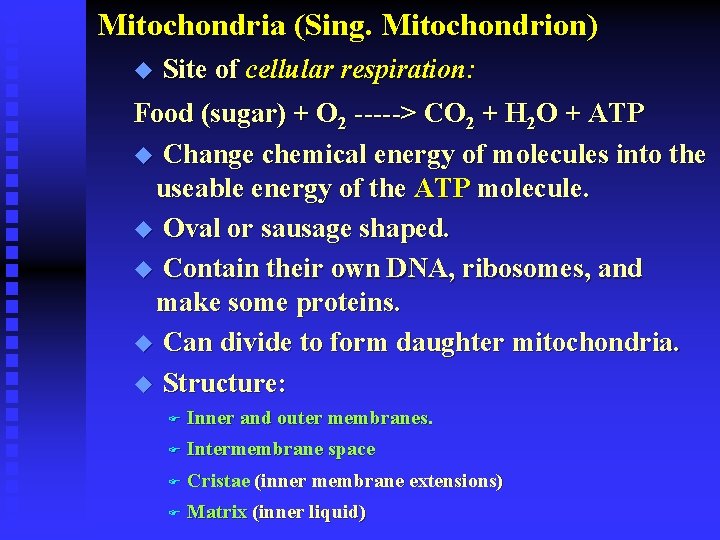
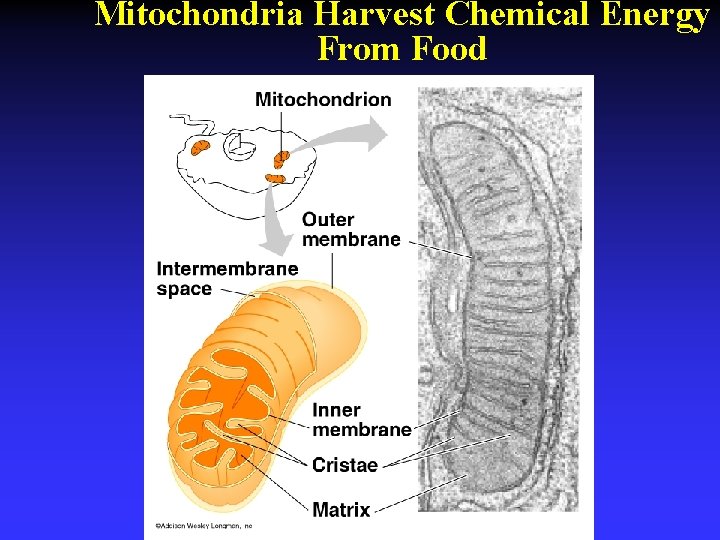
Mitochondria (Sing. Mitochondrion) u Site of cellular respiration: Food (sugar) + O 2 -----> CO 2 + H 2 O + ATP u Change chemical energy of molecules into the useable energy of the ATP molecule. u Oval or sausage shaped. u Contain their own DNA, ribosomes, and make some proteins. u Can divide to form daughter mitochondria. u Structure: F Inner and outer membranes. F Intermembrane space F Cristae (inner membrane extensions) F Matrix (inner liquid)
Mitochondria Harvest Chemical Energy From Food
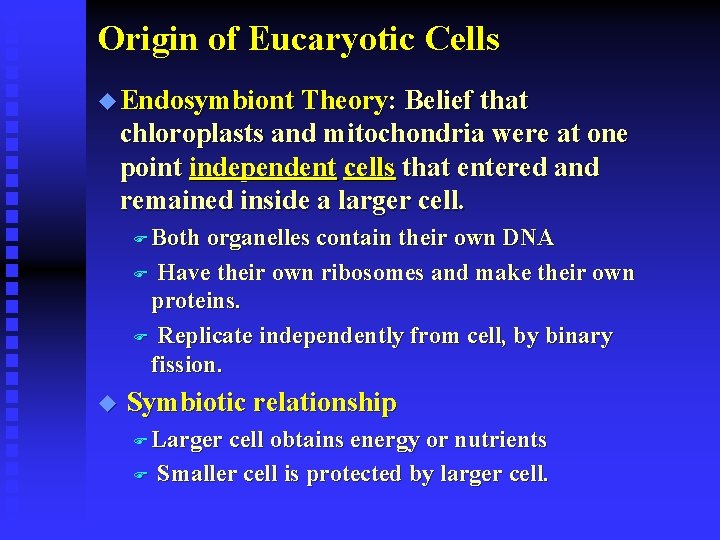
Origin of Eucaryotic Cells u Endosymbiont Theory: Belief that chloroplasts and mitochondria were at one point independent cells that entered and remained inside a larger cell. F Both organelles contain their own DNA F Have their own ribosomes and make their own proteins. F Replicate independently from cell, by binary fission. u Symbiotic relationship F Larger F cell obtains energy or nutrients Smaller cell is protected by larger cell.
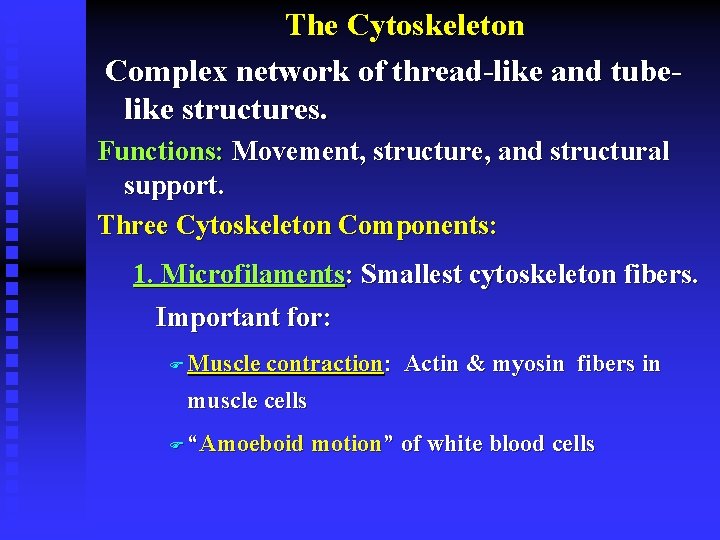
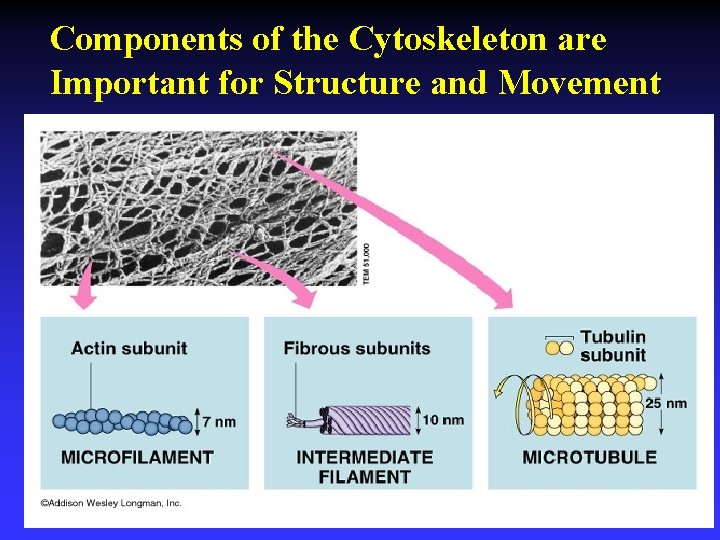
The Cytoskeleton Complex network of thread-like and tubelike structures. Functions: Movement, structure, and structural support. Three Cytoskeleton Components: 1. Microfilaments: Smallest cytoskeleton fibers. Important for: F Muscle contraction: Actin & myosin fibers in muscle cells F “Amoeboid motion” of white blood cells
Components of the Cytoskeleton are Important for Structure and Movement
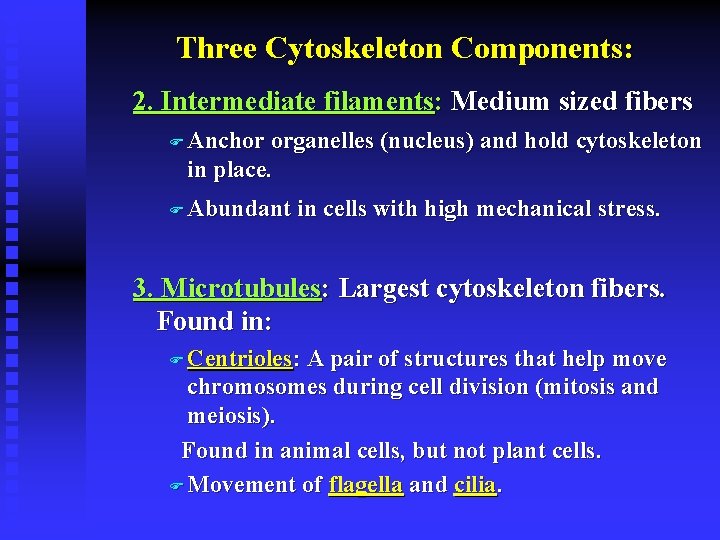
Three Cytoskeleton Components: 2. Intermediate filaments: Medium sized fibers F Anchor organelles (nucleus) and hold cytoskeleton in place. F Abundant in cells with high mechanical stress. 3. Microtubules: Largest cytoskeleton fibers. Found in: F Centrioles: A pair of structures that help move chromosomes during cell division (mitosis and meiosis). Found in animal cells, but not plant cells. F Movement of flagella and cilia.
Typical Animal Cell
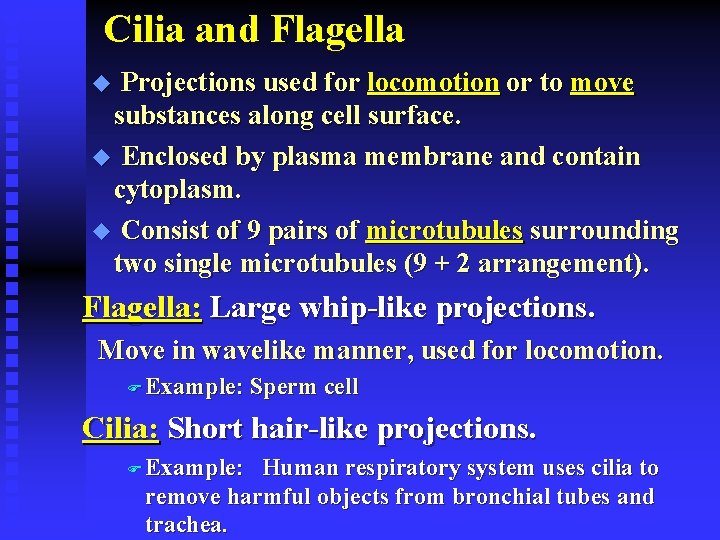
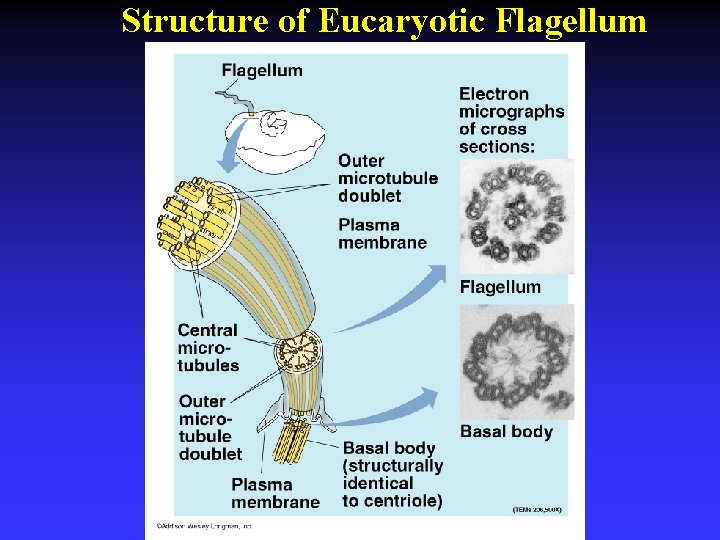
Cilia and Flagella Projections used for locomotion or to move substances along cell surface. u Enclosed by plasma membrane and contain cytoplasm. u Consist of 9 pairs of microtubules surrounding two single microtubules (9 + 2 arrangement). u Flagella: Large whip-like projections. Move in wavelike manner, used for locomotion. F Example: Sperm cell Cilia: Short hair-like projections. F Example: Human respiratory system uses cilia to remove harmful objects from bronchial tubes and trachea.
Structure of Eucaryotic Flagellum
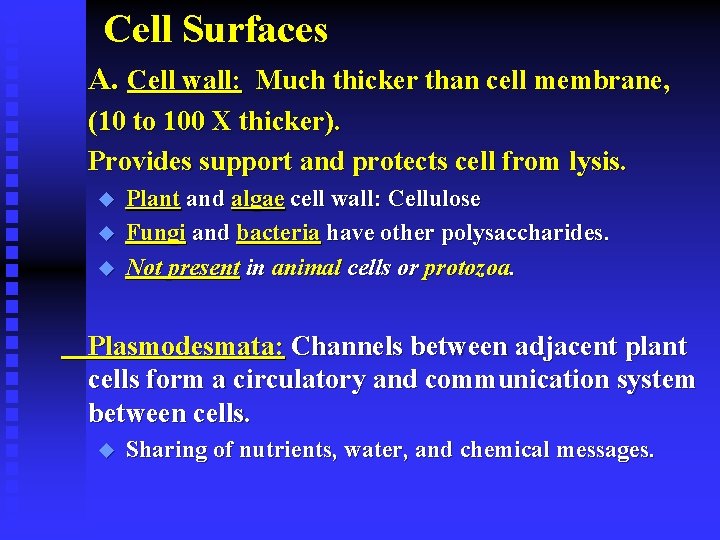
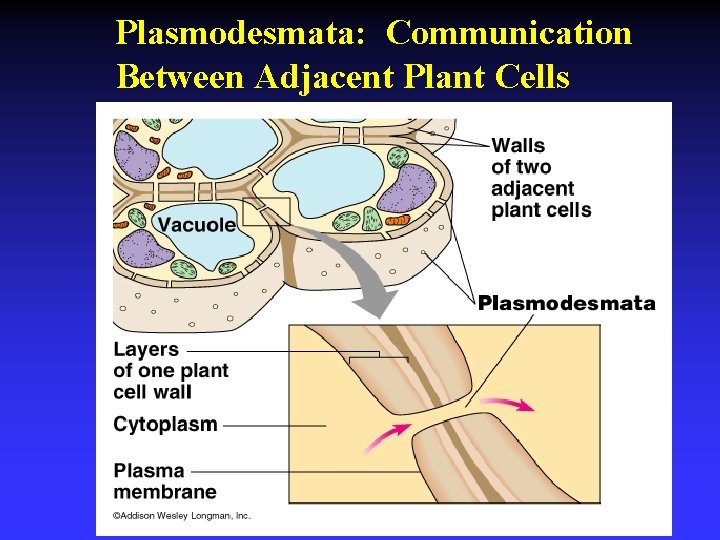
Cell Surfaces A. Cell wall: Much thicker than cell membrane, (10 to 100 X thicker). Provides support and protects cell from lysis. u u u Plant and algae cell wall: Cellulose Fungi and bacteria have other polysaccharides. Not present in animal cells or protozoa. Plasmodesmata: Channels between adjacent plant cells form a circulatory and communication system between cells. u Sharing of nutrients, water, and chemical messages.
Plasmodesmata: Communication Between Adjacent Plant Cells
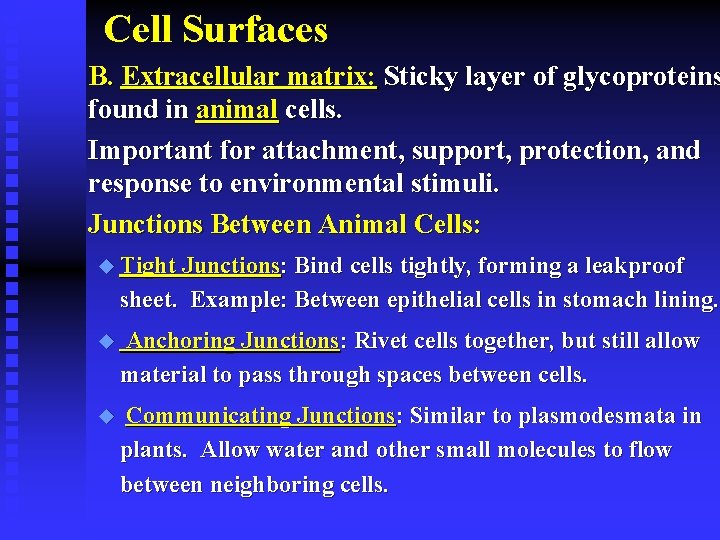
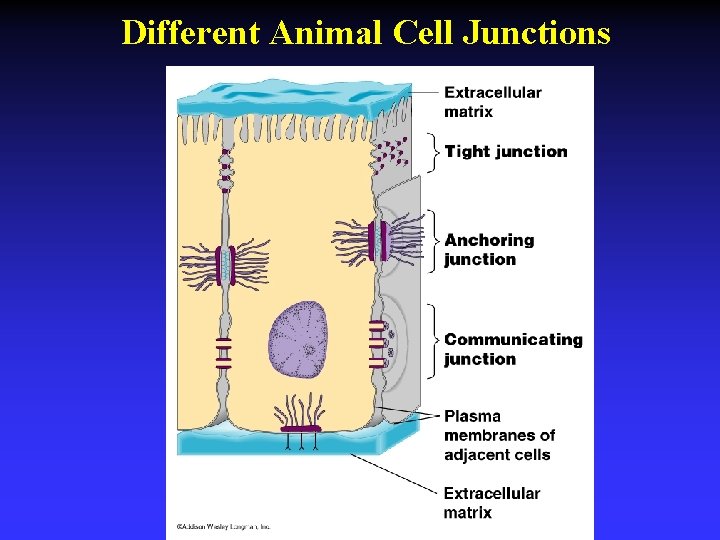
Cell Surfaces B. Extracellular matrix: Sticky layer of glycoproteins found in animal cells. Important for attachment, support, protection, and response to environmental stimuli. Junctions Between Animal Cells: u Tight Junctions: Bind cells tightly, forming a leakproof sheet. Example: Between epithelial cells in stomach lining. u Anchoring Junctions: Rivet cells together, but still allow material to pass through spaces between cells. u Communicating Junctions: Similar to plasmodesmata in plants. Allow water and other small molecules to flow between neighboring cells.
Different Animal Cell Junctions
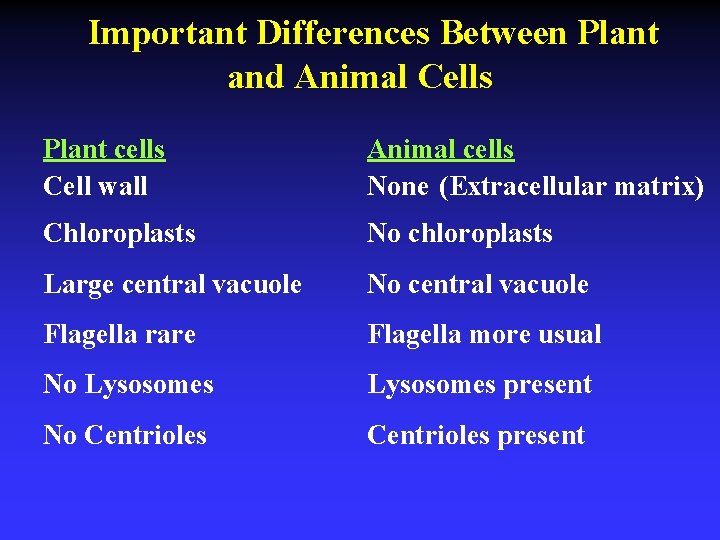
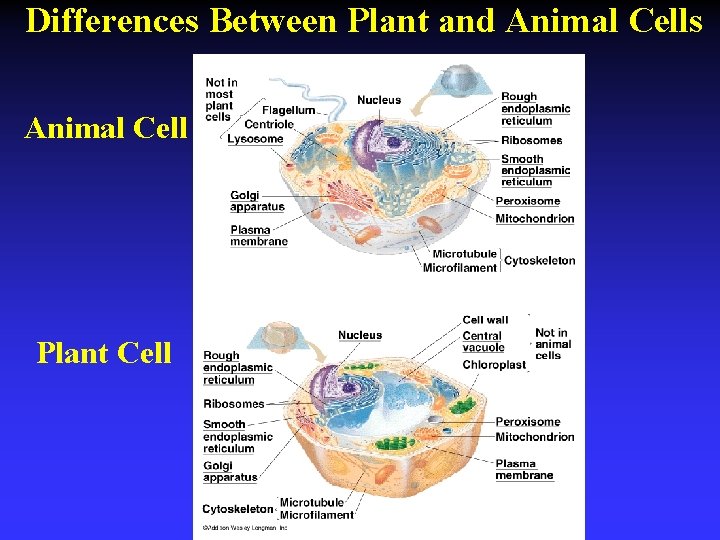
Important Differences Between Plant and Animal Cells Plant cells Cell wall Animal cells None (Extracellular matrix) Chloroplasts No chloroplasts Large central vacuole No central vacuole Flagella rare Flagella more usual No Lysosomes present No Centrioles present
Differences Between Plant and Animal Cells Animal Cell Plant Cell
Typical Plant Cell
Summary of Eucaryotic Organelles Function: Manufacture u Nucleus u Ribosomes u Rough ER u Smooth ER u Golgi Apparatus Function: Breakdown u Lysosomes u Vacuoles
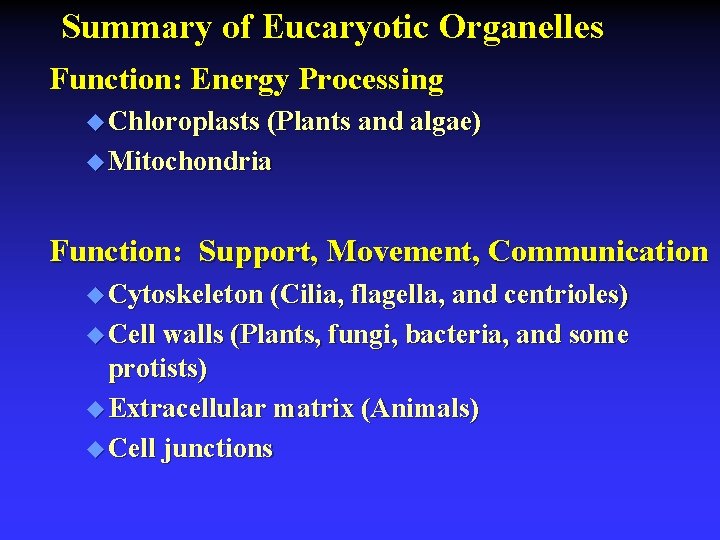
Summary of Eucaryotic Organelles Function: Energy Processing u Chloroplasts (Plants and algae) u Mitochondria Function: Support, Movement, Communication u Cytoskeleton (Cilia, flagella, and centrioles) u Cell walls (Plants, fungi, bacteria, and some protists) u Extracellular matrix (Animals) u Cell junctions