
Chapter 4 Blood Overview of Blood n n
Chapter 4 Blood
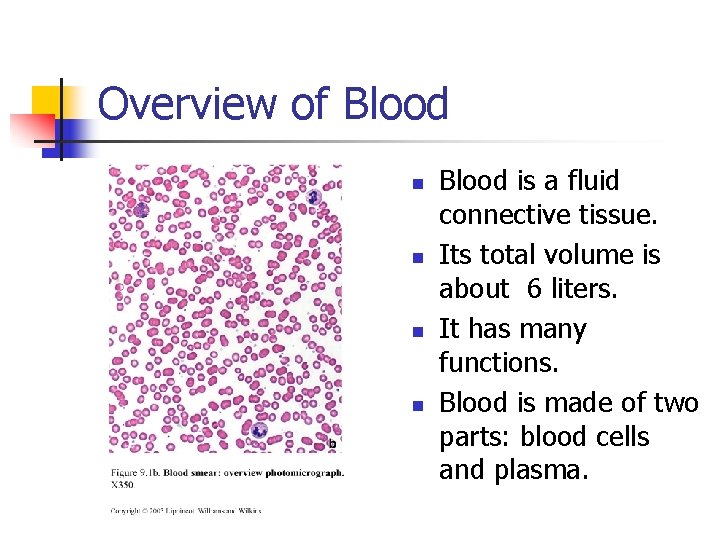
Overview of Blood n n Blood is a fluid connective tissue. Its total volume is about 6 liters. It has many functions. Blood is made of two parts: blood cells and plasma.
Main Functions n n n Transport of nutrients and oxygen to cells. Transport of wastes and carbon dioxide away from cells. Delivery of hormones and other regulatory substances to and from cells and tissues. Maintenance of homeostasis. Transport of humoral agent and cells of the immune system.
Plasma n n Its main component is water. A variety of solutes , including proteins (albumin, fibrinogen) , dissolved gases (oxygen, carbon dioxide) , electrolytes (Na, Mg , Ca), nutrients (glucose, lipids) , regulatory substances (hormones, e nzymes) and waste materials (drugs urea).
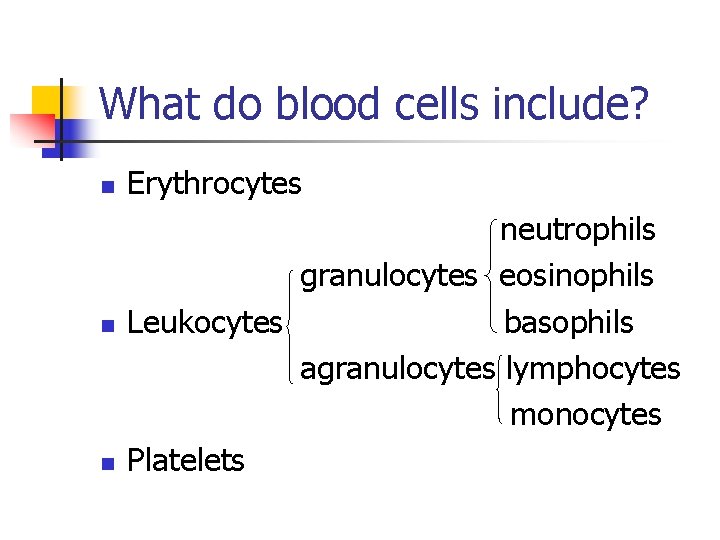
What do blood cells include? n n n Erythrocytes neutrophils granulocytes eosinophils Leukocytes basophils agranulocytes lymphocytes monocytes Platelets
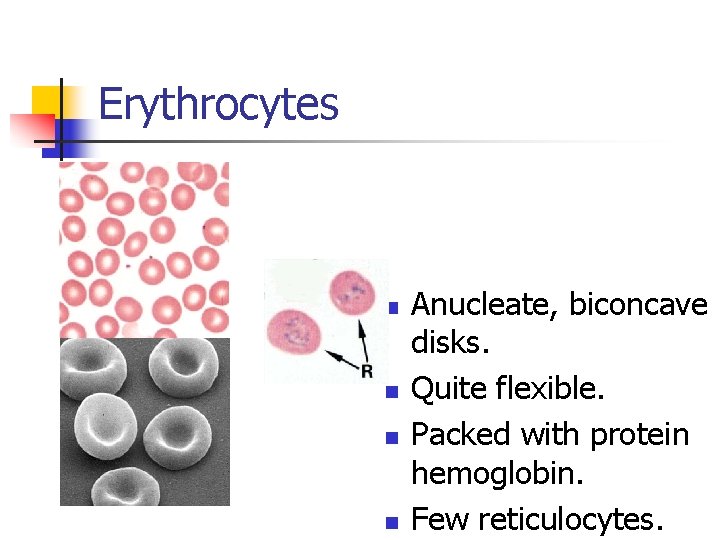
Erythrocytes n n Anucleate, biconcave disks. Quite flexible. Packed with protein hemoglobin. Few reticulocytes.
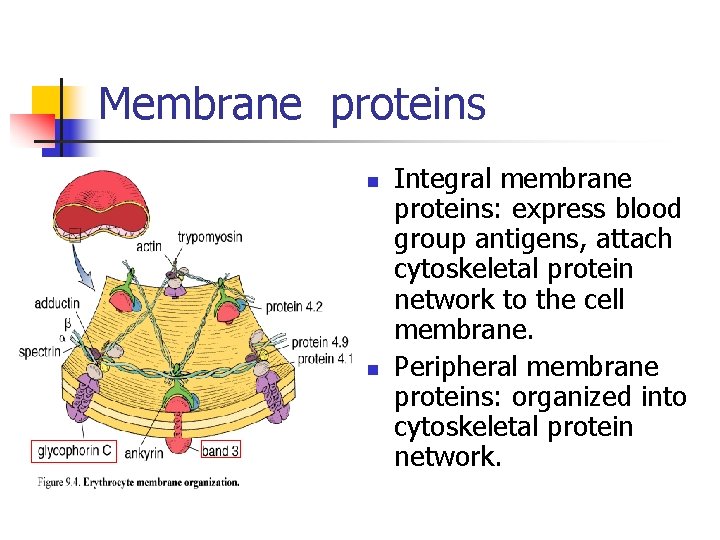
Membrane proteins n n Integral membrane proteins: express blood group antigens, attach cytoskeletal protein network to the cell membrane. Peripheral membrane proteins: organized into cytoskeletal protein network.
Leukocytes-granulocytes n n n Possess two types of granules: specific granules and azurophilic granules. Granulocytes have nuclei with two or more lobes. Include the neutrophils, eosinophils, and basophils.
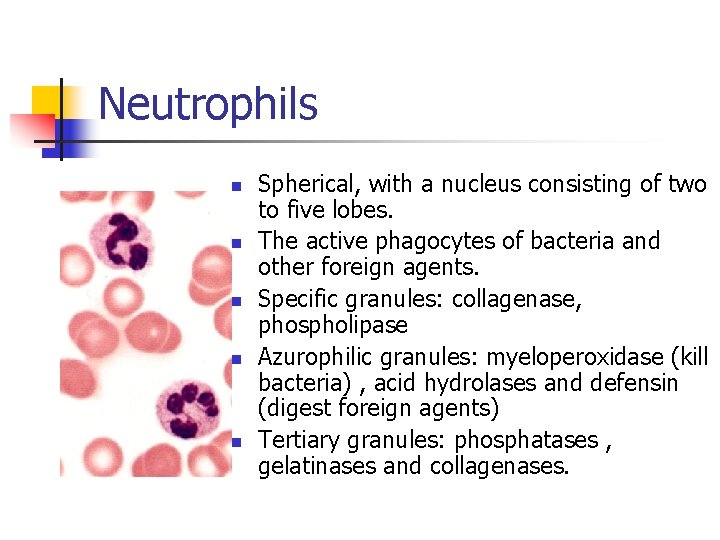
Neutrophils n n n Spherical, with a nucleus consisting of two to five lobes. The active phagocytes of bacteria and other foreign agents. Specific granules: collagenase, phospholipase Azurophilic granules: myeloperoxidase (kill bacteria) , acid hydrolases and defensin (digest foreign agents) Tertiary granules: phosphatases , gelatinases and collagenases.
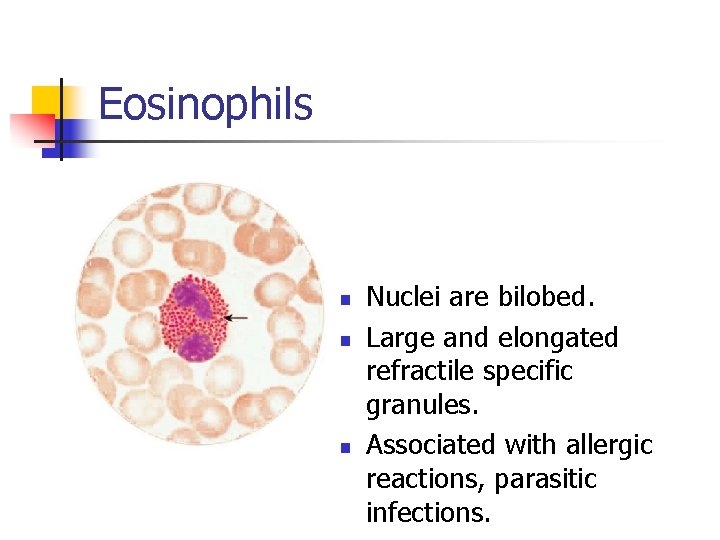
Eosinophils n n n Nuclei are bilobed. Large and elongated refractile specific granules. Associated with allergic reactions, parasitic infections.
Eosinophils n n Specific granules: major basic protein (MBP), eosinophil cationic protein(ECP), eosinophil peroxidase(EPO) and eosinophil-derived neurotoxin (EDN); ----destruct parasites. histaminase, arylsulfatase, collagenase. ----attenuate allergic reactions. Azurophilic granules: acid hydrolases. ----attenuate allergic reactions.

Basophils n n n Nucleus is divided into irregular lobes. Specific granules are few and irregular in size and shape. Contain heparan sulfate, histamine, and slow-reacting substance of anaphylaxis (SAS-A). Participate in anaphylaxis, anticoagulation.
Leukocytes-agranulocytes n n n Do not have specific granules, but contain azurophilic granules. The nucleus is round or indented. Includes lymphocytes and monocytes.
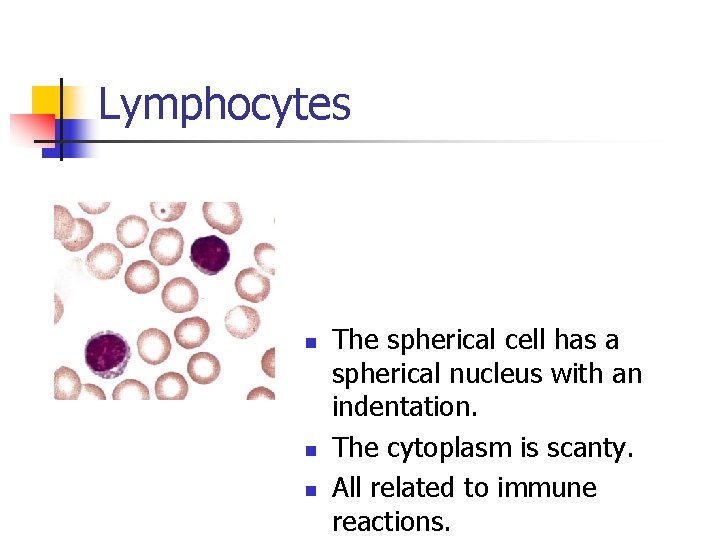
Lymphocytes n n n The spherical cell has a spherical nucleus with an indentation. The cytoplasm is scanty. All related to immune reactions.
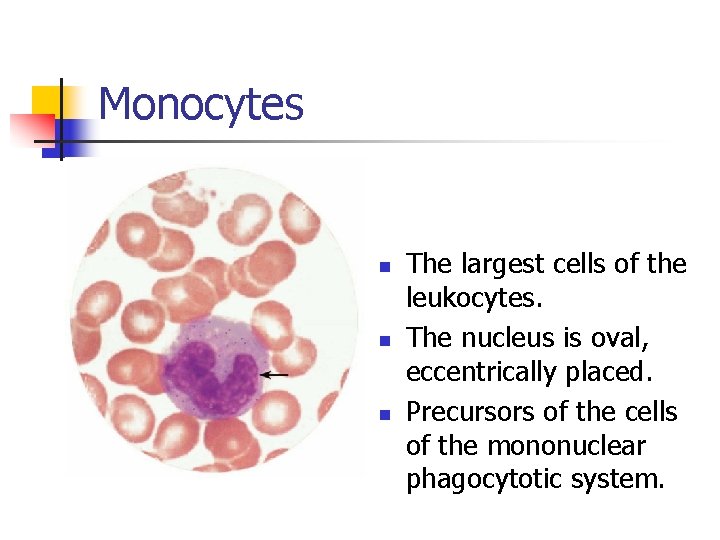
Monocytes n n n The largest cells of the leukocytes. The nucleus is oval, eccentrically placed. Precursors of the cells of the mononuclear phagocytotic system.
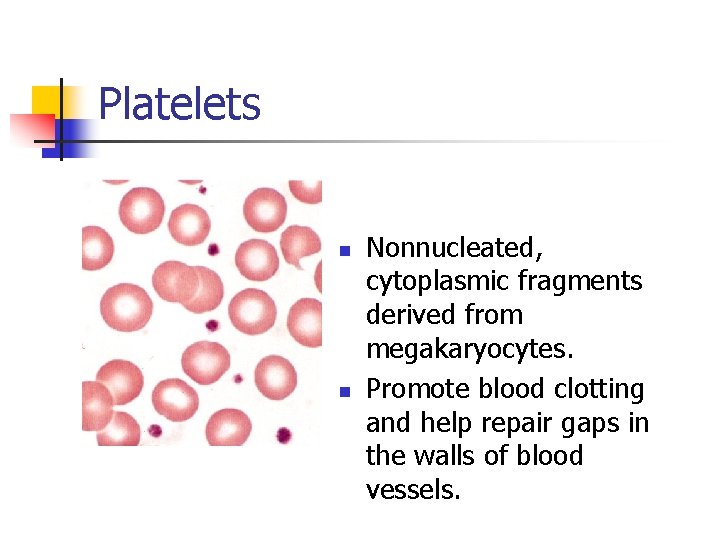
Platelets n n Nonnucleated, cytoplasmic fragments derived from megakaryocytes. Promote blood clotting and help repair gaps in the walls of blood vessels.
Hemopoiesis n n Hemopoiesis includes both erythropoiesis and leukopoiesis, as well as thrombopoiesis. In the adult, erythrocytes, granulocytes, monocytes, and platelets are formed in the red bone marrow; lymphocytes are also formed in the red bone marrow and in the lymphatic tissues.
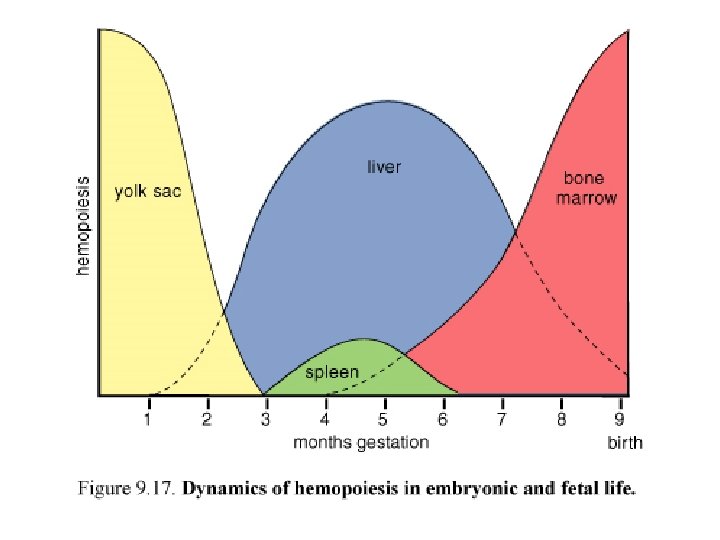
Monophyletic theory n n n Pluripotential stem cell (PPSC) differentiate into multipotential myeloid stem cell and multipotential lymphoid stem cell. Multipotential myeloid stem cell only in bone marrow and give rise to all blood cells other than lymphocytes. Multipotential lymphoid stem cell in bone marrow and in lymphoid tissues , give rise to lymphocytes.
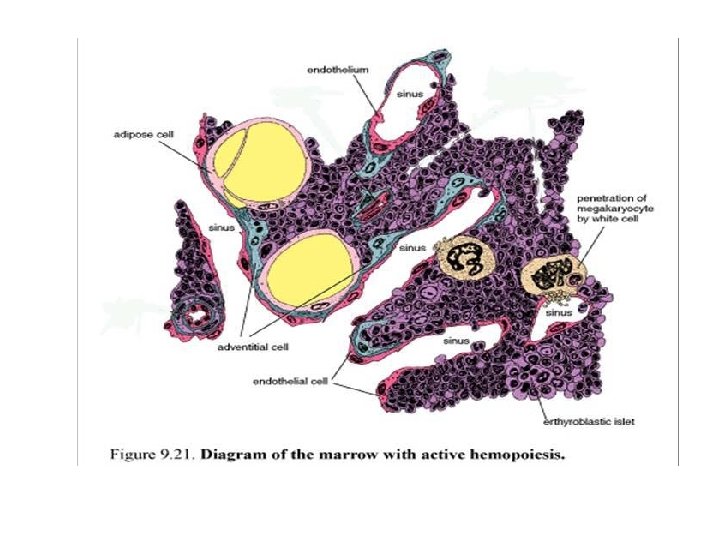
Bone Marrow n n Red bone marrow lies entirely within the spaces of bone, in the medullary cavity of young long bones and the spaces of spongy bone. Bone marrow not active in blood cell formation contains predominately adipose cells, giving it the appearance of adipose tissue.
Summary n n n What is plasma? What do blood cells include? What is the characteristics of each kind of blood cells? What is the hemopoiesis? What is the structure of bone marrow?
Homework n n Review the characteristics of blood cells. Prepare for the next lesson-chapter 10 muscle tissue.
- Slides: 23