
Chapter 4 Atmospheric Temperature the Solar Energy Budget
Chapter 4 Atmospheric Temperature & the Solar Energy Budget
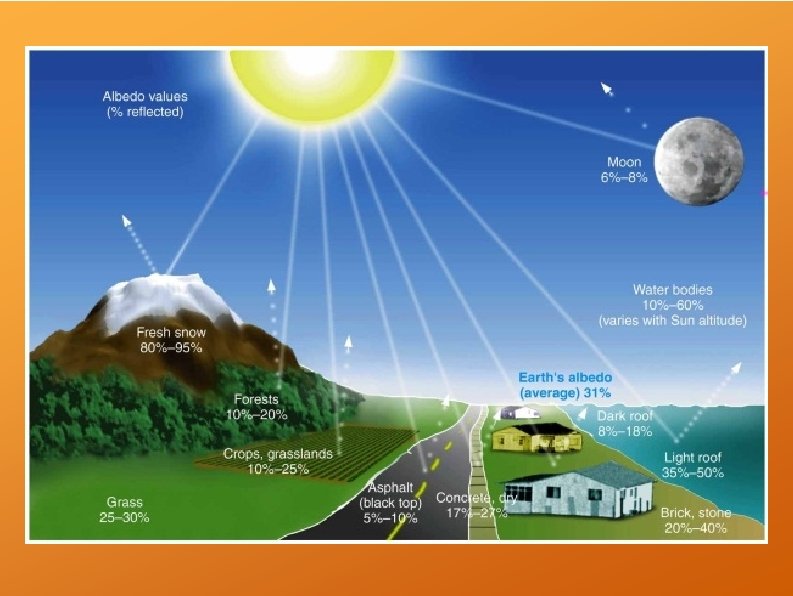
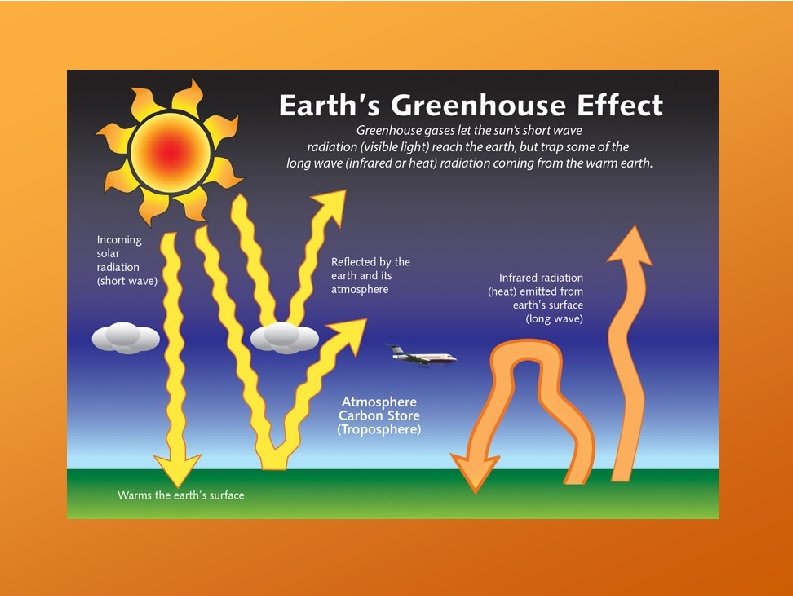
The Solar Energy Budget Insolation - incoming solar radiation Primary energy source for the atmosphere Radiation – the process by electromagnetic energy is emitted from an object The sun emits radiation in the form of shortwave radiation 45% directly reaches earth's surface 31% is reflected back into space 24% absorbed by the atmosphere After radiation is absorbed by the earth, it is re-radiated back as longwave radiation into the atmosphere

Absorption The ability of an object to absorb energy from electromagnetic waves Different types of materials have different absorption properties Generally speaking, darker colors have higher absorptive properties than lighter colors
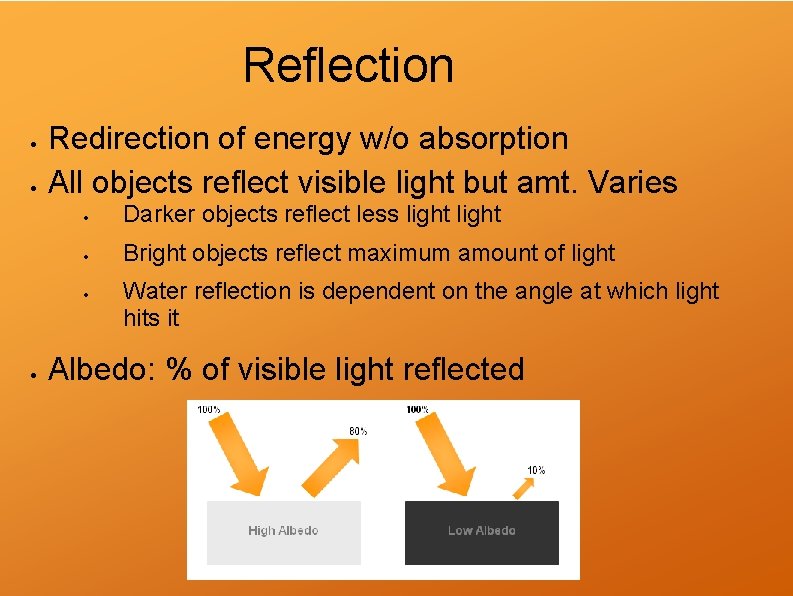
Reflection Redirection of energy w/o absorption All objects reflect visible light but amt. Varies Darker objects reflect less light Bright objects reflect maximum amount of light Water reflection is dependent on the angle at which light hits it Albedo: % of visible light reflected
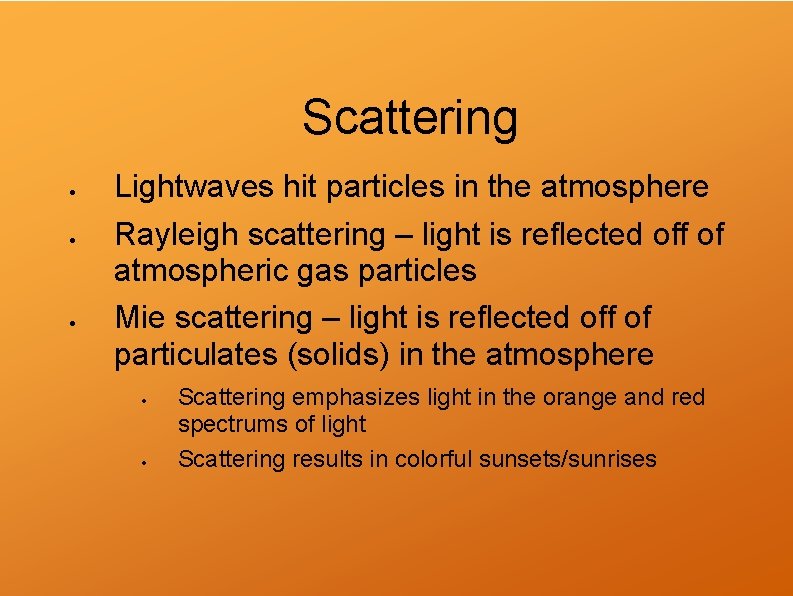
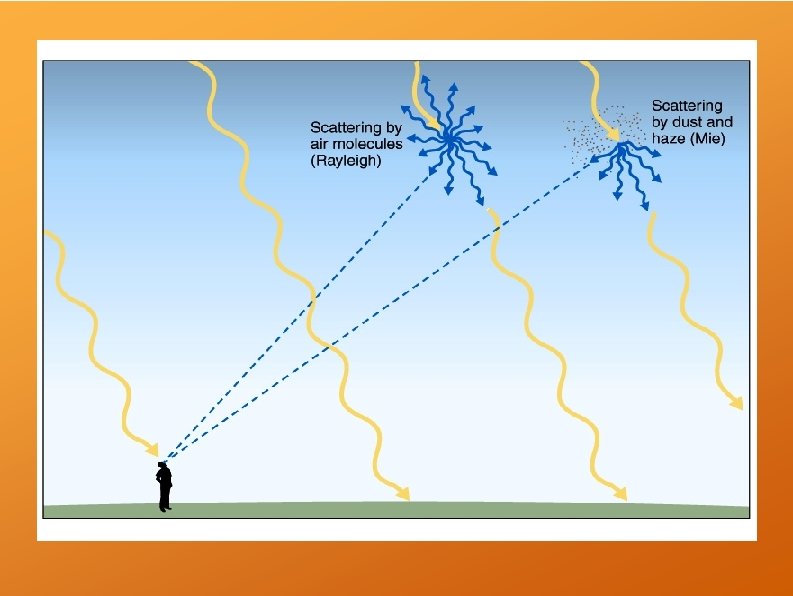
Scattering Lightwaves hit particles in the atmosphere Rayleigh scattering – light is reflected off of atmospheric gas particles Mie scattering – light is reflected off of particulates (solids) in the atmosphere Scattering emphasizes light in the orange and red spectrums of light Scattering results in colorful sunsets/sunrises
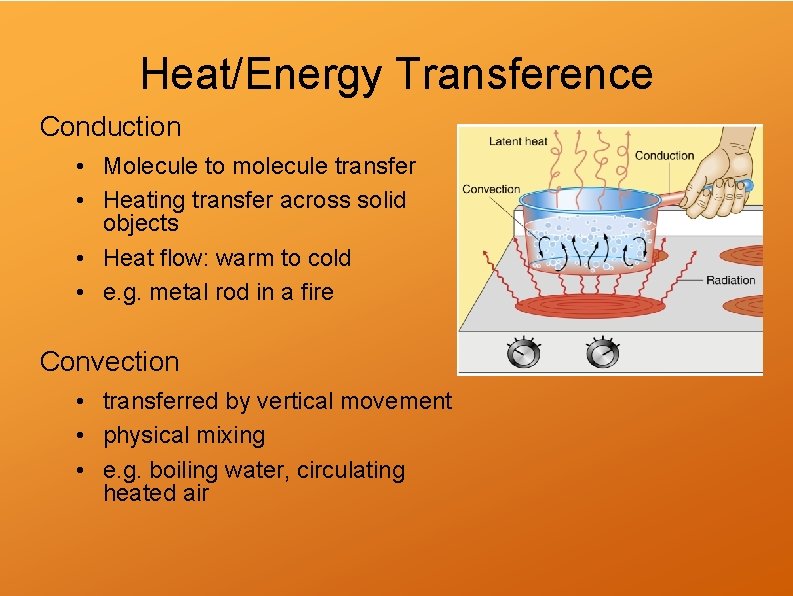
Heat/Energy Transference Conduction • Molecule to molecule transfer • Heating transfer across solid objects • Heat flow: warm to cold • e. g. metal rod in a fire Convection • transferred by vertical movement • physical mixing • e. g. boiling water, circulating heated air
Greenhouse Effect • Heating of the lower atmosphere (troposphere) • Incoming shortwave radiation penetrates through the atmosphere to earth’s surface • Re-radiated long-wave radiation is absorbed by atmospheric gases • Creates a “warming” effect on the planet
Greenhouse Effect cont. • Greenhouse gases are crucial for the greenhouse effect • Water Vapor • Carbon Dioxide (CO 2) • Methane (CH 4) • Chloroflourocarbons (CFC’S) • Adding more of a greenhouse gas to the atmosphere, such as CO 2 or Methane, intensifies the greenhouse effect, thus warming the planet. • In tropical zones, where water vapor is abundant and the greenhouse effect is large, adding a small amount of CO 2 or Water Vapor has a minimum impact. • The opposite is true in dry polar regions
Water Vapor vs CO 2 Water Vapor • • • Added to atmosphere by evaporation or evapotranspiration (plant sweat) Most abundant greenhouse gas in atmosphere Falls back to earth as rain/snow (hydrologic cycle) CO 2 • Supplied to atmosphere by: • • • Respiration processes Decay of organic material Burning of organic material Volcanic eruptions Removed from atmosphere by photosynthesis: converting light energy to chemical energy
- Slides: 13