
Chapter 4 Antenna Matching Techniques Part 1 Table
Chapter 4 Antenna Matching Techniques Part 1

Table of Contents • • • Transmission line principles Lumped matching circuits Reactive matching circuits Power splitting/combining networks Impedance matching and Smith Chart 1 week 2
4. 1 Transmission line and principles

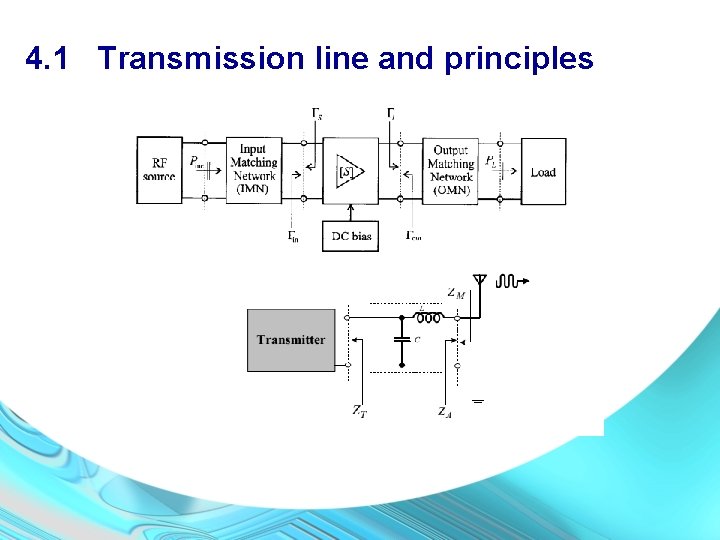
Matching Network • minimum power loss in the feed line & maximum power delivery • linearizing the frequency response of the circuit • improving the S/N ratio of the system for sensitive receiver components (lownoise amplifier, etc. ) • reducing amplitude & phase errors in a power distribution network (such as antenna array-feed network)

Matching Network Factors in the selection of matching networks • complexity - bandwidth requirement (such as broadband design) • adjustability - implementation (transmission line, chip R/L/C elements. . ) 5

S 11, Reflection Coefficient, and Return Loss Reflection Coefficient Return Loss Should yield +ve value a (S 11) b High RL, less reflection *Antenna is one port 6
4. 2 Lumped Matching Networks L – Type Matching Network
Notes: Determining L – Type Matching Network 8
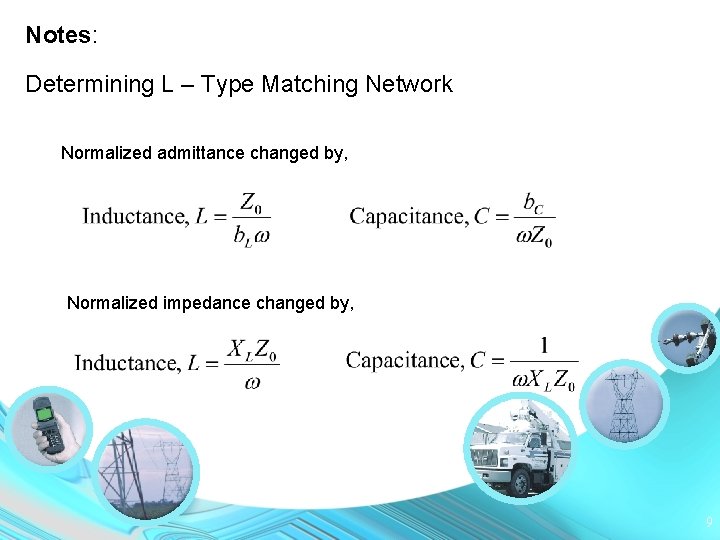
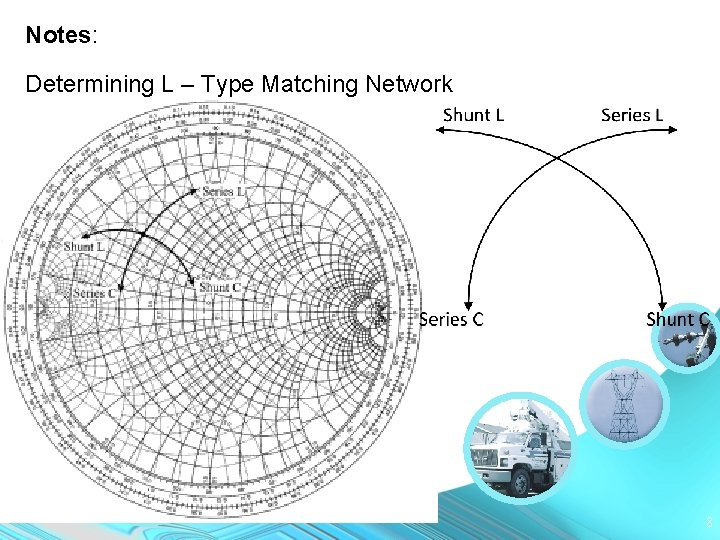
Notes: Determining L – Type Matching Network Normalized admittance changed by, Normalized impedance changed by, 9

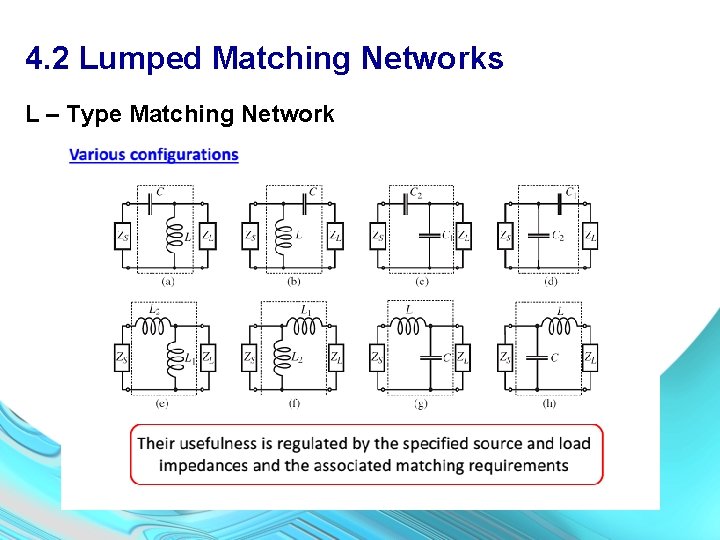
L – Type Matching Network

L – Type Matching Network

L – Type Matching Network
L – Type Matching Network
L – Type Matching Network

L – Type Matching Network
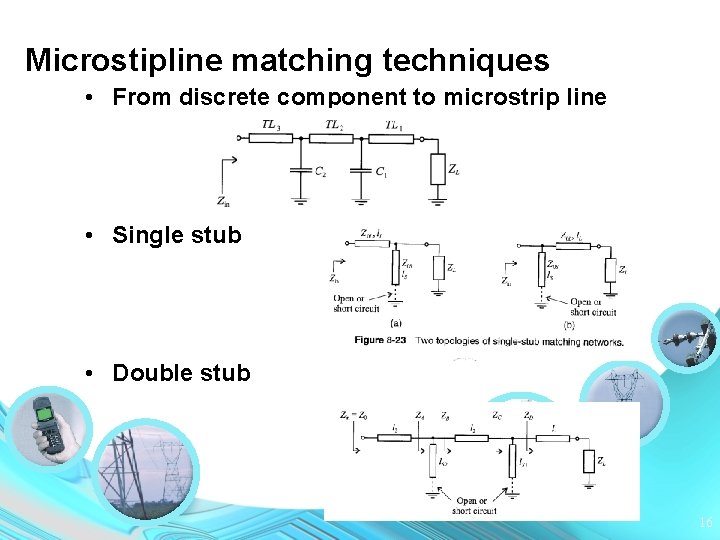
Microstipline matching techniques • From discrete component to microstrip line • Single stub • Double stub 16
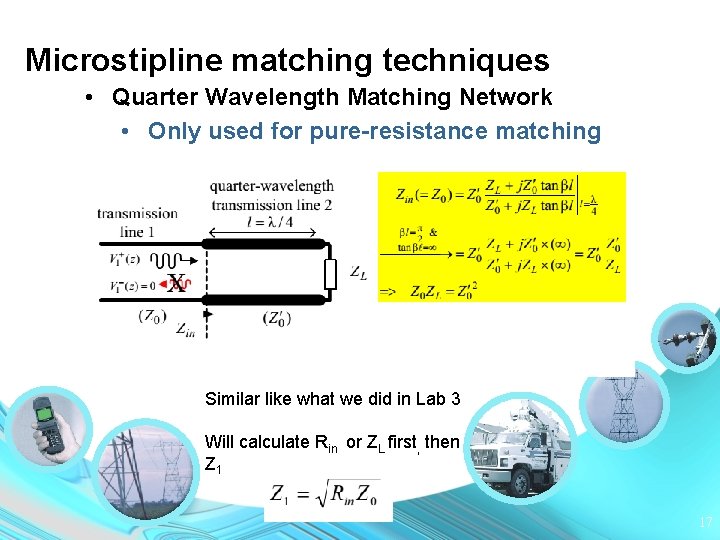
Microstipline matching techniques • Quarter Wavelength Matching Network • Only used for pure-resistance matching Similar like what we did in Lab 3 Will calculate Rin or ZL first, then Z 1 17
- Slides: 17