
Chapter 4 A 4 BOrder Among Cells Cellular
Chapter 4 A & 4 BOrder Among Cells & Cellular Respiration
Levels of Cellular Organization • Microscopic- organisms that can live without the help of other cells – Unicellular • Multicellular- organisms that are made of many cells – Sometimes called colonial organisms
Levels of Cellular Organization • Some multicellular organisms have groups of similar cells working together called- Tissue • Tissues are arranged into Organs– Groups of tissue working together to accomplish a function • Organs are arranged into organ systems
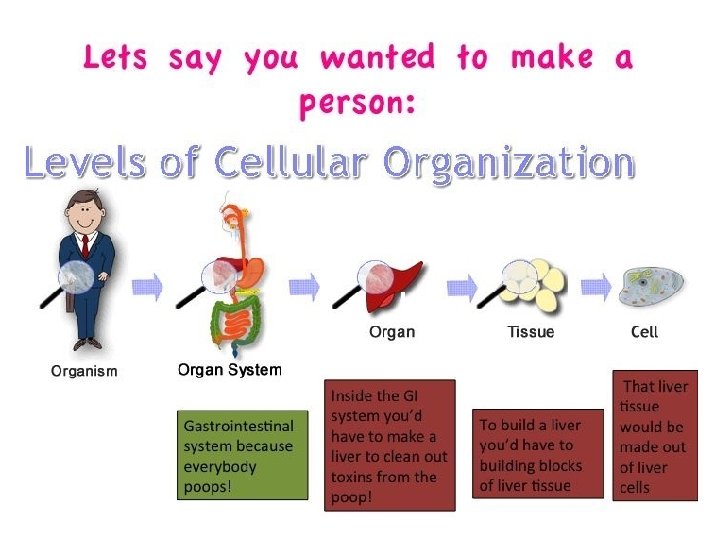
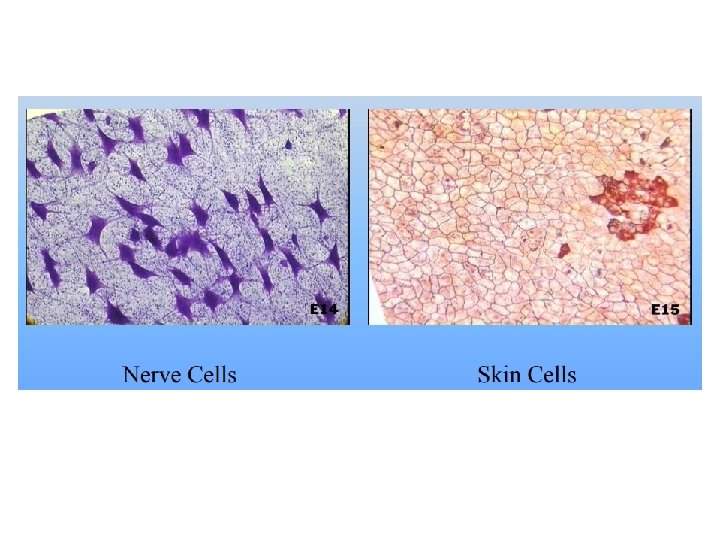
Division of Labor • Division of Labor- when each tissue and organ performs its special function to keep the whole organism alive
Cellular Respiration • How do we get energy? – We eat things that make energy. • How do the things we eat make energy? – They make it – Called: Producers • We eat producers, so we are consumers • Producers make their own energy, consumers eat producers and turn them into energy
Cellular Respiration • When we breakdown of outside energy to make energy we can use- Cellular Respiration – Sometimes sugar, sometimes fats or proteins • We use enzymes to turn sugar into usable energy called ATP • ATP is like gasoline for your body
Aerobic Cellular Respiration • What does aerobic mean? – Something that needs oxygen to happen • Aerobic Cellular Respiration – Using oxygen to turn energy into usable energy • Reactants- things needed for a chemical reaction. Aerobic Cellular Respiration reactants: – Sugar & Oxygen • Products- things that come out of a chemical reaction. Aerobic Cellular Respiration products: – Carbon Dioxide & Water & Energy
Aerobic Cellular Respiration • Sugar + Oxygen → Carbon Dioxide + Water + Energy (ATP) 1. Sugar enters cell 2. In cytoplasm, large sugar is broken into small pieces. This releases a little ATP 3. Sugar pieces enter the mitochondria 4. Carbon dioxide is released when sugar is broken down by the mitochondria 5. This releases a lot of energy as ATP 6. Water is also released
Anaerobic Cellular Respiration • What is anaerobic? – Process performed without oxygen • So what is anaerobic cellular respiration? – Breaking down sugar for energy without using oxygen – Not as much ATP produces as aerobic • 2 main types: – Alcoholic Fermentation – Lactic Acid Fermentation
Anaerobic Cellular Respiration • Alcoholic Fermentation- produces alcohol and carbon dioxide as products – Yeast in bread performs this • Lactic Acid Fermentation- produces lactic acid as a product – Bacteria in yogurt, cottage cheese, etc. does this • Not as efficient as aerobic cellular respiration.
Anaerobic Cellular Respiration 1. Sugar enters cell 2. In cytoplasm, sugar molecules broken and small amounts of ATP released 3. Sugar fragments converted to alcohol or lactic acid 4. Carbon Dioxide is released as a byproduct
- Slides: 13