
CHAPTER 4 42010 1 Line Construction Laid Line

- Slides: 46
CHAPTER 4 4/2010 1
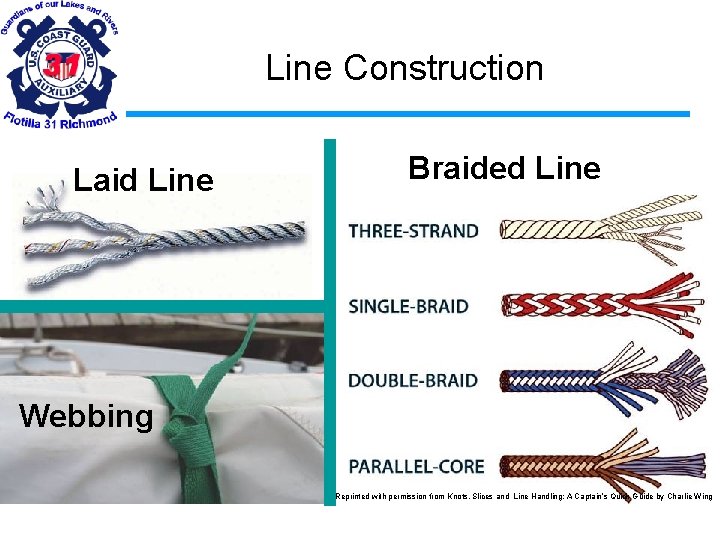
Line Construction Laid Line Braided Line Webbing Reprinted with permission from Knots, Slices and Line Handling: A Captain’s Quick Guide by Charlie Wing
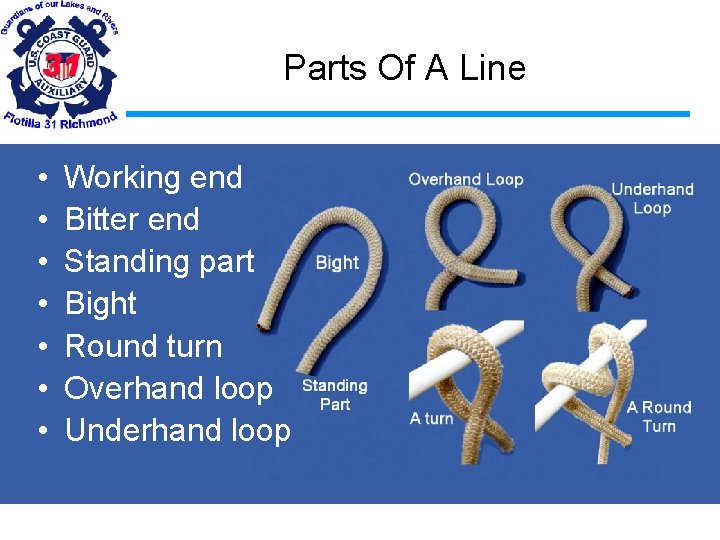
Parts Of A Line • • Working end Bitter end Standing part Bight Round turn Overhand loop Underhand loop
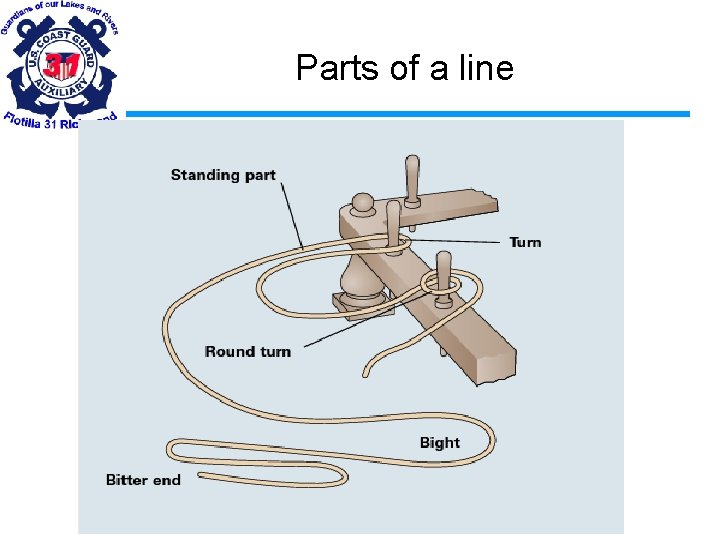
Parts of a line
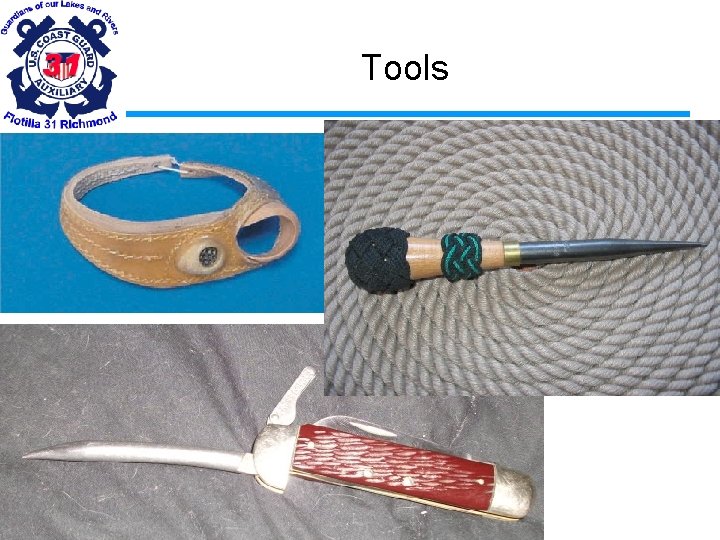
Tools
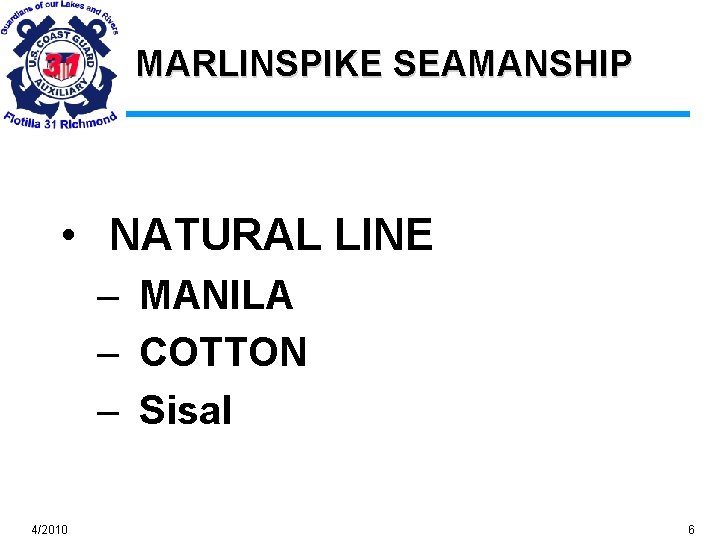
MARLINSPIKE SEAMANSHIP • NATURAL LINE – MANILA – COTTON – Sisal 4/2010 6
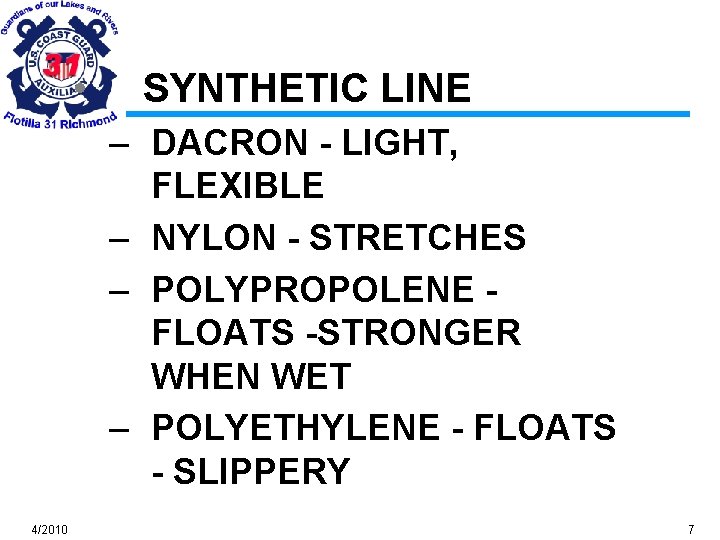
• SYNTHETIC LINE – DACRON - LIGHT, FLEXIBLE – NYLON - STRETCHES – POLYPROPOLENE FLOATS -STRONGER WHEN WET – POLYETHYLENE - FLOATS - SLIPPERY 4/2010 7
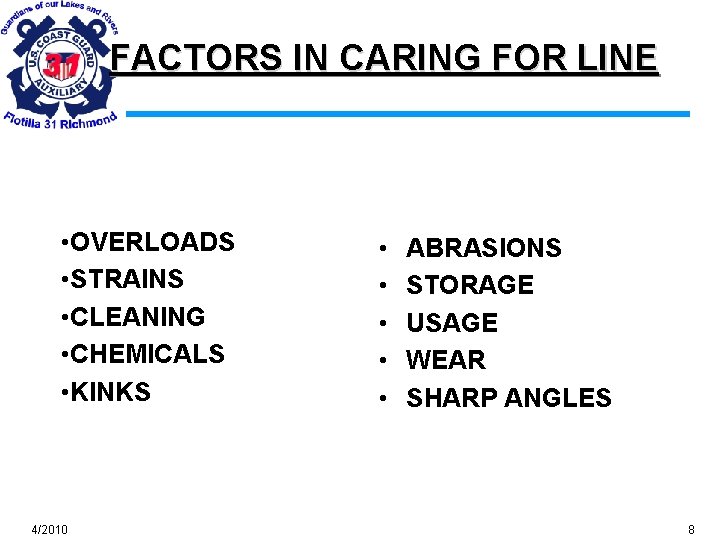
FACTORS IN CARING FOR LINE • OVERLOADS • STRAINS • CLEANING • CHEMICALS • KINKS 4/2010 • • • ABRASIONS STORAGE USAGE WEAR SHARP ANGLES 8
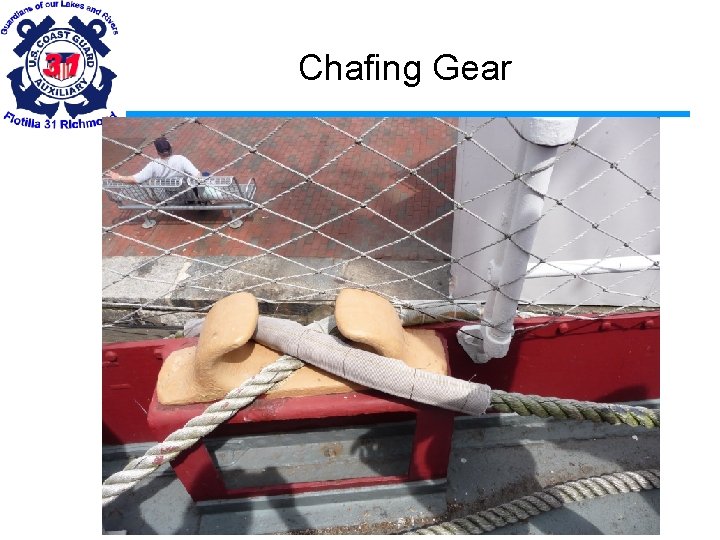
Chafing Gear
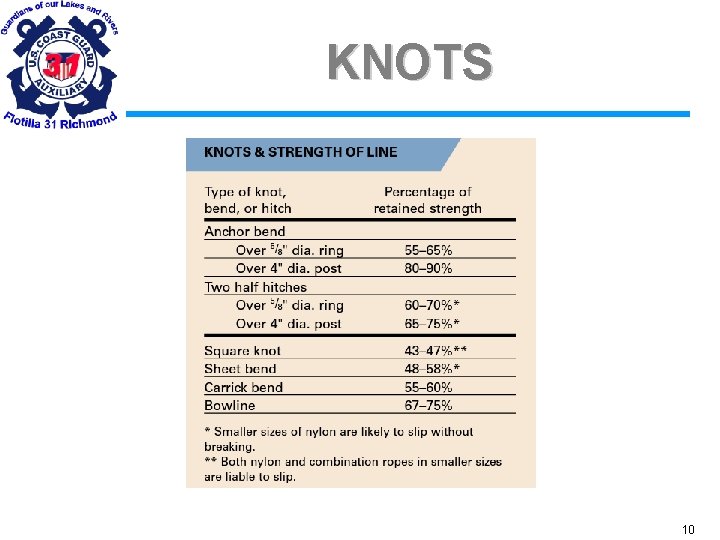
KNOTS 10
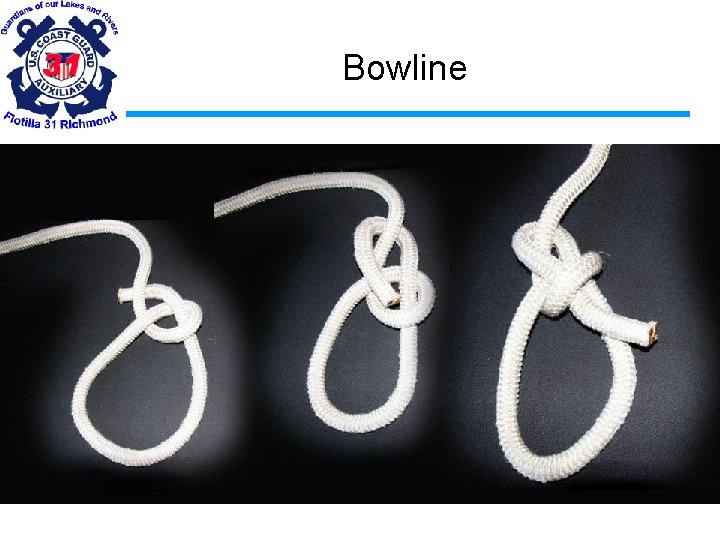
Bowline
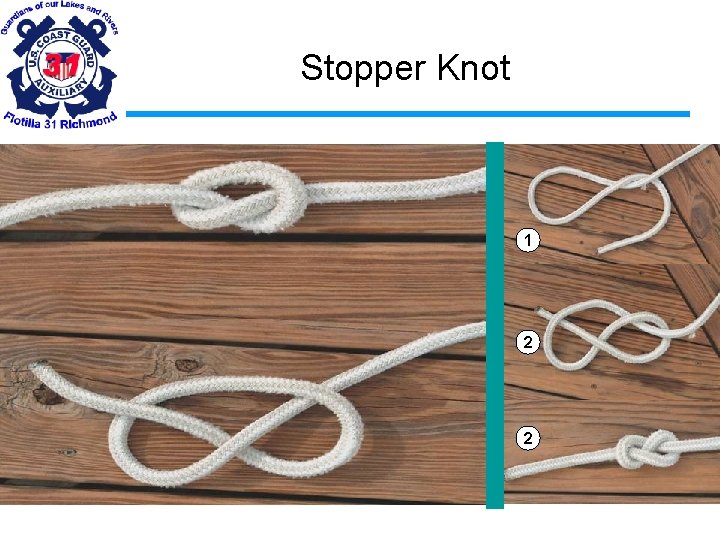
Stopper Knot 1 2 2
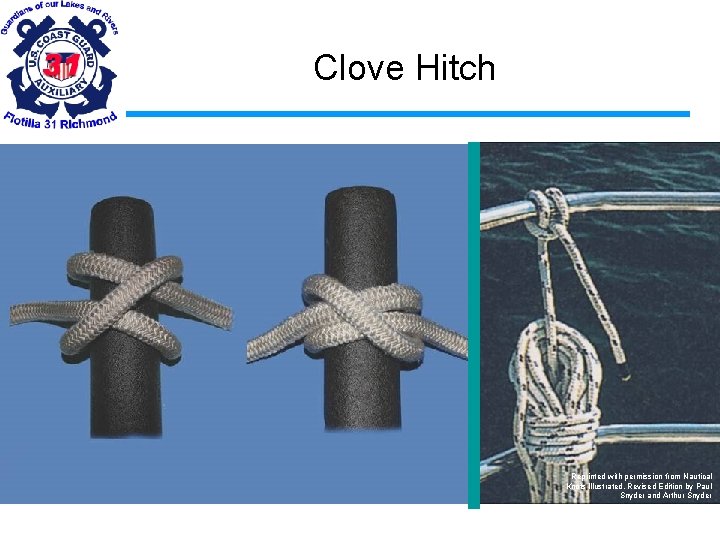
Clove Hitch Reprinted with permission from Nautical Knots Illustrated, Revised Edition by Paul Snyder and Arthur Snyder
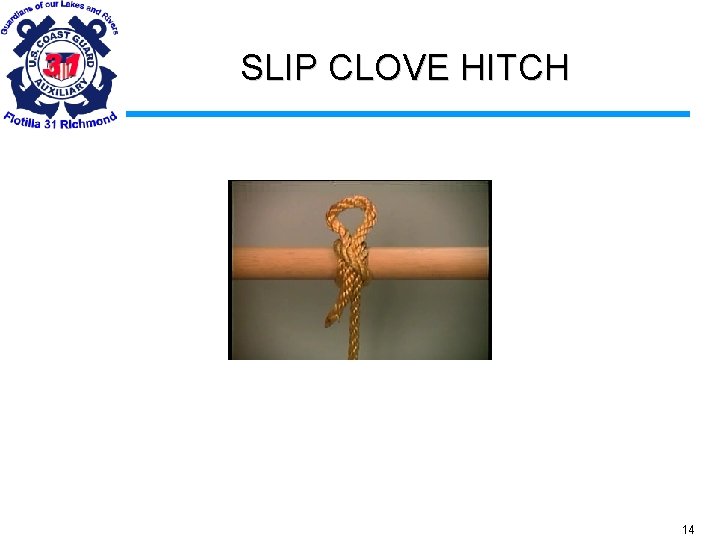
SLIP CLOVE HITCH 14
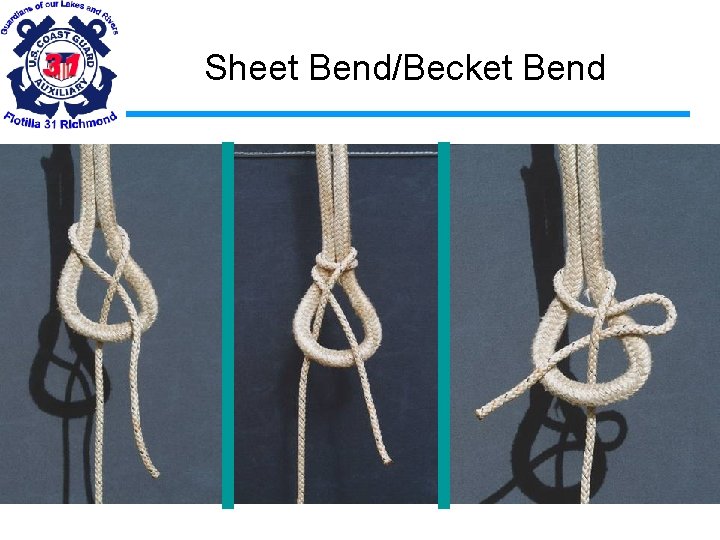
Sheet Bend/Becket Bend
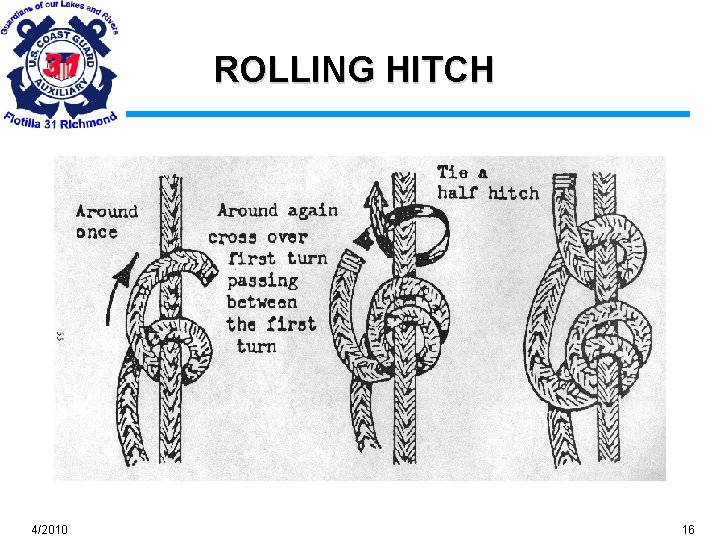
ROLLING HITCH 4/2010 16
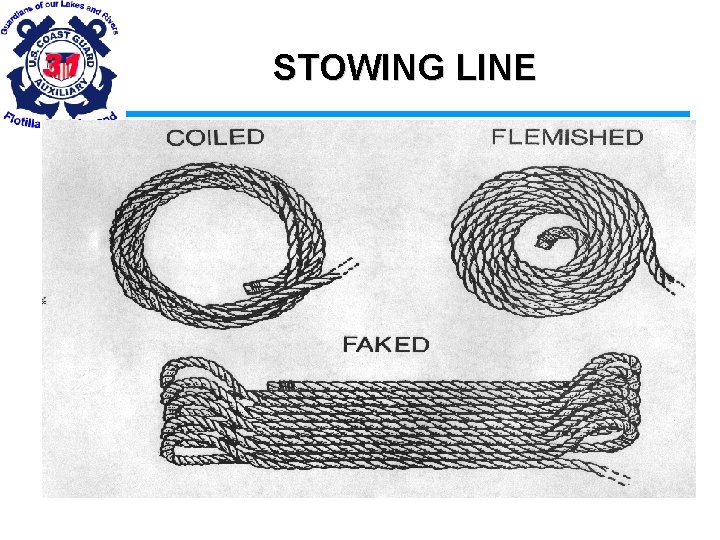
STOWING LINE
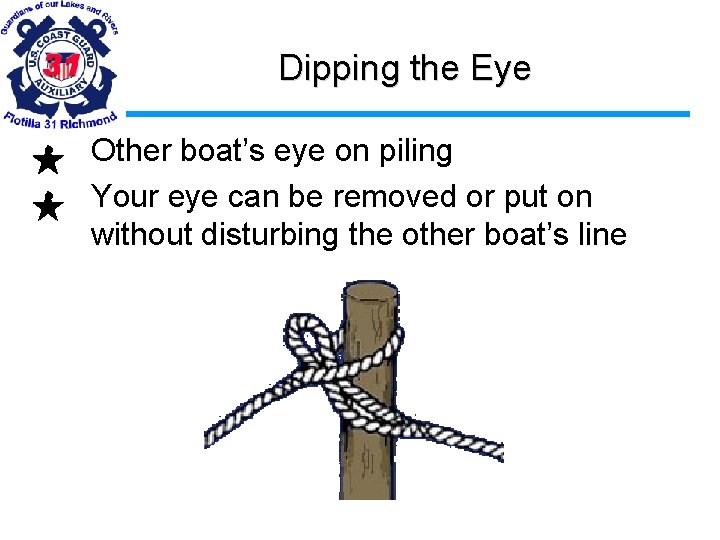
Dipping the Eye • • Other boat’s eye on piling Your eye can be removed or put on without disturbing the other boat’s line
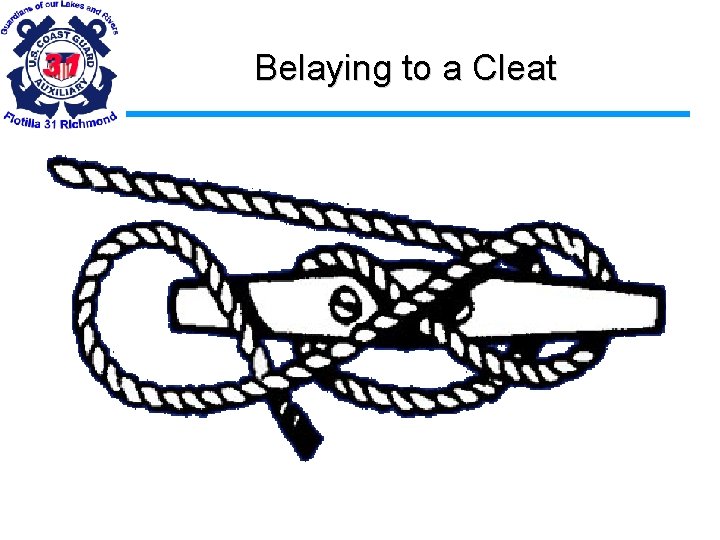
Belaying to a Cleat
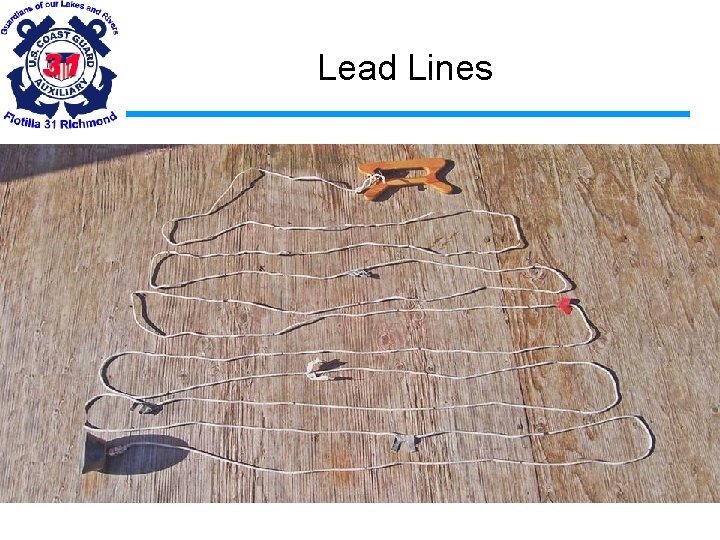
Lead Lines
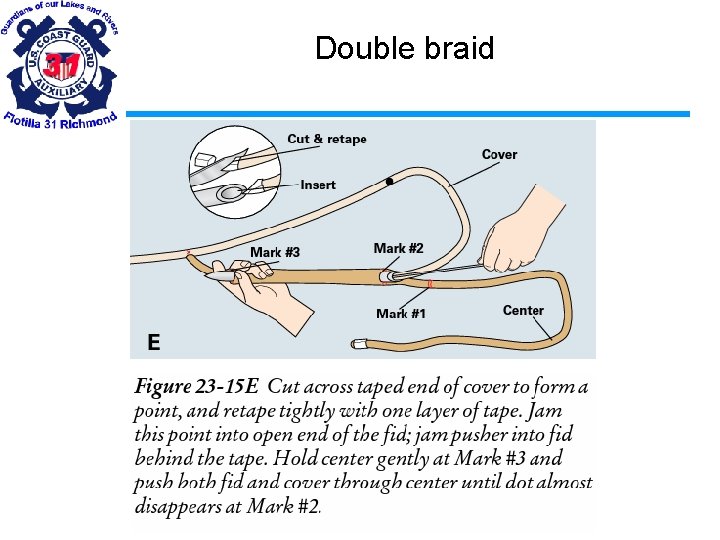
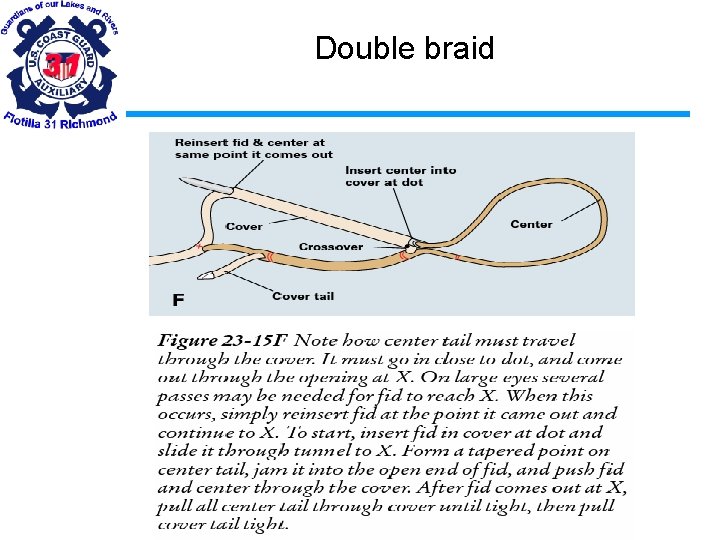
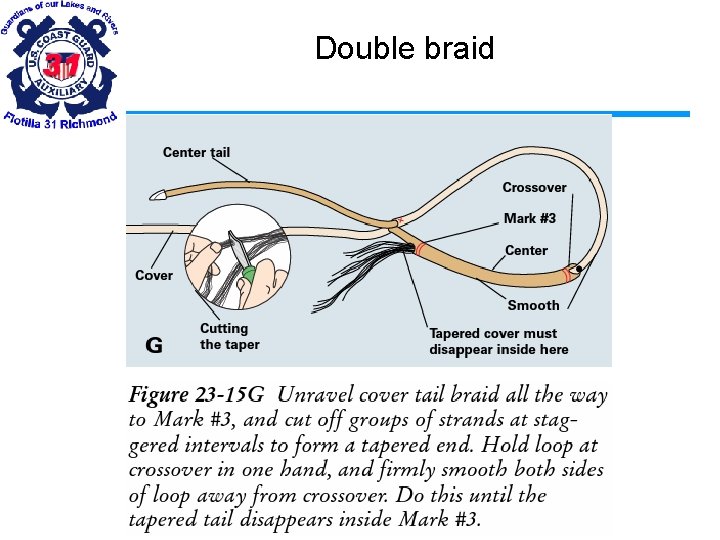
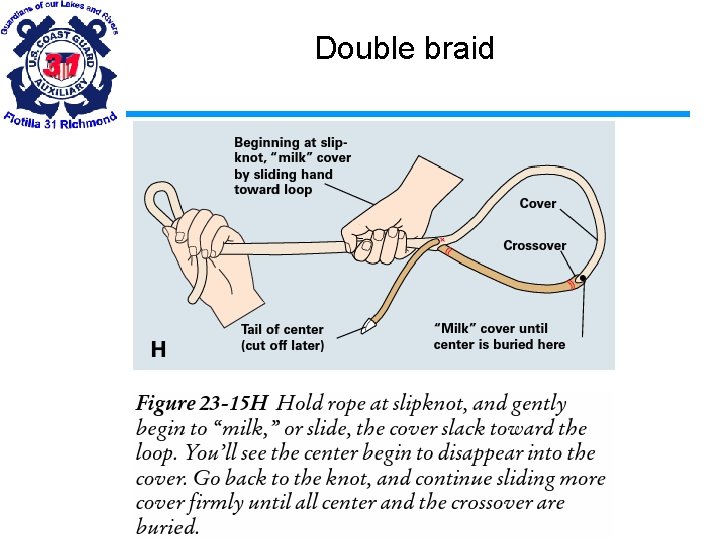
Splicing • • Short Splice Eye Splice Long Splice Splicing Double Braid
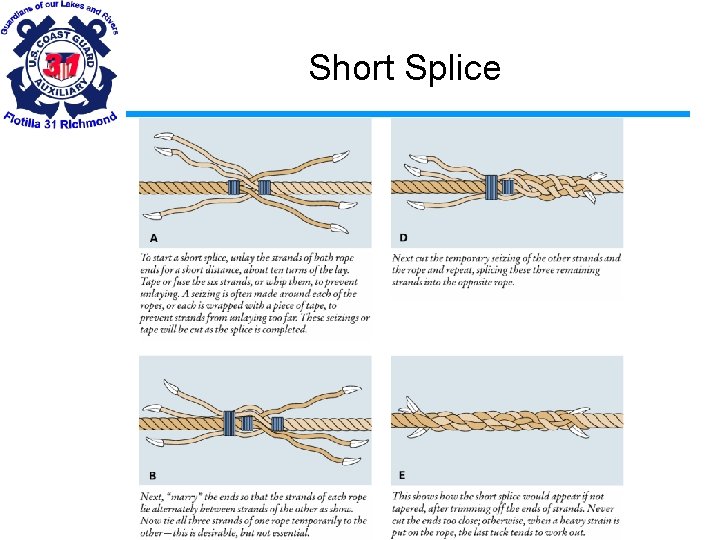
Short Splice
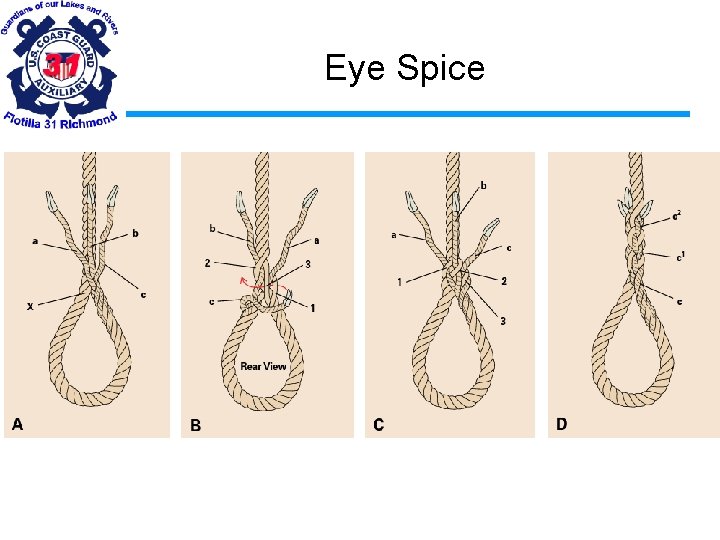
Eye Spice
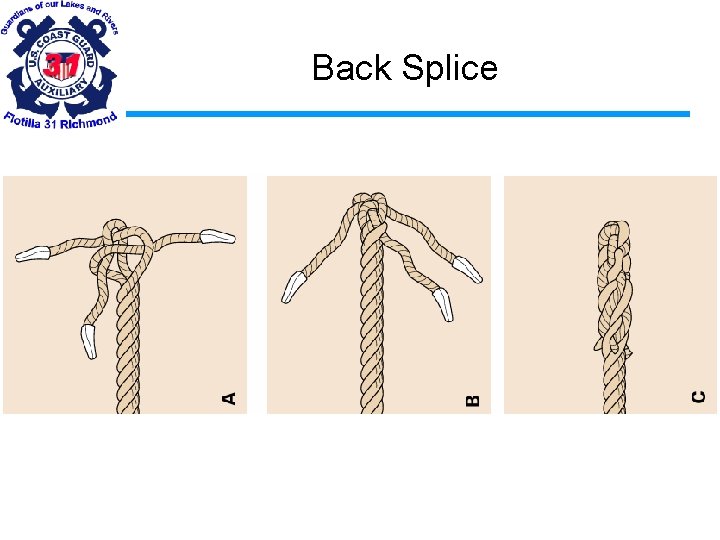
Back Splice
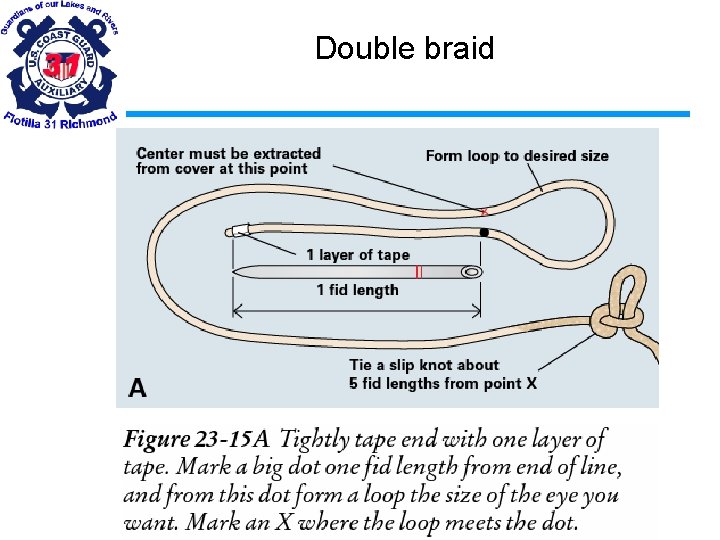
Double braid
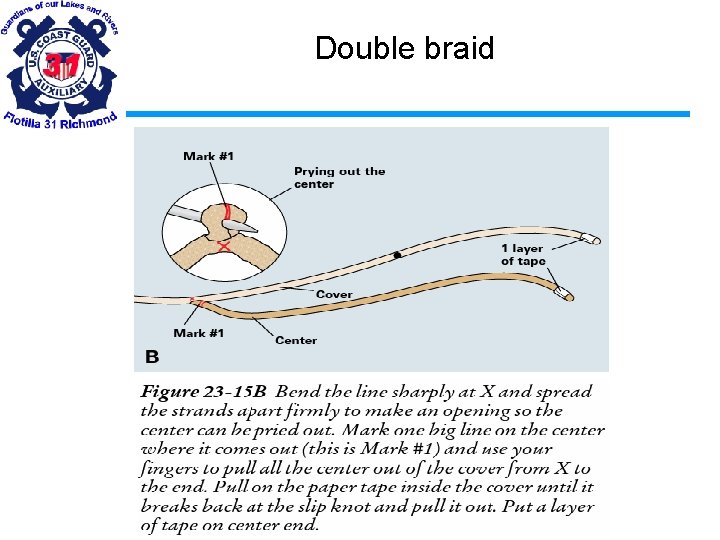
Double braid
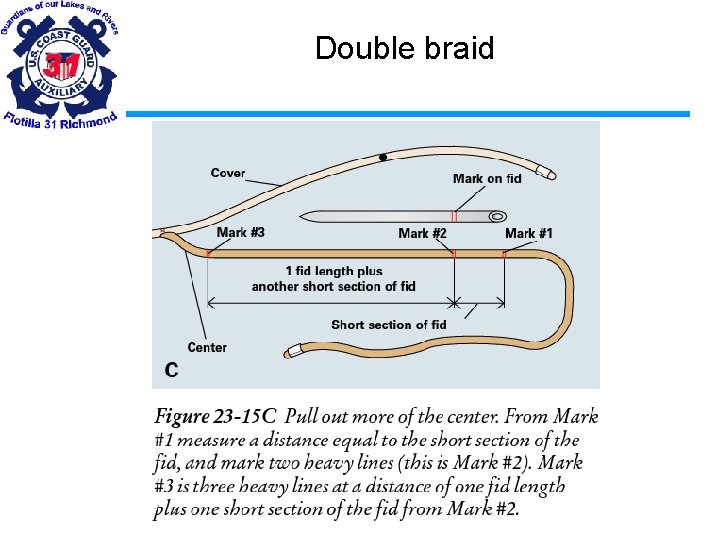
Double braid
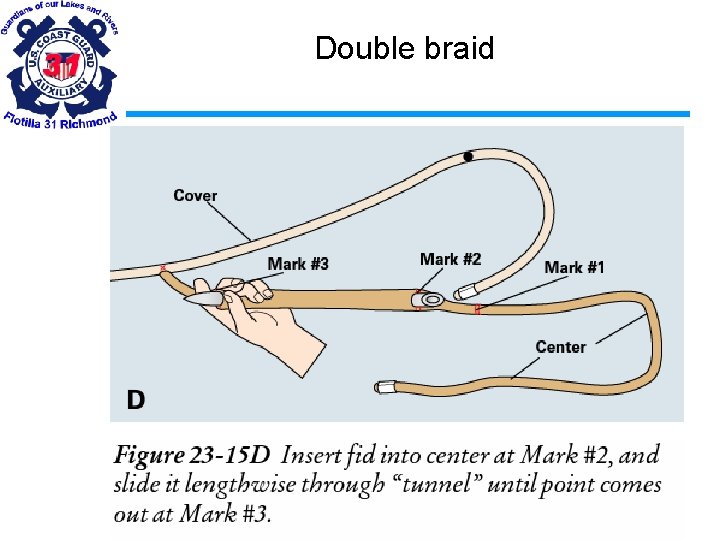
Double braid
Double braid
Double braid
Double braid
Double braid
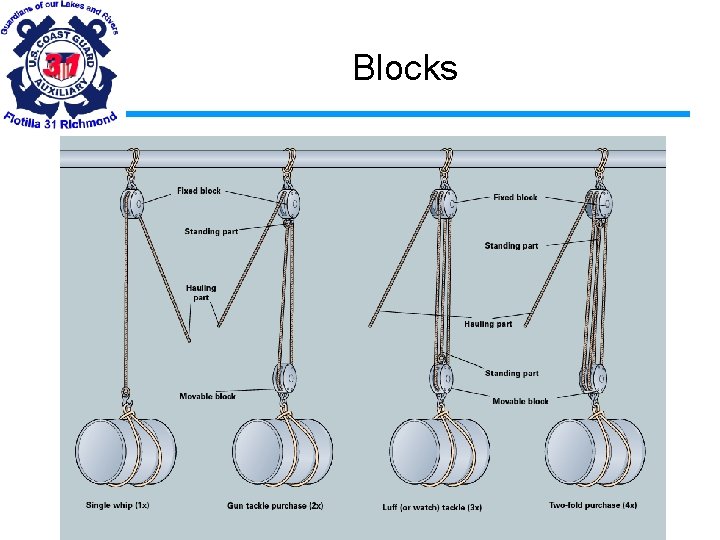
Blocks
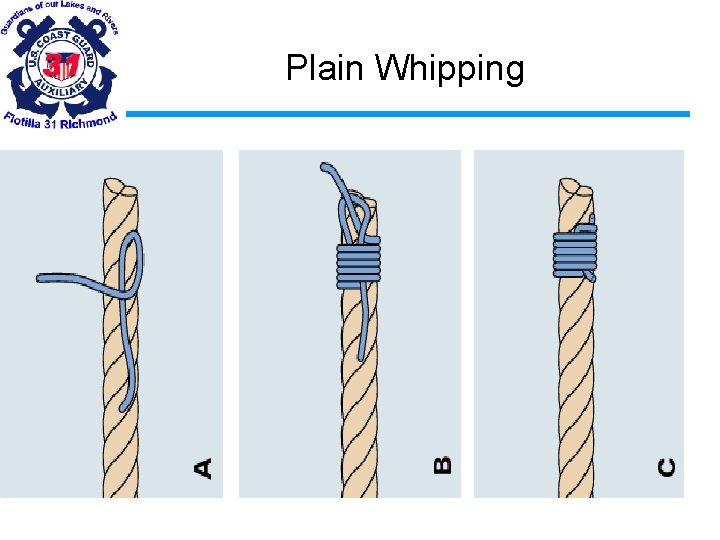
Plain Whipping
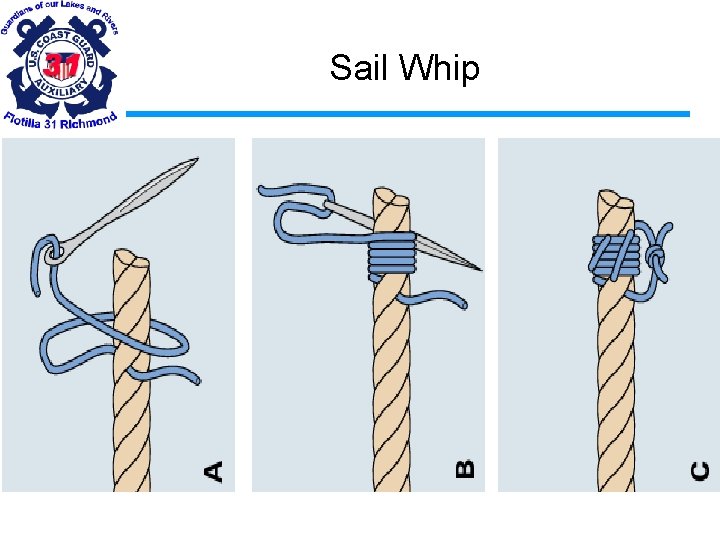
Sail Whip
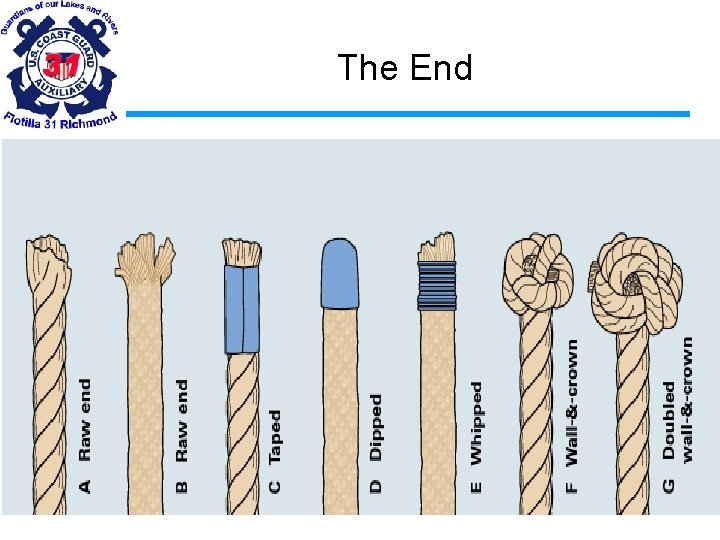
The End
REVIEW QUESTIONS NO. 2 2. Which knot is most useful to temporarily join the ends of different diameter lines? The _____ a. Fisherman’s bend b. Square or Reef knot c. Sheet or Becket Bend d. Sheepshank
REVIEW QUESTIONS NO. 3 3. The preferred method of joining rope ends permanently is by use of a ______ a. knot b. splice c. marlinspike d. turnbuckle
REVIEW QUESTIONS NO. 4 4. Which of the following types of line has the highest elasticity? a. Manila b. Dacron c. Cotton d. Nylon
REVIEW QUESTIONS NO. 5 5. The most popular and durable of natural fibers used in the manufacture of rope for marine applications is ______ a. flax b. sisal c. cotton d. manila hemp
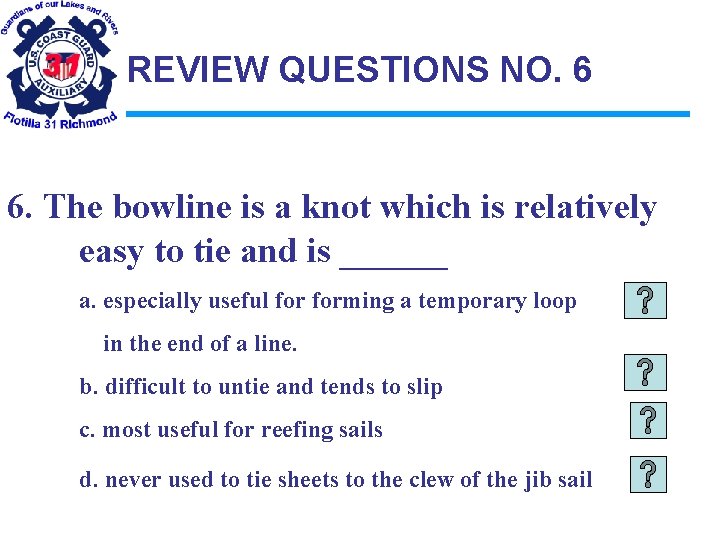
REVIEW QUESTIONS NO. 6 6. The bowline is a knot which is relatively easy to tie and is ______ a. especially useful forming a temporary loop in the end of a line. b. difficult to untie and tends to slip c. most useful for reefing sails d. never used to tie sheets to the clew of the jib sail
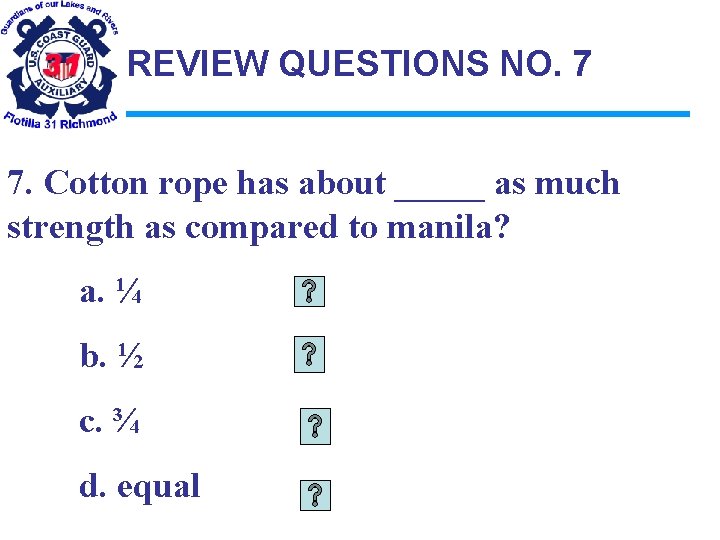
REVIEW QUESTIONS NO. 7 7. Cotton rope has about _____ as much strength as compared to manila? a. ¼ b. ½ c. ¾ d. equal
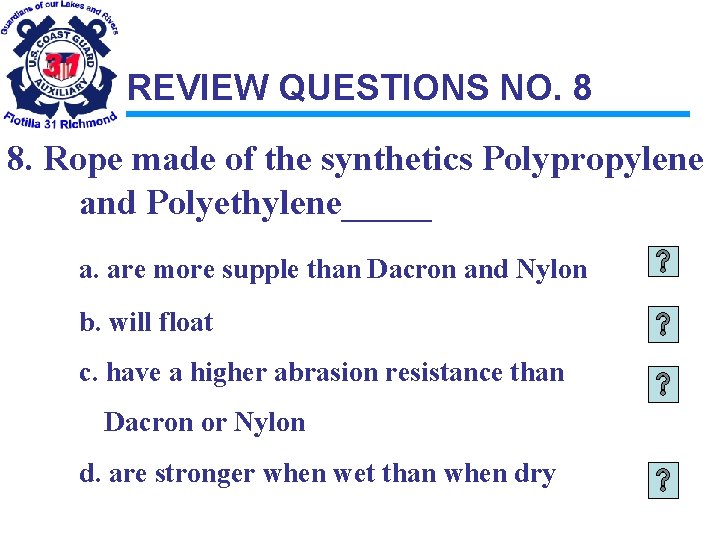
REVIEW QUESTIONS NO. 8 8. Rope made of the synthetics Polypropylene and Polyethylene_____ a. are more supple than Dacron and Nylon b. will float c. have a higher abrasion resistance than Dacron or Nylon d. are stronger when wet than when dry
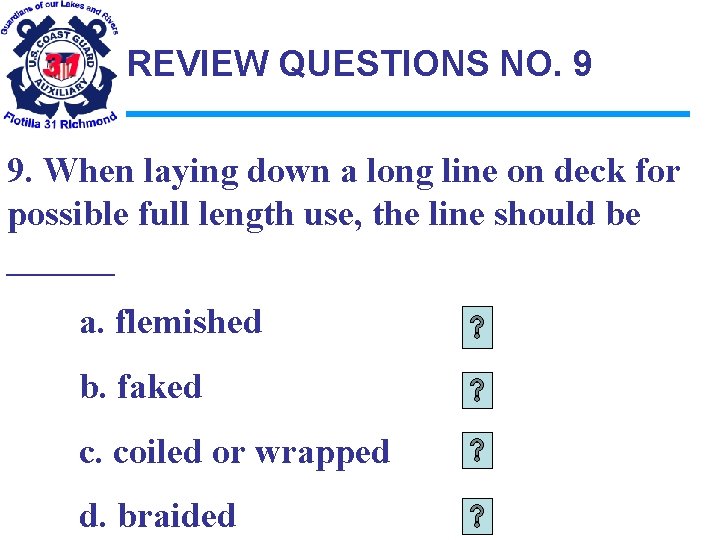
REVIEW QUESTIONS NO. 9 9. When laying down a long line on deck for possible full length use, the line should be ______ a. flemished b. faked c. coiled or wrapped d. braided
REVIEW QUESTIONS NO. 10 10. Where is Nylon sometimes dangerous? a. in the open sun b. in dark, damp storage c. when tightly spliced d. under a heavy towing load