
Chapter 4 4 1 The SIPDE Process Risk
- Slides: 30
Chapter 4 4. 1 The SIPDE Process
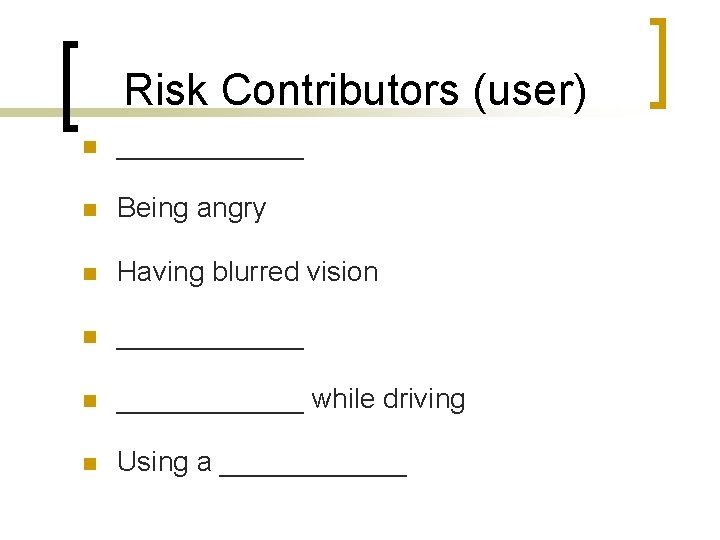
Risk Contributors (user) n ______ n Being angry n Having blurred vision n ____________ while driving n Using a ______
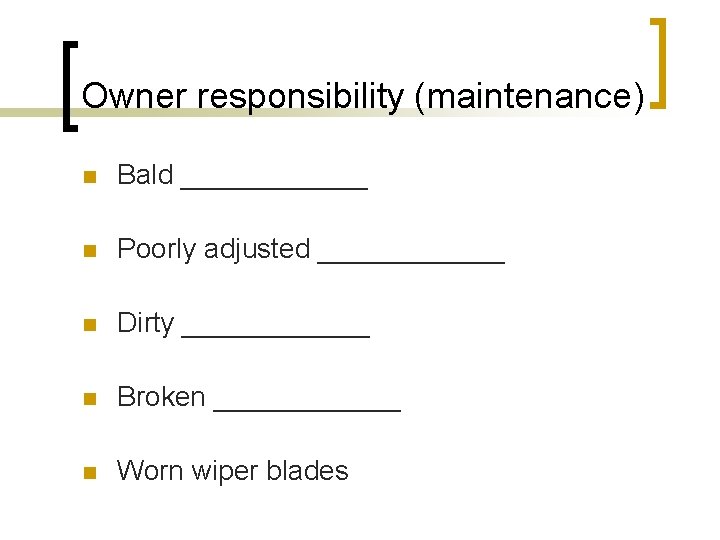
Owner responsibility (maintenance) n Bald ______ n Poorly adjusted ______ n Dirty ______ n Broken ______ n Worn wiper blades
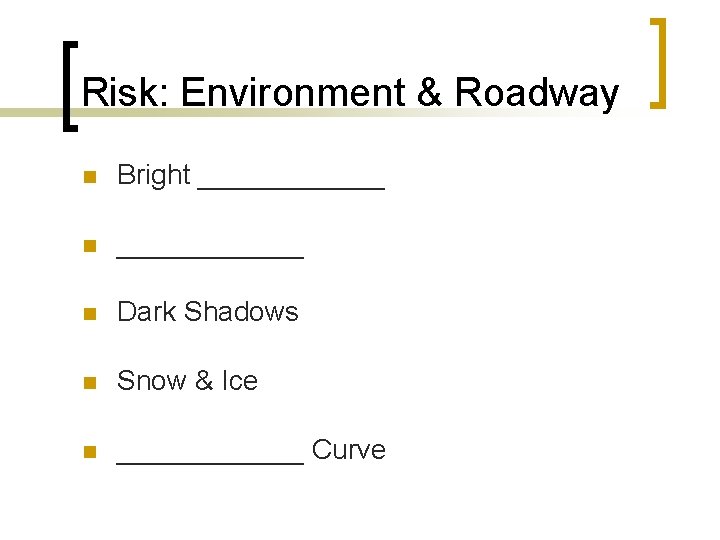
Risk: Environment & Roadway n Bright ____________ n Dark Shadows n Snow & Ice n ______ Curve
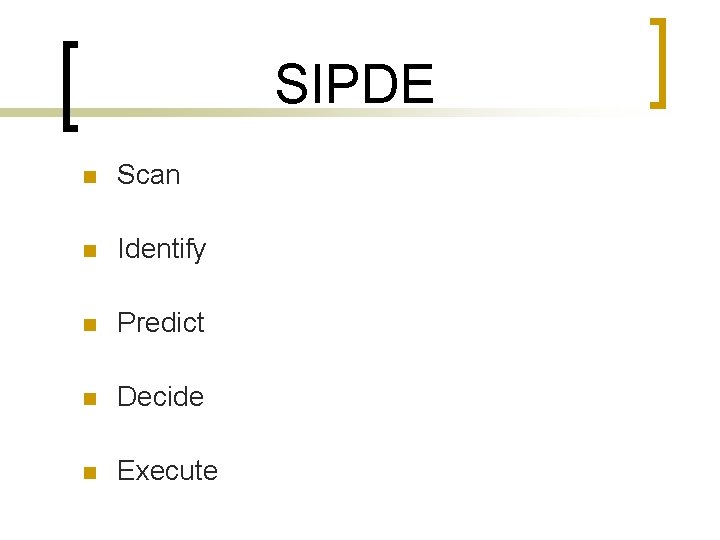
SIPDE n Scan n Identify n Predict n Decide n Execute
SCAN n Looking to the left, straight, right, and behind the area surrounding your vehicle.
Identify Use of visual search pattern to identify… n Open and closed zones n ______ clues n Other ______ n Roadway features and conditions n ______ controls
Predict Use knowledge, judgment, and experience to predict n ______ of other users n Speed n ______ n Control
Squirrels
Decide to use one or more action to: n Change or maintain speed n Change ______ n ______
Execute your decision to: n Control speed n ______ n Communicate n ______ actions
____ Visual ____ Pattern n Is a process of searching _____ areas in a ______ sequence. n When should we practice this?
Smith System Is an organized method to help drivers develop good seeing habits n Aim high in ______ n Keep your ______ moving n Get the big ______ n Make sure other see you “______” n Leave an “______”
Aim high in steering n Look ahead ______ seconds n Look far ahead to identify clues and analyze situations before the zone becomes ______. n Some restrictions include: hills, large vehicles, weather, curves, etc…
Keep your eyes moving n Looking near and far, side to side, and in the mirrors will help you! n You must ______ on an object for an instant so you can analyze it! n Don’t ______ too long!
Get the big picture n Is a mental process of putting together the critical clues you have selected. n It is the result of ______ and keeping your ______!
“BE SEEN” n Let others ______. n Don’t hangout in the ______ of other vehicles. n “If you cant see my mirrors then I cant see you!”
Leave an “OUT” n Always be looking for ______ zones. n ______ will have less open zones then country areas! n What can we look for?
___________ The area you can see around you, while looking straight ahead
______ Vision n The area that you can see clearly and sharply n This is only about _____ degrees in front of you!
______ Vision n The area you can see to the left and right of central vision is your side vision n The farther you get away from your central vision the ______ clearly you can see n ______ degrees
How to communicate with other drivers. n Headlights, taillights, and brake lights n ______ signals n Parking lights and hazard flashers n Back-up lights n ______ n Eye contact
How to handle a hazard
______ a hazard n Reduce the possibility of a conflict by deciding to put ________ between yourself and the hazard Ex. A car driving down a street moves closer to the middle of the lane because they predict a car door will open.
______ Hazards n There will be times that you will face more than one hazard at a time n ______ try to handle both or all at once! n Decide to adjust your speed to deal with only ______ hazard at a time.
______ the space n Sometimes they cant be ______ or ______. n When this happens you need to compromise by ___________ as possible to the greater hazard. n Sometimes you might have to _____ a hazard to prevent a bigger one!
______ Cushion The area of space all around your vehicle
How do we get into our vehicle?
Closed Zone A space ______ to you because of a ______ in your line of sight or intended path of travel
Open Zone A space where you can drive ______ restriction