
Chapter 39 Plant Response AP Biology Plant Reactions
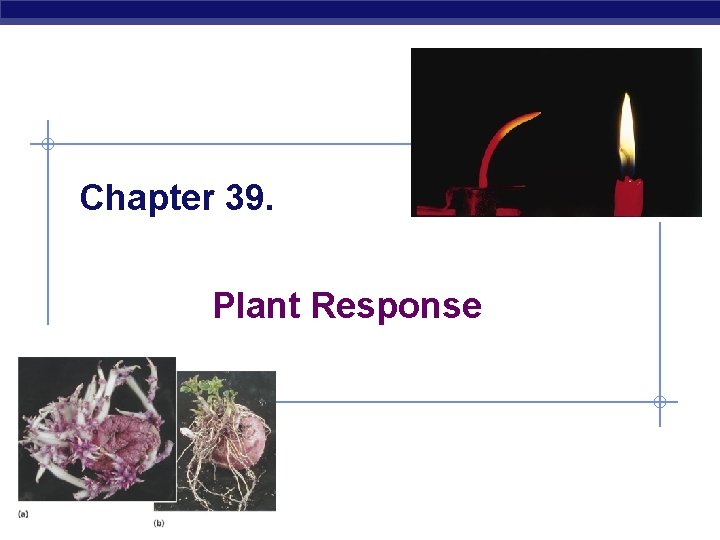
Chapter 39. Plant Response AP Biology
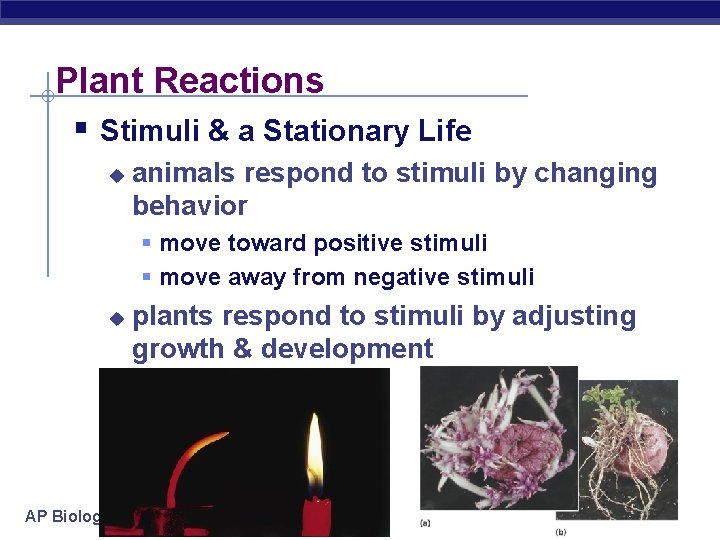
Plant Reactions § Stimuli & a Stationary Life u animals respond to stimuli by changing behavior § move toward positive stimuli § move away from negative stimuli u AP Biology plants respond to stimuli by adjusting growth & development
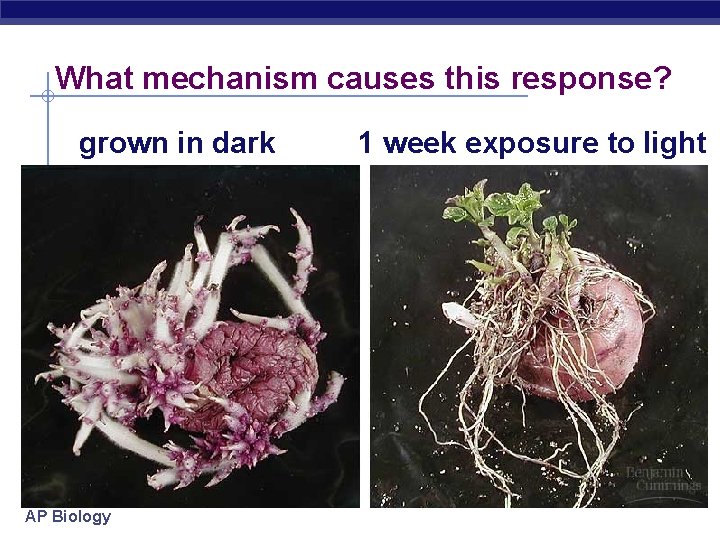
What mechanism causes this response? grown in dark AP Biology 1 week exposure to light
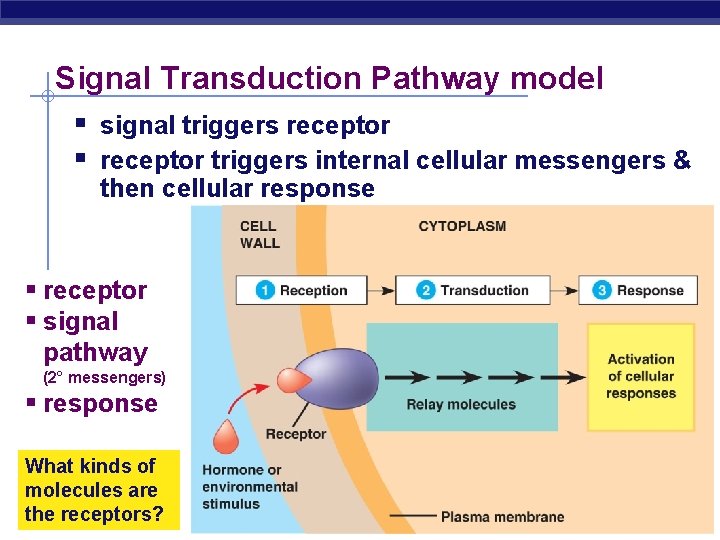
Signal Transduction Pathway model § signal triggers receptor § receptor triggers internal cellular messengers & then cellular response § receptor § signal pathway (2° messengers) § response What kinds of molecules are the receptors? AP Biology
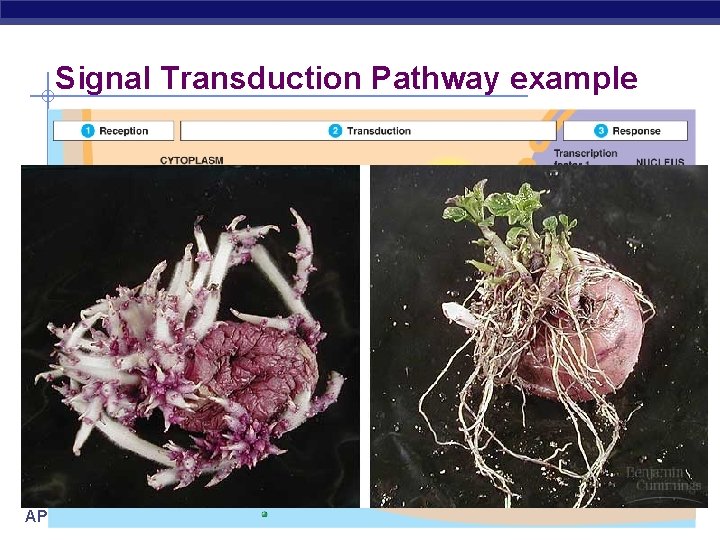
Signal Transduction Pathway example 1. Light signal is detected by the phytochrome receptor, which then activates least 2 uses c. GMP as a 2 nd 2. Oneatpathway signal transduction pathways messenger to activate 3. Both pathways leada protein kinase. to expression of genes The pathway forother proteins that involves increases Ca 2+ that function in in cytoplasmic greening activates a different response of plant. protein kinase. AP Biology
Plant hormones § Chemical signals that coordinate different parts of an organism only minute amounts are required u produced by 1 part of body u transported to another part u binds to specific receptor u triggers response in target cells & tissues u AP Biology
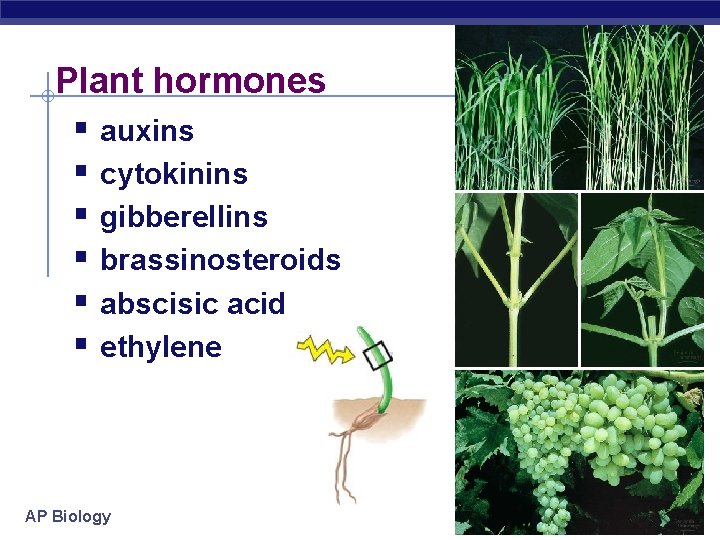
Plant hormones § auxins § cytokinins § gibberellins § brassinosteroids § abscisic acid § ethylene AP Biology
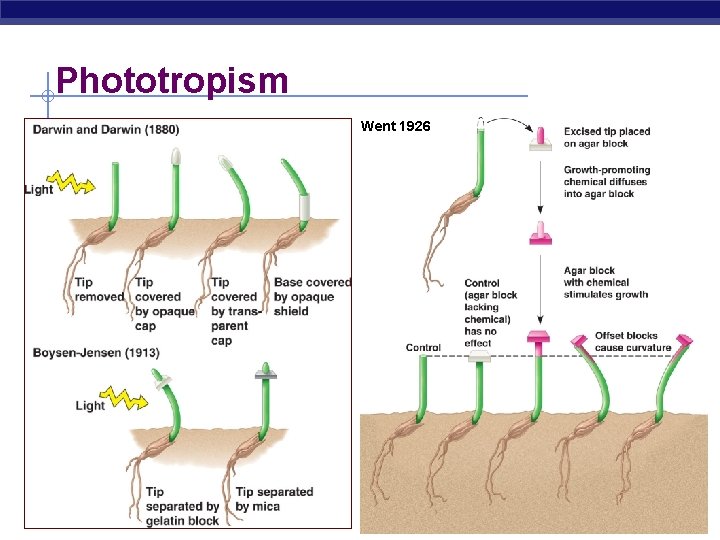
Phototropism § Growth towards light Went 1926 AP Biology
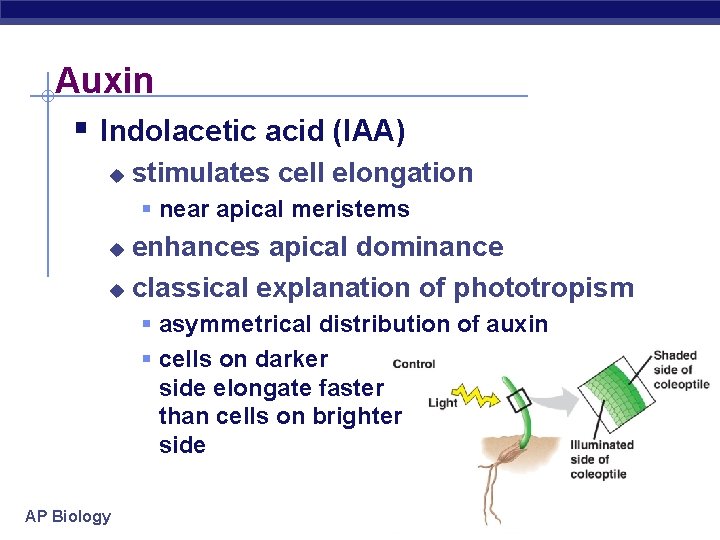
Auxin § Indolacetic acid (IAA) u stimulates cell elongation § near apical meristems enhances apical dominance u classical explanation of phototropism u § asymmetrical distribution of auxin § cells on darker side elongate faster than cells on brighter side AP Biology
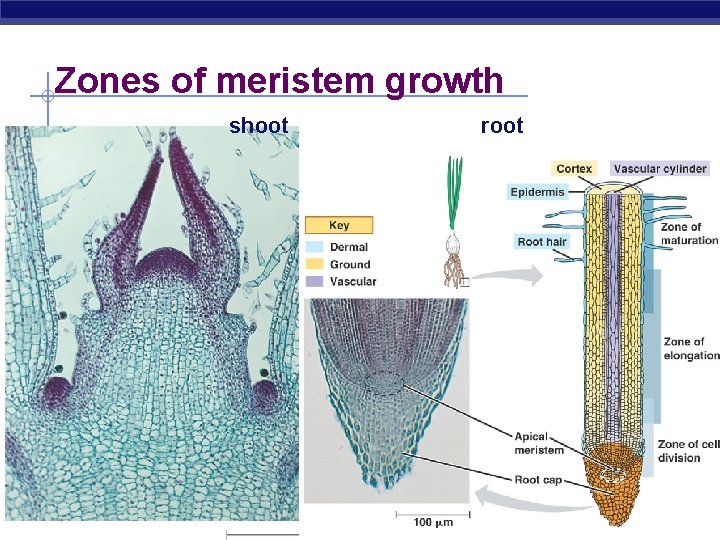
Zones of meristem growth shoot AP Biology root
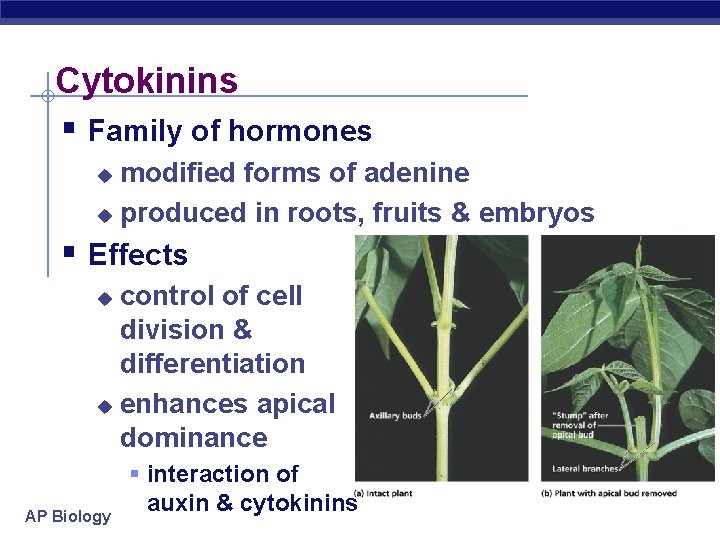
Cytokinins § Family of hormones modified forms of adenine u produced in roots, fruits & embryos u § Effects control of cell division & differentiation u enhances apical dominance u AP Biology § interaction of auxin & cytokinins
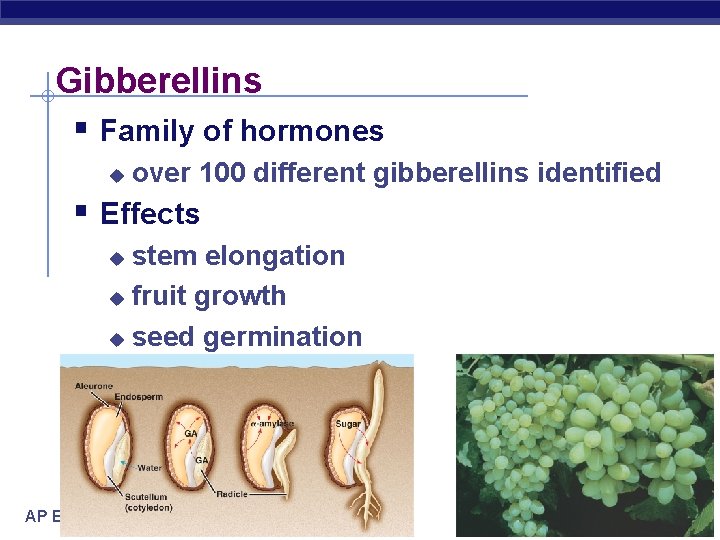
Gibberellins § Family of hormones u over 100 different gibberellins identified § Effects stem elongation u fruit growth u seed germination u AP Biology
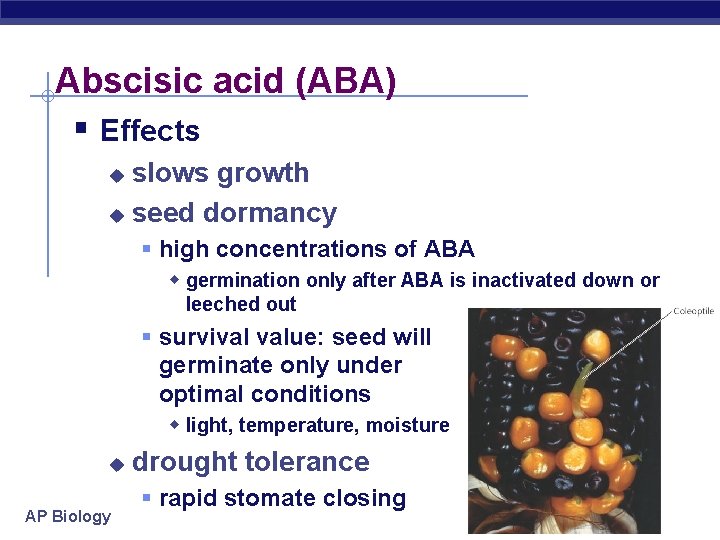
Abscisic acid (ABA) § Effects slows growth u seed dormancy u § high concentrations of ABA w germination only after ABA is inactivated down or leeched out § survival value: seed will germinate only under optimal conditions w light, temperature, moisture u AP Biology drought tolerance § rapid stomate closing
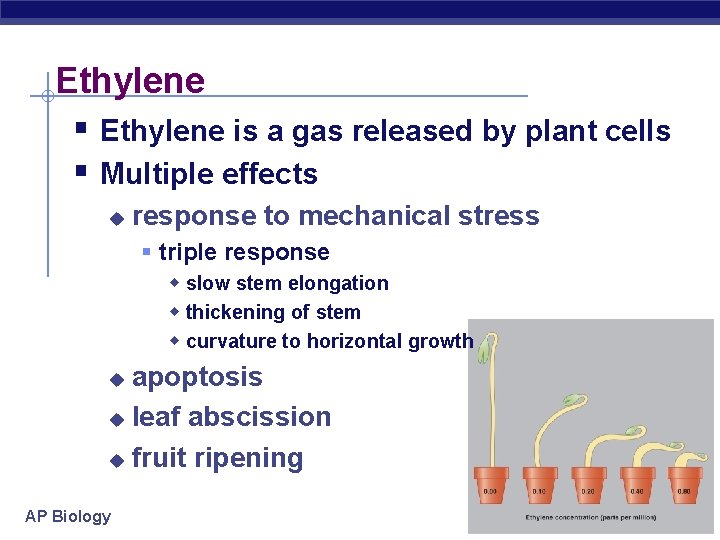
Ethylene § Ethylene is a gas released by plant cells § Multiple effects u response to mechanical stress § triple response w slow stem elongation w thickening of stem w curvature to horizontal growth apoptosis u leaf abscission u fruit ripening u AP Biology
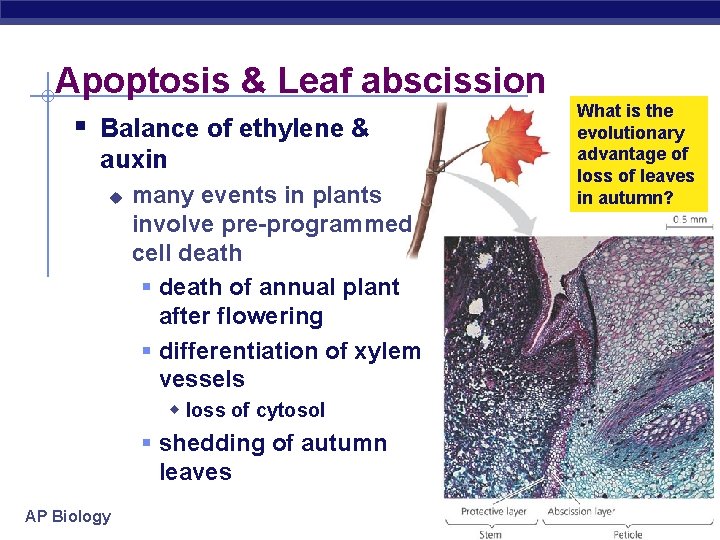
Apoptosis & Leaf abscission § Balance of ethylene & auxin u many events in plants involve pre-programmed cell death § death of annual plant after flowering § differentiation of xylem vessels w loss of cytosol § shedding of autumn leaves AP Biology What is the evolutionary advantage of loss of leaves in autumn?
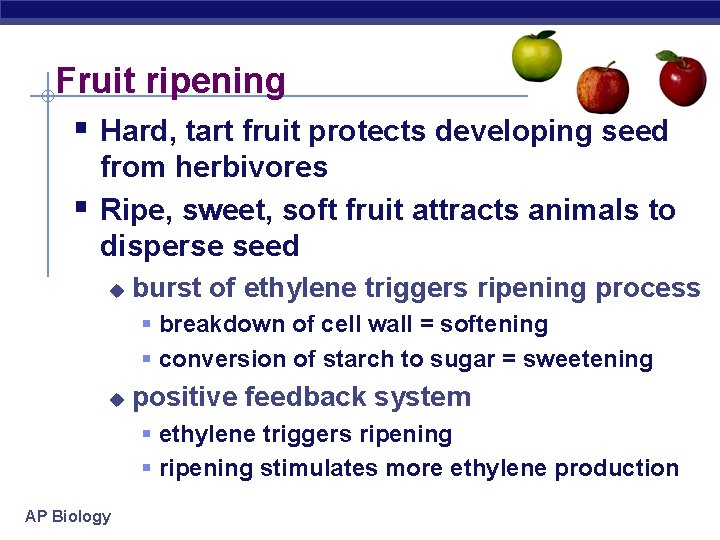
Fruit ripening § Hard, tart fruit protects developing seed § from herbivores Ripe, sweet, soft fruit attracts animals to disperse seed u burst of ethylene triggers ripening process § breakdown of cell wall = softening § conversion of starch to sugar = sweetening u positive feedback system § ethylene triggers ripening § ripening stimulates more ethylene production AP Biology
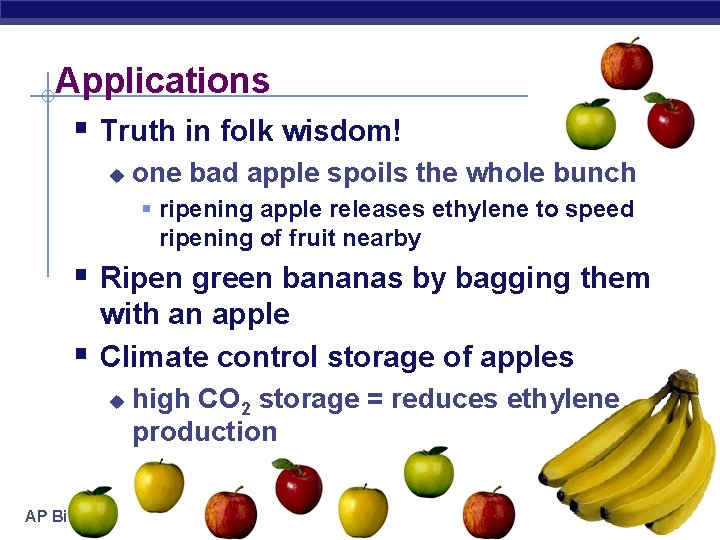
Applications § Truth in folk wisdom! u one bad apple spoils the whole bunch § ripening apple releases ethylene to speed ripening of fruit nearby § Ripen green bananas by bagging them § with an apple Climate control storage of apples u AP Biology high CO 2 storage = reduces ethylene production
Responses to light § Photomorphogenesis u effect of light on plant growth § Light detection intensity u direction u wavelength u § blue-light receptors § phytochromes (red-light receptors) Why does it make “biological sense” that red & blue light have greater effects on plants response that other wavelengths? AP Biology
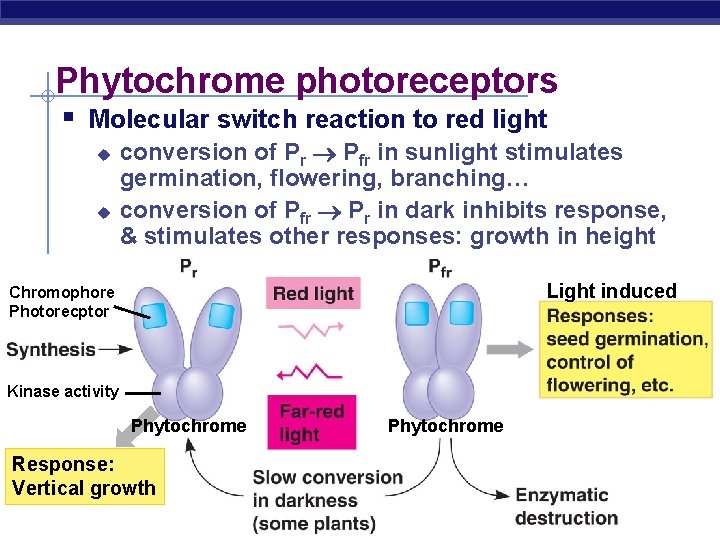
Phytochrome photoreceptors § Molecular switch reaction to red light u u conversion of Pr Pfr in sunlight stimulates germination, flowering, branching… conversion of Pfr Pr in dark inhibits response, & stimulates other responses: growth in height Light induced Chromophore Photorecptor Kinase activity Phytochrome Response: Vertical growth AP Biology Phytochrome
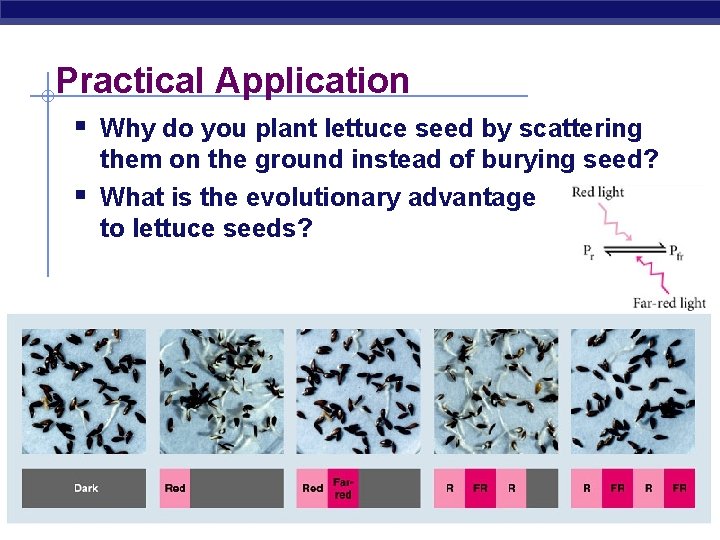
Practical Application § Why do you plant lettuce seed by scattering § them on the ground instead of burying seed? What is the evolutionary advantage to lettuce seeds? AP Biology
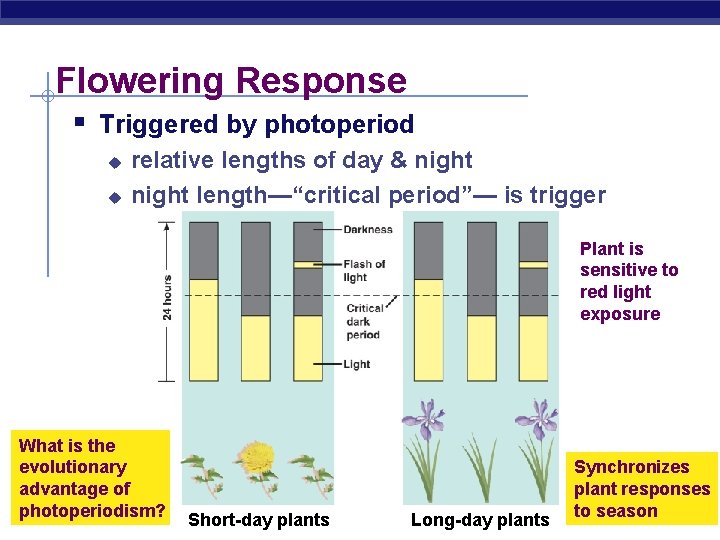
Flowering Response § Triggered by photoperiod u u relative lengths of day & night length—“critical period”— is trigger Plant is sensitive to red light exposure What is the evolutionary advantage of photoperiodism? AP Biology Short-day plants Long-day plants Synchronizes plant responses to season
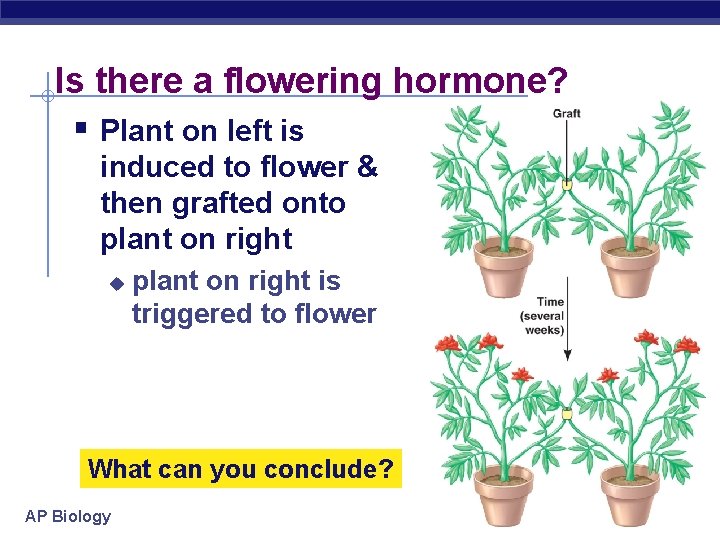
Is there a flowering hormone? § Plant on left is induced to flower & then grafted onto plant on right u plant on right is triggered to flower What can you conclude? AP Biology
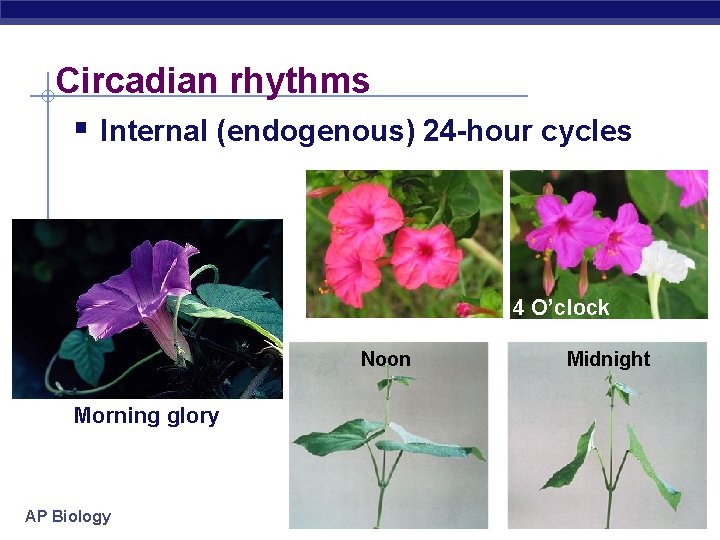
Circadian rhythms § Internal (endogenous) 24 -hour cycles 4 O’clock Noon Morning glory AP Biology Midnight
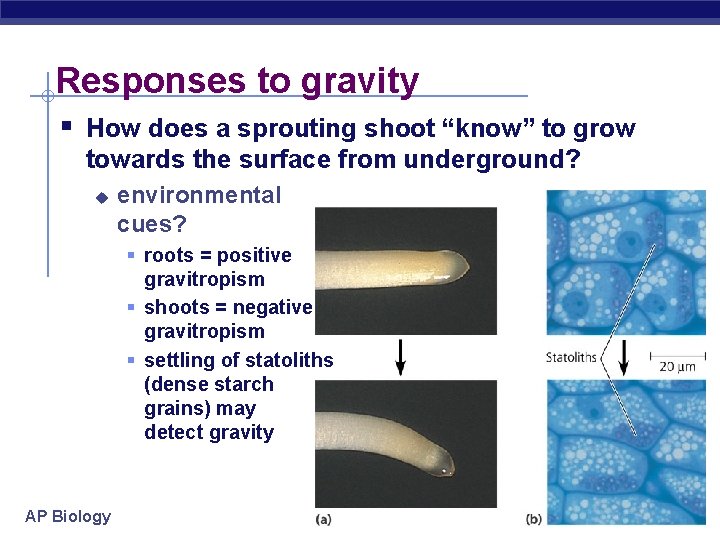
Responses to gravity § How does a sprouting shoot “know” to grow towards the surface from underground? u environmental cues? § roots = positive gravitropism § shoots = negative gravitropism § settling of statoliths (dense starch grains) may detect gravity AP Biology
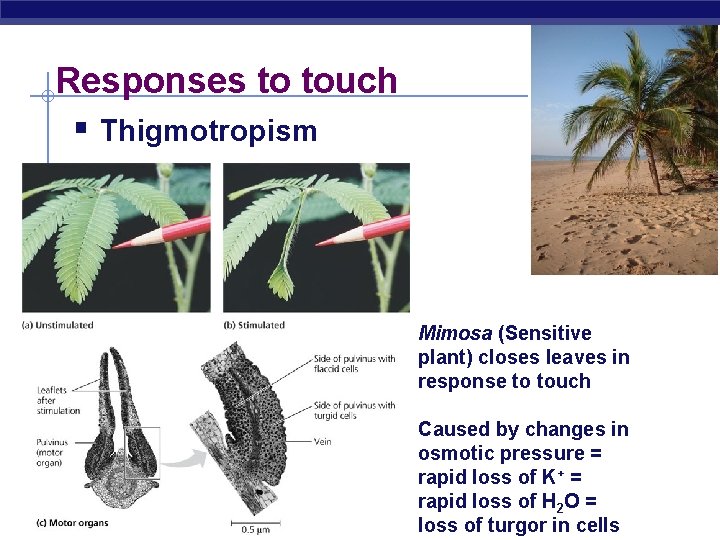
Responses to touch § Thigmotropism Mimosa (Sensitive plant) closes leaves in response to touch AP Biology Caused by changes in osmotic pressure = rapid loss of K+ = rapid loss of H 2 O = loss of turgor in cells
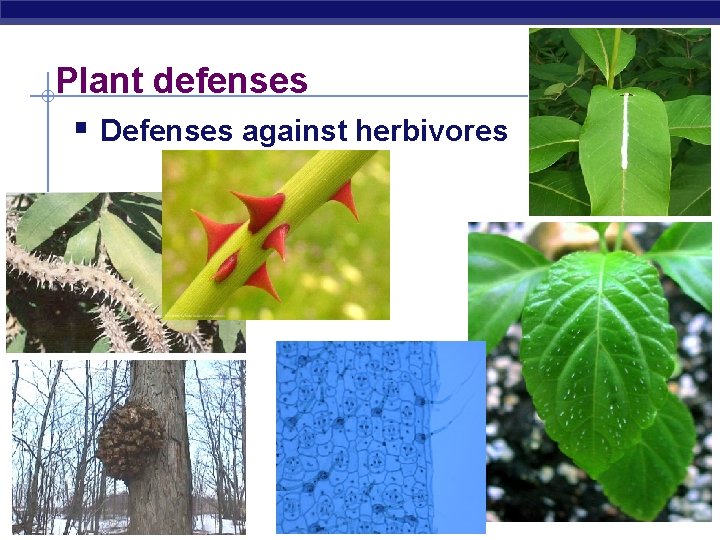
Plant defenses § Defenses against herbivores AP Biology
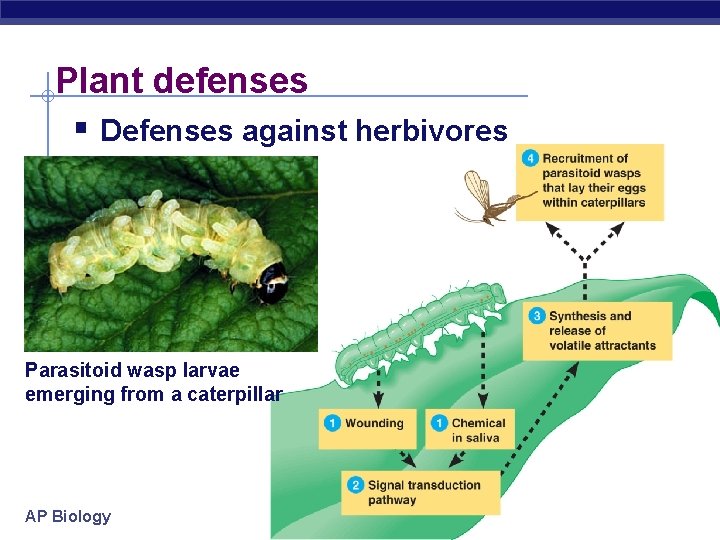
Plant defenses § Defenses against herbivores Parasitoid wasp larvae emerging from a caterpillar AP Biology
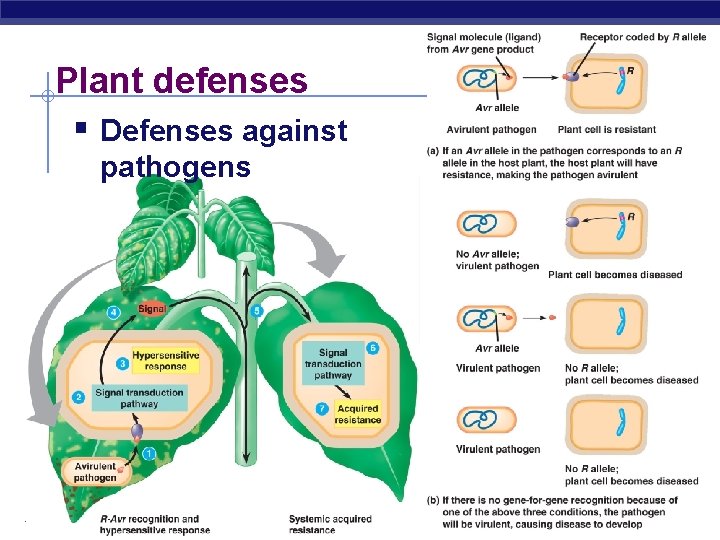
Plant defenses § Defenses against pathogens AP Biology
- Slides: 28