
Chapter 39 Biologic Response Modifiers Copyright 2015 2012

Chapter 39 Biologic Response Modifiers Copyright © 2015, 2012, 2009, 2006, 2003, 2000, 1997, 1993 by Saunders, an imprint of Elsevier Inc. 1
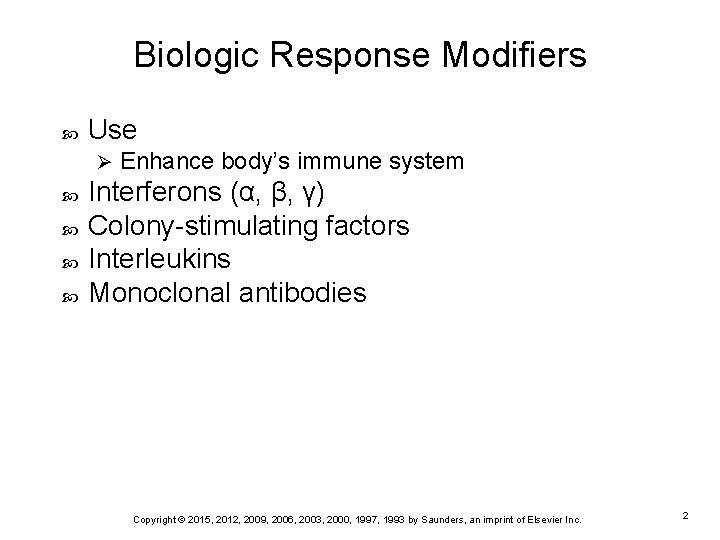
Biologic Response Modifiers Use Ø Enhance body’s immune system Interferons (α, β, γ) Colony-stimulating factors Interleukins Monoclonal antibodies Copyright © 2015, 2012, 2009, 2006, 2003, 2000, 1997, 1993 by Saunders, an imprint of Elsevier Inc. 2
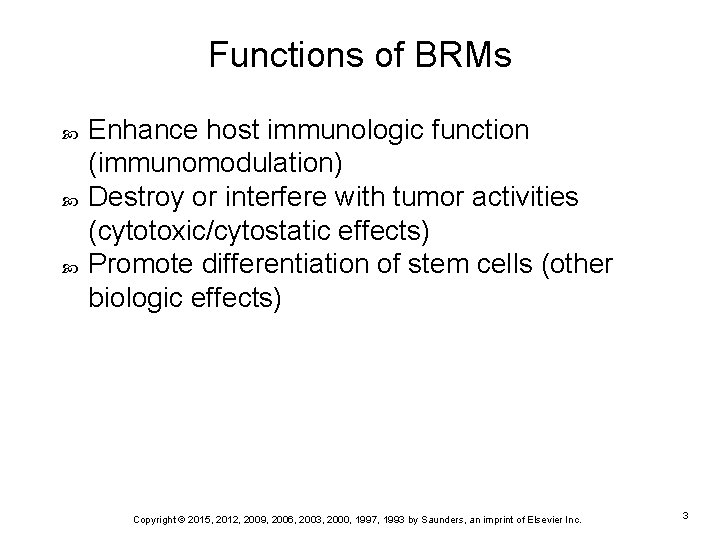
Functions of BRMs Enhance host immunologic function (immunomodulation) Destroy or interfere with tumor activities (cytotoxic/cytostatic effects) Promote differentiation of stem cells (other biologic effects) Copyright © 2015, 2012, 2009, 2006, 2003, 2000, 1997, 1993 by Saunders, an imprint of Elsevier Inc. 3
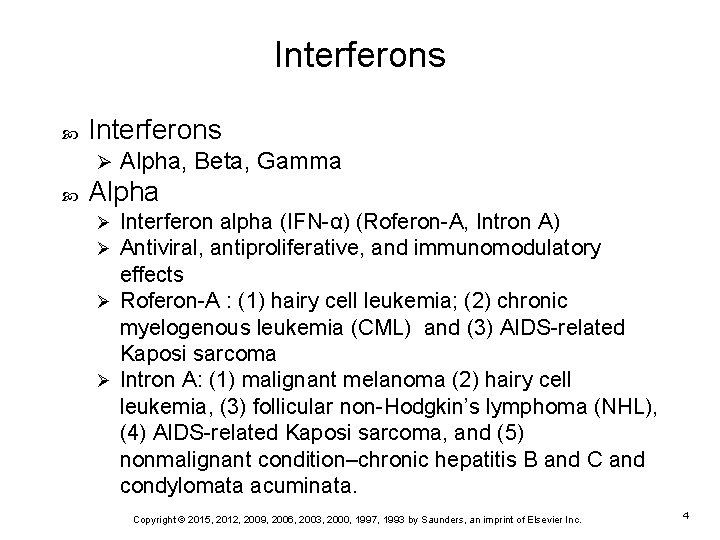
Interferons Ø Alpha, Beta, Gamma Alpha Interferon alpha (IFN-α) (Roferon-A, Intron A) Antiviral, antiproliferative, and immunomodulatory effects Ø Roferon-A : (1) hairy cell leukemia; (2) chronic myelogenous leukemia (CML) and (3) AIDS-related Kaposi sarcoma Ø Intron A: (1) malignant melanoma (2) hairy cell leukemia, (3) follicular non-Hodgkin’s lymphoma (NHL), (4) AIDS-related Kaposi sarcoma, and (5) nonmalignant condition–chronic hepatitis B and C and condylomata acuminata. Ø Ø Copyright © 2015, 2012, 2009, 2006, 2003, 2000, 1997, 1993 by Saunders, an imprint of Elsevier Inc. 4
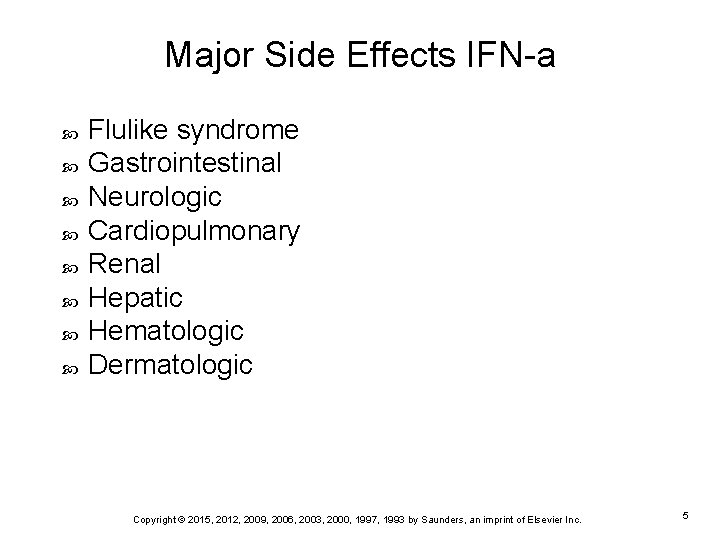
Major Side Effects IFN-a Flulike syndrome Gastrointestinal Neurologic Cardiopulmonary Renal Hepatic Hematologic Dermatologic Copyright © 2015, 2012, 2009, 2006, 2003, 2000, 1997, 1993 by Saunders, an imprint of Elsevier Inc. 5
Interferons (Cont. ) Interferon beta (IFN-β) (Betaseron, IFN-β-1 b) Indicated for the treatment of multiple sclerosis Enhances the activity of suppressor T-cells Reduces the production of proinflammatory cytokines Ø Reduces antigen-presentation Ø Inhibits the movement of lymphocytes in the central nervous Ø Ø Ø Copyright © 2015, 2012, 2009, 2006, 2003, 2000, 1997, 1993 by Saunders, an imprint of Elsevier Inc. 6
Interferons (Cont. ) Interferon gamma (IFN-γ) (Actimmune, IFN-γ 1 b) Ø Indicated for delaying time to disease progression in patients with severe malignant osteopetrosis, reducing the frequency and severity of serious infections related to chronic granulomatous disease, and treating patients with chronic myelogenous leukemia and renal cell carcinoma Copyright © 2015, 2012, 2009, 2006, 2003, 2000, 1997, 1993 by Saunders, an imprint of Elsevier Inc. 7

Colony-Stimulating Factors Action of hematopoietic colony-stimulating factors Regulate the growth, maturation, and differentiation of bone marrow stem cells Ø Decrease the length of posttreatment neutropenia Ø Permit the delivery of higher doses of drugs Ø Reduce bone marrow recovery time after bone marrow transplantation Ø Enhance macrophage or granulocyte tumor-, virus, and fungus-destroying ability Ø Prevent severe thrombocytopenia after myelosuppressive chemotherapy Ø Copyright © 2015, 2012, 2009, 2006, 2003, 2000, 1997, 1993 by Saunders, an imprint of Elsevier Inc. 8
Erythropoietin-Stimulating Agents Epoetin alfa (Procrit, Epogen) Darbepoetin alfa (Aranesp) Side effects and adverse reactions Ø Hypertension, headache, arthralgias (joint pain), nausea, edema, fatigue, diarrhea, vomiting, chest pain, injection site skin reaction, asthenia (weakness), dizziness, seizures, thrombosis (clots), and allergic reactions Special considerations: Do not shake, store the vials at 36° F to 46° F (2° C to 8° C), do not freeze, and protect Aranesp from light. Copyright © 2015, 2012, 2009, 2006, 2003, 2000, 1997, 1993 by Saunders, an imprint of Elsevier Inc. 9
Colony-Stimulating Factors (Cont. ) Granulocyte colony-stimulating factor Drugs • Filgrastim (Neupogen) • Pegfilgrastim (Neulasta) Ø Side effects • Nausea, vomiting, skeletal pain, alopecia, diarrhea, Ø neutropenia, fever, mucositis, fatigue, anorexia, dyspnea, headache, cough, skin rash, chest pain, generalized weakness, sore throat, stomatitis, constipation, and pain of unspecified origin Ø Considerations Copyright © 2015, 2012, 2009, 2006, 2003, 2000, 1997, 1993 by Saunders, an imprint of Elsevier Inc. 10
Colony-Stimulating Factors (Cont. ) Granulocyte macrophage colony-stimulating factor Drugs • Sargramostim (Leukine) Ø Considerations Ø Side effects • Fever, mucous membrane disorder, asthenia Ø (weakness), malaise, sepsis, nausea, diarrhea, vomiting, anorexia, liver damage, alopecia, rash, peripheral edema, dyspnea, blood dyscrasias, renal dysfunction, and central nervous system disorder Copyright © 2015, 2012, 2009, 2006, 2003, 2000, 1997, 1993 by Saunders, an imprint of Elsevier Inc. 11
Colony-Stimulating Factors (Cont. ) Thrombopoietic growth factor Drugs • Oprelvekin (Neumega) Ø Action Ø Administration • Sub. Q Ø Considerations Ø Side effects • Serious fluid retention, cardiovascular events, Ø ophthalmologic events, and severe hypersensitivity reactions Copyright © 2015, 2012, 2009, 2006, 2003, 2000, 1997, 1993 by Saunders, an imprint of Elsevier Inc. 12

Interleukin-2 Drugs Ø Action Ø Treats metastatic renal cell carcinoma and metastatic melanoma Administration Ø Aldesleukin (Proleukin) IV infusion, sub. Q Considerations Side effects: capillary leak syndrome and infection Copyright © 2015, 2012, 2009, 2006, 2003, 2000, 1997, 1993 by Saunders, an imprint of Elsevier Inc. 13

Keratinocyte Growth Factor Drugs Ø Indication Ø Palifermin (Kepivance) Decreasing incidence and duration of severe oral mucositis as a result of treatment with myelotoxic therapy requiring hematologic stem cell support Side effects Ø Skin toxicities, oral toxicities, hypertension, and transient increases in serum lipase and serum amylase Copyright © 2015, 2012, 2009, 2006, 2003, 2000, 1997, 1993 by Saunders, an imprint of Elsevier Inc. 14
Nursing Process: Biologic Response Modifiers Apply to each group of agents: Ø Ø Ø Assessment Nursing diagnoses Planning Nursing interventions Evaluation Copyright © 2015, 2012, 2009, 2006, 2003, 2000, 1997, 1993 by Saunders, an imprint of Elsevier Inc. 15
Practice Question #1 A 64 -year-old patient is being treated with interferon alpha (Roferon-A) for hairy cell leukemia. The patient asks the nurse how long the treatment will last. An appropriate response would be that treatment usually continues, before deciding if the patient is a responder or nonresponder, for at least A. B. C. D. 1 month. 3 months. 6 months. 12 months. Copyright © 2015, 2012, 2009, 2006, 2003, 2000, 1997, 1993 by Saunders, an imprint of Elsevier Inc. 16
Practice Question #2 A patient who is thrombocytopenic is ordered to receive a biologic response modifier. The nurse anticipates the patient will receive A. interferon (IFN). B. filgrastim (Neupogen). C. oprelvekin (Neumega). D. epoetin alpha (Procrit). Copyright © 2015, 2012, 2009, 2006, 2003, 2000, 1997, 1993 by Saunders, an imprint of Elsevier Inc. 17
Practice Question #3 Which nursing intervention is designed to treat the most common side effects of filgrastim (Neupogen)? A. B. C. D. Provide antihypertensives to lower blood pressure. Provide bronchodilators to treat wheezing. Provide antibiotics to treat secondary infections. Provide analgesia to relieve bone pain. Copyright © 2015, 2012, 2009, 2006, 2003, 2000, 1997, 1993 by Saunders, an imprint of Elsevier Inc. 18
Practice Question #4 When working with a patient receiving epoetin alpha (Procrit), it is most important for the nurse to assess the patient for the development of A. B. C. D. bone pain and headaches. hypertension and edema. nausea and vomiting. fluid retention and allergic reactions. Copyright © 2015, 2012, 2009, 2006, 2003, 2000, 1997, 1993 by Saunders, an imprint of Elsevier Inc. 19
Practice Question #5 Patients receiving sargramostim (Leukine) are most likely to develop which adverse reaction? A. B. C. D. Tumor lysis syndrome Hemorrhagic cystitis Pleural/pericardial effusion Hypertensive crisis Copyright © 2015, 2012, 2009, 2006, 2003, 2000, 1997, 1993 by Saunders, an imprint of Elsevier Inc. 20
Practice Question #6 Before administering darbepoetin alfa (Aranesp), it is most important for the nurse to assess the patient for a history of which condition? A. B. C. D. Anemia Chronic renal failure Pancreatitis Hypertension Copyright © 2015, 2012, 2009, 2006, 2003, 2000, 1997, 1993 by Saunders, an imprint of Elsevier Inc. 21
Practice Question #7 A patient is receiving oprelvekin (Neumega). It is most important for the nurse to assess for concurrent use of which group of medications? A. B. C. D. Diuretics Narcotic analgesics Positive inotropes Antiviral drugs Copyright © 2015, 2012, 2009, 2006, 2003, 2000, 1997, 1993 by Saunders, an imprint of Elsevier Inc. 22
- Slides: 22