
Chapter 37 The Human Defence System 1 3

![3. 5. 3 Responses in the Human -[D] The Defence System Objectives – What](https://slidetodoc.com/presentation_image/1d313897a4e4b95cf6cfa4ee65929eec/image-2.jpg "3. 5. 3 Responses in the Human -[D] The Defence System Objectives – What")

- Slides: 68
Chapter 37 The Human Defence System 1
3. 5. 3 Responses in the Human -[D] The Defence System Objectives – What you will need to know from this section The Immune System • Describe the Defence System including skin/mucous membranes (of breathing, reproduction and digestive systems) and the Phagocytic white blood cells. • Describe the Specific Defence System, including antigen/antibody response • Define the term: Induced Immunity • Explain the terms: Vaccination & Immunisation • Describe the structure & reproduction of viruses & explain why they are classified as non living things. 2
3
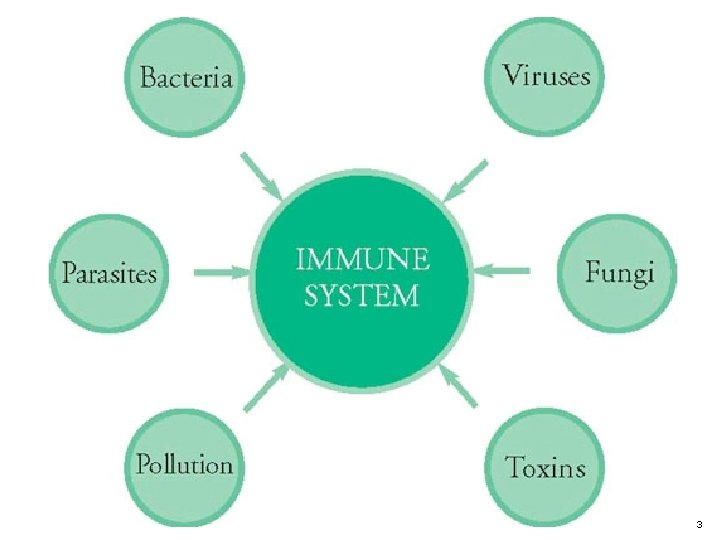
1. Immunity is the ability of an organism to resist infection. 2. The human body is designed to protect itself from foreign cells, invaders or pathogens. 3. A pathogen is an organism that causes disease. Bacteria and Viruses are the best know pathogens. You. Tube - Introduction to how the immune system works 4
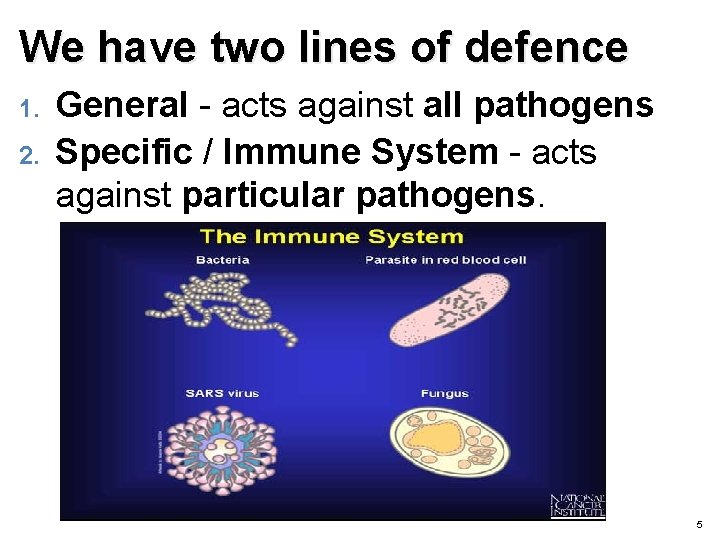
We have two lines of defence 1. 2. General - acts against all pathogens Specific / Immune System - acts against particular pathogens. 5
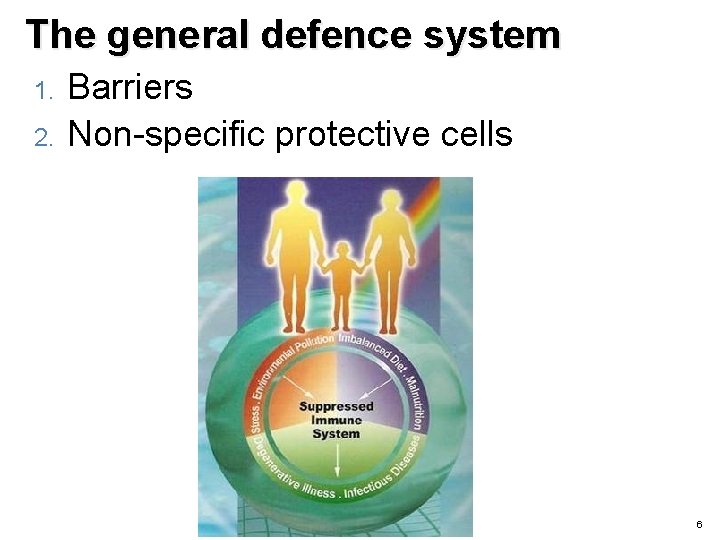
The general defence system 1. 2. Barriers Non-specific protective cells 6
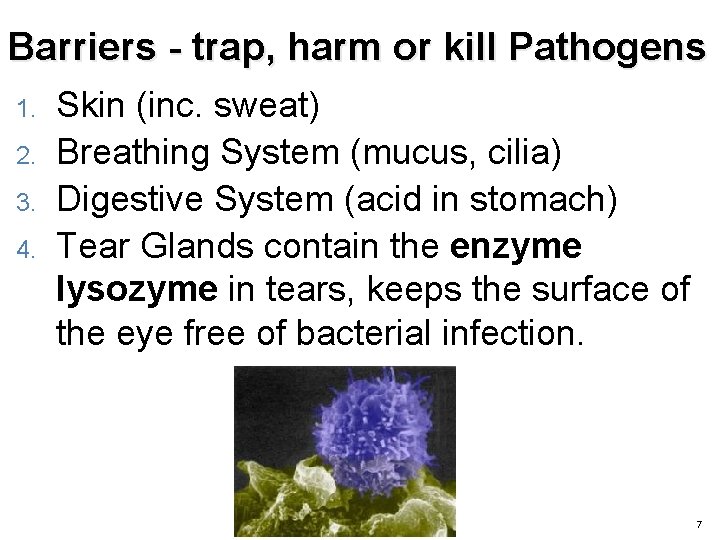
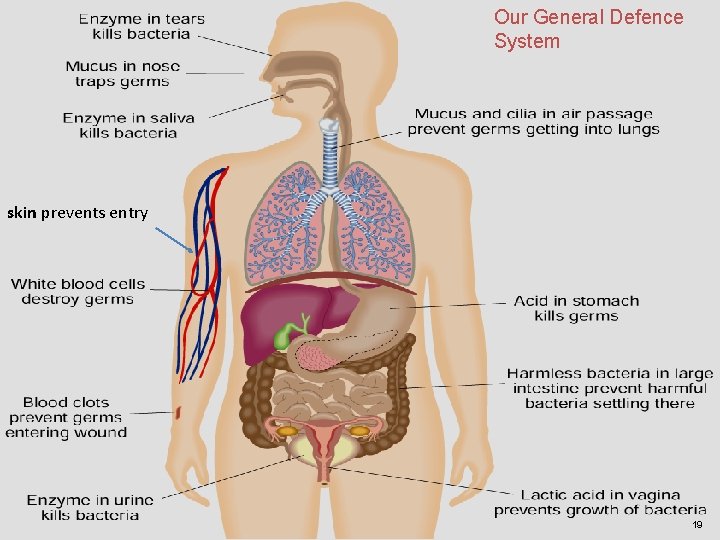
Barriers - trap, harm or kill Pathogens 1. 2. 3. 4. Skin (inc. sweat) Breathing System (mucus, cilia) Digestive System (acid in stomach) Tear Glands contain the enzyme lysozyme in tears, keeps the surface of the eye free of bacterial infection. 7
Learning Check 1 1. 2. 3. 4. 5. What is Immunity? What is a pathogen? E. g. s? What are the two lines of defence? What does the general defence system consist of? Name some Barriers. 8
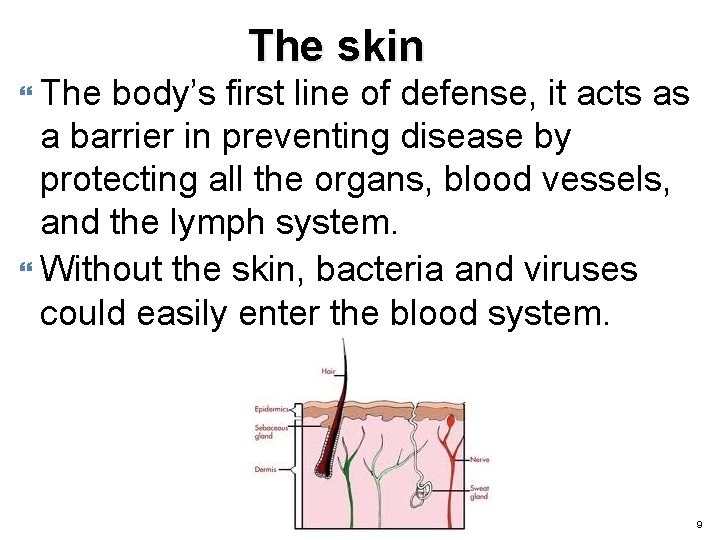
The skin The body’s first line of defense, it acts as a barrier in preventing disease by protecting all the organs, blood vessels, and the lymph system. Without the skin, bacteria and viruses could easily enter the blood system. 9
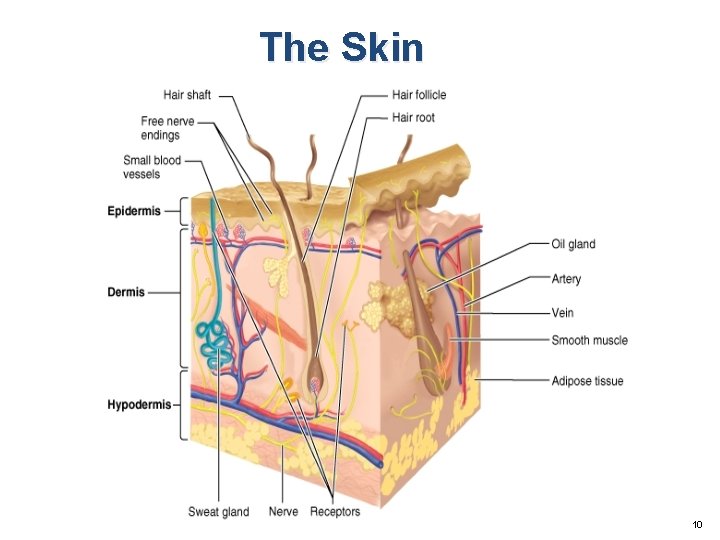
The Skin 10
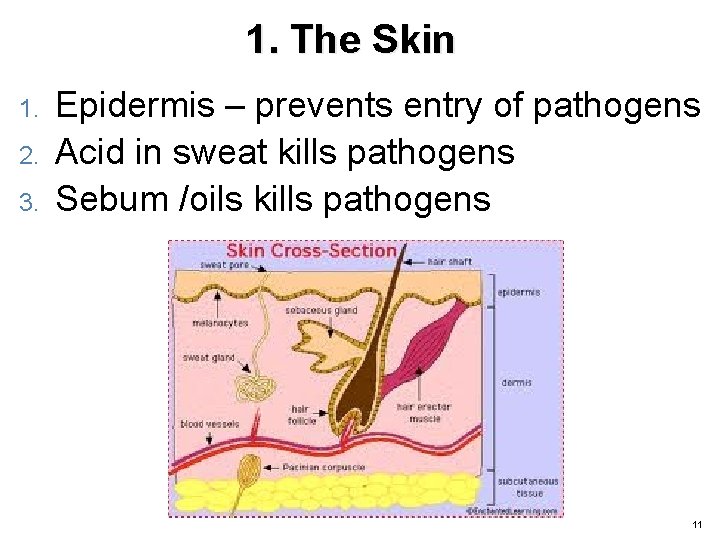
1. The Skin 1. 2. 3. Epidermis – prevents entry of pathogens Acid in sweat kills pathogens Sebum /oils kills pathogens 11
2. Mucus The sticky, thick fluid produced by the mucous membranes that line all openings of the body – digestive, reproductive and respiratory tract. When dust particles enter the body, they get trapped in the mucous membranes and are then digested. 12
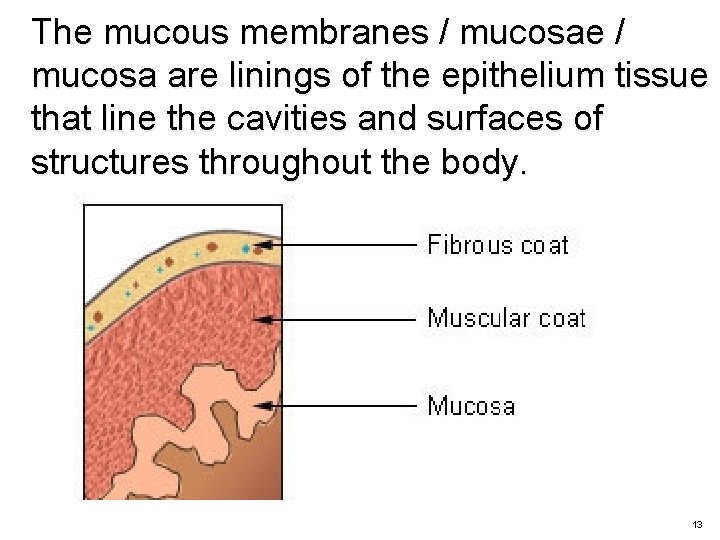
The mucous membranes / mucosae / mucosa are linings of the epithelium tissue that line the cavities and surfaces of structures throughout the body. 13
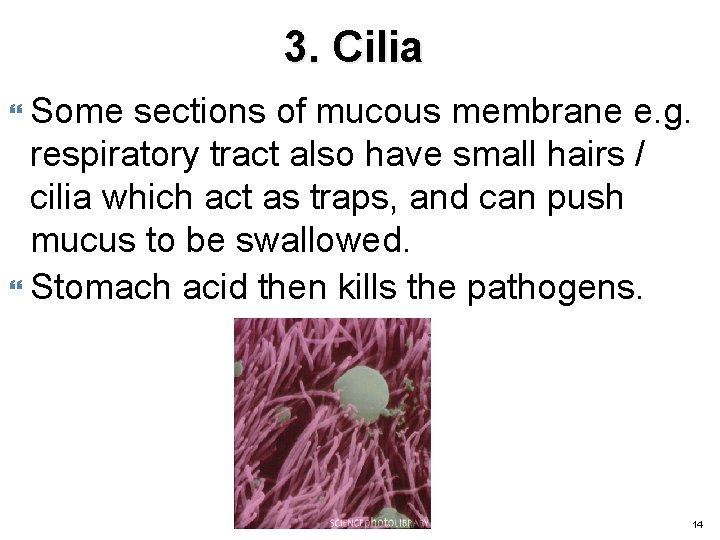
3. Cilia Some sections of mucous membrane e. g. respiratory tract also have small hairs / cilia which act as traps, and can push mucus to be swallowed. Stomach acid then kills the pathogens. 14
Nose hairs 15
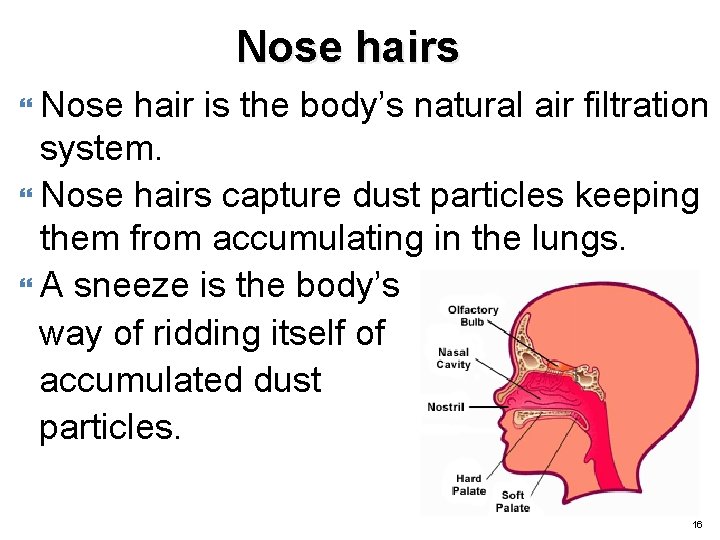
Nose hairs Nose hair is the body’s natural air filtration system. Nose hairs capture dust particles keeping them from accumulating in the lungs. A sneeze is the body’s way of ridding itself of accumulated dust particles. 16
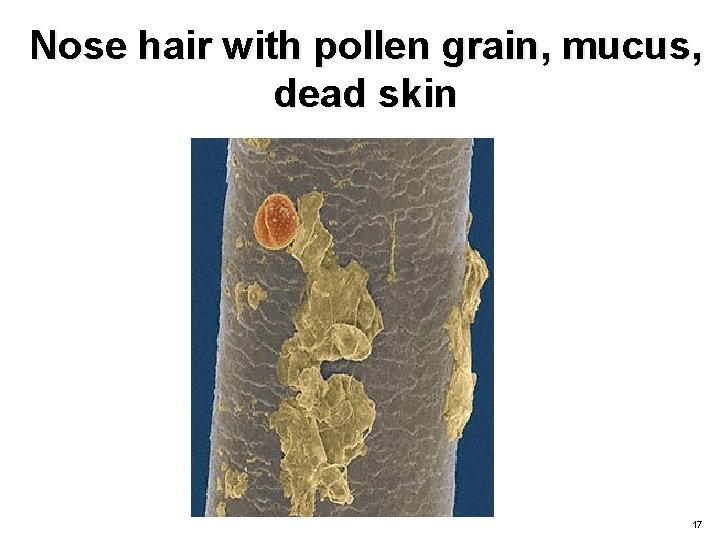
Nose hair with pollen grain, mucus, dead skin 17
Learning Check 2 1. 2. 3. 4. What is the body’s first line of defense? How does it play a role in preventing disease? What is mucus? How does it play a role in preventing disease? What are cilia? How do they play a role in preventing disease? How do nose hairs play a role in preventing disease? 18
Our General Defence System skin prevents entry 19
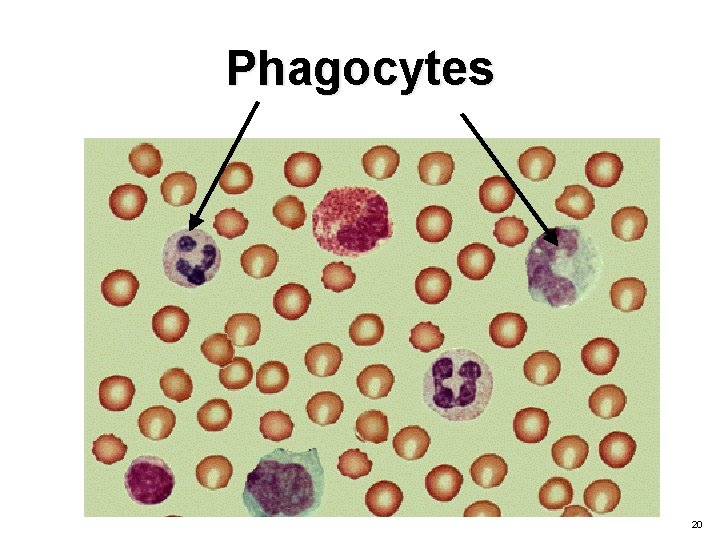
Phagocytes 20
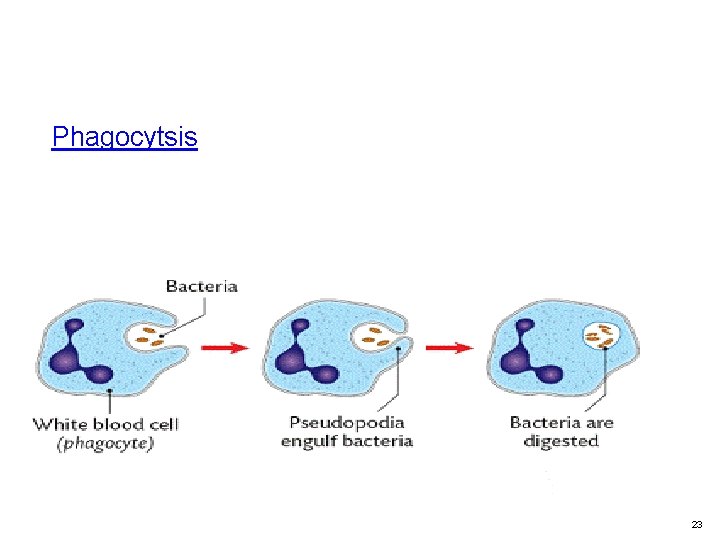
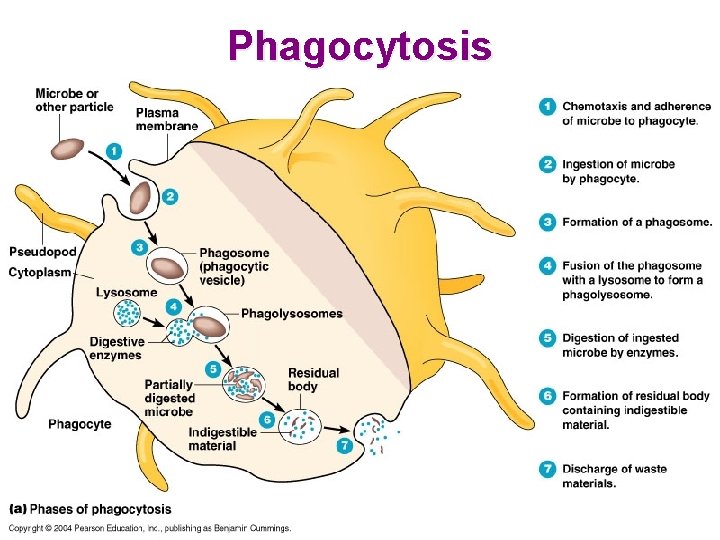
4. Phagocytes / White Blood Cells 1. 2. They engulf / trap harmful materials / microbes / pathogens when they enter the body They secrete chemicals to digest / destroy them causing high temps / fever Inflammatory reaction, as immune system cells rushes to a location to deal with unwanted invaders. 21
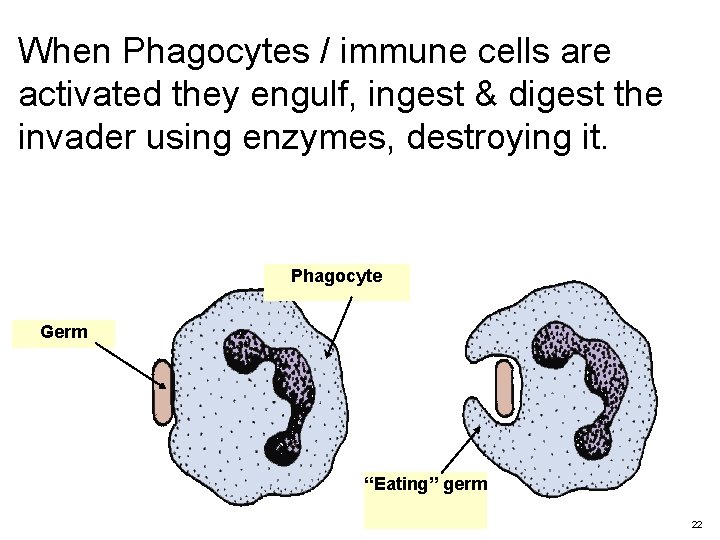
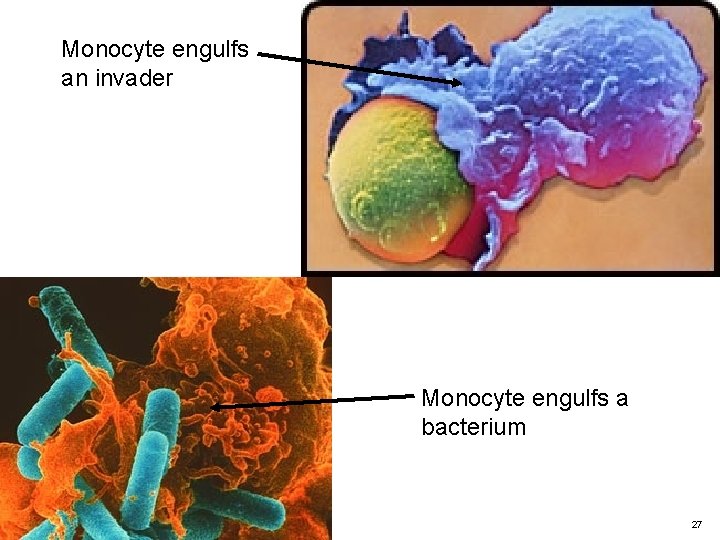
When Phagocytes / immune cells are activated they engulf, ingest & digest the invader using enzymes, destroying it. Phagocyte Germ “Eating” germ 22
Phagocytsis 23
Phagocytosis 24
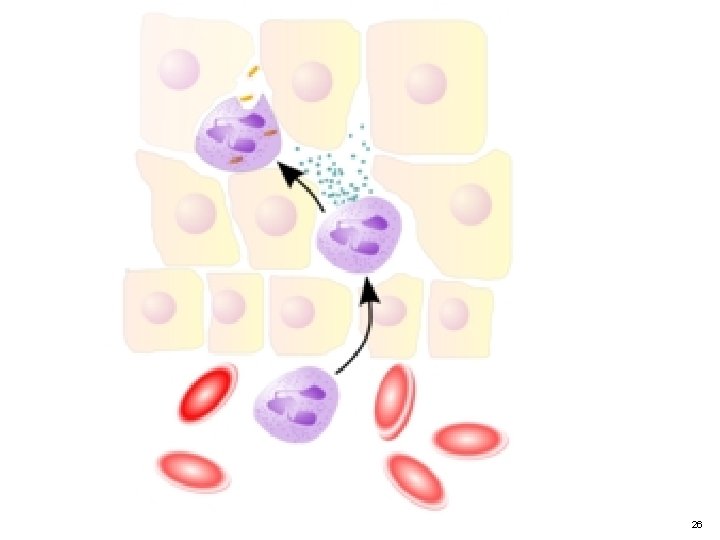
The Inflammatory Response The inflammatory response (inflammation) occurs when tissues are injured by bacteria, trauma, toxins, heat, or any other cause. There are 4 signs of inflammation: 1. Red & warm - increased blood flow to the affected area 3. Swelling - increased amount of blood & influx of phagocytic cells and proteins 4. Pain - expansion of tissues, causing pressure on nerve cells, and also due to the presence of pain mediators. 25
26
Monocyte engulfs an invader Monocyte engulfs a bacterium 27
Animation phagocytosis How the Body Works : When the Skin is Cut 28
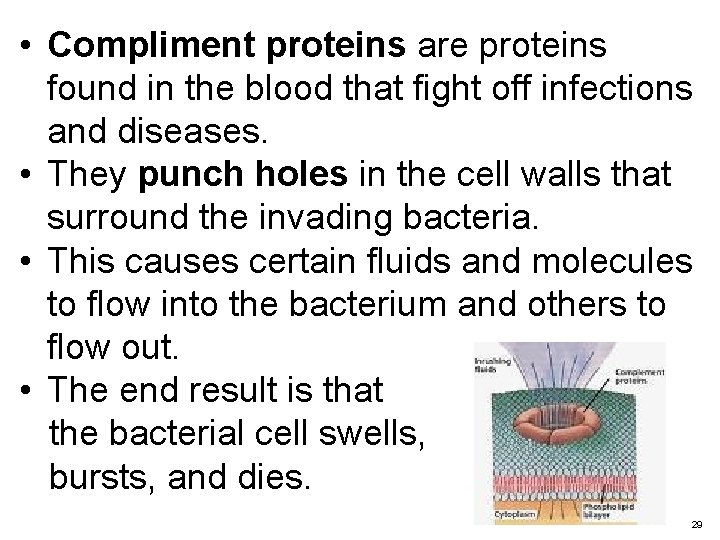
• Compliment proteins are proteins found in the blood that fight off infections and diseases. • They punch holes in the cell walls that surround the invading bacteria. • This causes certain fluids and molecules to flow into the bacterium and others to flow out. • The end result is that the bacterial cell swells, bursts, and dies. 29
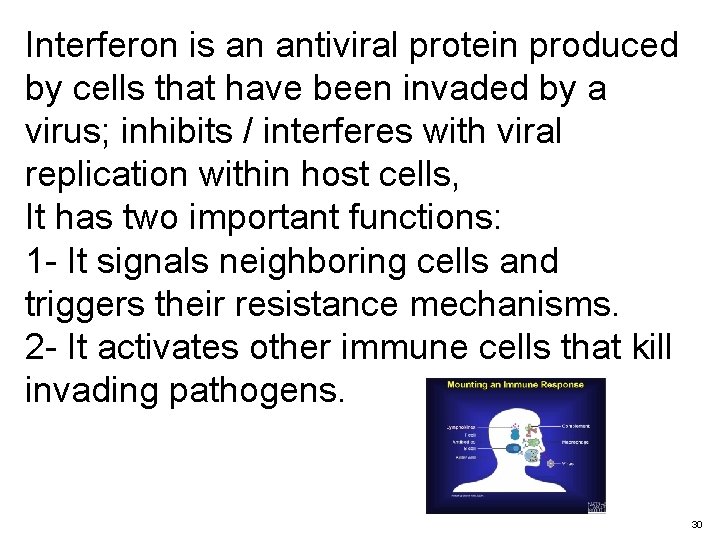
Interferon is an antiviral protein produced by cells that have been invaded by a virus; inhibits / interferes with viral replication within host cells, It has two important functions: 1 - It signals neighboring cells and triggers their resistance mechanisms. 2 - It activates other immune cells that kill invading pathogens. 30
Learning Check 3 1. 2. 3. 4. 5. 6. What are Phagocytes? How do they play a role in preventing disease? What is the inflammatory response What are 4 signs of inflammation? What are Compliment proteins? What is Interferon? 31
The specific defence system or Immune response 32
Microorganisms/germs Such invaders include: 1. bacteria, 2. viruses, 3. fungi, 4. Parasites e. g. worms, 5. cancer cells, and even 6. transplanted organs and tissues 33
Nonself or Foreign To defend the body against these invaders, the immune system must be able to distinguish between what belongs in the body (self) and what does not (nonself or foreign). Ø Any substances that are identified as nonself can stimulate an immune response in the body. Ø 34
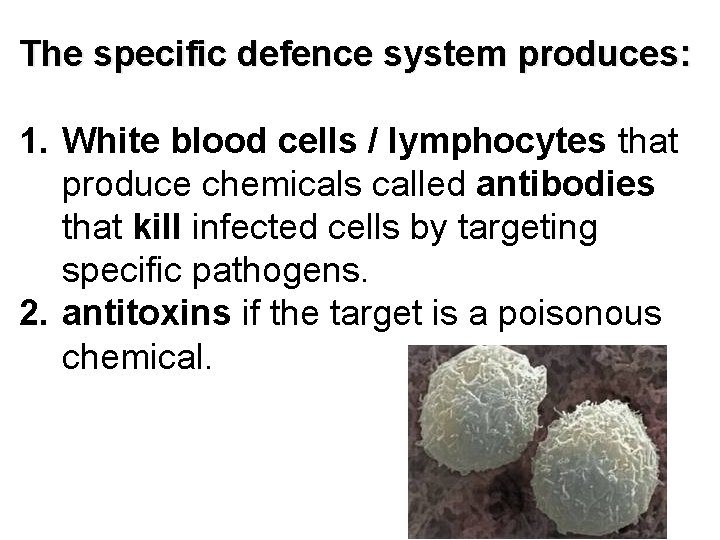
The specific defence system produces: 1. White blood cells / lymphocytes that produce chemicals called antibodies that kill infected cells by targeting specific pathogens. 2. antitoxins if the target is a poisonous chemical.
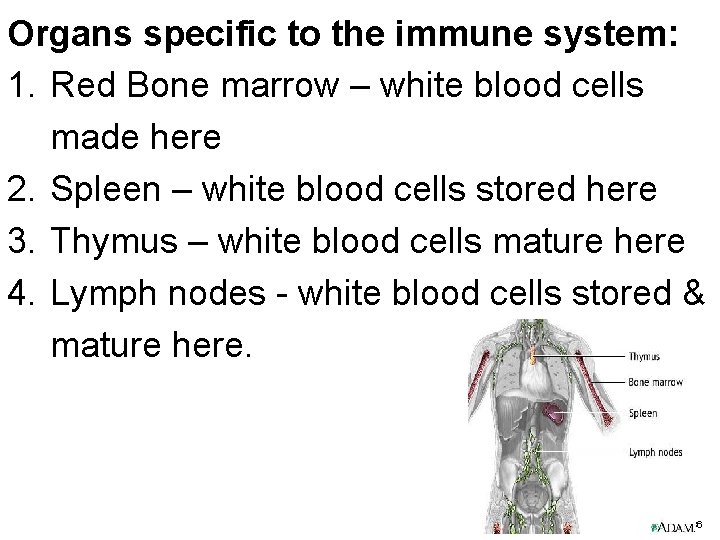
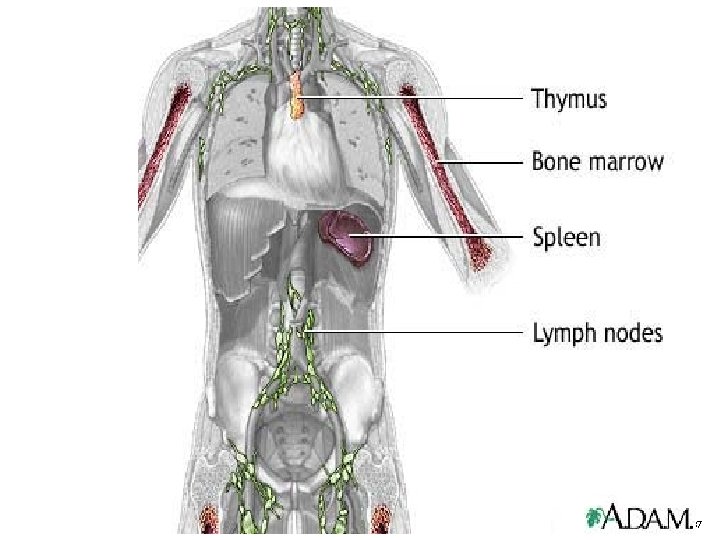
Organs specific to the immune system: 1. Red Bone marrow – white blood cells made here 2. Spleen – white blood cells stored here 3. Thymus – white blood cells mature here 4. Lymph nodes - white blood cells stored & mature here. 36
37
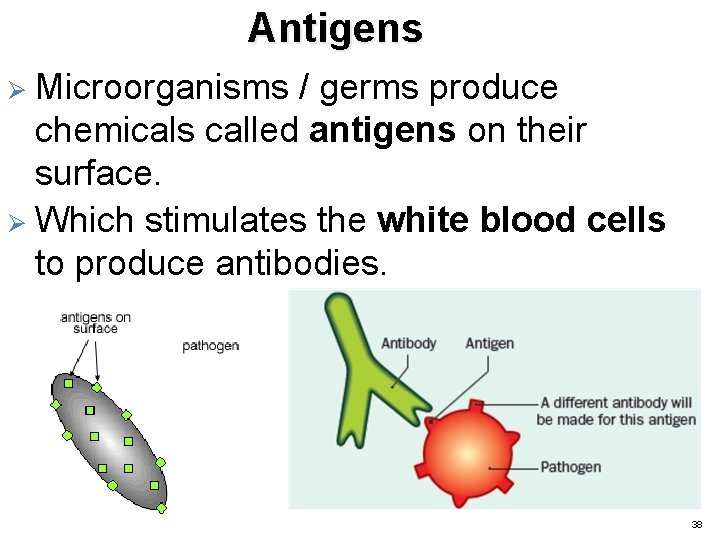
Antigens Microorganisms / germs produce chemicals called antigens on their surface. Ø Which stimulates the white blood cells to produce antibodies. Ø 38
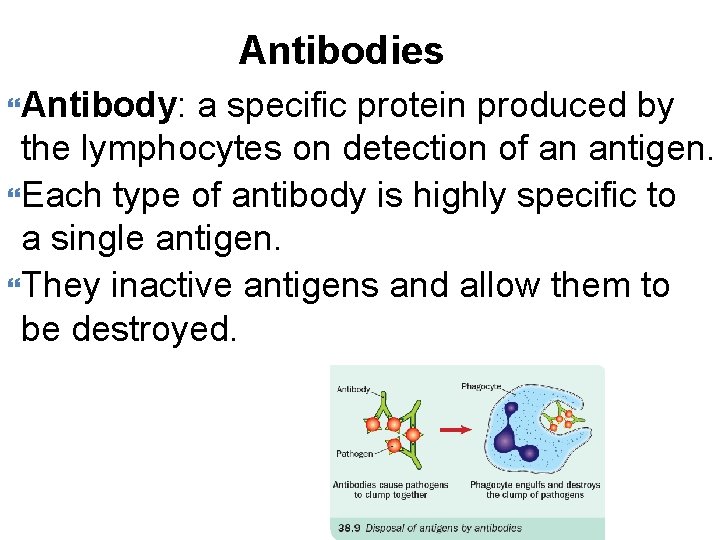
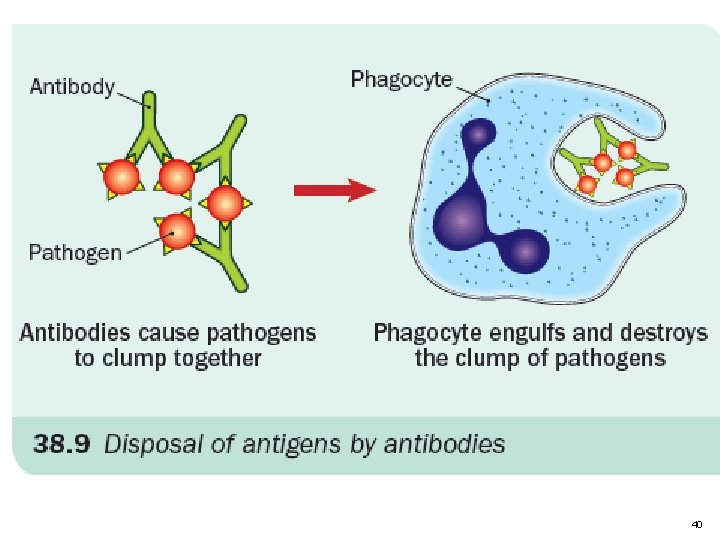
Antibodies Antibody: a specific protein produced by the lymphocytes on detection of an antigen. Each type of antibody is highly specific to a single antigen. They inactive antigens and allow them to be destroyed.
40
Learning Check 4 1. 2. 3. 4. 5. Name some Microorganisms/germs. What does the specific defence system produces? What Organs are specific to the immune system? What are antigens? What are antibodies? 41
IMMUNITY 42
43
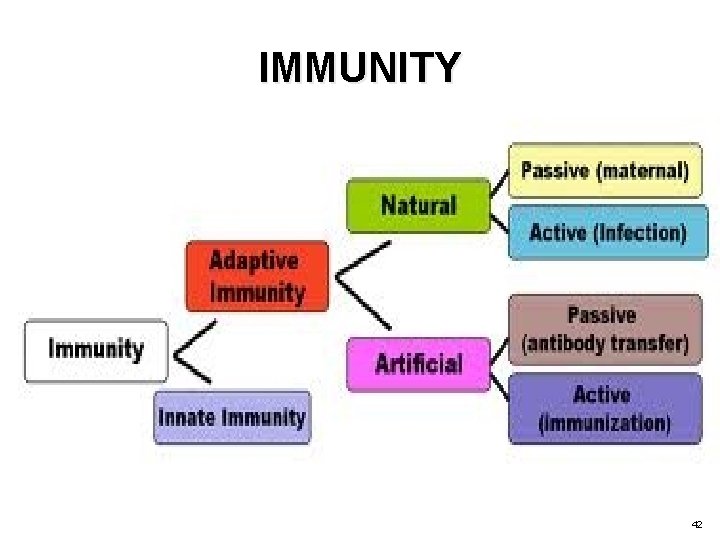
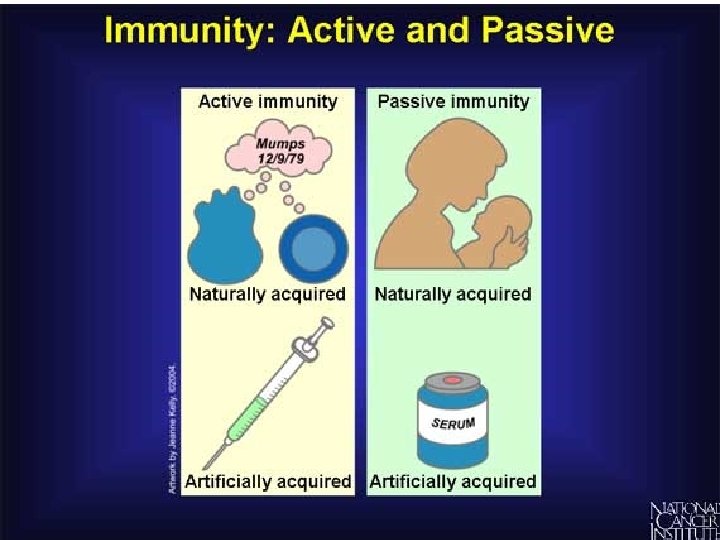
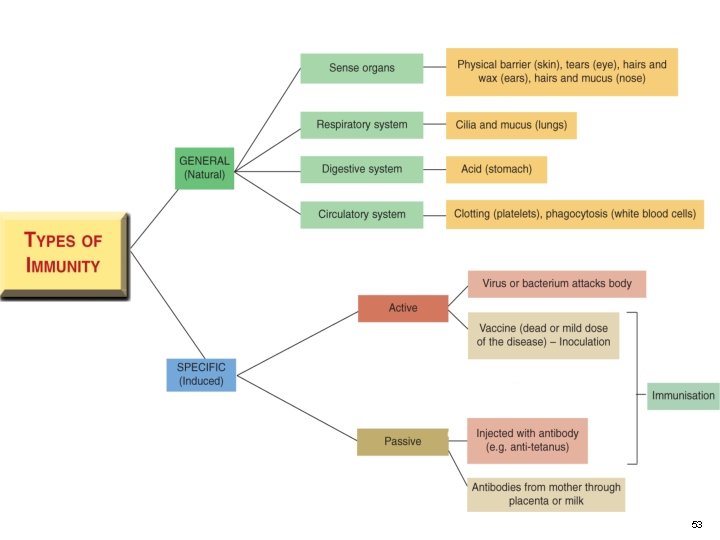
Induced Immunity due to antibody production after the antigens on the pathogen have been detected. There are two types: 1. Active Induced Immunity 2. Passive Induced Immunity 44
1. Active Induced Immunity Natural: normal infection 2. Artificial: vaccination / immunisation The patient produces the antibodies in response to antigen detection by phagocytes. It is a long-term protection because of the long life of memory B cells. 1. 45
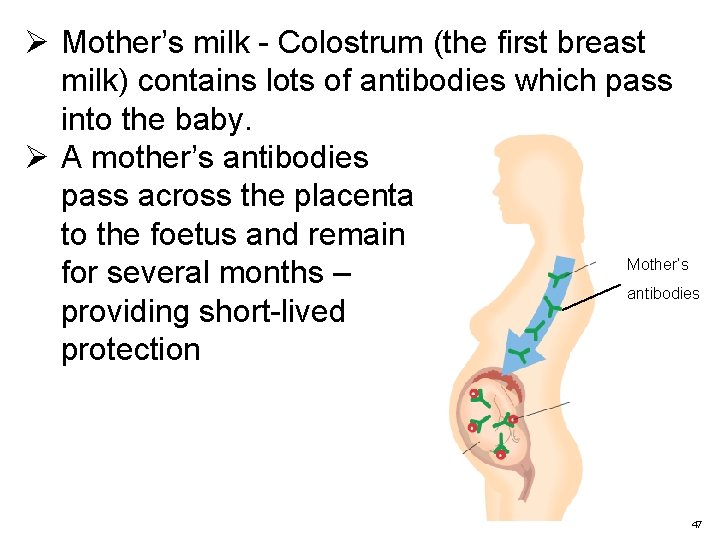
2. Passive Induced Immunity Occurs when foreign antibodies are given to body. Provides short-term immunity 1. Natural: a child getting antibodies from the placenta or mother’s milk 2. Artificial: getting an injection of foreign antibodies against a particular pathogen e. g. anti-tetanus 46
Ø Mother’s milk - Colostrum (the first breast milk) contains lots of antibodies which pass into the baby. Ø A mother’s antibodies pass across the placenta to the foetus and remain Mother’s for several months – antibodies providing short-lived protection 47
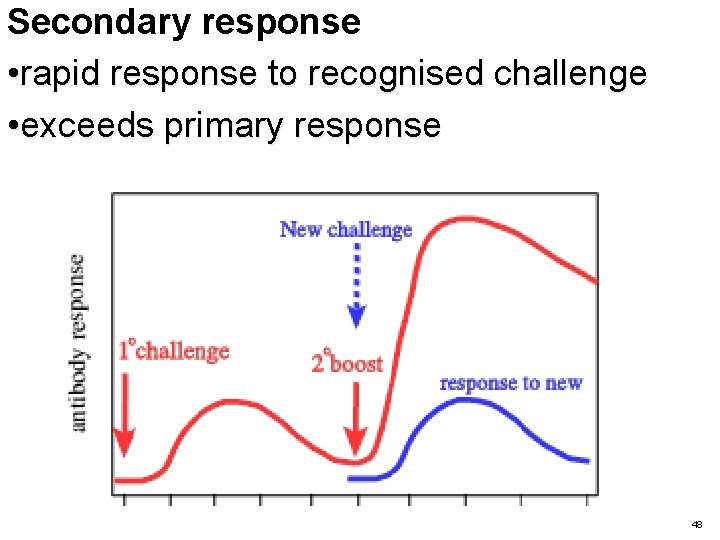
Secondary response • rapid response to recognised challenge • exceeds primary response 48
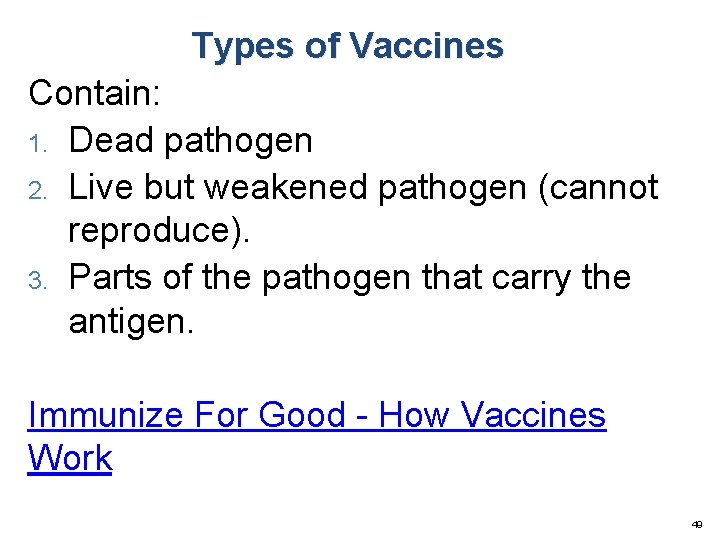
Types of Vaccines Contain: 1. Dead pathogen 2. Live but weakened pathogen (cannot reproduce). 3. Parts of the pathogen that carry the antigen. Immunize For Good - How Vaccines Work 49
Vaccination A vaccine induces active immunity against a specific pathogen by stimulating the formation of antibodies & memory cells. 50
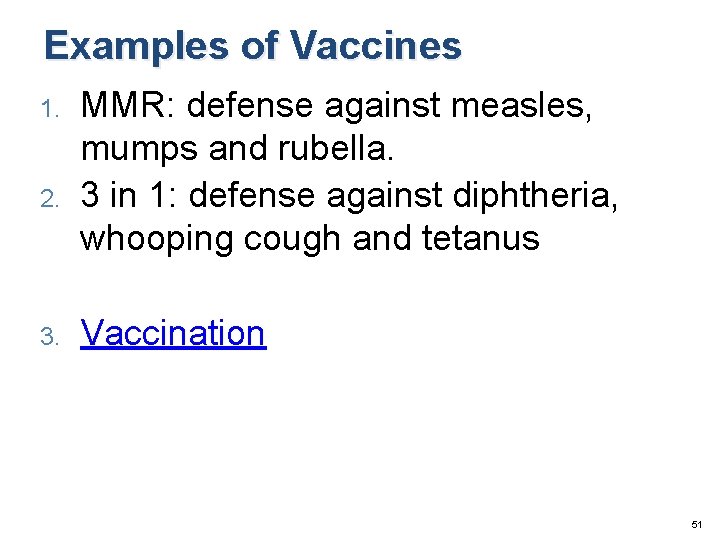
Examples of Vaccines 1. 2. 3. MMR: defense against measles, mumps and rubella. 3 in 1: defense against diphtheria, whooping cough and tetanus Vaccination 51
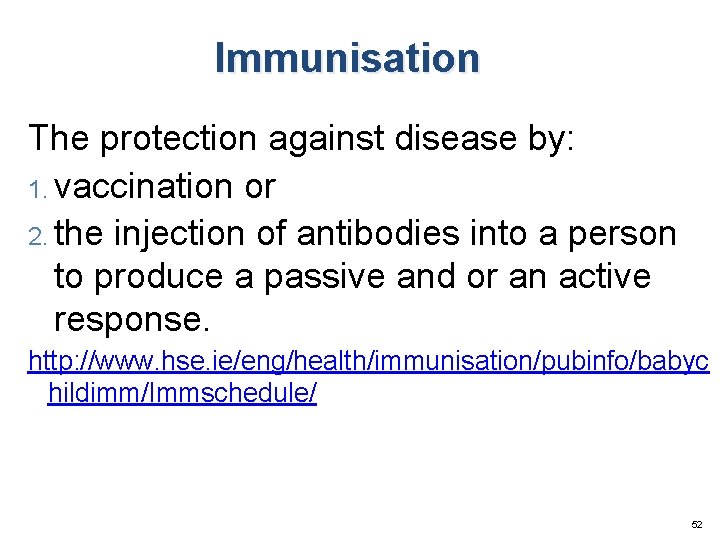
Immunisation The protection against disease by: 1. vaccination or 2. the injection of antibodies into a person to produce a passive and or an active response. http: //www. hse. ie/eng/health/immunisation/pubinfo/babyc hildimm/Immschedule/ 52
53
Learning Check 5 1. What is Induced Immunity? Name the 2 types. 2. What is Active Induced Immunity? Name the 2 types. 3. What is Passive Induced Immunity? Name the 2 types. 4. What are Vaccines? How do they work? 5. What is Immunisation? 54
HIGHER LEVEL 55
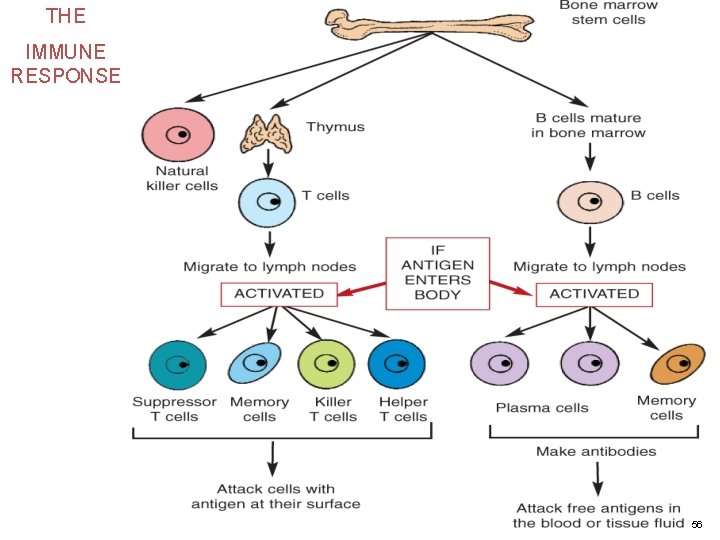
THE IMMUNE RESPONSE 56
Lymphocytes are 2 types of white blood cell which are produced in the Lymph nodes. 1. B-cells / B-lymphocytes- mature in the bone marrow. 2. T-cells / T-lymphocytes - mature in the thymus gland.
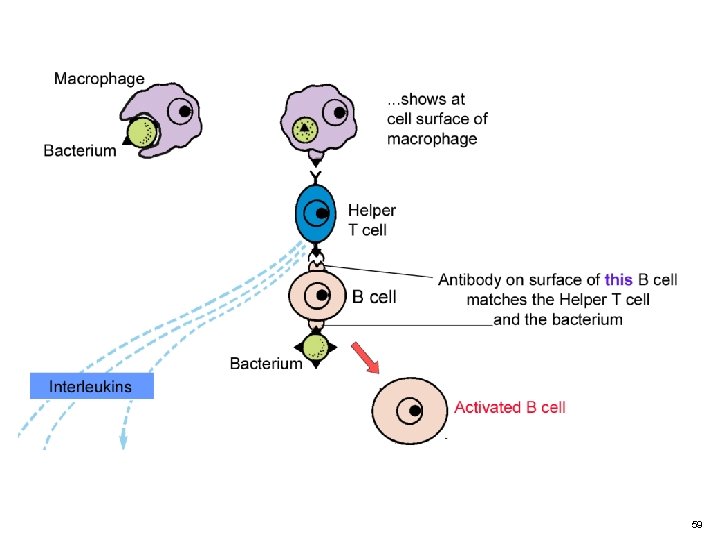
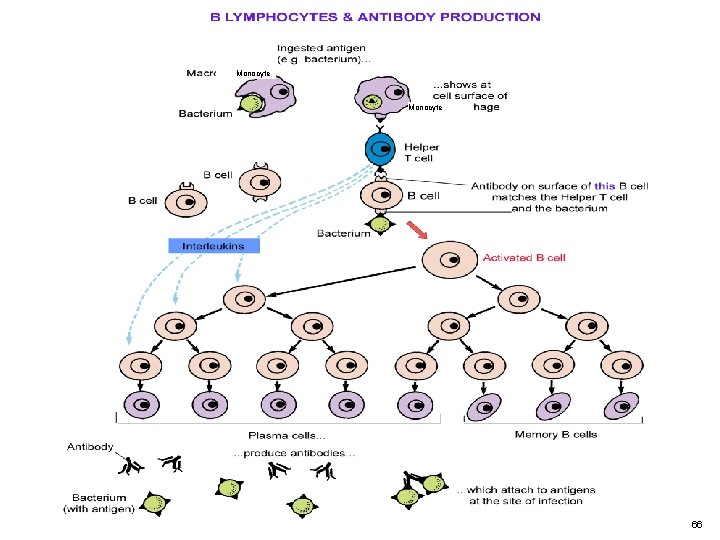
B-cells / B lymphocytes 1. 2. 3. 4. Produce antibodies When a B-cell encounters an antigen / a foreign protein, e. g. on the surface of a bacterium It stimulates the production of lots of Bcells / antibodies, These attach to the antigen marking them for destruction. 58
59
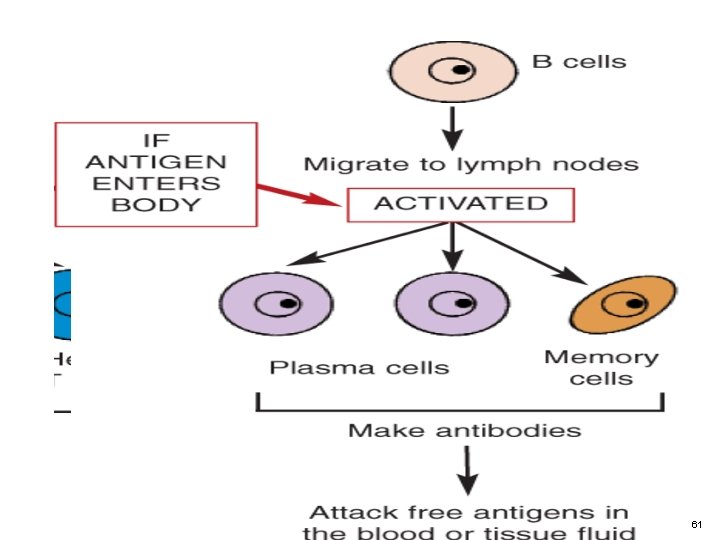
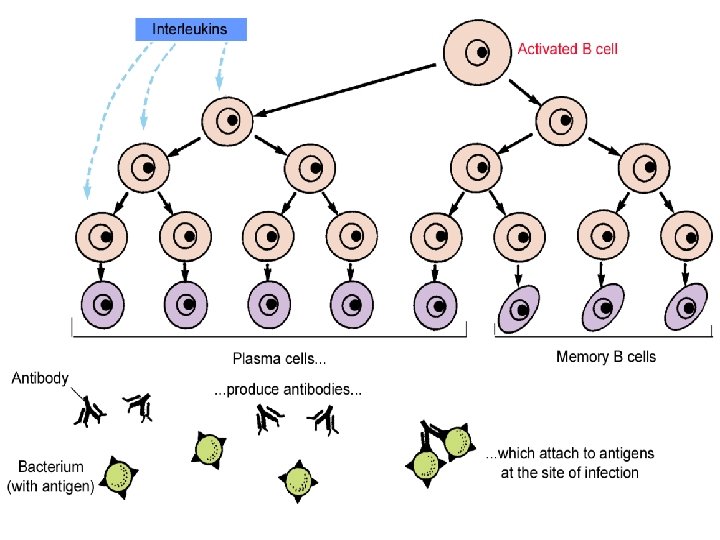
Primary immune response ØSome B cells change into memory cells, which remember that specific antigen, and others change into plasma cells. ØHelper T cells help B cells in this process. ØPlasma cells produce antibodies that are specific to the antigen that stimulated their production. 60
61
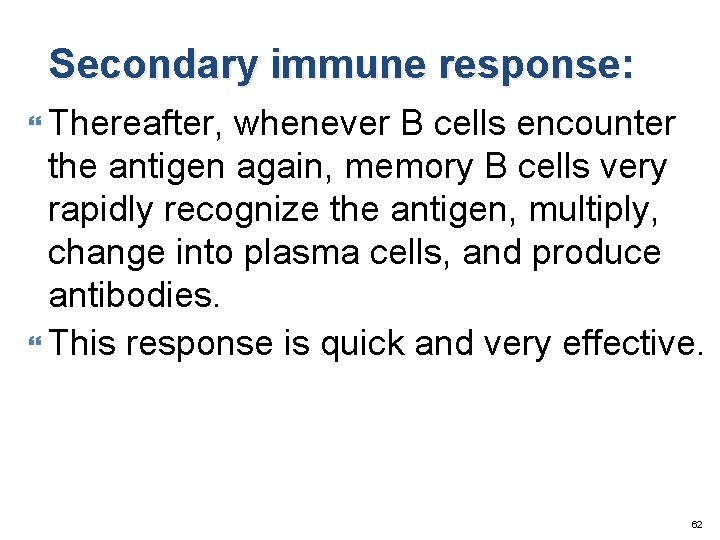
Secondary immune response: Thereafter, whenever B cells encounter the antigen again, memory B cells very rapidly recognize the antigen, multiply, change into plasma cells, and produce antibodies. This response is quick and very effective. 62
63
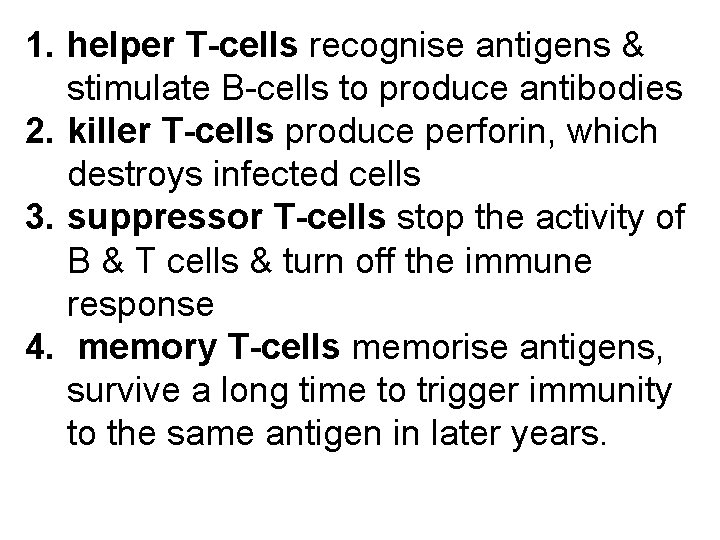
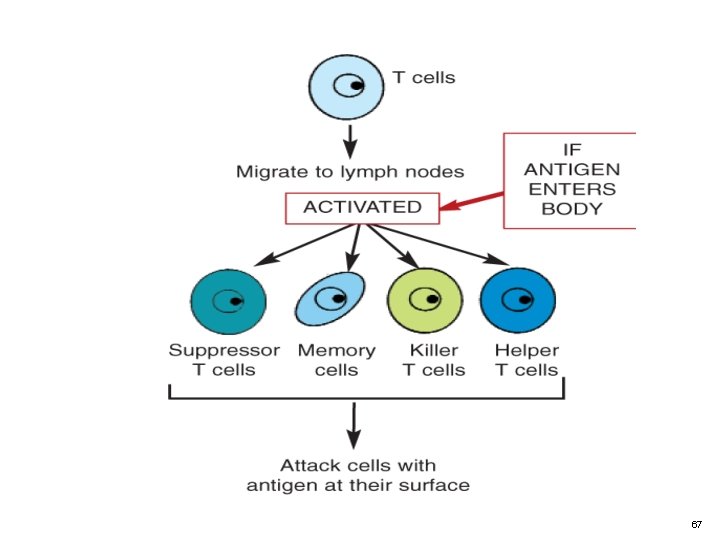
T-cells / T-lymphocytes There are 4 Types of of T- cells / T-lymphocytes
1. helper T-cells recognise antigens & stimulate B-cells to produce antibodies 2. killer T-cells produce perforin, which destroys infected cells 3. suppressor T-cells stop the activity of B & T cells & turn off the immune response 4. memory T-cells memorise antigens, survive a long time to trigger immunity to the same antigen in later years.
Monocyte 66
67
Learning Check 6 1. What Lymphocytes? Name the 2 types. 2. What are B-cells / B lymphocytes? How do they work? 3. What is the Primary immune response? 4. What is the Secondary immune response? 5. Name the 4 Types of T- cells / Tlymphocytes. 6. What is the function of each? 68