
Chapter 36 DIFFRACTION PHYSICAL OPTICS SINGLE SLIT DIFFRACTION
- Slides: 23
Chapter 36 DIFFRACTION (PHYSICAL OPTICS)
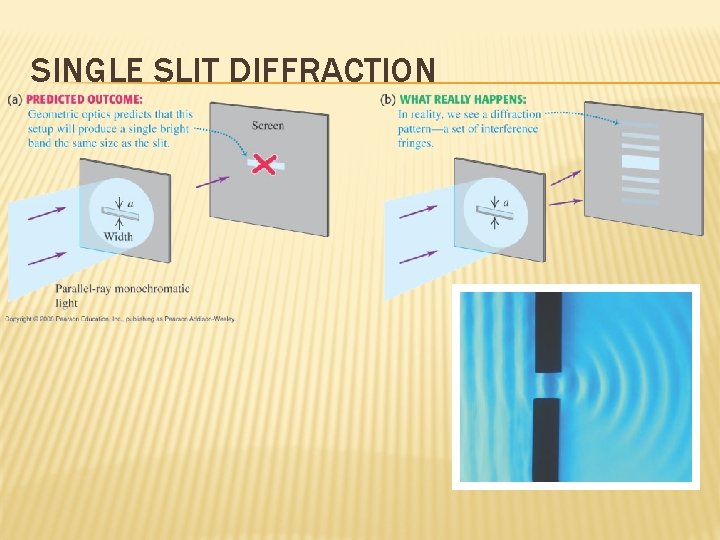
SINGLE SLIT DIFFRACTION
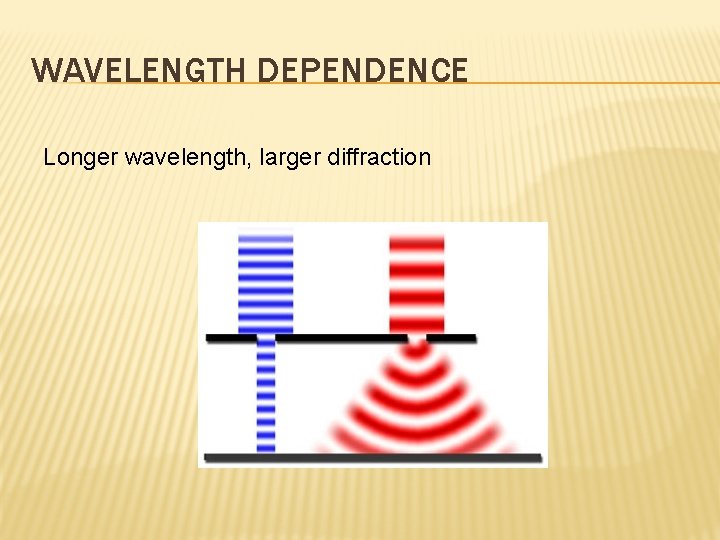
WAVELENGTH DEPENDENCE Longer wavelength, larger diffraction
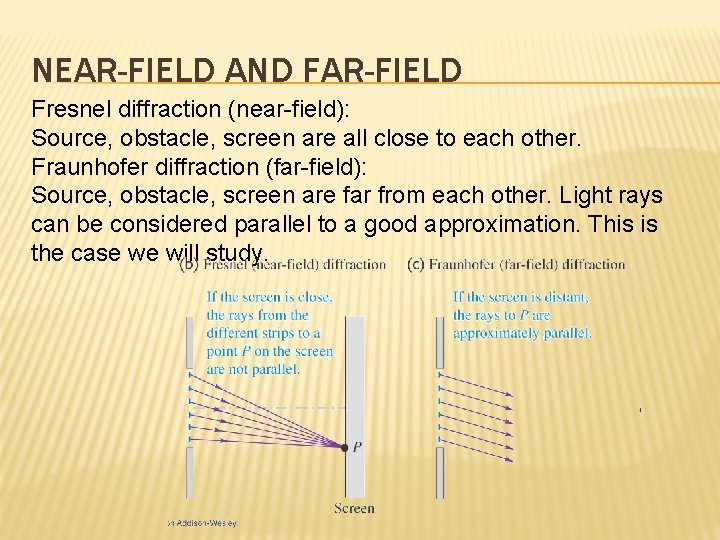
NEAR-FIELD AND FAR-FIELD Fresnel diffraction (near-field): Source, obstacle, screen are all close to each other. Fraunhofer diffraction (far-field): Source, obstacle, screen are far from each other. Light rays can be considered parallel to a good approximation. This is the case we will study.
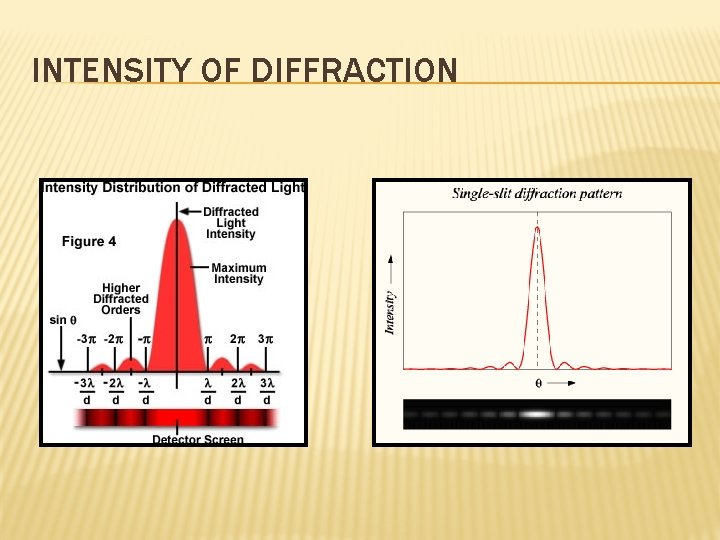
INTENSITY OF DIFFRACTION
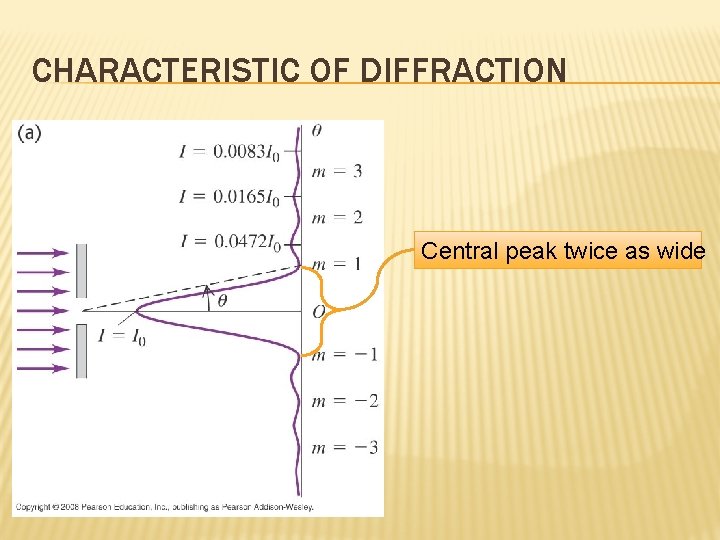
CHARACTERISTIC OF DIFFRACTION Central peak twice as wide
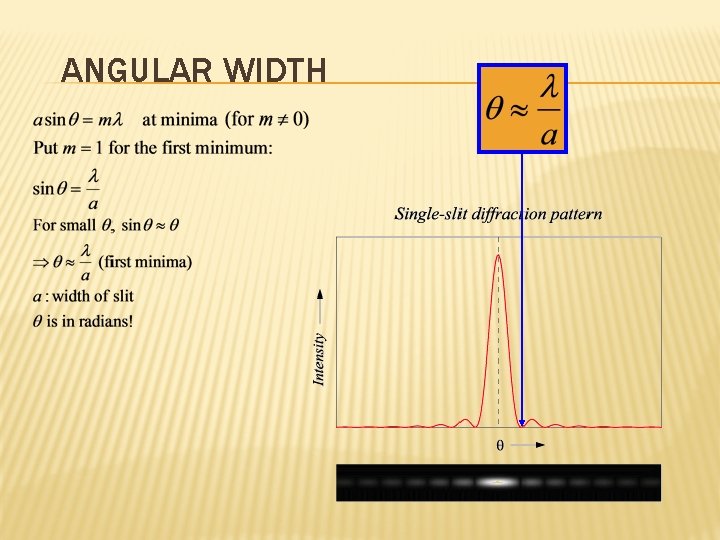
ANGULAR WIDTH
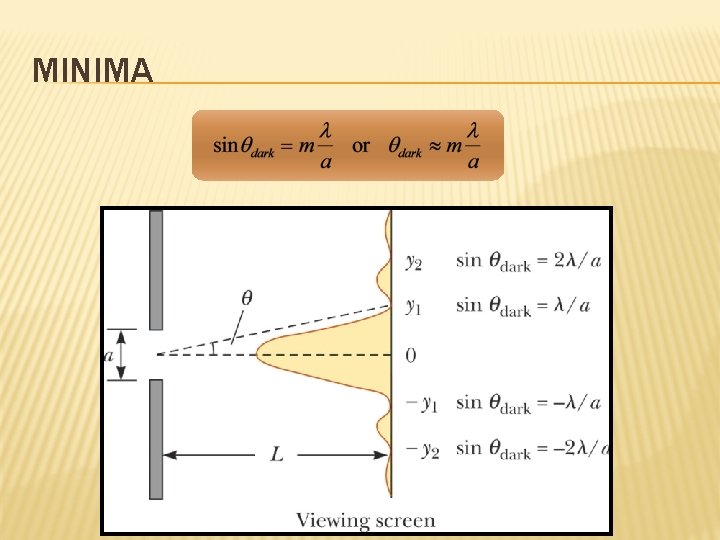
MINIMA
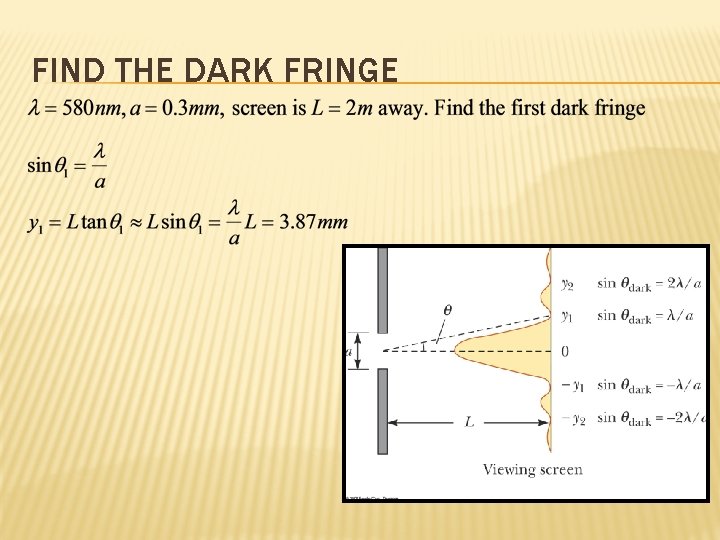
FIND THE DARK FRINGE
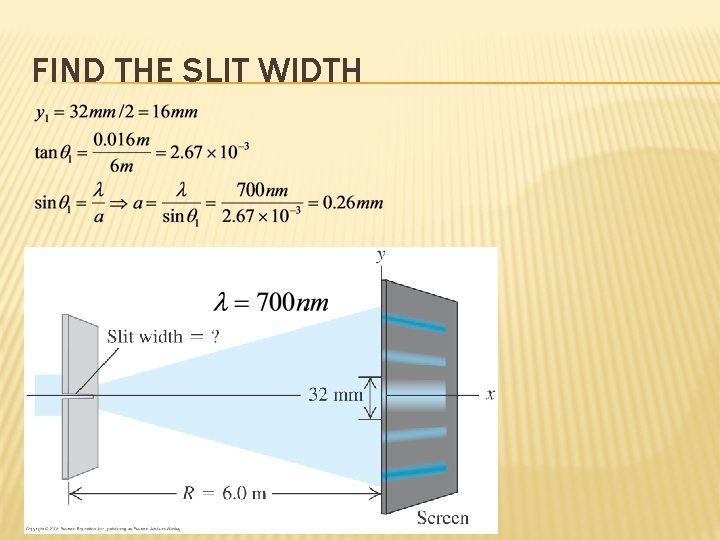
FIND THE SLIT WIDTH
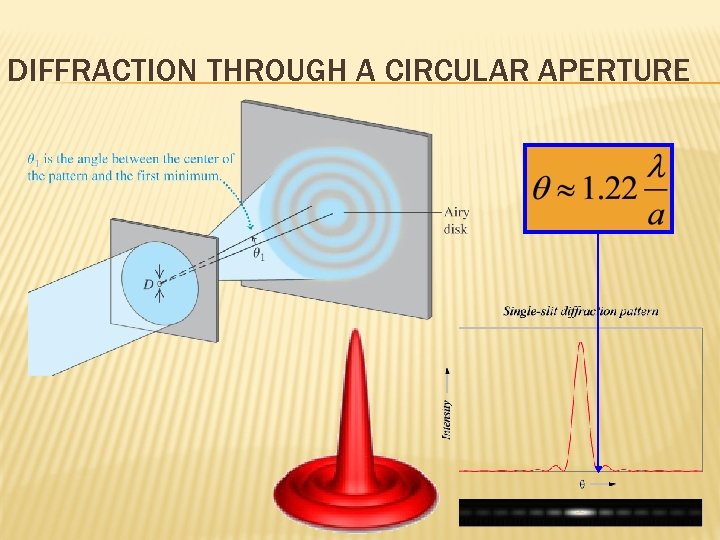
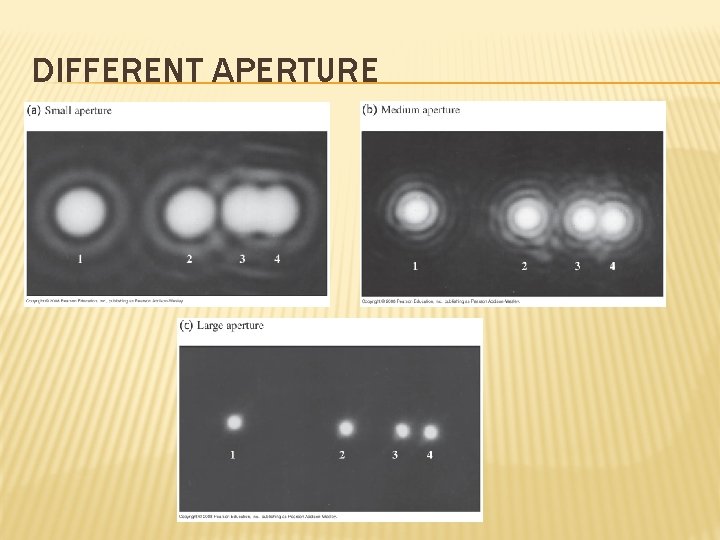
DIFFRACTION THROUGH A CIRCULAR APERTURE
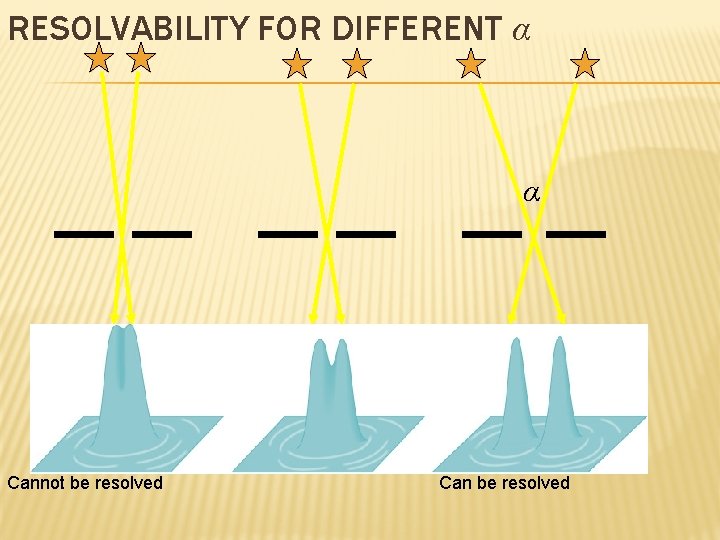
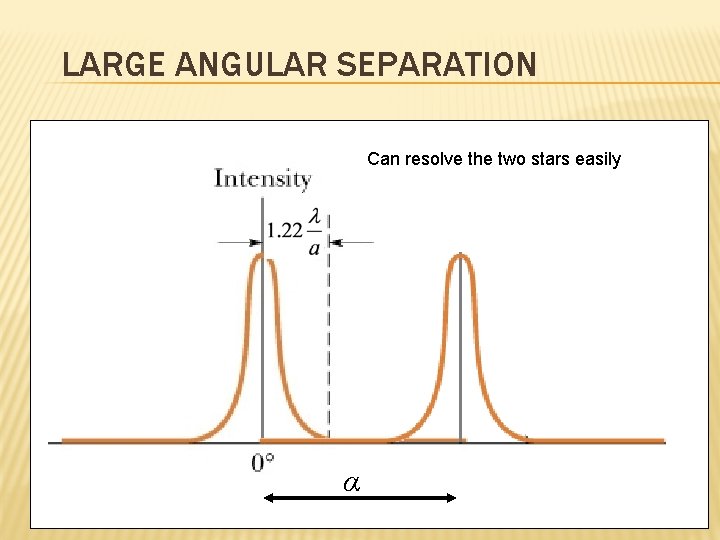
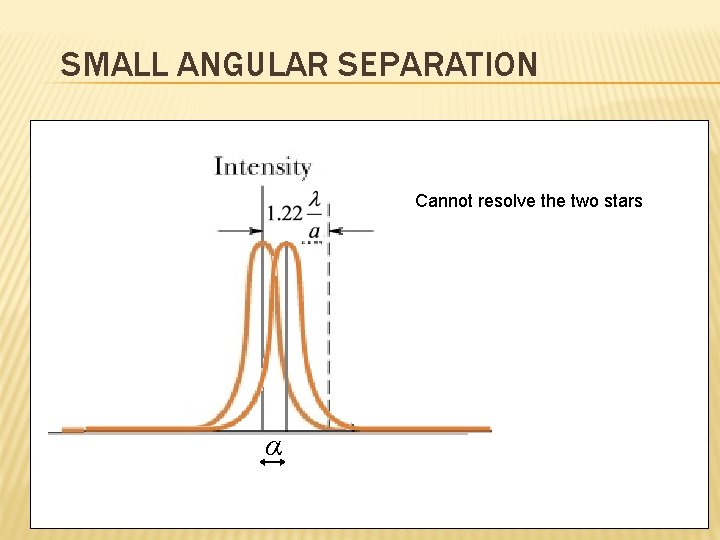
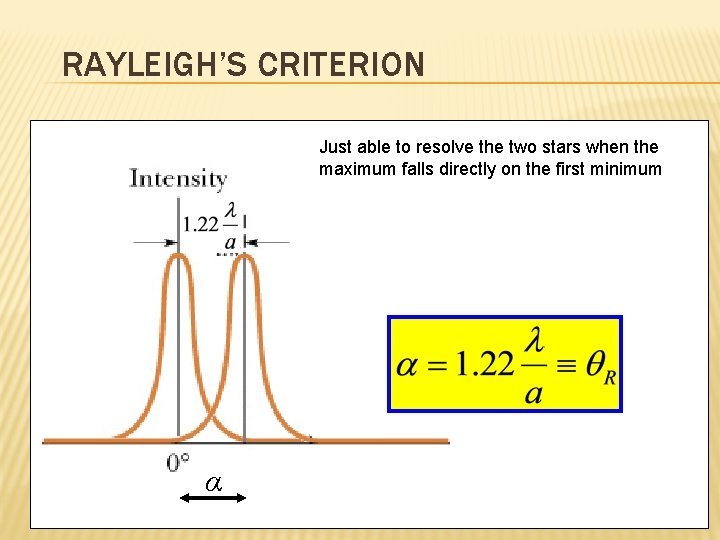
RESOLVABILITY FOR DIFFERENT α α Cannot be resolved Can be resolved
LARGE ANGULAR SEPARATION Can resolve the two stars easily α
SMALL ANGULAR SEPARATION Cannot resolve the two stars α
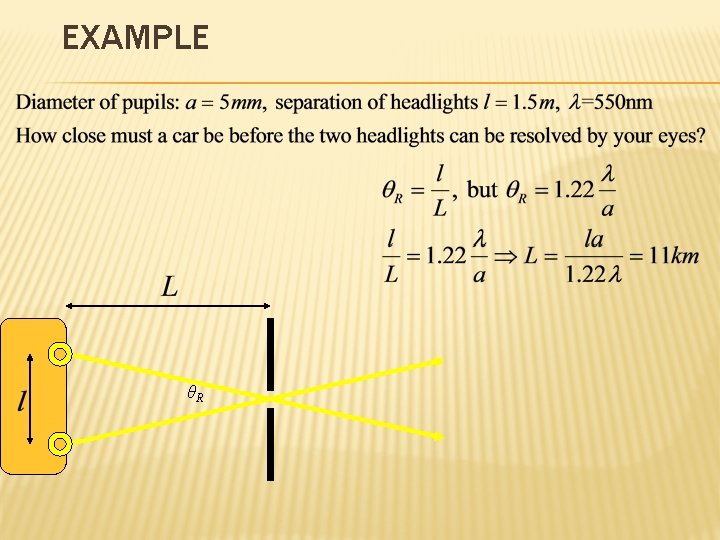
RAYLEIGH’S CRITERION Just able to resolve the two stars when the maximum falls directly on the first minimum α
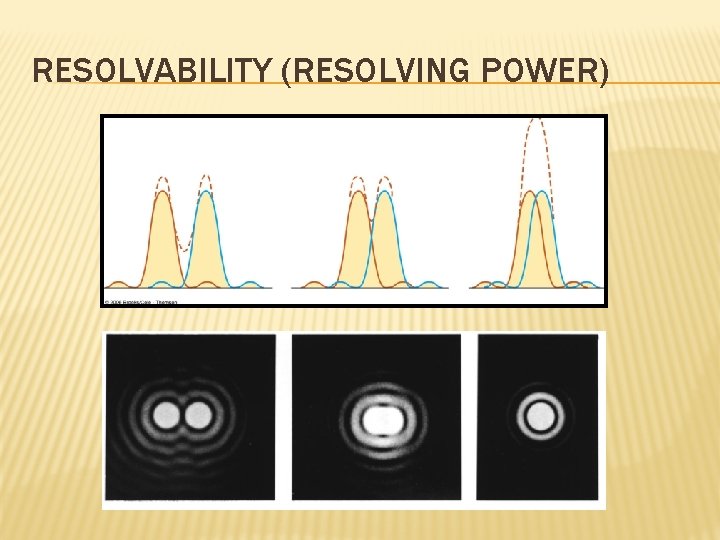
RESOLVABILITY (RESOLVING POWER)
DIFFERENT APERTURE
EXAMPLE θR
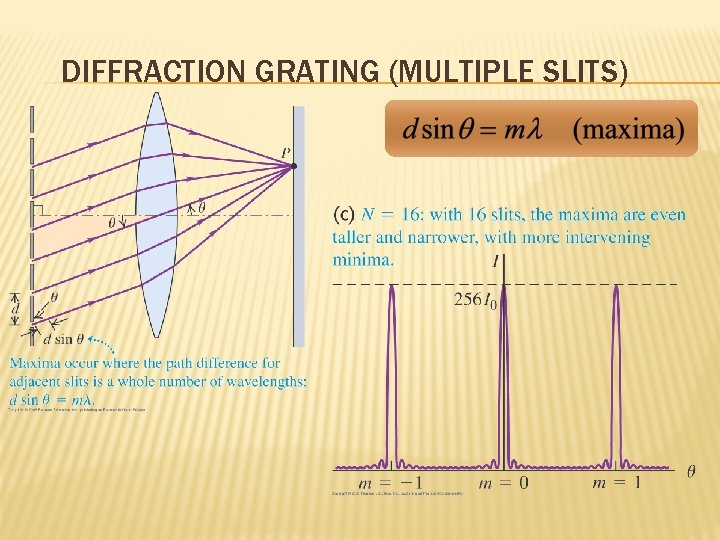
DIFFRACTION GRATING (MULTIPLE SLITS)
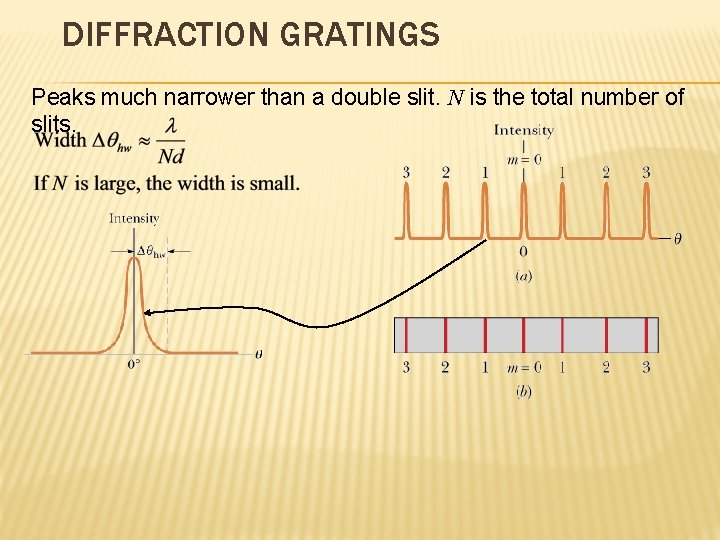
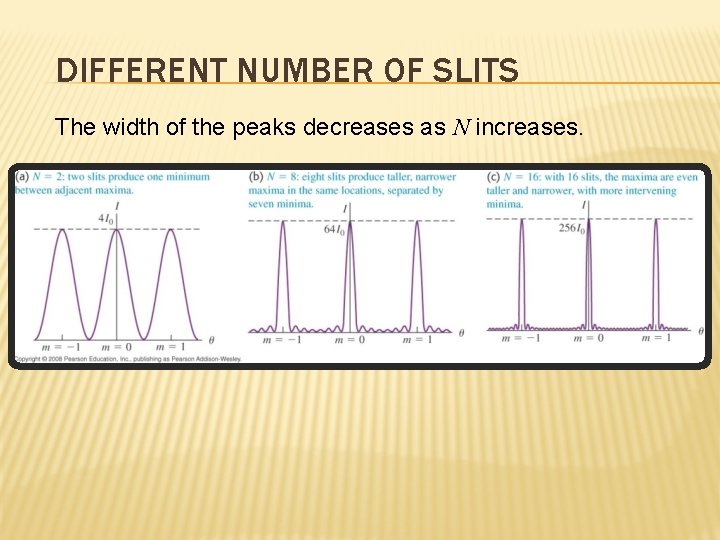
DIFFRACTION GRATINGS Peaks much narrower than a double slit. N is the total number of slits.
DIFFERENT NUMBER OF SLITS The width of the peaks decreases as N increases.
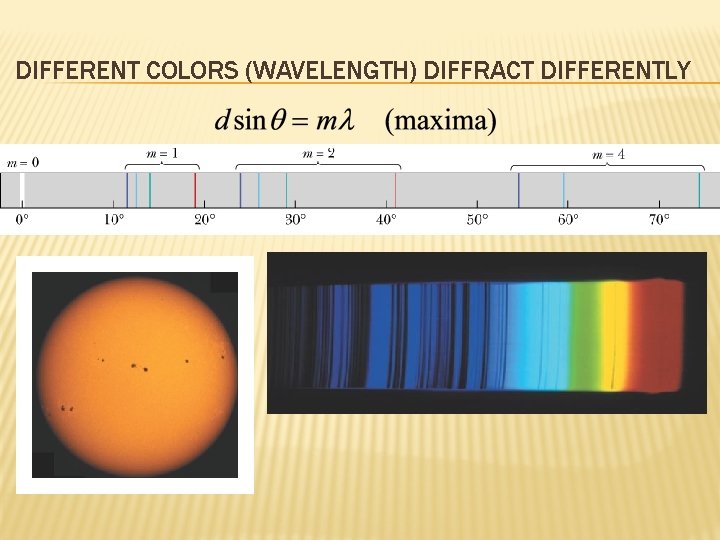
DIFFERENT COLORS (WAVELENGTH) DIFFRACT DIFFERENTLY
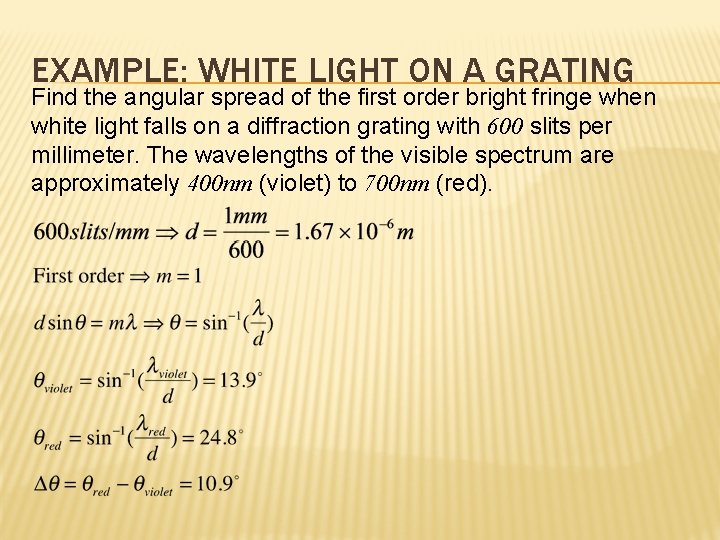
EXAMPLE: WHITE LIGHT ON A GRATING Find the angular spread of the first order bright fringe when white light falls on a diffraction grating with 600 slits per millimeter. The wavelengths of the visible spectrum are approximately 400 nm (violet) to 700 nm (red).