
Chapter 35 Safe Medication Use Drugs Commonly Used
- Slides: 16
Chapter 35 Safe Medication Use
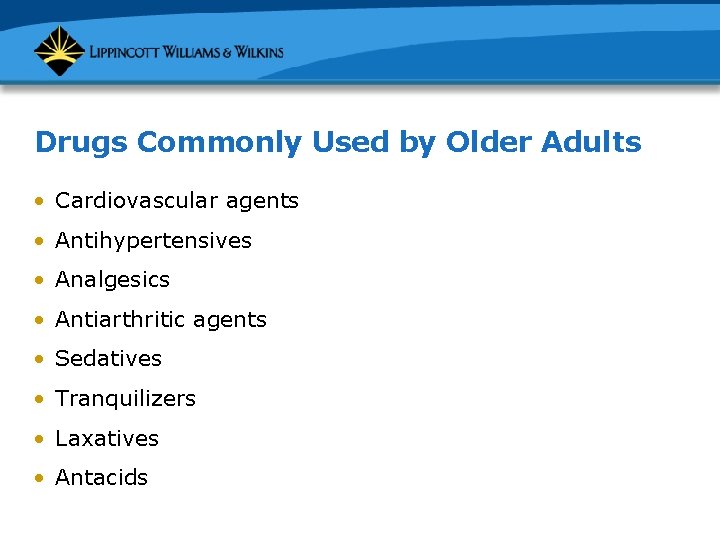
Drugs Commonly Used by Older Adults • Cardiovascular agents • Antihypertensives • Analgesics • Antiarthritic agents • Sedatives • Tranquilizers • Laxatives • Antacids
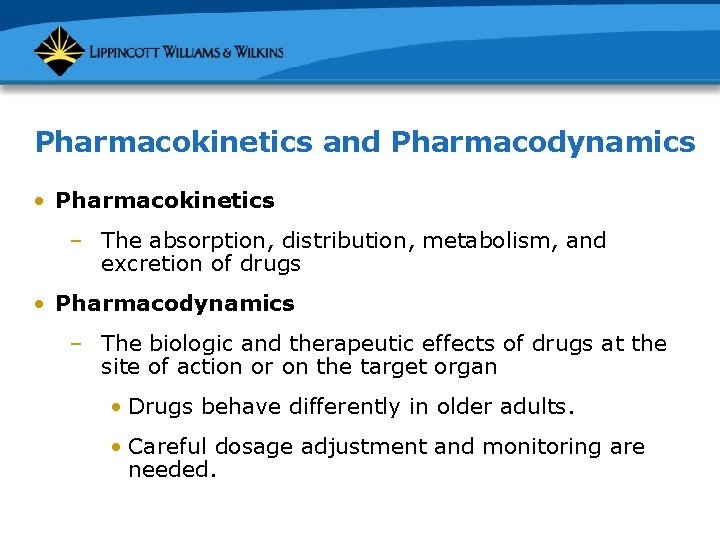
Pharmacokinetics and Pharmacodynamics • Pharmacokinetics – The absorption, distribution, metabolism, and excretion of drugs • Pharmacodynamics – The biologic and therapeutic effects of drugs at the site of action or on the target organ • Drugs behave differently in older adults. • Careful dosage adjustment and monitoring are needed.
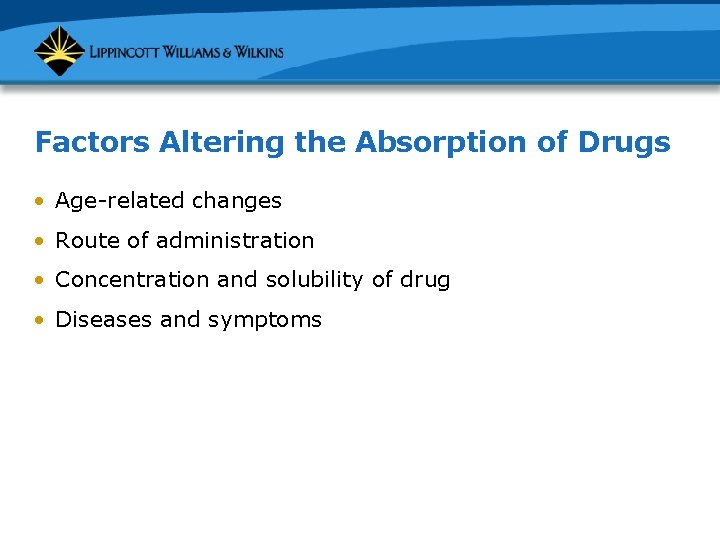
Factors Altering the Absorption of Drugs • Age-related changes • Route of administration • Concentration and solubility of drug • Diseases and symptoms
Measures to Maximize the Absorption of Drugs • Encourage Exercise. • Stimulate circulation and increase blood flow at the absorption site. • Prevent fluid volume deficit, hypothermia, and hypotension. • Avoid preparations that neutralize gastric secretions if a low gastric p. H is required for drug absorption.
Measures to Maximize the Absorption of Drugs (cont. ) • Monitor drug–drug and drug–food interactions. • Monitor drug-herb interactions. • Use the most effective administration.
Drugs Having Increased Biological Half. Life • Antibiotics • Barbiturates • Cimetidine • Digoxin • Salicylate
Conditions That Decrease Metabolism of Drugs • Dehydration • Hyperthermia • Immobility • Liver disease
Risk of Adverse Reactions in Elders • Symptoms can appear differently in older persons. • A prolonged time may be required for an adverse reaction to become apparent. • Adverse reactions can be demonstrated after a drug has been discontinued. • Adverse reactions can develop to drugs that have been used for a long period without problems.
Questions Nurses Should Ask About Patient Medications • Why is the drug ordered? • Is the smallest possible dosage ordered? • Is the patient allergic to the drug? • Can this drug interact with other drugs, herbs, or nutritional supplements that are being used? • Are there any special instructions accompanying the drug’s administration? • Is the most effective route of administration being used?
Precautions in Drug Administration • Do not crush enteric coated tablets. • Assure suppositories have been melted, not expelled. • Avoid cardiac overload from too rapid IV administration.
Older Adult’s Response to Drugs • Increased myocardial sensitivity to anesthesias • Increased central nervous system receptor sensitivity to narcotics, alcohol, and bromides
Risk Factors for Medication Errors • Multiple medications • Cognitive impairment • Visual and hearing deficits • Arthritic or weak hands • History of noncompliance with medical care • Lack of knowledge about medications • Limited finances
Risk Factors for Medication Errors (cont. ) • Illiteracy • Lack of support system • History of inappropriate self-medication • Expired or borrowed medications in the home
Alternatives to Medications • Lifestyle changes • Diet modifications • Regular exercise • Effective stress management techniques • Regular schedules for sleep, rest, and elimination • Alternative therapies
Source • Eliopoulos, C. (2005). Gerontological Nursing, (6 th ed. ). Philadelphia: Lippincott, Williams & Wilkins (ISBN 0 -7817 -4428 -8).