
Chapter 35 Plant Anatomy AP Biology Basic anatomy
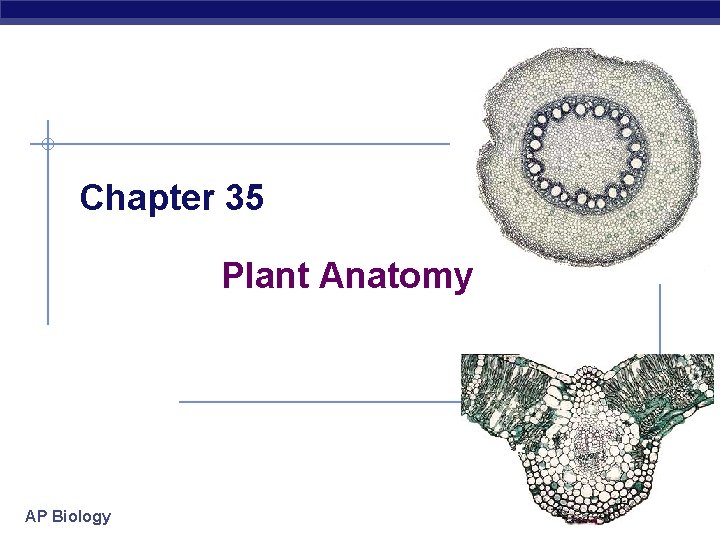
Chapter 35 Plant Anatomy AP Biology
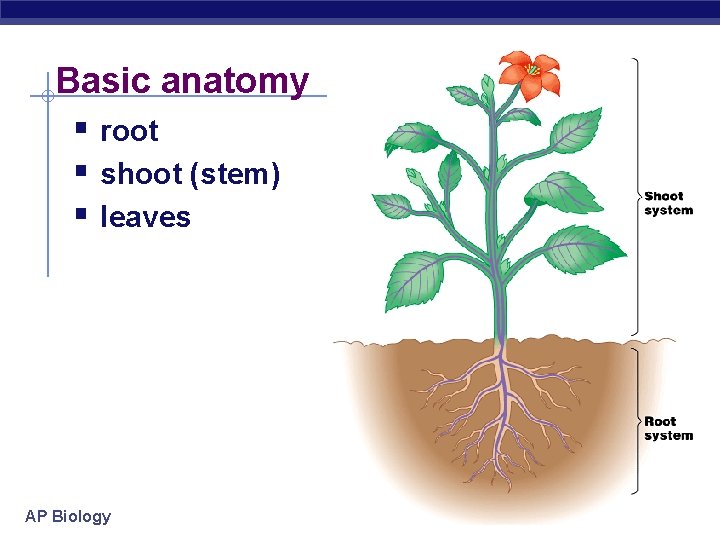
Basic anatomy § root § shoot (stem) § leaves AP Biology
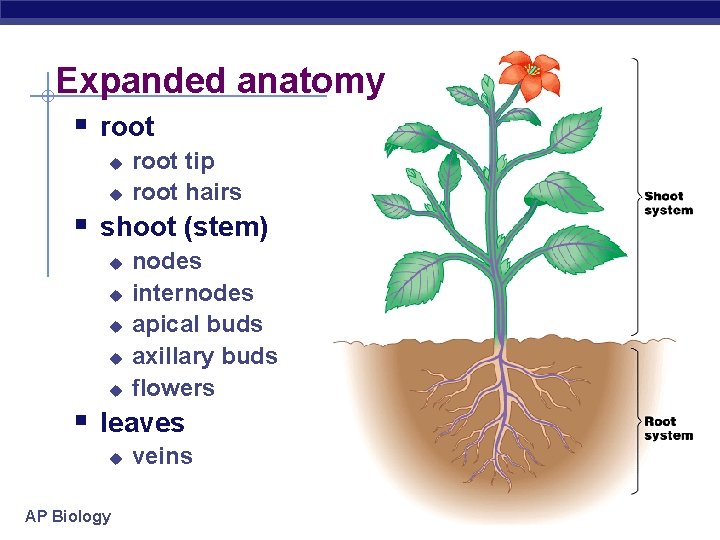
Expanded anatomy § root u u root tip root hairs § shoot (stem) u u u nodes internodes apical buds axillary buds flowers § leaves u AP Biology veins
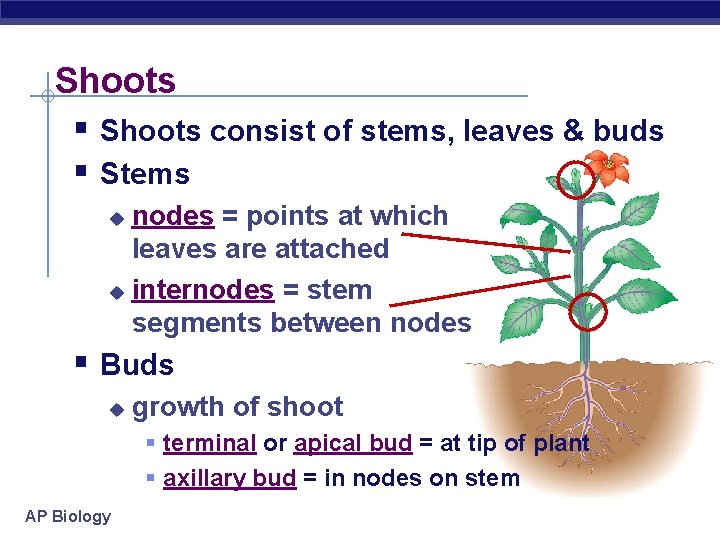
Shoots § Shoots consist of stems, leaves & buds § Stems nodes = points at which leaves are attached u internodes = stem segments between nodes u § Buds u growth of shoot § terminal or apical bud = at tip of plant § axillary bud = in nodes on stem AP Biology
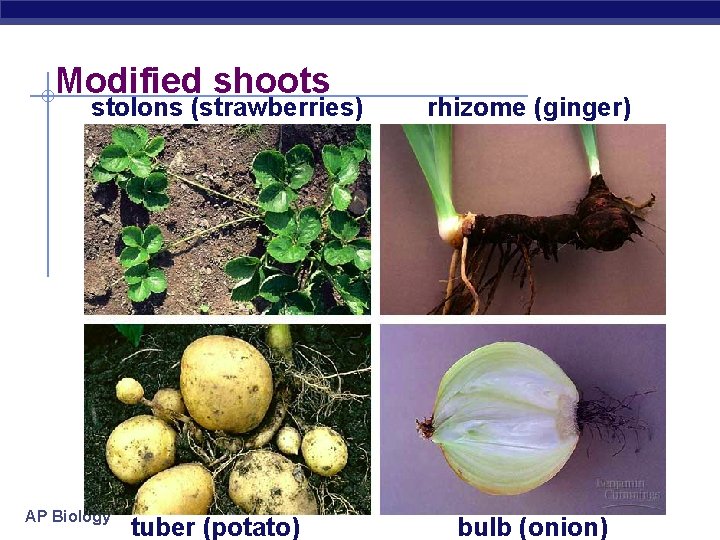
Modified shoots stolons (strawberries) AP Biology tuber (potato) rhizome (ginger) bulb (onion)
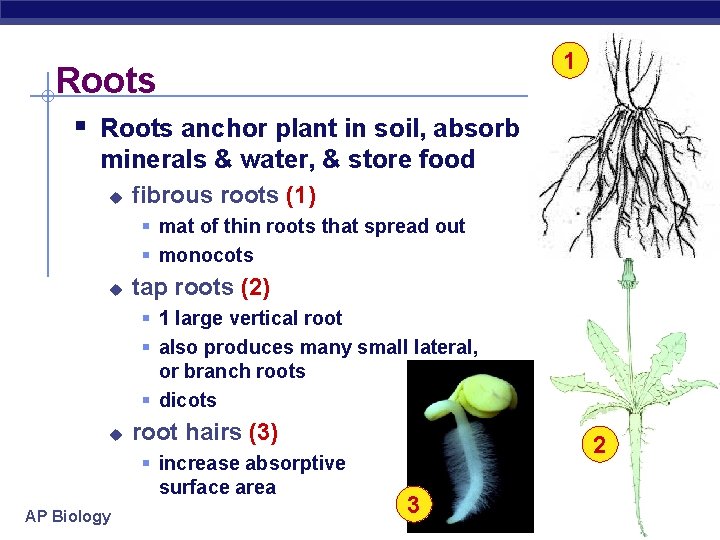
1 Roots § Roots anchor plant in soil, absorb minerals & water, & store food u fibrous roots (1) § mat of thin roots that spread out § monocots u tap roots (2) § 1 large vertical root § also produces many small lateral, or branch roots § dicots u root hairs (3) § increase absorptive surface area AP Biology 2 3
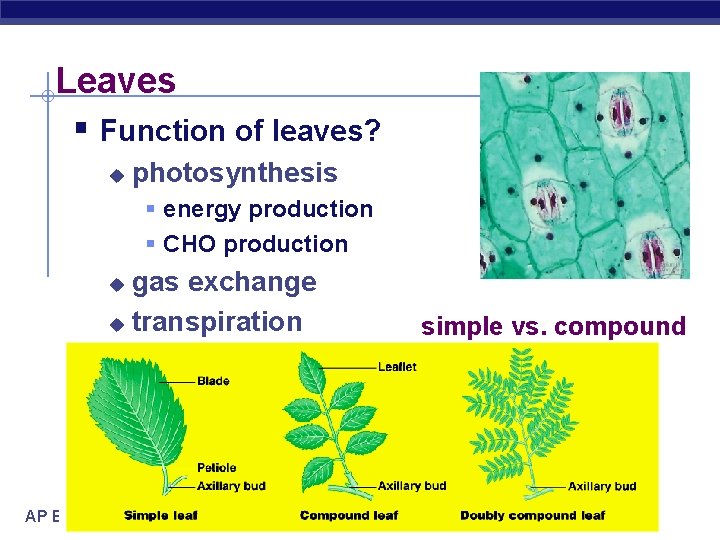
Leaves § Function of leaves? u photosynthesis § energy production § CHO production gas exchange u transpiration u AP Biology simple vs. compound
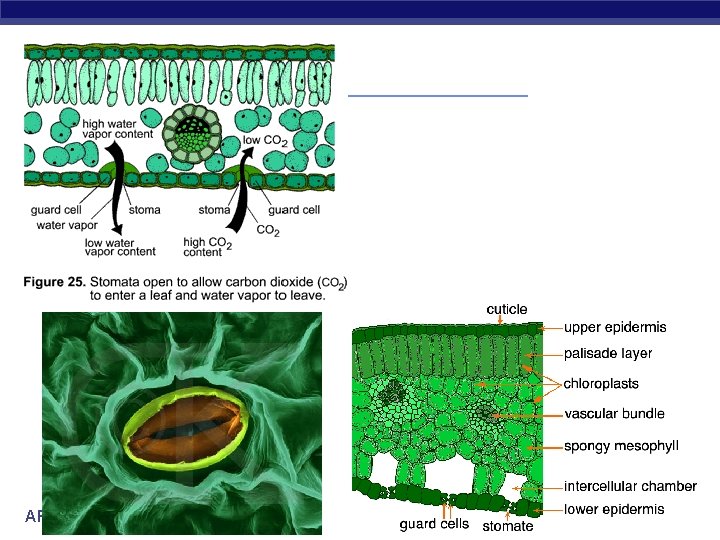
AP Biology
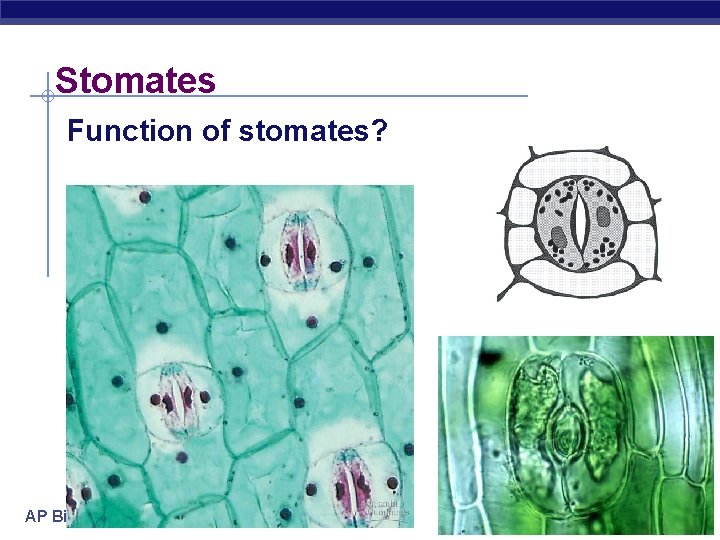
Stomates Function of stomates? AP Biology
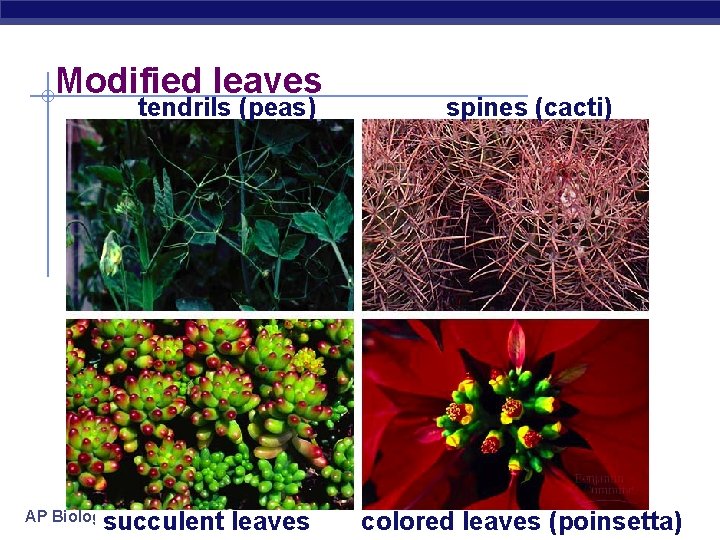
Modified leaves tendrils (peas) succulent leaves AP Biology spines (cacti) colored leaves (poinsetta)
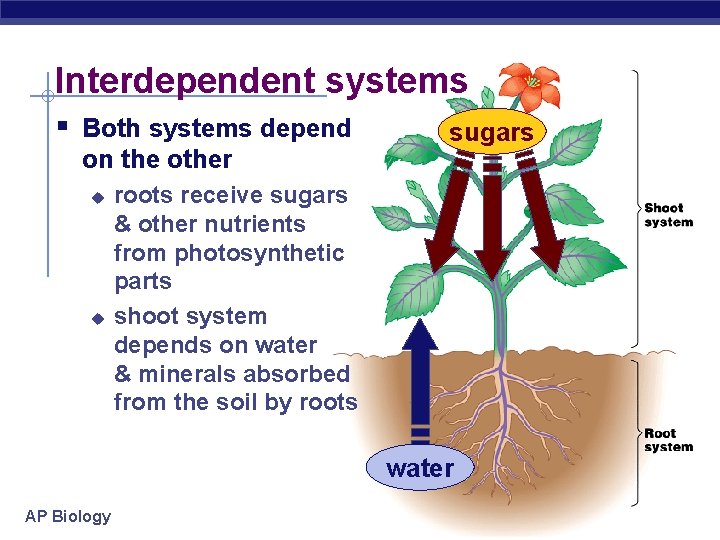
Interdependent systems § Both systems depend on the other u u sugars roots receive sugars & other nutrients from photosynthetic parts shoot system depends on water & minerals absorbed from the soil by roots water AP Biology
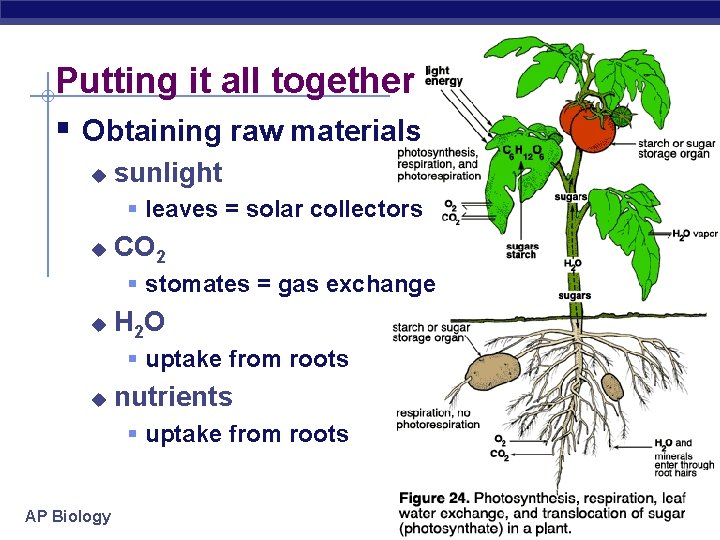
Putting it all together § Obtaining raw materials u sunlight § leaves = solar collectors u CO 2 § stomates = gas exchange u H 2 O § uptake from roots u nutrients § uptake from roots AP Biology
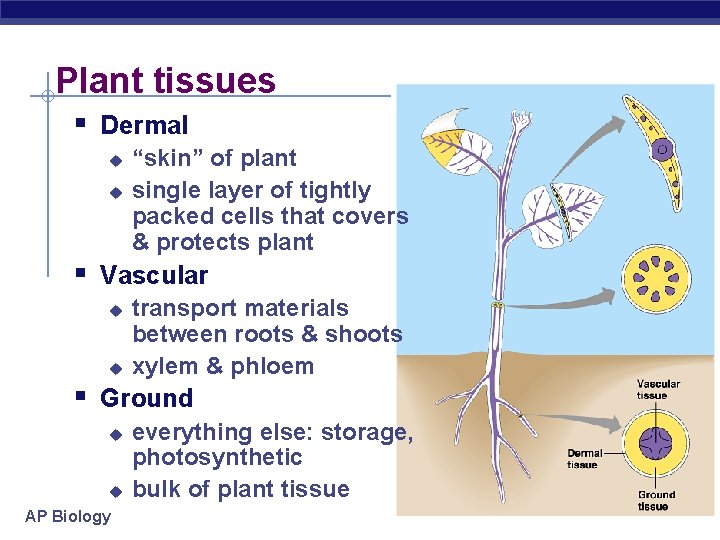
Plant tissues § Dermal u u “skin” of plant single layer of tightly packed cells that covers & protects plant § Vascular u u transport materials between roots & shoots xylem & phloem § Ground u u AP Biology everything else: storage, photosynthetic bulk of plant tissue
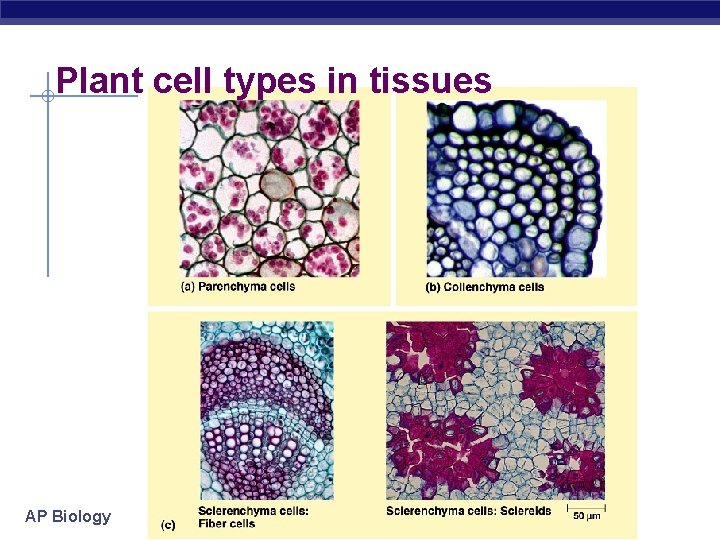
Plant cell types in tissues AP Biology

Plant cell types in tissues § Parenchyma u u u “typical” plant cells = least specialized photosynthetic cells, storage cells tissue of leaves, stem, fruit, storage roots § Collenchyma u unevenly thickened primary walls = support § Sclerenchyma u u u AP Biology very thick, “woody” secondary walls = support rigid cells that can’t elongate dead at functional maturity
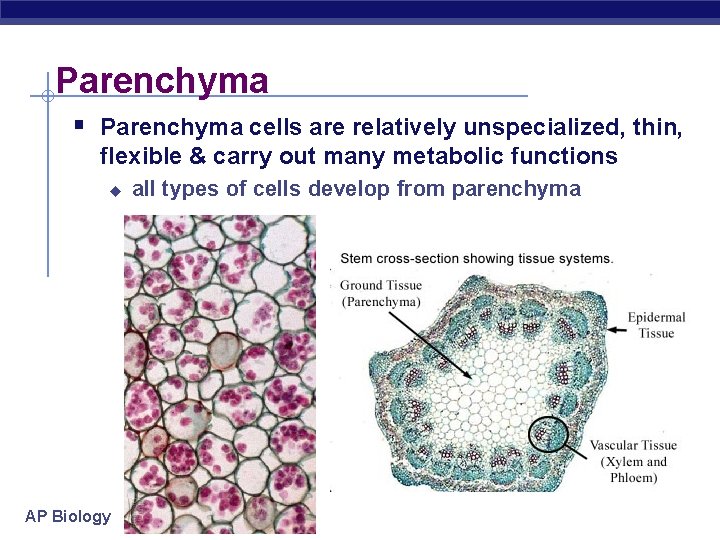
Parenchyma § Parenchyma cells are relatively unspecialized, thin, flexible & carry out many metabolic functions u AP Biology all types of cells develop from parenchyma
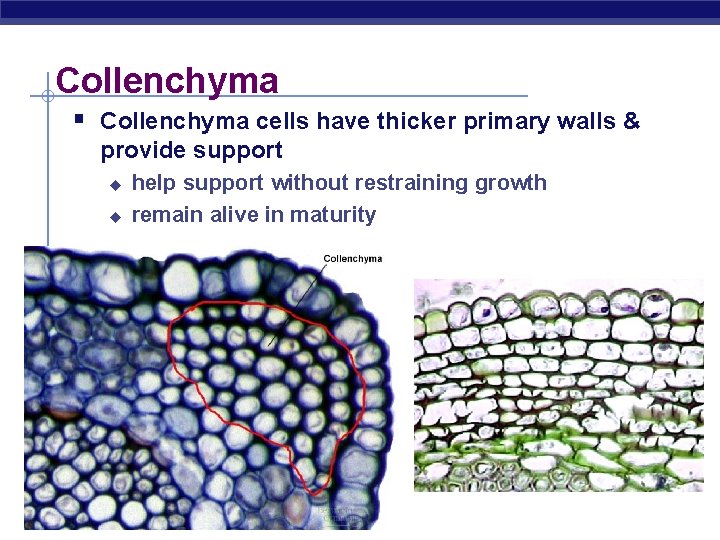
Collenchyma § Collenchyma cells have thicker primary walls & provide support u u AP Biology help support without restraining growth remain alive in maturity
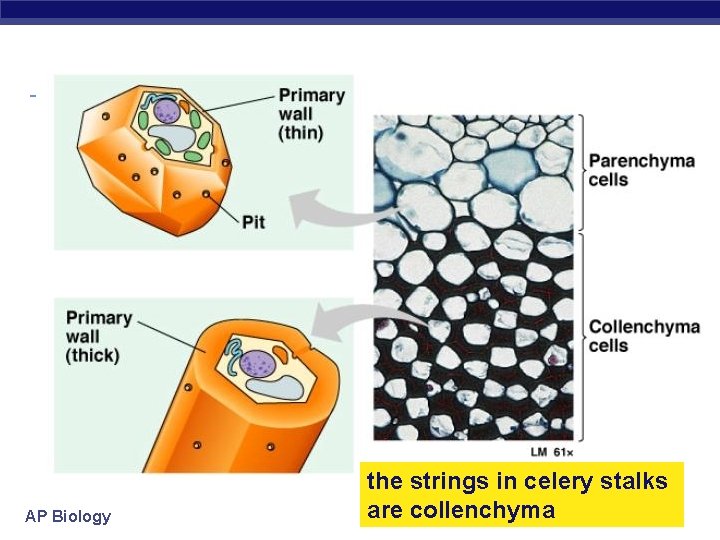
AP Biology the strings in celery stalks are collenchyma
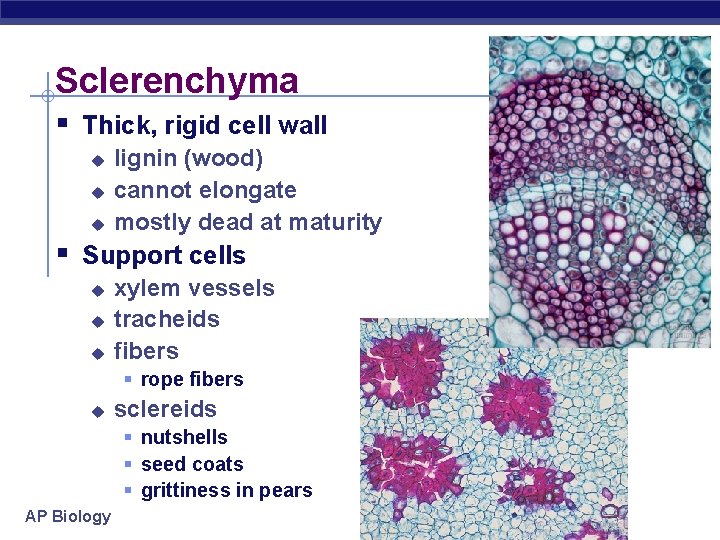
Sclerenchyma § Thick, rigid cell wall u u u lignin (wood) cannot elongate mostly dead at maturity § Support cells u u u xylem vessels tracheids fibers § rope fibers u sclereids § nutshells § seed coats § grittiness in pears AP Biology
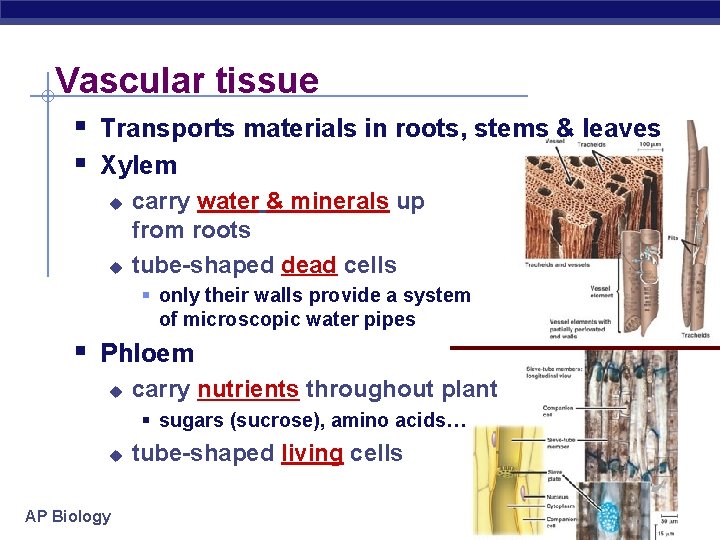
Vascular tissue § Transports materials in roots, stems & leaves § Xylem u u carry water & minerals up from roots tube-shaped dead cells § only their walls provide a system of microscopic water pipes § Phloem u carry nutrients throughout plant § sugars (sucrose), amino acids… u AP Biology tube-shaped living cells
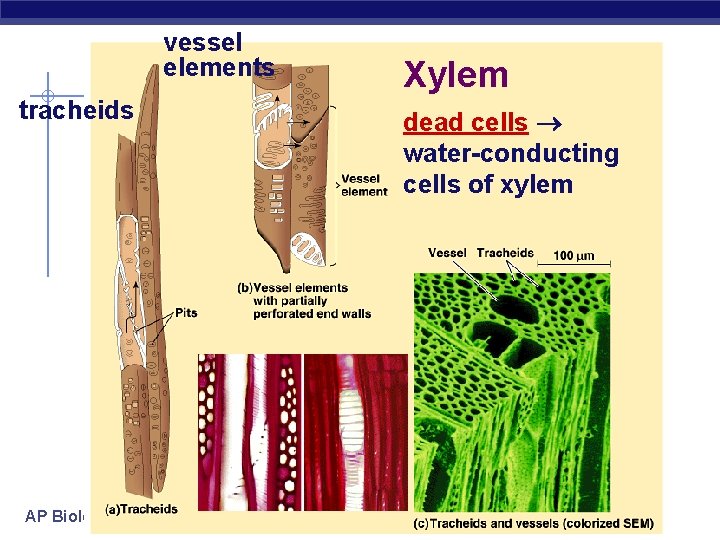
vessel elements tracheids AP Biology Xylem dead cells water-conducting cells of xylem
Xylem § Dead at functional maturity § Cell elongated into tubes u tracheids § long, thin cells with tapered ends § walls reinforced with lignin = support § thinner pits in end walls allows water flow u vessel elements § wider, shorter, thinner walled & less tapered § perforated ends walls allows free water flow AP Biology
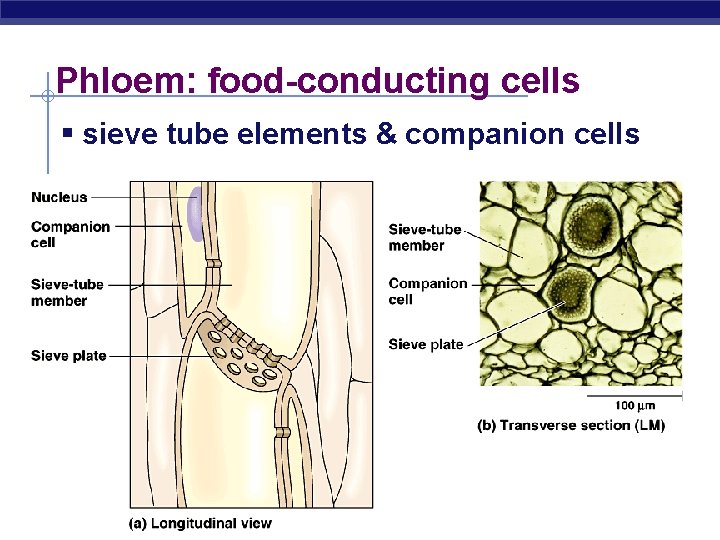
Phloem: food-conducting cells § sieve tube elements & companion cells AP Biology
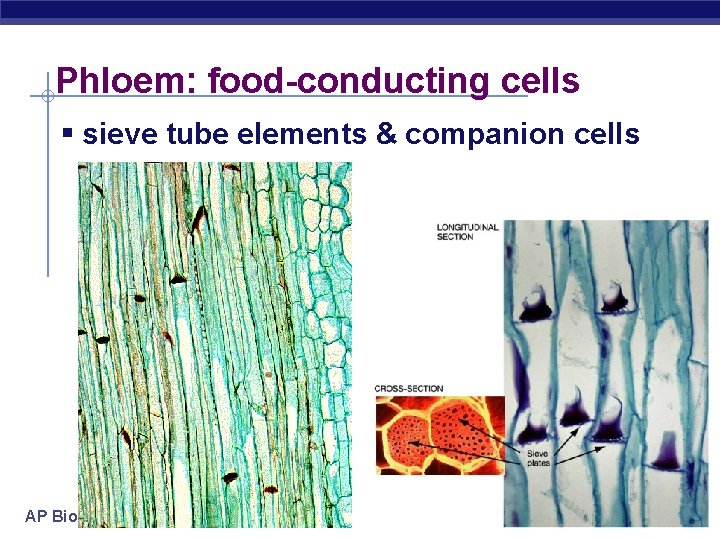
Phloem: food-conducting cells § sieve tube elements & companion cells AP Biology
Phloem § Living cells at functional maturity u lack nucleus, ribosomes & vacuole § more room: specialized for liquid food (sucrose) transport § Cells u sieve tubes § end walls, sieve plates, have pores to facilitate flow of fluid between cells u companion cells § nucleated cells connected to the sieve-tube § help sieve tubes AP Biology
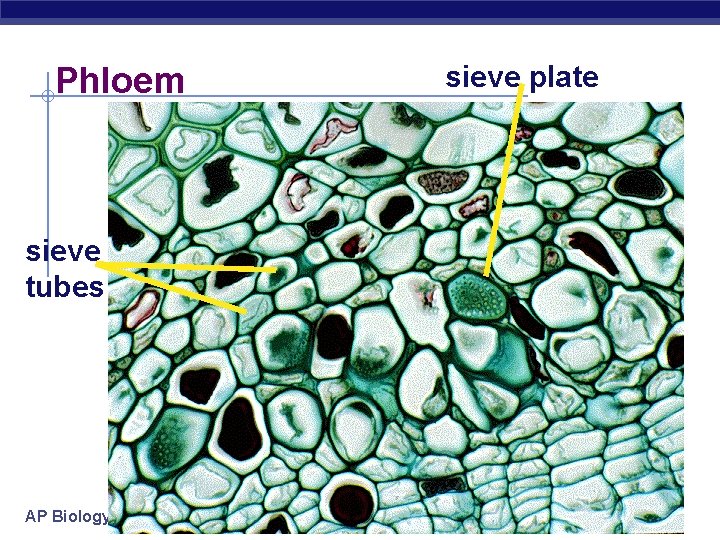
Phloem sieve tubes AP Biology sieve plate
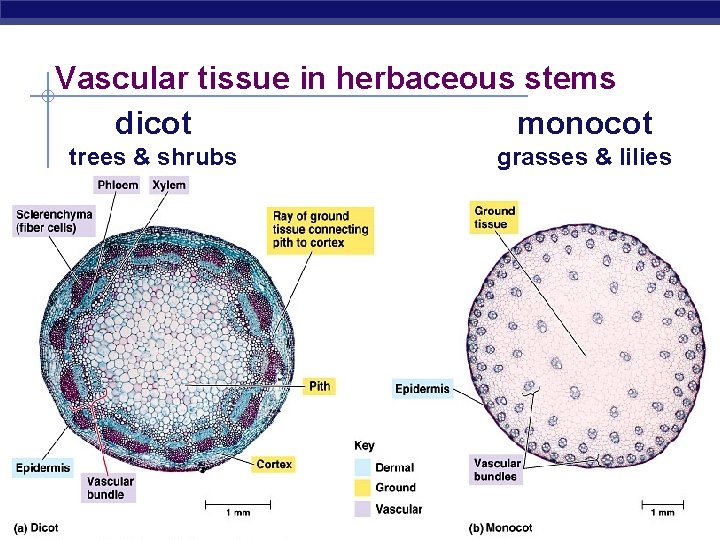
Vascular tissue in herbaceous stems dicot monocot trees & shrubs AP Biology grasses & lilies
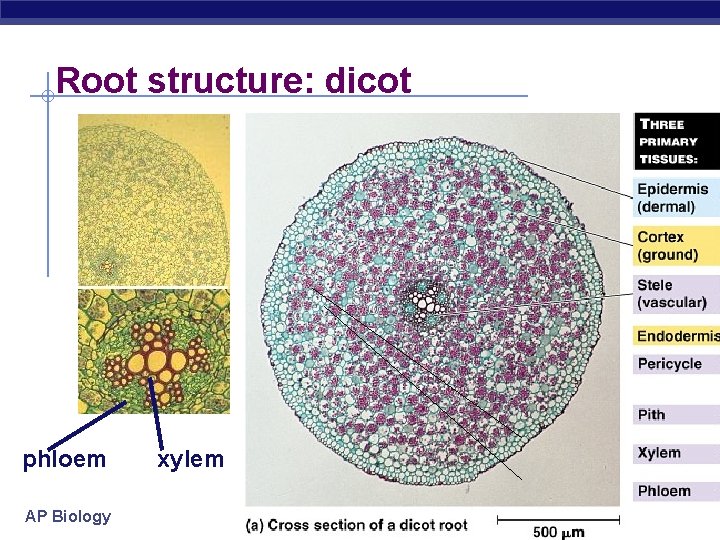
Root structure: dicot phloem AP Biology xylem
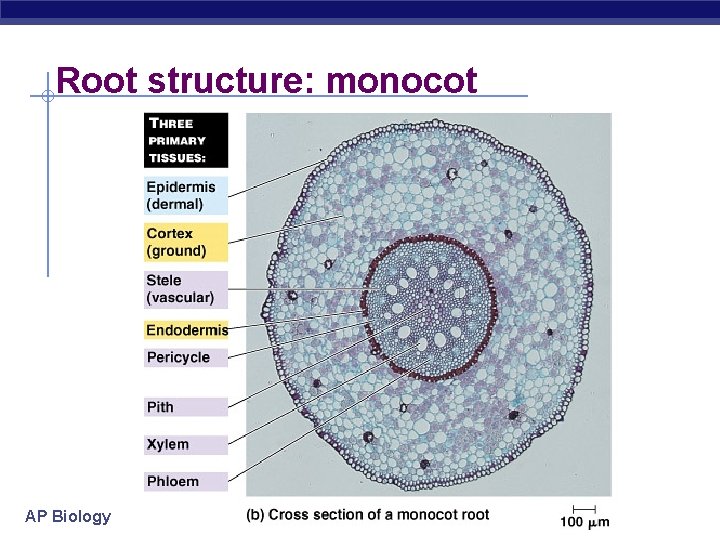
Root structure: monocot AP Biology
Any Questions? AP Biology
- Slides: 30