
Chapter 35 INTERFERENCE PHYSICAL OPTICS WHAT IS PHYSICAL
- Slides: 40
Chapter 35 INTERFERENCE (PHYSICAL OPTICS )
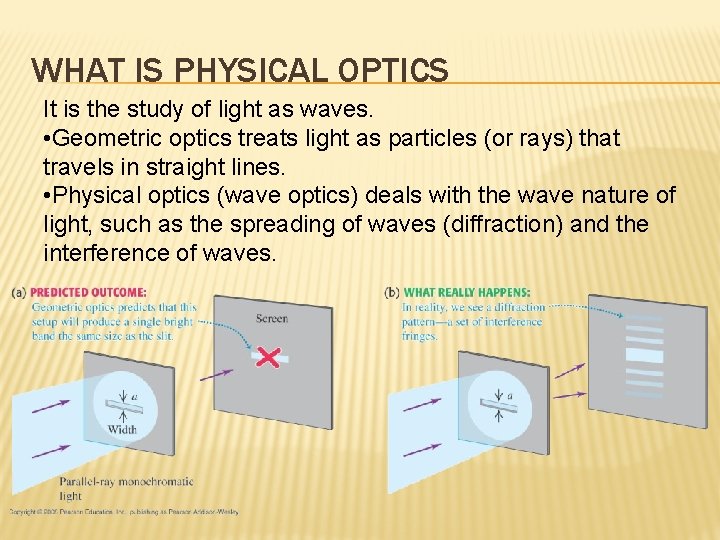
WHAT IS PHYSICAL OPTICS It is the study of light as waves. • Geometric optics treats light as particles (or rays) that travels in straight lines. • Physical optics (wave optics) deals with the wave nature of light, such as the spreading of waves (diffraction) and the interference of waves.
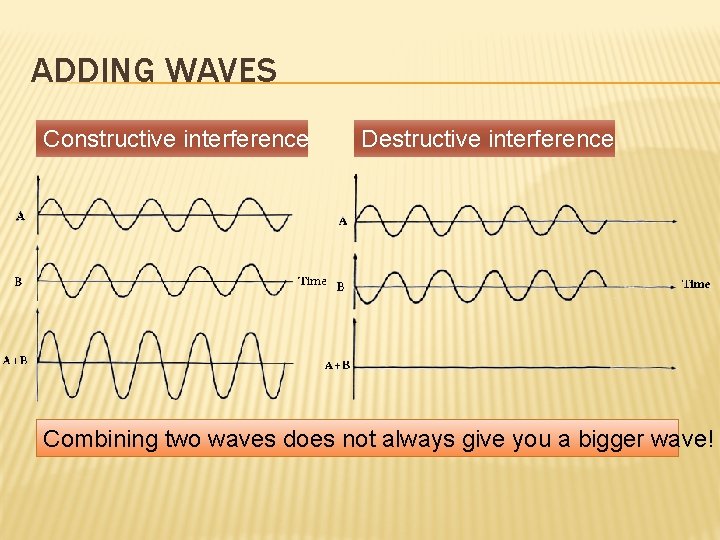
ADDING WAVES Constructive interference Destructive interference Combining two waves does not always give you a bigger wave!
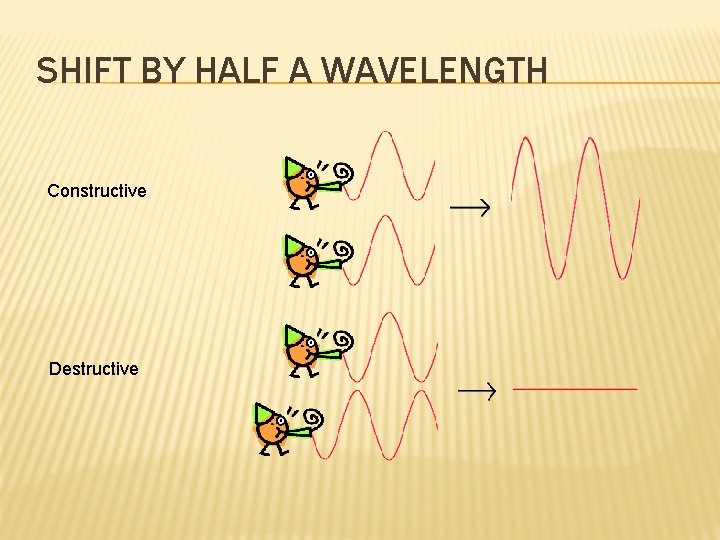
SHIFT BY HALF A WAVELENGTH Constructive Destructive
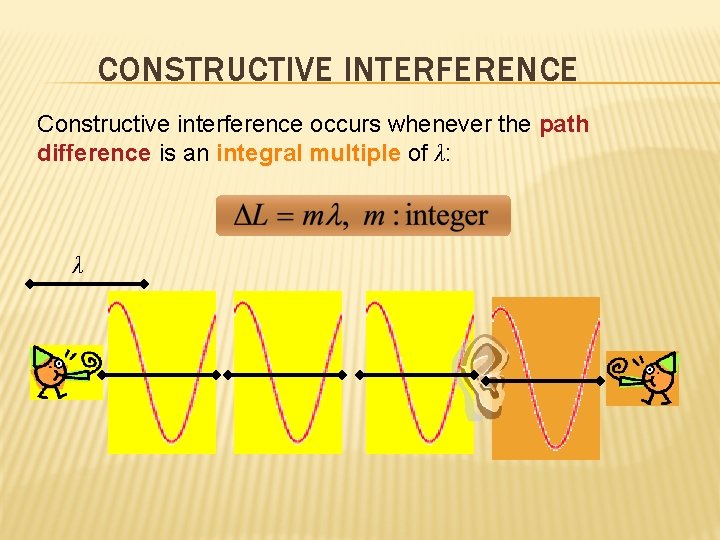
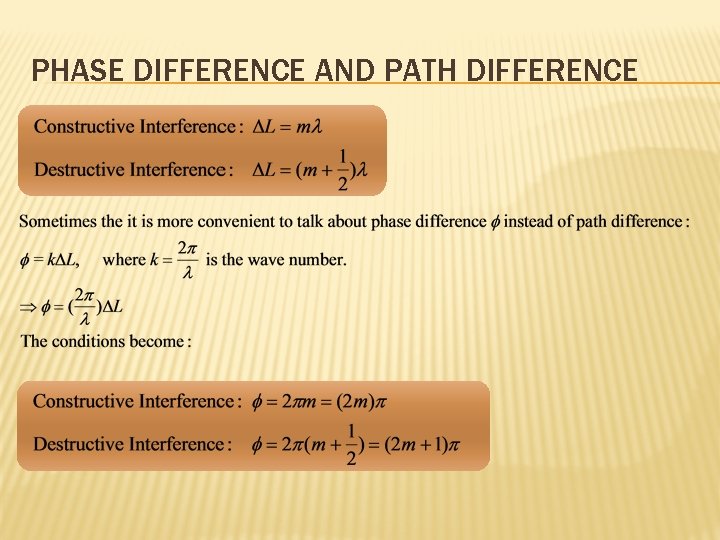
CONSTRUCTIVE INTERFERENCE Constructive interference occurs whenever the path difference is an integral multiple of λ: λ
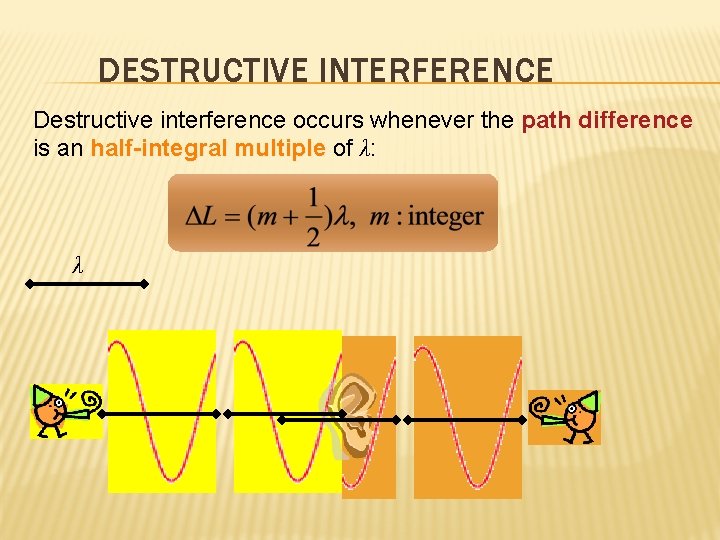
DESTRUCTIVE INTERFERENCE Destructive interference occurs whenever the path difference is an half-integral multiple of λ: λ
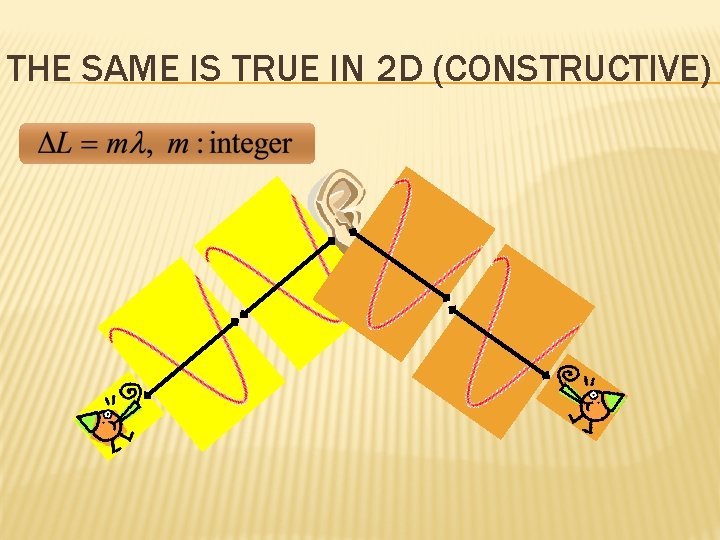
THE SAME IS TRUE IN 2 D (CONSTRUCTIVE)
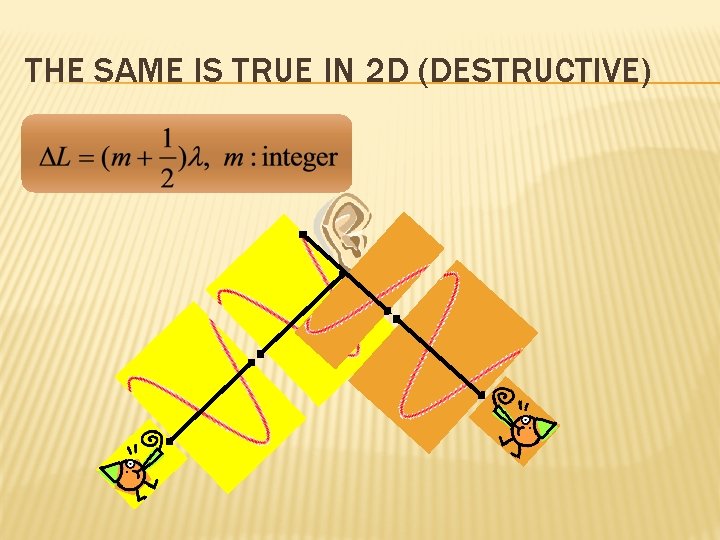
THE SAME IS TRUE IN 2 D (DESTRUCTIVE)
PHASE DIFFERENCE AND PATH DIFFERENCE
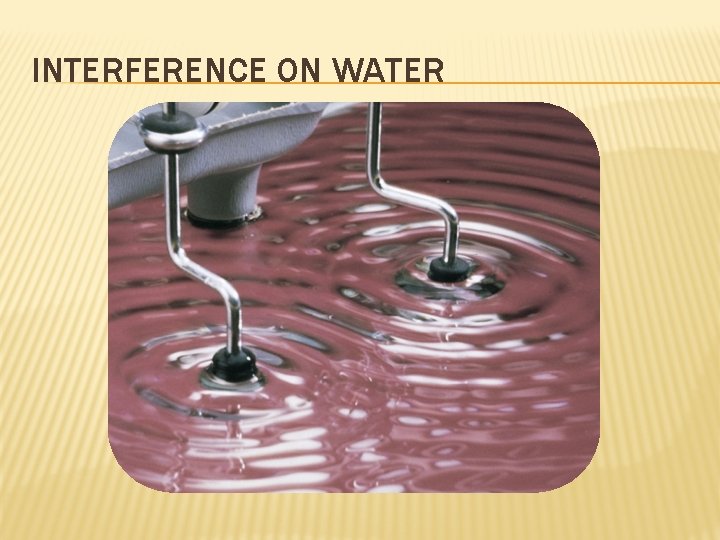
INTERFERENCE ON WATER
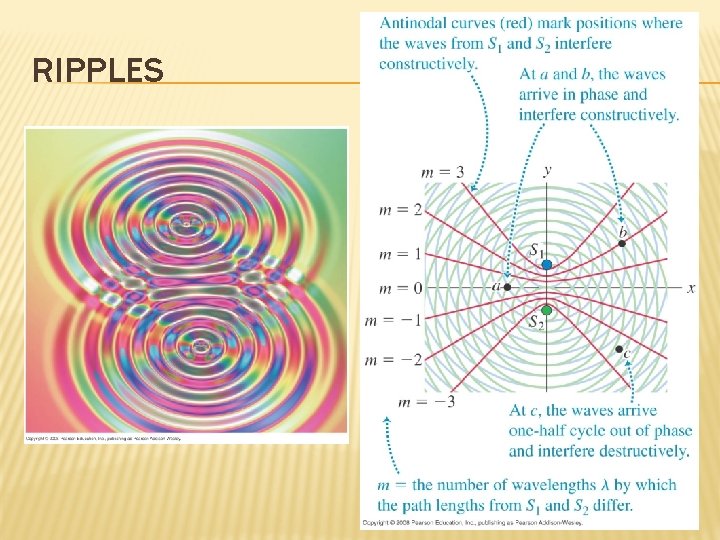
RIPPLES
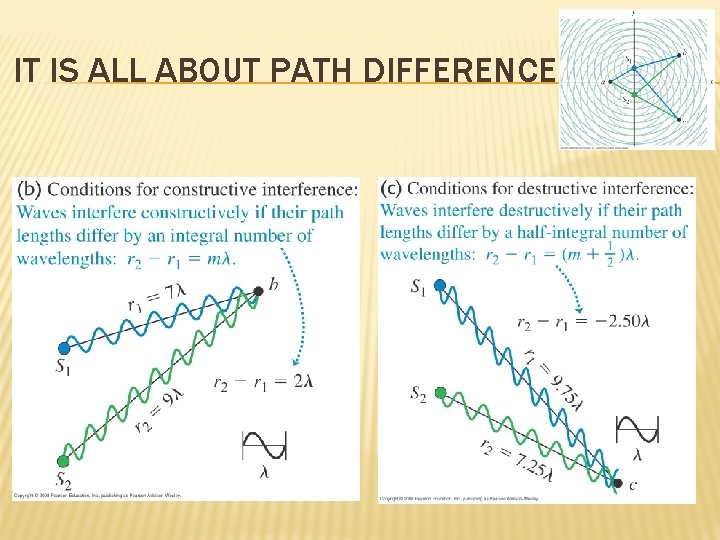
IT IS ALL ABOUT PATH DIFFERENCE
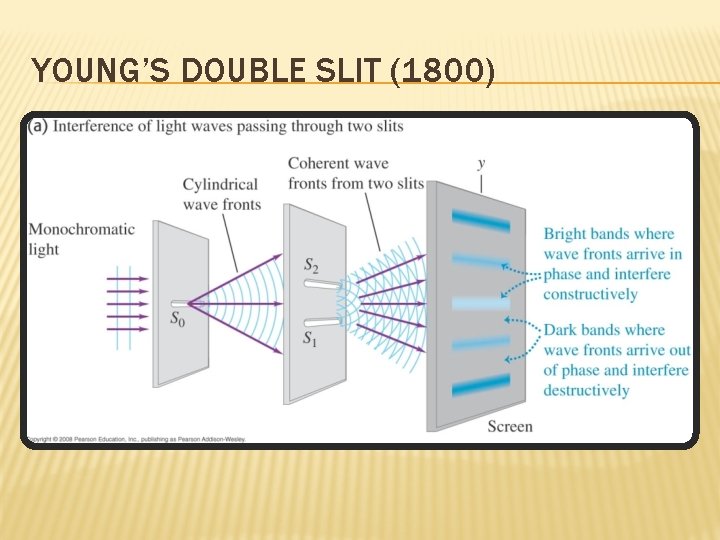
YOUNG’S DOUBLE SLIT (1800)
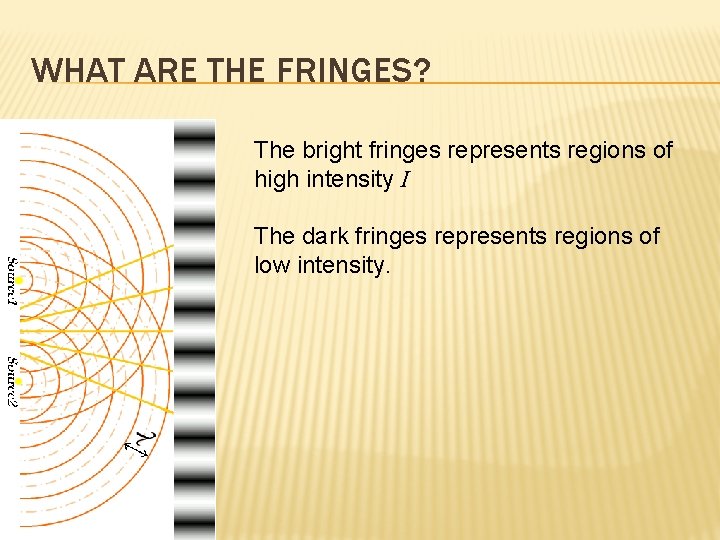
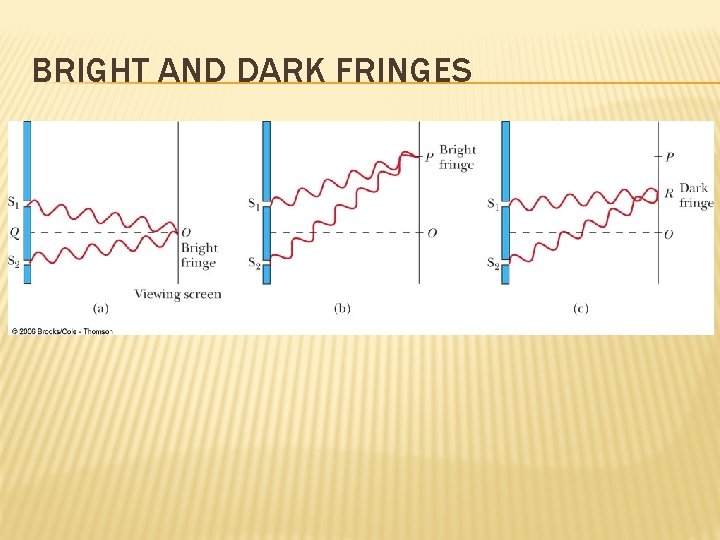
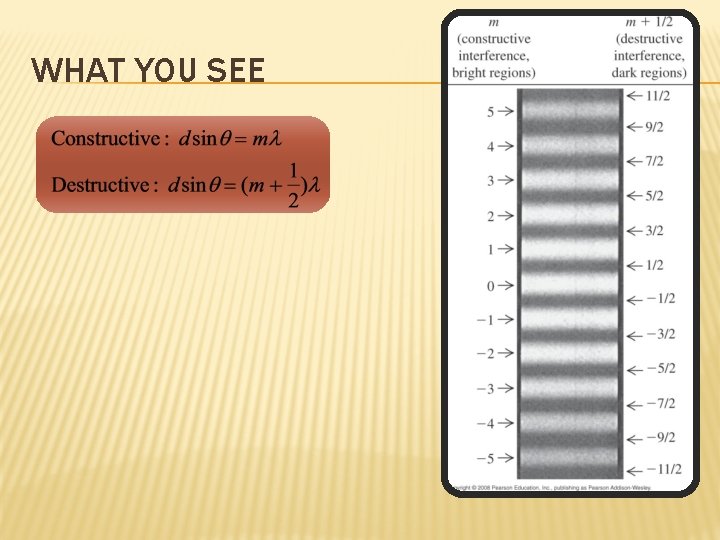
WHAT ARE THE FRINGES? The bright fringes represents regions of high intensity I The dark fringes represents regions of low intensity.
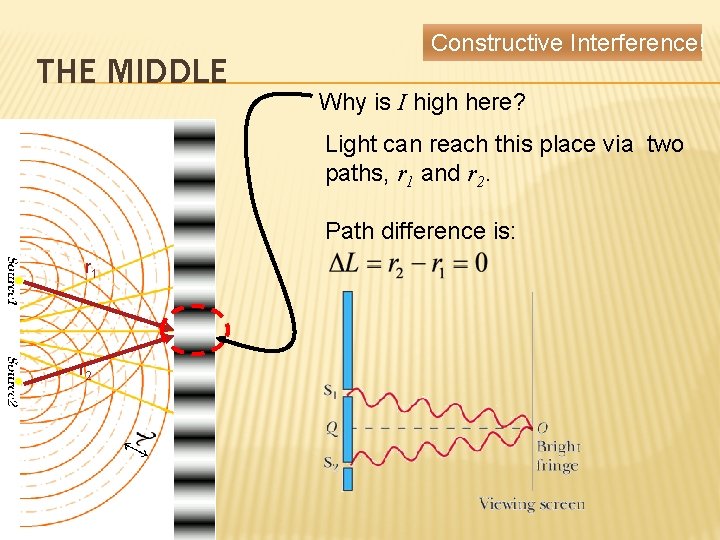
THE MIDDLE Constructive Interference! Why is I high here? Light can reach this place via two paths, r 1 and r 2. Path difference is: r 1 r 2
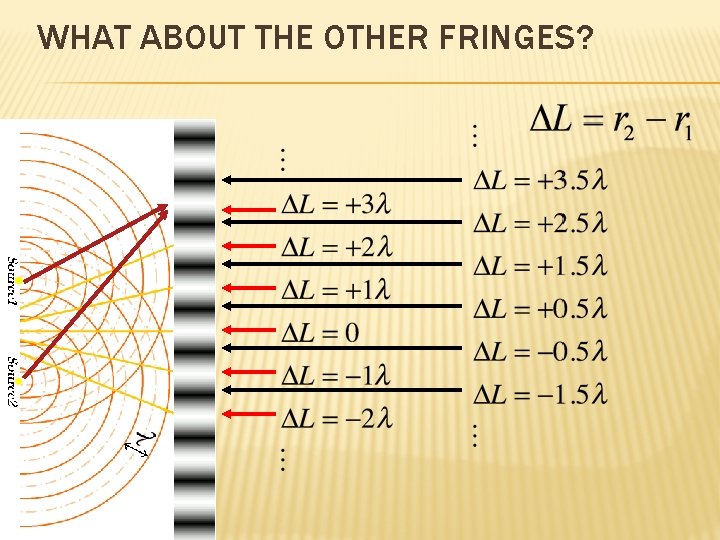
WHAT ABOUT THE OTHER FRINGES?
BRIGHT AND DARK FRINGES
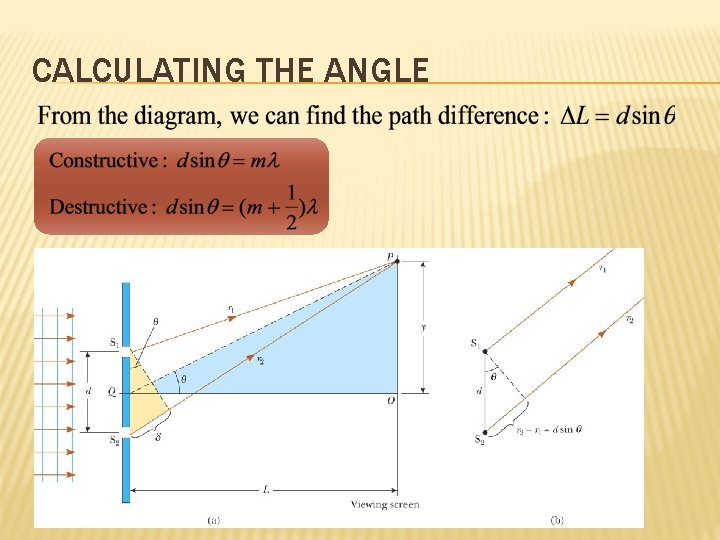
CALCULATING THE ANGLE
WHAT YOU SEE
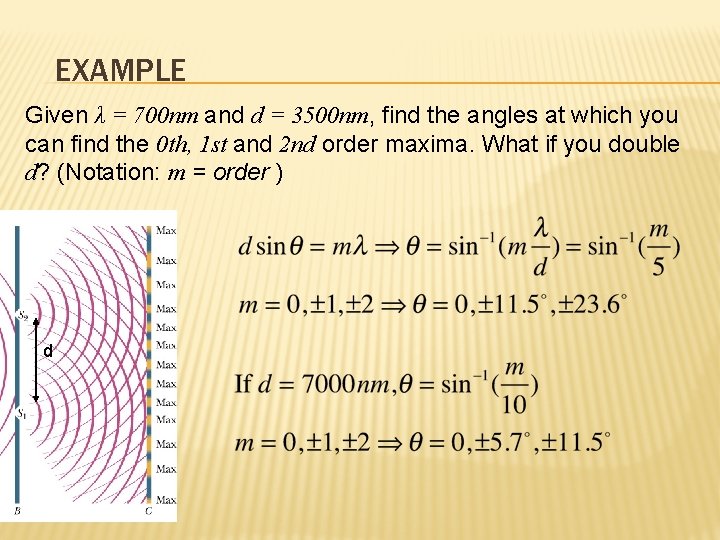
EXAMPLE Given λ = 700 nm and d = 3500 nm, find the angles at which you can find the 0 th, 1 st and 2 nd order maxima. What if you double d? (Notation: m = order ) d
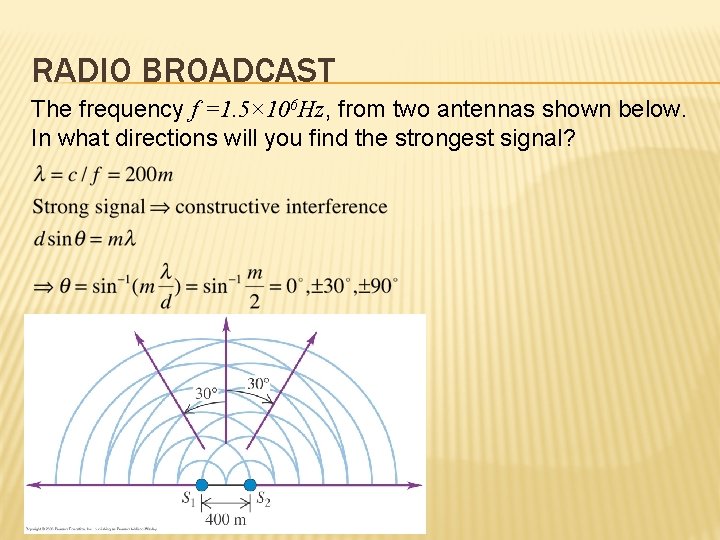
RADIO BROADCAST The frequency f =1. 5× 10⁶ Hz, from two antennas shown below. In what directions will you find the strongest signal?
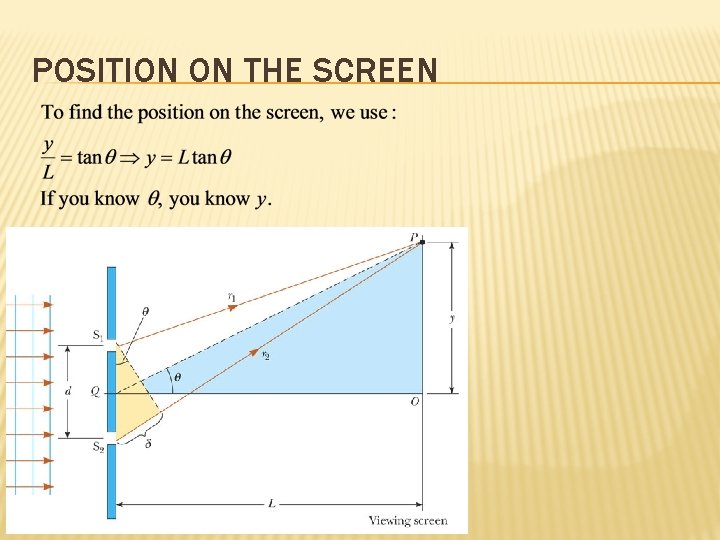
POSITION ON THE SCREEN
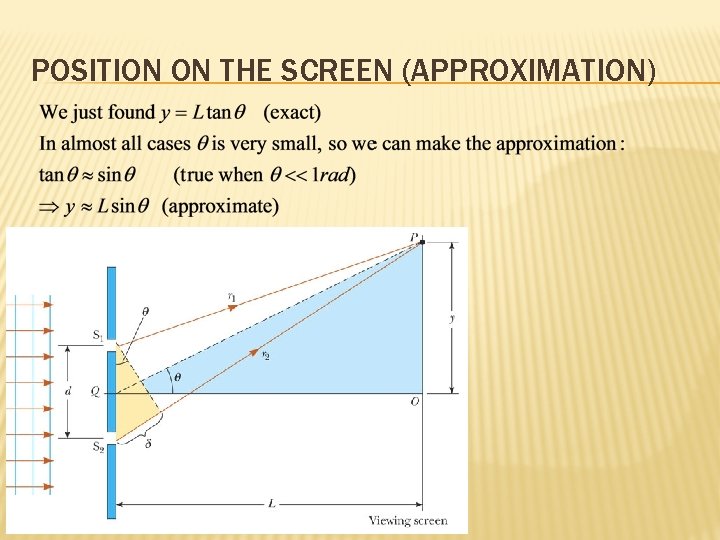
POSITION ON THE SCREEN (APPROXIMATION)
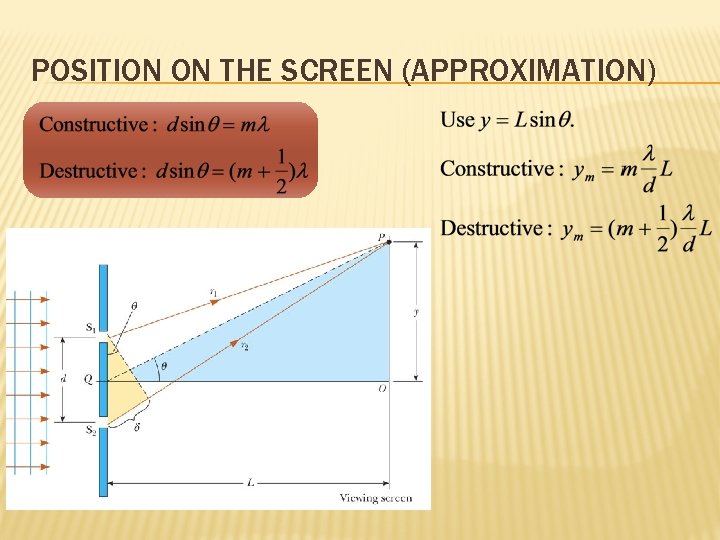
POSITION ON THE SCREEN (APPROXIMATION)
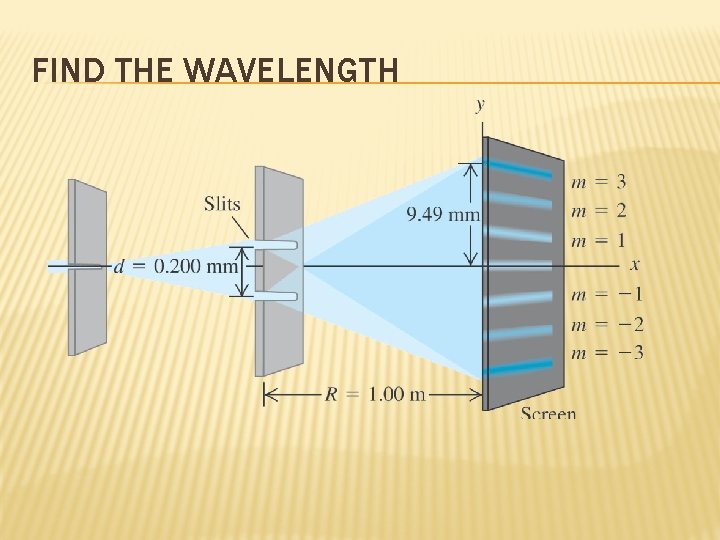
FIND THE WAVELENGTH
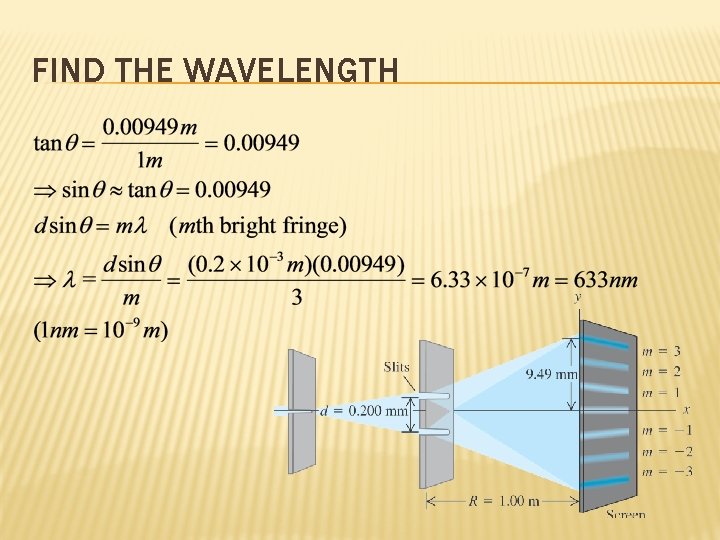
FIND THE WAVELENGTH
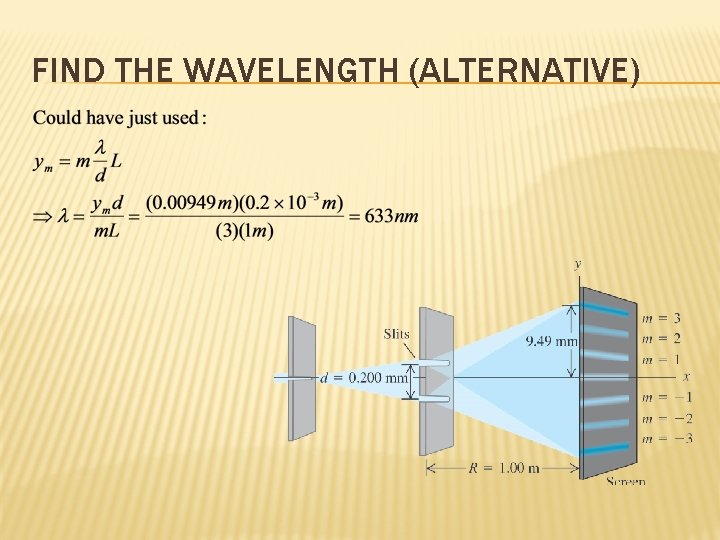
FIND THE WAVELENGTH (ALTERNATIVE)
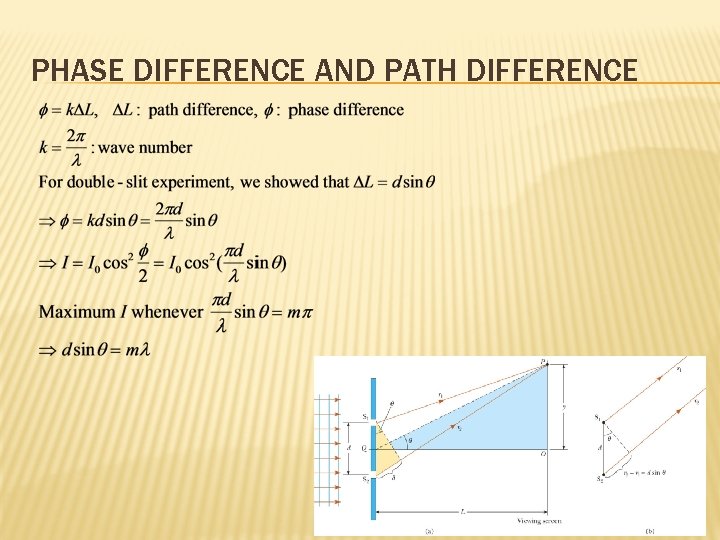
PHASE DIFFERENCE AND PATH DIFFERENCE
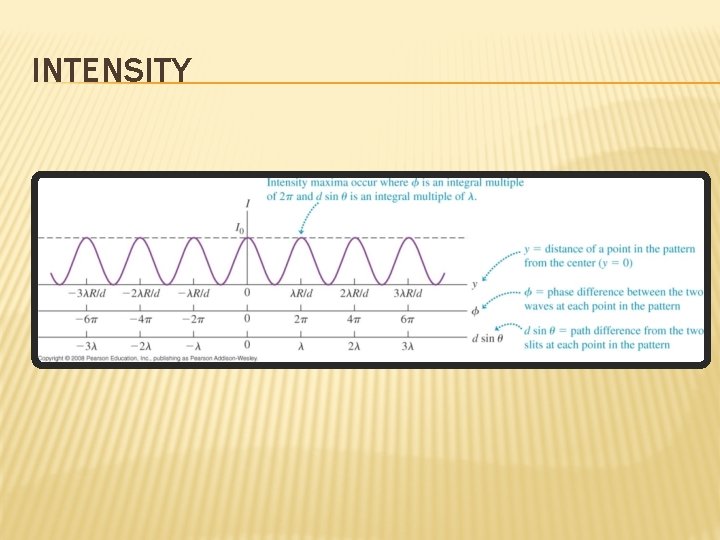
INTENSITY
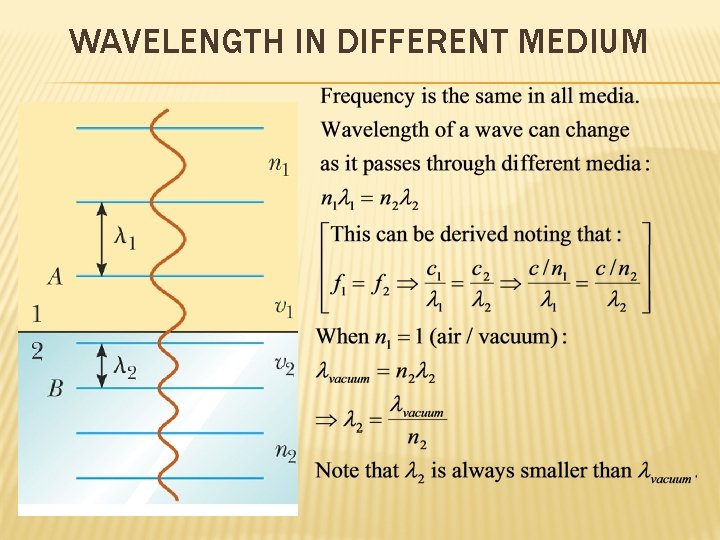
WAVELENGTH IN DIFFERENT MEDIUM
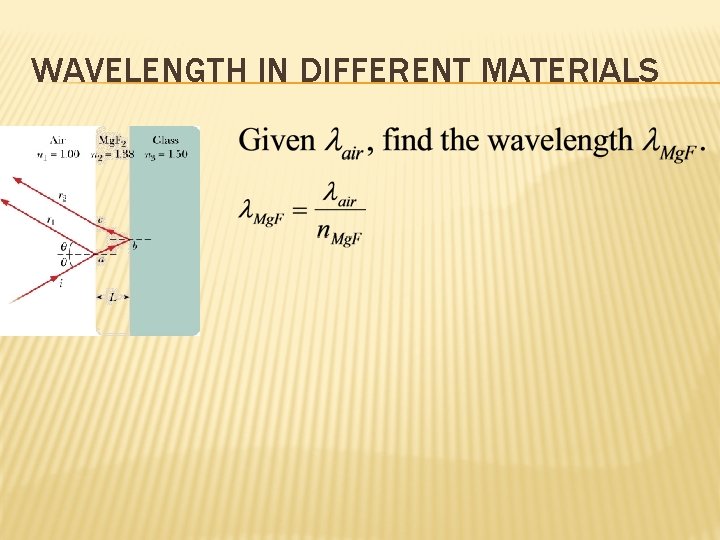
WAVELENGTH IN DIFFERENT MATERIALS
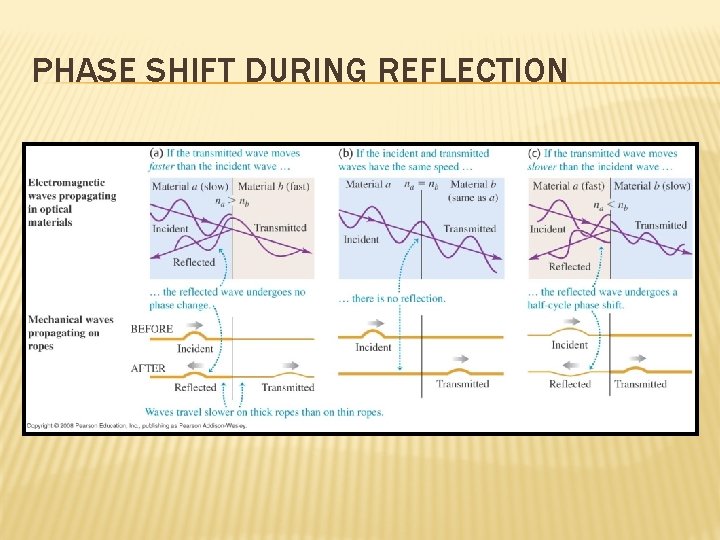
PHASE SHIFT DURING REFLECTION
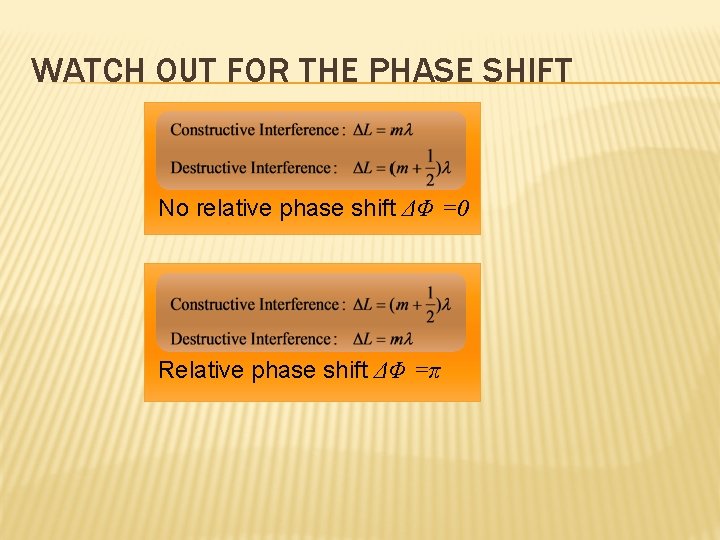
WATCH OUT FOR THE PHASE SHIFT No relative phase shift ΔΦ =0 Relative phase shift ΔΦ =π
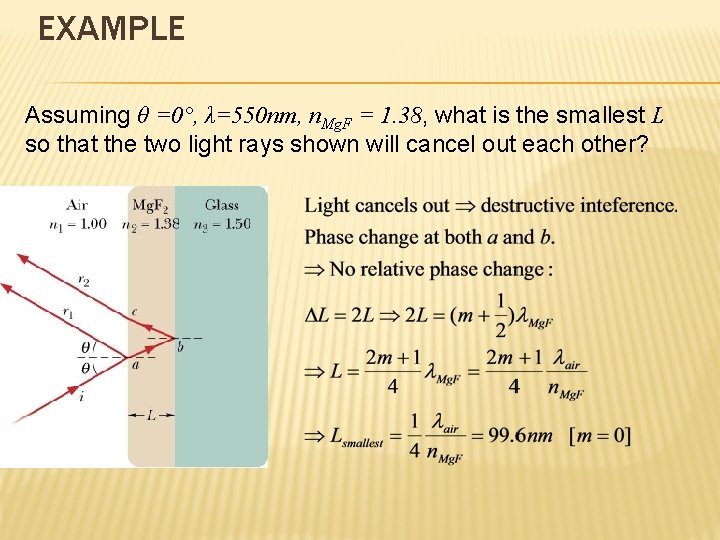
EXAMPLE Assuming θ =0°, λ=550 nm, n. Mg. F = 1. 38, what is the smallest L so that the two light rays shown will cancel out each other?
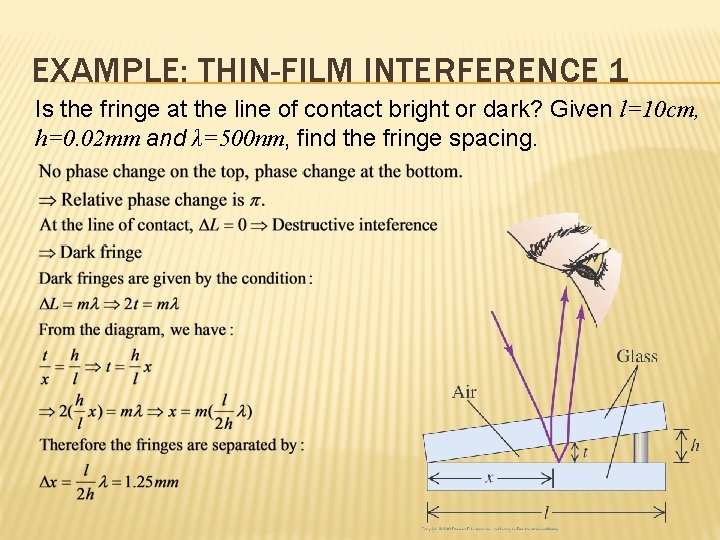
EXAMPLE: THIN-FILM INTERFERENCE 1 Is the fringe at the line of contact bright or dark? Given l=10 cm, h=0. 02 mm and λ=500 nm, find the fringe spacing.
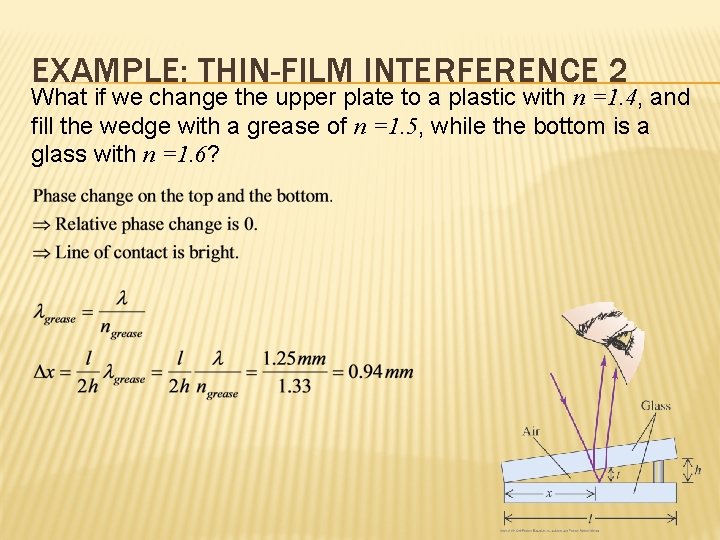
EXAMPLE: THIN-FILM INTERFERENCE 2 What if we change the upper plate to a plastic with n =1. 4, and fill the wedge with a grease of n =1. 5, while the bottom is a glass with n =1. 6?
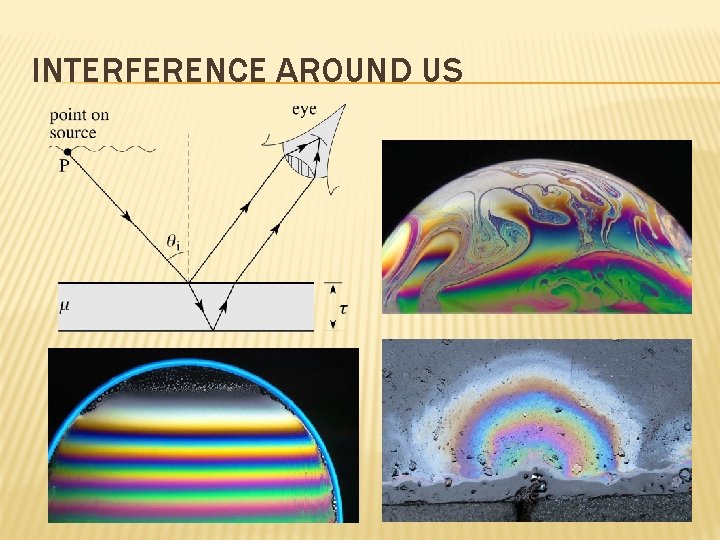
INTERFERENCE AROUND US
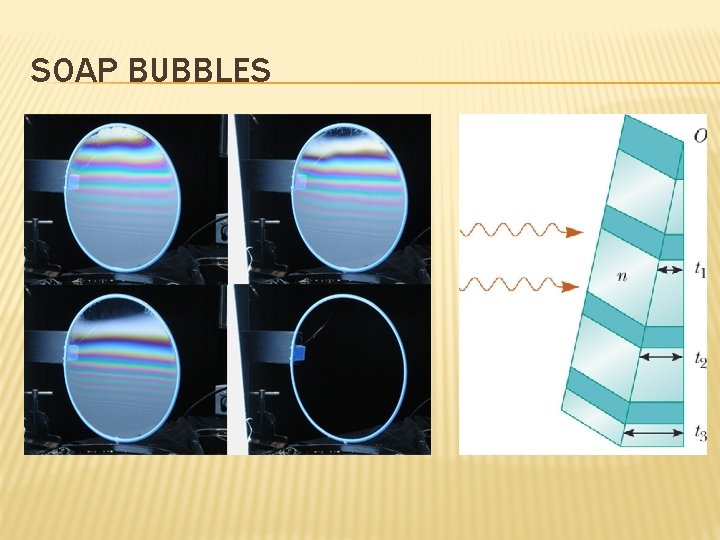
SOAP BUBBLES
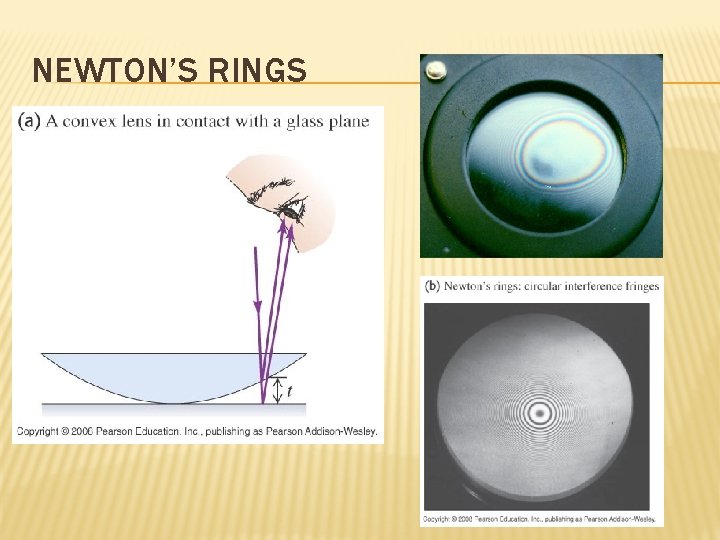
NEWTON’S RINGS
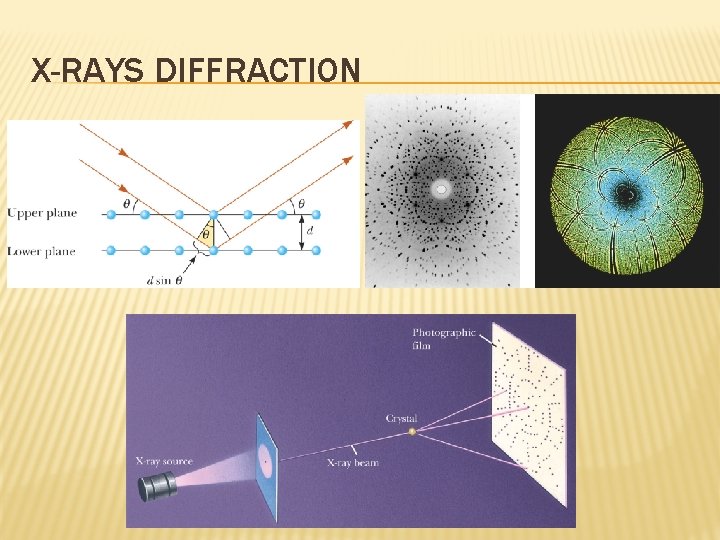
X-RAYS DIFFRACTION