
Chapter 34 Nervous System stimulus receptors Line of

- Slides: 64
Chapter 34: Nervous System
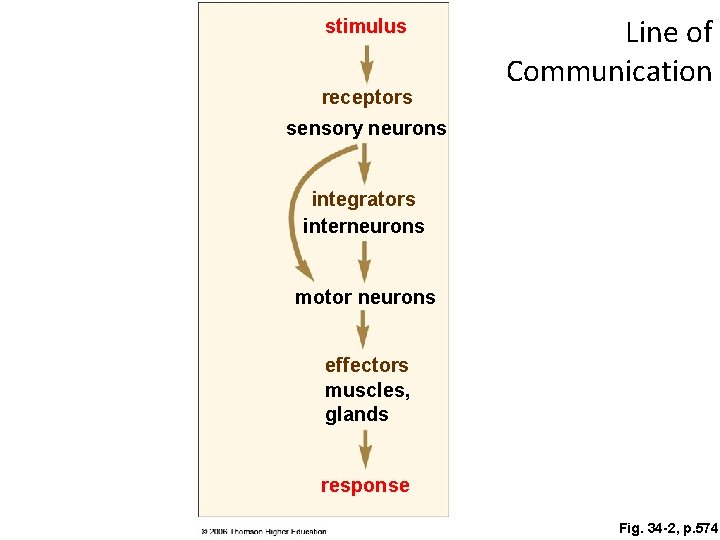
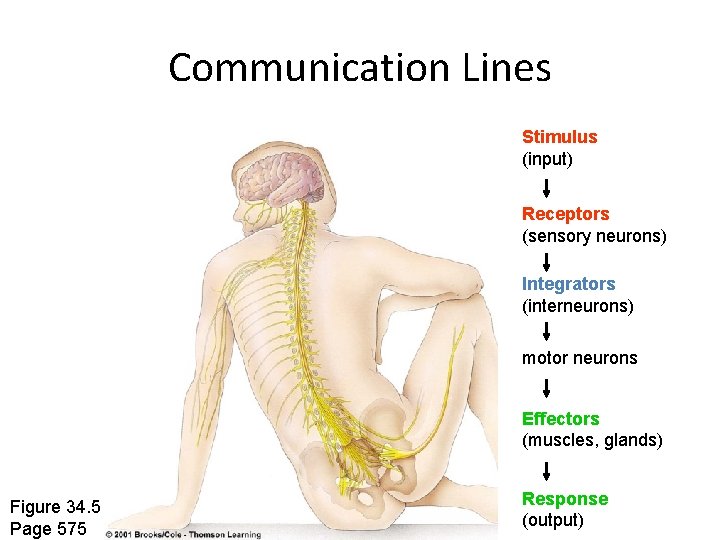
stimulus receptors Line of Communication sensory neurons integrators interneurons motor neurons effectors muscles, glands response Fig. 34 -2, p. 574
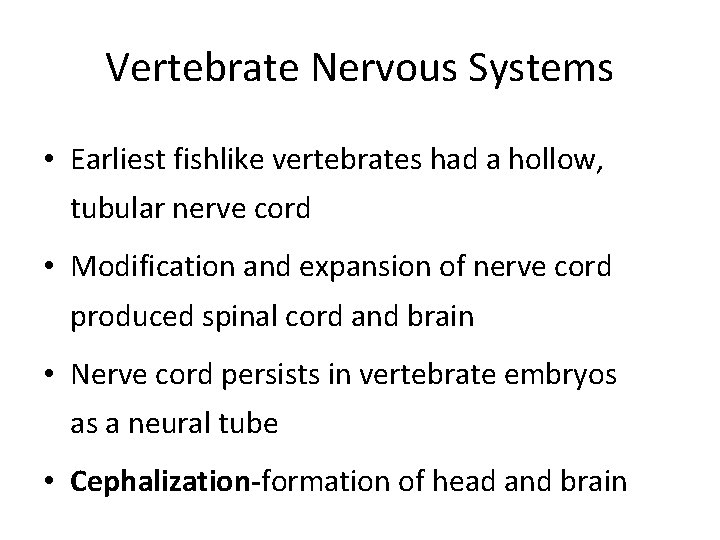
Vertebrate Nervous Systems • Earliest fishlike vertebrates had a hollow, tubular nerve cord • Modification and expansion of nerve cord produced spinal cord and brain • Nerve cord persists in vertebrate embryos as a neural tube • Cephalization-formation of head and brain
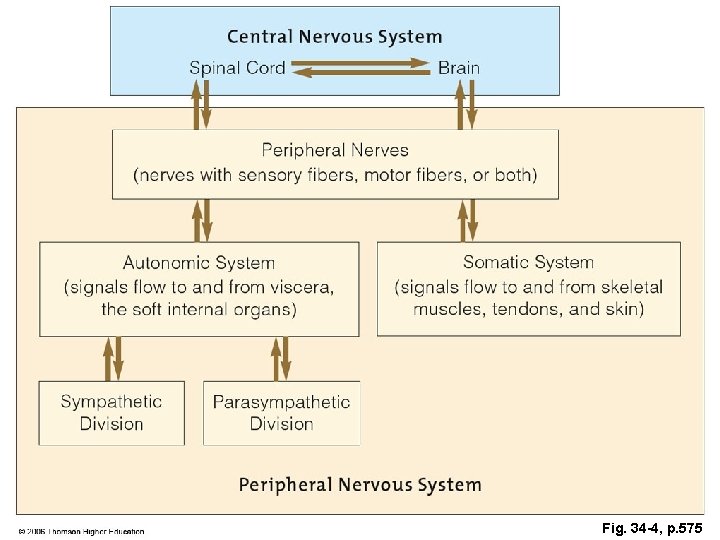
Fig. 34 -4, p. 575
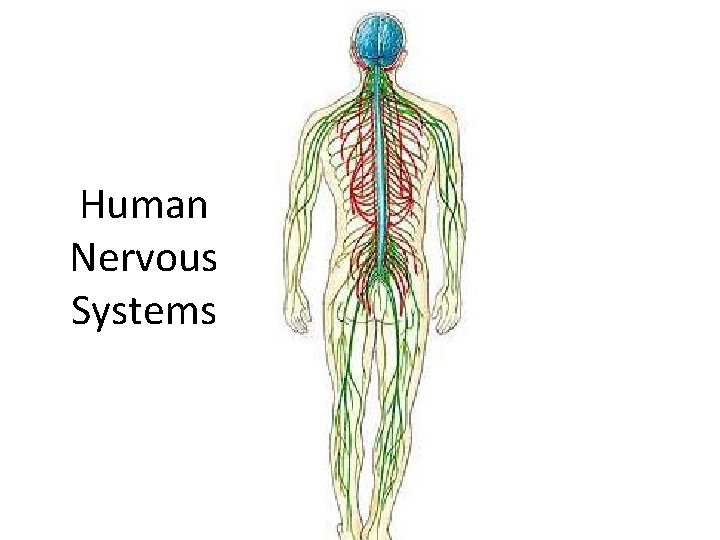
Human Nervous Systems
Communication Lines Stimulus (input) Receptors (sensory neurons) Integrators (interneurons) motor neurons Effectors (muscles, glands) Figure 34. 5 Page 575 Response (output)
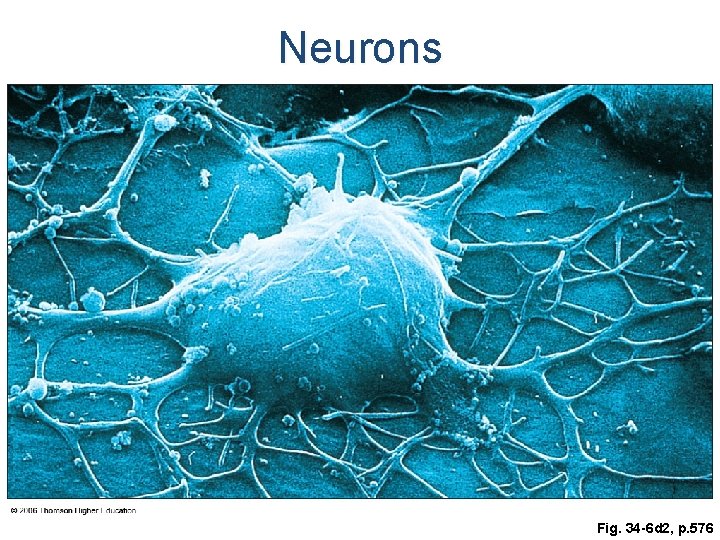
Neurons • Basic units of communication in nearly all nervous systems • Monitor information in and around the body and issue commands for responsive actions
Neurons Fig. 34 -6 d 2, p. 576
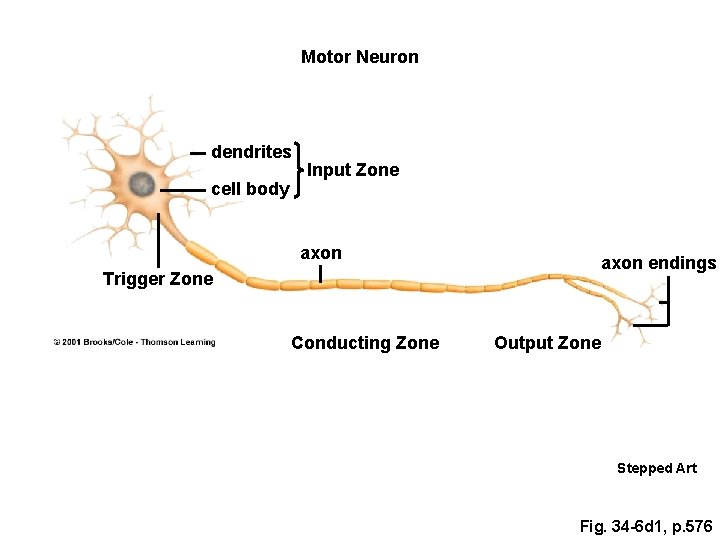
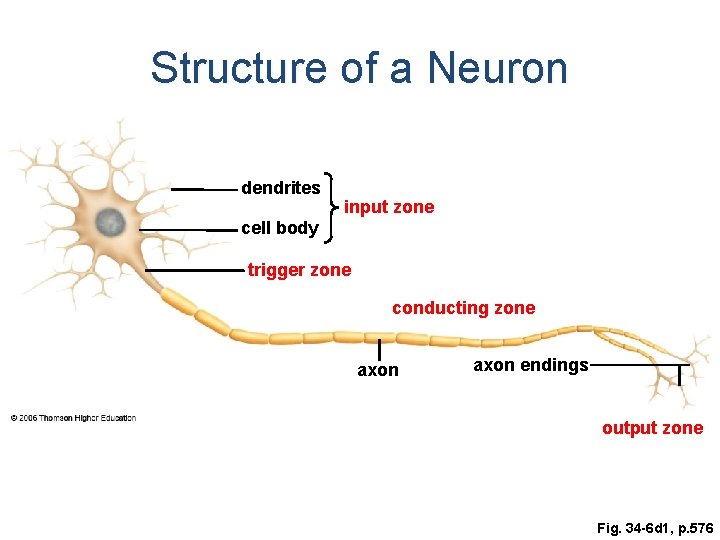
Motor Neuron dendrites cell body Input Zone axon endings Trigger Zone Conducting Zone Output Zone Stepped Art Fig. 34 -6 d 1, p. 576
Three Classes of Neurons • Sensory neurons • Interneurons • Motor neurons
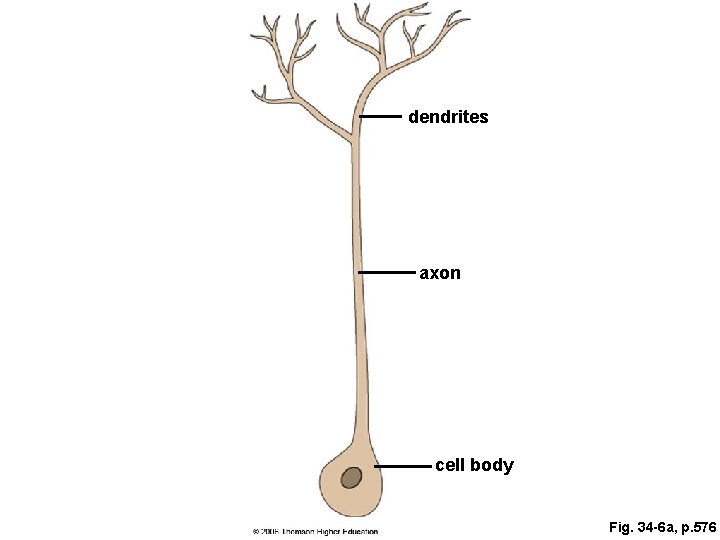
dendrites axon cell body Fig. 34 -6 a, p. 576
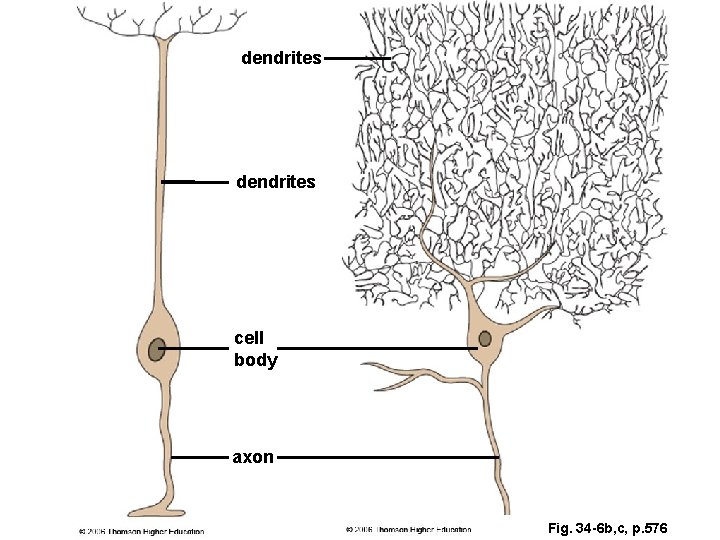
dendrites cell body axon Fig. 34 -6 b, c, p. 576
Structure of a Neuron dendrites input zone cell body trigger zone conducting zone axon endings output zone Fig. 34 -6 d 1, p. 576
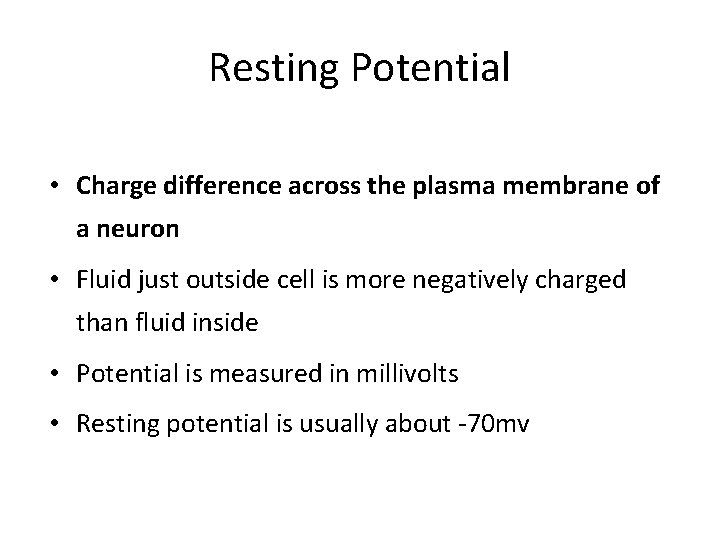
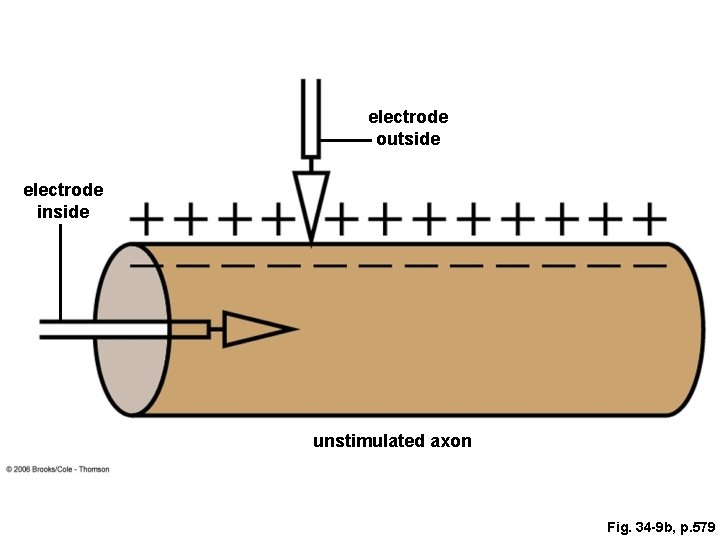
Resting Potential • Charge difference across the plasma membrane of a neuron • Fluid just outside cell is more negatively charged than fluid inside • Potential is measured in millivolts • Resting potential is usually about -70 mv
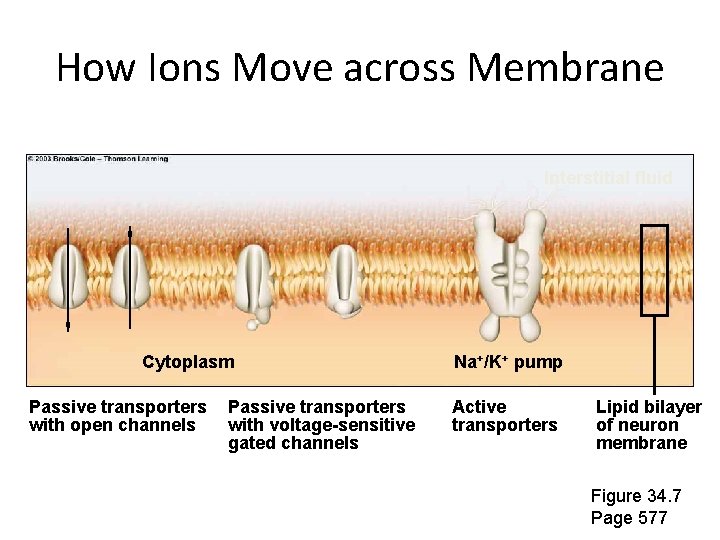
How Ions Move across Membrane Interstitial fluid Cytoplasm Passive transporters with open channels Passive transporters with voltage-sensitive gated channels Na+/K+ pump Active transporters Lipid bilayer of neuron membrane Figure 34. 7 Page 577
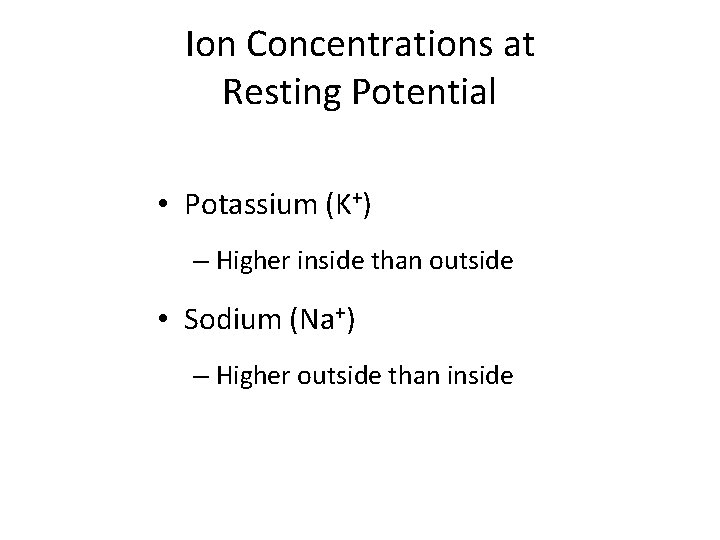
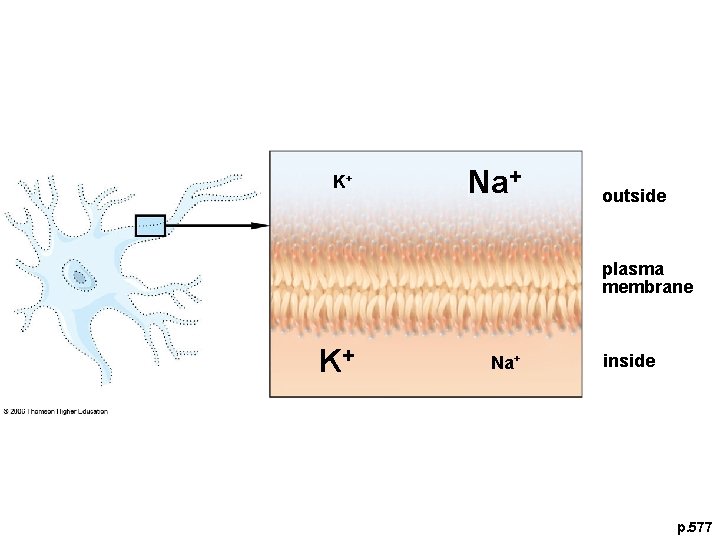
Ion Concentrations at Resting Potential • Potassium (K+) – Higher inside than outside • Sodium (Na+) – Higher outside than inside
K+ Na+ outside plasma membrane K+ Na+ inside p. 577
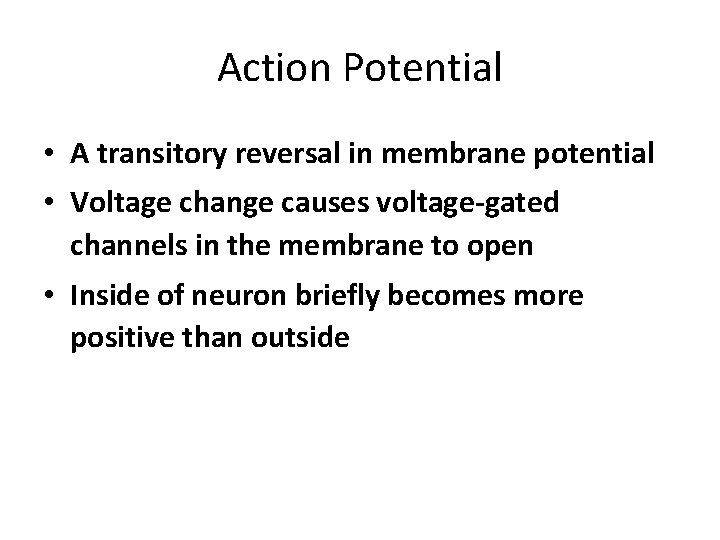
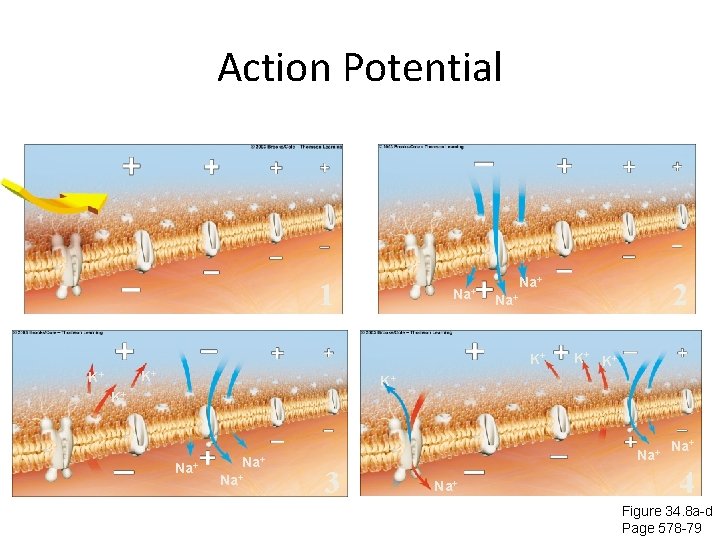
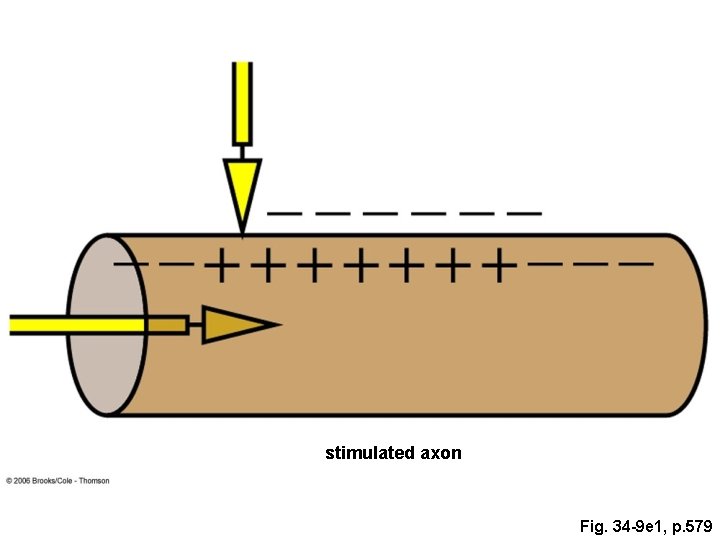
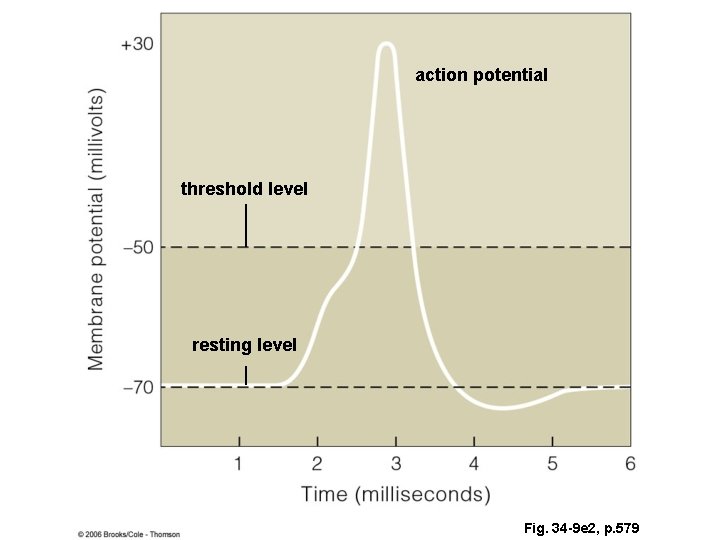
Action Potential • A transitory reversal in membrane potential • Voltage change causes voltage-gated channels in the membrane to open • Inside of neuron briefly becomes more positive than outside
Action Potential 1 Na+ K+ K+ K+ 2 Na+ K+ K+ Na+ Na+ 3 Na+ 4 Figure 34. 8 a-d Page 578 -79
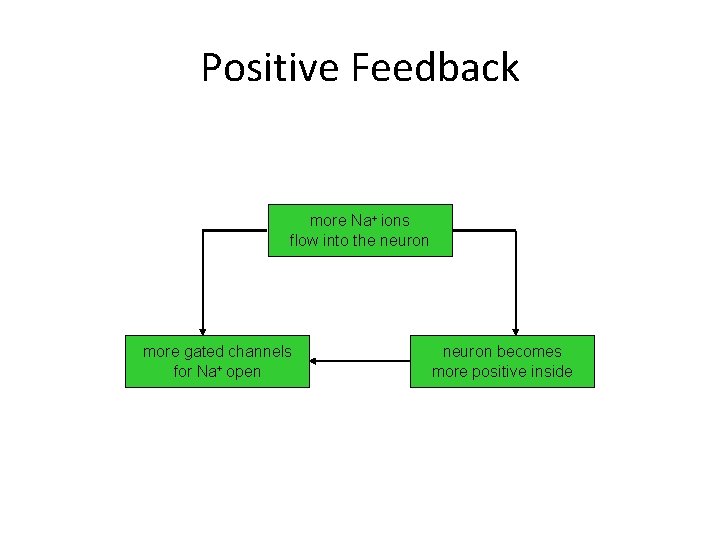
Positive Feedback more Na+ ions flow into the neuron more gated channels for Na+ open neuron becomes more positive inside
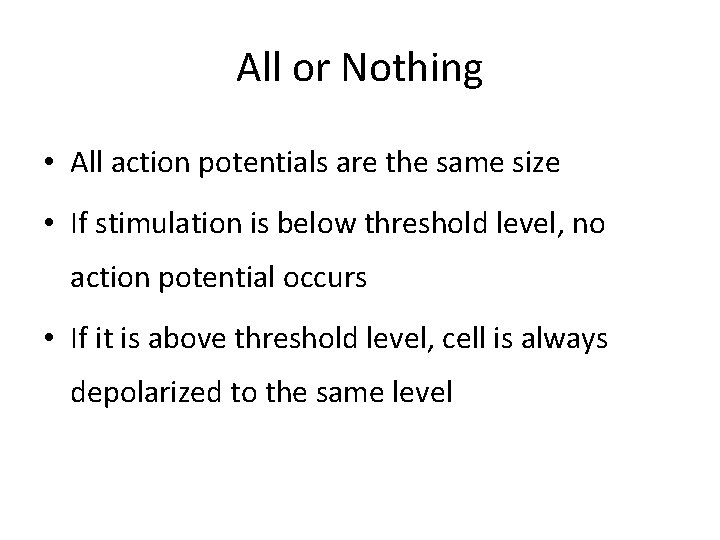
All or Nothing • All action potentials are the same size • If stimulation is below threshold level, no action potential occurs • If it is above threshold level, cell is always depolarized to the same level
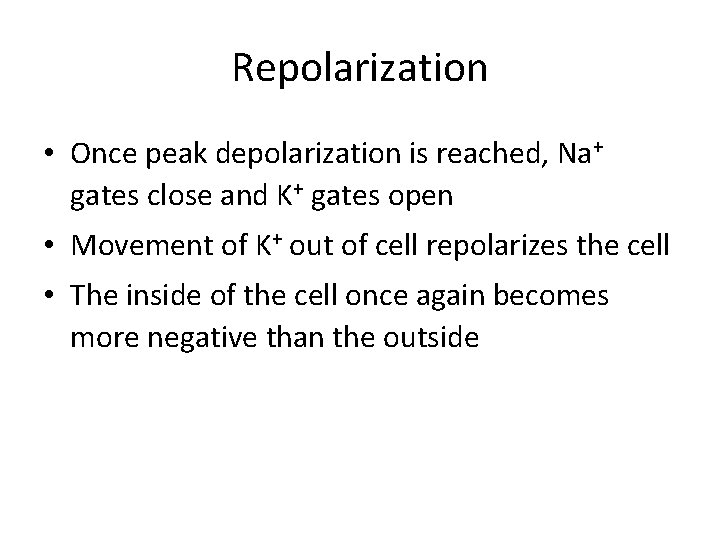
Repolarization • Once peak depolarization is reached, Na+ gates close and K+ gates open • Movement of K+ out of cell repolarizes the cell • The inside of the cell once again becomes more negative than the outside
electrode outside electrode inside unstimulated axon Fig. 34 -9 b, p. 579
stimulated axon Fig. 34 -9 e 1, p. 579
action potential threshold level resting level Fig. 34 -9 e 2, p. 579
Propagation of Action Potentials • An action potential in one part of an axon brings a neighboring region to threshold • Action potential occurs in one patch of membrane after another
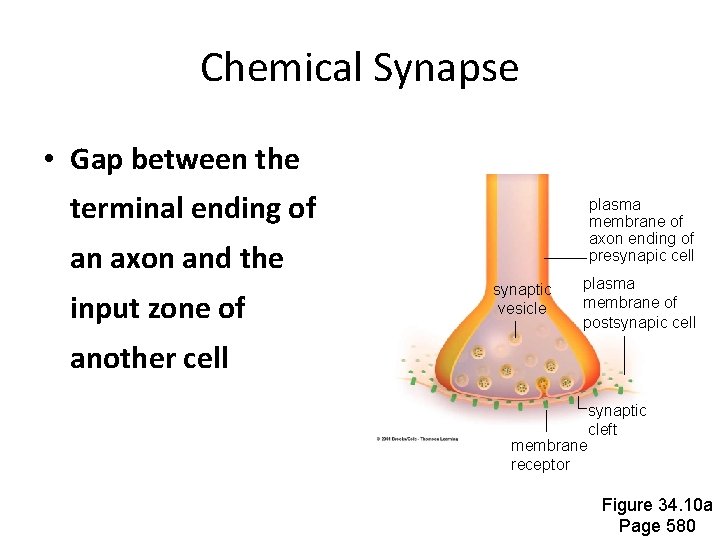
Chemical Synapse • Gap between the terminal ending of plasma membrane of axon ending of presynapic cell an axon and the input zone of synaptic vesicle plasma membrane of postsynapic cell another cell membrane receptor synaptic cleft Figure 34. 10 a Page 580
Synaptic Transmission • Action potential in axon ending of presynaptic cell causes voltage-gated calcium channels to open • Flow of calcium into presynaptic cell causes release of neurotransmitter into synaptic cleft
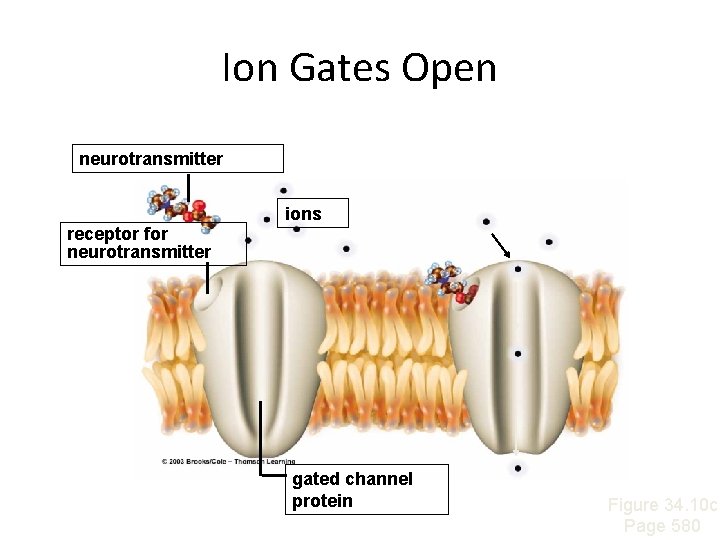
Synaptic Transmission • Neurotransmitter diffuses across cleft and binds to receptors on membrane of postsynaptic cell • Binding of neurotransmitter to receptors opens ion channels in the membrane of postsynaptic cell
Ion Gates Open neurotransmitter ions receptor for neurotransmitter gated channel protein Figure 34. 10 c Page 580
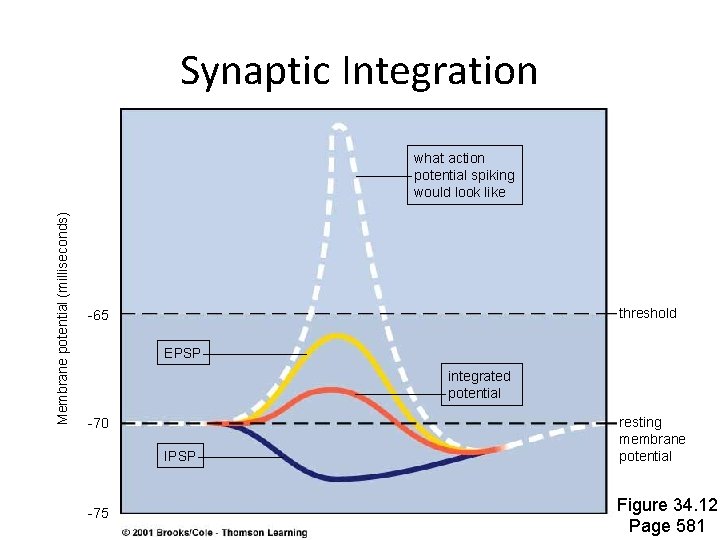
Synaptic Integration Membrane potential (milliseconds) what action potential spiking would look like threshold -65 EPSP integrated potential -70 IPSP -75 resting membrane potential Figure 34. 12 Page 581
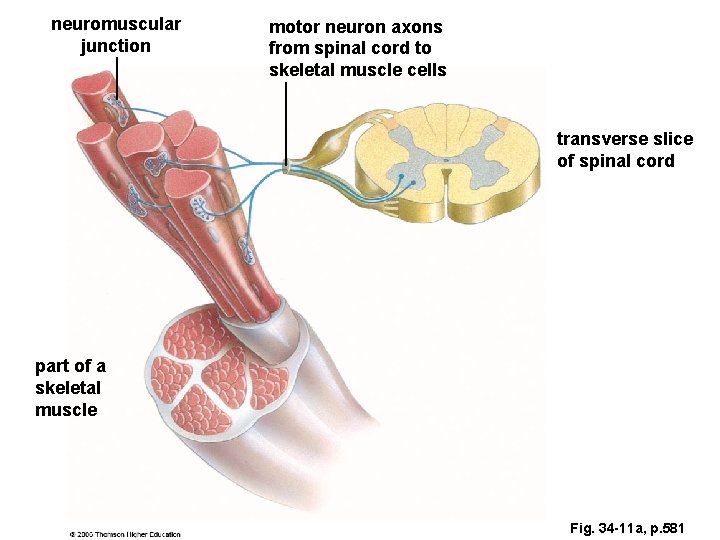
neuromuscular junction motor neuron axons from spinal cord to skeletal muscle cells transverse slice of spinal cord part of a skeletal muscle Fig. 34 -11 a, p. 581
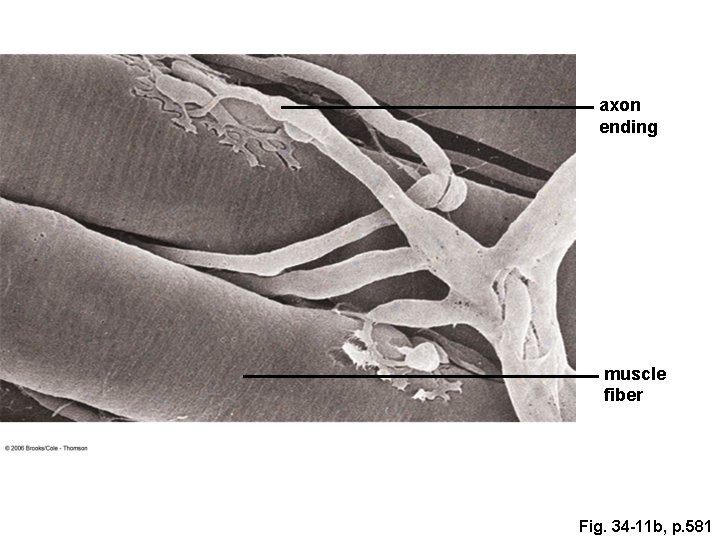
axon ending muscle fiber Fig. 34 -11 b, p. 581
Neurotransmitters • • • ACh Norepinephrine Epinephrine Dopamine Serotonin GABA • Derived from amino acids
Multiple Sclerosis • A condition in which nerve fibers lose their myelin • Slows conduction • Symptoms include visual problems, numbness, muscle weakness, and fatigue
Fig. 34 -13 a, p. 582
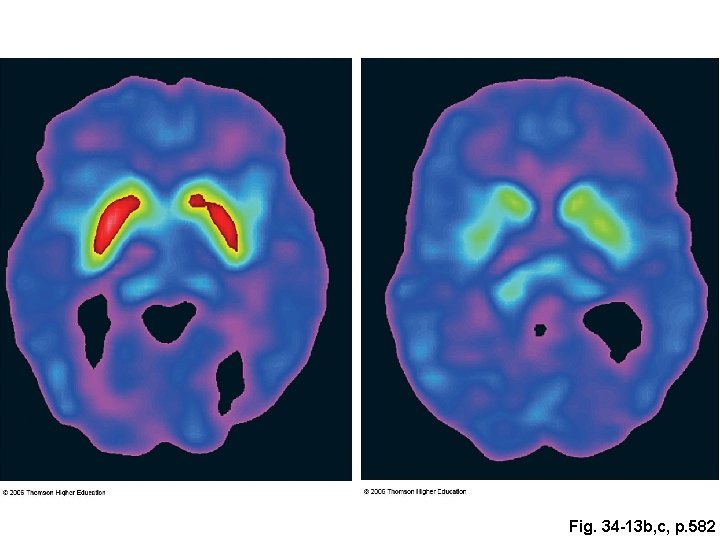
Fig. 34 -13 b, c, p. 582
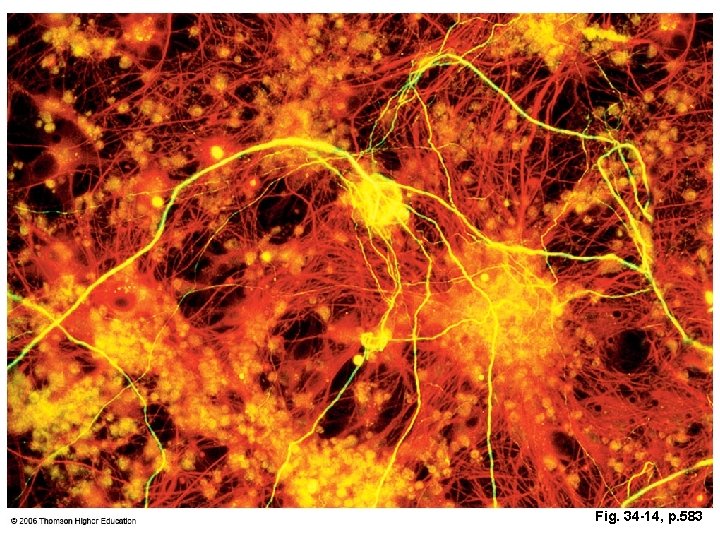
Fig. 34 -14, p. 583
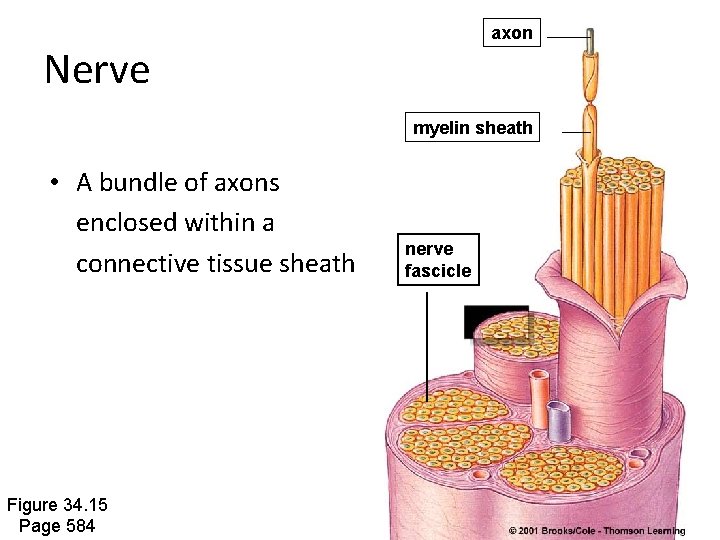
axon Nerve myelin sheath • A bundle of axons enclosed within a connective tissue sheath Figure 34. 15 Page 584 nerve fascicle
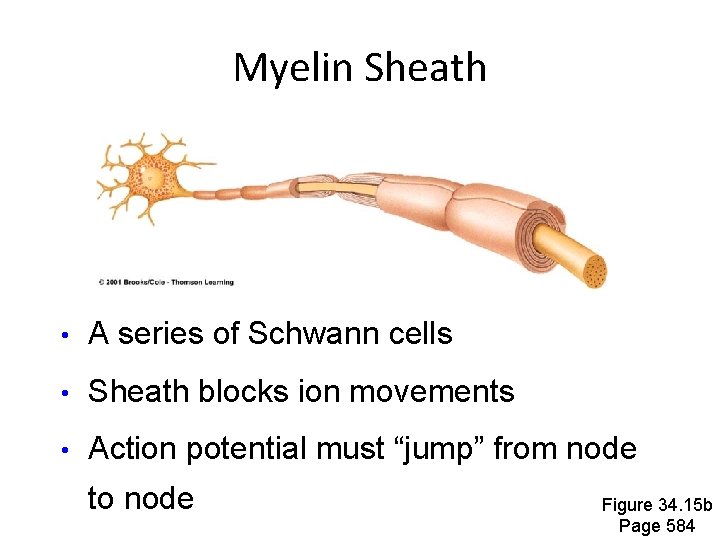
Myelin Sheath • A series of Schwann cells • Sheath blocks ion movements • Action potential must “jump” from node to node Figure 34. 15 b Page 584
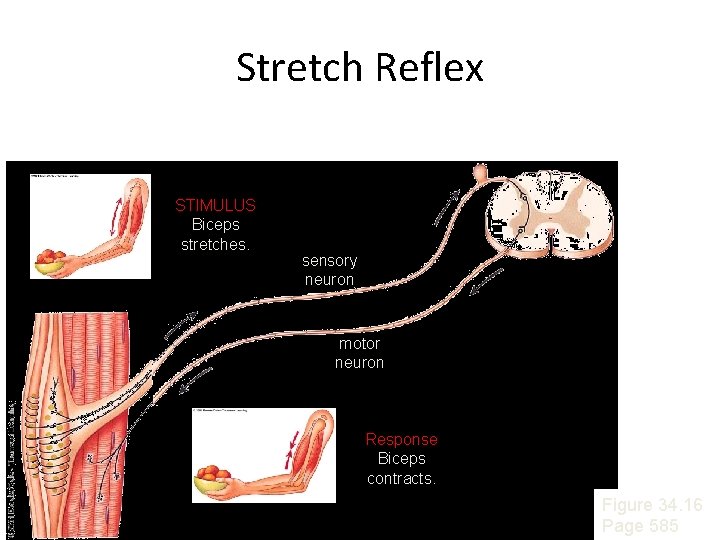
Reflexes • Automatic movements made in response to stimuli • In the simplest reflex arcs, sensory neurons synapse directly on motor neurons • Most reflexes involve an interneuron
Stretch Reflex STIMULUS Biceps stretches. sensory neuron motor neuron Response Biceps contracts. Figure 34. 16 Page 585
Central and Peripheral Nervous Systems • Central nervous system (CNS) – Brain – Spinal cord • Peripheral nervous system – Nerves that thread through the body
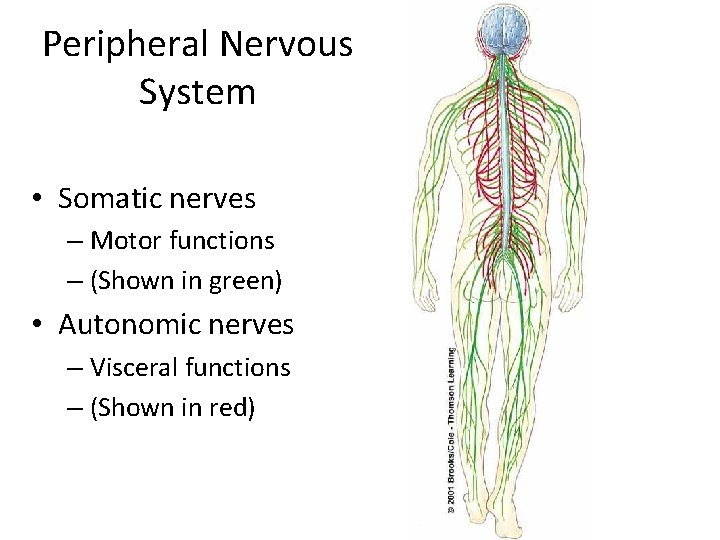
Peripheral Nervous System • Somatic nerves – Motor functions – (Shown in green) • Autonomic nerves – Visceral functions – (Shown in red)
Function of the Spinal Cord • Expressway for signals between brain and peripheral nerves • Sensory and motor neurons make direct reflex connections in the spinal cord • Spinal reflexes do not involve the brain
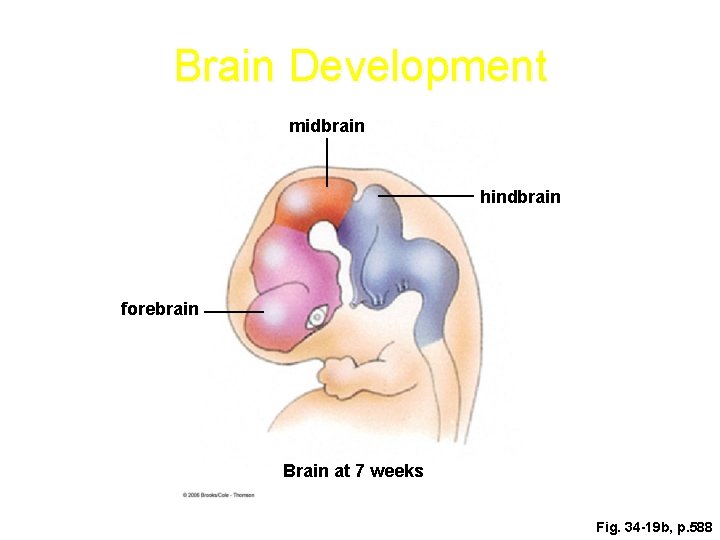
Brain Development midbrain hindbrain forebrain Brain at 7 weeks Fig. 34 -19 b, p. 588
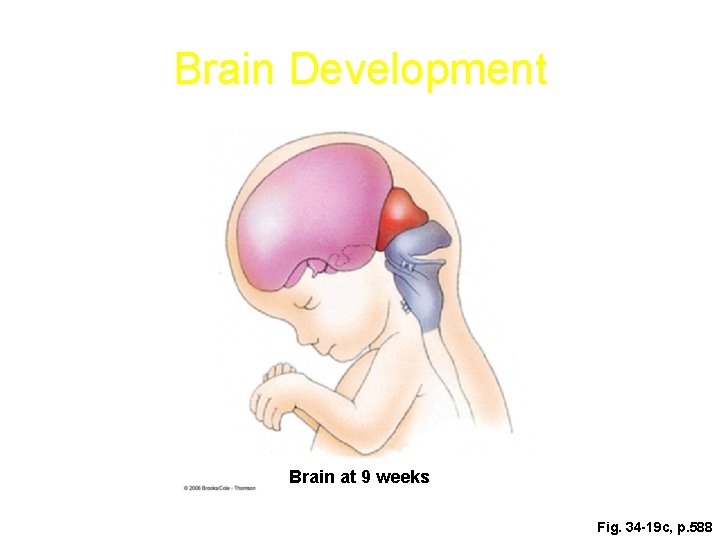
Brain Development Brain at 9 weeks Fig. 34 -19 c, p. 588
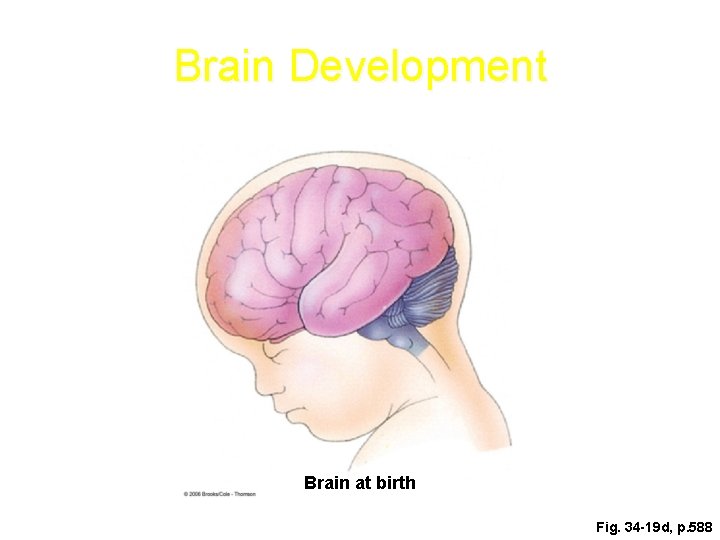
Brain Development Brain at birth Fig. 34 -19 d, p. 588
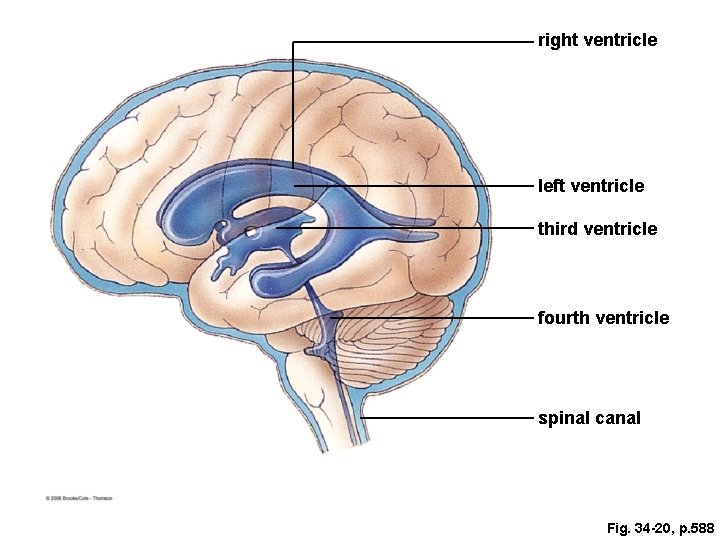
right ventricle left ventricle third ventricle fourth ventricle spinal canal Fig. 34 -20, p. 588
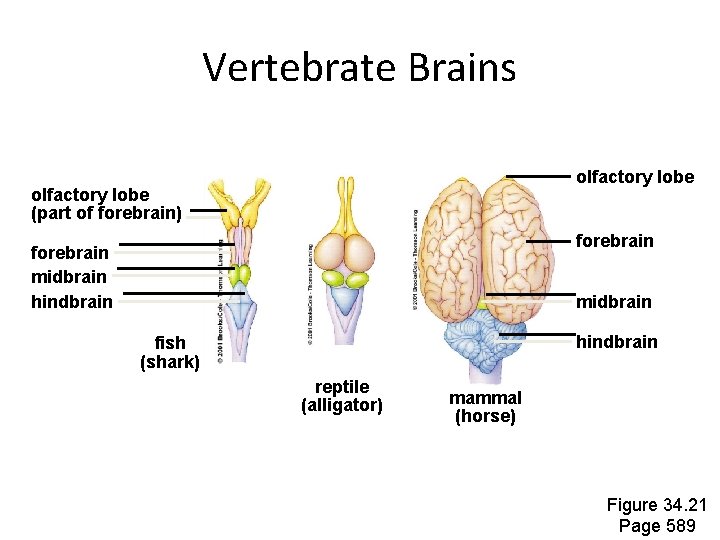
Vertebrate Brains olfactory lobe (part of forebrain) forebrain midbrain hindbrain fish (shark) reptile (alligator) mammal (horse) Figure 34. 21 Page 589
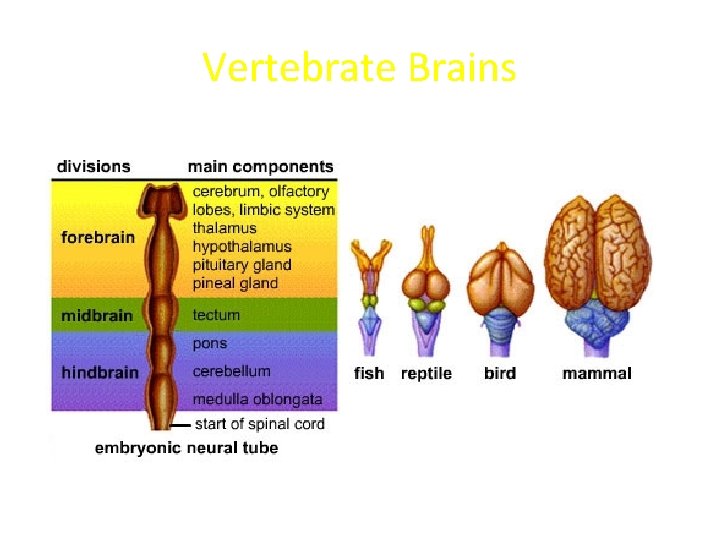
Vertebrate Brains Regions of the vertebrate brain
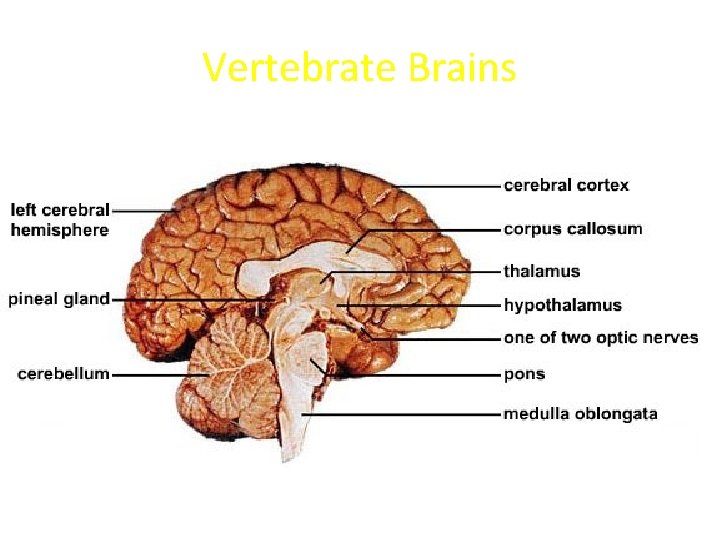
Vertebrate Brains Sagittal view of a human brain
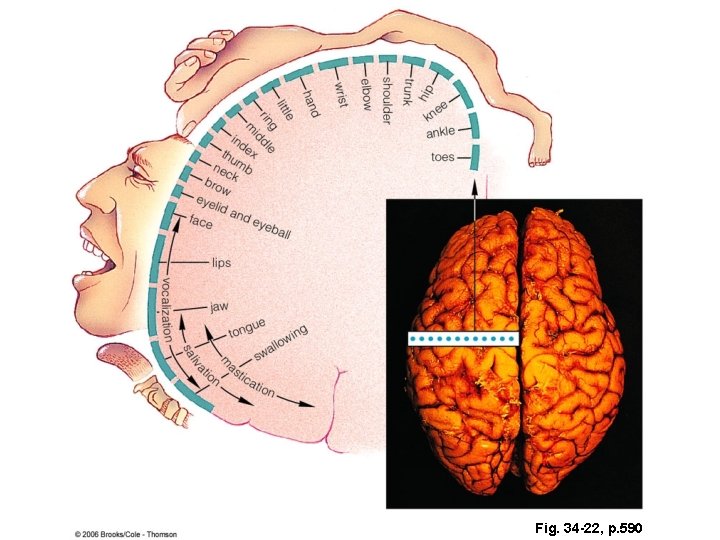
Fig. 34 -22, p. 590
Anatomy of the Cerebrum • Largest and most complex part of human brain • Outer layer (cerebral cortex) is highly folded • A longitudinal fissure divides cerebrum into left and right hemispheres
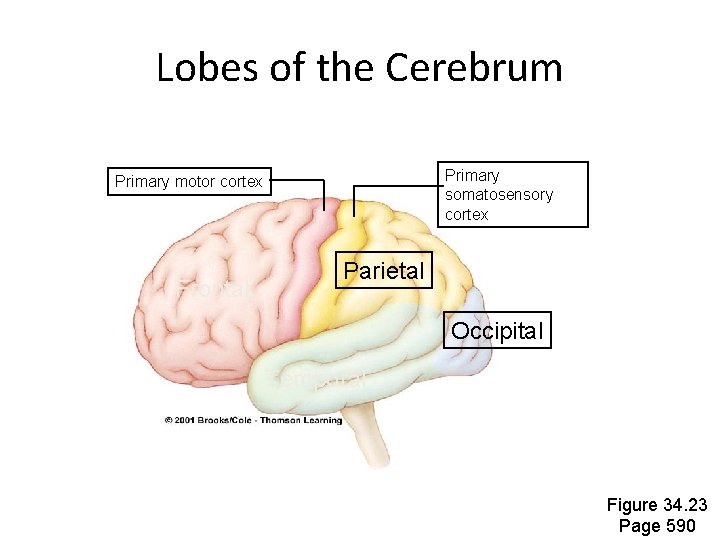
Lobes of the Cerebrum Primary somatosensory cortex Primary motor cortex Frontal Parietal Occipital Temporal Figure 34. 23 Page 590
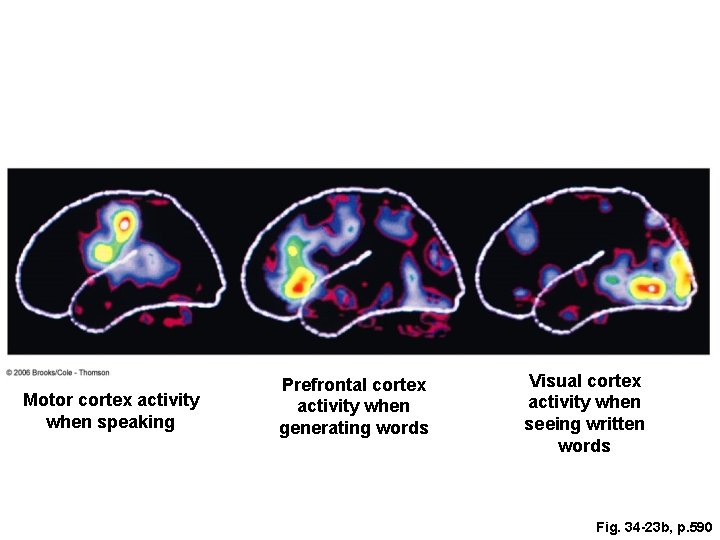
Motor cortex activity when speaking Prefrontal cortex activity when generating words Visual cortex activity when seeing written words Fig. 34 -23 b, p. 590
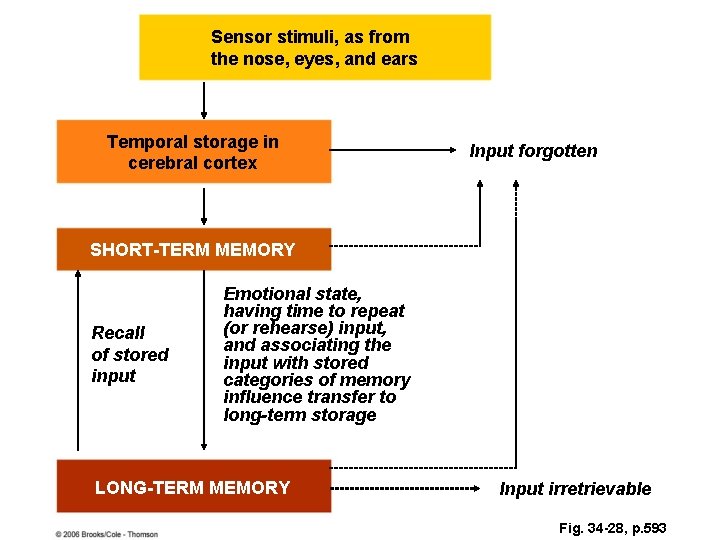
Memory • Brain’s capacity to store and retrieve information about past sensory input • Stored in stages – Temporary storage in cerebral cortex – Short-term memory – Long-term memory
Sensor stimuli, as from the nose, eyes, and ears Temporal storage in cerebral cortex Input forgotten SHORT-TERM MEMORY Recall of stored input Emotional state, having time to repeat (or rehearse) input, and associating the input with stored categories of memory influence transfer to long-term storage LONG-TERM MEMORY Input irretrievable Fig. 34 -28, p. 593
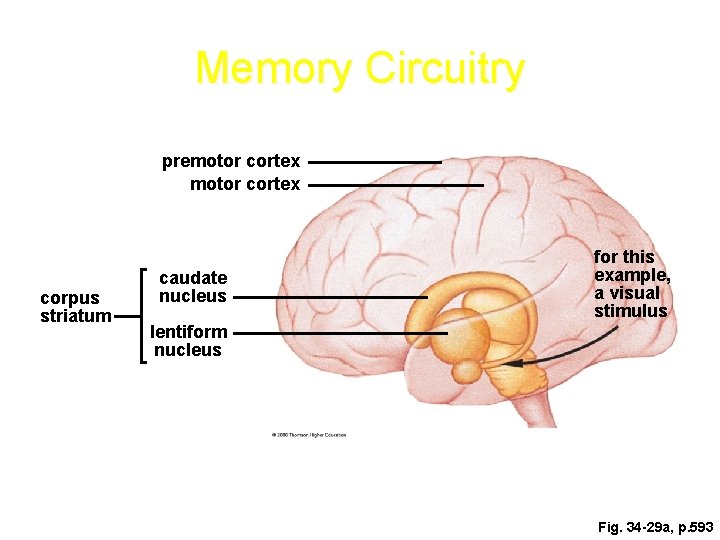
Memory Circuitry premotor cortex corpus striatum caudate nucleus for this example, a visual stimulus lentiform nucleus Fig. 34 -29 a, p. 593
Drugs and Addiction • A drug is a substance introduced into the body to provoke a specific physiological response • In addiction, a drug assumes an “essential” biochemical role in the body
Stimulants • Increase alertness and body activity, then cause depression – Caffeine – Nicotine - mimics acetylcholine – Cocaine - blocks neurotransmitters reuptake – Amphetamines & Ecstasy - induce dopamine release
Depressants and Hypnotics • Lower activity of nerves and parts of the brain – Barbiturates – Alcohol - acts directly on the plasma membrane to alter cell function
Analgesis • Pain relievers • Natural - endorphins and enkephalins • Narcotic - codeine and heroin – among the most addictive drugs
Hallucinogens and Marijuana • Skew sensory perception by interfering with action of neurotransmitters • LSD affects action of serotonin • Marijuana is a depressant at low dose; it can also cause disorientation, anxiety, delusion, and hallucinations