
CHAPTER 33 Fish and Amphibians SECTION 1 The
CHAPTER 33 Fish and Amphibians
SECTION 1 The Fish Body
KEY CHARACTERISTICS OF MODERN FISHES Single-loop circulation 3 Categories of Vertebrate Fish: Agnatha (jawless) Chondrichthyes (cartilaginous) Osteichthyes (bony) All share certain characteristics: Gills Used to obtain oxygen Blood pumped by heart to the gills Lung-Fishes (double-loop circulation) Vertebral column Internal skeleton of cartilage or bone Vertebral column protects spinal cord
GILLS Major respiratory organ of all fish Gill filaments Finger-like projections where gases enter and leave the blood Gill slit Allows water to leave the fish’s body Countercurrent flow Water and blood pass in different directions Ensures that oxygen diffuses into the blood
CIRCULATION OF BLOOD Fish contain a 4 - chambered-pump heart p. 748 – fig. 3 1. Sinus venosus Reduces resistance of blood flow into the heart 2. Atrium Large chamber with thin, muscular walls 3. Ventricle Thick-walled pump forces blood through the gills 4. Conus arteriosus Last chamber of the heart
KIDNEYS 2/3 of vertebrate fish is Freshwater fish take in Die if below this level Osmosis can cause dehydration Nephrons Found in kidneys Tubelike structures that regulate the body’s salt and water balance Remove wastes from the blood water Salty sea water can dehydrate fish Marine fish drink water and pump out ions water through osmosis
REPRODUCTION Fertilization generally occurs externally Spawning Male and female gametes are released near each other in the water Large numbers of eggs are released to be fertilized Ensures that some will survive Sharks, skates and rays are fertilized internally Male uses claspers to insert sperm into the female
SECTION 2 Today’s Fishes
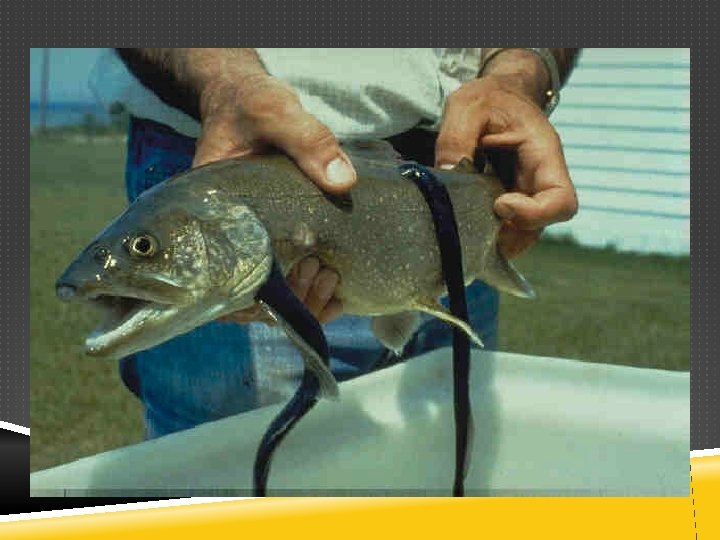
JAWLESS FISHES Lampreys and hagfishes Scaleless Multiple gill slits Unpaired fins Hagfish found at extreme depths Up to 1 mile Secrete slime when threatened Little evolution over the last 330 million yrs. Lamprey found in both salt and freshwater Must reproduce in freshwater parasitic
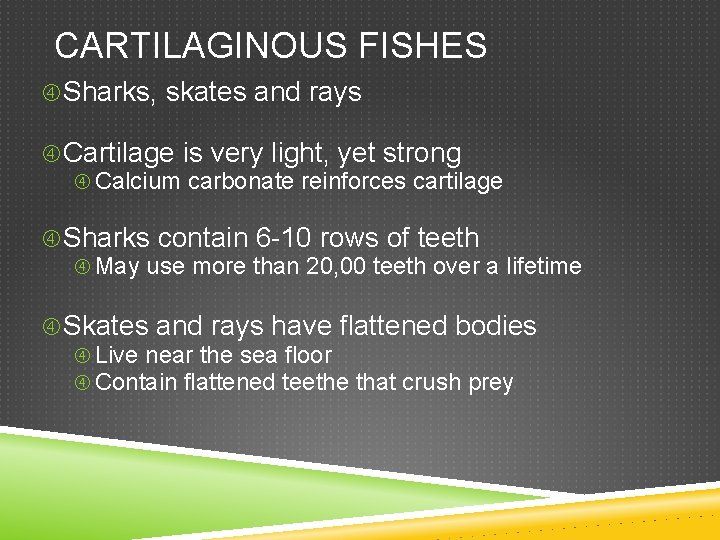
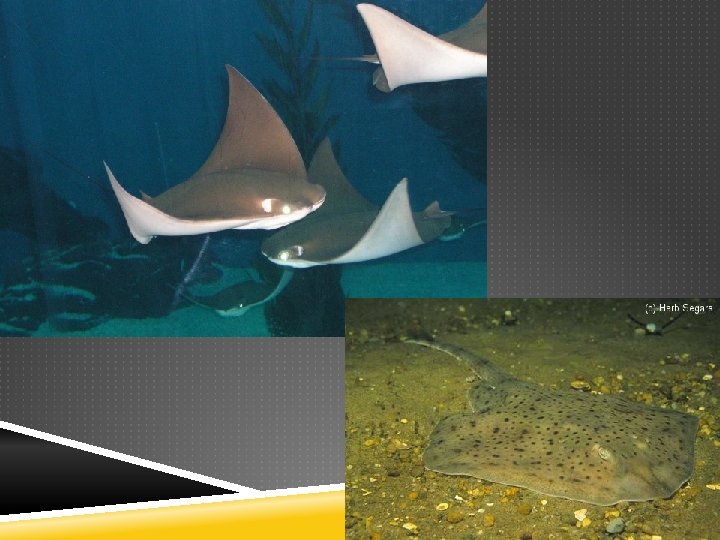
CARTILAGINOUS FISHES Sharks, skates and rays Cartilage is very light, yet strong Calcium carbonate reinforces cartilage Sharks contain 6 -10 rows of teeth May use more than 20, 00 teeth over a lifetime Skates and rays have flattened bodies Live near the sea floor Contain flattened teethe that crush prey
BONY FISHES Most diverse and abundant of all fish Strong internal skeleton Lateral line Sensory system that extends along each side of the fish Aid in determining position and movement Also aids in the detection of stationary objects Gill cover Operculum covers the gills Allow fish to draw in water Swim bladder Gas-filled sac Regulates buoyancy
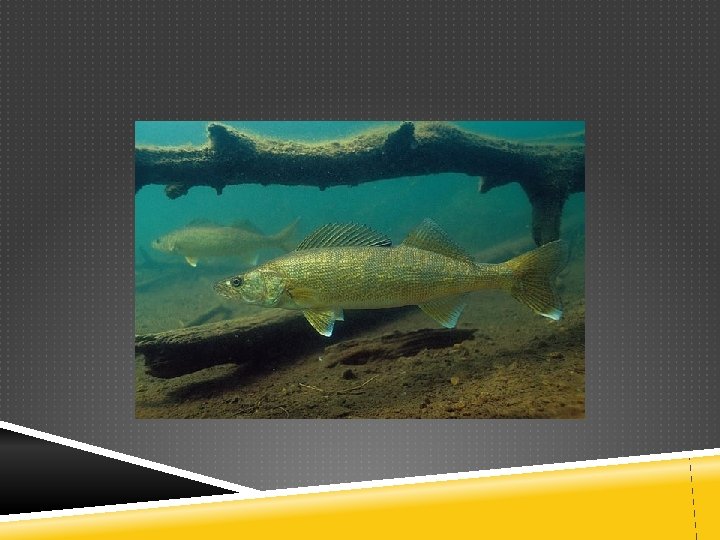
RAY-FINNED BONY FISHES Majority of all living fishes Fins supported by rays Teleosts Most advanced of all ray-finned bony fish Highly mobile fins About 95% of all living fish species
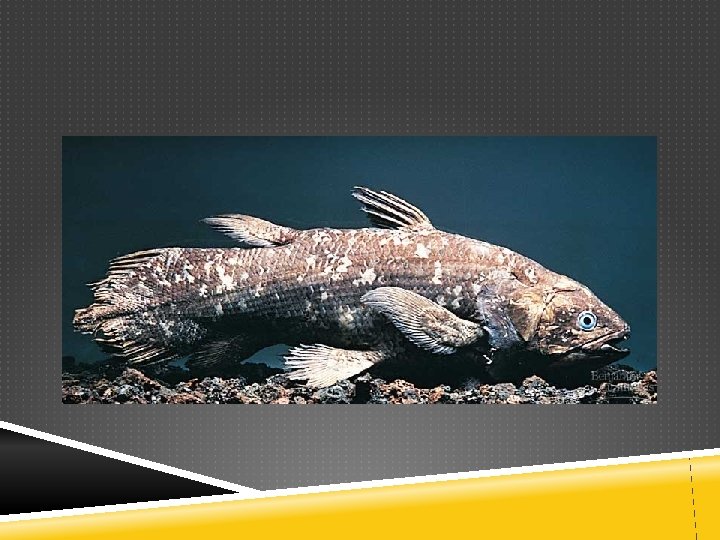
LOBE-FINNED BONY FISHES Only 7 species of lobe-finned species are alive today Contain paired fins that are structurally different from ray-finned fishes Lobe is usually long, fleshy with a core of bone Bones connected by joints Allows for independent movement
SECTION 3 Amphibians
AMPHIBIANS First vertebrates to walk on land Class amphibia contains 3 orders: Anura (frogs and toads) Urodela (salamanders and newts) Apoda (caecilians)
KEY CHARACTERISTICS OF MODERN AMPHIBIANS 5 characteristics of most amphibians: Legs Key adaptation for living on land Frogs, toads, salamanders and newts have 4 legs Caecilians have none Lungs Most adult amphibians breath with a pair of lungs Larval amphibians have gills, lungless salamanders Double-loop circulation Veins return blood to heart Blood then pumped to other tissues Partially divided heart Left and right atrium Only 1 ventricle Oxygen-rich and oxygen-poor blood delivered to tissues Cutaneous respiration Respiration occurs through the skin Only efficient at high skin surface to volume ratios
LUNGS Evolutionary solution to living on land Lung Internal, baglike respiratory organ that allows oxygen and carbon dioxide to be exchanged between the air and the bloodstream Many amphibians also obtain oxygen through their skin
DOUBLE-LOOP CIRCULATION Allows more oxygen to be delivered to their muscles Pulmonary veins A pair of veins that carry oxygen-rich blood to the body Allows blood to be pumped at high pressure
CIRCULATION OF BLOOD 1. Oxygen-poor blood from the body enters the right atrium 2. The pulmonary veins carry oxygen-rich blood from the lungs to the left atrium 3. A mixture of oxygen-rich and oxygen-poor blood enters the ventricle 4. The ventricle pumps blood to the lungs and the body tissues Septum Divides left and right atria
FROGS AND TOADS Live in environments ranging from deserts to rain forests Adults are carnivorous Some species have sticky tongues that extend to grab prey Frog bodies are designed for jumping Toads generally have shorter legs and bumpy skin
REPRODUCTION IN FROGS Depend on water to complete their life cycle Females release eggs into water, males sperm will fertilize them externally Eggs hatch as tadpoles Undergo metamorphosis until development into adult
SALAMANDERS AND CAECILIANS Long bodies and tails Smooth, moist skin Length ranges from 4 in. to 5 ft. Live near water to keep skin moist Salamander is generally external Juveniles hatch and contain gills Some keep gills for life
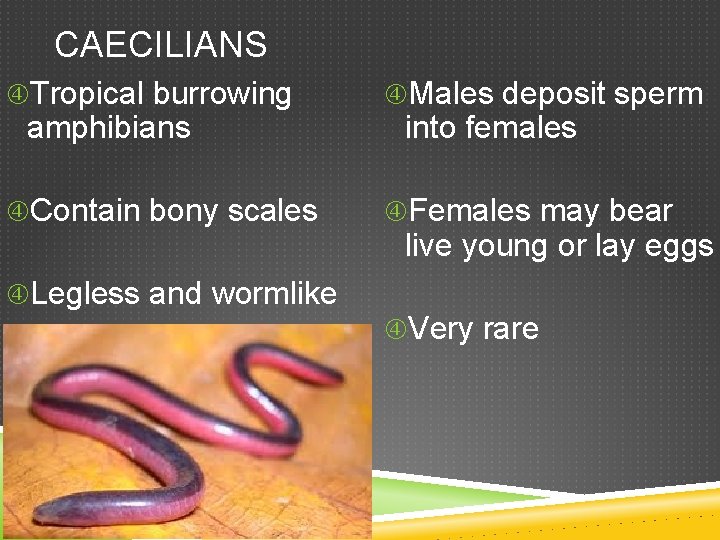
CAECILIANS Tropical burrowing Males deposit sperm Contain bony scales Females may bear amphibians Legless and wormlike into females live young or lay eggs Very rare
- Slides: 27